
Reviewed · DAY TRIPS
Kyoto Full Day Tour from Kobe with Licensed Guide and Vehicle
Kyoto rewards smart planning. This private day trip pairs a licensed multilingual guide with a private vehicle, giving you a practical way to reach Kyoto from Kobe and focus on the places you care about. I especially like the custom planning and the chance to visit major sights such as Fushimi Inari, Kiyomizu-dera, Gion, Kinkakuji, and Arashiyama without wrestling with Kyoto’s train and bus system.
I also like the personal attention. Guides such as Kazuo, Yuka, Hiro, Kiriko, and Andy have adapted schedules to suit families, cruise passengers, and people with only one day in Japan. The main caution is price: at $1,165.63 for up to two people, this is a costly outing, and you must choose only three or four main sites rather than attempting the entire list.
In This Review
- Key points to know before booking
- A private road to Kyoto from Kobe
- Fushimi Inari and the southern temple district
- Kiyomizu-dera and Gion: classic Kyoto in one walk
- Kinkakuji, Ryoanji, and Ninna-ji in northern Kyoto
- Nishiki Market, Pontocho, and a useful meal break
- Arashiyama, bamboo, and the western hills
- Eastern and northern choices for a quieter day
- What the guide adds to the day
- Price, group size, and real value
- Who should book this Kobe to Kyoto tour?
- Should you book it?
- FAQ
- How long does the Kyoto tour from Kobe last?
- How many people can join the private tour?
- Is transportation included?
- Can I choose which Kyoto sights to visit?
- Are entrance fees included?
- Is pickup available?
- Are child car seats available?
- Can I cancel for a full refund?
Key points to know before booking
- You choose three or four main sights: The long list of Kyoto attractions is a menu of possibilities, not a promise that you will visit them all.
- A private car saves time: This matters when you are traveling from Kobe and have a fixed return time, especially on a cruise-port stop.
- The guides shape the day around you: Previous outings have included bamboo groves, Kinkakuji, Gion, Fushimi Inari, the Monkey Park, and local restaurants.
- The tour lasts about nine hours: That sounds generous, but the drive from Kobe and Kyoto traffic leave less time for sightseeing than the clock suggests.
- Entry fees and lunch cost extra: Some temple fees are not included, so keep a separate budget for admissions, food, and personal purchases.
- It suits small private groups best: The price covers up to two people, and only your party takes part.
A private road to Kyoto from Kobe
Kyoto is close enough to visit from Kobe, but not so close that poor planning is harmless. You have a long day ahead, and a private vehicle removes the need to connect through several trains or decide which crowded city bus might get you near the next temple.
The car is especially useful for a cruise-port visit. Several outings described by the guides involved collecting people at the port and returning them in time for departure. Andy, Kiriko, and Yuka were praised for keeping an eye on the clock, while drivers used quicker routes and knew when to collect the group.
That flexibility is the heart of the experience. You are not following a rigid procession from one attraction to the next. After booking, a guide contacts you and sends a selection of possible places. You can then explain what matters most: temples, gardens, traditional neighborhoods, food, photography, or a short list of famous sights.
Still, a car cannot defeat Kyoto traffic. The city can become slow around the major temple districts, and nine hours can disappear quickly. If you want a relaxed visit with long walks and time inside several temples, select three places. If you prefer a fast-paced day, four major stops may be possible, but you should say so clearly during planning.
More Private Tours in Kobe:
- Kobe 4hr Private Tour with Government-Licensed Guide
★ 5.0 · 59 reviews - Kobe: Private Tour – Excursion to Osaka / Kyoto possible
★ 4.7 · 27 reviews - Kobe: Private Walking Shore Excursion- Kyoto/Osaka/Nara/Kobe
★ 4.8 · 23 reviews
Fushimi Inari and the southern temple district
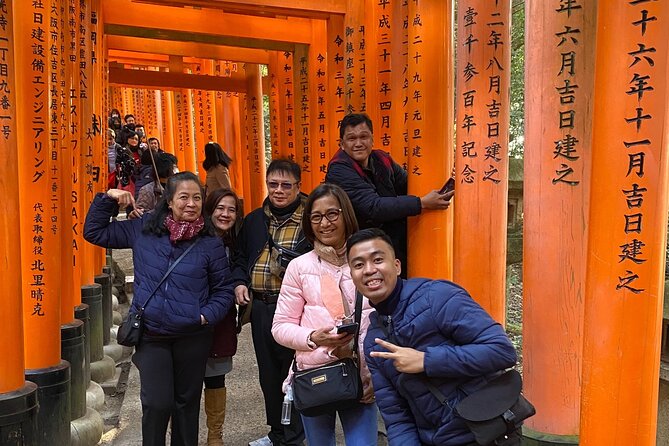
Fushimi Inari-taisha is one of Kyoto’s most recognizable sights, with long lines of orange torii gates climbing the wooded mountain. The basic shrine grounds are free, but the full walk takes much longer than a quick photo stop.
The supplied schedule gives Fushimi Inari only 15 minutes as a sample stop, but the actual visits described by guests were more flexible. One group made it farther up the mountain to see additional torii gates because time remained at the end of the day. That is useful advice: tell your guide if you want to walk beyond the first crowded section.
The shrine is a strong choice for a first visit because it gives you Shinto architecture, forest paths, and a sense of movement in one place. The drawback is physical effort. Even a short walk involves stairs and slopes, so it may not be the best choice if your group needs a very easy day.
Tofuku-ji and Toji are other possible southern Kyoto choices. Tofuku-ji is a large Zen temple known for autumn color, while Toji dates from the early Heian period and is associated with Kyoto’s early development as the imperial capital. Both require an admission fee if you enter the paid areas.
Kiyomizu-dera and Gion: classic Kyoto in one walk
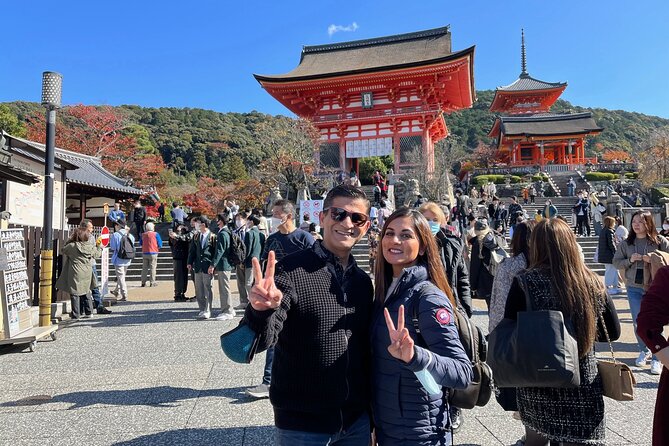
Kiyomizu-dera is one of the city’s essential sights. The temple sits above the historic Higashiyama area, and its wooden stage gives you a memorable view across Kyoto. A guide can explain Buddhist customs, temple design, and the proper way to approach a Buddhist temple, details that are easy to miss if you simply arrive, take a photograph, and leave.
The visit is not just about the main building. The approach through Higashiyama leads through preserved streets and traditional shopfronts, though the area can be crowded. Wear shoes suited to walking because the district includes slopes, steps, and narrow lanes.
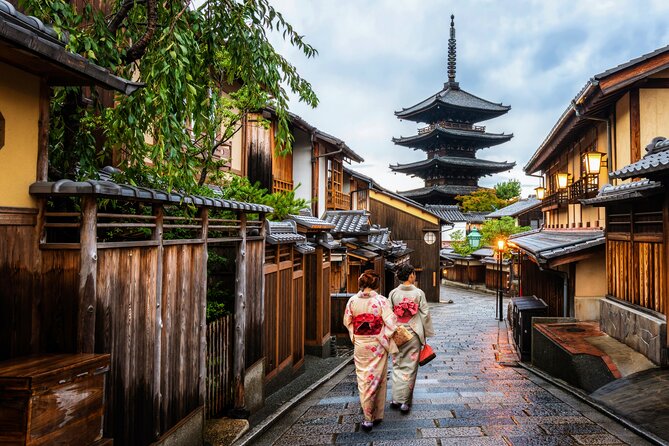
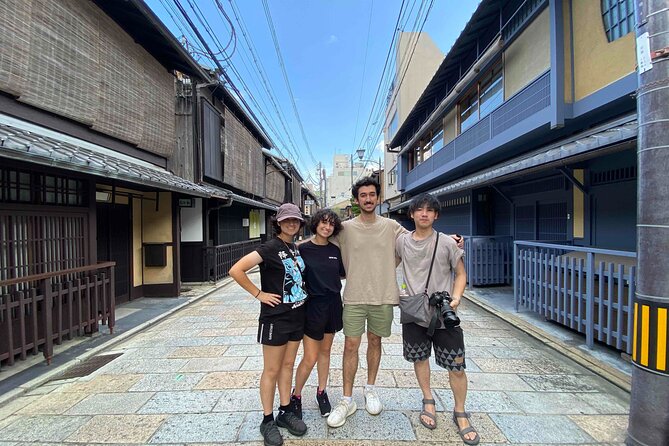
Nearby Gion adds a different side of old Kyoto. Its streets are associated with geisha culture, traditional teahouses, and carefully preserved wooden buildings. A guide is useful here because the narrow lanes can be confusing, and local customs matter. You should also follow your guide’s advice about respectful photography and private entrances.
The stop can be paired with Kennin-ji, a Zen temple close to Hanamikoji and Shijo streets. Its grounds are spacious, and its dry gardens offer a calmer setting after the busy lanes of Gion. With only one minute shown in the sample schedule, Kennin-ji is clearly a possible addition rather than a full visit unless you request more time.
Kinkakuji, Ryoanji, and Ninna-ji in northern Kyoto
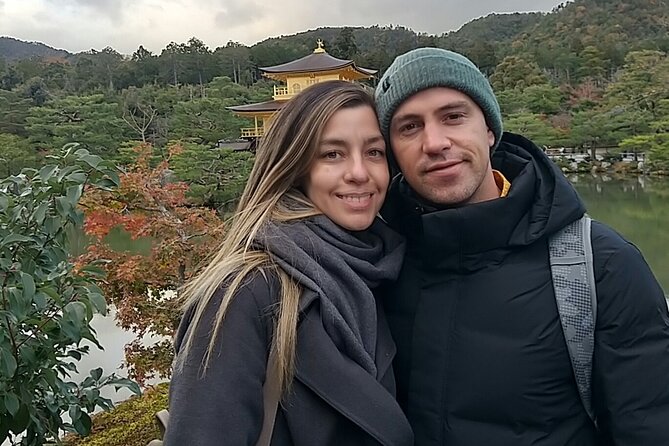
Kinkakuji, the Golden Pavilion, is an efficient choice for a first day. Its top two floors are covered in gold leaf, and the pavilion sits beside a pond in a carefully arranged garden. The visit is visually powerful, but it is also one of Kyoto’s busiest stops. You follow a set path, and the experience is more about seeing the famous composition than wandering freely.
Admission is not included. The same applies to Ryoanji, home to Japan’s best-known rock garden. The garden is spare and quiet in design, but the viewing platform can be crowded. A guide adds value by explaining how Zen gardens are viewed and why the arrangement has prompted so much discussion.
Ninna-ji gives you another World Heritage temple, this one linked to the Omuro school of Shingon Buddhism and founded in 888. It offers a broader temple setting than the Golden Pavilion, though fitting all three northern sites into a short day would make the schedule brisk.
This cluster makes sense if you want famous temples and prefer to limit long cross-city drives. Pairing Kinkakuji with Kiyomizu-dera, however, creates a fuller first glimpse of Kyoto because you see both the northern and eastern districts.
More Day Trips in Kobe:
- Kobe Half Day Tour – Private & Personalized with a Local Guide
★ 4.5 · 18 reviews - Cruise Stop-Over: Private Custom Day trip to Kyoto from Kobe Port
★ 4.5 · 12 reviews - Mt. Fuji Instagram-Worthy Spots Day Tour: Ladder Town, Oshino Hakkai, Lake Kawaguchi, Lawson Convenience Store (Departing from Tokyo Station or Shinjuku Station)
★ 4.8 · 35,467 reviews - 【Mount Fuji Magnificent Scenery Exploration Day Tour】Arakurayama Sengen Park & Kawaguchiko Oishi Park & Oshino Hakkai & INS Famous Lawson & Hikawa Clock Shop (Departing from Tokyo)
★ 4.9 · 12,075 reviews
Nishiki Market, Pontocho, and a useful meal break
Nishiki Market is Kyoto’s Kitchen, a narrow shopping street extending for five blocks with more than one hundred shops and restaurants. It is a good choice if food is part of your reason for visiting Japan. You can browse local ingredients and small eateries, but the lane is tight and busy, so it is not a place to rush through with a large shopping bag.
Lunch is not included. That is worth clarifying before you set out, particularly if you want a special meal. Several guides helped arrange memorable food stops, including tempura, sushi, Kobe beef, and a restaurant in Kobe after the tour. These touches can make the day feel more personal, but restaurant costs remain your responsibility.
Pontocho is another possible food stop. This narrow alley runs between Shijo-dori and Sanjo, just west of the Kamogawa River, and is lined with restaurants. It is atmospheric in the evening, but during a daytime temple-focused visit it may be better used as a short walk than as a major destination.
Arashiyama, bamboo, and the western hills
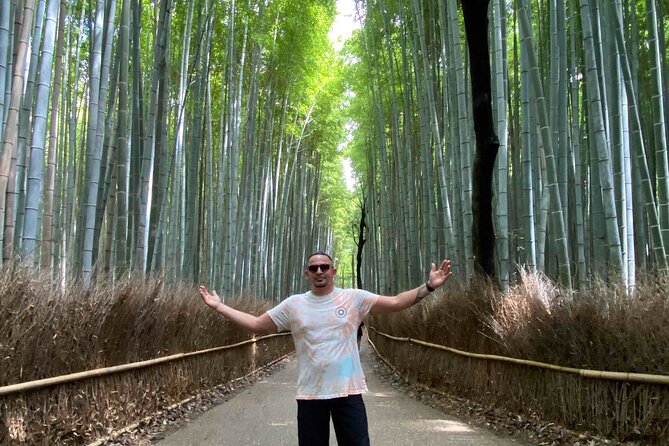
Arashiyama is the most tempting place to overpack into a Kyoto day. The district includes the famous Bamboo Forest Street, Togetsukyo Bridge, Tenryu-ji, Okochi Sanso Garden, and several quieter hillside temples.
The bamboo path is photogenic, but the walk is short and can be crowded. I would not book this tour simply to take one bamboo photograph. The area becomes more rewarding when you pair the grove with Tenryu-ji, the leading Zen temple in Arashiyama, or with Okochi Sanso Garden, the former villa of actor Okochi Denjiro.
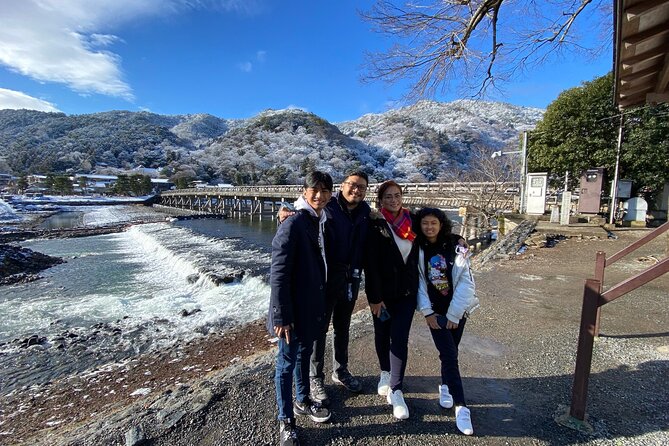
Togetsukyo Bridge gives you a classic Arashiyama view over the river and mountains. It was first built during the Heian period and reconstructed in the 1930s. The bridge itself takes little time, so it works well as part of a broader western Kyoto visit.
If you want a quieter side of Arashiyama, ask about Jojakko-ji, Nisonin, Gio-ji, Adashino Nenbutsuji, or Otagi Nenbutsu-ji. These temples offer moss, maple trees, preserved lanes, thatched roofs, and distinctive stone figures. Otagi Nenbutsu-ji is especially unusual, with about 1,200 stone rakan statues, each showing a different expression.
The tradeoff is time. These places are spread along the western hills, and several require walking. You should choose one or two rather than trying to collect them all.
Eastern and northern choices for a quieter day
Ginkakuji, the Silver Pavilion, is a fine alternative to Kinkakuji. It began as the retirement villa of shogun Ashikaga Yoshimasa and is known for its Zen setting and gardens rather than a silver-covered building. The nearby eastern mountain area also connects naturally with other walks, though the tour schedule may not allow a long stroll.
Nanzenji is another strong choice. It is one of Kyoto’s major Zen temples, with spacious grounds at the foot of the Higashiyama mountains. The Nanzenji Suirokaku aqueduct adds a distinctive piece of nineteenth-century engineering to the temple setting.
For something farther from central Kyoto, consider Kibune, Kurama, or Kurama-dera. Kibune developed around Kifune Shrine in a wooded northern valley, while Kurama is a rural mountain town known for its temple and hot spring. These sites offer a greener, less central side of Kyoto, but the extra driving makes them poor companions for several famous downtown temples.
Shugakuin Imperial Villa and Katsura Imperial Villa are also possible choices. Both are prized for architecture and gardens, and Shugakuin is managed by the Imperial Household Agency. Entry rules and fees apply, and the short sample times should not be mistaken for a full guided visit. Ask the agency in advance if these are your priority.
What the guide adds to the day
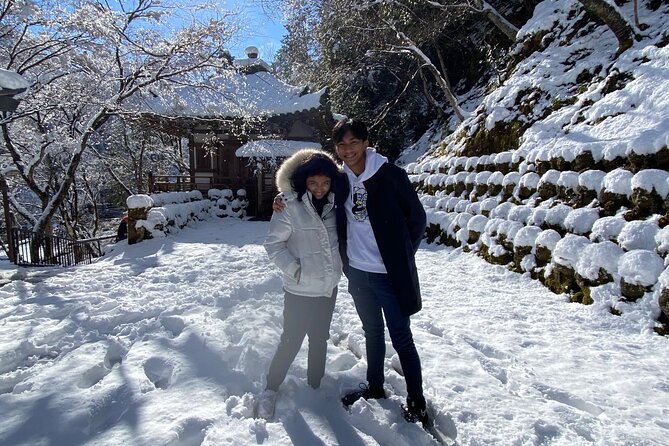
The strongest part of this experience is not simply having a driver. It is having someone explain how the places fit together.
Kazuo Sumi has taught visitors the proper approach to both Shinto shrines and Buddhist temples, along with the historical background of each site. Hiro built a day around specific requests and added cultural explanations along the way. Yuka has handled demanding schedules with a friendly manner, while Kiriko created a packed plan for a couple who wanted to see a great deal in limited time.
Andy has also been praised for taking photographs and helping a group return to its ship on time. Those details matter on a port day. A missed departure is not a minor inconvenience.
There is one important warning. One dissatisfied customer reported serious English communication problems and an unexpected request for extra payment after the day. The response from the agency disputed the account and described the guide as experienced. I would treat this as a reason to confirm the guide’s language ability, the final duration, and any possible extra-hour charge before departure.
Price, group size, and real value
The cost is $1,165.63 per group of up to two people. That is a steep price for a day trip, especially because admission fees, lunch, and personal expenses are not included.
The value improves if you are traveling from a cruise port, have only one day, and place a high price on a private vehicle and custom planning. Splitting the cost between two people also makes more sense than paying it alone. You are buying time, convenience, and a guide who can adjust the order of stops.
The value is weaker if you are staying in Kyoto, are comfortable with trains, or want to spend hours at one or two temples. In that case, public transport and a smaller guided walk may leave you more money for food and admissions.
You should also remember that the guide’s entry fees are covered only for sights included under the tour’s stated selections. Other admissions remain extra, and the tour cannot combine separate groups to lower the price.
Who should book this Kobe to Kyoto tour?
I would choose this tour for a couple arriving by ship, families who want a private vehicle, or first-time visitors who need help deciding between Kyoto’s many major sights. It also suits anyone who wants cultural explanation instead of simply being dropped outside a temple.
I would be cautious if you dislike fast schedules, want a long tea ceremony, or hope to see most of the 29 possible places in one day. Kyoto does not reward a checklist mentality. Pick three or four priorities and let the guide build a sensible route.
The tour is private, offers pickup, and allows service animals. Most people can participate, but car seats and booster seats are limited, and rear-facing car seats are not available. Contact the provider early if you need child seating.
Should you book it?
Book this Kyoto day trip if time matters more than price. The private car and guide are particularly useful when Kobe is your base and your return time is fixed. Ask for a clear plan before the day begins, including the chosen sites, guide language, entrance costs, lunch arrangements, and any possible extension fee.
Skip it if you have several days in Kyoto or prefer slow travel. For the right small group, though, this can turn a difficult Kobe-to-Kyoto day into a focused introduction to temples, shrines, old neighborhoods, gardens, and Japanese food.
FAQ
How long does the Kyoto tour from Kobe last?
The experience lasts approximately nine hours.
How many people can join the private tour?
The quoted price covers a private group of up to two people. Only your group participates.
Is transportation included?
Yes. A private vehicle and a licensed local English-speaking guide are included.
Can I choose which Kyoto sights to visit?
Yes. You select three or four preferred sites from the available choices, and the guide contacts you after booking to plan a personalized day.
Are entrance fees included?
No. Entrance fees, lunch, and personal expenses are not included. Guide entry fees are covered only for sights listed under the tour’s stated selections.
Is pickup available?
Yes. Pickup is offered, and previous port excursions have included pickup and drop-off at the Kobe cruise port.
Are child car seats available?
Only a limited number of car seats and booster seats are available. Rear-facing car seats are not available, and you must contact the provider directly if you need one.
Can I cancel for a full refund?
You can cancel at least 24 hours before the experience start time for a full refund. Cancellations or changes made less than 24 hours before the start time are not accepted for a refund.
Just added in Kobe
- Kobe Nunobiki Herb Gardens Ticket & Ropeway Ticket★ 4.8 · 1,196 reviews
- Next-Generation Local Guide: Private Kobe Tour★ 5.0 · 39 reviews
- Cruise Stop-Over: Private Custom Day trip to Kyoto from Kobe Port★ 4.5 · 12 reviews
- Sake Brewery and Japanese Life Experience Tour in Kobe★ 5.0 · 39 reviews
- Exploring Nada Sake Breweries Kobe Private Tour with Government-Licensed Guide★ 5.0 · 17 reviews
- Private Shore Excursion Kobe Port – Best of Kobe with a local★ 5.0 · 19 reviews
- Shore excursion: Full Day Private Kyoto Tour From Osaka/Kobe Port★ 4.5 · 36 reviews
- Kobe Half Day Tour – Private & Personalized with a Local Guide★ 4.5 · 18 reviews
Day Trips, compared.
![[Kyoto & Nara Day Tour] Sagano Scenic Railway & Nara Park & Fushimi Inari Taisha Thousand Torii Gates & Togetsukyo Bridge & Bamboo Grove & Kimono Forest (Departing from Osaka)](https://media.japanvisits.com/wp-content/uploads/kyoto-nara-day-tour-sagano-scenic-railway-nara-park-fushimi-inari-taisha-thousand-torii-gates-togetsukyo-bridge-bamboo-grove-kimono-forest-departing-from-osaka-k110001-400x257.jpg)
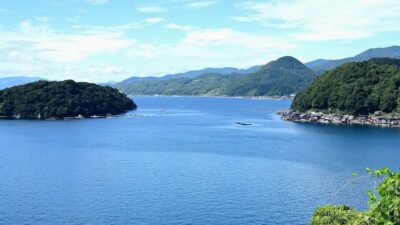
Kyoto Amanohashidate & Ine Funaya & Ine Bay Scenic Day Trip (Departing from Osaka or Kyoto)
Read our review →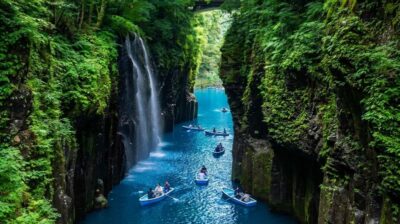
Kyushu: Mount Aso, Kusasenri & Takachiho Gorge Day Tour (Optional Takachiho Boat Ride Experience)
Read our review →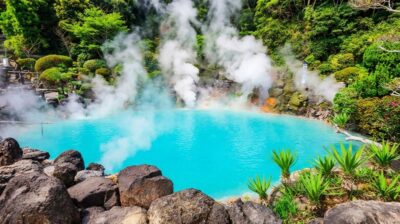
Kyushu One-Day Tour: Yufuin no Mori Train & Yufuin Town & Nyoirin-ji Temple & Dazaifu & Hell Hot Springs (Departing from Fukuoka)
Read our review →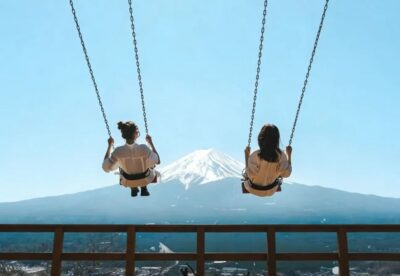
Browse the lists this tour appears in