
Reviewed · MOUNT FUJI TOURS
From Kawaguchiko: Mt. Fuji Private Tour with a Local Guide
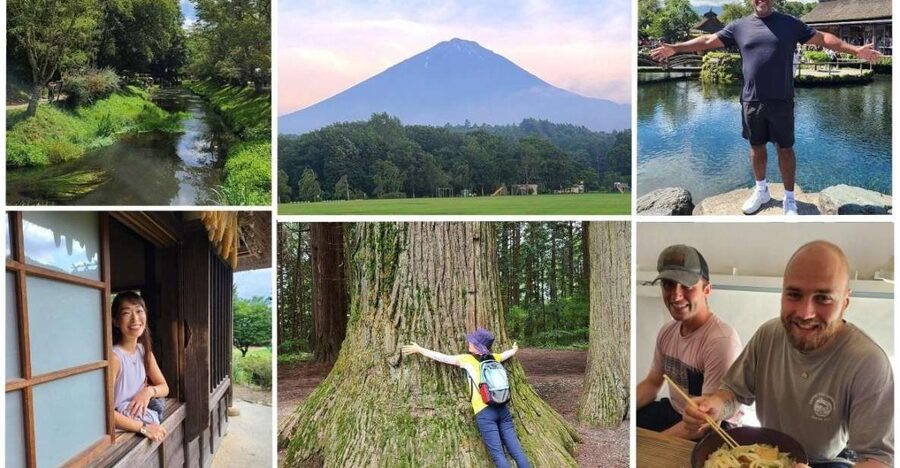
Fuji rewards flexible planning. This six-hour private tour with local guide Johnny gives you a far more personal way to explore Fujikawaguchiko than a fixed bus route, with room to adjust the day around cloud cover, crowds, your interests, and your energy. I especially like the weather-based planning and the chance to combine famous viewpoints with quiet shrines, forests, waterfalls, and local food stops. I also like that one guide handles pickup, driving, sightseeing, photographs, and practical advice.
The main consideration is time. The tour lists many possible places, but six hours is not enough to explore every stop properly. You and Johnny will need to choose. It also does not visit Mt. Fuji Fifth Station, so this is a tour of the lakes, towns, shrines, gardens, and nearby sights rather than a mountain road trip up Fuji.
In This Review
- Key points to know before booking
- Why a private day around Fuji makes sense
- Pickup in Kawaguchiko, Fujiyoshida, or Narusawa
- Lake Kawaguchi and the best early photo stops
- Gardens, textiles, and a waterfall in the forest
- Houtou Fudou and the taste of Yamanashi
- Oshino Hakkai, ponds, and traditional village life
- Arakura Fuji Sengen Shrine and the famous pagoda view
- Caves, lakes, and the western side of the region
- How much can you really see in six hours?
- The $387 group price and who gets good value
- Who should book this private Fuji tour?
- Should you book it?
- FAQ
- How long is the Mt. Fuji private tour?
- Where can pickup and drop-off take place?
- Does the tour visit Mt. Fuji Fifth Station?
- How many people can join the private group?
- Is food included in the tour price?
- Is the tour conducted in English?
Key points to know before booking
- Johnny adjusts the route to the weather: If Fuji appears through the clouds, the day can shift toward the best available viewpoints.
- You get a private vehicle and local pickup: Pickup is available at hotels and other locations in Fujiyoshida, Kawaguchiko, and Narusawa.
- The route mixes major sights with quieter places: Expect shrines, lakes, waterfalls, caves, gardens, markets, and Fuji viewpoints.
- The tour is priced per group: The $387 rate covers up to seven people, making it much better value for a family or small group than for one or two people.
- Food is extra: Set aside about 1,500 to 2,000 yen per person if you eat during the day.
- The tour is in English: Johnny is praised for his friendly manner, clear communication, local knowledge, and willingness to change plans.
Why a private day around Fuji makes sense
The Kawaguchiko area looks compact on a map, but its sights are spread around several lakes, villages, shrines, and forest roads. Public transport can get you to the main places, though moving between less-visited stops takes more planning and patience. A private car lets you cover more ground without repeatedly returning to a station.
I like the way this tour treats Mt. Fuji as part of a wider region rather than as a single photo stop. You may spend part of the day beside Lake Kawaguchi, then move to an old shrine, a waterfall, a traditional village, or a food market. That gives you a better feel for the area around the mountain.
The private format also suits families. Johnny has adjusted routes for children, added short walks, stopped for playground time, and checked regularly on comfort. He has even lent a heavier coat on a cold snowy day. Those small acts matter when you are managing different ages and energy levels.
You should also know that a private tour is not automatically better for everyone. If you want a strict, low-cost sightseeing schedule and do not care about adapting to conditions, a bus or public route may suit you. Here, you are paying for personal attention, transport, flexibility, and local judgment.
More Private Tours in Mount Fuji:
- Mt. Fuji Five Lakes Area Private Tour with Licensed Guide(Kawaguchiko area Dep)
★ 5.0 · 55 reviews - Tokyo 6hr Private Tour with Government-Licensed Guide
★ 5.0 · 3,902 reviews - Private Tour to Mt. Fuji and Hakone (Fully Licenced Operator)
★ 5.0 · 1,910 reviews
Pickup in Kawaguchiko, Fujiyoshida, or Narusawa
Pickup and drop-off are available within Fujikawaguchiko, Fujiyoshida, and Narusawa. Specific pickup options include Kawaguchiko Station, Mt. Fuji Station, Fuji Q Highland Station, and local hotels.
That arrangement is useful if you are staying outside the station area. It also avoids spending the first part of your morning figuring out local buses. One particularly helpful detail is that Johnny has accommodated a hotel change on the day of a tour, carrying luggage in the vehicle and dropping the group at its new hotel afterward.
Your starting time is not fixed in the information provided, so check availability when booking. It is worth discussing your priorities before the day begins. Tell Johnny if you care most about photography, shrines, gardens, local food, short walks, family stops, or quiet places. The more clearly you explain your interests, the more useful the flexible format becomes.
Lake Kawaguchi and the best early photo stops
Yagizaki Park is a gentle opening stop. You get a short photo break and a first look at the lakeside setting. It is not a long visit, but it helps you get oriented.
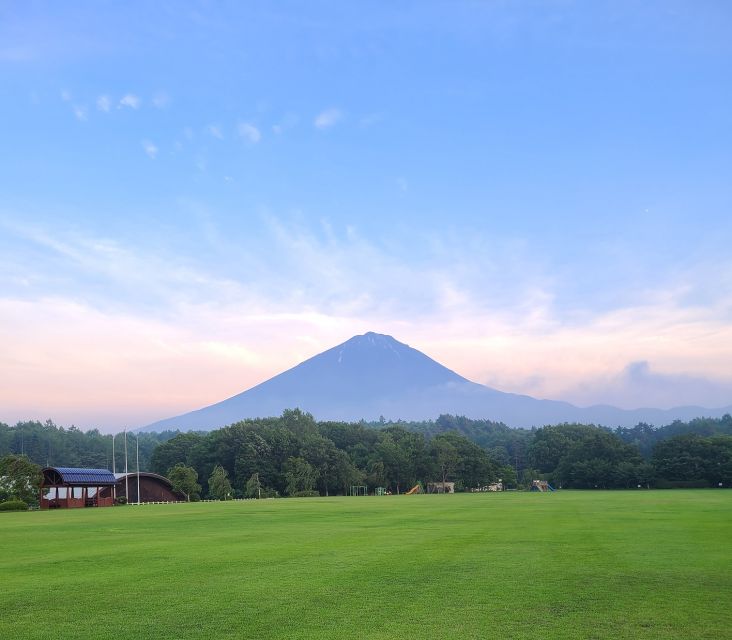
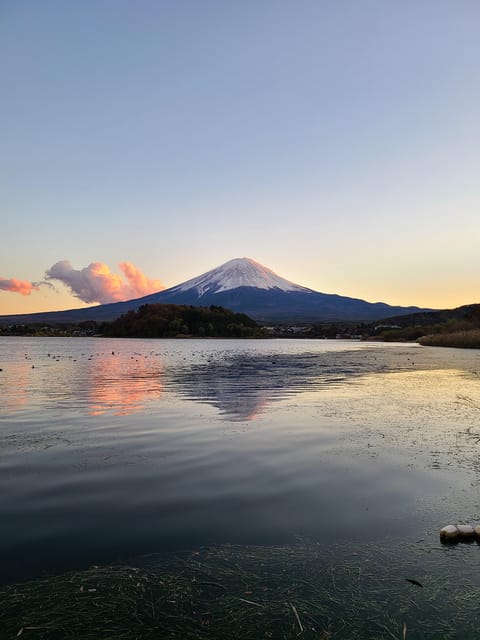
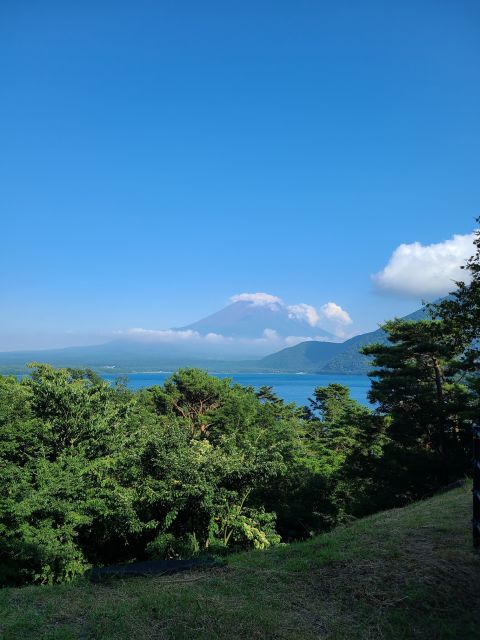
Lake Kawaguchi itself is used for photographs, scenic driving, and possibly sunset views. Conditions matter here. Fuji can be covered by cloud for much of the day and appear suddenly later, so a flexible route is more useful than a rigid promise of one perfect viewpoint.
Oishi Park allows about 20 minutes for photographs, free time, and shopping. It is one of the better-known stops, so it may feel busier than the quieter places on the route. Still, the open lake views and Fuji backdrop make it a sensible choice when visibility is good.
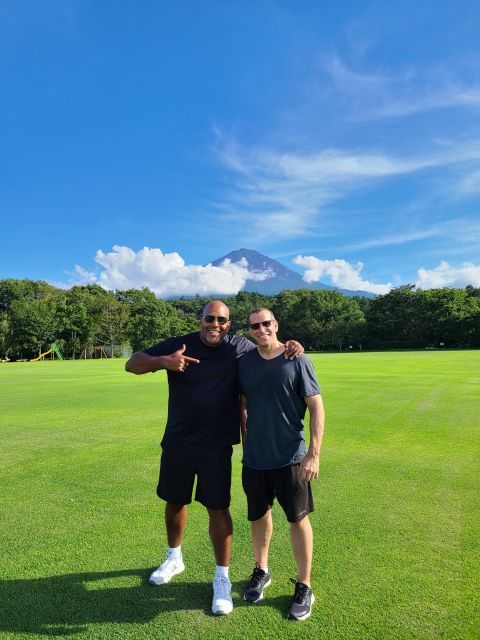
If photography is your main interest, tell Johnny early. A photography-focused visit in autumn can include locations chosen for Fuji and fall color. The guide can also take pictures for you, a practical benefit when you want a full family photograph rather than another arm’s-length selfie.
Gardens, textiles, and a waterfall in the forest
The Kubota Itchiku Art Museum is included as a short sightseeing stop, with scenic views along the way. Its appeal is the combination of Japanese garden design and elaborate kimono art. You may want more than the suggested 20 minutes if the textiles are a major reason for visiting, so discuss that before setting the route.
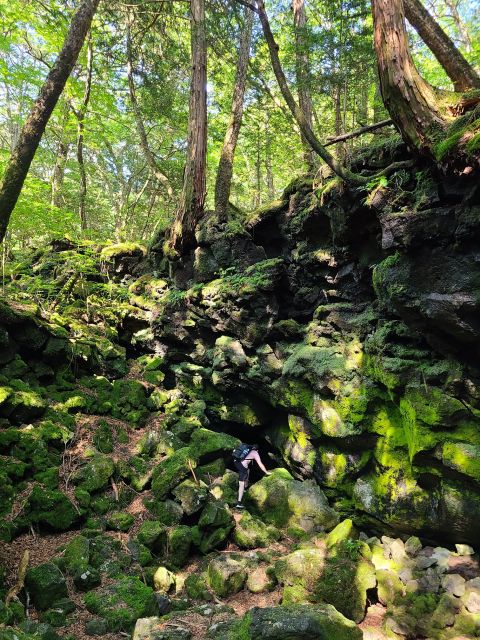
Haha-no-Shirataki Waterfall offers a different mood. The stop includes a walk and views through a wooded setting. It is a good choice if you want a little nature and a break from lakeside photo points. The visit is brief, so think of it as a short walk rather than a long forest outing.
Kawaguchi Asama Shrine adds religious and cultural context. You can walk among the shrine grounds and learn about the local connection between Mt. Fuji, shrine worship, and regional traditions. The route also includes Kitaguchi-hongu Fuji Sengen Shrine, one of the more important shrine visits in the area.
These shrine stops are valuable because they shift the focus away from scenic snapshots. You are not only looking at Fuji. You are also seeing places tied to worship, mountain mythology, local festivals, and the long tradition of approaching the mountain as a sacred site.
A few more options to weigh up in Mount Fuji
- Mt. Fuji Instagram-Worthy Spots Day Tour: Ladder Town, Oshino Hakkai, Lake Kawaguchi, Lawson Convenience Store (Departing from Tokyo Station or Shinjuku Station)
★ 4.8 · 35,467 reviews - 【Mount Fuji Magnificent Scenery Exploration Day Tour】Arakurayama Sengen Park & Kawaguchiko Oishi Park & Oshino Hakkai & INS Famous Lawson & Hikawa Clock Shop (Departing from Tokyo)
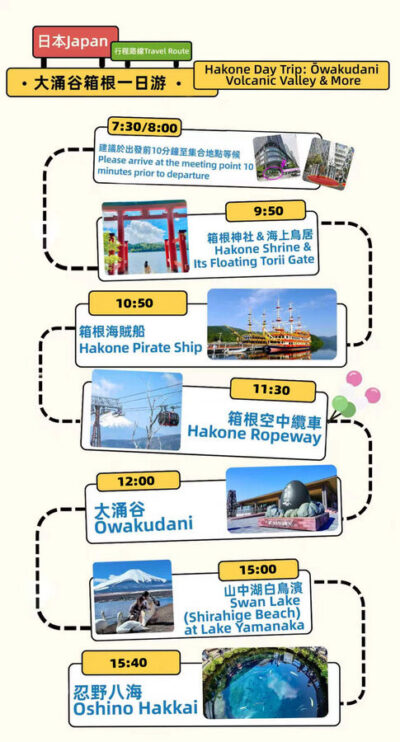
★ 4.9 · 12,075 reviews - Mount Fuji & Hakone – Lake Ashi Torii Gate, Hakone Shrine, Hakone Pirate Ship, Hakone Ropeway, Owakudani, Lake Yamanaka & Oshino Hakkai Day Trip: Sea, Land, and Air Panoramic Tour from Tokyo
★ 4.8 · 7,989 reviews - Mount Fuji Day Trip: Includes Kawaguchiko Tenjozan Park Ropeway Ticket & Arakurayama Sengen Park & Nichikawa Clock Shop & Lawson Convenience Store & Oishi Park (Departing from Tokyo)
★ 4.8 · 4,041 reviews
Houtou Fudou and the taste of Yamanashi
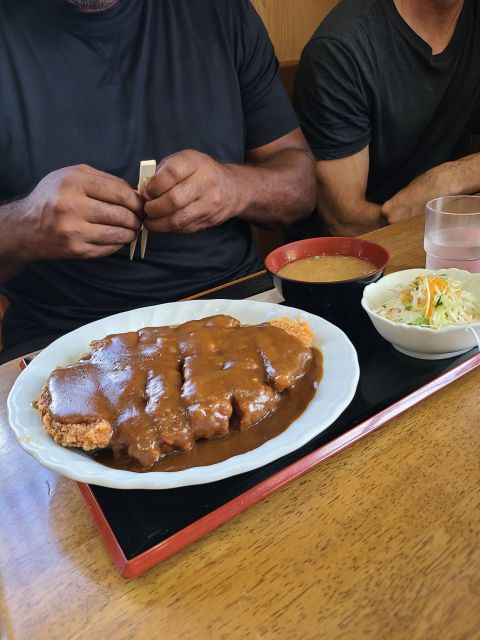
The 35-minute break at Houtou Fudou is the clearest planned meal stop. Houtou is a local specialty, a thick noodle dish served in miso broth, and it makes sense here because the region is known for this hearty style of food.
Food and drinks are not included. If you eat during the tour, budget about 1,500 to 2,000 yen per person, roughly $10 to $17. That is a useful allowance for a regional lunch, though your actual spending depends on what you order.
Johnny’s food advice is one of the strongest reasons to choose a local guide. He has recommended ramen, regional noodles, fruit, dinner restaurants, and local produce. One family particularly enjoyed buying grapes and peaches at a fruit stand in his home village. You can ask for a dinner recommendation too, and he has helped with restaurant bookings.
Do not expect a food tour. The main purpose is sightseeing, and the meal break is limited. But a local recommendation can save you from eating near the station simply because it is convenient.
Oshino Hakkai, ponds, and traditional village life

Oshino Hakkai receives around 35 minutes and offers photographs, shopping, food stalls, and scenic views. Its clear ponds and traditional setting make it one of the most rewarding stops for a first visit to the Fuji area.
The short timing means you will need to keep moving. If you want to browse every stall or eat slowly, Oshino Hakkai could easily take longer than planned. I would treat the stop as a sampler unless it is one of your top priorities.
The area also works well for families. One suggested route included feeding ducks at Fuji ponds, sampling snacks, and enjoying time outdoors. Those simple activities can make the day more engaging for children who are less interested in shrine architecture.
The Fujisan Museum offers another brief stop, with local information and scenic views along the route. It can help place the mountain and surrounding area in context, especially if you want more than photographs. Again, six hours requires choices, so ask Johnny how much time is sensible for your interests.
Arakura Fuji Sengen Shrine and the famous pagoda view
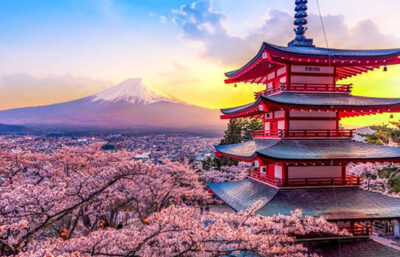
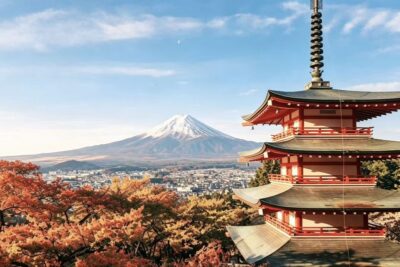
Arakura Fuji Sengen Shrine is allowed about 35 minutes and includes walking and scenic views. This is the stop associated with the familiar Chureito Pagoda and Fuji view, one of the most recognizable images from Japan.
The view can be spectacular in clear weather, but this is also a well-known photo location. It may be busier than a smaller shrine or roadside viewpoint. The private tour helps because Johnny can adjust the order or spend time elsewhere if clouds or crowds make the view less worthwhile at that moment.
You should be ready for walking at this stop. The details provided do not specify the exact number of steps or walking conditions, so ask before the tour if mobility is a concern. The same practical point applies to the shrine walks, waterfall, cave, and village stops.
Caves, lakes, and the western side of the region
The Dragon Cave is a short scenic stop, with about 15 minutes listed. The tour can also include forest caves and short walks depending on the route selected and the day’s conditions. These places add a sense of adventure that you will not get from a standard lake circuit.
Saiko Iyashi-no-Sato Nenba is a reconstructed traditional village area near Lake Saiko. You can walk through the site and take a self-guided look at its buildings and mountain setting. It is a useful choice if you want traditional architecture and a slower rural feel.
Lake Motosu is the most distant option listed, with about 30 minutes for scenic driving and photographs. It can be a fine choice for open views and a quieter lake atmosphere, but including it means giving up time at some Kawaguchiko stops. You should not expect to visit every lake in one six-hour outing.
The route also lists Hard Off as a 15-minute visit or pass-by. This is an unusual addition, but it may appeal if you enjoy Japanese secondhand stores, local shopping, or browsing ordinary places rather than only formal attractions. It is easy to skip if that is not your interest.
How much can you really see in six hours?
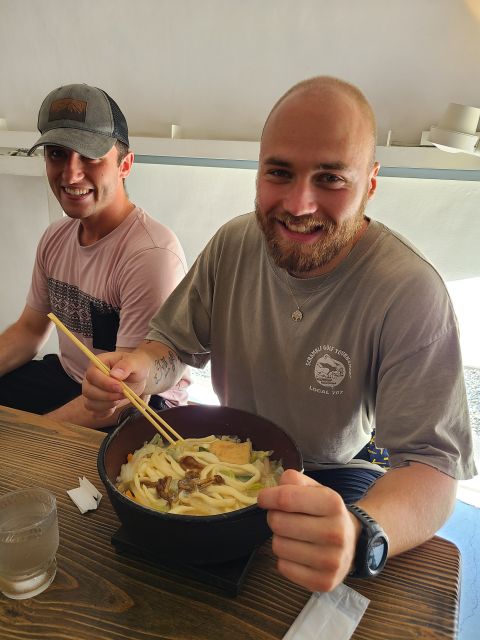
The full list contains far more stops than any sensible six-hour visit can cover in depth. The times shown beside the attractions add up to much more than six hours even before driving is counted. I would read the list as a menu of possible places, not a promise that every one will be visited.
That is not a flaw if you use the format properly. The strength of the day is choosing perhaps eight or nine stops that fit your interests and the weather. One family reached about nine places and still had time for walks, children’s activities, food, and photo stops.
The order can change during the day. On a cloudy morning, Johnny may focus on shrines, gardens, museums, waterfalls, or food. If Fuji appears later, he can move toward an open viewpoint. Several families appreciated this ability to change plans when rain, snow, typhoon conditions, or cloud cover affected visibility.
Rain does not automatically ruin the outing. The route can still include cultural sites, local food, waterfalls, forests, and lesser-known places. One group had heavy rain and no Fuji view for much of the day but still reached the main sights they wanted. That is a useful reminder to judge the tour by more than one mountain photograph.
The $387 group price and who gets good value
The cost is $387 per group of up to seven people. For a full group, that works out to about $55 per person before food. For four people, it is about $97 each. For two people, it is about $194 each, so the value depends heavily on group size.
That price includes private transport, hotel pickup and drop-off, and an English-speaking local guide. You are not paying only to be driven between viewpoints. You are paying for route changes, explanations, photography help, food suggestions, and the convenience of a private vehicle.
I think the price makes the most sense for families, two couples, or groups of friends who would otherwise need several taxis or a complex mix of buses. Solo visitors and couples should compare the cost with their desire for privacy and flexibility.
The tour has a perfect five-star rating from 35 reviews, and 96 percent of ratings for transport are perfect. Those figures support the idea that the service is especially strong in friendliness, comfort, adaptability, and local advice. They do not guarantee clear Fuji weather, so keep your expectations realistic.
Who should book this private Fuji tour?
I would choose it if you are staying in the Kawaguchiko area and want to see more than the standard station and lake circuit. It is especially suitable for:
- Families needing flexible stops and a private vehicle
- Small groups that can share the $387 cost
- Photographers who want different Fuji viewpoints
- People interested in shrines, gardens, local food, and rural sights
- Visitors who dislike fixed bus schedules and large groups
- Anyone visiting during uncertain weather
I would think twice if your only goal is reaching Fifth Station. This tour does not go there. I would also reconsider if you want long museum visits, a slow lunch, or enough time at every attraction. Six hours is best used as a focused sampler.
Before booking, prepare a short wish list rather than demanding the entire route. Pick your top three priorities, then let Johnny fit in other stops around them. That approach gives you the best chance of a relaxed, useful day.
Should you book it?
Book this tour if you value a personal route more than a fixed checklist. Johnny’s strongest qualities are his friendly English communication, attention to comfort, local food advice, and ability to change the plan when Fuji hides behind clouds. The tour also gives you a way to see shrines, villages, waterfalls, lakes, gardens, and caves that are harder to combine on your own.
Skip it if you need Fifth Station, a rock-bottom price for one or two people, or a tightly fixed schedule with long visits at only a few places. For a family or small group based in Kawaguchiko, though, the private format offers a practical way to make the most of a region where weather and distance can quickly complicate a day.
FAQ
How long is the Mt. Fuji private tour?
The tour lasts six hours. Starting times depend on availability, so check the available options when booking.
Where can pickup and drop-off take place?
Pickup is available from hotels and other locations within Fujiyoshida, Kawaguchiko, and Narusawa. Listed pickup points include Kawaguchiko Station, Mt. Fuji Station, and Fuji Q Highland Station. Drop-off is available in Fujiyoshida, Kawaguchiko, and Narusawa.
Does the tour visit Mt. Fuji Fifth Station?
No. Mt. Fuji Fifth Station is not included in this tour.
How many people can join the private group?
The price covers a private group of up to seven people.
Is food included in the tour price?
No. Food and drinks are extra. If you eat during the tour, the suggested daily food budget is about 1,500 to 2,000 yen per person.
Is the tour conducted in English?
Yes. The tour includes a live English-speaking local guide.
Just added in Mount Fuji
- Mount Fuji Six Scenic Spots One-Day Tour: Arakurayama Sengen Park, Hikawa Clock Shop, Oshino Hakkai, Lake Kawaguchiko, Lawson Convenience Store, Lake Yamanakako Swan Feeding (Departing from Tokyo/Shinjuku)★ 4.9 · 3,880 reviews
- Mount Fuji Day Trip: Includes Kawaguchiko Tenjozan Park Ropeway Ticket & Arakurayama Sengen Park & Nichikawa Clock Shop & Lawson Convenience Store & Oishi Park (Departing from Tokyo)★ 4.8 · 4,041 reviews
- Mount Fuji & Hakone – Lake Ashi Torii Gate, Hakone Shrine, Hakone Pirate Ship, Hakone Ropeway, Owakudani, Lake Yamanaka & Oshino Hakkai Day Trip: Sea, Land, and Air Panoramic Tour from Tokyo★ 4.8 · 7,989 reviews
- 【Mount Fuji Magnificent Scenery Exploration Day Tour】Arakurayama Sengen Park & Kawaguchiko Oishi Park & Oshino Hakkai & INS Famous Lawson & Hikawa Clock Shop (Departing from Tokyo)★ 4.9 · 12,075 reviews
- Mount Fuji Full-Day Small Group driver-guide tour (with Pick-up option)★ 4.8 · 715 reviews
- Fuji-Q Highland Ticket★ 4.6 · 3,474 reviews
- Mt. Fuji Instagram-Worthy Spots Day Tour: Ladder Town, Oshino Hakkai, Lake Kawaguchi, Lawson Convenience Store (Departing from Tokyo Station or Shinjuku Station)★ 4.8 · 35,467 reviews
- Private Fuji Full-day Car Tour with Hotel Pickup -Local Guide★ 5.0 · 12 reviews
Mount Fuji Tours, compared.

Mt. Fuji 5th Station & Hakone Cruise 1-Day Bus Tour
Read our review →
Mount Fuji Full-Day Small Group driver-guide tour (with Pick-up option)
Read our review →Browse the lists this tour appears in