
Reviewed · PRIVATE TOURS IN TOKYO
Tokyo 6hr Private Tour with Government-Licensed Guide
Tokyo rewards a plan, but not a rigid one. This private six-hour tour pairs a government-licensed English-speaking guide with a flexible route through the city’s old neighborhoods, royal center, gardens, shrines, markets, and modern districts. I like the personal format and the chance to shape the day around your interests. I also like that guides can teach you how to use Tokyo’s trains and subway, not just point at famous buildings. The main catch is simple: six hours is not enough for the long menu of possible stops, and a large share of the day may go to walking and public transportation.
This costs $155.86 per person, with group discounts available. That can be fair value for a family or small group that wants a private guide, especially on a first day in Tokyo. You pay extra for trains, food, and most entrance fees, so the final cost will be higher than the headline price.
In This Review
- Key things to know before booking
- Why a private guide helps in Tokyo
- Building a realistic six-hour route
- Asakusa and Senso-ji: Tokyo’s old downtown
- Imperial Palace: royal history without palace interiors
- Shinjuku Gyoen and Tokyo’s garden escapes
- Shibuya, Harajuku, and Yoyogi Park
- Tsukiji Fish Market for food and local color
- Akihabara and Tokyo’s specialized neighborhoods
- Ueno, Nezu, Shibamata, and Odaiba
- Tokyo Tower and the challenge of city scale
- Walking, trains, and the real pace of the day
- Price, group size, and what you actually receive
- Who should book this Tokyo tour
- Should you book it?
- FAQ
- How long is the Tokyo private tour?
- Is this a private tour?
- How many sights will I visit?
- Is hotel pickup included?
- Are transportation fees included?
- Are meals included?
- Does the tour enter the Imperial Palace?
- Is Tokyo Tower’s top deck included?
- Can I cancel for a full refund?
Key things to know before booking
- You choose three or four sights: The long list of possible places is a menu, not a promise to visit them all.
- The day is built around trains and walking: No private vehicle is included, and transport costs are yours.
- Your guide can shape the route: Guides have tailored days for food lovers, families, architecture fans, first-time visitors, and repeat visitors.
- Tokyo’s old and new sides fit into one day: Asakusa, Meiji Shrine, Shibuya, Harajuku, the Imperial Palace, and Tsukiji offer very different settings.
- Good guides teach useful skills: Several guides helped people understand shrine customs, train routes, and getting back to their hotels.
- The tour is private: Only your group participates, so you avoid the pace and fixed route of a large group outing.
Why a private guide helps in Tokyo
Tokyo is not hard because every sight is far away. It is hard because the city is made of many separate centers, each with its own mood and transport links. Asakusa feels tied to old Tokyo, Shibuya is all movement and screens, Harajuku mixes youth fashion with a major shrine, and Ueno combines museums, gardens, and temples.
A private guide gives you a local person to connect those pieces. You can ask why a shrine is important, how to behave at a temple, which neighborhood suits your evening plans, or how to use the rail system after the tour ends. Guides such as An, Koba, Taichi, Sho, Taku, and Yusuke received especially warm praise for explaining culture, adjusting plans, and helping people get around.
The best value comes when you tell the guide what you want before the start. One family mixed a middle school student’s interests with the adults’ plans. Another group focused on architecture. Others wanted food, old Tokyo, or a broad first look at the city.
This is not a sightseeing conveyor belt. It is also not a private car tour. You will walk, find stations, ride trains, and handle your own fares. That makes the day more active, but it also gives you a useful lesson in moving through Tokyo.
More Private Tours in Tokyo
- Private Tour to Mt. Fuji and Hakone (Fully Licenced Operator)
★ 5.0 · 1,910 reviews - Tokyo Customized Private Tour (Must See Places in 1 Day)
★ 5.0 · 1,499 reviews - Mount Fuji Full-Day Private Tour from Tokyo (Customizable)
★ 4.9 · 1,470 reviews
Building a realistic six-hour route
The experience offers a large selection of possible sights, but the included service is a customizable walking tour of three or four sites. That distinction matters. You cannot sensibly visit all 20 places in six hours, especially if you want explanations and time to look around.
A good route keeps stops in the same part of town or connects them with simple train rides. A day that jumps from western Tokyo to the far east and back can spend two hours or more in stations and on trains. One unhappy customer had a route that included Haneda Airport, which made transport time especially heavy.
I would ask the guide to create a compact route based on your top two priorities. Then add one or two nearby stops. If food matters most, pair Tsukiji with Ginza or Hamarikyu Gardens. For traditional Tokyo, choose Asakusa and perhaps Ueno. For a first-day overview, Meiji Shrine, Harajuku, and Shibuya work well together.
Asakusa and Senso-ji: Tokyo’s old downtown
Asakusa is one of the strongest choices for a first visit. It preserves the feel of shitamachi, or old low-city Tokyo, with Senso-ji Temple as its centerpiece. The temple is colorful, popular, and easy to combine with the surrounding streets.
A guide can explain the difference between a Buddhist temple and a Shinto shrine, show you how to approach each one, and explain the customs for paying respects. One guide even gave visitors coins to use at shrines, a small kindness that made the rituals less awkward.
The usual stop here is about an hour, which is far more useful than a five-minute photo pause. You can see the temple grounds and get a sense of Asakusa’s older character. The drawback is that this area can be crowded, especially around the main temple approach, so it may not feel quiet or reflective.
Imperial Palace: royal history without palace interiors
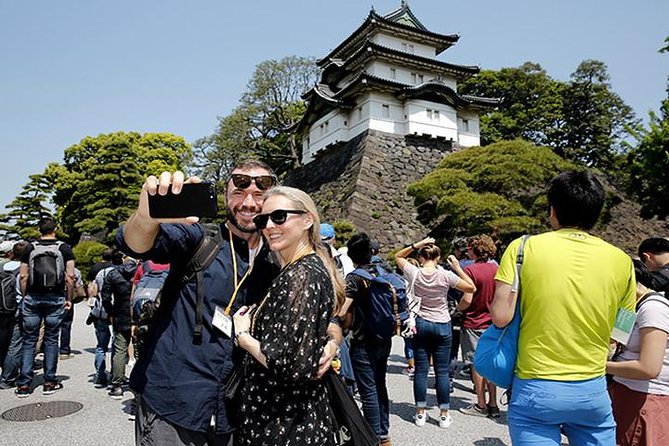
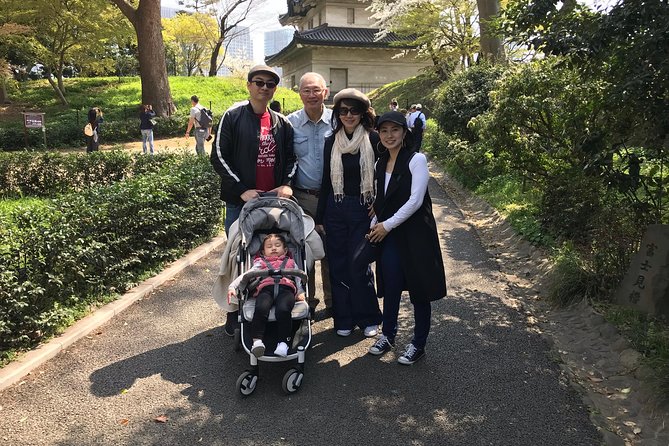
The Imperial Palace occupies the former site of Edo Castle, the seat of the Tokugawa shoguns. The grounds feature moats, large stone walls, and open park areas in central Tokyo. A guide adds context to what can otherwise look like a series of walls and lawns.
Plan on about 30 minutes here unless your chosen route includes a garden or longer walk. The important limitation is that this tour does not include access inside the Imperial Palace. You are seeing the exterior grounds and surrounding areas, not touring royal rooms.
That makes the palace a good choice for visitors interested in Japanese government and history, but perhaps less useful if you mainly want gardens or indoor attractions. Confirm which part of the grounds your guide plans to visit.
A completely different kind of day out:
- Tokyo Disney Resort – Tokyo Disneyland & Tokyo DisneySea Park Tickets
★ 4.8 · 99,488 reviews - SHIBUYA SKY Ticket
★ 4.7 · 46,509 reviews - JR Whole Japan Rail Pass
★ 4.8 · 29,150 reviews - Mt Fuji and Hakone 1-Day Bus Tour Return by Bullet Train
★ 5.0 · 26,383 reviews
Shinjuku Gyoen and Tokyo’s garden escapes
Shinjuku Gyoen offers a needed pause from the city’s hard edges. Its lawns, paths, and quiet scenery make it one of the most pleasant green spaces in central Tokyo. I would choose it for a slower day, a family outing, or anyone who needs a break from stations and crowds.
The suggested time can be as little as five minutes, which is not enough to appreciate the garden. Entrance costs extra. If you want to walk, take photographs, or sit for a while, make this one of your main three or four stops rather than a quick add-on.
Koishikawa Korakuen and Rikugien offer another look at traditional Japanese gardening. Koishikawa Korakuen was created in the early Edo period for the Mito branch of the ruling Tokugawa family. Rikugien was built around 1700 for the fifth Tokugawa shogun and takes its name from the six principles of poetry.
Both gardens require extra admission and deserve more than the five-minute sample allocation. They are poor choices if your goal is to cover several famous districts in one day, but excellent choices if you prefer calm paths and careful garden design.
Hama Rikyu Gardens sit beside Tokyo Bay and include seawater ponds that change with the tides, along with a teahouse. They pair well with Tsukiji because both are in the same general area. Again, entrance is extra, and five minutes would barely get you through the gate.
Shibuya, Harajuku, and Yoyogi Park
Shibuya Crossing, also called Shibuya Scramble, gives you one of Tokyo’s defining modern scenes. People stream across from every direction, while the Hachiko statue nearby recalls the famous loyal dog. It is a quick stop, but it captures Tokyo’s scale and energy better than many long museum visits.
Harajuku offers a different kind of spectacle. Takeshita Street is associated with youth fashion and teenage culture, while the surrounding area includes older and more traditional sights. Yoyogi Park, with broad lawns, ponds, and wooded areas, sits nearby and gives you room to breathe.
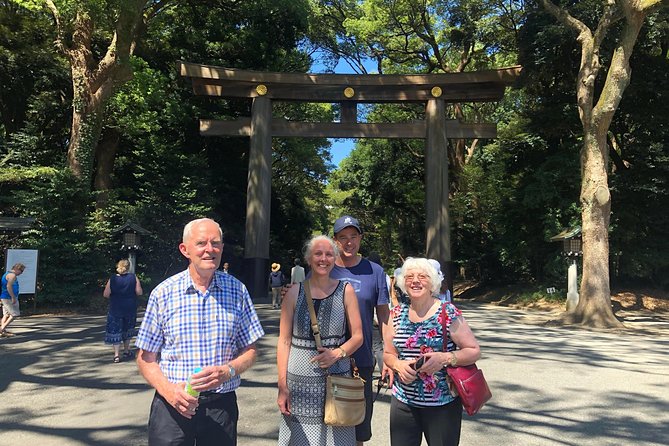
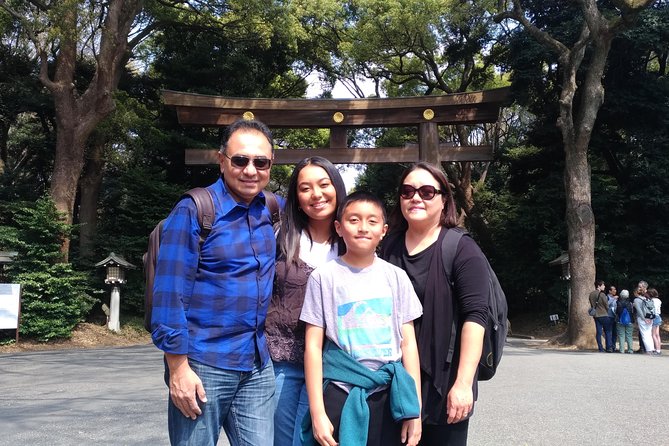
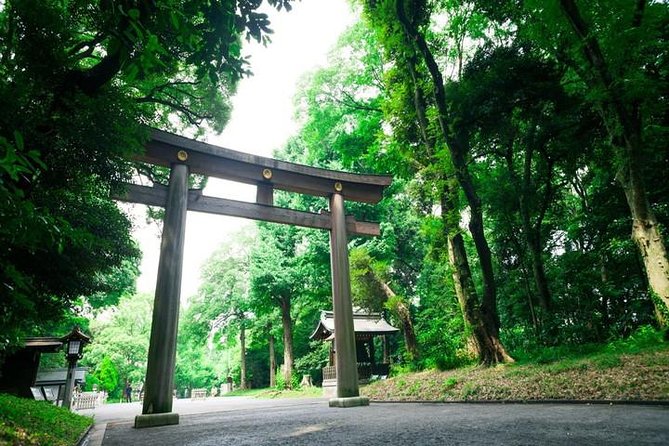
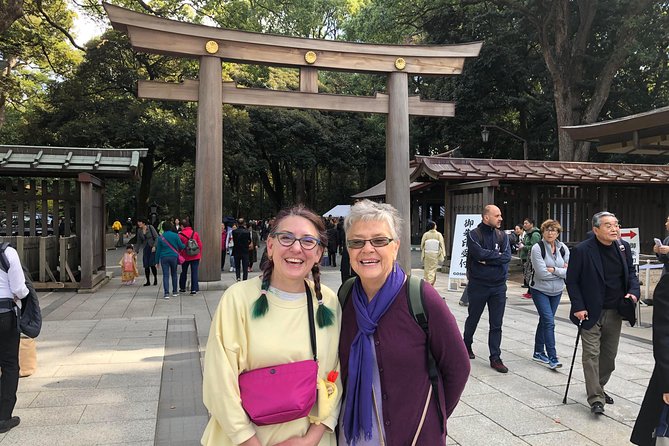
Meiji Jingu Shrine is the cultural anchor of this group. Dedicated to the deified spirits of Emperor Meiji and Empress Shoken, it sits beside busy Harajuku Station but feels removed from the traffic once you enter the grounds. Guides can explain shrine manners and the meaning of what you see.
These three areas make a smart route, but you need to decide what matters most. A quick Shibuya photo, a walk along Takeshita Street, and a proper visit to Meiji Shrine can fill much of the six hours. Adding Yoyogi Park may make the day more relaxed, but it reduces time elsewhere.
Tsukiji Fish Market for food and local color
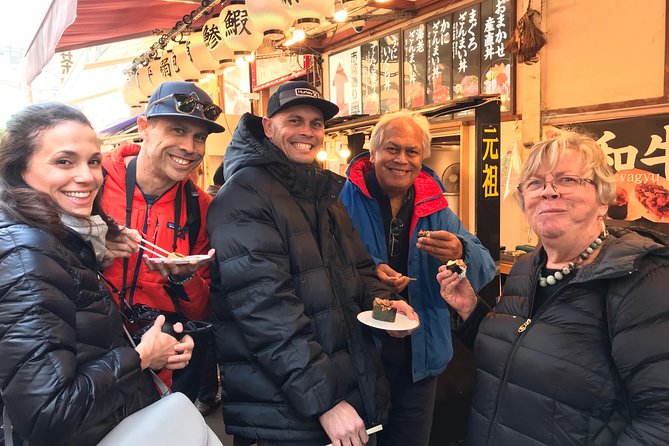
Tsukiji is the old fish market area and a natural choice for anyone who plans a Tokyo day around eating. The streets offer food shops and specialty products, and your guide may help you choose a place to eat. One guide arranged sushi and another found a local restaurant for lunch, while a different group enjoyed sushi, sake, and other market foods.
Food and lunch are not included, so budget separately. You should also tell the guide about allergies, dietary restrictions, or foods you want to try before the tour. The market can become a rushed stop if the route includes too many distant neighborhoods. One visitor specifically wished for less rushing and more time to enjoy the market.
I would choose Tsukiji as a main stop, not as something squeezed between faraway attractions. Thirty minutes is enough for a look, but not for a relaxed meal and browsing.
Akihabara and Tokyo’s specialized neighborhoods
Akihabara is known for electronics shops and, in more recent years, anime, manga, and gaming culture. It makes sense for visitors with a clear interest in those subjects. It is less useful as a five-minute photo stop because the district’s appeal comes from browsing and seeing how its shops fit together.
Golden Gai in Shinjuku has a different character. Its very small eating and drinking establishments grew from postwar black-market roots around 1950. The lanes are atmospheric, but a five-minute visit only gives you a glimpse. It is better suited to an evening plan, when you can return independently and spend time there.
Gotokuji Temple is associated with the maneki-neko, the raised-paw cat figurines often linked with good fortune. It is a distinctive choice for visitors who want something beyond the standard first-time route. The suggested visit is about ten minutes, and admission is free.
Ueno, Nezu, Shibamata, and Odaiba
Ueno Park brings several attractions together, including museums, a zoo, Toshogu Shrine, and Shinobazu Pond. It is also a major cherry blossom gathering place. Since the park contains so much, five minutes will not do it justice. Choose it if you want one museum, a temple, or a walk around the pond, not simply a quick pass-through.
Nezu, along with nearby Yanaka, preserves parts of old downtown Tokyo that escaped major damage from wars and natural disasters. This area suits repeat visitors and anyone who wants a quieter, less polished side of the capital. It is a better pick for local atmosphere than for a checklist of famous landmarks.
Shibamata sits toward eastern Tokyo near the Edogawa River. Its old-style character makes it another good choice for repeat visitors, but its distance may make it awkward alongside western districts.
Odaiba is a shopping and entertainment area on a man-made island in Tokyo Bay. It began as a group of defensive fort islands. The district is spread out, so a five-minute stop gives you only the briefest look.
Tokyo Tower and the challenge of city scale
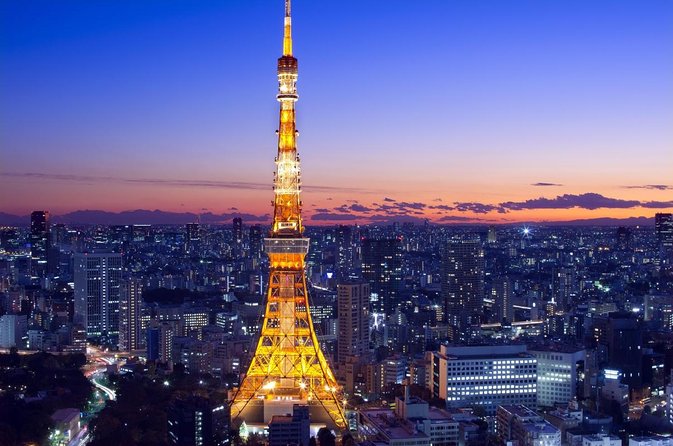
Tokyo Tower is the retro red landmark that has appeared in generations of Tokyo scenes and anime. The tour includes access only up to the main deck, and the top deck is not included. Admission is extra.
The tower is a strong choice if you want a city view or a classic photograph. It is not a smart addition to a route already packed with Asakusa, Shibuya, and Tsukiji unless you accept less time at each place. Tokyo’s size is the tour’s central problem: every added district has a transport cost in time, even when the train ride itself is efficient.
Walking, trains, and the real pace of the day
Bring comfortable shoes. The tour is described as a walking experience, with pickup on foot within a designated area of Tokyo. You may use trains or buses between districts, and fares are not included.
Have yen available for transportation, and prepare to spend part of the day finding platforms, changing lines, and walking through large stations. That is not wasted time if your guide teaches you how the system works. Several guides helped visitors use the rail network, buy or manage train tickets, and return to their hotels.
Still, the pace varies with the route. One group walked and used many trains in six hours. Another found that too much time went into public transport. The best protection is to agree on a compact plan before setting out and to say clearly if you prefer fewer sights with more time at each.
Price, group size, and what you actually receive
At $155.86 per person, the tour is easiest to justify for a private group that values personal attention. Families can shape the day around different ages, couples can focus on food or culture, and repeat visitors can skip the basic sights. The private format also means you can ask questions freely and change emphasis as the day develops.
The price does not cover a private vehicle, transport, lunch, personal expenses, or most entrance fees. The guide’s admission is covered only for sights listed under the tour’s recommended places. If you visit a paid garden, museum, or observation deck, expect to pay your own admission.
You are paying mainly for planning, explanation, local help, and time saved. You are not paying for luxury transport or a long list of included tickets. For some people, learning the subway and shrine customs is worth the cost. For others, especially confident independent visitors, the price may feel high when two or three hours are spent moving between areas.
Who should book this Tokyo tour
I would recommend it most strongly to first-time visitors, families, people with limited time, and anyone nervous about Tokyo’s rail system. It also suits repeat visitors who give the guide a clear theme, such as old neighborhoods, architecture, gardens, food, or anime culture.
It may not suit you if you want a slow museum day, a private car, or entry to the Imperial Palace interior. It is also a poor match if you want to visit every famous district in one day. Tokyo will not cooperate with that plan, and neither will the clock.
The guide matters greatly. The strongest experiences came from guides who contacted people beforehand, used maps or visual aids, explained history in clear English, adjusted the route, and helped with practical tasks. Names praised for these strengths include An, Taichi, Sho, Koba, Taku, Fumiko, Masa, Tachi, Yusuke, and Shigeru. Your guide may be different, so share your priorities early.
Cancellation is free up to 24 hours before the start time. Changes or cancellations inside that window are not accepted for a refund. Service animals are allowed, most people can participate, and the tour is near public transportation.
Should you book it?
Book this tour if you want Tokyo explained by a local person and you value a private, adjustable day more than a fixed sightseeing list. Make the most of it by selecting three or four nearby sights, carrying yen for transport and food, wearing good shoes, and asking your guide to teach you the train system.
Skip it if you are comfortable planning Tokyo on your own and dislike paying extra for transport and admissions. The tour’s real strength is not speed. It is the human help: understanding what you are seeing, learning how to behave at shrines and temples, and leaving with enough confidence to explore the city independently.
FAQ
How long is the Tokyo private tour?
The tour lasts approximately six hours.
Is this a private tour?
Yes. Only your group participates, and you cannot combine multiple tour groups.
How many sights will I visit?
The included service is a customizable tour of three or four sites chosen from the recommended places.
Is hotel pickup included?
Pickup is offered on foot within a designated area of Tokyo. This is a walking tour, not a private vehicle pickup service.
Are transportation fees included?
No. Transportation fees are not included, so you should have yen available for trains or buses.
Are meals included?
No. Lunch and other personal expenses cost extra.
Does the tour enter the Imperial Palace?
No. The tour does not include access inside the Imperial Palace.
Is Tokyo Tower’s top deck included?
No. Access is included only up to the main deck, and admission costs extra.
Can I cancel for a full refund?
Yes, if you cancel at least 24 hours before the experience start time. Cancellations made less than 24 hours in advance are not refunded.
Just added in Tokyo
- MT. FUJI/ Private Tour delivered and guided by a top-tier driver★ 5.0 · 27 reviews
- Mt fuji & Hakone customizable day tour w/ English speaking driver★ 5.0 · 45 reviews
- Fuji Speedway Self Drive & Mt. Fuji Private Tour pickup & dropoff★ 5.0 · 14 reviews
- Mt.Fuji Trekking 1 Day Tour up to the summit★ 5.0 · 14 reviews
- Customisable Mt.Fuji Private Day Trip, English Speaking Driver★ 5.0 · 22 reviews
- Seasonal Mt. Fuji Scenic Views, Fruit Picking and Ropeway Ride!★ 4.5 · 35 reviews
- Private Mt Fuji Tour from Tokyo: Scenic BBQ and Hidden Gems★ 5.0 · 146 reviews
- Private Mount Fuji Tour in Luxury Vehicle with English Guide★ 4.5 · 39 reviews
Private Tours in Tokyo, compared.
Private Tour to Mt. Fuji and Hakone (Fully Licenced Operator)
Read our review →
Tokyo Customized Private Tour (Must See Places in 1 Day)
Read our review →
Mount Fuji Full-Day Private Tour from Tokyo (Customizable)
Read our review →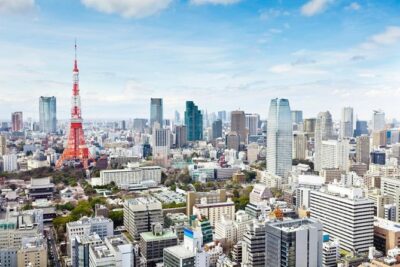
Tokyo 4hr Private Tour with Government-Licensed Guide
Read our review →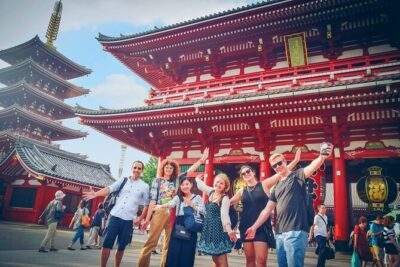
Tokyo Customized Private Tour: See Top Attractions in 1 Day
Read our review →
Mt Fuji Private Tour with English Speaking Driver
Read our review →
Mt. Fuji & Hakone Private Day Tour with English-Speaking Driver
Read our review →
Tokyo Private Day Trip – Enjoy Your First-Time Visit to Tokyo!
Read our review →Browse the lists this tour appears in