
Reviewed · ENTRY TICKETS
JR Whole Japan Rail Pass
Japan’s rail network makes it possible to link Tokyo, Kyoto, Osaka, Hiroshima, and far-flung regions without buying a ticket for every leg. The JR Whole Japan Rail Pass turns those long-distance journeys into one plan: choose 7, 14, or 21 consecutive days, then ride eligible JR services as often as you like.
I like two things most: the freedom to change plans without pricing every JR ride, and free seat reservations on eligible trains after you exchange the pass. The catch is cost: at from $334.79, it is not automatically a bargain, especially if your trip stays in one region or relies heavily on subways.
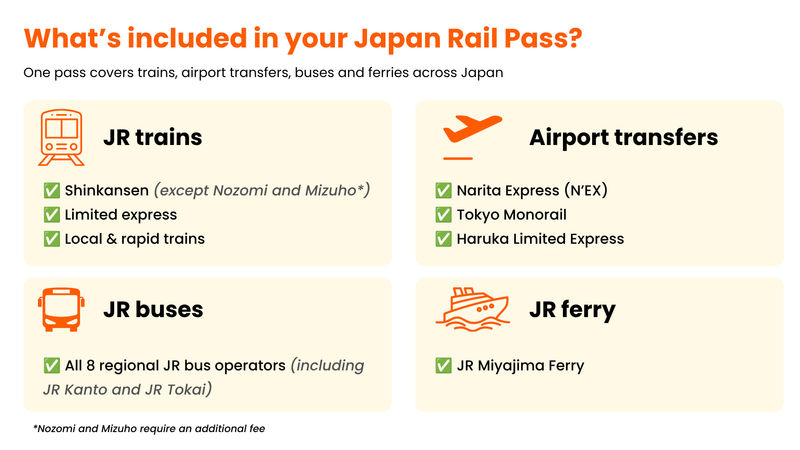
- Nationwide JR access: Ride most JR local, rapid, limited express, and Shinkansen services, with exceptions.
- Three pass lengths: Choose 7, 14, or 21 consecutive days, and set the start date when exchanging your order.
- Airport links included: Eligible routes include the Narita Express, Tokyo Monorail, and Kansai Airport’s Haruka Limited Express.
- Reservations cost nothing extra: Book eligible reserved seats at a JR ticket office or reserved-seat machine after redeeming the pass.
- Not a universal transit card: Tokyo and other cities’ subways, many non-JR lines, and Nozomi and Mizuho Shinkansen are not covered.
- Plan before buying: The pass is most useful when your itinerary includes several long JR journeys during its active dates.
In This Review
- The pass is a travel tool, not a sightseeing tour
- What a week on the rails can look like
- From Tokyo Station to the next city
- Seat reservations make long rides easier
- Airport trains and useful side trips
- The real value depends on your route
- A few details to settle before departure
- Who should buy the Japan Rail Pass?
- FAQ
- Does the JR Whole Japan Rail Pass cover all trains in Japan?
- Can I use the pass on Tokyo’s subway?
- How do I exchange the paper order for my pass?
- When does the pass become active?
- Are seat reservations included?
- Do children need their own pass?
The pass is a travel tool, not a sightseeing tour
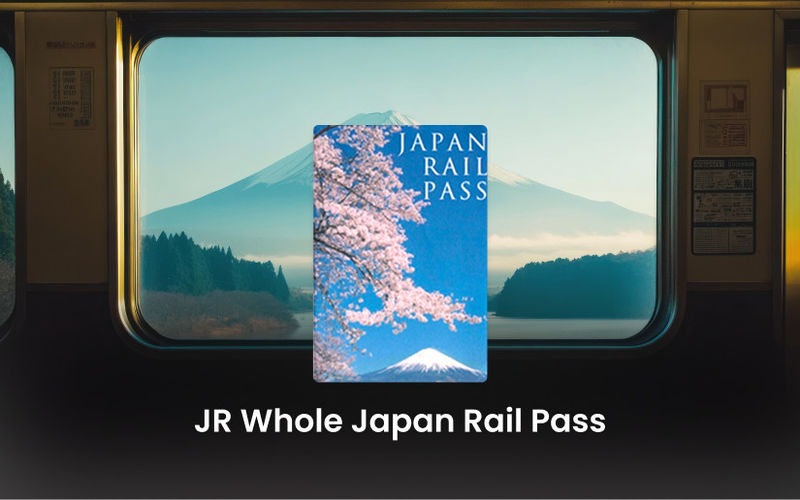
This is not a guided outing with a set route or a host waiting at Tokyo Station. It is a rail pass for eligible JR services across Japan, designed for visitors who want to build their own itinerary. Start in Tokyo, head toward Kyoto or Osaka, then continue to places such as Kanazawa, Hiroshima, or beyond, provided your chosen trains and routes are covered.
The listing location is Tokyo Station, but you do not need to begin your pass there. You exchange the paper order at an eligible JR office, including offices at major stations and airports, then choose a start date within 30 days of exchange. That date matters: once active, the pass runs for consecutive days, not a set number of travel days.
The experience is strongest when you value flexibility. You can make a long-distance rail journey without purchasing each covered ticket separately, and you can reserve eligible seats at no extra charge. It is less handy for a trip built around city subways, private railways, or long stays in one place.
What a week on the rails can look like
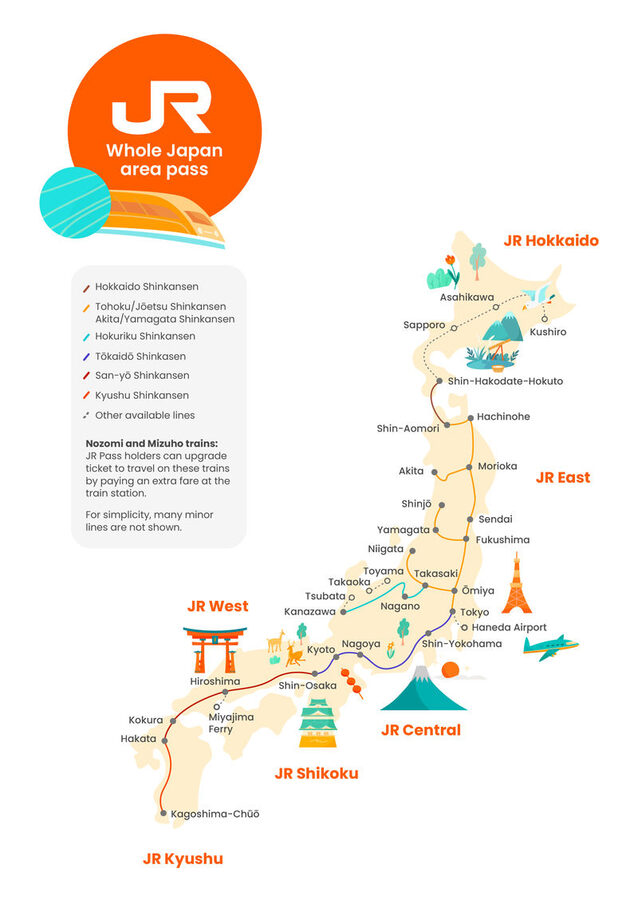
There is no prescribed itinerary, so the best route depends on your plans. A 7-day pass might suit a focused trip that links Tokyo with Kyoto and Osaka, perhaps adding another longer JR journey. A 14-day pass gives you more room to travel between several regions, while 21 days can work for a broad trip from Hokkaido in the north toward Kyushu in the south.
Think of each pass as a block of consecutive days, not a bundle of separate rides to spend at your leisure. If you plan to stay put in Tokyo for several days, then spend time around Mount Fuji without using covered JR services, activating the pass on your first day in Japan could waste valuable coverage. One practical approach is to schedule its start date for the stretch with the most intercity rail travel.
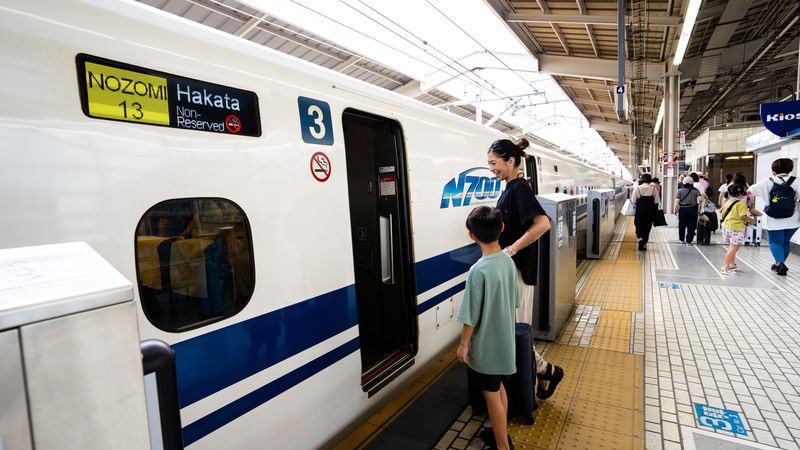
The pass covers most JR local, rapid, limited express, and Shinkansen trains. The Nozomi and Mizuho Shinkansen are excluded unless you buy the additional Japan Rail Pass Nozomi Mizuho ticket. That restriction matters on popular routes: check the exact train and fare before assuming every bullet train is covered.
More Entry Tickets in Tokyo
- Tokyo Disney Resort – Tokyo Disneyland & Tokyo DisneySea Park Tickets
★ 4.8 · 99,488 reviews - SHIBUYA SKY Ticket
★ 4.7 · 46,509 reviews - TOKYO SKYTREE® Ticket
★ 4.7 · 25,136 reviews
From Tokyo Station to the next city
Tokyo Station is a major departure point for long-distance JR journeys, and it is a useful place to exchange your order if it fits your arrival plans. But there is no need to exchange at Tokyo Station if you land elsewhere. You can redeem the order at JR offices in airports or main stations, subject to office availability and operating hours.
Tokyo itself is where pass value can get fuzzy. JR lines can be useful for some journeys around the city, but the pass does not cover Tokyo Metro or other subway services. You may still need a prepaid local transport card such as Suica for non-JR rides. If most of your days are spent on the subway, the pass may sit unused while you pay for the transport you actually take.
Once you leave the capital, the pass becomes easier to assess. Add up the covered long-distance trips you expect to make during the pass period, then compare that total with the pass price. A journey-heavy itinerary can make the pass worthwhile, but convenience alone does not guarantee savings.
Seat reservations make long rides easier
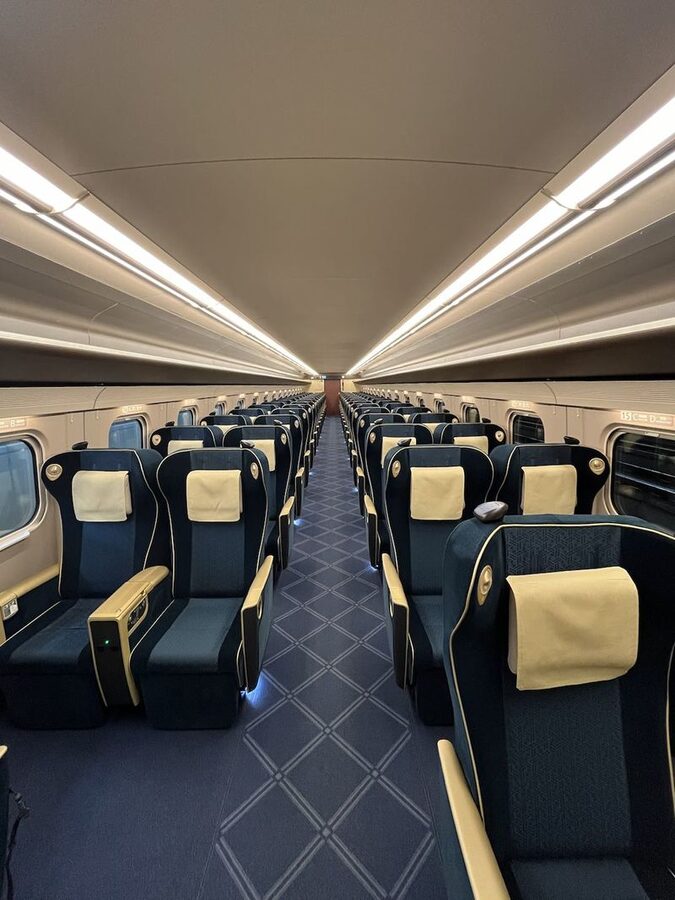
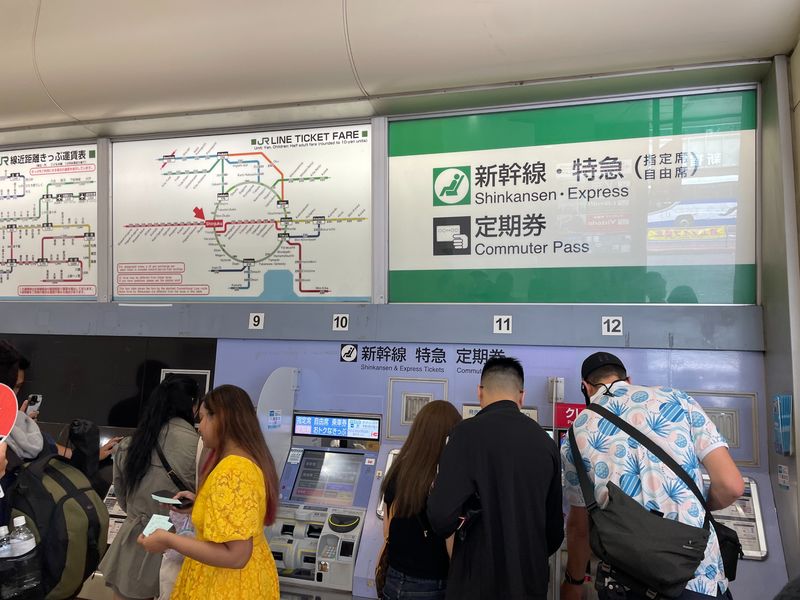
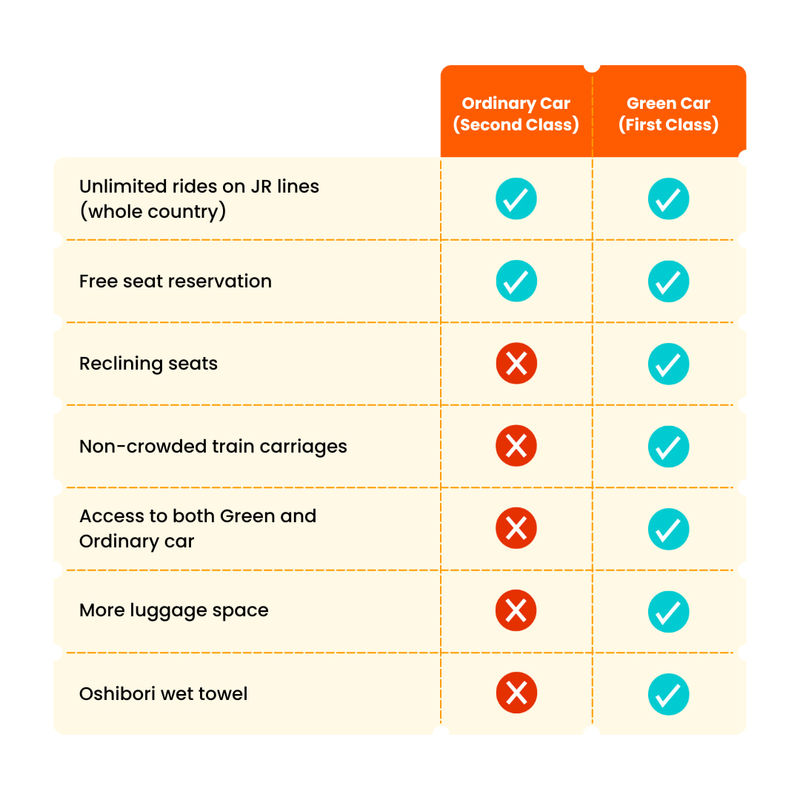
You can reserve seats in Ordinary or Green Cars at no extra charge after exchanging the order for your actual pass. Reservations are available at JR ticket offices, known as Midori-no-madoguchi, and at reserved-seat ticket machines. At a machine, scan the pass QR code or enter the reservation number, provide your passport number, and enter your route, date, and preferred time.
Seat reservations are optional on many services, but they are a sensible choice for Shinkansen and limited express journeys, particularly in busy travel periods. If you have several long rides planned, you can book them at a station once your pass is active. Keep the process manageable by working one leg at a time: confirm your next stop, then plan the following connection.
Ordinary Car is the standard second-class option. Green Car is first class, with wider legroom and a quieter, less crowded feel, but it costs more. For most people, Ordinary Car offers the better value. Green Car may appeal if comfort matters more than keeping the overall trip cost down, especially on longer journeys.
Airport trains and useful side trips

The pass includes several handy airport connections: the Narita Express, Tokyo Monorail from Haneda, and Haruka Limited Express from Kansai Airport. These can make the first or last leg of a trip simpler, but check that the service and route you plan to use are eligible. An airport transfer by itself is not a reason to buy a nationwide pass; the broader itinerary is what determines its value.
Some local JR buses are included, but JR express bus routes are not. Specific railway sections are also covered on certain routes: Aoimori Railway between Aomori and Hachinohe, Aomori and Noheji, and Hachinohe and Noheji; IR Ishikawa Railway between Kanazawa and Tsubata; and Ainokaze Toyama Railway between Toyama and Takaoka. These exceptions can help with particular regional connections, but do not assume the pass covers every private or local railway.
The JR-West Miyajima Ferry is included, a useful addition for an excursion to Miyajima Island. Other ferry services are not automatically covered; the JR-Kyushu hydrofoil between Hakata and Busan, South Korea, is specifically excluded. Check the operator and route before you board.
A completely different kind of day out:
- Mt Fuji and Hakone 1-Day Bus Tour Return by Bullet Train
★ 5.0 · 26,383 reviews - teamLab Borderless Tickets: MORI Building DIGITAL ART MUSEUM
★ 4.7 · 24,126 reviews - teamLab Planets TOKYO Ticket
★ 4.7 · 21,663 reviews - Harry Potter Studio Tour Tokyo
★ 4.8 · 17,194 reviews
The real value depends on your route
The listed starting price is $334.79, and package choices include 7, 14, or 21 days in Ordinary or Green Car. The right comparison is not the pass price against every transport cost in Japan. It is the pass price against the eligible JR rides you will actually take during the same consecutive-day window.
A string of long-distance trips can add up quickly, which is why this pass is often most attractive to people moving between several regions. If your plan is Tokyo, Kyoto, and Osaka with only a few intercity rides, compare individual tickets and regional passes before buying. A regional pass may fit a concentrated trip better. If you plan to travel widely and often, the nationwide pass can also save the bother of buying a separate ticket for each covered leg.
The high overall rating, 4.8 out of 5 from 29,150 ratings, and more than 798,010 bookings point to a product many people find convenient. The most consistently valued features are easy intercity travel, the ability to reserve seats, and the potential savings on frequent Shinkansen use. At the same time, the price has risen, and some pass holders find they still need to pay for local transit. Run the numbers for your own route rather than relying on the pass’s reputation.
A few details to settle before departure
The pass is available to non-Japanese passport holders entering Japan with a Temporary Visitor stamp or sticker. At immigration, use a staffed counter if needed to make sure the stamp is placed in your passport; automated gates do not apply the stamp. Non-Japanese passport holders who have permanent residence in Japan are not eligible under the stated rules. Japanese passport holders living abroad for 10 or more years may qualify with a valid Japanese passport and an accepted overseas residence document.
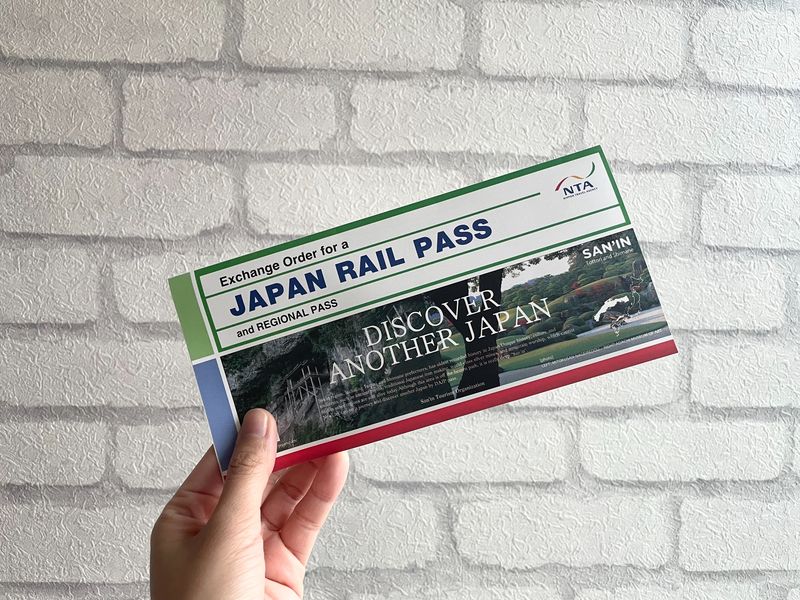
Klook sends a paper Exchange Order. The email confirmation and Klook voucher alone cannot be exchanged for the pass, so keep the mailed order safe and take it to a JR exchange office with your passport. You must redeem it within 90 days of issue, and the name on it must match the passholder’s passport. After exchange, select a start date within 30 days. Once activated, the pass is valid for 7, 14, or 21 consecutive days, depending on your purchase.
Allow time for delivery before your trip. The stated free global mailing option is four business days, though delivery options and timing depend on where you live. The planned travel date chosen at checkout is not your pass activation date. For a trip more than 90 days away, confirmation is expected about 70 days before travel, so take that timing into account.
If you are bringing oversized luggage on the Tokaido, Sanyo, or Kyushu Shinkansen, reserve both your seat and the baggage area in advance. Standard luggage dimensions are listed as up to 160 cm in total across length, width, and height. For children aged 0 to 5, a pass is not required if the child does not occupy a separate seat; a separate seat requires a pass.
Who should buy the Japan Rail Pass?
I would consider it if you have several long JR journeys planned within a tight 7, 14, or 21-day window, want the option to reserve seats, and are comfortable organizing your own rail travel. It is especially useful when your route crosses multiple regions and you can make active use of the pass on most days.
I would pause if your itinerary centers on one city, relies on subway systems, or includes only a couple of long-distance rides. Compare the pass with individual fares and regional options before paying. If your route checks out, the pass can make rail travel across Japan feel simpler and more flexible. If the sums do not work, buying tickets as you go is the wiser choice.
FAQ
Does the JR Whole Japan Rail Pass cover all trains in Japan?
No. It covers most JR trains, including eligible local, rapid, limited express, and Shinkansen services. Nozomi and Mizuho trains are excluded unless you buy an additional ticket, and subways and many non-JR services are not covered.
Can I use the pass on Tokyo’s subway?
No. The pass is mainly for JR-operated services and does not cover subways. You may need a local transport card such as Suica for subway and other non-JR rides.
How do I exchange the paper order for my pass?
Take the paper Exchange Order and your passport to a JR office at an airport or main station in Japan. The confirmation email and Klook voucher cannot be used in place of the Exchange Order.
When does the pass become active?
At exchange, choose a start date within 30 days. The pass then runs for 7, 14, or 21 consecutive days, according to the option you bought.
Are seat reservations included?
Yes. After you redeem the pass, eligible seat reservations in Ordinary or Green Cars can be made at a JR ticket office or reserved-seat ticket machine without an extra reservation charge.
Do children need their own pass?
Children aged 0 to 5 do not need a pass if they do not occupy a separate seat. If you want a child in this age group to have a seat, the child needs a pass.
Just added in Tokyo
- Simply Japan★ 4.6 · 262 reviews
- Japan: Tokyo Nights & Kyoto Temples★ 4.7 · 20 reviews
- Japan: Land of the Rising Sun★ 4.7 · 122 reviews
- Japan Classic 14 Day – One Life Adventures★ 4.9 · 1,003 reviews
- A Classic 11 Day Japan Holiday★ 4.8 · 32 reviews
- 5 Day All Inclusive Japan Classics(Private Guide and Driver)Family Tour Customizable★ 5.0 · 4 reviews
- 13-Day Japan Tour: Tokyo, Mount Fuji, Kyoto, Nara, Osaka & Beyond★ 4.5 · 207 reviews
- Tokyo to Osaka Shinkansen Tickets & Schedule★ 4.9 · 8,499 reviews
Entry Tickets, compared.

Tokyo Disney Resort – Tokyo Disneyland & Tokyo DisneySea Park Tickets
Read our review →



teamLab Borderless Tickets: MORI Building DIGITAL ART MUSEUM
Read our review →

Browse the lists this tour appears in