
Reviewed · MUSEUMS AND GALLERIES
teamLab Planets TOKYO Ticket
At teamLab Planets, the art is not safely tucked behind glass. You take off your shoes, step into water, and enter rooms where light, flowers, and digital images respond to your movement. It is part art show, part physical adventure, and a welcome change from another day of looking at displays from a distance.
I like two things about the format: you become part of the work, and each room asks you to use your body in a different way. The water and koi exhibit is a rare art experience, while the drawing room lets children turn their own pictures into moving images. The main trade-off is crowding. A premium pass can speed entry at the front, but it does not promise shorter waits inside.
In This Review
- The details to know before you book
- What teamLab Planets asks you to do
- From the shoe lockers to the first rooms
- The water room, where koi answer your movement
- Flowers, lights, and a garden of glowing forms
- A soft floor and a chance to make your own art
- How long to stay, and when crowds matter
- Is the ticket worth its price?
- Food, parking, and useful extras in Toyosu
- Who will enjoy this most
- Should you book teamLab Planets?
- FAQ
- How long should I allow for teamLab Planets?
- What are the opening hours?
- Do I need to book in advance?
- How do I get to teamLab Planets?
- Do I need to take off my shoes?
- Will I get wet?
- What should I wear?
- Can children visit?
- Is photography allowed?
- Can I leave and come back later?
The details to know before you book

- Walk through water with digital koi: Bare feet are part of the experience, and water can reach an adult’s knees.
- Find your balance in Soft Black Hole: Its yielding floor feels more like a giant cushion than a standard gallery walkway.
- Watch your drawing enter the art: In Sketch Umwelt World, your creation becomes part of a digital scene.
- Expect changing light and sound: Some rooms have flashing lights and loud audio, so this is not a good fit for everyone.
- Allow one to three hours: A focused visit can be shorter, but interactive rooms and queues can stretch your stay.
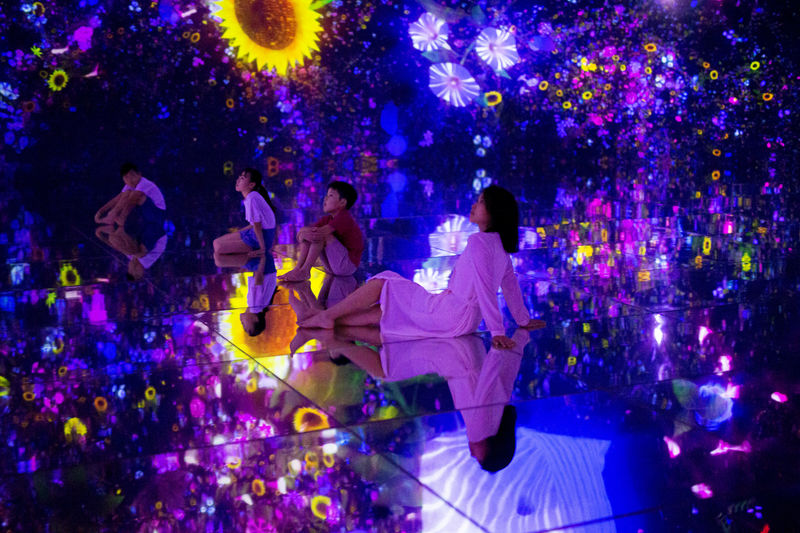
- Wear trousers and bring a change for small children: Mirrored floors can reflect skirts, and water can leave clothes damp.
What teamLab Planets asks you to do
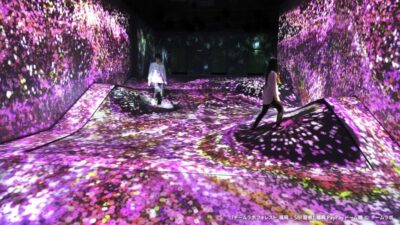
teamLab Planets TOKYO is an art museum in Toyosu built around participation. Instead of moving through a conventional sequence of paintings and labels, you walk, wade, balance, watch, and sometimes make something yourself. The rooms use projection, light, sound, mirrors, water, and physical surfaces to make your movements part of the display.
That idea is why the visit can feel different from a standard museum outing. You are not just asked to look closely. You may need to take off your shoes, step into a pool, or pause while a room changes around you. The work can feel playful and even restful, though it can also be loud, busy, and physically unusual.
The attraction is at 6-chome-1-16 Toyosu, Koto City, Tokyo. Shin-Toyosu Station is about a one-minute walk away, while Shijoumae Station and Toyosu Market are about five minutes away on foot. Toyosu Station, served by the Tokyo Metro Yurakucho Line, is roughly a ten-minute walk.
More Entry Tickets in Tokyo
- Tokyo Disney Resort – Tokyo Disneyland & Tokyo DisneySea Park Tickets
★ 4.8 · 99,488 reviews - SHIBUYA SKY Ticket
★ 4.7 · 46,509 reviews - JR Whole Japan Rail Pass
★ 4.8 · 29,150 reviews
From the shoe lockers to the first rooms
Your visit begins with practical preparation. You will leave your shoes before entering the exhibit areas, and free lockers are available for small bags. They measure 23 centimeters wide, 34 centimeters deep, and 37 centimeters high, so do not count on fitting large luggage inside.
The exhibition’s lighting is often low, and its layout can feel intricate. Take your time when moving between rooms, especially if you are with children. Hold their hands throughout. The dark passages and unfamiliar flooring are part of the design, but they make it easier to lose sight of someone or misjudge a step.
There are areas where you walk barefoot and others where the floor is soft or uneven underfoot. This is not a visit for rushing from one photo spot to the next. Give yourself a moment to adjust in each new space, and follow staff instructions about where you can walk and what you need to remove.
The water room, where koi answer your movement
One of the most memorable rooms is Drawing on the Water Surface Created by the Dance of Koi and People. You walk barefoot through water while digital koi move around you and react to your presence. The effect is direct: your body becomes part of the scene rather than simply watching it from the side.
The water can reach knee height for adults. That is a useful detail to plan around, not a minor surprise once you are inside. Wear clothing you do not mind getting wet, particularly if you are visiting with small children, and consider packing a change of clothes for them.
Staff may ask you to change if your clothes get wet, since wet clothing is not allowed into the next artwork for safety reasons. Towels are available to rent, but it is easier to arrive prepared. If your clothes get damp, dry them before moving on.
The exhibit is barefoot, so shoes such as Crocs may not be accepted in certain areas. Wear shoes that are easy to remove and put back on, and be ready to queue if you need to change footwear. The water section is a key reason to choose Planets, but it may not appeal to anyone uneasy about shared water or the practicalities of getting wet.
Flowers, lights, and a garden of glowing forms
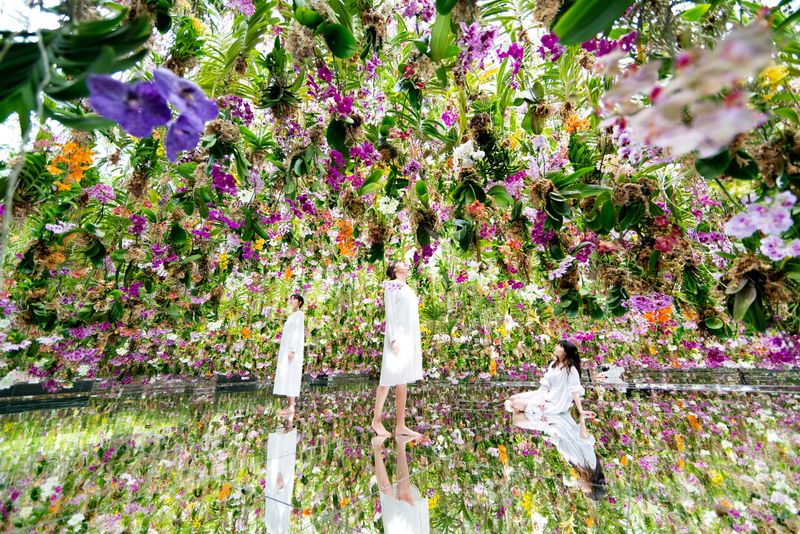
The Floating Flower Garden surrounds you with suspended flowers, creating a room that changes as you move through it. The flowers and their shifting arrangement offer a quieter counterpoint to the more physical exhibits. It is one of the spaces where you may want to slow down, rather than treating the museum as a checklist.
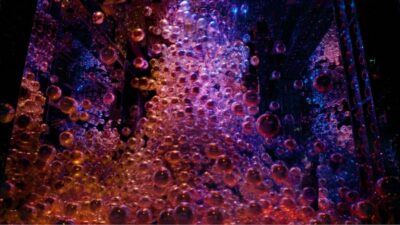
Infinite Crystal Universe fills a room with thousands of LED points. The lights create a sense of depth and scale, and the effect shifts as you move through the space. It is a strong choice if you enjoy color and reflective surfaces, though the visual intensity may be too much for someone sensitive to flashing lights.
Moss Garden of Resonating Microcosms offers a different rhythm. Moss balls glow in response to movement, creating a gentler, more intimate scene than the large light rooms. The garden helps show the range of the exhibition: not every room aims for a grand spectacle, and some of the appeal lies in watching small changes unfold.
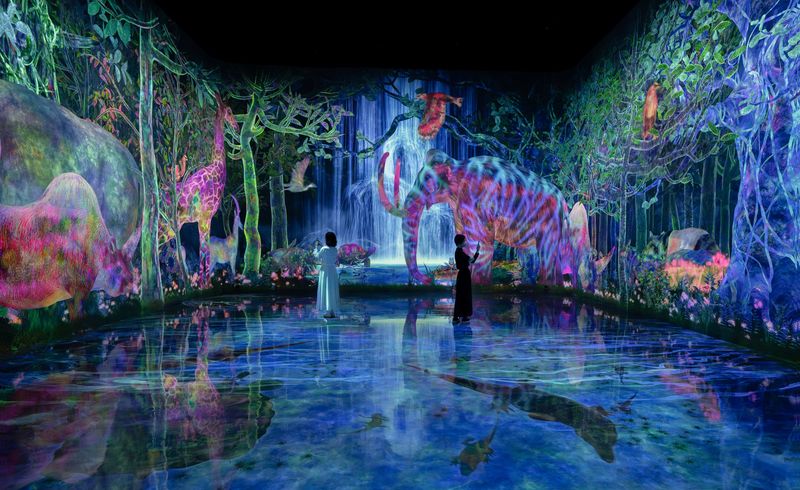
A room called Universe of Fire Particles Falling from the Sky adds another digital sky to the mix. These works are best approached with a little patience. The display is not a static picture, so pausing and watching can be more rewarding than trying to take a quick photo and move on.
More Museums and Galleries in Tokyo
- teamLab Borderless Tickets: MORI Building DIGITAL ART MUSEUM
★ 4.7 · 24,126 reviews - Tokyo: teamLab Planets TOKYO Digital Art Museum Entry Ticket
★ 4.6 · 9,779 reviews - Art Aquarium Museum GINZA Ticket
★ 4.6 · 5,577 reviews - Tokyo: Samurai Ninja Museum Guided tour and Experience
★ 4.6 · 1,010 reviews
A soft floor and a chance to make your own art
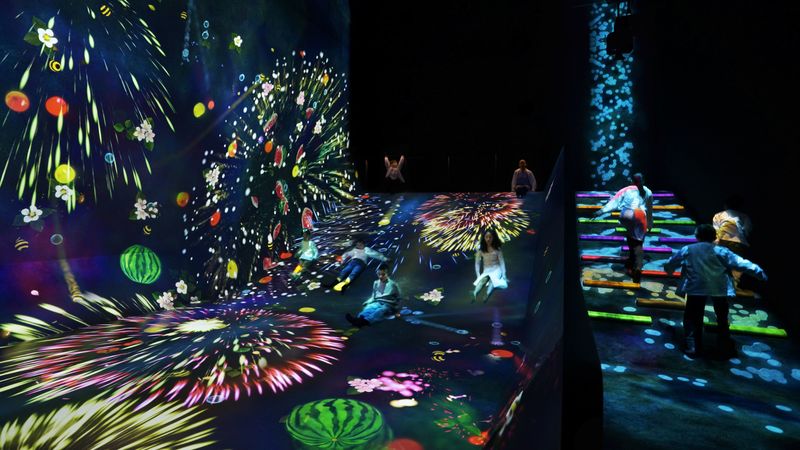
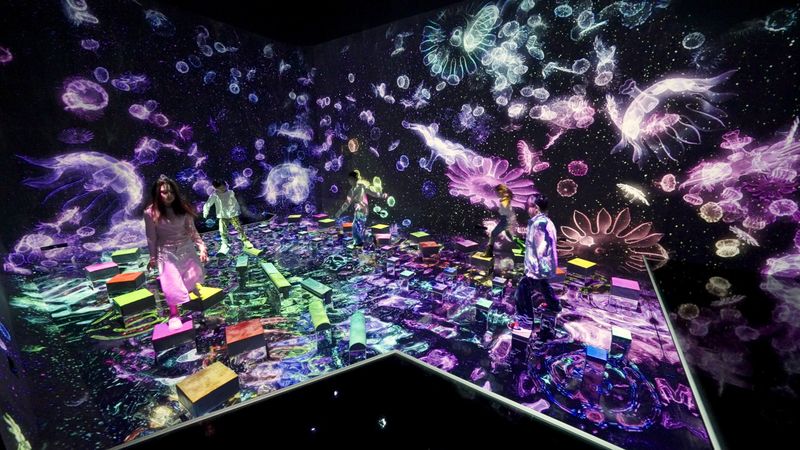
Soft Black Hole changes the way you walk. The floor is soft and unsettles your balance, a simple physical idea that makes the room feel strange without relying only on projections. Take smaller steps and keep an eye on children, who may find the surface fun but need help staying steady.
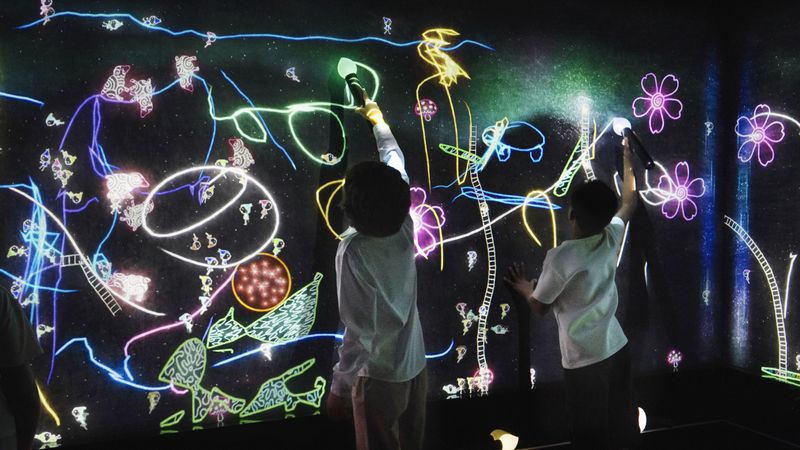
In Sketch Umwelt World, part of the Future Park area, you draw an image and watch it join a digital world. This hands-on element gives children a clear role in the exhibit, and it can hold their attention longer than rooms that ask only for looking. It also gives adults a welcome break from photographing the art.
The attraction’s app can provide more information about the works and add interactive features. Download it before your visit if you want to use those options, rather than spending time setting it up at the entrance.
How long to stay, and when crowds matter
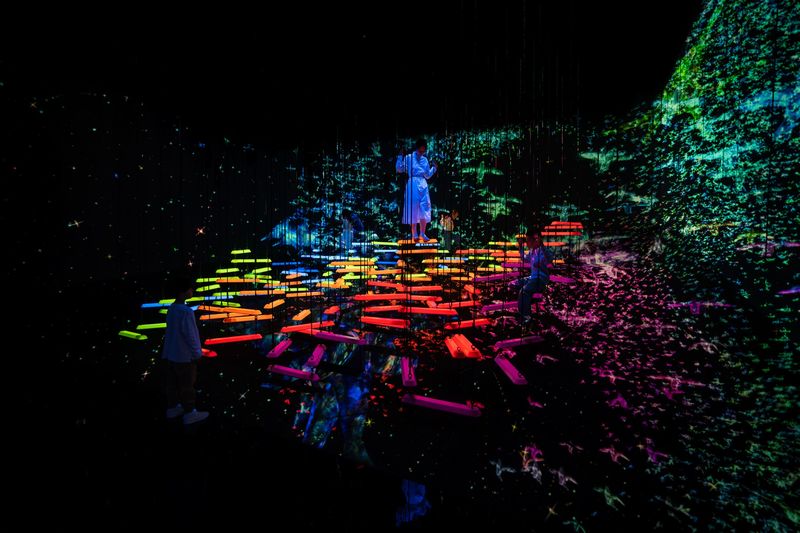
Plan for one to three hours, depending on your pace and the line at entry. A visit may initially seem short, but interactive rooms can keep you longer than expected. If you have another timed activity later, leave a generous buffer rather than assuming you will be done in an hour.
The stated opening hours are 08:00 to 22:00, with last entry at 21:00. Hours and closure dates can change, so check the official website before setting your schedule. Entry is organized in dated 30-minute time slots, and you should arrive at the entrance at the time printed on your ticket. Even with a timed ticket, waits of 30 to 60 minutes may occur during busy periods.
A skip-the-line Premium Pass is for entry to the venue. It can save time at the front when there is a long queue, but it does not remove lines for individual rooms. If you visit during a crowded school holiday, that distinction matters. Pay extra for it if saving the initial wait is worth the cost to you, not because you expect to move straight through every exhibit.
Once you leave, you cannot re-enter. There is no need to rush, but do plan meals and other stops around the fact that you cannot step out and return. Outside food and drinks are not allowed inside.
Is the ticket worth its price?
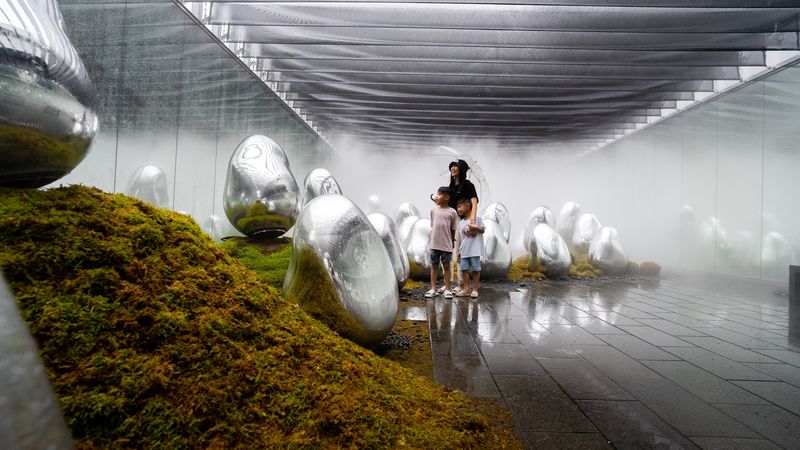
Tickets start at $26.55, with the final price depending on the option and date you select. For a Tokyo attraction that combines several art rooms with hands-on elements, the price can be reasonable if you enjoy digital art, interactive installations, or unusual family activities. It is less compelling if you prefer quiet galleries, traditional art, or a long stretch of unstructured time.
The strongest value comes from treating the visit as an activity, not just a photo stop. The water room, soft floor, changing light works, and drawing space offer several distinct ways to engage with the art. Families can get a lot from that variety, especially when children are old enough to follow directions and cope with dim rooms and changing surfaces.
The experience is not equally suited to everyone. Some rooms are small, and the exhibition can feel crowded. The constant lights and sound may be tiring, while some adults may find the presentation aimed more at families and teenagers than at a contemplative museum audience. If you have already visited teamLab Borderless or another digital art exhibition, consider how much you want a second experience of this kind.
The ticket is valid only on the selected date and time, so choose a slot that fits your day. Children aged zero to three enter free. Children aged 12 and under must be accompanied by a paying adult, with no more than three children per paying adult. A Youth ticket requires student identification.
Food, parking, and useful extras in Toyosu
The venue has a Living Art Store and Sketch Factory, open daily from 08:30 to 22:00, and Vegan Ramen UZU Tokyo, open from 10:30 to 21:30. Ramen orders end 30 minutes before closing, and before 11:00 only light meals and drinks are available. These can make it easier to build a meal around the visit, though food and drinks are not included in the ticket.
A weekday parking offer provides one free hour at Urban Dock LaLaport Toyosu. To claim it, bring the parking ticket issued when you enter the car park and your booking voucher to the 1st-floor General Information Desk at LaLaport Toyosu 1, between 11:00 and 19:00. You may have to wait if the desk is busy, and a lost parking ticket cannot be reissued. Public transport is simpler for many visitors, especially given the short walk from Shin-Toyosu Station.
Some ticket options add a Bic Camera discount coupon, admission to Tokyo Tower’s Main Deck, or access to Senkyaku Banrai Toyosu Manyo Club Onsen with a foot bath and a free drink. Compare the actual bundle and price before choosing. A bundle is useful only if the added stop fits your plans.
Who will enjoy this most
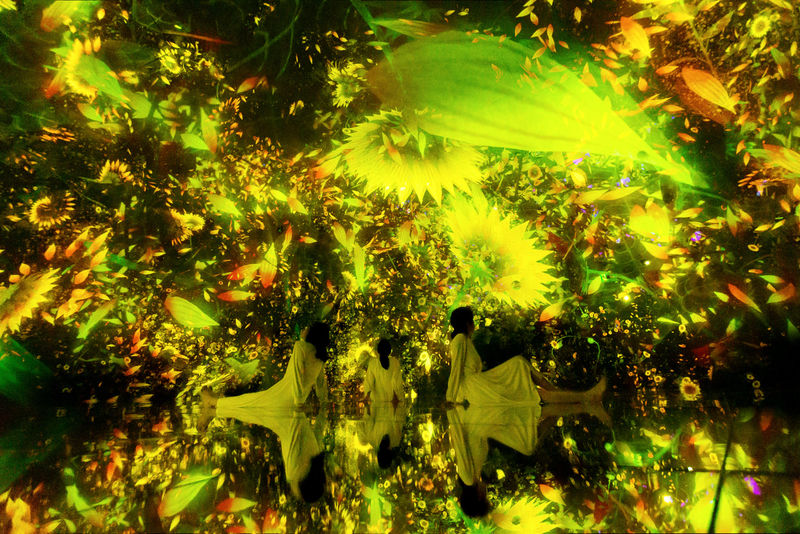
I would put teamLab Planets high on the list for families with school-age children, people who enjoy interactive art, and anyone looking for something different from temples, shops, and observation decks. Children can draw, move through water, and explore changing rooms, though adults need to keep them close in the dim passages.
It can also suit adults who are curious about digital art and willing to join in rather than stand back. The light rooms can be striking, and the water and flower works offer a change of pace. But if you prefer silence, clear signage, or a traditional museum visit, you may find the crowds and sensory effects more tiring than enjoyable.
For visitors with mobility needs, note that wheelchair users are asked to transfer to the venue’s standard wheelchairs once inside, and the supply is limited. Strollers are not allowed in the exhibit and must be left in the designated area. Certain areas are not accessible to pregnant women for safety reasons. Pets, including guide dogs, are not permitted inside due to the complex layout.
Should you book teamLab Planets?
Book it if you want art you can move through, and if walking barefoot through water sounds like a feature rather than a nuisance. It is especially worthwhile for families and curious first-timers who can give it at least two hours and arrive prepared for crowds.
Think twice if you dislike flashing lights, need a quiet outing, or have a tight schedule that leaves no room for an entry queue. Wear trousers, bring a change of clothes for young children, and check current hours before you go. With those basics covered, Planets offers a genuinely different way to spend part of a Tokyo day.
FAQ
How long should I allow for teamLab Planets?
The visit typically takes one to three hours. Allow extra time if you expect a queue or want to explore each room at a relaxed pace.
What are the opening hours?
The stated hours are 08:00 to 22:00, with last entry at 21:00. Hours and closure dates may change, so check the official website before your visit.
Do I need to book in advance?
Tickets are sold for selected dates and 30-minute entry times, and daily capacity is limited. Book ahead and arrive at the time shown on your ticket.
How do I get to teamLab Planets?
Shin-Toyosu Station is about a one-minute walk away. Shijoumae Station and Toyosu Market are about five minutes away, and Toyosu Station is around a ten-minute walk.
Do I need to take off my shoes?
Yes. Some areas require you to go barefoot, and you should remove your shoes before entering the locker space.
Will I get wet?
You walk through water in one of the exhibits, and it can reach knee height for adults. Wear clothes you do not mind getting wet, and consider bringing a change for small children.
What should I wear?
Trousers are recommended because one area has a mirror floor that may reflect underwear beneath skirts or wide-hemmed pants. Choose easy-to-remove shoes, and bring spare clothes for children who may get wet.
Can children visit?
Yes. Children aged zero to three enter free, and children aged 12 and under must be accompanied by a paying adult. Children must be supervised, especially in dark areas and around water.
Is photography allowed?
Photography for personal use is allowed. Commercial photography and video, as well as live broadcasting, are prohibited.
Can I leave and come back later?
No. Re-entry is not allowed after you leave the venue. Outside food and drinks are also not allowed inside.
Just added in Tokyo
- Simply Japan★ 4.6 · 262 reviews
- Japan: Tokyo Nights & Kyoto Temples★ 4.7 · 20 reviews
- Japan: Land of the Rising Sun★ 4.7 · 122 reviews
- Japan Classic 14 Day – One Life Adventures★ 4.9 · 1,003 reviews
- A Classic 11 Day Japan Holiday★ 4.8 · 32 reviews
- 5 Day All Inclusive Japan Classics(Private Guide and Driver)Family Tour Customizable★ 5.0 · 4 reviews
- 13-Day Japan Tour: Tokyo, Mount Fuji, Kyoto, Nara, Osaka & Beyond★ 4.5 · 207 reviews
- Tokyo to Osaka Shinkansen Tickets & Schedule★ 4.9 · 8,499 reviews
Museums and Galleries, compared.
teamLab Borderless Tickets: MORI Building DIGITAL ART MUSEUM
Read our review →
teamLab Planets TOKYO Digital Art Museum Entry Ticket
Read our review →
Browse the lists this tour appears in