
Reviewed · MUSEUMS AND GALLERIES
Tokyo: teamLab Planets TOKYO Digital Art Museum Entry Ticket
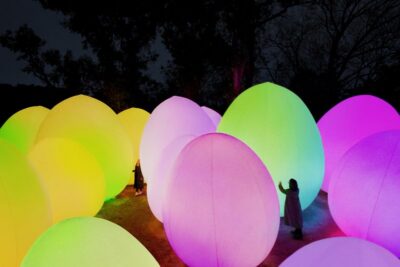
Prepare to leave your shoes behind. teamLab Planets TOKYO turns digital art into a full-body adventure, with light, sound, water, flowers, mirrors, and shifting images responding to your presence. I love the way the exhibition makes you part of the artwork, and I especially like that it works for adults, teenagers, and children who normally find museums dull.
The water installations and flower rooms are the clear highlights, offering moments that feel playful, peaceful, and surprisingly emotional. My main caution is practical: entry is tied to a narrow time window, some waiting takes place outdoors, and the non-refundable ticket leaves little room for mistakes.
In This Review
- Key points before you book
- Why teamLab Planets feels different from a normal museum
- Starting the visit: timing, queues, and the first practical decisions
- The opening rooms: reset your museum habits
- Water Gallery: the part most people remember
- Flower rooms: slow down and look up
- Light, sound, and the five-senses approach
- How long to stay and how to pace the route
- Is the $25 price good value?
- Who will enjoy teamLab Planets most?
- Small details that make the visit better
- Should you book teamLab Planets TOKYO?
- FAQ
- How much does teamLab Planets TOKYO cost?
- How long is the ticket valid?
- Can I buy a ticket on the same day?
- How late can I arrive?
- What do I need to bring?
- Do I need to remove my shoes?
- What should I wear?
- Can children visit teamLab Planets alone?
- Is teamLab Planets accessible for wheelchair users?
Key points before you book
- Barefoot water rooms: Some areas have water rising to knee height, so wear trousers you can roll up.
- Your movement changes the art: Light, sound, and digital images react as people move through the rooms.
- Plan at least two hours: Many people expect a quick visit, then find themselves lingering much longer.
- Entry times matter: You can enter only during the first 30 minutes after your selected time.
- The strongest rooms are the water and flower galleries: These are the parts most likely to stay with you.
- Check the exact location: Tokyo has two teamLab sites, and tickets for one cannot be used at the other.
Why teamLab Planets feels different from a normal museum
A conventional art museum asks you to keep your distance. You look at a painting, read a label, and move on. teamLab Planets removes that safe gap. You walk through the work, stand inside changing projections, and watch the room alter around you.
The exhibition covers more than 10,000 square meters, with several distinct areas rather than one large hall. The route moves through different textures, temperatures, sounds, reflections, and light patterns. You may be asked to slow down, sit, wade, look upward, or simply wait for the next image to form.
That physical involvement gives the visit its appeal. You are not just taking pictures of digital art. Your body blocks light, changes the movement of projected images, and becomes one small part of a much larger scene.
The concept sounds serious, but the mood is usually cheerful and open. Teenagers can enjoy the visual effects without needing an art lecture, while adults often find quiet moments that feel more thoughtful than expected. One of the nice surprises is how easily the visit shifts between fun and calm.
More Entry Tickets in Tokyo
- Tokyo Disney Resort – Tokyo Disneyland & Tokyo DisneySea Park Tickets
★ 4.8 · 99,488 reviews - SHIBUYA SKY Ticket
★ 4.7 · 46,509 reviews - JR Whole Japan Rail Pass
★ 4.8 · 29,150 reviews
Starting the visit: timing, queues, and the first practical decisions
Your ticket is valid for one day, but it is tied to a selected entry time. You can enter only during the first 30 minutes after that time, and late arrivals are not refunded. That makes this less flexible than a standard museum ticket, so give yourself enough time to reach the site.
Do not assume you can buy admission on the same day. The information provided for this activity says same-day ticket purchases are not possible, so booking ahead is important, especially if your Tokyo schedule is tight.
You will receive an official voucher by email. Keep it ready for entry, and bring your passport or another accepted ID card. Staff may check identification to confirm age or school affiliation, so do not leave your documents back at your accommodation.
There is one detail worth checking twice: Tokyo has two teamLab locations. A ticket for the wrong site will not solve your problem at the entrance. Read the venue name carefully before you set out, especially if you are booking more than one teamLab attraction.
Some ticket arrangements may help you avoid a long ticket line, but you should not treat that as a promise that you can ignore the selected entry time. Arriving early is sensible, yet one practical drawback is that people may be asked to wait outside until their admission slot begins. In cold, wet, or hot weather, this can be uncomfortable.
Once the staff begin moving people inside, the flow is generally orderly. Groups are managed in stages rather than released all at once, which helps the rooms feel less chaotic. Still, the atmosphere changes with the time of day. An early slot is a good choice if you want a quieter first look.
The opening rooms: reset your museum habits
The first stages prepare you for the unusual rules of the building. You remove your shoes and use lockers for small items. Bare feet are not just a quirky touch. They help you feel changes in the floor and move safely through areas that may contain water.
This is the point where the experience stops feeling like an ordinary gallery visit. You may need to walk carefully, pay attention to the surface below you, and think about your clothing. Loose trousers that roll above the knee are the safest choice.
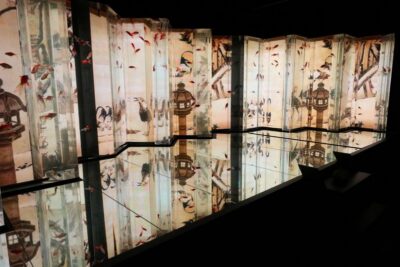
Some floors use reflective materials. Short skirts and dresses can be awkward, since mirrors may show more than you intend. Trousers are the practical option, and the venue may provide short clothing for the water sections if needed.
Small bags and unnecessary belongings can get in the way. Lockers are available for small items, so carrying less will make it easier to move, sit, and look around. Food, drink, and smoking are not allowed inside.
The route is easy enough to follow for most people, though signage and direction are not perfect in every spot. Take your time when moving from one room to the next. The goal is not to rush through a checklist.
Water Gallery: the part most people remember

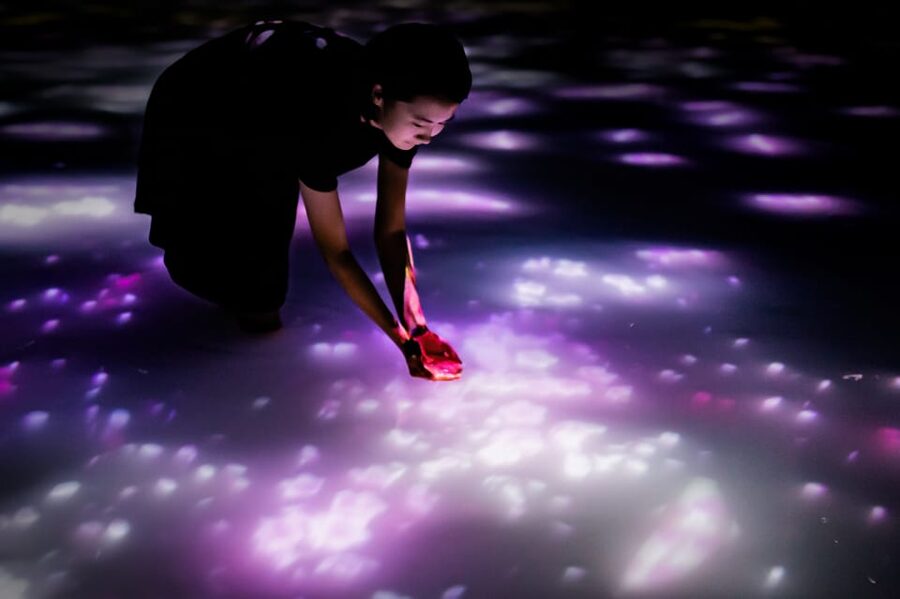
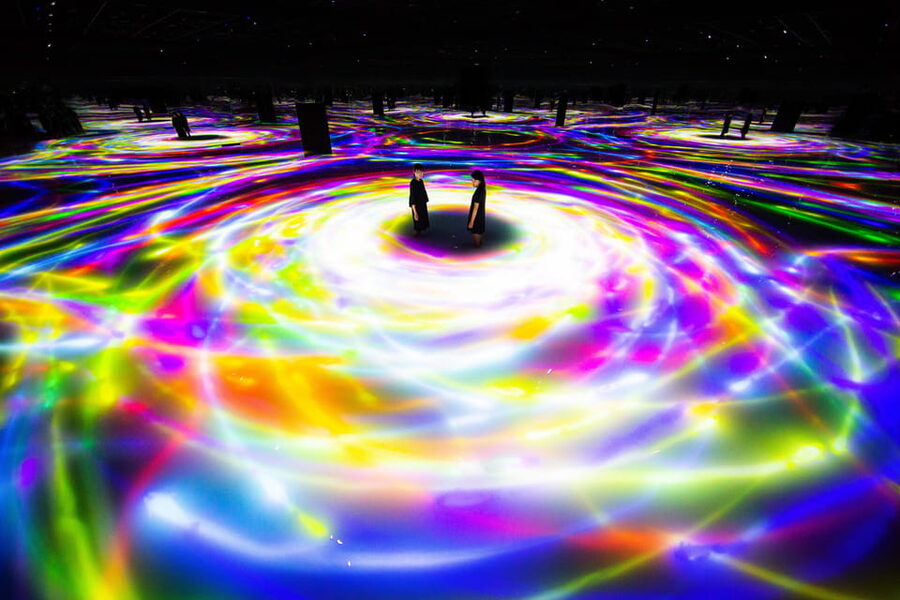
The water rooms are the signature section. You walk through shallow water while digital images and colored light change the space around you. Water levels can reach your knees, so roll your trousers well above that point before entering.
This section works because it uses more than sight. You feel the water around your legs, hear the room, watch projected forms move, and adjust your steps as the artwork changes. The simple act of walking becomes part of the display.
The water area can feel playful, especially for families and teenagers. It can also be quiet and almost dreamlike when the flow is controlled and people are not speaking loudly. You might find yourself slowing down to watch the images rather than trying to photograph every second.
The koi imagery is another memorable feature. Digital fish move through the water and respond to the people around them, creating the pleasant illusion that the room is alive. It is the kind of effect that is easy to understand in a sentence but much better when you are standing inside it.
There are limits. If you dislike wet feet, have difficulty walking on changing surfaces, or cannot roll your trousers above your knees, this part may not suit you. Staff can provide short pants according to the supplied information, but it is still wise to dress for the conditions.
More Museums and Galleries in Tokyo
- teamLab Borderless Tickets: MORI Building DIGITAL ART MUSEUM
★ 4.7 · 24,126 reviews - teamLab Planets TOKYO Ticket
★ 4.7 · 21,663 reviews - Art Aquarium Museum GINZA Ticket
★ 4.6 · 5,577 reviews - Tokyo: Samurai Ninja Museum Guided tour and Experience
★ 4.6 · 1,010 reviews
Flower rooms: slow down and look up
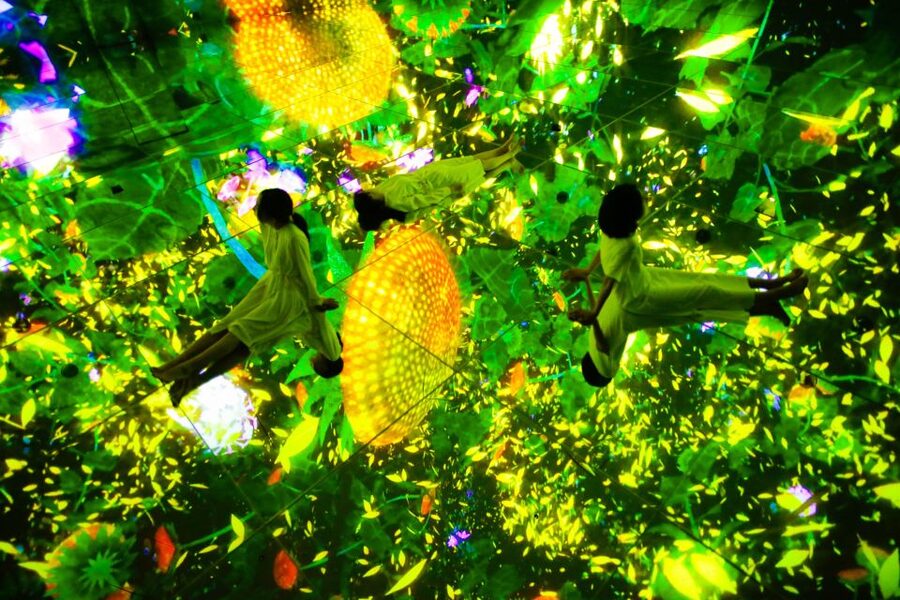
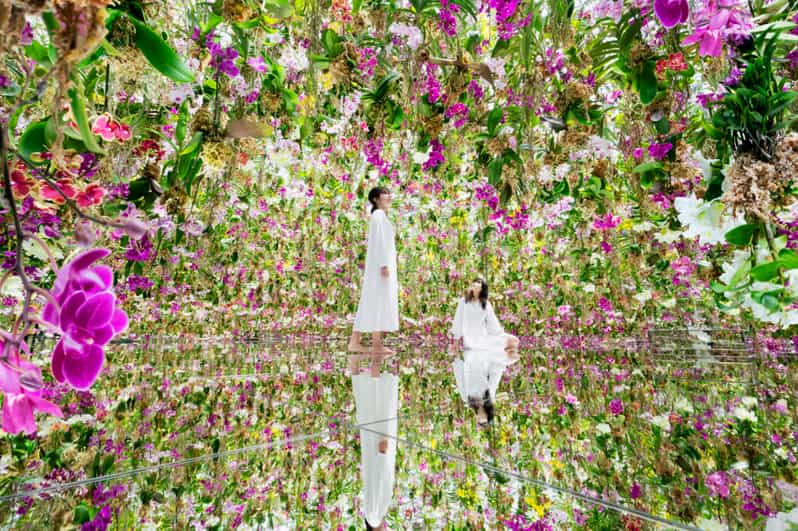
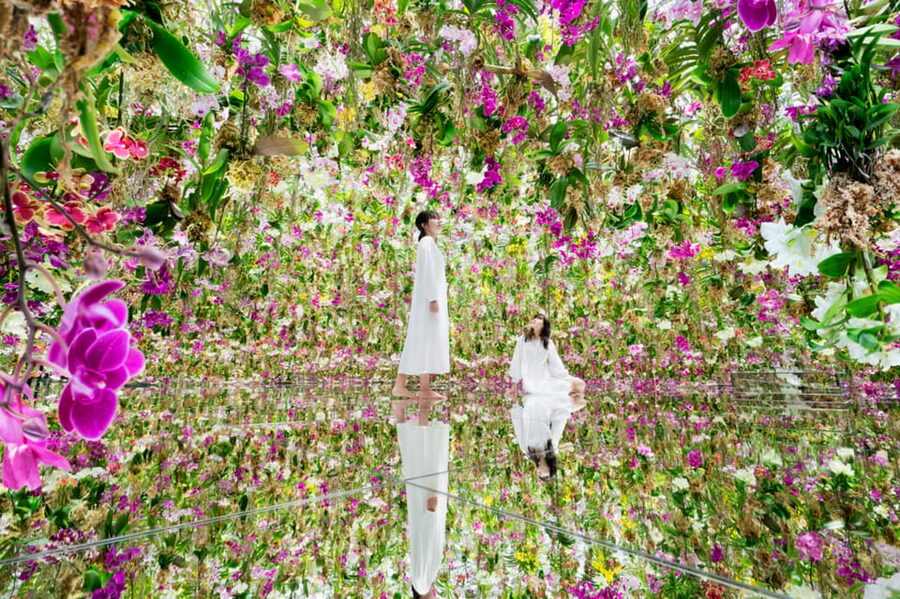
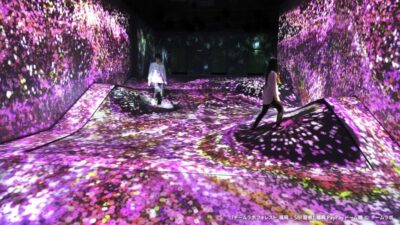
The flower installations offer a different mood from the water galleries. Instead of concentrating on your footing, you can look around, lie down, and watch digital flowers appear, fall, or shift across the room.
The falling-flower room is a favorite for good reason. From the floor, the projections can seem to move toward your face, giving the room a gentle sense of motion. You do not need to understand a theory of digital art to enjoy it. The effect is direct, beautiful, and easy to appreciate.
The orchid installation and Flower Universe also receive strong praise. The orchids create a more delicate atmosphere, while Flower Universe gives you a broad field of changing flowers to observe. These rooms reward patience, so I would not treat them as photo stops lasting only a few seconds.
If you want photographs, take them after you have first watched the room without your phone. The displays change constantly, and staring at a screen can flatten the experience. One useful way to handle the visit is to make a first pass with your phone away, then take a few pictures when you find a scene worth remembering.
Solo visitors can enjoy these rooms just as much as couples and families, though some activities may feel a little awkward alone. That is not a reason to skip the museum. It simply means you should expect a playful setting where people may sit, pose, and interact with the displays.
Light, sound, and the five-senses approach
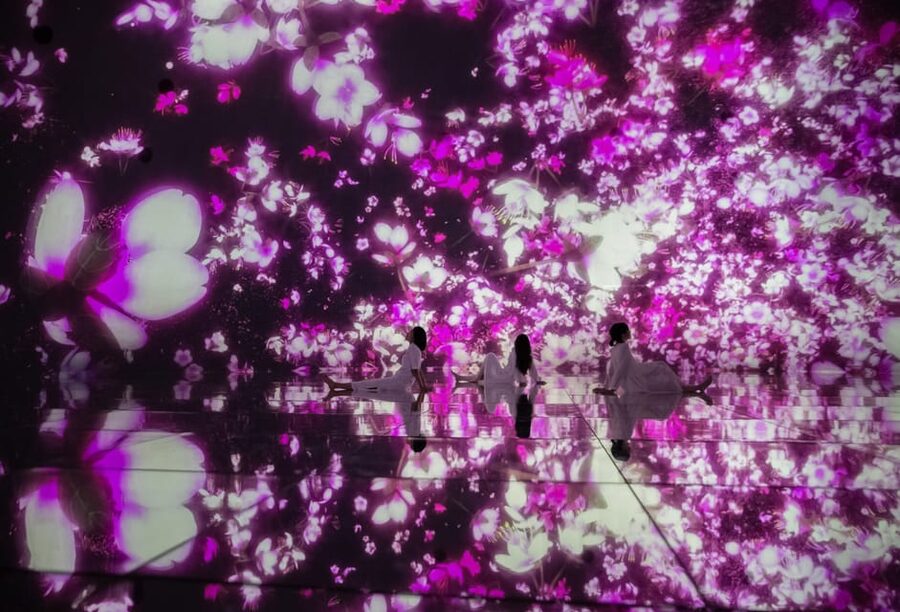
teamLab Planets is not only a collection of projections. The exhibition uses sound, touch, movement, water, and changing materials to create a physical response. That is why the visit can feel more powerful than seeing digital artwork on a flat screen.
The rooms are built to alter your sense of distance and direction. Mirrors can make a small area seem much larger, while darkness and light can make it harder to judge where a wall or floor ends. You will need to move slowly and follow staff instructions.
The sound matters, too. Music and ambient effects help set the pace of each space. In one room, the sound may encourage you to pause. In another, the shifting images and movement around you may make the room feel more energetic.
Noise from other people can affect the quieter sections. If you are hoping for a calm, reflective visit, choose a less busy entry time and allow yourself to wait for a peaceful moment inside a room. Staff do a good job controlling movement, but they cannot make every person whisper.
The exhibition is not recommended for people with light sensitivity, epilepsy, or heart problems. Wheelchair users should also know that some areas are not accessible by wheelchair. Children younger than 13 must be accompanied by an adult, and unaccompanied minors are not allowed.
How long to stay and how to pace the route

The ticket gives you access for the day, but the practical visit is one continuous museum experience rather than a hop-on, hop-off attraction. Plan on at least two hours if you want to look carefully instead of simply passing through.
You might finish sooner if you move quickly, but that would miss much of the value. Several rooms change over time, and the best parts are not always visible the instant you enter. Sitting or standing quietly for a few minutes often reveals more than taking a quick photograph.
I would divide the visit into three simple stages:
- First, follow the route without worrying about pictures.
- Next, return your attention to the rooms that affected you most.
- Finally, take a few photos and check that you have not left anything in the lockers.
This approach helps you avoid the common mistake of turning the whole visit into a camera exercise. The displays are designed to surround you, not just sit behind you as a backdrop.
The controlled flow also keeps the rooms from feeling packed, even when many people are in the building. That is a real benefit. The waiting before entry may be frustrating, but the organized movement once inside makes the experience easier to enjoy.
Is the $25 price good value?
At about $25 per person, the ticket is not the cheapest short activity in Tokyo. It is also not a poor value if you give the exhibition enough time.
You are paying for several distinct rooms, a large 10,000-square-meter site, and an art experience that uses your whole body. The value is strongest if you enjoy visual art, technology, photography, unusual museums, or activities that work for different ages.
Families may find the price worthwhile because teenagers and children have something active to do rather than simply looking at displays behind barriers. Adults who normally avoid art museums can also enjoy it because the experience does not depend on reading long explanations.
The calculation changes if you dislike crowds, cannot use the water rooms, or want a traditional art collection with paintings and sculpture. In that case, part of the ticket price pays for features you may not fully use.
The café is not a major reason to book. The supplied information includes a criticism of the coffee shop, and there may not be a convenient place to wait there before entry. Plan your food and drink around the visit, since eating and drinking inside the exhibition are prohibited.
Who will enjoy teamLab Planets most?
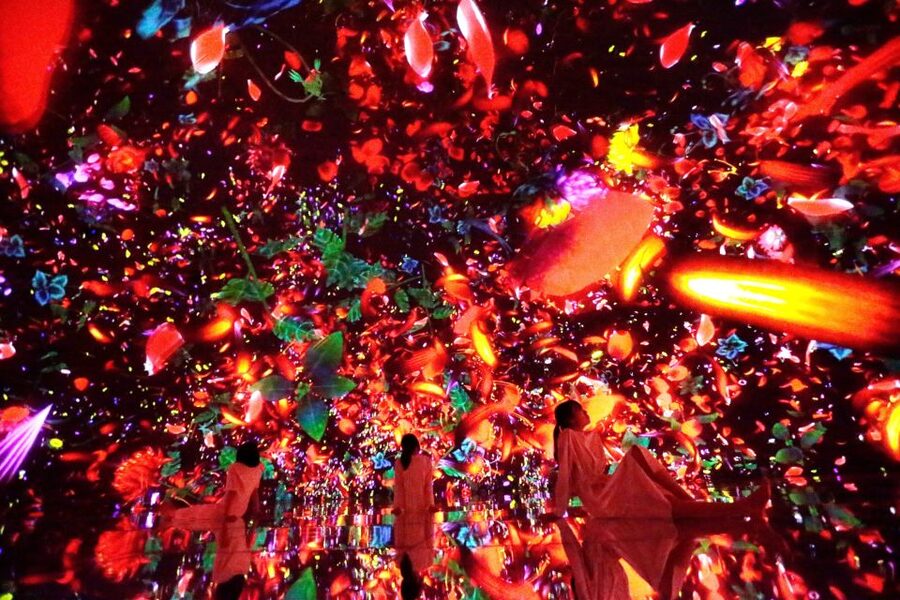
I would recommend this for families with older children, couples, groups of friends, teenagers, and solo visitors who like experimental art. It is especially good for a rainy evening or for a Tokyo day that needs something indoors and different.
You do not need an art background. Curiosity matters more than knowledge. If you are willing to remove your shoes, get your feet wet, and follow a route at a relaxed pace, you are likely to enjoy the central idea.
It may not suit people with epilepsy, light sensitivity, heart problems, or mobility needs that make uneven or water-based sections difficult. Some rooms cannot accommodate wheelchair users, so accessibility should be checked before purchase.
The exhibition is also a poor fit if you need a flexible schedule. The 30-minute admission window and non-refundable policy mean you must arrive on time. Intoxicated visitors are not allowed, and children under 13 need an adult with them.
Small details that make the visit better
Wear trousers that roll above the knee, and choose clothing that is comfortable around reflective floors. Bring your passport or ID, keep your voucher available on your phone, and carry only what you need.
Arrive with enough time to find the correct venue, but do not expect to enter far ahead of your selected slot. If the weather is unpleasant, the outdoor wait may be the least enjoyable part of the day.
A less busy entry time is worth considering. It can make the water rooms calmer and give you more room to watch the flower installations. An early time slot may also help if you want to avoid ending your visit in a rush.
You may find the official teamLab app useful for a smoother visit, so downloading it before arrival is a sensible extra step. Most important, keep your phone from taking over the experience. The images are far more impressive when you give them your full attention.
Should you book teamLab Planets TOKYO?
Yes, if you want an art visit that is physical, playful, and unlike a standard museum. The water galleries, falling flowers, orchids, and interactive light rooms offer enough variety to justify the price, and the attraction works well for mixed-age groups.
Book it only after checking the location, entry time, clothing requirements, and health restrictions. If you need wheelchair access throughout, dislike flashing light, or cannot manage the water sections, choose another Tokyo activity.
For everyone else, I would allow at least two hours, select a quieter time if possible, and treat the $25 ticket as payment for participation rather than observation. That is where teamLab Planets earns its place in a Tokyo itinerary.
FAQ
How much does teamLab Planets TOKYO cost?
The listed price is $25 per person. Transportation is not included.
How long is the ticket valid?
The ticket is valid for one day, with entry based on the selected starting time.
Can I buy a ticket on the same day?
No. Same-day ticket purchases are not possible according to the activity information.
How late can I arrive?
Entrance is allowed only during the first 30 minutes after your selected entry time. Late arrivals are not eligible for a refund.
What do I need to bring?
Bring your official voucher and a passport or ID card. Staff may request ID to confirm age or school affiliation.
Do I need to remove my shoes?
Yes. Visitors must enter the exhibition barefoot. Lockers are available for small items.
What should I wear?
Wear trousers that can be rolled above the knee because some areas contain water that can rise to knee height. Short clothing may be available at the venue for the water sections.
Can children visit teamLab Planets alone?
No. Children younger than 13 must be accompanied by an adult, and unaccompanied minors are not allowed.
Is teamLab Planets accessible for wheelchair users?
Some areas are not accessible by wheelchair. The activity is not suitable for wheelchair users according to the provided information.
Just added in Tokyo
- A One-of-a-Kind Sushi Experience in a Special Place of Japan★ 5.0 · 15 reviews
- Tokyo Cute Bento Cooking Class – Make a Kawaii Character Lunchbox★ 5.0 · 126 reviews
- Japanese Home Cooking Class & Walk in Todoroki Temple Tokyo★ 5.0 · 88 reviews
- Japan Tokyo Tower Observatory Deck E-Ticket★ 4.0 · 34 reviews
- Catch a Baseball Game in Tokyo with a Local – Tickets Included★ 5.0 · 24 reviews
- JDM Experience with Fast&Furious RX-7 (English speaking Driver)★ 5.0 · 57 reviews
- Tokyo Private Day Tour by Car with English speaking Driver Guide★ 4.0 · 29 reviews
- Japan Classic 10 Day – One Life Adventures★ 5.0 · 129 reviews
Museums and Galleries, compared.

teamLab Borderless Tickets: MORI Building DIGITAL ART MUSEUM
Read our review →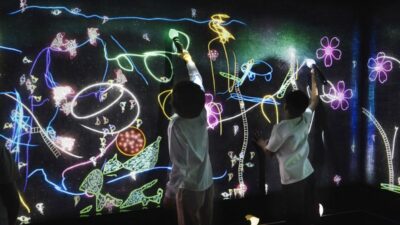



Browse the lists this tour appears in