
Reviewed · MUSEUMS AND GALLERIES
Art Aquarium Museum GINZA Ticket
Art Aquarium Ginza turns goldfish into the main event, setting them in sculptural tanks beneath shifting color and soft light. The route moves through rooms such as the Goldfish Corridor and Bamboo Forest, where fish, water and Japanese-inspired design make a compact, unusual stop in central Tokyo.
I like two things in particular: the displays give you a close look at goldfish breeds and flowing fins, and each room has its own visual character, so the walk feels more varied than a row of standard tanks. It is also easy to fit into a Ginza day, and you can take photos and video inside.
The main drawback is the scale. You may finish in 30 minutes if you move briskly, so the ticket makes most sense if you enjoy visual art, photography or a short family outing. Some people also find the dark rooms and small tanks uncomfortable from an animal-welfare point of view.
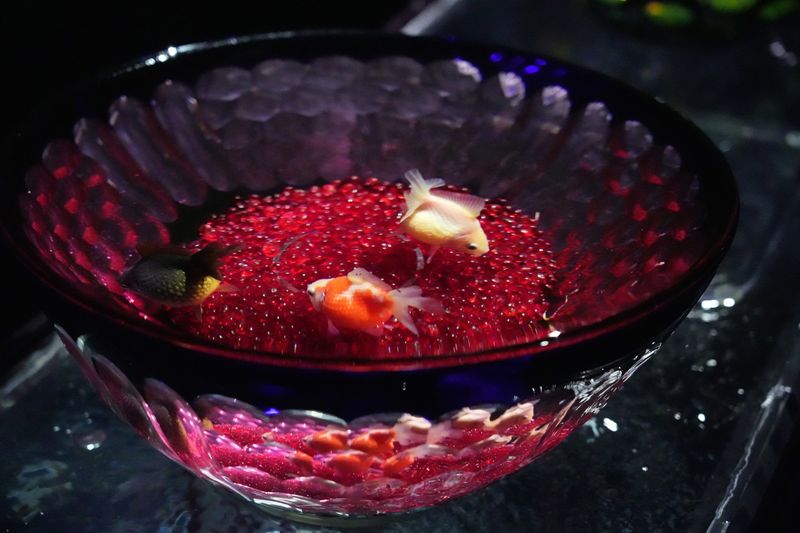
- Goldfish in open-top basins: The newer showcase puts rare breeds within close view, making their fin shapes and colors easier to notice.
- Rooms with distinct designs: Look for the illuminated Goldfish Corridor, stacked Goldfish Waterfall and bamboo-like columns of the Goldfish Bamboo Forest.
- A Japanese design thread: Temaririum draws on the bright patterns of traditional temari balls, giving the fish a different setting from the more subdued rooms.
- A short indoor visit: Allow one to two hours, though a quicker circuit can take around 30 minutes.
- Good for photos and children: Photography is allowed, and up to two children aged 12 or younger can enter free with a paying adult.
- A convenient Ginza address: The museum is inside Ginza Mitsukoshi, with direct underground access from Ginza Station.
In This Review
- Goldfish as the artwork
- Following the rooms, one display at a time
- Beauty, photography and the welfare question
- How long to stay, and what the ticket is worth
- Finding the entrance inside Ginza Mitsukoshi
- Booking and timing without fuss
- Who will enjoy Art Aquarium Ginza
- Should you book it?
- FAQ
- How long does a visit take?
- Where is the Art Aquarium Museum entrance?
- Which stations are closest?
- Can I take photos inside?
- Can children enter free?
- Are strollers and pets allowed?
Goldfish as the artwork
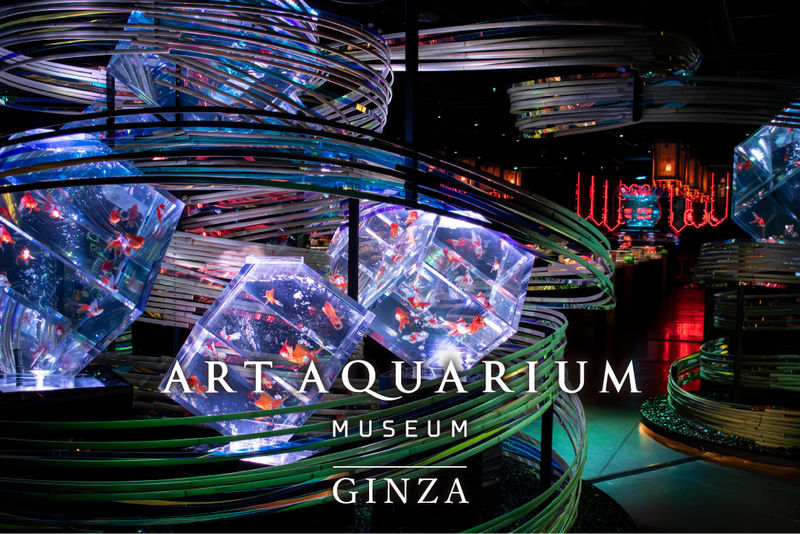
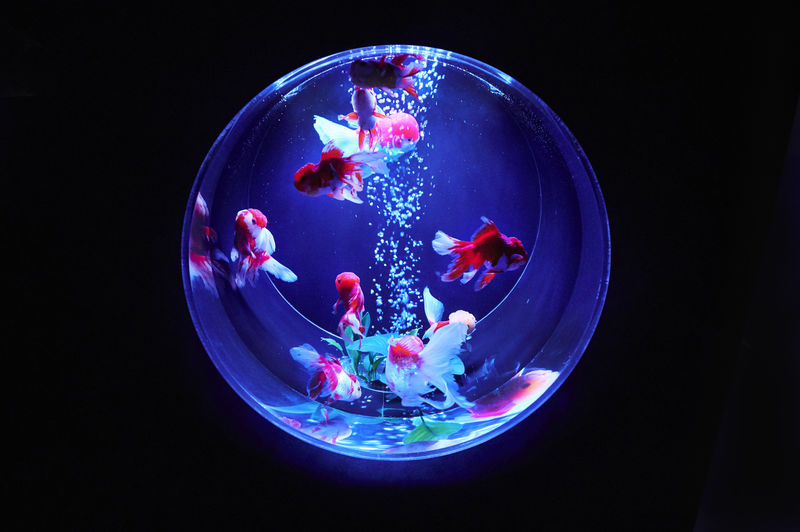
Art Aquarium is less a conventional aquarium than a sequence of designed rooms. Instead of focusing on habitat displays or a broad range of aquatic species, it puts goldfish at the center and changes how you see them through tank shape, light, color and setting. The fish are living subjects, but the design is the point.
That approach will appeal if you like photography, contemporary installations or Japanese decorative arts. It may disappoint if you expect a large aquarium with varied marine life, informative natural-history displays or a long route. The exhibition is compact, and its appeal depends on how much pleasure you take in looking closely at the same basic subject in different visual settings.
The museum has a subdued, often dark atmosphere. Colored light gives the tanks a dreamlike quality, and music and carefully controlled rooms add to the sense of a staged art experience. The effect is atmospheric rather than loud or action-packed, so it can make a calm change of pace from Ginza’s shops and streets.
Following the rooms, one display at a time
The experience is self-paced. There is no guide or fixed tour schedule in the information provided, so you can linger at a favorite tank or move on when a room has done its work. That freedom matters in a place built around looking: the same display may hold your attention for a few seconds or several minutes.
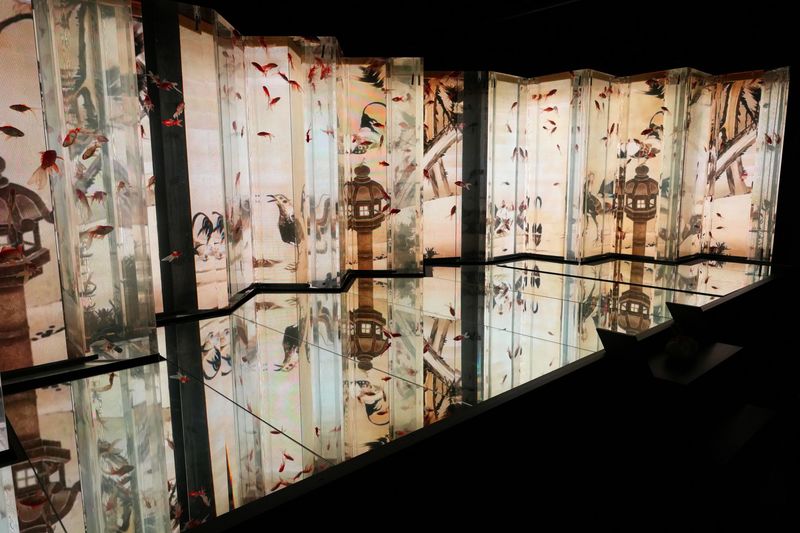
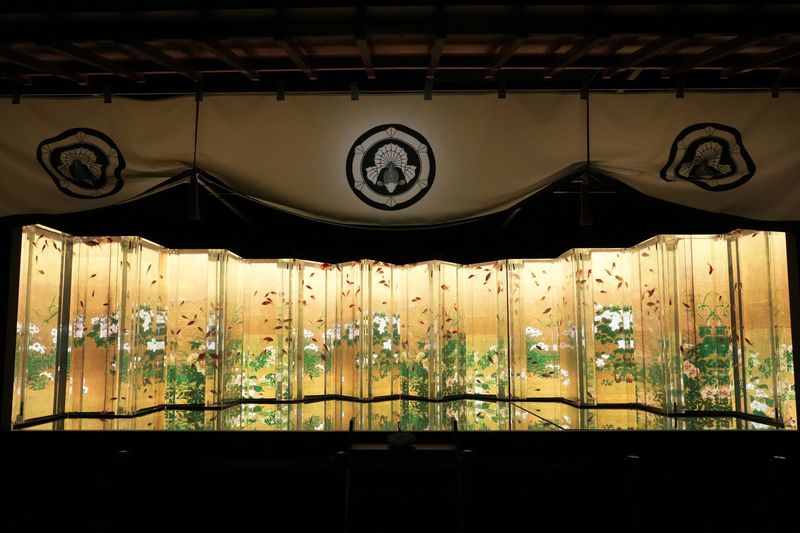
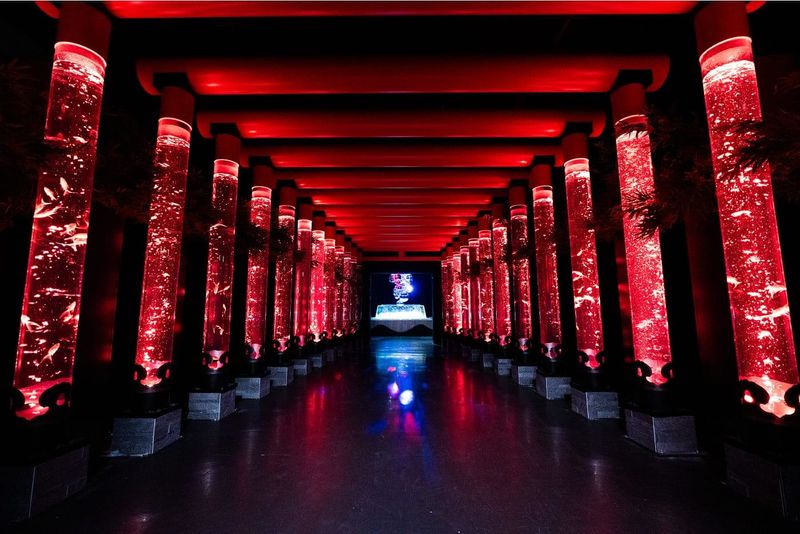
The Goldfish Corridor is a natural place to start. Long rows of illuminated tanks set fish against bands of color and light. From a distance, the repetition creates a strong pattern; closer up, the fish themselves become the focus. If you are taking pictures, this stretch offers plenty of chances to frame the fish against the glow, though the low light may affect how your camera handles the scene.
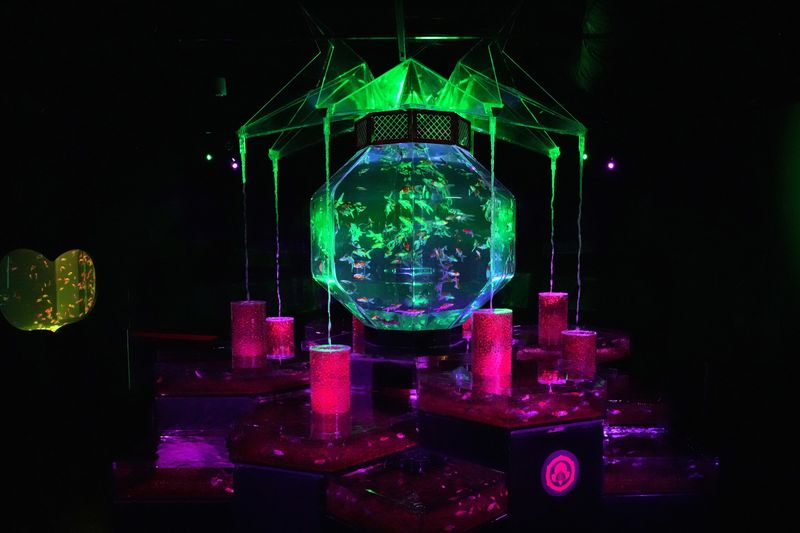
In the Goldfish Collection, unusual breeds and creative tank shapes put the fish’s bodies and fins on display. This is where a slow pace pays off. Rather than rushing to see every tank, pause long enough to compare shapes, markings and movement. The newer showcase includes rare breeds in clear, open-top basins, a useful contrast to the more enclosed, highly designed displays elsewhere.
The Goldfish Waterfall builds its effect through stacked tanks. The arrangement suggests water flowing downward, even as each tank holds its own small scene. It is a good example of the museum’s central trick: ordinary aquarium forms become part of a larger visual composition.
Temaririum uses bright patterns inspired by traditional Japanese temari balls. The design is more decorative and colorful than a plain tank, and it gives the room a distinct identity. For children, these shifting patterns and moving fish can be easier to connect with than a display that relies on subtle lighting alone.
At the Goldfish Bamboo Forest, tall column tanks echo the vertical lines of bamboo. Light changes across the columns while fish move inside them, making the room feel different from the corridor’s repeated horizontal views. The contrast between displays is one reason the exhibition feels more like a series of art rooms than a single aquarium hall.
You may also encounter digital art near the end, along with a museum shop. These provide a final change of pace after the fish displays. The shop is a practical place to browse for a small keepsake, though purchases are not included in the admission ticket.
More Entry Tickets in Tokyo
- Tokyo Disney Resort – Tokyo Disneyland & Tokyo DisneySea Park Tickets
★ 4.8 · 99,488 reviews - SHIBUYA SKY Ticket
★ 4.7 · 46,509 reviews - JR Whole Japan Rail Pass
★ 4.8 · 29,150 reviews
Beauty, photography and the welfare question
The strongest part of the visit is the visual design. People often value the combination of goldfish, lighting, sound and Japanese-inspired forms, and many find the rooms peaceful and striking. The venue is also well suited to photos: you are free to take pictures and video, and there are multiple displays with distinct backdrops.
Still, the lighting and tank sizes raise a fair concern for some visitors. The exhibition presents goldfish in small, brightly lit settings, and some people leave uneasy about the fish’s welfare. Others describe the tanks as immaculate and appreciate being able to see the fish closely. The supplied information does not establish conditions beyond the display itself, so I would not dismiss the concern or treat it as settled fact.
If animal welfare is central to your travel choices, you may prefer to skip this attraction. If you go, you can look at both parts of the experience: the care put into the visual presentation and the questions prompted by keeping live animals within it. It is reasonable to find the art beautiful and still feel conflicted about its subject.
How long to stay, and what the ticket is worth
The stated visit time is one to two hours, but your pace makes a big difference. A quick walk through can take about 20 to 30 minutes. If you stop to study the fish, take photos and move slowly through each room, an hour or more is a sensible plan. The exhibition is not a full-day attraction, so pair it with shopping, a meal or another Ginza stop rather than travelling across Tokyo solely for a short visit.
Tickets start at $17.05, with the exact cost depending on the package and date. At that price, the value comes down to your interest in visual design. For someone who enjoys atmospheric installations and wants a distinctive indoor stop, the art direction and photo opportunities can justify the fee. If you judge attractions by how many hours they occupy, or want broad aquarium displays, it may feel expensive for the time spent.
Several ticket options are offered. A fixed-date ticket is tied to the chosen date, while a flexible-date adult ticket allows a visit within its stated validity period. There are also combination packages with teamLab Planets Tokyo or 24-, 48- and 72-hour Tokyo Subway tickets. A buy-two-get-one offer and a ticket with a JPY 500 museum-shop voucher may also be available. Check the terms and current price for the specific option you choose.
Up to two children aged 0 to 12, including elementary school students, can enter free with a paying adult. Each child must be accompanied by a paying adult. That makes the outing easier to plan for families, though the subdued light and compact displays may suit children who enjoy looking at fish and taking pictures more than those who need hands-on activities.
Finding the entrance inside Ginza Mitsukoshi
The address is 4 Chome-6-16 Ginza, Chuo City, Tokyo, inside the Ginza Mitsukoshi New Building. The venue’s entrance is via the Ginza Terrace on the 9th floor. Use the New Building escalator or the elevators in either building to reach that floor. The Main Building escalator does not go directly to the 9th floor, so follow signs rather than assuming any escalator will take you there.
Getting there is straightforward. Ginza Station, served by the Tokyo Metro Ginza, Marunouchi and Hibiya lines, has direct access. Higashi-Ginza Station is about a two-minute walk via an underground passage, while Ginza-itchome Station is about five minutes on foot from Exit 9. JR Yurakucho Station is about a nine-minute walk from its Chuo or Ginza exit.
The direct station links make this a handy choice in bad weather or between other Ginza plans. Allow a little time to find the correct building and floor, particularly if you enter the department store from street level. Once inside, the New Building route is the detail that saves you the most confusion.
Strollers and pets are not allowed. There are no coin lockers at the museum, but you can find lockers around the station. If you are carrying shopping bags or travelling with a stroller, plan ahead rather than expecting to store them at the entrance.
More Museums and Galleries in Tokyo
- teamLab Borderless Tickets: MORI Building DIGITAL ART MUSEUM
★ 4.7 · 24,126 reviews - teamLab Planets TOKYO Ticket
★ 4.7 · 21,663 reviews - Tokyo: teamLab Planets TOKYO Digital Art Museum Entry Ticket
★ 4.6 · 9,779 reviews - Tokyo: Samurai Ninja Museum Guided tour and Experience
★ 4.6 · 1,010 reviews
Booking and timing without fuss
The ticket is redeemed at the venue by showing your voucher, and mobile entry means you do not need to print it. Same-day tickets may be available with instant confirmation, but advance purchase is sensible on weekends and holidays, when tickets can sell out. Opening hours are listed as daily from 10:00 a.m. to 7:00 p.m., with last entry at 6:00 p.m.; hours and closure dates can change, so check the current schedule before setting out.
A fixed-date voucher is valid only on the selected date and, if applicable, time. If you miss the selected time, you may still be able to enter later that day, but congestion can mean a wait. That makes it wise to choose a time you can reach without rushing, especially if you are connecting the visit with a meal or another booked attraction.
Who will enjoy Art Aquarium Ginza
This works best for art and design fans, anyone who likes photographing unusual interiors, and families with children who are curious about goldfish. It also suits a rainy-day plan: the whole visit is indoors, central and short enough to fit between other activities.
You may want to pass if you need a long attraction, prefer natural-history interpretation, or feel strongly about keeping fish in display tanks. The exhibition’s visual effect is its main draw, but that same presentation is what prompts ethical reservations for some people. Knowing that in advance helps you make a more comfortable choice.
Should you book it?
Book Art Aquarium Ginza if you want a compact, visually distinctive stop in central Tokyo and you enjoy taking time with light, pattern and photography. The combination of unusual goldfish displays, easy Ginza access and child admission makes it simple to add to a day nearby.
Skip it if a 30-minute visit would feel poor value, or if the animal-welfare question would prevent you from enjoying the art. For everyone else, it is a memorable hour or so, not a major aquarium expedition. Plan around that scale, and the ticket is easier to judge fairly.
FAQ
How long does a visit take?
Allow about one to two hours, depending on how long you spend viewing each display and taking photos. A quicker visit may take around 30 minutes.
Where is the Art Aquarium Museum entrance?
The museum is inside Ginza Mitsukoshi New Building at 4 Chome-6-16 Ginza, Chuo City, Tokyo. Enter via the Ginza Terrace on the 9th floor.
Which stations are closest?
Ginza Station has direct access. Higashi-Ginza Station is about a two-minute walk via an underground passage, Ginza-itchome Station is about five minutes away, and JR Yurakucho Station is about a nine-minute walk.
Can I take photos inside?
Yes. Photo and video taking are allowed inside the museum.
Can children enter free?
Up to two children aged 0 to 12 can enter free with a paying ticket holder. Children must be accompanied by a paying adult.
Are strollers and pets allowed?
No. Strollers and pets are not allowed, and the museum does not have coin lockers. There are coin lockers around the station.
Just added in Tokyo
- Simply Japan★ 4.6 · 262 reviews
- Japan: Tokyo Nights & Kyoto Temples★ 4.7 · 20 reviews
- Japan: Land of the Rising Sun★ 4.7 · 122 reviews
- Japan Classic 14 Day – One Life Adventures★ 4.9 · 1,003 reviews
- A Classic 11 Day Japan Holiday★ 4.8 · 32 reviews
- 5 Day All Inclusive Japan Classics(Private Guide and Driver)Family Tour Customizable★ 5.0 · 4 reviews
- 13-Day Japan Tour: Tokyo, Mount Fuji, Kyoto, Nara, Osaka & Beyond★ 4.5 · 207 reviews
- Tokyo to Osaka Shinkansen Tickets & Schedule★ 4.9 · 8,499 reviews
Museums and Galleries, compared.
teamLab Borderless Tickets: MORI Building DIGITAL ART MUSEUM
Read our review →
teamLab Planets TOKYO Digital Art Museum Entry Ticket
Read our review →

Browse the lists this tour appears in