
Reviewed · MUSEUMS AND GALLERIES
Tokyo: Samurai Ninja Museum Guided tour and Experience
History gets hands-on here. Tokyo’s Samurai Ninja Museum pairs a short English guided tour with armor, helmets, swords, ninja stories, and two playful activities. I especially like the clear explanations from lively guides and the chance to wear samurai gear and throw shuriken instead of only looking at objects behind glass. The main point to consider is group size: bookings through one platform are limited to 15 people, but the full experience can include more participants from other booking sites.
This is a good choice if you want a compact introduction to samurai and ninja culture without giving up half a day. Guides such as Kenny, Nami, Shin, Megan, Nao, and Leon have earned praise for making the subject easy to follow, often with jokes and questions for children. At about an hour, the tour has enough substance to teach you something, but it does not ask young visitors to sit still forever.
In This Review
- Key points at a glance
- What the $27 admission really includes
- Beginning with the museum’s samurai displays
- The ninja section and what you learn
- Dressing as a samurai for photographs
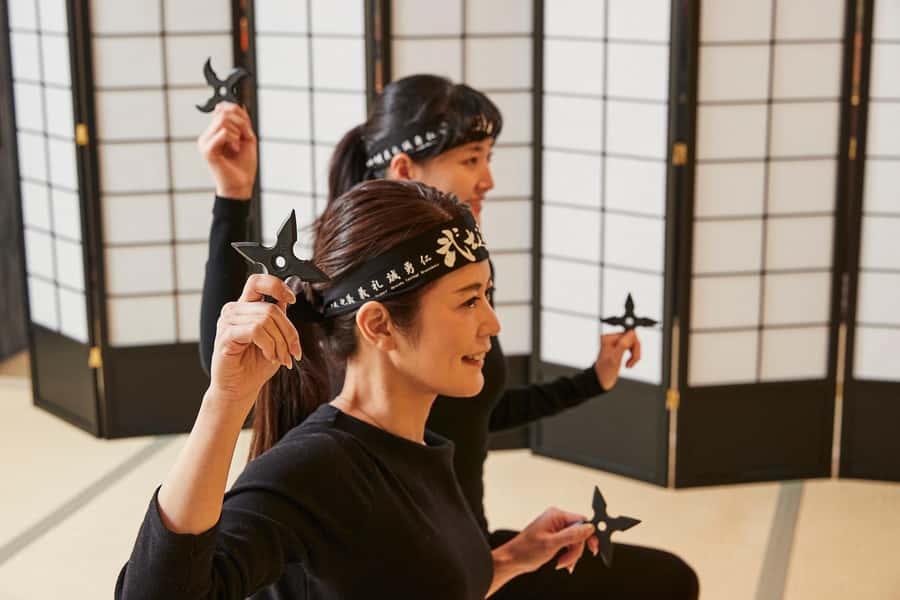
- Throwing shuriken and trying a ninja skill
- Why the guide makes such a difference
- Timing, pace, and group size
- Is it suitable for children and teenagers?
- English quality and teaching style
- What could disappoint you
- How to fit it into your Tokyo day
- Booking advice for the best experience
- Should you book the Samurai Ninja Museum tour?
- FAQ
- Where is the Samurai Ninja Museum experience located?
- How much does the tour cost?
- What is included in the ticket?
- Is the tour offered in English?
- How long does the experience take?
- Can I throw ninja stars?
- Can I dress up as a samurai?
- Is the activity suitable for children?
- How many people can join one booking?
- Can I cancel for a full refund?
Key points at a glance
- Real-looking samurai equipment: See armor, helmets, swords, and other displays that help put famous Japanese warriors into a physical setting.
- A guided English history lesson: Your guide explains the roles of samurai and ninja, important events, weapons, customs, and common myths.
- Shuriken practice included: You get to throw ninja stars as part of the visit, with a small contest included in some sessions.
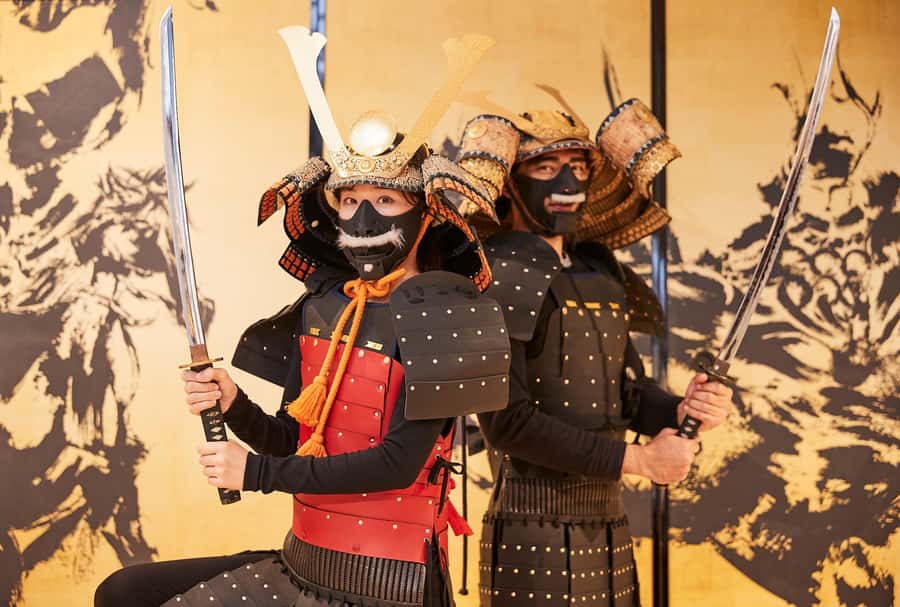
- Samurai dress-up with metal sword: You can put on samurai clothing, wear a real helmet, and pose while holding a metal sword.
- A strong family activity: Children, teenagers, and adults can all take part, and guides may use games or humor to keep younger participants involved.
- Good value for a short Tokyo stop: At $27 per person, it offers a guided museum visit plus hands-on activities rather than entry alone.
What the $27 admission really includes
The price is $27 per person, and that covers more than a basic museum ticket. You get entry, an English-speaking guide, ninja star throwing, and the samurai costume activity. For a visitor trying to fit several Tokyo sights into one day, that combination makes the cost reasonable.
A standard museum visit can leave you staring at armor and guessing what it meant. Here, the guide supplies the missing context, then lets you handle a small part of the subject through dress-up and target practice. I would not book this expecting a large national museum or a long academic lecture. I would book it as a focused, entertaining introduction.
The value rises if you are traveling with children or teenagers. The activities give younger visitors a reason to pay attention during the history portion. Adults also get something worthwhile, especially if your knowledge comes mostly from films, television, or video games.
More Castles and Historic Sites in Tokyo
- Tokyo: Imperial Palace and Shogun Historical Walking Tour
★ 5.0 · 2,251 reviews - Tokyo Castle & Imperial PalaceーShogun Walking Tour
★ 4.7 · 1,068 reviews - Tokyo: Imperial Palace Japanese History Walking Tour
★ 4.9 · 987 reviews
Beginning with the museum’s samurai displays
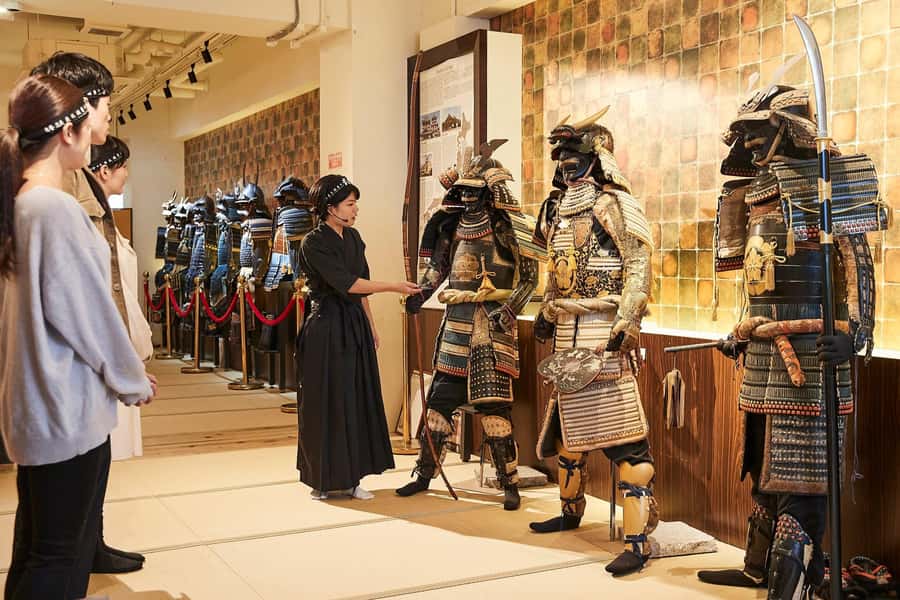
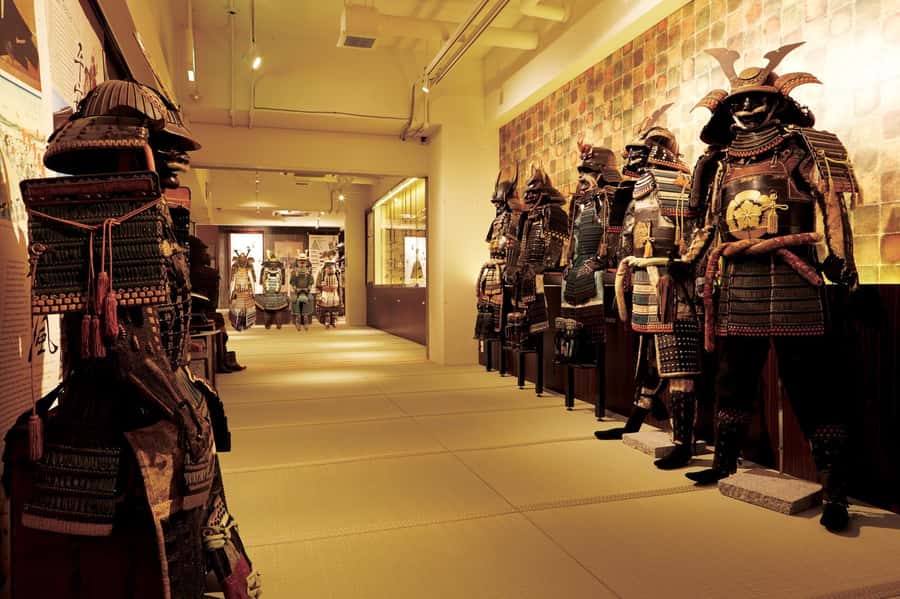
The visit begins with exhibits about samurai life and equipment. You can expect to see armor, helmets, and swords, with the guide explaining what you are looking at and how these objects fit into Japanese history.
Armor is much easier to understand when someone points out its parts and purpose. A helmet is not simply a dramatic photo prop, and a sword is not merely a symbol from a movie. The guide helps connect these objects to the people who used them and to the society around them.
The tour also covers major events and the samurai way of life. One especially useful part is the effort to sort fact from screen mythology. If your picture of samurai comes from films, you may leave with a more careful view of what is historical and what has been polished for entertainment.
Guide quality matters here. Kenny has been praised for mixing humor with solid explanations, while Nami and Shin are noted for giving clear accounts of samurai and ninja culture. Megan’s tour has been described as easy to follow and about an hour long. The exact personality will depend on who leads your session, but the experience is built around a guide rather than silent displays.
The ninja section and what you learn
Ninja culture carries a thick layer of mystery, and the tour addresses that directly. You learn about the role of ninjas in the past and how their image developed over time.
That distinction is useful. Popular culture often turns ninjas into nearly supernatural figures, while the historical reality was tied to particular tasks, skills, and periods. The museum experience gives you a basic framework without burying you in dates.
The ninja material also makes a nice change of pace from the samurai displays. Samurai armor can feel formal and weighty. Ninja stories bring secrecy, tactics, and legend into the discussion. Guides use the contrast to explain how these figures were viewed and why both remain so famous today.
I would keep your expectations sensible. This is an introductory tour, not a specialist study of Japanese military history. You will hear useful background, bust a few myths, and come away with better questions. That is a fair result for a one-hour activity in central Tokyo.
Dressing as a samurai for photographs
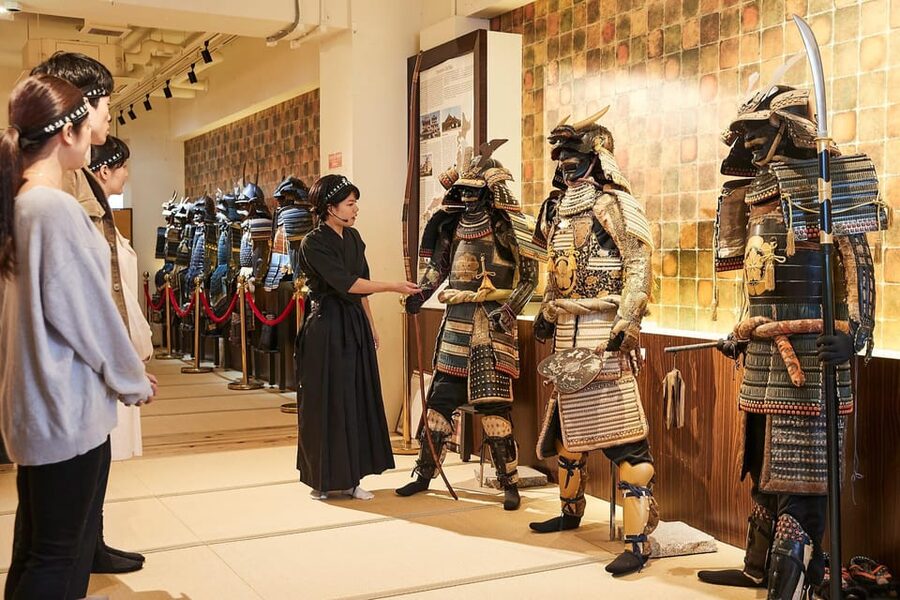
The samurai portion gives you a chance to dress up, put on a real samurai helmet, and hold a metal samurai sword. This is the part children often remember most, but adults are just as likely to enjoy the photo opportunity.
The costume turns an abstract lesson into something physical. A helmet has weight. Armor changes the way you stand. Holding a sword, even briefly and under supervision, gives you a small sense of the visual authority these objects were meant to convey.
The experience is not presented as combat training. It is a photo-friendly activity linked to the museum’s subject. I like that the dress-up comes after some historical explanation, since you have already learned something about the role and image of the samurai before posing in the gear.
If you are visiting with a family, this gives everyone an easy shared moment. One child can dress up while the rest of the group watches, then you can switch if the session allows. The supplied details do not promise that every participant will have unlimited costume time, so think of it as a guided group activity rather than a private photo studio.
More Museums and Galleries in Tokyo
- teamLab Borderless Tickets: MORI Building DIGITAL ART MUSEUM
★ 4.7 · 24,126 reviews - teamLab Planets TOKYO Ticket
★ 4.7 · 21,663 reviews - Tokyo: teamLab Planets TOKYO Digital Art Museum Entry Ticket
★ 4.6 · 9,779 reviews - Art Aquarium Museum GINZA Ticket
★ 4.6 · 5,577 reviews
Throwing shuriken and trying a ninja skill
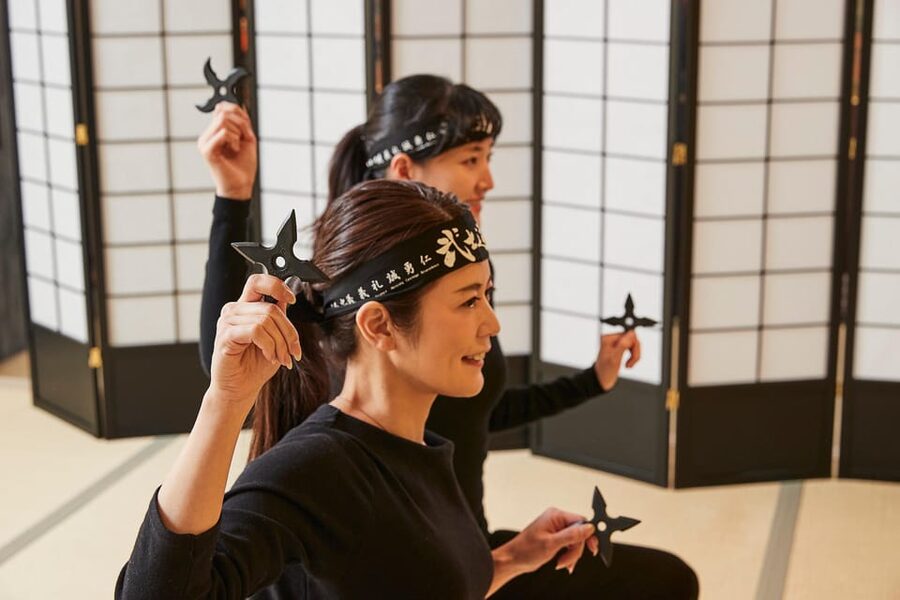
The shuriken activity is the most playful part of the visit. You practice throwing ninja stars at a target, and some sessions include a contest where the winner can keep a star.
This works well because it is simple. You do not need prior skill, special fitness, or a deep interest in military history. You receive the chance to try, miss a few times, and laugh with the group. It gives the tour a lively finish after the display and lecture sections.
Families place special value on this activity. Children can remember the physical challenge, while adults still get a quick taste of the subject. Several guide-led sessions have also used games or direct questions to involve younger members of the group.
Keep the activity in proportion. You are not receiving professional martial arts instruction, and the tour is not a full ninja training course. It is a safe, structured museum activity designed to add fun and a memorable photo or story to your Tokyo day.
Why the guide makes such a difference
The strongest part of this experience is not simply the collection. It is the way the guide turns the collection into a story.
A good guide can explain a weapon in a sentence, then use it to introduce social rank, warfare, or daily life. That keeps the tour moving and prevents the museum from feeling like a row of disconnected objects. The best sessions appear to rely on humor, clear English, and frequent interaction.
Kenny is repeatedly praised for his comic timing and enthusiasm. Nami is described as warm and informative. Shin has been credited with giving detailed explanations, and Nao with making the tour funny and interactive. Leon and the other guides have also been praised for speaking clear English and making the information easy to understand.
Guide names are useful to know, but you cannot choose one based on this information. Staff assignments can change. I would focus on the format: the tour is designed to be conversational, accessible, and active rather than formal or dry.
Timing, pace, and group size
The experience takes roughly an hour according to the supplied tour feedback. That length is one of its practical strengths. You can place it between other Tokyo plans, and children are less likely to lose interest before the hands-on section.
The pacing also seems carefully balanced. The tour gives time to the displays, history, costume activity, and shuriken practice without turning any one part into a long lecture. If you want a full afternoon devoted to samurai studies, this will feel short. If you want a compact cultural stop, the timing is well judged.
Group size deserves a closer look. A booking through GetYourGuide can reserve a maximum of 15 people, but the experience can include additional participants booked through other sites. That means you should not assume you are buying a private or very small tour.
A larger group may make the costume and throwing activities feel less personal. On the other hand, the activities are naturally social, and good guides have been praised for keeping large groups involved. If you need individual instruction or quiet museum time, ask about the expected group size before booking.
Is it suitable for children and teenagers?
I would put this high on the list for families. Children get armor, helmets, a sword to hold, and shuriken throwing. Teenagers who might resist a standard museum often respond better when the visit includes a physical challenge and a chance to take photos.
The tour also works for adults who do not consider themselves history fans. One useful feature is the plain delivery. The information is presented in a way that is easy to understand, with humor and examples rather than a heavy lecture.
The subject suits anyone interested in Japanese culture, old weapons, military traditions, or samurai and ninja films. Film fans may enjoy comparing the popular image with the historical explanations. A serious specialist may want more depth than this format can offer.
The experience is also a reasonable rainy-day plan because the main attractions are indoors. The supplied information does not provide accessibility details, so anyone with mobility, seating, or equipment concerns should contact the operator before booking.
English quality and teaching style
The tour is offered in English, and clear communication is central to its value. The guides praised in the supplied comments are described as fluent, enthusiastic, humorous, and easy to understand.
That matters because the subject contains unfamiliar names, objects, and historical ideas. A guide who rushes or speaks in overly technical terms can make the displays hard to follow. Here, the strongest descriptions point to explanations that are lively and accessible.
I also like that the teaching is mixed with participation. You are not expected to remember every date. You can ask questions, watch demonstrations, pose in costume, and try the shuriken activity. The result is a basic but lasting understanding of how samurai and ninja fit into Japan’s past.
What could disappoint you
The biggest limitation is scale. This is a small, focused experience rather than a huge museum visit. The tour lasts about an hour, and the hands-on sections are brief activities, not extended workshops.
The group can also be larger than the 15-person booking limit shown on one booking channel. If you dislike waiting your turn for a photo or target practice, that may affect your enjoyment.
The samurai and ninja labels can also create expectations of something more theatrical. The supplied details promise a guided museum tour, real equipment, dress-up, and shuriken throwing. They do not promise a stage show, sword fight, or elaborate performance. Book it for history plus playful participation, not for a full action spectacle.
Finally, the quality of the visit depends heavily on the guide. The recorded experiences praise the staff repeatedly, but a different guide may have a different style. The good news is that the format gives any capable guide plenty to work with.
How to fit it into your Tokyo day
At about one hour, this tour is easy to pair with other plans. The supplied information places it in Tokyo, on Honshu, and one comment describes the surrounding area as a good shopping area with access by train or taxi.
You can use it as a short cultural stop before or after shopping. It also works well on a family day when you want one structured activity between meals and sightseeing. Since the experience is not an all-day commitment, you retain room in your schedule for another neighborhood or museum.
I would avoid placing it at the very end of an overloaded day if your children are already tired. The shuriken activity is more enjoyable when everyone still has some energy. Arriving with enough time to listen to the guide also makes the displays more meaningful.
The operator is GLOBA Inc. The tour includes an English-speaking guide, and the booking terms allow you to reserve now and pay later. Cancellation is available up to 24 hours before the experience for a full refund, which is useful when Tokyo plans need to stay flexible.
Booking advice for the best experience
Book this if you want a short, active introduction to samurai and ninja culture. It is especially well suited to families, first-time visitors to Tokyo, film fans, and anyone who wants more than a display-only museum.
Before paying, check the session details and expected group size. The maximum of 15 people applies to reservations through GetYourGuide, but other booking channels can add participants. If you are traveling with a large family, confirm that everyone can join the same time slot.
Keep your schedule flexible enough to enjoy the guide’s explanations. The costume and shuriken sections are fun, but the history gives those activities their meaning. I would also allow time afterward for photos and nearby plans rather than rushing straight to the next appointment.
Should you book the Samurai Ninja Museum tour?
For $27, I think this is a good-value Tokyo activity. You receive museum entry, an English guided tour, samurai dress-up with a real helmet and metal sword, and ninja star practice. That is a fuller experience than a simple admission ticket, while the one-hour format keeps the commitment small.
Book it if you want history served in an approachable way, especially with children or teenagers. Skip it if you are seeking a large national museum, a long scholarly lecture, or serious martial arts training.
The best reason to go is the balance: a little history, a little myth-busting, a few impressive objects, and two activities that help the subject stick. For many visitors, that makes the Samurai Ninja Museum a memorable and practical stop in Tokyo.
FAQ
Where is the Samurai Ninja Museum experience located?
It is located in Tokyo, on Honshu, Japan. One supplied comment describes the area as a good shopping location with access by train or taxi.
How much does the tour cost?
The listed price is $27 per person.
What is included in the ticket?
The price includes museum entry, a guided tour with an English-speaking guide, a ninja star throwing activity, and a samurai experience.
Is the tour offered in English?
Yes. The tour includes an English-speaking guide, and English is the listed language.
How long does the experience take?
The tour is described as lasting about an hour in the supplied information.
Can I throw ninja stars?
Yes. Ninja star, or shuriken, throwing is included in the experience.
Can I dress up as a samurai?
Yes. The samurai activity includes dressing up, wearing a real samurai helmet, and holding a metal samurai sword.
Is the activity suitable for children?
Yes. The experience is described as suitable for families, and several supplied accounts specifically praise it for children and teenagers.
How many people can join one booking?
You can reserve a maximum of 15 people through GetYourGuide. The full experience may include more participants because bookings from other sites are accepted.
Can I cancel for a full refund?
Yes. You can cancel up to 24 hours in advance for a full refund. You can also reserve and pay later, which keeps your plans flexible.
Just added in Tokyo
- A One-of-a-Kind Sushi Experience in a Special Place of Japan★ 5.0 · 15 reviews
- Tokyo Cute Bento Cooking Class – Make a Kawaii Character Lunchbox★ 5.0 · 126 reviews
- Japanese Home Cooking Class & Walk in Todoroki Temple Tokyo★ 5.0 · 88 reviews
- Japan Tokyo Tower Observatory Deck E-Ticket★ 4.0 · 34 reviews
- Catch a Baseball Game in Tokyo with a Local – Tickets Included★ 5.0 · 24 reviews
- JDM Experience with Fast&Furious RX-7 (English speaking Driver)★ 5.0 · 57 reviews
- Tokyo Private Day Tour by Car with English speaking Driver Guide★ 4.0 · 29 reviews
- Japan Classic 10 Day – One Life Adventures★ 5.0 · 129 reviews
Museums and Galleries, compared.

teamLab Borderless Tickets: MORI Building DIGITAL ART MUSEUM
Read our review →

teamLab Planets TOKYO Digital Art Museum Entry Ticket
Read our review →



Browse the lists this tour appears in