Reviewed · TOKYO TOURS
Tokyo Wagyu & Sake Pairing Tasting Experience with Local Flavors
Tokyo does dinner very well. This experience makes it a lesson in Wagyu, sake, and Japanese cooking, served in a small setting near Tokyo Skytree. I especially like the variety of Wagyu cuts and the care taken to match each course with sake. I also like that solo diners can book, and that the group is limited to 12 people.
The main thing to consider is the setting. EMC is a compact restaurant space, and one unhappy diner was seated at the bar rather than with the main group. The experience is built around eating and explanation, not a social food walk, so you should book it for the meal itself rather than expect a lively group tour.
In This Review
- Quick points before you book
- A small restaurant beneath the Skytree
- What happens during the two-hour tasting
- Why tasting several Wagyu cuts matters
- Sake pairings that make the dinner useful
- The hosts and the tone of the evening
- How much value do you get for $151.96?
- Who will enjoy this most?
- Timing your Skytree evening
- My verdict on this Wagyu dinner
- FAQ
- Where does the Wagyu and sake experience take place?
- What time does the experience start?
- Is transportation included?
- Can children participate?
- What if I do not drink alcohol?
- Can the restaurant accommodate dietary needs?
Quick points before you book
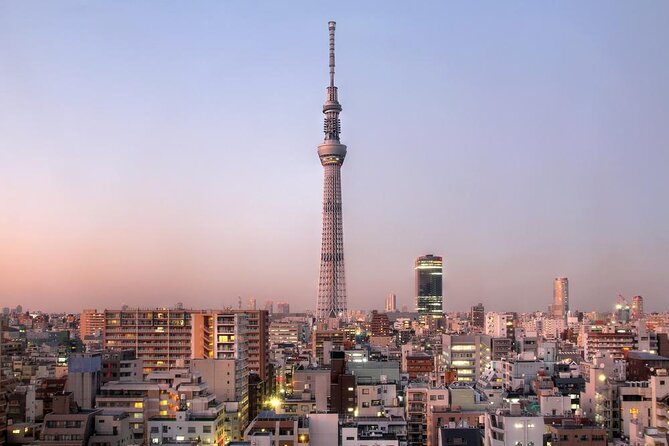
- Near Tokyo Skytree: The restaurant is about a five-block walk from the tower, making this an easy evening pairing with Skytree sightseeing.
- Many ways with Wagyu: You taste different cuts prepared with Japanese flavors, rather than receiving one large steak and calling it dinner.
- Sake with every course: Each dish comes with a hand-selected sake, including seasonal bottles and a house welcome drink.
- Small group format: The maximum is 12 people, and some sessions are much smaller, creating a close-up view of the preparation.
- About two hours: The tasting fits neatly into an evening plan, with a 6:00 pm start and a return to the same meeting point.
- Alcohol-free option: Guests who do not drink can receive up to three glasses of craft juice instead.
A small restaurant beneath the Skytree
You meet at EMC, at 3-chome 25-17 Oshiage in Sumida City. The restaurant sits on a quiet street close to Tokyo Skytree, rather than in a grand dining room with a flashy entrance. That modest arrival can be misleading. Inside, the room is intimate, and the cooking area lets you watch some of the preparation.
The location works well if you already plan to visit Skytree. You can see the tower, walk roughly five blocks to the restaurant, and settle in for dinner without arranging private transport. The activity ends where it begins, so you are responsible for getting to and from Oshiage on your own.
The small scale is part of the appeal. With no more than 12 diners, the chef and host can explain the dishes without shouting across a large room. Several people have described sessions with only six diners, which gives the meal an almost private-dining feel.
There is one practical catch: seating may not always place every party at the main table. If sitting with the full group matters to you, arrive on time and tell the staff if you have a seating concern. The restaurant has also received praise for its friendly English-speaking host, particularly from people who wanted clear explanations of unfamiliar beef cuts and sake.
A few more options to weigh up in Tokyo
- Tokyo Disney Resort – Tokyo Disneyland & Tokyo DisneySea Park Tickets
★ 4.8 · 99,488 reviews - SHIBUYA SKY Ticket
★ 4.7 · 46,509 reviews - JR Whole Japan Rail Pass
★ 4.8 · 29,150 reviews
What happens during the two-hour tasting
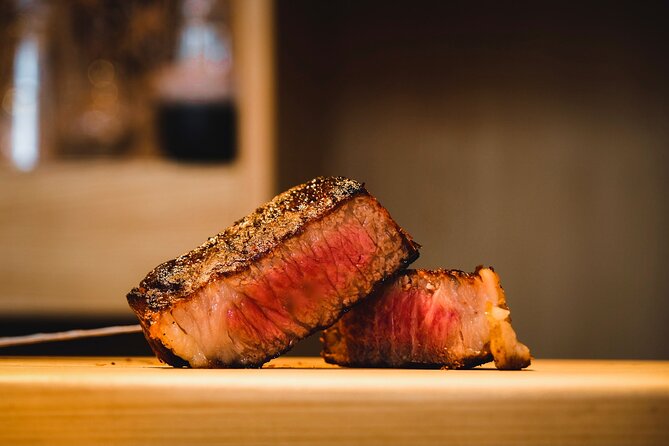
The evening begins with a brief explanation of the meal. You learn that the menu uses several parts of Wagyu and pairs the food with Japanese sake. From there, the chef prepares a succession of small courses in an omakase-style format.
The supplied details describe the meal in two slightly different ways: one section refers to seven dishes, while another describes a 10-course menu. The safest expectation is a multi-course tasting rather than a fixed promise of exactly seven or 10 plates. The contents change with the season, so no printed menu can guarantee the precise dishes you will receive.
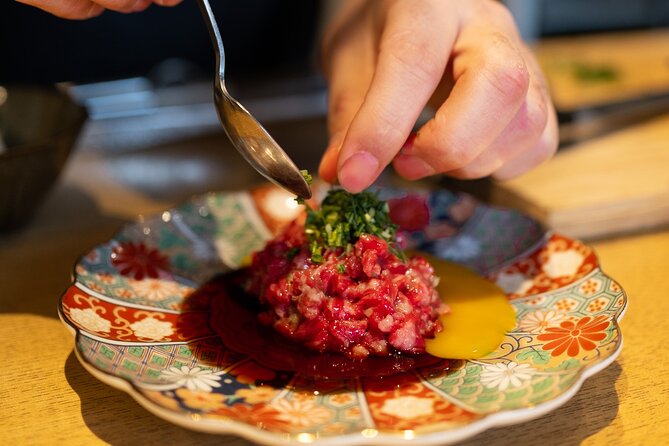
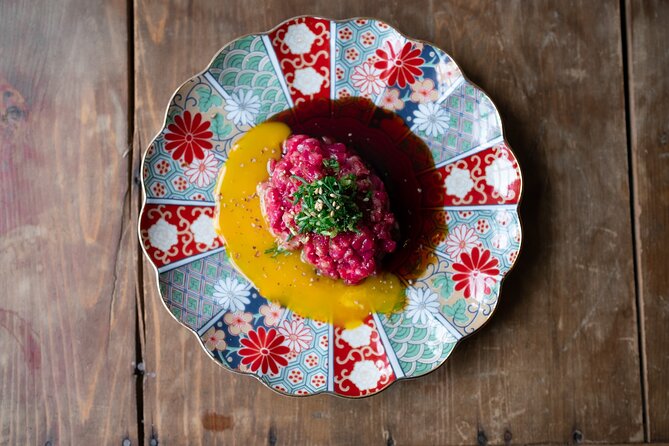
That changing menu is useful for a visitor who wants to taste Japanese ingredients beyond standard beef cuts. Seasonal ingredients and alcoholic drinks are part of the plan, and the beef may appear in several forms. You might receive simply prepared pieces that let the Wagyu speak for itself, followed by dishes that use traditional Japanese flavors.
The chef cooks in front of the diners for at least part of the meal. That gives you more than a plate arriving from a distant kitchen. You can watch the preparation, see how portions are handled, and ask about what you are eating. Chef Mike is specifically praised for explaining the food and cooking methods, while the host or translator helps make the information accessible in English.
Allow close to two hours, but do not treat it as a hurried meal. The pacing is designed around repeated food and drink pairings. If you have a theater booking, a timed observation deck visit, or a train connection afterward, leave plenty of room.
Why tasting several Wagyu cuts matters
Many visitors first meet Wagyu as a thick, expensive steak. This dinner takes a broader approach. You sample different parts of the animal, and each preparation shows how fat, texture, and seasoning can change the experience.
That is valuable because Wagyu is not only about tenderness. One bite may be soft and richly marbled, while another has a firmer texture or a different balance of meat and fat. Japanese seasoning can keep the dishes from becoming repetitive, especially across a long tasting.
The portions are designed as part of a sequence. You are not simply paying for a heavy slab of beef. You are paying to compare preparations, notice changes in texture, and understand why one sake suits one dish better than another.
Several diners have called the meat exceptionally tender, with some describing it as melting in the mouth. The praise is consistent enough to make the beef the clear star of the evening. Still, I would not book this if you dislike fatty beef or want a simple, familiar steak dinner. The point is variety, and that means some cuts may suit you better than others.
The food is also prepared with restraint. One useful description of the style is simple elegance, allowing the Wagyu to remain at the center. You should expect careful plating and traditional Japanese touches, but not a theatrical performance built around oversized portions.
Sake pairings that make the dinner useful
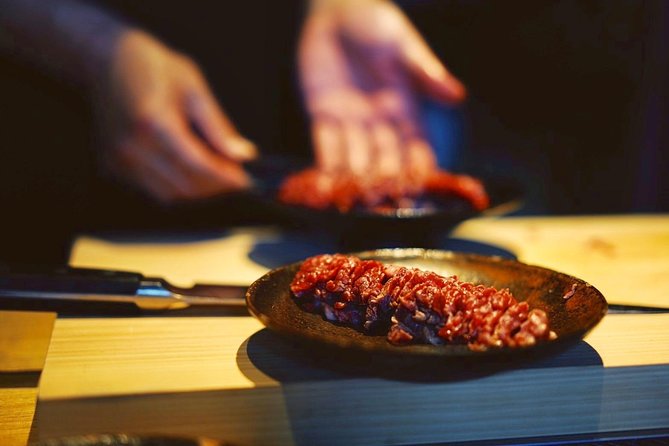
Sake can be confusing when you first encounter it. The staff make it easier by serving different styles alongside specific dishes rather than asking you to choose from a long menu without guidance.
Each course is paired with sake selected for that part of the meal. The pairings give you a chance to notice how sweetness, dryness, aroma, and body affect the beef. A sake that feels light on its own may work well with a strongly seasoned bite, while a fuller pour may match a richer cut.
The selection changes, and seasonal bottles are included. One drink described in the meal is a house-made sake served as a welcome drink. People who enjoyed it took photographs of the bottles so they could search for them later. That is a smart tip if you discover a style you want to find elsewhere in Japan.
The sake is not merely an optional add-on. It is central to the structure of the dinner. If you already enjoy sake, you will probably appreciate the range. If you are new to it, the explanations give you a gentle way to compare styles without committing to a full bottle.
Alcohol is served, so you must be at least 20 years old to take part. If you do not drink, the restaurant offers up to three glasses of craft juice. That makes the meal possible for non-drinkers, though the experience is still designed around food and sake together.
A completely different kind of day out:
- Mt Fuji and Hakone 1-Day Bus Tour Return by Bullet Train
★ 5.0 · 26,383 reviews - TOKYO SKYTREE® Ticket
★ 4.7 · 25,136 reviews - teamLab Borderless Tickets: MORI Building DIGITAL ART MUSEUM
★ 4.7 · 24,126 reviews - teamLab Planets TOKYO Ticket
★ 4.7 · 21,663 reviews
The hosts and the tone of the evening
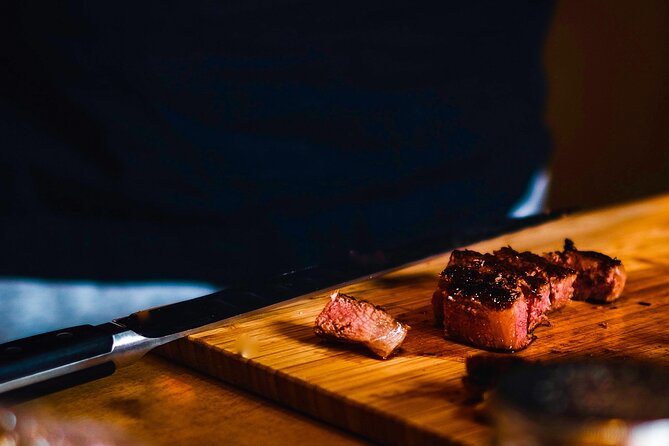
The strongest part of the service is the explanation. The staff describe the cuts, ingredients, cooking methods, and sake as the food arrives. Chef Mike is repeatedly praised for being warm and engaging, and the English support is good enough for many international diners to follow the meal comfortably.
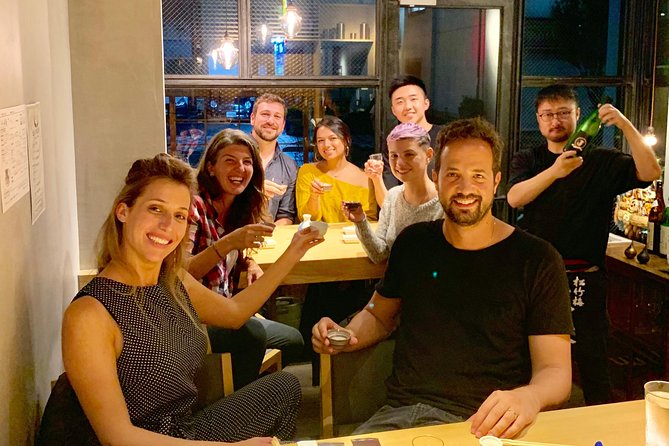
The intimate format helps. You can see the chef work, hear the explanation, and ask a question without trying to attract attention in a crowded dining room. Solo diners have also found the arrangement comfortable, especially when other people at the table were open to conversation.
The mood is relaxed rather than formal. The room has been described as cozy, with music playing in the background. One diner liked the old-school hip-hop soundtrack, while another enjoyed watching the food being made. Those details tell you this is not a silent, ceremonial tasting. It is polished, but it has personality.
Service may not be identical on every night. One poor experience involved a diner seated separately at the bar and feeling neglected after the opening dish. The staff response made clear that the experience is not intended primarily for socializing. That is worth knowing before you arrive: choose it for the food, instruction, and small-room atmosphere, not for a guaranteed group-bonding event.
How much value do you get for $151.96?
At $151.96 per person, this is an expensive dinner. You can find cheaper Wagyu meals in Tokyo, and a standard restaurant meal will usually cost less.
The price makes more sense when you count what is included: a multi-course dinner, several Wagyu preparations, sake with each course, a welcome drink, cooking demonstrations, and explanations in English. You are also getting access to cuts and pairings that would be difficult to order intelligently on your own.
The best comparison is not a bowl of beef or a single steak. Compare it with a high-end tasting dinner where you would pay separately for drinks and a guide. In that context, the cost is easier to justify, especially if you want one memorable food-focused evening rather than several ordinary meals.
Value depends on your priorities. I would call it worthwhile for a serious food night, a birthday, an anniversary, or a final evening in Tokyo. I would hesitate if your budget is tight, you do not drink, or you mainly want to eat a large amount of beef. The portions are part of a tasting sequence, so you leave with a broad impression rather than a giant steakhouse meal.
The booking pattern also matters. It is booked an average of 55 days in advance, which suggests that you should not assume you can decide at the last minute during a busy Tokyo visit. If your schedule is fixed, reserve early.
Who will enjoy this most?
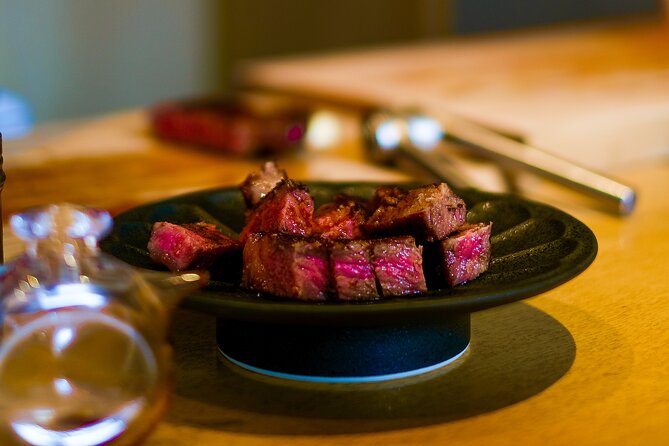
This experience fits you well if you enjoy learning while you eat. It is especially good for people who want to understand Wagyu beyond the familiar label and compare several Japanese sake styles in one sitting.
I would also recommend it to solo diners. One person can reserve, and the small room makes eating alone less awkward than at a large restaurant. Couples and small groups should find the setting easy to manage, though you should not expect a private room unless the booking arrangements specifically say so.
The dinner suits adults and older children, but children under 10 cannot participate. Since alcohol is part of the food pairing, the age rule is firm.
People with dietary needs should plan ahead. Gluten-free meals can be accommodated with at least 24 hours notice. A soy allergy was also handled carefully for one diner, but you should still notify EMC before arrival rather than rely on an assumption. The more precise you are about your needs, the easier it is for the kitchen to respond.
Service animals are allowed, and the meeting point is near public transportation. Private transportation is not included, so you will need to make your own way to Oshiage.
Timing your Skytree evening
A 6:00 pm start makes this easy to combine with Tokyo Skytree. You might visit the tower first, then walk to EMC for dinner. The short distance is convenient, but do not cut the timing close. Tokyo crowds, elevator waits, and getting oriented around Oshiage can all take longer than expected.
Arriving late is a real concern. If staff cannot reach you within 30 minutes of your reservation time, the booking may be canceled. Tell the restaurant in advance if you expect a delay.
The tasting ends back at EMC after about two hours. From there, you can return toward the station, continue around Skytree, or finish the night nearby. Since no private ride is provided, check your route before dinner if you are staying far from Sumida City.
Free cancellation is available if you cancel at least 24 hours before the start time. Changes or cancellations inside that window are not refunded. Poor weather or failure to reach the required minimum number of diners can also cause the activity to be rescheduled or refunded.
My verdict on this Wagyu dinner
I would book this if you want a focused, high-quality Japanese food experience near Tokyo Skytree. The best reasons are the range of Wagyu cuts, the sake matched to each dish, the small group size, and the clear explanations from the chef and host.
I would not book it expecting a casual food crawl, a huge steak, or a guaranteed chance to chat with every person in the room. The seating can vary, the menu changes by season, and the price requires a deliberate choice.
For a special evening, the cost is defensible. For a budget meal, it is not. If you reserve, arrive early, share dietary needs at least a day ahead, and treat the dinner as a guided tasting rather than a standard restaurant visit. That is when EMC makes the strongest case for itself.
FAQ
Where does the Wagyu and sake experience take place?
It takes place at EMC, located at 3-chome 25-17 Oshiage, Sumida City, Tokyo, near Tokyo Skytree. The activity ends at the same meeting point.
What time does the experience start?
The listed start time is 6:00 pm, and the tasting lasts approximately two hours.
Is transportation included?
No. Private transportation is not included. The restaurant is near public transportation and within walking distance of Tokyo Skytree.
Can children participate?
Children under 10 are not allowed. Since alcohol is served, participants must be at least 20 years old.
What if I do not drink alcohol?
You can request up to three glasses of craft juice instead. The experience still includes food paired with beverages, but non-drinkers have an alternative.
Can the restaurant accommodate dietary needs?
Gluten-free requests can be accommodated when made at least 24 hours in advance. You should also report allergies before the meal so the staff can plan safely.
Just added in Tokyo
- Very popular in Harajuku♡Animal petting zoo★ 4.6 · 39 reviews
- Yokohama Port: Private Customizable Tour with Transfer★ 5.0 · 19 reviews
- Wagyu & Sake 8 Course Tasting Dinner in Shinjuku★ 4.9 · 20 reviews
- Warner Bros. Studio Tour Tokyo – The Making of Harry Potter★ 4.8 · 181 reviews
- Yanaka District: Historical Walking Tour in Tokyo’s Old Town★ 4.8 · 117 reviews
- Tokyo: Classic Tsukiji Food Tour★ 4.9 · 78 reviews
- Tokyo: Tsukiji Fish Market Tour with 6 Stops & Seafood Lunch★ 4.5 · 165 reviews
- TOKYO Ultimate Samurai Armor Photo Experience!★ 5.0 · 16 reviews
Tokyo Tours, compared.

Tokyo Disney Resort – Tokyo Disneyland & Tokyo DisneySea Park Tickets
Read our review →
Mt Fuji and Hakone 1-Day Bus Tour Return by Bullet Train
Read our review →

teamLab Borderless Tickets: MORI Building DIGITAL ART MUSEUM
Read our review →