
Reviewed · COOKING CLASSES
Hands On Wagyu Sushi Making Experience
Sushi gets a meaty makeover. This 90-minute Tokyo class combines premium Wagyu with hands-on instruction, giving you a chance to prepare nigiri, gunkan maki, and temaki instead of simply watching a chef work. I like the small group of six, which should make it easier to ask questions, and I like that all ingredients and equipment are supplied.
I also appreciate the English-speaking instruction praised by past participants, including the friendly teaching from Hiroko and Saori. The main consideration is the price, $104.51 per person, which is a fair amount for a short class. You should also note that vegan and vegetarian choices are not available, and at least two people must book together.
In This Review
- Key points to know before booking
- What makes Wagyu sushi different
- Arriving in Tokyo for the noon class
- Meeting Hiroko, Saori, and the teaching team
- Preparing shari and premium Wagyu
- Building nigiri, gunkan maki, and temaki
- Plating your lunch before eating it
- How much value do you get for $104.51?
- Who should book this class?
- Practical details that affect your day
- What the strongest praise tells you
- A few limits to keep in mind
- Should you book the Wagyu sushi class?
- FAQ
- How long does the Wagyu sushi-making experience last?
- What time does the class start?
- Where does the experience begin and end?
- How many people can join the class?
- Is there a minimum booking requirement?
- Are vegetarian or vegan options available?
- Is lunch included?
- Can I cancel for a full refund?
Key points to know before booking
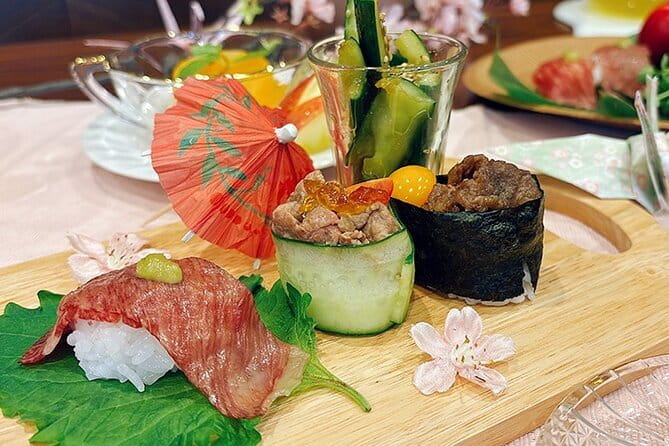
- Three Wagyu sushi styles: Learn to prepare nigiri, gunkan maki, and temaki rather than making only one basic roll.
- Wagyu preparation matters: Instruction includes how to cook the beef and prepare shari, the seasoned sushi rice.
- A six-person limit: The small class size should allow for personal help at each stage.
- Lunch is included: You eat the sushi you make, turning the lesson into a complete midday activity.
- Friendly English support: Past participants specifically praised the English-speaking instructors and patient step-by-step help.
- Central Tokyo timing: The class starts at 12:00 pm, lasts about 1 hour 30 minutes, and ends back at the meeting point.
What makes Wagyu sushi different
Traditional sushi usually puts fish or seafood at the center. Here, premium Wagyu takes that role, creating a class that suits you if raw fish is not your favorite or if you simply want to try a less familiar Japanese combination.
The appeal is not only the beef. You also learn how several sushi forms are built. Nigiri teaches the basic relationship between rice and topping. Gunkan maki gives you a different shape, with rice wrapped in seaweed and a raised edge. Temaki is the hand-rolled cone style, which adds a more relaxed finish to the lesson.
This range gives the class useful variety within a short time. You are not repeating the same movement for 90 minutes. Instead, you get a look at different shapes, textures, and ways of presenting the finished food.
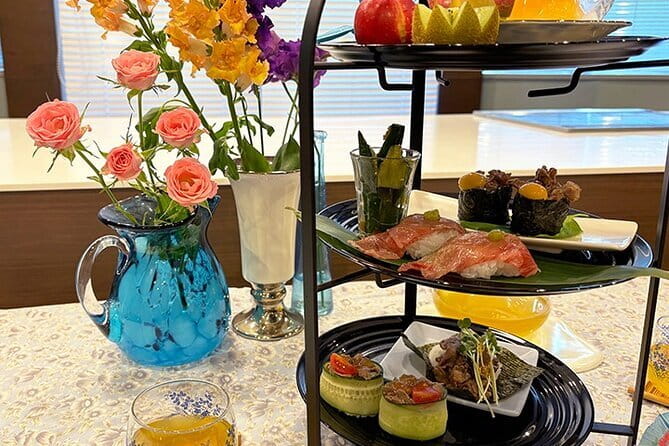
The class also includes plating. That may sound like a small extra, but it changes how you think about sushi. Shape, spacing, and presentation are part of the meal in Japan. You learn not only how to make food that tastes good, but also how to arrange it so it looks appealing before you sit down to eat.
More Cooking Classes in Tokyo
- Sushi Making Tokyo Roll and Authentic Japanese Sushi Class
★ 5.0 · 3,971 reviews - Tokyo: Roll and Authentic Sushi Making Class in Asakusa
★ 4.9 · 1,957 reviews - Tokyo Shinjuku Chopsticks Making Class
★ 5.0 · 1,763 reviews
Arriving in Tokyo for the noon class
The activity begins at 12:00 pm in Tokyo and finishes at the same meeting point. The exact meeting address is not provided in the tour details, so you should check your booking confirmation carefully and allow time to find the entrance.
The location is near public transportation, which is useful in a city where the easiest route often involves a train or subway followed by a short walk. Hotel pickup and drop-off are not included, so you handle your own journey to and from the class.
A mobile ticket makes entry simple. Keep the confirmation available on your phone, and do not assume that a hotel transfer is part of the package. Since the class starts at midday, it can fit neatly between a morning visit and an afternoon outing, though you will want to avoid scheduling a distant attraction immediately afterward.
Meeting Hiroko, Saori, and the teaching team
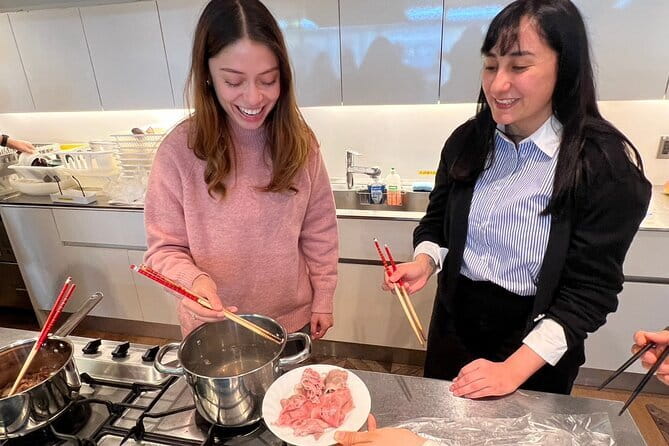
The strongest praise focuses on the instructors. Hiroko and Saori are specifically named as teachers, and the teaching style is described as friendly, patient, and easy to follow. English-speaking instruction is another useful feature, especially when the lesson includes small hand movements and cooking instructions that can be hard to understand from a demonstration alone.
A maximum of six people keeps this from feeling like a large cooking show. You should have a better chance to receive help with shaping rice, handling seaweed, cooking the Wagyu, and arranging the final plate.
The class is designed for participation rather than observation. The instructors guide you through each stage, and you make your own sushi with the provided ingredients and tools. That makes the experience accessible even if you have never prepared sushi before.
I would still keep expectations realistic. A 90-minute lesson can teach core techniques, but it will not turn you into a sushi chef. The value is in learning a few practical methods, enjoying good ingredients, and gaining enough confidence to understand how the pieces come together.
Preparing shari and premium Wagyu
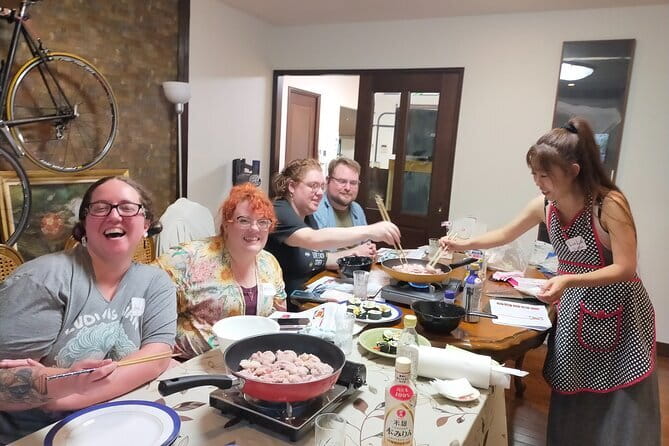
One useful detail from the class is the focus on shari, the seasoned sushi rice. Rice is the base of nigiri and a major part of gunkan maki and temaki, so learning how it is handled gives you a better sense of what makes sushi work.
The Wagyu preparation is equally important. The class includes instruction on how to cook the beef, rather than simply handing you pre-cooked slices and asking you to place them on rice. That cooking step helps explain how the beef’s texture and flavor fit the sushi format.
The precise cooking method is not provided, so you should not book this expecting a full technical lesson on every Wagyu cut or grade. Still, learning how to prepare the meat and pair it with sushi rice gives the class a clear purpose.
The ingredients and equipment are supplied, which keeps the process easy for you. You do not need to shop for specialty rice, seaweed, beef, or kitchen tools before arriving. This is especially handy if your Tokyo schedule is already full or if you are staying in a small hotel room without a kitchen.
A completely different kind of day out:
- Tokyo Disney Resort – Tokyo Disneyland & Tokyo DisneySea Park Tickets
★ 4.8 · 99,488 reviews - SHIBUYA SKY Ticket
★ 4.7 · 46,509 reviews - JR Whole Japan Rail Pass
★ 4.8 · 29,150 reviews - Mt Fuji and Hakone 1-Day Bus Tour Return by Bullet Train
★ 5.0 · 26,383 reviews
Building nigiri, gunkan maki, and temaki
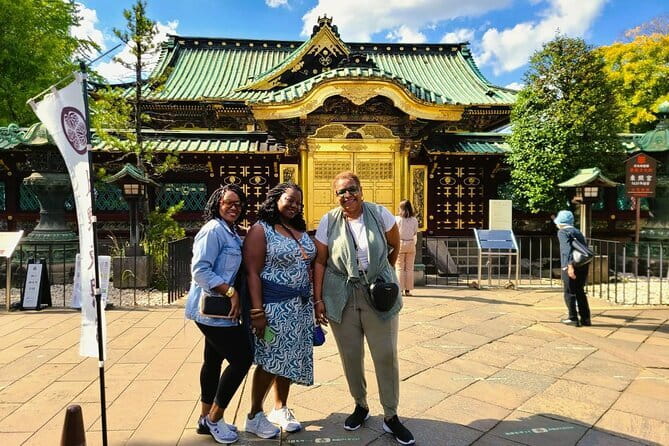
Nigiri is likely the most recognizable form in the class. It pairs a compact portion of sushi rice with a topping, here featuring Wagyu. The challenge is to shape the rice firmly enough to hold together without pressing it into a dense block.
Gunkan maki offers a different lesson. Its seaweed wrap forms a small vessel around the rice and topping. The raised sides change the shaping process and show you how seaweed can be used for structure, not just as an outer layer.
Temaki is the hand-rolled cone. It is less formal in appearance and often easier to assemble once you understand where the rice and fillings should go. It also gives you a third way to think about balance, because the cone must be shaped while the seaweed is still crisp.
Making all three styles in one class is a good use of the time. You can compare the pieces as you work, then see how presentation changes from one form to another. If your goal is to return home with a few sushi skills rather than just a photograph, this variety is one of the class’s best features.
Plating your lunch before eating it
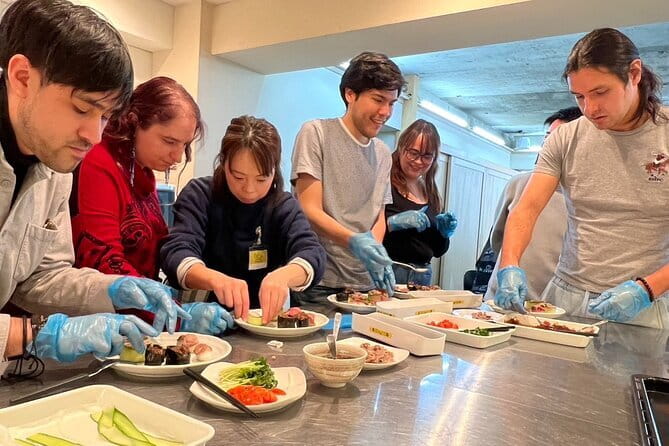
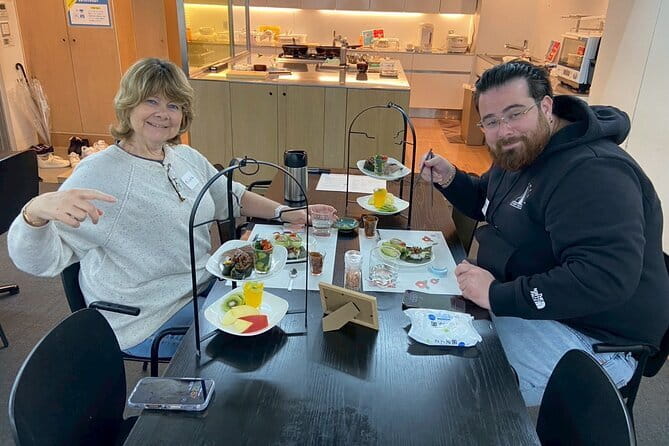
The final presentation is part of the lesson. You learn how to plate your Wagyu sushi so the finished meal looks deliberate and attractive. The class includes lunch, meaning you can eat your creations at the end rather than leaving with only a recipe or a quick taste.
This order matters. You first learn the technique, then make the food, then arrange it, and finally sit down to enjoy it. The result is a complete activity rather than a short demonstration.
Food photography also fits naturally into this part of the class. Downloadable photographs from the experience are included, giving you a record of the lesson without requiring you to take pictures during every step. The details do not specify how many photographs you receive or when they become available, but they are offered for later download.
The meal itself has received very strong praise. Past participants repeatedly describe the sushi as delicious, with high-quality ingredients and an excellent taste of Wagyu. One account also mentions Wagyu shabu shabu, though the standard description centers on the sushi lesson, so I would not book this expecting that extra dish to be guaranteed.
How much value do you get for $104.51?
At $104.51 per person, this is not a budget lunch. You are paying for more than the food: instruction, ingredients, equipment, a small class, lunch, and downloadable photographs are all part of the package.
The six-person limit is important when judging the price. A large class could make the cost feel steep, but a small group should provide more direct help and a less rushed experience. You also avoid the cost and trouble of finding specialty ingredients and cooking tools on your own.
The value is strongest if you want an activity as well as a meal. If you only want to eat Wagyu sushi, a restaurant may give you more food or a longer meal for the same money. If you want to learn how to make several styles and understand the basic handling of rice and beef, the class offers more than a restaurant visit.
I would especially consider it worthwhile for couples, families with older children, and friends who enjoy food activities. The minimum booking requirement of two people makes it less suitable for someone traveling alone unless another arrangement is available.
Who should book this class?
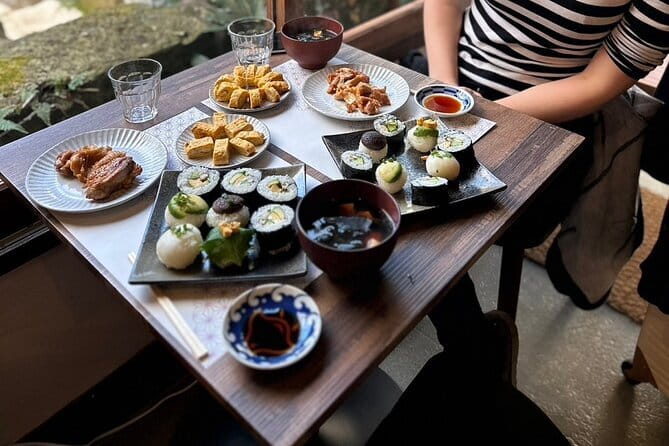
This experience fits you best if you enjoy Japanese food but prefer meat to fish. It also works well if you have already eaten plenty of standard sushi and want to try something different without committing to an advanced cooking course.
Beginners should feel comfortable booking. The class provides the equipment and ingredients, and the instruction is described as patient and easy to understand. You do not need to arrive with sushi-making experience.
It is also a good choice for a short Tokyo itinerary. The class takes about 90 minutes, starts at noon, and ends at the starting point. That leaves room for another activity later in the day, provided you account for your own transport.
You should skip it if you need vegan or vegetarian food. No such options are available. You may also want to choose another activity if you dislike cooking meat, handling food yourself, or paying for a class built around premium ingredients.
Practical details that affect your day
Confirmation is provided when you book, and the ticket can be kept on your mobile device. The class is near public transportation, but hotel pickup and drop-off are not included.
The experience is often reserved about 36 days ahead. That does not guarantee that every date sells out, but it is a useful sign that you should plan ahead, especially if your Tokyo dates are fixed.
Free cancellation is available if you cancel at least 24 hours before the local start time. Changes or cancellations inside that 24-hour window are not accepted for a refund. The activity may also be canceled if poor weather affects the operation, or if the minimum number of people is not reached. In those cases, you are offered another date or experience, or a full refund.
The weather rule is unusual for an indoor cooking activity, so read the notice on your confirmation. Do not leave this booking until the last minute if it is an important part of your day.
What the strongest praise tells you
The repeated positive points are clear: friendly staff, helpful instruction, good English, quality ingredients, and delicious food. The most useful detail is that the team helps at every step, not just at the beginning and end.
The teaching also appears to cover both preparation and presentation. You learn recipes, shari, meat cooking, sushi shaping, and plating. That broad mix explains why the experience feels more complete than a quick roll-making session.
The class has a perfect five-star rating from 16 published reviews, with 100 percent recommending it. That is an encouraging result, though the sample is small. I would treat it as strong evidence of consistently warm service, not proof that every person will find the price perfect or enjoy the Wagyu format.
The food receives nearly as much praise as the staff. That matters because a cooking class can be fun even when the final dish is ordinary. Here, the quality of the beef and the finished sushi is a central part of the appeal.
A few limits to keep in mind
The duration is short. You will learn a selection of techniques, but you will not cover every part of Japanese cooking or sushi tradition. If you want a long cultural lesson, a market visit, or a full multi-course cooking school, this is not that kind of activity.
The Wagyu theme also narrows the audience. It is a fine choice for meat lovers, but there are no vegan or vegetarian alternatives. Anyone in your group who does not eat beef may not have an equally satisfying experience.
The price may be the biggest hurdle. At just under $105, the class makes sense when you value instruction, a small group, and the hands-on format. It is harder to justify if your main goal is simply to have lunch.
Should you book the Wagyu sushi class?
I would book this if you want a friendly, compact Tokyo food activity with premium ingredients and real participation. The combination of three sushi styles, Wagyu preparation, plating, lunch, and English support gives you plenty to do in 90 minutes.
It is particularly well suited to couples and small groups who enjoy trying something unusual together. Book ahead, confirm the meeting address, and leave enough time for public transportation.
I would pass if you need vegetarian food, want a long technical cooking course, or think $104.51 is too much for a short meal-based activity. For everyone else, this looks like a polished and enjoyable way to make sushi with a distinctly meaty Tokyo twist.
FAQ
How long does the Wagyu sushi-making experience last?
The activity lasts approximately 1 hour and 30 minutes.
What time does the class start?
The class starts at 12:00 pm.
Where does the experience begin and end?
It begins in Tokyo, Japan, and ends back at the meeting point.
How many people can join the class?
The class has a maximum of six travelers.
Is there a minimum booking requirement?
Yes. A minimum of two people per booking is required.
Are vegetarian or vegan options available?
No. Vegan and vegetarian options are not available.
Is lunch included?
Yes. Lunch is included, along with the cooking experience and later-downloadable photographs.
Can I cancel for a full refund?
Yes, if you cancel at least 24 hours before the experience start time. Cancellations or changes made less than 24 hours before the start time are not refunded or accepted.
Just added in Tokyo
- A One-of-a-Kind Sushi Experience in a Special Place of Japan★ 5.0 · 15 reviews
- Tokyo Cute Bento Cooking Class – Make a Kawaii Character Lunchbox★ 5.0 · 126 reviews
- Japanese Home Cooking Class & Walk in Todoroki Temple Tokyo★ 5.0 · 88 reviews
- Japan Tokyo Tower Observatory Deck E-Ticket★ 4.0 · 34 reviews
- Catch a Baseball Game in Tokyo with a Local – Tickets Included★ 5.0 · 24 reviews
- JDM Experience with Fast&Furious RX-7 (English speaking Driver)★ 5.0 · 57 reviews
- Tokyo Private Day Tour by Car with English speaking Driver Guide★ 4.0 · 29 reviews
- Japan Classic 10 Day – One Life Adventures★ 5.0 · 129 reviews
Cooking Classes, compared.
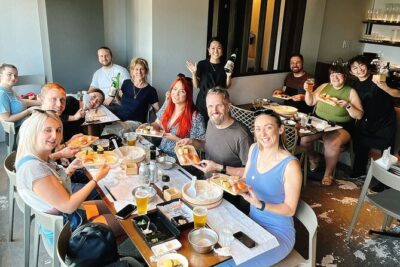
Sushi Making Tokyo Roll and Authentic Japanese Sushi Class
Read our review →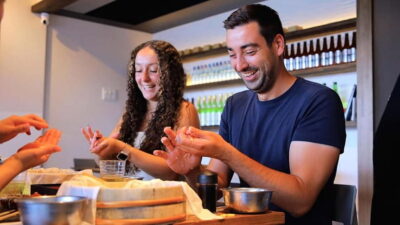
Roll and Authentic Sushi Making Class in Asakusa
Read our review →
Ramen Cooking Class at Ramen Factory in Kyoto
Read our review →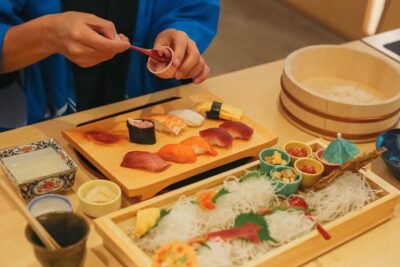
Sushi Making Class in a Happi Coat near a Famous Spot
Read our review →
Sushi Making Osaka Roll and Authentic Japanese Sushi Class
Read our review →
Tokyo Sushi Making Class in Tsukiji with Professional Chef
Read our review →
Ramen & Gyoza Cooking Class in Tokyo with Local Supermarket Visit
Read our review →Browse the lists this tour appears in