
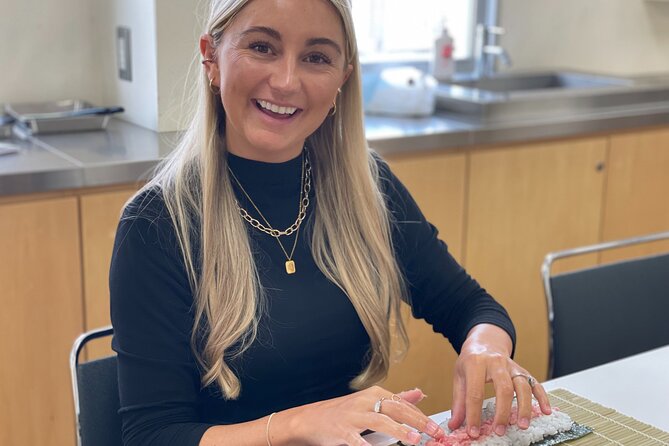
Reviewed · COOKING CLASSES
Tokyo Sushi Making Class in Tsukiji with Professional Chef
Sushi gets better when you make it. This 90-minute class brings you into Tsukiji for a practical lesson with a professional sushi chef, covering fish preparation, knives, rice, nigiri, and rolled sushi. I like the setting in a traditional Japanese building near the market, and I like that your finished work becomes lunch rather than a cooking exercise that ends with washing dishes.
The class also works well for families and first-time sushi makers. Children as young as seven have enjoyed making their own pieces, and the English-speaking hosts help keep the lesson clear. My main caution is simple: the room is on the third floor with stairs only, and allergy, halal, and kosher requests may not be possible to accommodate.
At $49.74 per person, this is a fair Tokyo activity price. You receive fresh market-sourced ingredients, proper utensils, instruction from a sushi master, five types of nigiri, one rolled sushi, and the chance to eat what you make. It is not a full cooking course, but it gives you a useful introduction without taking half a day.
In This Review
- Key Points Before You Book
- Why This Tsukiji Class Works So Well
- Arriving in Tsukiji’s Food District
- The Fish-Cutting Demonstration Comes First
- Making Five Nigiri, Step by Step
- Rolling One Maki Sushi
- Lunch Is the Sushi You Just Made
- Friendly Hosts Make the English Lesson Work
- The Traditional Classroom and Group Size
- Who Will Get the Most From This Activity?
- A Few Practical Limits to Keep in Mind
- Is the $49.74 Price Good Value?
- Should You Book the Tsukiji Sushi Class?
- FAQ
- How long does the sushi-making class last?
- Where does the class start and finish?
- What sushi will I make?
- Is the class taught in English?
- Is hotel transportation included?
- Can the class accommodate allergies or special diets?
Key Points Before You Book
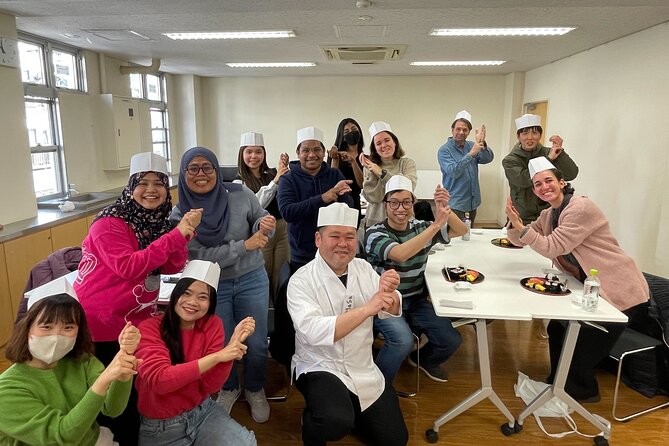
- Five nigiri and one rolled sushi: You make six different pieces or styles, then eat your finished sushi as lunch.
- A real fish-cutting demonstration: The chef shows how fish is prepared and explains the Japanese knives used for the work.
- Traditional Tsukiji setting: The classroom sits in a Japanese-style building near Tsukiji Fish Market, Tsukiji Jogai Market, and Tsukiji Nippon Fish Port Market.
- English support throughout: An English-speaking host helps translate the chef’s explanations and guides you through each step.
- Good for beginners and families: You do not need prior sushi skills, and children have enjoyed the hands-on format.
- Plan for stairs and timing: The class lasts about 1 hour 30 minutes, but it may run over, and the third-floor classroom has no elevator mentioned.
Why This Tsukiji Class Works So Well
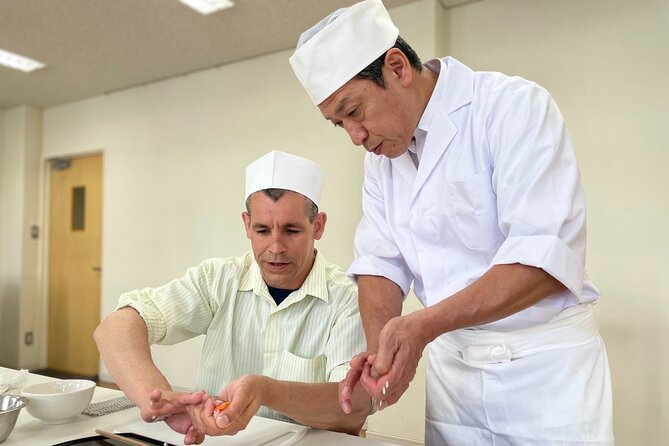
I like food activities that teach you something and feed you at the same time. This one does both. You learn enough technique to understand why restaurant sushi looks so neat, then you sit down to eat your own attempts while the chef prepares another piece for you.
The lesson is short enough to fit between other Tokyo plans. You can schedule it around a morning in Tsukiji, a visit to Ginza, or an afternoon elsewhere in the city. At the same time, 90 minutes gives the class room to cover more than a quick rolling demonstration.
The strongest part is the personal help. The chef demonstrates each movement, then lets you try. Hosts and assistants step in when your rice shape goes sideways or your roll needs a little rescue. That matters because sushi looks easy until you try to form rice with the right pressure.
The class has received a 5 out of 5 rating from 1,177 ratings, with 99 percent recommending it. Those figures do not replace your own judgment, but they fit the repeated praise for clear instruction, fresh ingredients, friendly staff, and an enjoyable pace.
More Cooking Classes in Tokyo
- Sushi Making Tokyo Roll and Authentic Japanese Sushi Class
★ 5.0 · 3,971 reviews - Tokyo: Roll and Authentic Sushi Making Class in Asakusa
★ 4.9 · 1,957 reviews - Tokyo Shinjuku Chopsticks Making Class
★ 5.0 · 1,763 reviews
Arriving in Tsukiji’s Food District
You make your own way to the meeting point at 4-chōme-16-2 Tsukiji, in Chuo City. The activity ends at the same meeting point, so you do not need to arrange a ride back or work out a separate final location.
The address places you close to the Tsukiji food area. Tsukiji is no longer Tokyo’s main wholesale fish market, but the outer market remains a useful place for seafood shops, small food counters, kitchen goods, and traditional market atmosphere. You might find it worth arriving early so you can get your bearings and look around before class.
The listed itinerary includes Tsukiji Fish Market, Tsukiji Jogai Market, and Tsukiji Nippon Fish Port Market. These names describe the local setting around the class rather than a long guided market tour. The main event is the workshop, so do not book this expecting a full walking tour with extended stops at each market.
That said, the location adds real value. You are not making sushi in an anonymous hotel conference room. You are learning close to one of Tokyo’s best-known seafood districts, with the sights and smells of the market area nearby.
The Fish-Cutting Demonstration Comes First
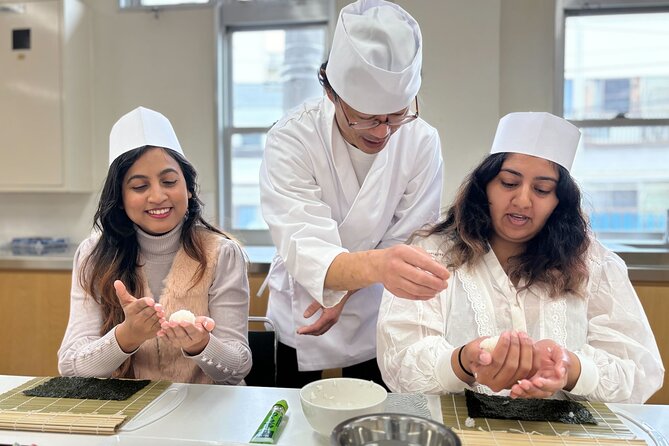
The session begins with a demonstration by the sushi chef. You watch the chef disassemble fish and explain the steps used to prepare it for sushi. This is more useful than simply seeing a finished slice placed on a plate because it shows the care behind the ingredient.
You also learn about Japanese knives. For many people, this is the most eye-opening part of the lesson. A sushi knife is not just a sharp kitchen knife. The chef’s movements, cutting direction, and control affect the texture and appearance of the fish.
Do not expect to leave as a professional fish cutter. The purpose is to show you the process and help you understand what the chef does before you begin making sushi. It gives context to the rest of the class and makes the meal feel less like a craft project.
The chef also explains what sushi is and covers several kinds of sushi. This is helpful if you know sushi mainly as a restaurant menu rather than as a group of different techniques and forms.
Making Five Nigiri, Step by Step
After the demonstration, you make five different nigiri sushi. Nigiri is the familiar style with a small mound of seasoned rice topped with fish or another ingredient.
This is where the class becomes properly hands-on. You are shown how much rice to use, how to shape it, and how to place the topping. The aim is not just to produce something edible. You get a feel for the balance between firm enough to hold together and gentle enough to keep the rice from becoming packed and heavy.
The chef and assistants help as you work. That support is especially useful for beginners, children, and anyone who has made sushi at home only with a bamboo mat. Participants have described their finished nigiri as looking much like restaurant sushi, which is a nice reward after the first few uneven attempts.
The five nigiri also give you more practice than a single sample piece. You repeat the motion and improve as you go. By the final piece, you should have a clearer sense of how the rice, topping, and hand position work together.
Fresh ingredients are provided, and the food is sourced from local market shops. The exact fish selection can vary, so you should not assume a particular species or menu on a particular date. If you have an allergy, tell the operator when you reserve. Requests may be considered, but the class cannot guarantee every change.
More Markets and Food Halls in Tokyo
- Tokyo Tsukiji Fish Market Food and Culture Walking Tour
★ 5.0 · 3,184 reviews - Tokyo: Tsukiji Fish Market Food and Walking tour
★ 5.0 · 1,724 reviews - Senkyaku Banrai Toyosu Manyo Club Onsen Experience in Tokyo
★ 4.7 · 1,690 reviews - Tokyo: Tsukiji Fish Market Guided Walking Tour
★ 4.9 · 1,397 reviews
Rolling One Maki Sushi
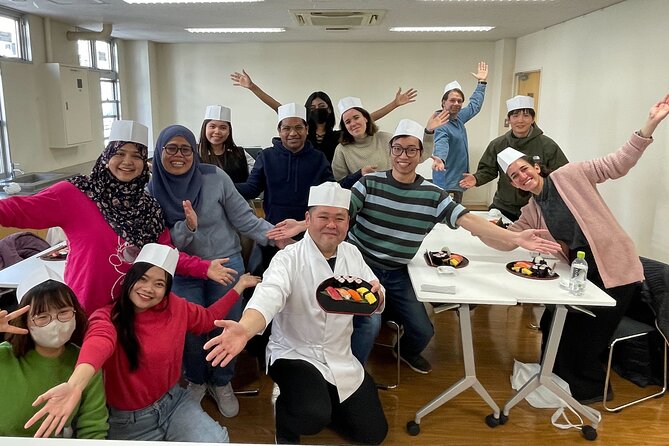
You also make one rolled sushi. This is the maki-style portion of the class, where ingredients are arranged and rolled rather than placed on top of rice by hand.
Rolling sushi can be the comic part of the activity. The ingredients need to be positioned sensibly, the pressure must be even, and the finished roll needs to be cut without squashing the center. The chef demonstrates the method, then you copy it with help nearby.
For families, this is often the most approachable part. Children can see the roll take shape and feel that they have made something substantial. Several families have said the activity encouraged children to try sushi and sashimi they had not previously eaten.
The class is not designed to train you in every sushi style. You will not cover a long list of elaborate restaurant preparations in 90 minutes. What you get is a clean introduction to two basic forms, enough to give you confidence and a few techniques to try at home.
Lunch Is the Sushi You Just Made
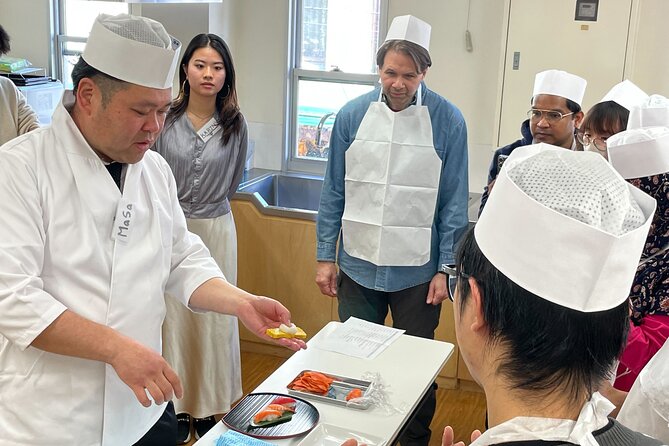
The best practical feature is that your work becomes lunch. You eat the five nigiri and one rolled sushi you prepared, using the provided tableware and ingredients.
This makes the price easier to justify. You are paying for a lesson, a chef demonstration, ingredients, staff support, and a meal. At $49.74, it is not the cheapest way to eat sushi in Tokyo, but it offers more than a restaurant plate because you also learn how the food is made.
While you eat your sushi, the chef prepares another piece with freshly prepared wasabi. That gives you a chance to compare your beginner work with the chef’s professional version. It is a small touch, but it helps you appreciate the precision involved.
Arrive with some appetite. The finished meal is not just a token sample, and one participant specifically advised keeping your stomach slightly empty. The activity includes sushi you make, but extra food and drinks are not included.
Friendly Hosts Make the English Lesson Work
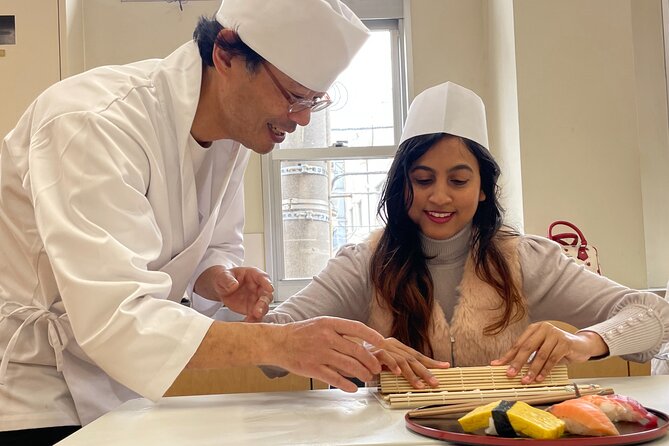
The class is led by an English-speaking host and a professional sushi master. The host helps translate the chef’s explanations and keeps the process moving, which is important when technical instructions are being given.
Names of staff have varied by session. Yuko, Yugo, Miky, Nao, Emma, Kanon, Kate, AJ, Ishi, and Eri have all been praised for friendly help at different times. You should not assume that one particular person will lead your class, but the repeated pattern is clear: the support team plays a major role in making the lesson easy to follow.
Yuko and Yugo have been especially praised for clear English and lively assistance. Chef Tanaka has been singled out for making the fish demonstration informative and fun. Kate has also been praised for explaining everything from knives and rice to fish and wasabi.
That combination is useful because the chef can focus on the sushi while the host checks that everyone understands. It also helps the class suit mixed groups, including families with children and people who have little experience with Japanese food.
The Traditional Classroom and Group Size
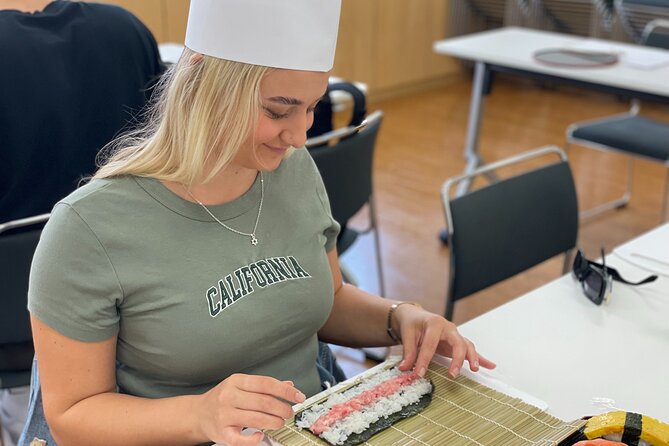
The classroom is in a traditional Japanese-style building on the third floor. The setting sounds modest rather than polished, and that is part of the appeal. You are in a local building near the market, not a staged culinary theater built only for tourists.
The room is described as intimate and suitable for small groups. The maximum group size is 20 people. That is not a private lesson, but it still allows the chef and assistants to move around and help participants individually.
You should be comfortable with stairs. The classroom has stairs only, with no elevator mentioned. If mobility is a concern, contact the operator before booking rather than treating this as a minor detail.
The schedule is listed as approximately 1 hour 30 minutes. The operator notes that it may run beyond the scheduled ending time. If you have a train, reservation, airport transfer, or another timed activity right after class, leave a cushion.
Who Will Get the Most From This Activity?
I would recommend this class most strongly to:
- First-time sushi makers who want clear instruction
- Families with children interested in food
- Visitors who enjoy learning through their hands
- Sushi fans who want to understand the work behind the plate
- People with a tight Tokyo schedule
- Anyone planning to visit Tsukiji anyway
You do not need to be an experienced cook. Beginners have found the class approachable, and the chef provides help when needed.
It also suits people who are still learning about sushi. One participant had eaten little sushi before the class and still enjoyed learning about its forms, preparation, and place in Japanese food culture. Making the food yourself can make unfamiliar ingredients feel less intimidating.
I would be more cautious if you want a long market walk, advanced knife training, or a broad Japanese cooking course. This is a focused sushi introduction, not a full culinary program.
A Few Practical Limits to Keep in Mind
The class does not include hotel pickup or drop-off. You make your own way to the Tsukiji meeting point, and public transportation is nearby.
Dietary restrictions need advance attention. The operator asks you to report allergies at reservation, but accommodation may not be possible. Halal and kosher requests are not accommodated, so this experience may not fit your needs if those requirements are essential.
The class may include raw seafood, and the available ingredients are tied to the market supply. No complete ingredient list is provided, so ask before booking if you need to avoid a specific fish or other ingredient.
Cancellation is free if you cancel at least 24 hours before the start time. Cancellations or changes made less than 24 hours in advance are not refunded or accepted. That is a reasonable policy, but it makes it worth checking your Tokyo schedule carefully.
Is the $49.74 Price Good Value?
For Tokyo, I consider $49.74 a sensible price for this particular package. You receive a professional demonstration, English assistance, fresh ingredients, utensils, six sushi preparations, and lunch.
The value is strongest if you would otherwise pay for a sushi meal and want a cultural activity as well. You are not merely watching a chef work. You are practicing the techniques and eating the result.
The value is weaker if you have no interest in sushi or if you prefer a large meal with many different dishes. The menu is centered on the sushi you make, with no promise of extra courses or drinks.
Still, the short duration keeps the commitment low. You can fit it into a day without giving up a major Tokyo sight. For many people, that balance makes it a better choice than a longer cooking school that takes up most of an afternoon.
Should You Book the Tsukiji Sushi Class?
I would book this if you want a friendly, practical introduction to sushi and like the idea of eating your own work. The fish-cutting demonstration, market setting, English support, and hands-on practice give the class more substance than a quick food photo opportunity.
It is especially good for families, beginners, and anyone visiting Tsukiji. Keep your schedule flexible after the class, arrive hungry but not ravenous, and contact the operator early about allergies.
Skip it if you need halal or kosher food, cannot manage stairs, or want advanced sushi training. For everyone else, this is a well-priced way to connect a famous Tokyo food district with a skill you can try again at home.
FAQ
How long does the sushi-making class last?
The activity lasts approximately 1 hour and 30 minutes. It may run beyond the scheduled ending time, so leave extra time before your next appointment.
Where does the class start and finish?
The class starts at 千社額棟 4-chōme-16-2 Tsukiji, Chuo City, Tokyo 104-0045, Japan. It ends back at the meeting point.
What sushi will I make?
You will make five different nigiri sushi and one rolled sushi. You can eat the sushi you make during the class.
Is the class taught in English?
Yes. An English-speaking host is included and helps explain or translate the professional chef’s instruction.
Is hotel transportation included?
No. Hotel pickup and drop-off are not included. You make your own way to the Tsukiji meeting point.
Can the class accommodate allergies or special diets?
You should report allergies when making your reservation. The operator will try to accommodate allergy-related requests, but it may not be possible. Halal and kosher requests are not accommodated.
Just added in Tokyo
- MT. FUJI/ Private Tour delivered and guided by a top-tier driver★ 5.0 · 27 reviews
- Mt fuji & Hakone customizable day tour w/ English speaking driver★ 5.0 · 45 reviews
- Fuji Speedway Self Drive & Mt. Fuji Private Tour pickup & dropoff★ 5.0 · 14 reviews
- Mt.Fuji Trekking 1 Day Tour up to the summit★ 5.0 · 14 reviews
- Seasonal Mt. Fuji Scenic Views, Fruit Picking and Ropeway Ride!★ 4.5 · 35 reviews
- Customisable Mt.Fuji Private Day Trip, English Speaking Driver★ 5.0 · 22 reviews
- Private Mt Fuji Tour from Tokyo: Scenic BBQ and Hidden Gems★ 5.0 · 146 reviews
- Private Mount Fuji Tour in Luxury Vehicle with English Guide★ 4.5 · 39 reviews
Cooking Classes, compared.
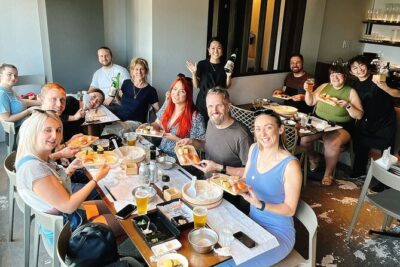
Sushi Making Tokyo Roll and Authentic Japanese Sushi Class
Read our review →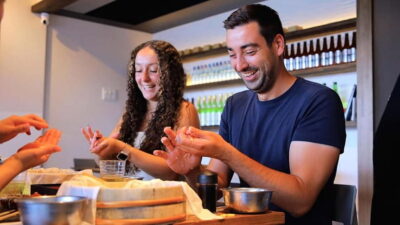
Roll and Authentic Sushi Making Class in Asakusa
Read our review →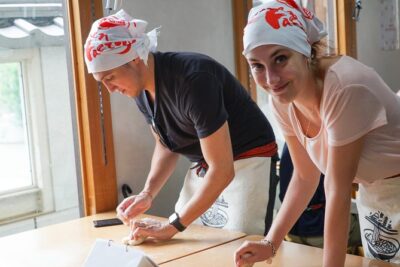
Ramen Cooking Class at Ramen Factory in Kyoto
Read our review →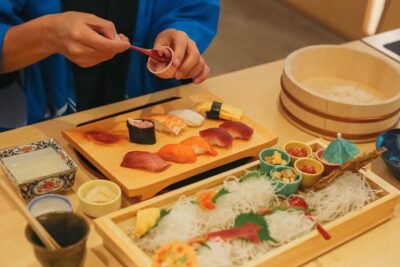
Sushi Making Class in a Happi Coat near a Famous Spot
Read our review →
Sushi Making Osaka Roll and Authentic Japanese Sushi Class
Read our review →
Ramen & Gyoza Cooking Class in Tokyo with Local Supermarket Visit
Read our review →
Tsukiji Fish Market Guided Tour and Sushi Making with Pro Chef
Read our review →Browse the lists this tour appears in