
Reviewed · MARKETS AND FOOD HALLS
Tokyo: Tsukiji Fish Market Guided Walking Tour
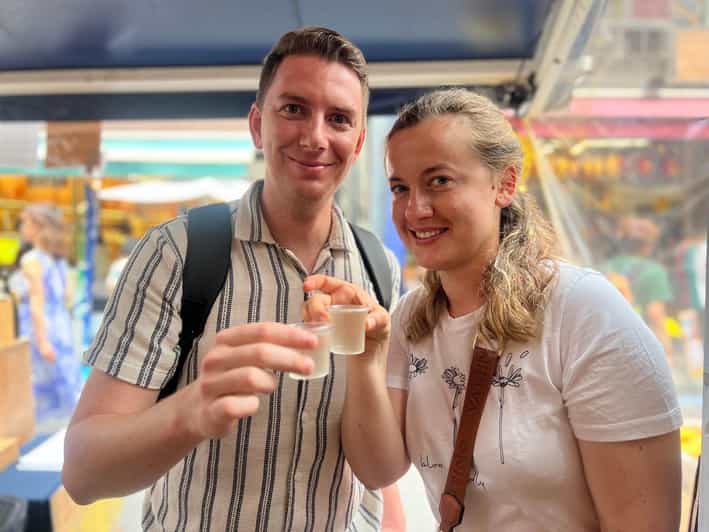
Tsukiji rewards an appetite and a little guidance. I like the way this small-group tour combines a quiet temple visit with hands-on food tasting, and I like having a local guide lead me through stalls I might otherwise pass by. The main drawback is simple: food costs extra, and popular bites can add up quickly, so bring cash and set a tasting budget.
At $22 for two hours, this is a strong value for first-time visitors to Tokyo. Guides such as Jim, Rie, Yayoi, Sayaka, Haydn, and Minori have helped guests understand what they are seeing, choose between unfamiliar foods, and handle ordering at crowded stalls. You should expect a walking tour rather than a sit-down meal, with plenty of freedom to skip anything that does not appeal.
In This Review
- Key points to know before you go
- Why Tsukiji is still worth your morning
- Meeting at Tsukiji Station
- Tsukiji Hongwanji, a calm opening stop
- Finding your way through the outer market
- A tasting tour without a fixed menu
- What the guides add to the experience
- Timing, crowds, and the market atmosphere
- Is $22 good value?
- Who should book this Tsukiji walk?
- Should you book it?
- FAQ
- How long does the Tsukiji Fish Market tour last?
- Where do I meet the guide?
- Is the tour conducted in English?
- How large is the group?
- Is food included in the tour price?
- How much does the tour cost?
- Do I need to bring cash?
- Is admission to the market and temple included?
- Can I cancel the tour for a refund?
Key points to know before you go
- Tsukiji Hongwanji starts the story: The 15-minute temple stop gives useful context about local religion, architecture, and the neighborhood before the food begins.
- The guide is your market compass: Tsukiji Outer Market can feel confusing, but your guide leads you to selected shops and explains what each ingredient is used for.
- You choose what to eat: There is no fixed tasting menu. You order and pay for the foods you want at each stall.
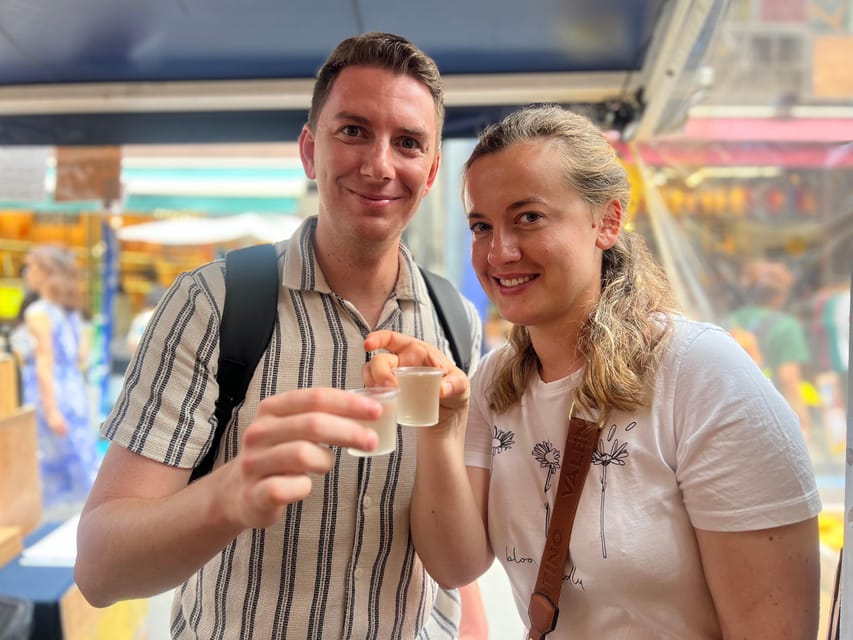
- Expect a wide food range: Past tastings have included tamago, oysters, sushi, wagyu beef, eel, sea urchin, tuna, sweets, nuts, sake, and free samples.
- Cash matters: Cash is specifically recommended, and some premium seafood and beef items can be expensive.
- Ten people is the limit: The small group keeps the walk personal and makes it easier to ask questions or get help ordering.
Why Tsukiji is still worth your morning
Tsukiji is often called a fish market, but the outer market is much broader than a row of seafood counters. You will find fresh fish, dried seafood, vegetables, eggs, sweets, spices, nuts, cooking tools, and other ingredients used in Japanese kitchens.
The famous wholesale market moved to Toyosu, but Tsukiji Outer Market remains a food center with decades of links to Tokyo cooking. The area has been part of the city’s food scene for more than 80 years, and that long connection helps explain why the market feels like more than a place to grab breakfast.
I like this tour because it explains the ingredients instead of treating the market as a photo stop. A guide can tell you how a particular food is used, why one cut of fish costs more than another, or how Japanese food traditions connect to daily life.
That context matters. Without it, you may see a slab of dried seafood, a tray of raw fish, or a row of unusual sweets without knowing what makes any of them special. With a guide, the market becomes easier to read.
More Markets and Food Halls in Tokyo
- Tokyo Tsukiji Fish Market Food and Culture Walking Tour
★ 5.0 · 3,184 reviews - Tokyo: Tsukiji Fish Market Food and Walking tour
★ 5.0 · 1,724 reviews - Senkyaku Banrai Toyosu Manyo Club Onsen Experience in Tokyo
★ 4.7 · 1,690 reviews
Meeting at Tsukiji Station
The tour begins at the Starbucks in front of Tsukiji Station. Your guide waits near the bench outside, which gives you a clear landmark in a busy part of Tokyo.
There are two starting-location options listed for the activity, but both use the Starbucks by Tsukiji Station as the meeting reference. Confirm the exact option and time when you book, then arrive ready to walk.
The tour is in English and lasts two hours. Groups are limited to 10 people, a useful size for a market where large crowds can block narrow paths and make conversation difficult. Guides have also helped with practical details such as stall payments, water stops, and even arranging a taxi afterward when needed.
The walking itself is not long in distance, but Tsukiji can be crowded and visually overwhelming. Wear comfortable shoes and keep your belongings close. The market is a working shopping district, not a polished food hall, so you should expect movement, noise, and people focused on buying and selling.
Tsukiji Hongwanji, a calm opening stop
From the meeting point, you walk about five minutes to Tsukiji Hongwanji. The guided visit lasts around 15 minutes and offers a welcome change of pace before entering the market.
The temple is known for detailed carvings and a peaceful interior. Guides explain the building and its place in Japanese culture, religion, and local history. Some guides have also added nearby temples or shrines when time allowed, though the listed route centers on Hongwanji.
I think this stop improves the whole experience. It gives you a cultural introduction before you start sampling food, and it shows that Tsukiji is not only about seafood. The temple’s quiet atmosphere also helps you reset before the crowded market streets.
Do not expect a long temple tour. Fifteen minutes is enough to see the main features and hear an introduction, but not enough for a detailed study of the building. If you want an extended temple visit, plan to return on your own.
After the temple, you walk another five minutes to Tsukiji Outer Market.
Finding your way through the outer market

The main part of the tour takes place at Tsukiji Outer Market, with roughly 100 minutes devoted to guided exploration and shopping. The route is divided into two market sections, but in practice the focus is a continuous walk through food stalls and specialty shops.
This is where the guide earns the $22 fee. You could wander through Tsukiji independently, but the choices can be hard to sort out. A guide points out selected stalls, explains what is worth trying, and helps you move through the market without spending your whole visit simply deciding where to stop.
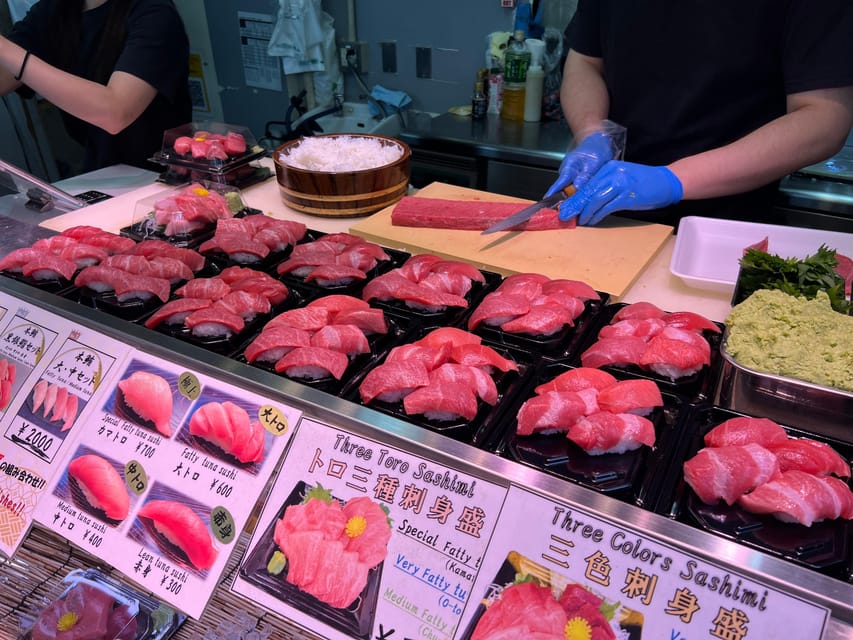
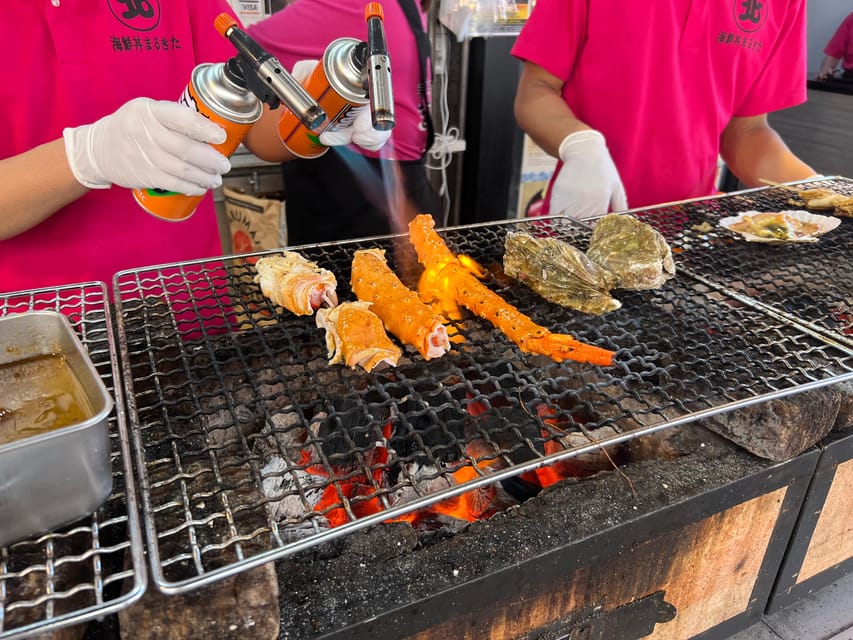
Several guides have taken small groups to favorite spots for wagyu beef, fatty tuna, unagi eel, sashimi, oysters, tamago, dried goods, fruit, nuts, sweets, and matcha-related products. You may also receive free samples of snacks or dried seafood along the way.
The exact foods will vary. This is not a guaranteed menu, and the guide’s preferred stops may change with availability. That flexibility is useful because the market is a real trading area rather than a staged tasting attraction.
Your guide can also explain how ingredients fit into Japanese cooking. That can be especially helpful with products that are unfamiliar outside Japan, including dried fish, shrimp, scallops, specialty spices, sea urchin, and different types of sushi.
More Walking Tours in Tokyo
- Tokyo: Imperial Palace and Shogun Historical Walking Tour
★ 5.0 · 2,251 reviews - Tokyo: Shinjuku Local Bar and Izakaya Guided Walking Tour
★ 4.9 · 1,794 reviews - Tokyo: Asakusa Walking Tour with Sensoji Temple Visit
★ 4.8 · 1,583 reviews - Tokyo Castle & Imperial PalaceーShogun Walking Tour
★ 4.7 · 1,068 reviews
A tasting tour without a fixed menu
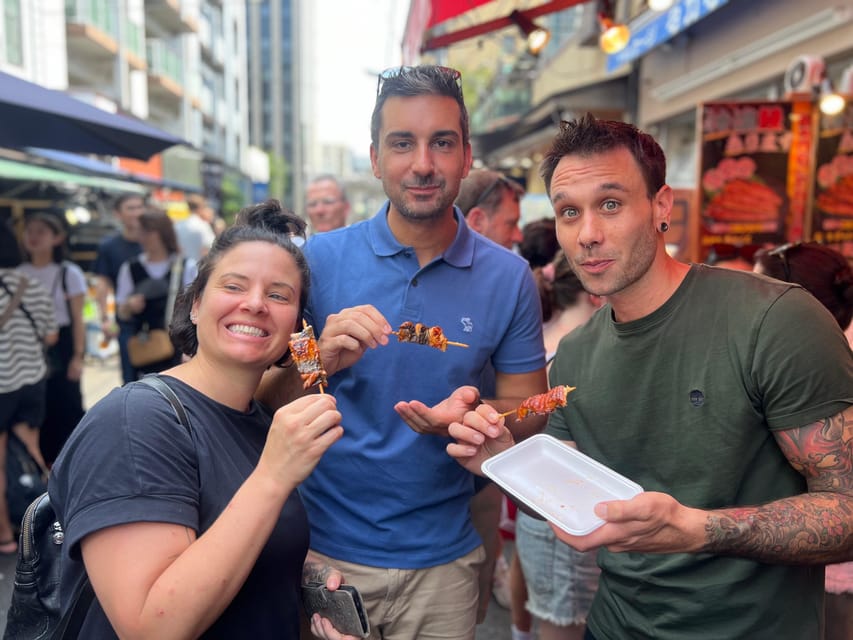
Food is not included in the $22 price. At each stop, you decide what you want and pay the vendor directly. This arrangement has two clear benefits: you control your spending, and you can avoid foods that do not fit your preferences, allergies, or appetite.
One guest who disliked seafood still found a few dishes worth trying, while another appreciated being able to choose among several options at each stop. That makes the tour more flexible than a set tasting menu.
You should still bring enough cash. Premium items such as wagyu, tuna, oysters, and sea urchin may cost more than small snacks. Some people have spent freely because there is so much to sample, so it is smart to decide in advance how much you want to spend on food.
Sharing small plates with the group can help you taste more without ordering a full portion of everything. Ask your guide how much a serving costs before ordering if the price is not clear.
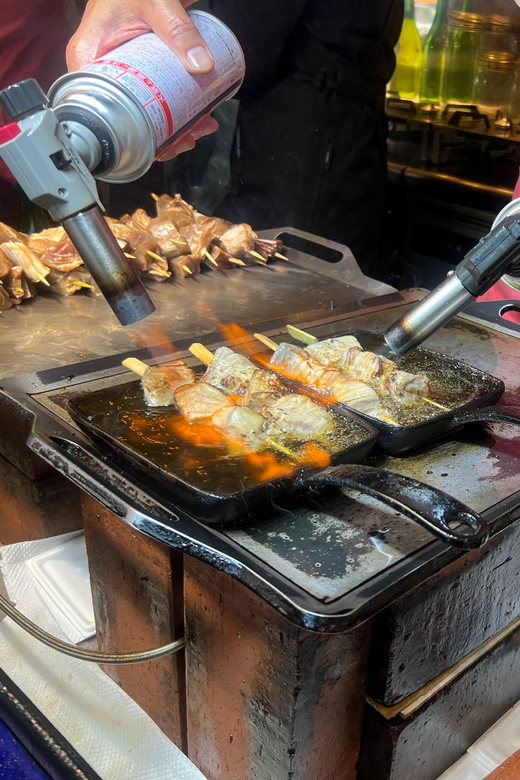
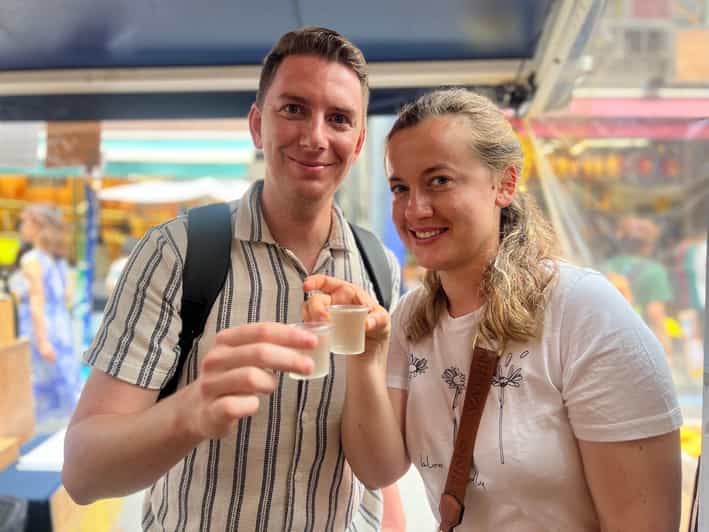
The range can be impressive. Tamago is a popular favorite, while sushi and sashimi offer the expected seafood experience. Wagyu skewers, grilled eel, sweets, nuts, and sake add variety for people who want more than raw fish.
The tour is also suitable for cautious eaters. You are not required to try every sample, and your guide can suggest less challenging choices. If you love seafood, you can focus on tuna, oysters, eel, sea urchin, or sashimi. If you do not, the beef, egg, sweets, dried goods, and other non-seafood items provide alternatives.
What the guides add to the experience
The strongest part of this tour is the human guidance. Jim has been praised for explaining food, culture, history, and the people connected to the market. Rie has been described as friendly, funny, patient, and good at finding local specialties. Yayoi has led groups to favorite stalls for tamago, oysters, sushi, wagyu, and sweets.
Sayaka has helped people navigate crowds and order at several shops, while Haydn has explained the temple and market in clear detail. Minori brings an energetic approach and points out foods and stalls that are easy to miss.
The names matter less than the pattern: the guide’s role is active. This is not simply a person walking ahead while you take pictures. The guide explains, recommends, translates when needed, helps with payments, and keeps the group moving.
A guide’s personal suggestions can also make the food more interesting. One may favor beef, another seafood, and another sweets or sake. Since there is no fixed menu, you can ask questions and shape the tasting around your own interests.
The small group size helps here. With no more than 10 participants, you have a better chance to hear explanations and ask about ingredients. It also makes sharing food and moving between stalls easier than it would be with a large coach group.
Timing, crowds, and the market atmosphere
The two-hour schedule is well suited to a first visit. You spend a short time at the temple, then most of the outing in the market where there is more to see and taste.
The market can be crowded even on a weekday morning. That is part of the appeal, but it also affects the pace. You may need to wait briefly at a stall, walk closely with the group, or move on when an area becomes too packed.
Do not expect to inspect every shop. Tsukiji is too large and varied for that in two hours. The value comes from seeing a well-chosen portion of the market and learning how to continue exploring after the tour ends.
The meeting point and return point are both at the Starbucks by Tsukiji Station. That makes the tour easy to combine with other plans in central Tokyo. You finish with a better sense of where to return for more food, shopping, or a second look.
Is $22 good value?
Yes, especially if you are new to Tsukiji or unsure how to order Japanese market food. The price covers the English-speaking guide, the walking tour, photos taken during the outing, and entry to the market and Hongwanji Temple, where no admission fee is required.
The food bill is separate, but that is not necessarily a weakness. A fixed tasting price often forces you to pay for foods you do not want. Here, you can spend very little on a few samples or order several premium bites if food is your main reason for visiting.
The tour becomes less valuable if you already know Tsukiji well, speak Japanese comfortably, and enjoy choosing stalls on your own. Independent visitors can explore at their own pace and avoid the $22 guide fee.
For most first-time visitors, though, the guide saves time and reduces guesswork. You are paying for direction, explanations, food choices, and help in a complicated market, not just for access.
Free cancellation up to 24 hours before the tour and the option to reserve now and pay later make it easier to fit into a changing Tokyo schedule.
Who should book this Tsukiji walk?
I would recommend it to first-time Tokyo visitors, food-focused travelers, and anyone who feels unsure about ordering at Japanese stalls. It also suits couples, families with older children, and small groups who want a shared tasting experience without committing to a fixed menu.
It is a good choice if you want cultural context along with food. The temple stop, explanations of Japanese ingredients, and discussion of how food and tradition connect give the morning more substance.
It may be less suitable if you dislike walking in crowded places, want a long sit-down meal, or prefer a quiet and carefully timed food experience. It is also not ideal if you want every food purchase included in one upfront price.
Bring cash, arrive at the Starbucks by Tsukiji Station, and come with a flexible appetite. If you have food allergies or strong dislikes, tell the guide before ordering and use the choice-based format to your advantage.
Should you book it?
Book this tour if Tsukiji feels exciting but slightly confusing. The best reason to go is not simply to see fish stalls. It is to understand what you are looking at, taste foods you might overlook, and get practical help choosing among the market’s many options.
I especially like it for a first or second day in Tokyo, when guide suggestions can shape the rest of your food plans. You may leave with ideas for sushi, Kobe beef, matcha, sake, or specialty ingredients to seek out later.
Skip it if you already have a detailed Tsukiji plan and prefer complete independence. Otherwise, $22 is a sensible price for two hours of focused guidance, with the freedom to spend only what you want on food.
FAQ
How long does the Tsukiji Fish Market tour last?
The tour lasts two hours, including the temple visit, walking time, market exploration, and food-stall stops.
Where do I meet the guide?
You meet at the Starbucks located in front of Tsukiji Station. The guide waits near the bench at Starbucks.
Is the tour conducted in English?
Yes. The tour includes a live English-speaking guide.
How large is the group?
The tour is limited to 10 participants.
Is food included in the tour price?
No. Food and drinks are not included. You choose what you want at the market stalls and pay for those items separately.
How much does the tour cost?
The listed price is $22 per person.
Do I need to bring cash?
Yes. Cash is specifically recommended for the tour, especially because food purchases are separate from the tour price.
Is admission to the market and temple included?
Entry to Tsukiji Fish Market, Tsukiji Outer Market, and Tsukiji Hongwanji Temple is free, so no separate admission fee is required.
Can I cancel the tour for a refund?
Yes. You can cancel up to 24 hours in advance for a full refund. You can also reserve the activity and pay later.
Just added in Tokyo
- MT. FUJI/ Private Tour delivered and guided by a top-tier driver★ 5.0 · 27 reviews
- Mt fuji & Hakone customizable day tour w/ English speaking driver★ 5.0 · 45 reviews
- Fuji Speedway Self Drive & Mt. Fuji Private Tour pickup & dropoff★ 5.0 · 14 reviews
- Mt.Fuji Trekking 1 Day Tour up to the summit★ 5.0 · 14 reviews
- Seasonal Mt. Fuji Scenic Views, Fruit Picking and Ropeway Ride!★ 4.5 · 35 reviews
- Customisable Mt.Fuji Private Day Trip, English Speaking Driver★ 5.0 · 22 reviews
- Private Mount Fuji Tour in Luxury Vehicle with English Guide★ 4.5 · 39 reviews
- Mt. Fuji Highlight Photo Spots One Day Tour from Tokyo★ 4.5 · 36 reviews
Markets and Food Halls, compared.
Tokyo Tsukiji Fish Market Food and Culture Walking Tour
Read our review →

Senkyaku Banrai Toyosu Manyo Club Onsen Experience in Tokyo
Read our review →
Nishiki Market Brunch Walking Tour (7 Tastings + Brunch)
Read our review →
Tokyo Sushi Making Class in Tsukiji with Professional Chef
Read our review →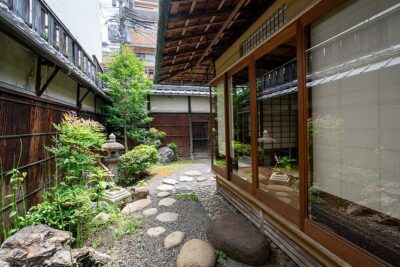
Tsukiji Fish Market Guided Tour and Sushi Making with Pro Chef
Read our review →Tsukiji Fish Market Food and Culture Walking Tour
Read our review →Browse the lists this tour appears in