
Reviewed · TEMPLES AND SHRINES
Tokyo: Asakusa Walking Tour with Sensoji Temple Visit
Tokyo gets more traditional in Asakusa. This two-hour walk gives you a clear introduction to Sensoji Temple and the streets around it for $22, a fair price when you want context rather than a quick photo stop. I especially like the route through Kaminarimon, Nakamise Street, and Asakusa Shrine, plus the practical food tips guides such as Aya, Keiko, and Glenda share along the way. The main drawback is simple: Asakusa can be crowded, and two hours leaves little time for lingering inside shops or exploring the temple grounds on your own.
The tour works best because it connects Buddhist and Shinto traditions in one compact outing. Guides explain the incense ritual, temple details, local customs, and the area’s past in clear English, often with humor. You should still expect a walking tour in a busy district, with standing, outdoor time, and a fairly brisk pace.
In This Review
- Key points to know before you go
- Why Asakusa makes a smart first Tokyo walk
- Meeting beneath the Thunder Gate
- Nakamise Street, where the approach becomes a marketplace
- Sensoji Temple, the heart of the two-hour route
- Asakusa Shrine and the value of seeing two faiths together
- Hoppy Street and Shin-Nakamise: Asakusa beyond the postcard
- Ending at Azuma Bridge
- The guides are the main reason to book
- What $22 really buys you
- Timing, pace, and practical comfort
- Who should book this Asakusa walk?
- Should you book the Sensoji and Asakusa walking tour?
- FAQ
- Where does the tour begin?
- Where does the tour finish?
- How long does the tour last?
- What language is the tour offered in?
- What is included in the price?
- Does the tour visit Sensoji Temple?
- Does the route include Asakusa Shrine?
- Will the tour visit Nakamise Shopping Street?
- Is the tour wheelchair accessible?
- Can I cancel for a refund?
Key points to know before you go
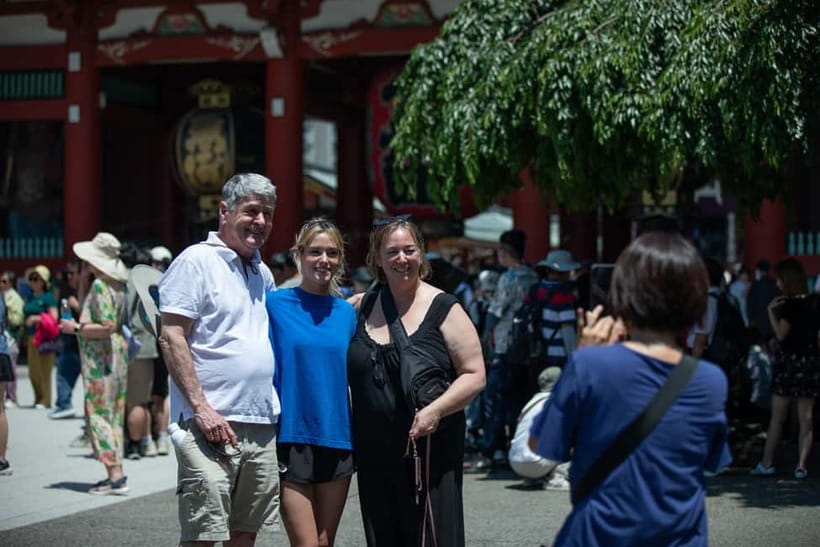
- Kaminarimon is the meeting point: Find your guide on the left side of the Thunder Gate, near Tokiwado Kaminari-okoshi Honpo, with a tour sign.
- Sensoji is the centerpiece: You get a guided visit, photo time, and free time at Tokyo’s oldest Buddhist sanctuary.
- The route covers more than the temple: Nakamise, Asakusa Shrine, Hoppy Street, Shin-Nakamise, and Azuma Bridge round out the walk.
- Food advice is part of the value: Guides often point out places to eat after the tour, which is handy because the walk ends near many restaurants.
- English guidance is included: The tour has a live English-speaking guide and is listed as wheelchair accessible.
- The booking is flexible: You can cancel up to 24 hours ahead for a full refund and reserve without paying immediately.
Why Asakusa makes a smart first Tokyo walk
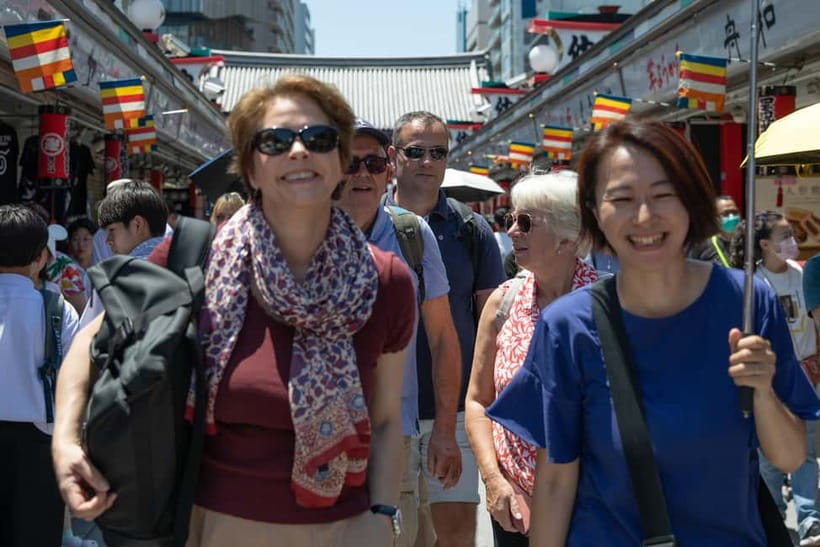
Tokyo is enormous, and its modern districts can feel like a blur of towers, signs, stations, and shopping centers. Asakusa gives you a more focused starting point. In a short distance, you see a famous temple, a Shinto shrine, old-style shopping streets, food lanes, and the Sumida River.
I like this district for its sense of connection. You are not simply moving from one isolated sight to another. The Thunder Gate leads to Nakamise, Nakamise leads to Sensoji, and the surrounding streets show how worship, shopping, food, and daily life share the same space.
The guide adds the part you cannot easily get from a map. You learn what to look for at the gate, how the incense ritual works, and why the temple and shrine are treated as different religious sites. Several guides also offer suggestions for the rest of your Tokyo visit, not just Asakusa.
This is especially useful early in a Japan trip. Andrew described the walk as a good introduction to the country, while others appreciated tips for restaurants and later sightseeing. I would schedule it near the start of your stay if you want a friendly orientation and a few ideas for the days ahead.
More Temples and Shrines in Tokyo
- Tokyo: Meiji Shrine, Asakusa, Skytree Bus Tour and Cruise
★ 4.7 · 1,986 reviews - Nikko: Kegon Falls, Lake Chuzenji & Toshogu Temple
★ 4.6 · 1,577 reviews - Tokyo: Nikko Toshogu Shrine and Kegon Waterfall Tour
★ 4.5 · 1,266 reviews
Meeting beneath the Thunder Gate
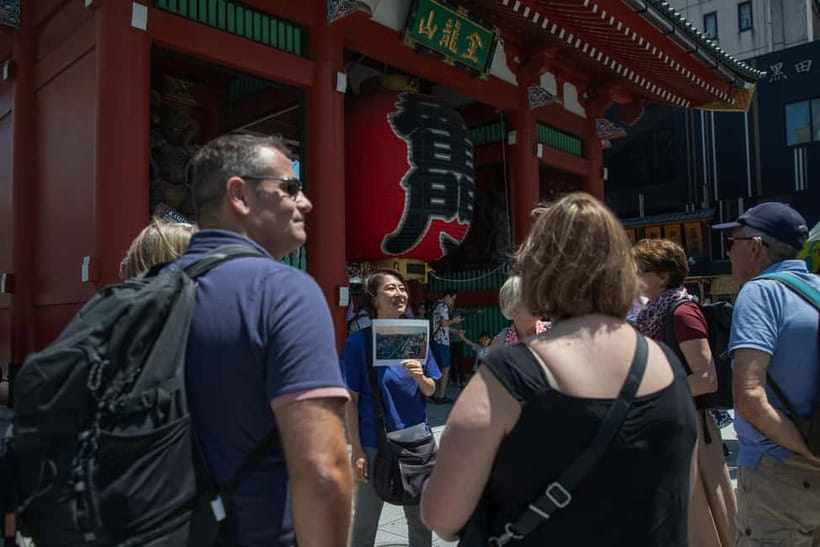
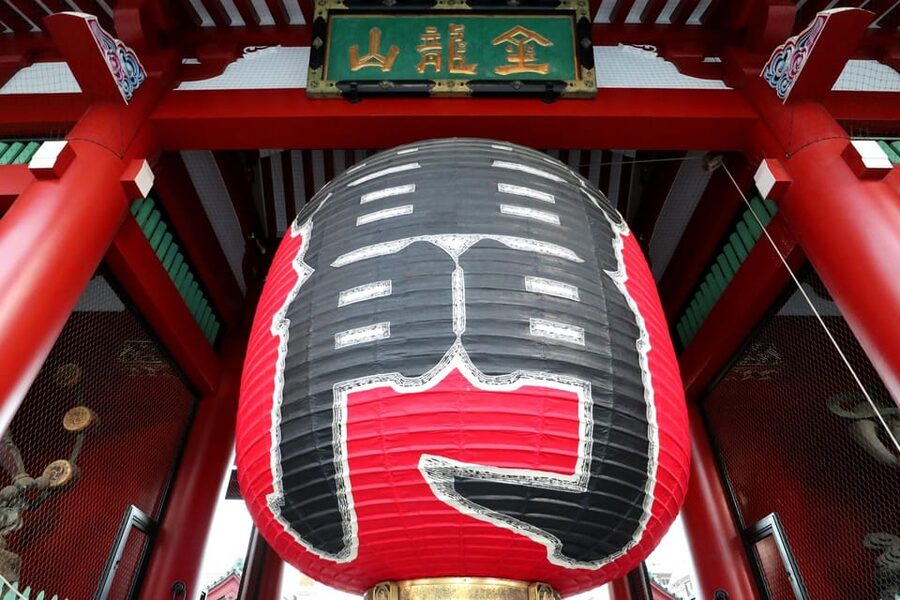
The tour begins at Kaminarimon, the large entrance gate to Sensoji. Look for the guide on the left side of the gate, close to Tokiwado Kaminari-okoshi Honpo. The guide will hold a sign, but you should arrive early because the walk cannot wait long for late arrivals.
Kaminarimon means Thunder Gate, and it gives the tour a strong opening image. Its huge lantern and bold entrance make it one of Asakusa’s best-known sights. This is a natural place for photos, but the guide’s explanation helps you look past the obvious picture.
Allow extra time to reach the meeting point. The instructions are specific, yet a large landmark with crowds can still create confusion. If you are carrying luggage, managing a stroller, or walking at a slower pace, arrive with enough time to settle in before the group moves.
The first guided stop lasts about 10 minutes. That may sound brief, but it is enough to introduce the gate and explain how it fits into the approach to the temple.
Nakamise Street, where the approach becomes a marketplace
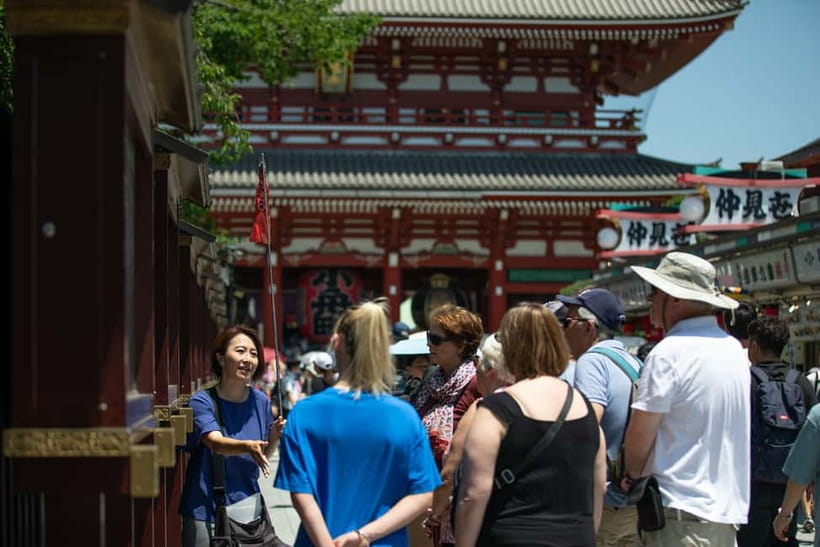
From Kaminarimon, you walk along Nakamise Shopping Street. This is one of Japan’s oldest shopping centers, and its position is part of its charm: the shops line the approach toward Sensoji.
The street gives you an easy look at traditional goods, small souvenirs, snacks, and local food. The tour allows around 15 minutes here, so think of this as a guided introduction rather than a serious shopping session. You can note places to revisit after the walk.
That limited time is worth remembering. If you stop at every shop, you will quickly fall behind. I suggest listening for the guide’s recommendations, taking a few photos, and saving purchases for later unless something is especially tempting.
This section also helps explain the relationship between commerce and religion in Asakusa. The approach to a major temple is not silent or empty. It has been shaped by people coming to worship, buy small items, eat, and spend time in the neighborhood.
Sensoji Temple, the heart of the two-hour route
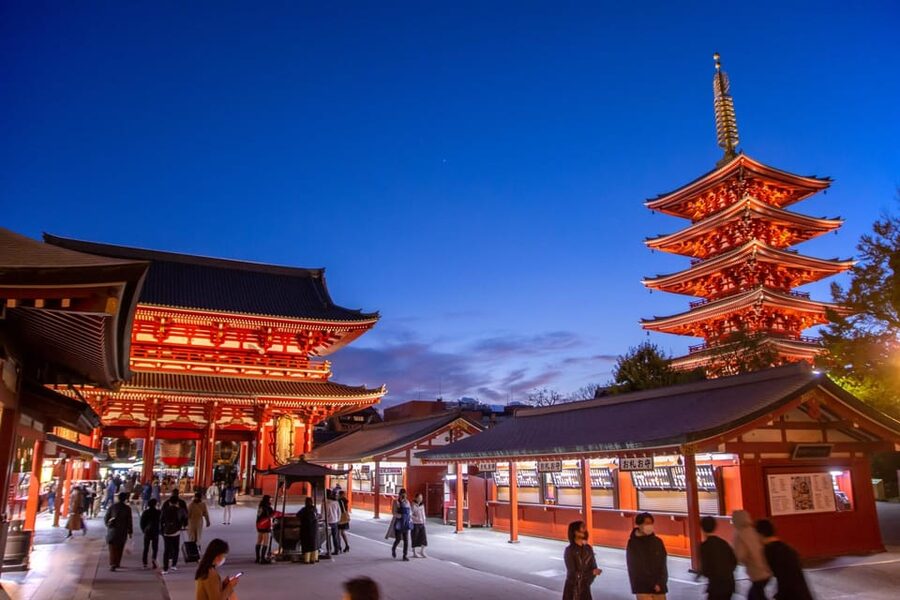
Sensoji, also called Asakusa Kannon, is Tokyo’s oldest Buddhist sanctuary. The temple is the main reason to book this walk, but the experience is better when you understand what you are seeing.
You get a guided visit, a photo stop, and free time, with about 30 minutes listed for this portion. That is enough to admire the architecture, take pictures, and hear the main stories without turning the tour into a long religious lecture.
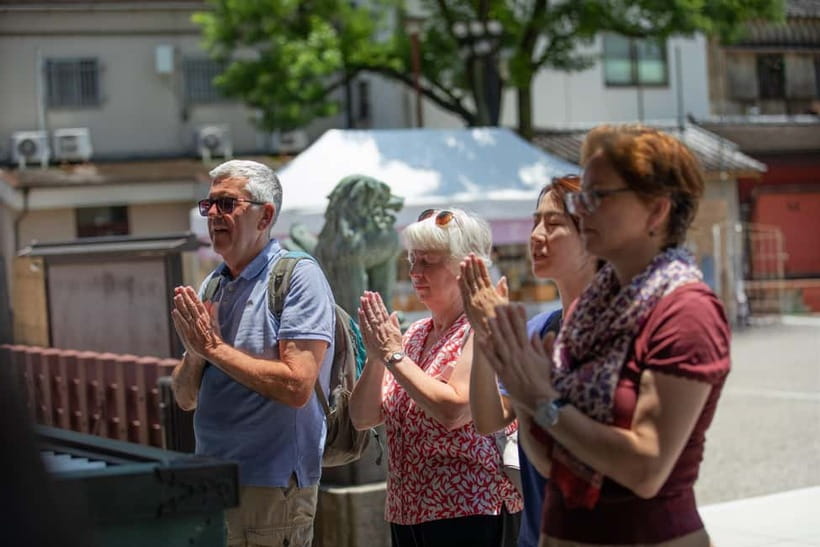
One useful part of the visit is the incense ritual. Your guide explains the custom and shows you how to take part respectfully. Details like this matter because they let you do more than stand outside and photograph the buildings. You gain a small but meaningful connection to the place.
The guides also explain temple features, local traditions, and stories connected with Sensoji. Aya received particular praise for explaining the temple’s architecture, traditions, history, and miracles, while other guides were appreciated for answering questions in plain English.
You should expect some free time, but not complete independence. The group remains on a schedule, and the temple grounds can be crowded. If you want quiet reflection, a long look at every detail, or time to browse every nearby stall, plan to return after the tour.
The temple is also an excellent place to ask questions. Guests on past walks praised Keiko for patiently answering many questions and making sure the group could hear her. That kind of care can make a difference in a busy open-air setting.
More Walking Tours in Tokyo
- Tokyo Tsukiji Fish Market Food and Culture Walking Tour
★ 5.0 · 3,184 reviews - Tokyo: Imperial Palace and Shogun Historical Walking Tour
★ 5.0 · 2,251 reviews - Tokyo: Shinjuku Local Bar and Izakaya Guided Walking Tour
★ 4.9 · 1,794 reviews - Tokyo: Tsukiji Fish Market Food and Walking tour
★ 5.0 · 1,724 reviews
Asakusa Shrine and the value of seeing two faiths together
The next major stop is Asakusa Shrine, with about 20 minutes for a visit, guided explanation, and photos. This is where the tour broadens beyond Sensoji.
Seeing the Buddhist temple and Shinto shrine together gives you a useful lesson in Japanese religious culture. You do not need prior knowledge to follow the explanation. The guide points out the differences and shows how both sites fit into Asakusa’s identity.
Lara specifically appreciated seeing both Buddhist and Shinto places during the same walk. That is one of the tour’s strongest features. A basic temple visit can leave you with beautiful photographs but little understanding. This route gives you a simple framework for recognizing two important traditions.
The shrine stop also changes the mood. Sensoji feels like the grand centerpiece, while the shrine offers another perspective on local worship and the area’s traditions. Your guide can tie the two stops together instead of presenting them as unrelated monuments.
As with the temple, this is an outdoor visit with standing and walking. The listed wheelchair accessibility is encouraging, but the exact ease of every street, entrance, and crowded section is not specified. If you use a wheelchair, it would be sensible to confirm current route details before booking.
Hoppy Street and Shin-Nakamise: Asakusa beyond the postcard
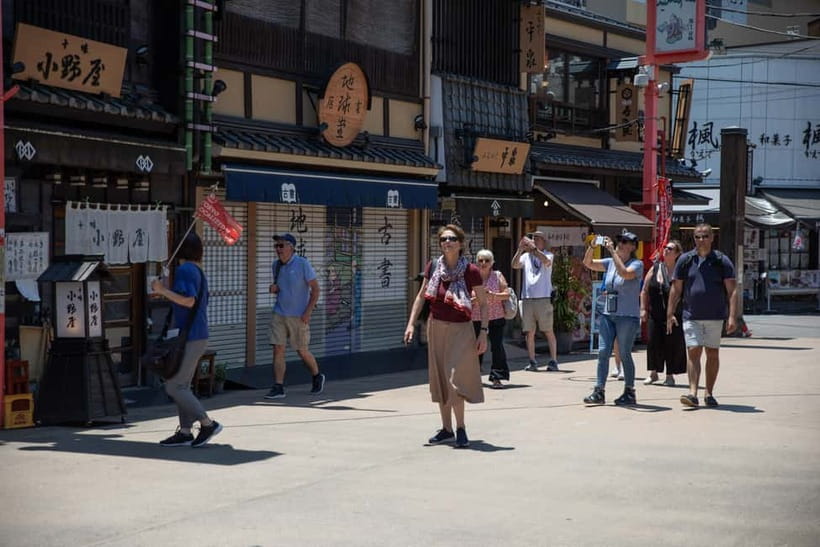
After the religious sites, the walk turns toward everyday Asakusa. Hoppy Street is scheduled for about 10 minutes, followed by another 10 minutes at Shin-Nakamise Shopping Street.
Hoppy Street is known for its casual food and drink atmosphere. The brief stop gives you a sense of the district’s social side, but it is not a dedicated food tour. You should not expect a full tasting menu or a long meal during the two-hour walk.
That said, this part adds useful balance. You have seen the formal gate and temple buildings. Now you see where people go to eat, browse, and spend time. The shift makes Asakusa feel like a living neighborhood rather than a collection of historic sights.
Shin-Nakamise offers another chance to see local shops and food businesses. It is separate from the better-known Nakamise approach, so the route does not simply retrace its steps. Guides often give recommendations for lunch or later visits, and the end of the tour is well placed for acting on that advice.
Keiko, Aya, Rio, and Polina were all praised for useful food suggestions. Rio even brought extra charts and information, while Polina combined historical details with ideas for modern local food vendors. These touches can make the walk more useful than a standard sightseeing circuit.
Ending at Azuma Bridge
The tour ends at Azuma Bridge. This gives you a clear finish point rather than leaving you somewhere in the temple complex.
The bridge area lets you shift from Asakusa’s older streets toward the Sumida River setting. The tour information does not promise a long bridge-side visit, so treat it as the endpoint, not a separate river cruise or extended viewpoint stop.
This location is practical for planning lunch or continuing your day. You can return toward the temple and shopping streets, follow the guide’s restaurant advice, or use the finish as a natural break before another Tokyo activity.
Because the tour finishes after about two hours, it fits neatly into a morning or afternoon. Several people liked that it ended around lunchtime, when the area offers many places to eat. If you prefer to explore without a fixed schedule, the finish at Azuma Bridge also gives you room to continue independently.
The guides are the main reason to book
The strongest pattern in the feedback is the quality of the guiding. Names that received repeated praise include Aya, Keiko, Hiroko, Glenda, Polina, Loc, Miyu, Rio, and Mei.
The praise is specific. Guides were valued for clear English, humor, patience, historical explanations, cultural context, and practical suggestions. Keiko was praised for adjusting her pace and making sure children and a 14-year-old stayed involved. Aya was often described as warm, attentive, and willing to answer questions. Hiroko was appreciated for including everyone and responding to individual needs.
That matters in Asakusa because the area can be visually overwhelming. Signs, crowds, shops, rituals, and ornate buildings compete for your attention. A good guide turns that noise into a story you can follow.
The experience is not dependent on one named guide, since the guide assigned to you can vary. Still, the repeated strength of the guiding suggests that the operator places real weight on personal explanations rather than simply leading you from one location to the next.
What $22 really buys you
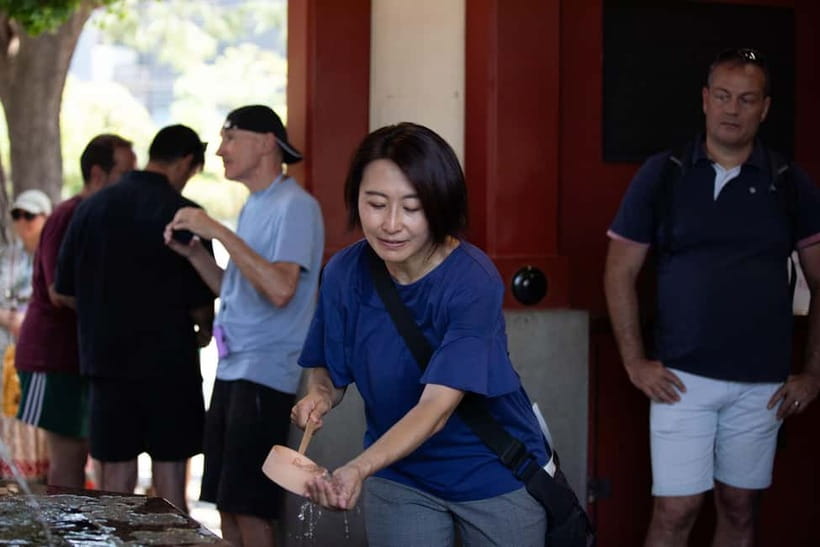
At $22 per person, this is good value if you want an informed introduction to Asakusa. You are paying for two hours of an English-guided route through several major sights, not admission to a special exhibit or a private tour.
The cost makes most sense for first-time visitors, families, and anyone who wants help understanding Japanese customs. You could walk the same streets on your own for less, of course. But without a guide, you may miss the meaning of the incense ritual, the distinction between the temple and shrine, and the stories tied to the landmarks.
The value drops if you already know Sensoji well or want extended shopping and food time. You might prefer to explore independently if you enjoy reading signs, stopping often, and setting your own pace.
There are no food tastings listed, and the tour includes the walking route and guide only. Budget separately for snacks, souvenirs, or lunch.
Timing, pace, and practical comfort
The total duration is two hours, with stops ranging from 10 to 30 minutes. That creates a clear rhythm: short explanations at the gate and shopping streets, longer time at Sensoji and Asakusa Shrine, then a quick look at the food and shopping lanes.
Wear comfortable shoes. Even though the tour is not long, you will spend the time walking and standing outdoors. Crowds can slow the group, especially around Kaminarimon, Nakamise, and the temple grounds.
Arrive before the meeting time. The guide waits on the left side of Kaminarimon near the named shop and carries a sign, but late arrivals may not be able to catch up.
The tour is offered in English with a live guide. It is listed as wheelchair accessible, though the supplied information does not detail restroom access, pavement conditions, or the exact group size. Ask for current accessibility details if those points affect your planning.
The cancellation policy is traveler-friendly: cancel up to 24 hours in advance for a full refund. You can also reserve now and pay later, which helps if your Tokyo schedule is still changing.
Who should book this Asakusa walk?
I would choose this tour if you are visiting Tokyo for the first time, want a traditional district in your itinerary, or prefer explanations to silent sightseeing. It is also a good pick for families, since guides have shown patience with children and younger teenagers.
It suits curious walkers who want history, religion, food pointers, and neighborhood context in one short outing. The route is compact enough to fit around other plans, yet broad enough to show several sides of Asakusa.
I would think twice if you dislike organized groups, need lots of time for shopping, or want a dedicated food experience. You will get recommendations and a look at food streets, but you will not get a meal or a tasting program as part of the price.
Should you book the Sensoji and Asakusa walking tour?
For $22, I think this is a strong introduction to one of Tokyo’s most rewarding traditional districts. The best reasons to book are the clear route, the Sensoji and Asakusa Shrine explanations, and the guides’ useful advice for food and later sightseeing.
Book it near the beginning of your Tokyo stay, arrive early at Kaminarimon, and treat the tour as an orientation rather than the final word on Asakusa. Afterward, return to the temple or shopping streets for the slower exploration that the schedule cannot provide.
If you want a short, well-priced walk that turns famous sights into understandable places, book it. If you already know the district and prefer total freedom, save the $22 and wander on your own.
FAQ
Where does the tour begin?
It begins in front of Kaminarimon, the Thunder Gate. The guide waits on the left side near Tokiwado Kaminari-okoshi Honpo and holds a sign.
Where does the tour finish?
The walk finishes at Azuma Bridge.
How long does the tour last?
The tour lasts two hours.
What language is the tour offered in?
The tour has a live English-speaking guide.
What is included in the price?
The price includes the walking tour and guide.
Does the tour visit Sensoji Temple?
Yes. Sensoji Temple is the main stop, with a guided visit, photo time, and free time.
Does the route include Asakusa Shrine?
Yes. The itinerary includes a guided visit and photo stop at Asakusa Shrine.
Will the tour visit Nakamise Shopping Street?
Yes. The route visits Nakamise Shopping Street and also includes Shin-Nakamise Shopping Street.
Is the tour wheelchair accessible?
The activity is listed as wheelchair accessible. The supplied information does not give further details about specific surfaces or entrances.
Can I cancel for a refund?
Yes. You can cancel up to 24 hours in advance for a full refund. You can also reserve now and pay later.
Just added in Tokyo
- MT. FUJI/ Private Tour delivered and guided by a top-tier driver★ 5.0 · 27 reviews
- Mt fuji & Hakone customizable day tour w/ English speaking driver★ 5.0 · 45 reviews
- Fuji Speedway Self Drive & Mt. Fuji Private Tour pickup & dropoff★ 5.0 · 14 reviews
- Mt.Fuji Trekking 1 Day Tour up to the summit★ 5.0 · 14 reviews
- Seasonal Mt. Fuji Scenic Views, Fruit Picking and Ropeway Ride!★ 4.5 · 35 reviews
- Customisable Mt.Fuji Private Day Trip, English Speaking Driver★ 5.0 · 22 reviews
- Private Mt Fuji Tour from Tokyo: Scenic BBQ and Hidden Gems★ 5.0 · 146 reviews
- Private Mount Fuji Tour in Luxury Vehicle with English Guide★ 4.5 · 39 reviews
Temples and Shrines, compared.
![[Kyoto & Nara Day Tour] Sagano Scenic Railway & Nara Park & Fushimi Inari Taisha Thousand Torii Gates & Togetsukyo Bridge & Bamboo Grove & Kimono Forest (Departing from Osaka)](https://media.japanvisits.com/wp-content/uploads/kyoto-nara-day-tour-sagano-scenic-railway-nara-park-fushimi-inari-taisha-thousand-torii-gates-togetsukyo-bridge-bamboo-grove-kimono-forest-departing-from-osaka-k110001-400x257.jpg)
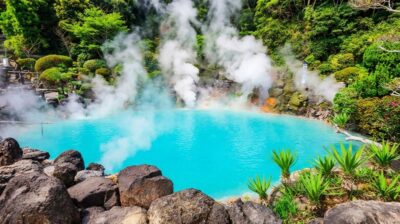
Kyushu One-Day Tour: Yufuin no Mori Train & Yufuin Town & Nyoirin-ji Temple & Dazaifu & Hell Hot Springs (Departing from Fukuoka)
Read our review →
Fushimi Inari, Kinkakuji, Bamboo Grove 1 Day Bus Tour
Read our review →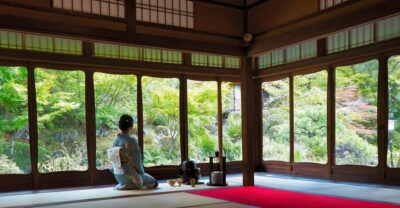
Tea Ceremony in a Traditional Tea House in Kiyomizu
Read our review →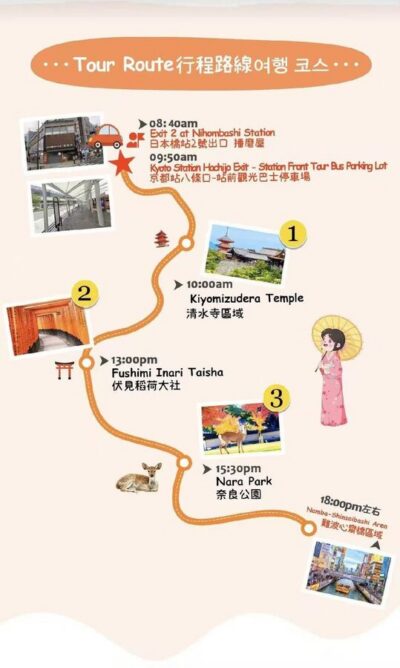
Kyoto Nara Day Trip │ Kiyomizu-dera Temple + Fushimi Inari-taisha Shrine + Nara Park (Departing from Osaka/Kyoto)
Read our review →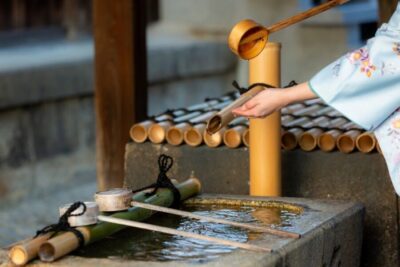
Browse the lists this tour appears in