
Reviewed · MARKETS AND FOOD HALLS
Tokyo Tsukiji Fish Market Food and Culture Walking Tour
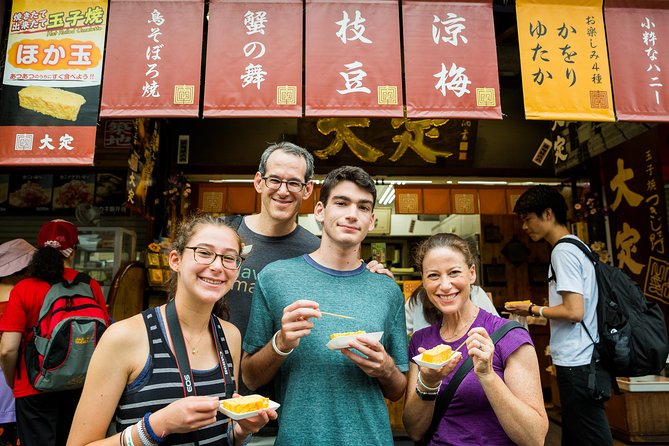
Tsukiji rewards curiosity and an empty stomach. This three-hour walk gives you a local guide to the market’s maze plus a useful spread of tastes, from Wagyu beef and fish cakes to sushi or a seafood bowl. I like that you get more than a quick snack crawl: the route includes Tsukiji Hongwan-ji Temple, market history, cooking tips, and a look at the shops where top chefs seek ingredients. The main drawback is that this is the outer market, not a tour of the famous wholesale tuna auction, and the fish market section closes on Wednesdays, Sundays, and holidays.
I also like the small-group format, with a maximum of 20 people, and the chance to see food you might miss on your own, such as sea urchin, pufferfish, dashi soup, Japanese omelette, and seasonal produce. Guides such as Kiyo, Naz, Shoko, Masa, and Yuki have received especially warm praise for clear explanations and friendly help. Still, the experience is not suitable for vegetarians, people who cannot eat fish, or anyone needing halal, gluten-free, or allergy-friendly arrangements.
In This Review
- Key points to know before you book
- Why Tsukiji still matters for food lovers
- Starting at Tsukiji Hongwan-ji Temple
- Tsukiji Jogai Market: 90 minutes among the stalls
- The old market area and the food stops
- Tsukiji Uogashi and the limits of the wholesale visit
- Finishing with sushi or a seafood bowl
- What the guides add to the experience
- Price, group size, and what the $99.49 buys
- Who should book this Tsukiji walk?
- Should you book it?
- FAQ
- How long does the Tsukiji Fish Market Food and Culture Walking Tour last?
- Where does the tour meet?
- What food and drinks are included?
- Is the old Tsukiji wholesale fish market included?
- Which days is the fish market closed?
- What should I wear?
- Can the tour accommodate dietary restrictions?
Key points to know before you book
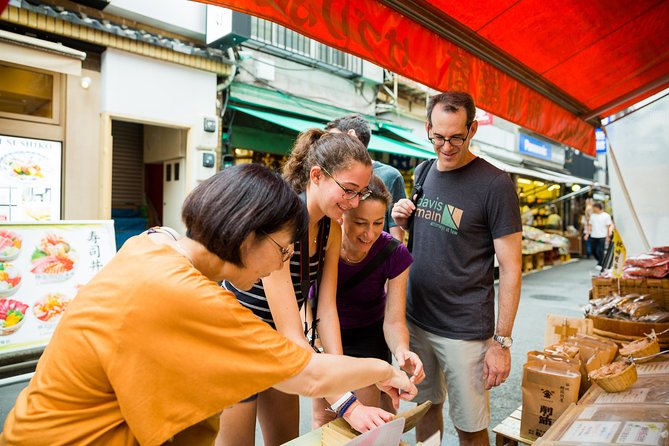
- Three hours in the Tsukiji Outer Market: Expect a walking tour through food stalls, small shops, and the Tsukiji Uogashi area.
- Lunch and snacks are included: Tastings can include Wagyu beef, tuna, fish cakes, Japanese omelette, fruit, dashi soup, green tea, and either sushi or a seafood bowl.
- The wholesale market is not the old auction site: You visit a mini wholesale area when it is open, but this is not a tour of the former inner-market auction.
- Guides make the difference: Strong guides explain ingredients, customs, history, and how to use Japanese foods at home.
- Market days affect the menu: Wednesdays, Sundays, and other closure days mean some shops are shut, so omelette, fish cake, and fruit may not be available.
- Come ready to walk and eat fish: Comfortable shoes are essential, and dietary flexibility is required.
Why Tsukiji still matters for food lovers
Tsukiji is no longer Tokyo’s main wholesale fish market, but its outer market remains a major food district. The streets are lined with seafood sellers, snack counters, kitchen-tool shops, produce stalls, and restaurants. For a first visit, the sheer range can be hard to sort out.
That is where this tour earns its keep. Instead of wandering from stall to stall, you follow a guide who can explain what you are seeing and point out food that may not be obvious to you. The experience is less about checking off famous sights and more about understanding how ingredients fit into Japanese cooking.
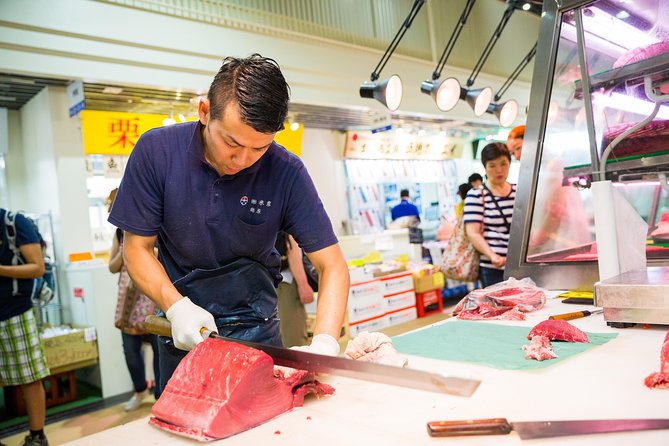
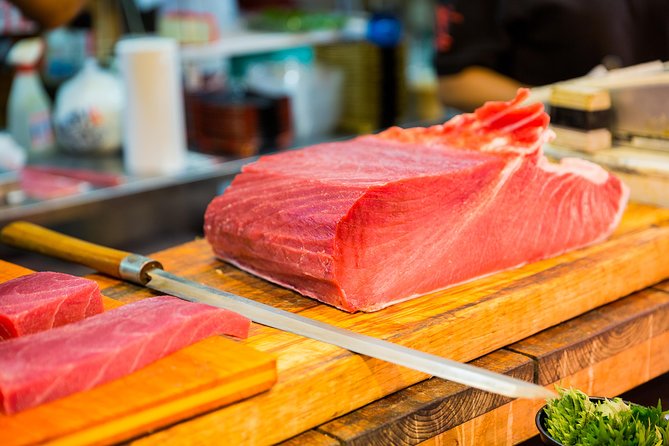
You may see boxes of uni, tanks holding pufferfish, and workers cutting large tuna. You also get context about why chefs from some of Tokyo’s best restaurants come to this district for fresh ingredients. The market feels practical rather than staged. People shop, sell, prepare, and eat here.
The rating is listed at 4.9 from more than 3,000 reviews, with 97 percent recommending the experience. That is unusually strong, but the less favorable experiences point to an important truth: your guide matters a great deal. A lively guide can turn a crowded market into a lesson in Japanese food. A slower or less engaging guide may leave you watching more than eating.
More Markets and Food Halls in Tokyo
- Tokyo: Tsukiji Fish Market Food and Walking tour
★ 5.0 · 1,724 reviews - Senkyaku Banrai Toyosu Manyo Club Onsen Experience in Tokyo
★ 4.7 · 1,690 reviews - Tokyo: Tsukiji Fish Market Guided Walking Tour
★ 4.9 · 1,397 reviews
Starting at Tsukiji Hongwan-ji Temple
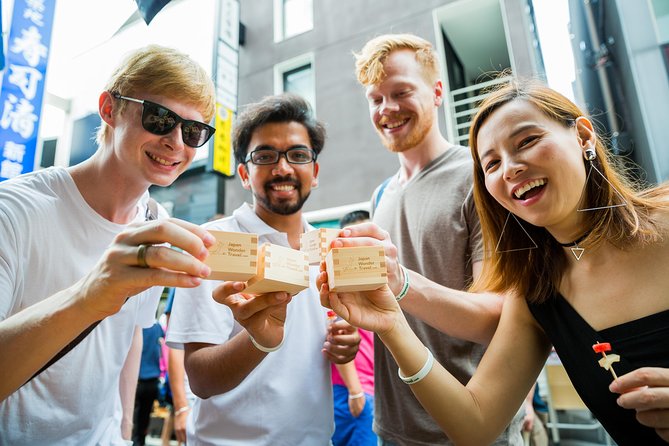
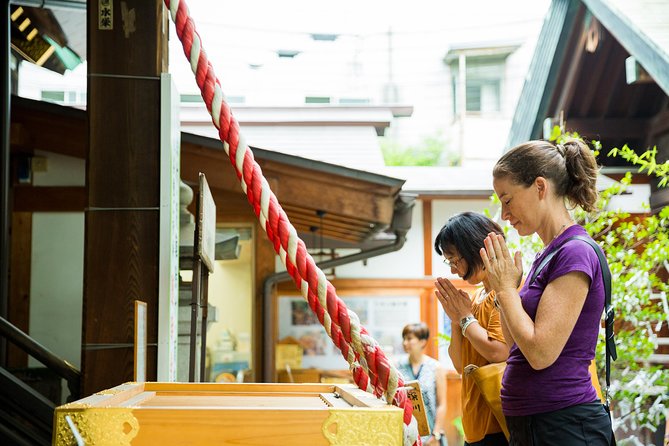
The meeting point is the main gate of Tsukiji Hongwan-ji Temple, at 3-chōme-15-1 Tsukiji, Chuo City. Pay close attention to the word main gate. The meeting instructions warn that map applications may send you to the back side of the temple.
The temple gives the tour a useful opening. Before the food begins, you have a chance to see an important local landmark and hear about its unusual building design and history. One highly praised guide, Kiyo, began with an explanation of how the temple was built and what inspired it. That sort of introduction helps place the market in its neighborhood instead of treating it as an isolated food court.
You must arrive on time. The group leaves at the scheduled start, and late arrivals cannot extend the tour. There are no refunds for arriving late on the day, so I would plan extra time for the train and the walk to the gate.
The tour ends back at the meeting point. Hotel pickup, transportation to Tsukiji, extra food and drinks, and personal purchases are not included.
Tsukiji Jogai Market: 90 minutes among the stalls
The first major portion lasts about an hour and a half in Tsukiji Jogai Market, the outer market. This is the heart of the experience, and it is where the guide’s local judgment matters most.
You can expect a sensory tour of seafood stalls and food counters. The route may bring you past fresh fish, shellfish, sea urchin, tuna, pufferfish, fish cakes, Japanese omelette, fruit, spices, and other ingredients. Rather than simply pointing at displays, a good guide explains what the products are and how Japanese cooks use them.
Early tastings can include dashi soup and green tea. Dashi is a basic Japanese stock, often made with ingredients such as fish and seaweed, so it gives you a quick taste of the foundation behind many Japanese dishes. Green tea provides a simple pause between samples.
Other food stops may include tuna, fish cake, tamagoyaki, seasonal fruit, and Wagyu beef skewers. The exact selection can change with the day and the shops that are open. That flexibility is part of the market experience, but it also means you should not treat every advertised item as guaranteed.
Several guides have helped make this section especially useful. Shoko has been praised for explaining how she uses Japanese foods and spices in her own cooking, as well as helping with purchases to take home. Yuki has been noted for clear explanations of customs and for arranging a chance to watch fish being prepared before making sushi.
A small group is a real advantage here. The market can be crowded, and it is easy to lose sight of a guide or miss an explanation. Groups of four have made it easier to move through tight areas, hear the commentary, and stop for a little shopping.
The tradeoff is pace. One disappointing experience involved long waits and a guide who seemed uncertain. If your group is large or a stall is busy, the tour may not move quickly. This is not a nonstop eating contest. Some time goes to listening, waiting, and looking.
The old market area and the food stops
The itinerary includes about 30 minutes in the old Tsukiji market area for food tasting. This portion gives you a chance to focus on the foods themselves instead of only the market’s layout.
You may try Japanese omelette, fish cakes, fruit, and other samples. On open market days, these foods help show the range of Tsukiji. The market is not only about raw fish. Sweet omelette, prepared seafood, tea, snacks, and cooking ingredients all form part of the local food culture.
You can also use this time to ask practical questions. What is the difference between various fish? How should you serve an ingredient? Which foods travel well as gifts? Guides such as Shoko have helped people choose items for home cooking, while others have suggested shops for kitchen tools or sake tasting.
The amount of food is worth considering before you pay. The tour includes lunch and snacks, but one person found the tastings too limited and felt the experience involved more looking and talking than eating. I would not arrive after skipping every meal unless you are comfortable with a light, spread-out lunch. Most people will eat several items, but this is not an unlimited food tour.
More Walking Tours in Tokyo
- Tokyo: Imperial Palace and Shogun Historical Walking Tour
★ 5.0 · 2,251 reviews - Tokyo: Shinjuku Local Bar and Izakaya Guided Walking Tour
★ 4.9 · 1,794 reviews - Tokyo: Asakusa Walking Tour with Sensoji Temple Visit
★ 4.8 · 1,583 reviews - Tokyo Castle & Imperial PalaceーShogun Walking Tour
★ 4.7 · 1,068 reviews
Tsukiji Uogashi and the limits of the wholesale visit
The route also passes through Tsukiji Uogashi, described as a mini wholesale market with many kinds of fresh fish. This section lasts about 30 minutes when the market is open.
Here you get a closer look at the trade side of Tsukiji. It helps explain the connection between the stalls you see as a customer and the professional food businesses that buy seafood in quantity. The area is most useful if you want to understand how the market functions, not just grab a snack.
Be clear about what you are booking. The experience focuses on the outer market and does not take you through the former inner wholesale market and its famous tuna auction. The main wholesale operation moved elsewhere, and this can surprise people who expect the old market setup.
The Uogashi section is closed on Wednesdays, Sundays, holidays, and other market closure days. On those dates, some shops are also shut, so Japanese omelette, fish cake, and fruit may not be served. The operator says an alternative is provided if a restaurant suddenly closes, but the exact replacement can vary.
For the fullest version of the route, choose a market day and check the date before booking. If your schedule allows, avoiding Wednesday and Sunday gives you a better chance of seeing the wholesale section and receiving the full range of tastings.
Finishing with sushi or a seafood bowl
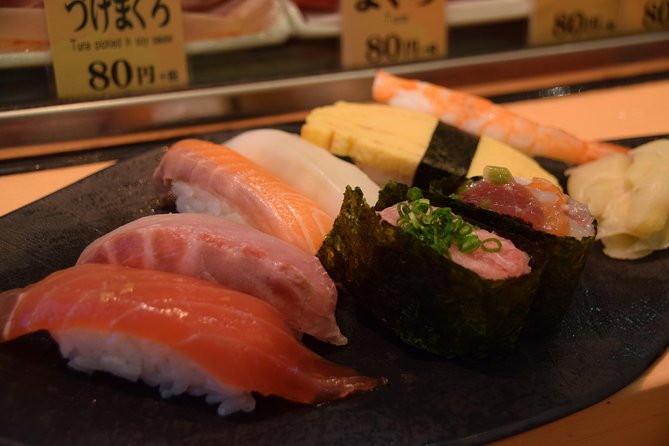
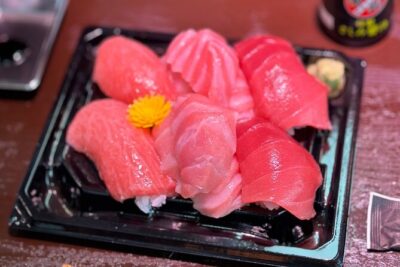
The final 30 minutes include either sushi or a seafood bowl, depending on the day and time. This is the tour’s main meal and a welcome finish after walking through the market.
The choice between sushi and a seafood bowl is not presented as a fixed selection, so you should expect the operator to decide based on availability. The meal gives you a chance to sit down and enjoy the seafood in a more settled setting after the busy stalls.
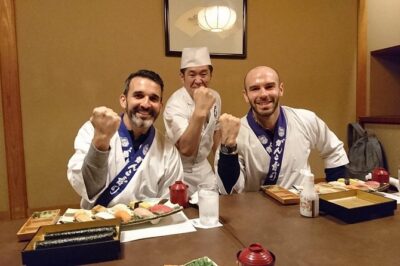
Some guides add extra value here. One tour included a sushi-cutting demonstration, while another ended with sashimi prepared at Moritaya. A different group watched sea bass being prepared and then made its own sushi. These details are not guaranteed, but they show the kind of food education that can make the final stop more memorable.
The quality of the meal will depend on the restaurant used that day. One less positive experience described the final restaurant as feeling too tourist-oriented and said there was little choice once the group arrived. That is a fair caution. You are paying for a planned group experience, not the freedom to compare every restaurant in Tsukiji.
Still, the final meal is a useful benefit for first-time visitors. You do not have to guess where to eat after the tour, and you get to try seafood with a guide who can explain what is on the plate.
What the guides add to the experience
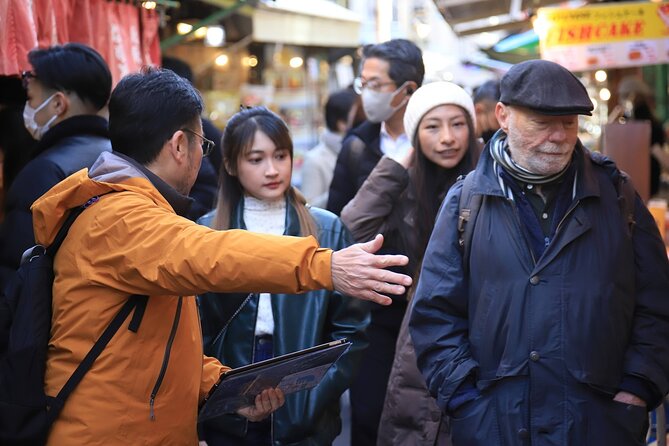
The strongest part of this tour is not a single dish. It is the human guide who connects the food, market, and neighborhood.
Masa has been praised for a calm manner, patience, humor, and strong cultural explanations. Take helped a first-time sushi eater feel comfortable trying squid and eel. Joy made the walk more relaxed by welcoming a participant’s basic Japanese. Hanako helped a small group find good food and shops while also introducing the temple.
Other praised guides include Naz, Miky, Mari, Hedeki, Sean, Mike, Yuko, KK, Mieko, and Nick. The repeated pattern is clear: the best guides do more than lead you from one stall to another. They explain ingredients, answer questions, manage the crowd, suggest purchases, and adjust the pace when possible.
That last point matters if you have an older family member. Mieko was especially appreciated for keeping a comfortable pace for an elderly father. The tour requires moderate physical fitness, but the exact walking speed can depend on the group and guide.
The mixed experiences also give you a realistic warning. English communication was described as a little difficult on one tour, and some guides were judged too young, slow, or low-energy. If you want a lively, highly polished food performance, results may vary. If you see a guide name available at booking, it could be worth checking current details, but the guide cannot always be selected.
Price, group size, and what the $99.49 buys
At $99.49 per person, this is not the cheapest way to eat in Tsukiji. You can walk through the outer market without paying an admission fee, buy snacks directly, and choose your own restaurant.
The tour can still be good value if you want structure. Your fee covers about three hours of guiding, market interpretation, multiple tastings, snacks, and lunch. It also saves you from having to identify unfamiliar foods, choose a restaurant, and work out how the market fits together.
I would consider it most worthwhile on a first Tokyo visit, especially if you are curious about Japanese food but do not know where to start. It is also useful for people who want cultural background along with lunch, rather than a simple list of places to eat.
The value drops if you already know Tsukiji well, prefer to browse at your own speed, or expect a large meal with many choices. A returning visitor did still find new spots with a guide, but independent explorers may prefer spending the same money on several self-chosen dishes.
The maximum group size is 20, though some departures may be much smaller. A small group makes it easier to hear, move, shop, and ask questions. It can also make the experience feel more personal, though a full group will naturally be less flexible.
Who should book this Tsukiji walk?
I would recommend it to first-time Tokyo visitors, food-focused couples, families with older children, and anyone who wants help making sense of Japanese ingredients. It suits curious eaters who enjoy trying fish, seafood, tea, fruit, meat, and unfamiliar snacks.
You should also be comfortable standing and walking for three hours. Wear walking shoes, and avoid arriving hungry enough to expect a single large meal right away.
This is not the right choice for vegetarians, people who cannot eat fish, or anyone with halal, gluten-free, or allergy requirements. The operator specifically says these requests cannot be accommodated. The minimum drinking age is 20, and a different drink is offered to anyone younger.
Free cancellation is available if you cancel at least 24 hours before the start time. Changes or cancellations inside that window are not accepted, and late arrival on the day is not refundable.
Should you book it?
Book this tour if you want a friendly guide to lead you through Tsukiji’s food stalls, explain Japanese cooking, and put several good tastes in front of you without requiring much planning. The strongest guides turn the market into a lesson in food and local customs, and the included sushi or seafood bowl makes the price easier to justify.
Skip it if you want the old wholesale auction, need strict dietary accommodations, or prefer total freedom over where and what you eat. For the best chance at the full route, choose a day other than Wednesday, Sunday, or a holiday, meet at the temple’s main gate early, and arrive ready for fish, walking, and a little market chaos.
FAQ
How long does the Tsukiji Fish Market Food and Culture Walking Tour last?
The tour lasts approximately three hours.
Where does the tour meet?
You meet your guide at the main gate of Tsukiji Hongwan-ji Temple, at 3-chōme-15-1 Tsukiji, Chuo City, Tokyo. The tour ends back at the meeting point.
What food and drinks are included?
Lunch and snacks are included. Tastings may include dashi soup, green tea, Wagyu beef skewers, fish cakes, Japanese omelette, seasonal fruit, tuna, sushi, and a seafood bowl. The final meal is either sushi or a seafood bowl, depending on the day and time.
Is the old Tsukiji wholesale fish market included?
The tour visits the Tsukiji Outer Market and may pass through the Tsukiji Uogashi mini wholesale market when it is open. It does not provide a tour of the former inner wholesale market and tuna auction site.
Which days is the fish market closed?
The Uogashi wholesale market is closed on Wednesdays, Sundays, holidays, and other market closure days. Some food items may not be available on those dates.
What should I wear?
Wear comfortable walking shoes because the experience is mainly a walking tour.
Can the tour accommodate dietary restrictions?
The operator does not accommodate vegetarian, halal, gluten-free, or allergy-related requests. You also cannot join the tour if you cannot eat fish.
Just added in Tokyo
- Manga Lesson with a Professional Japanese Manga Artist in Nakano★ 5.0 · 77 reviews
- Making a bento box with cute character look in Japan★ 5.0 · 15 reviews
- Tokyo/Ikebukuro Manga drawing workshop by pro-Manga artists★ 5.0 · 65 reviews
- Luxury Tokyo Sake, Cocktail, Whisky and Pairing Tour★ 5.0 · 18 reviews
- Tokyo Ueno Food & Nature & Localtown Tour: 10Dishes+ Drinks★ 5.0 · 34 reviews
- Make Your Own Bonsai with a Professional Bonsai Artist in Tokyo★ 4.5 · 18 reviews
- Official Sumo Tournament Ticket with Guided Experience★ 4.5 · 19 reviews
- Make Traditional Nerikiri Sweets & Matcha experience in Shibuya★ 5.0 · 130 reviews
Markets and Food Halls, compared.

Senkyaku Banrai Toyosu Manyo Club Onsen Experience in Tokyo
Read our review →
Nishiki Market Brunch Walking Tour (7 Tastings + Brunch)
Read our review →
Tokyo Sushi Making Class in Tsukiji with Professional Chef
Read our review →
Tsukiji Fish Market Guided Tour and Sushi Making with Pro Chef
Read our review →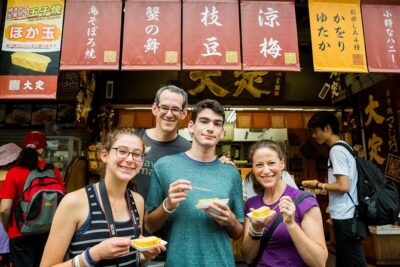
Tsukiji Fish Market Food and Culture Walking Tour
Read our review →Browse the lists this tour appears in