
Reviewed · MARKETS AND FOOD HALLS
Tokyo: Tsukiji Fish Market Food and Culture Walking Tour
The best way into Tsukiji is through your appetite. This three-hour walk takes you through the market’s food stalls with a local English-speaking guide, mixing Wagyu skewers and sushi with useful lessons about Japanese food customs, shrine etiquette, and the market’s past. I like the small groups, limited to eight people, and the way the tour gives you a clear route through a place that can otherwise feel like a maze. I also like that the tastings build toward a proper fish bowl or sushi meal.
The main drawback is timing. On Wednesdays, Sundays, public holidays, and other closed market days, some stalls are shut, so the Japanese omelet, fish cake, and fruit may not be available. The market can also be crowded and hard to hear in the rain. Still, guides such as Shun, Miki, Nazu, Robert, Luna, and Yoshiko have earned strong praise for making the food stops easy and the cultural details enjoyable.
In This Review
- Key points to know before you book
- Starting beneath the roof of Tsukiji Honganji Temple
- Entering the Tsukiji Outer Market
- The tasting route: from Wagyu to tamagoyaki
- Fish bowl or sushi at the final stop
- What the guides add to the experience
- How much food do you really get for $96?
- The right timing, clothing, and pace
- Who will enjoy this Tsukiji tour most?
- Practical booking advice
- Should you book the Tsukiji food walk?
- FAQ
- Where does the Tsukiji food tour start?
- How long does the tour last?
- What food is included?
- Will I have sushi or a seafood bowl?
- Does the tour run on Wednesdays and Sundays?
- Can the tour accommodate dietary restrictions?
- Is the tour suitable for wheelchair users?
Key points to know before you book
- Start at Tsukiji Honganji Temple: Meet at the main gate, where some guides also explain the temple and proper shrine or temple manners before entering the market.
- Expect a generous tasting route: The set menu includes high-grade Wagyu beef, Japanese omelet, fish cake, seasonal fruit, and either sushi or a seafood bowl.
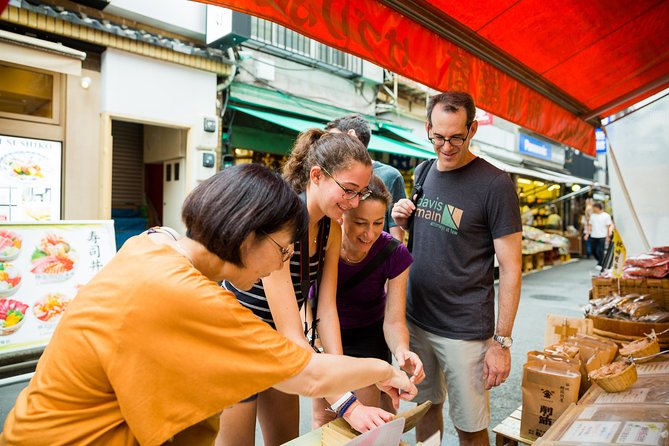
- Small groups make a real difference: With only two to eight people, you can ask questions, keep up in crowded lanes, and get help ordering or choosing items.
- The final meal changes by day: Depending on the schedule, you will finish with sushi or a seafood bowl, sometimes with a fish-cutting demonstration.
- Closed days affect the menu: Wednesday and Sunday are especially important to check, since the fish wholesaler area and some shops do not operate.
- Bring good walking shoes: This is a market walk with a moderate amount of walking, tight spaces, crowds, and occasional wet conditions.
Starting beneath the roof of Tsukiji Honganji Temple
Your meeting point is the main gate of Tsukiji Honganji Temple, formally written as 浄土真宗本願寺派 築地本願寺. That is a useful landmark, but give yourself time to find the correct entrance. The tour ends back at the temple, so the route has a tidy beginning and finish rather than leaving you somewhere unfamiliar.
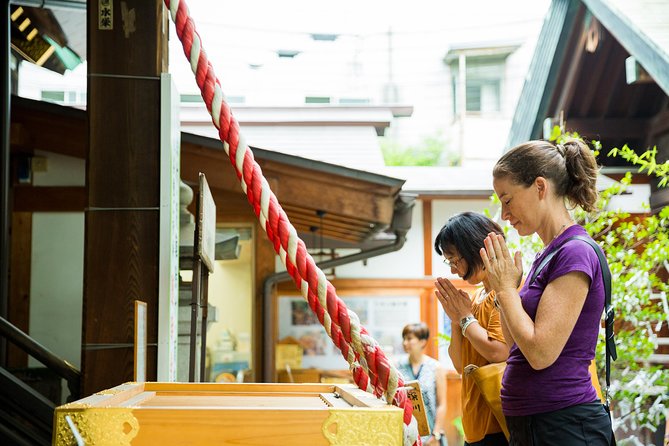
The temple adds a worthwhile cultural opening. Guides have explained its history, the development of the Tsukiji area, and basic etiquette such as how to perform a cleansing ritual. One guide even helped a participant understand shrine manners before the market walk began.
This is not a long temple tour. The focus remains food, but the opening gives you a little context before you enter the busy lanes. I like that balance. You are not simply marched from snack to snack. You get a sense of the place where the market sits and how Japanese religious customs fit into daily life.
More Markets and Food Halls in Tokyo
- Tokyo Tsukiji Fish Market Food and Culture Walking Tour
★ 5.0 · 3,184 reviews - Tokyo: Tsukiji Fish Market Food and Walking tour
★ 5.0 · 1,724 reviews - Senkyaku Banrai Toyosu Manyo Club Onsen Experience in Tokyo
★ 4.7 · 1,690 reviews
Entering the Tsukiji Outer Market
Tsukiji’s famous wholesale fish auction moved to Toyosu, but the outer market remains a major food district. Here you will find stalls and small shops selling fish, shellfish, prepared foods, tea, fruit, fish cakes, omelets, and other ingredients. It is a working food market, but it is also a popular stop for people who want to eat while they shop.
The first portion lasts about 30 minutes and serves as an introduction. Your guide points out the layout, explains why chefs come here for fresh ingredients, and helps you read the market’s rhythm. The useful part is not just seeing seafood. It is learning how to approach the stalls, what different products are used for, and which foods are best suited to eating on the spot.
A guide is particularly helpful here because the market can be confusing. Signs may not tell you much in English, and several stalls may sell similar-looking foods. Instead of guessing, you can ask what something is, how it is prepared, and how it is normally eaten.
The market is also crowded. The route is easier with someone who knows where to walk, but do not expect a quiet stroll. Stay close to the guide, especially during the morning rush. In wet weather, umbrellas, narrow lanes, and crowds make conversation harder. One participant found it difficult to hear during heavy rain, a fair warning if you are sensitive to noise or want a detailed lecture at every stop.
The tasting route: from Wagyu to tamagoyaki
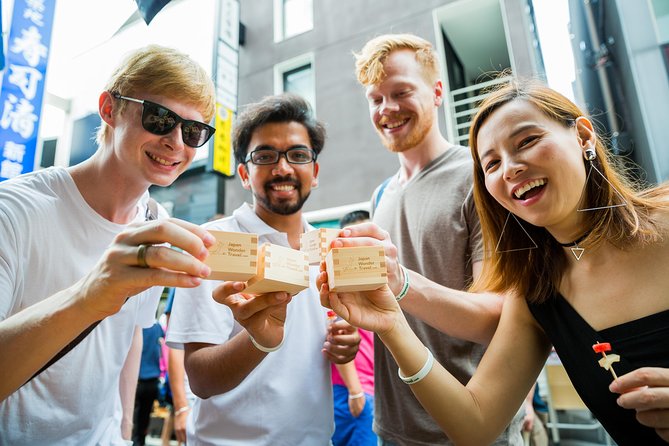
The food is the main reason to book this tour, and the selection gives you a broad introduction rather than one long restaurant meal. You should arrive ready to sample several small portions.
The Wagyu beef skewer is often the early favorite. It is a high-grade item and one of the more memorable tastes on the route. Several people singled it out as the best bite of the day, and one person went back afterward to buy another. If you like beef, this alone may help justify the price.
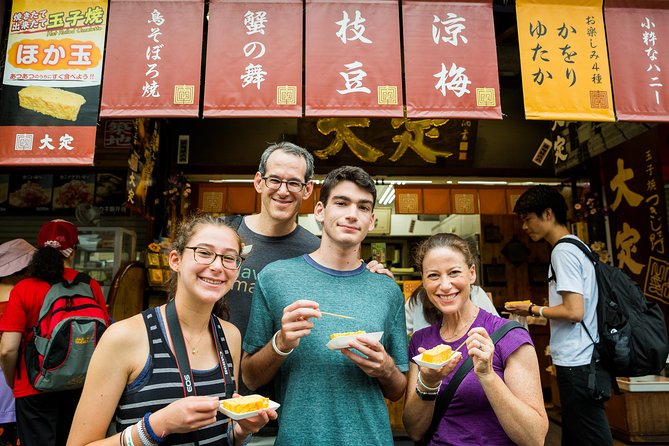
Next may come Japanese omelet, or tamagoyaki. Market omelets are often prepared in large rectangular blocks and cut into portions. Here, the value is not only the taste. Your guide can explain how the dish fits into Japanese cooking and why it appears so often in market food stalls.
Fish cake adds another texture to the route. It is less showy than Wagyu, but that is part of the point. You are trying everyday market foods as well as luxury ingredients. Seasonal fruit gives you something fresh and sweet between savory samples, and the exact fruit depends on the time of year and which shops are open.
The tour can also include other samples, such as squid, sea urchin, matcha ice cream, oysters, and additional seafood purchased along the route. These items are not presented as a fixed promise, so think of them as possible extras rather than guaranteed parts of the set menu.
This is one area where expectations matter. Most of the food is praised, but not every middle tasting will feel equally special. One assessment found the Wagyu and final sashimi bowl excellent, while the items between them felt less refined. I consider that a reasonable criticism. A market tour is not the same as a luxury tasting menu. You are sampling a mix of snacks, ingredients, and delicacies while walking through the place where they are sold.
Fish bowl or sushi at the final stop
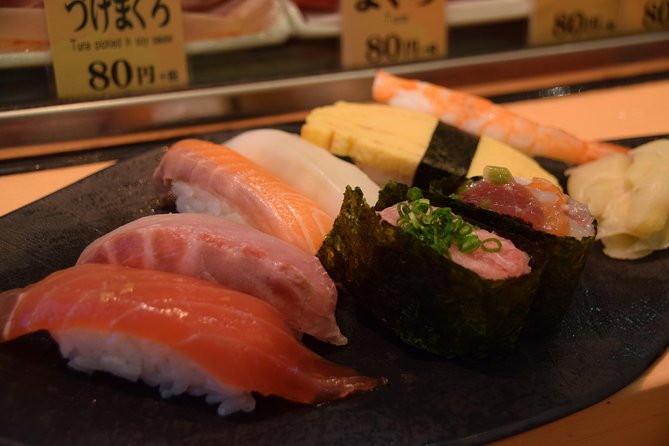
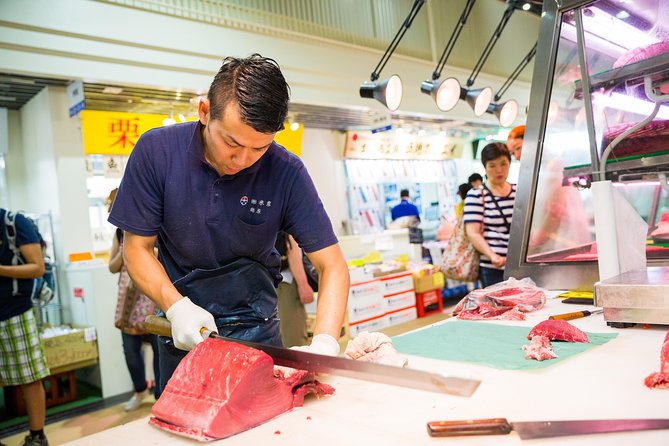
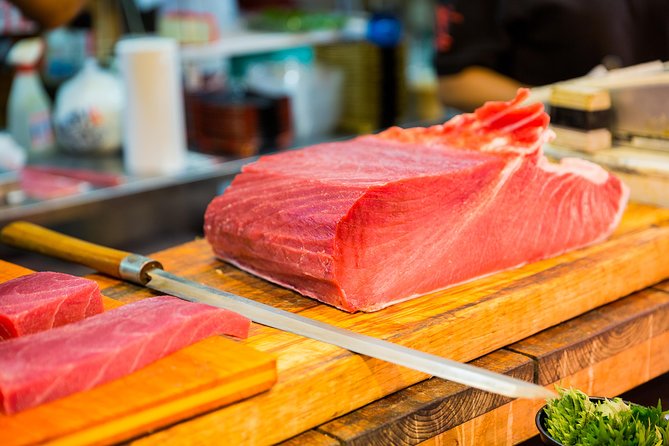
The tour ends with a more substantial meal. Depending on the day and time, you will receive either sushi or a seafood bowl. The bowl may include fresh sashimi, and some groups have watched a chef cut and prepare the fish before serving it.
This final stop gives the tour a satisfying shape. You begin with small finger foods, continue through the market, then sit down for a proper seafood dish. By this point, you may already have eaten quite a lot. One participant said the lunch felt more like a fun destination and demonstration than a necessary meal because the earlier tastings had filled them up.
I see that as a positive for most people. You are unlikely to leave hungry. If you have a small appetite, take modest portions early and remember that the final bowl or sushi is still coming.
The exact meal is not guaranteed to be the same every day. If the restaurant closes unexpectedly, an alternative meal is provided. That protects the basic experience, but it also means you should not book with the assumption that one specific sushi presentation is certain.
More Walking Tours in Tokyo
- Tokyo: Imperial Palace and Shogun Historical Walking Tour
★ 5.0 · 2,251 reviews - Tokyo: Shinjuku Local Bar and Izakaya Guided Walking Tour
★ 4.9 · 1,794 reviews - Tokyo: Asakusa Walking Tour with Sensoji Temple Visit
★ 4.8 · 1,583 reviews - Tokyo: Tsukiji Fish Market Guided Walking Tour
★ 4.9 · 1,397 reviews
What the guides add to the experience
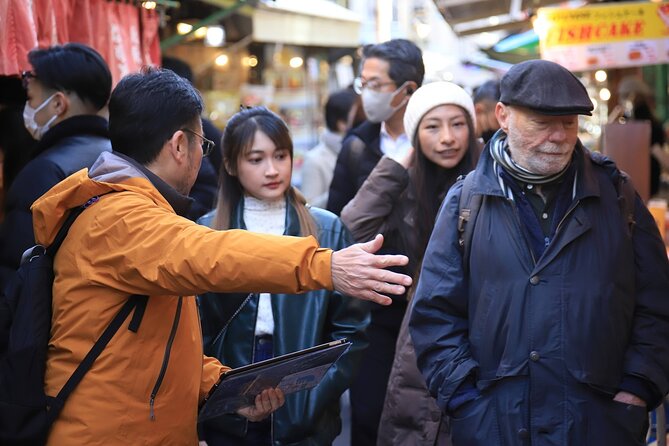
The guides are central to the value of this walk. The strongest praise goes to guides who do more than point at stalls. Shun has been appreciated for his warmth, food knowledge, and ability to keep the group entertained. Miki, Nazu, Robert, Luna, Yoshiko, and Keiko have also been praised for clear explanations and friendly help.
A good guide changes the market from a collection of tempting displays into a lesson in how food works in Japan. You can learn what chefs buy, how ingredients are handled, how to behave around vendors, and what you are looking at before you put it in your mouth.
The small group limit helps here. A group of two to eight people is far easier to manage than a large crowd. You have more room to ask about an unfamiliar food, and your guide can help with purchases or explain a vendor’s recommendation. One small group had just four people, which made the walk feel especially personal.
Guides also adjust to the group. Some have helped slower walkers, waited for older family members, or allowed people time to investigate a stall that caught their eye. Others have offered suggestions for tea, whisky bars, or places to visit after the tour. Those personal touches make the experience feel less mechanical.
The quality can still vary by individual guide. The guide names praised most often include Shun, Robert, Nazu, Miki, Luna, Yuki, Yoshiko, and others. You cannot necessarily choose a particular person when booking, so judge the tour by the structure rather than expecting a specific guide.
How much food do you really get for $96?
At $96 per person, this is not the cheapest way to eat at Tsukiji. You can buy individual snacks yourself for less, and independent visitors have complete freedom to choose their own stalls.
The price pays for more than the food. You are also paying for a three-hour route, a local English-speaking guide, translation and ordering help, market background, and a final sushi or seafood bowl. In a market where choice can become confusing, that guidance has practical value.
I think the price works best for a first visit to Tokyo, especially if you want to understand what you are eating rather than simply point at something and hope for the best. It also suits anyone who wants a food-heavy morning with enough variety to replace a full meal.
It is less appealing if you already know Tsukiji well, prefer to eat slowly at your own chosen restaurants, or are traveling on a tight food budget. You may also spend more money during the walk on extra oysters, fruit, tea, sake, or beer. One person felt that sake or beer should not have carried an extra charge, so ask about additional purchases before ordering.
The right timing, clothing, and pace
The tour lasts three hours and involves a moderate amount of walking. Wear comfortable shoes and clothes that let you move easily through crowded market lanes. A camera is useful, though you should stay aware of vendors, customers, and food preparation around you.
Morning conditions can change the feel of the tour. A Saturday morning at 8:30 was described as very crowded, while a midweek visit was suggested as calmer. That advice is practical, but remember that Wednesday is also a market closure day. If you want a quieter visit, check the available times carefully and avoid assuming that every weekday has the same market activity.
Rain does not automatically ruin the experience. Several groups still enjoyed the food and explanations in wet weather. But rain creates real problems: umbrellas block sightlines, lanes get tighter, and the guide’s voice is harder to hear. If you have a choice, a dry day will make the walk more comfortable.
The market also has uneven access for people who cannot walk easily. The tour is not suitable for wheelchair users or people with mobility impairments. It is not designed for vegans or vegetarians, and the operator cannot accommodate vegetarian, halal, or gluten-free requests.
The minimum drinking age in Japan is 20, but alcohol is not the focus. The central experience is food and market culture.
Who will enjoy this Tsukiji tour most?
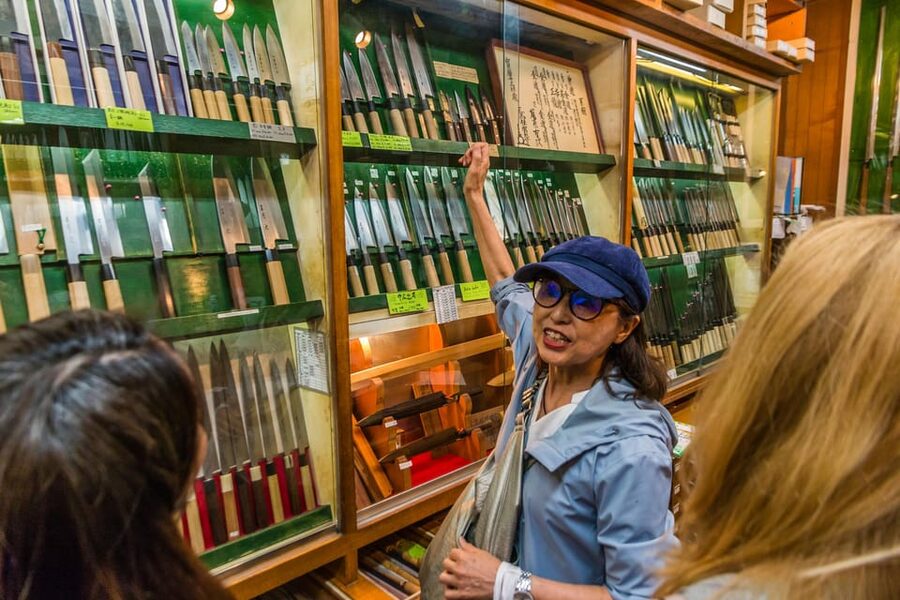
I would recommend it to first-time Tokyo visitors who want a guided introduction to Japanese ingredients and market customs. It is also a good choice for people who feel nervous ordering in a crowded food district or who want to try foods they would not select alone.
Families with older children may enjoy the variety, but remember that infant meals are not included. People who dislike seafood, raw fish, or crowded food markets should think twice. The final meal is fish-based, and the route depends on being comfortable around busy stalls and strong food smells.
Food lovers will get the most from it, especially those who want both high-end tastes such as Wagyu and ordinary market snacks such as fish cake and omelet. The cultural side is useful, but this is not a formal lecture. The information comes in short explanations as you move, eat, and shop.
If you want a slow, scholarly account of Tsukiji’s past, this may feel light. One person enjoyed the tour but wanted more detailed local history. For most visitors, though, the mix of short history lessons, food advice, and market time is well judged.
Practical booking advice
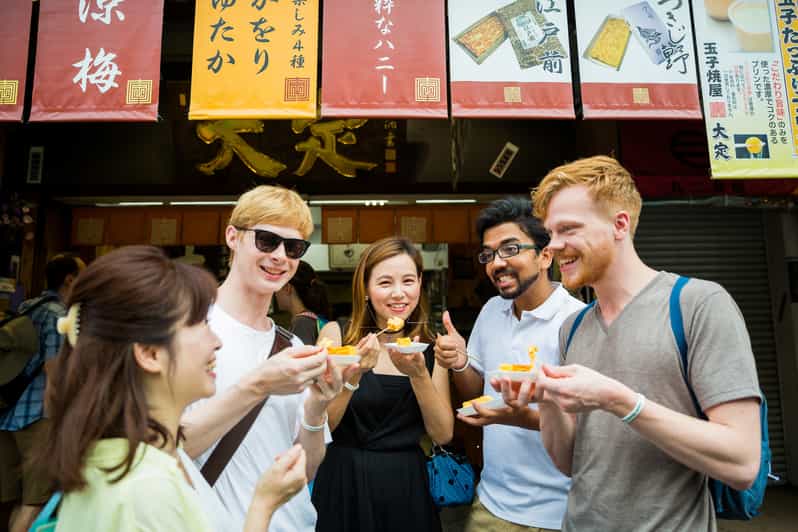
You can cancel up to 24 hours before the start for a full refund, and the reserve-now, pay-later option keeps your plans flexible. Still, the most important booking check is the operating date. The fish wholesaler market is closed on Wednesdays, Sundays, public holidays, and other designated market holidays.
The tour may still run on those dates, but some stalls will be closed and several included foods cannot be served. Japanese omelet, fish cake, and seasonal fruit are specifically affected. If those tastings matter to you, choose an active market day and confirm the starting time.
Allow extra time to reach the temple gate. One participant praised the map directions after using them to arrive on time, while another missed the start because of a train mistake and joined partway through. Do not count on that second outcome. Arriving late can mean missing the first market section.
Should you book the Tsukiji food walk?
Book it if you want a guided, food-first introduction to Tsukiji and value local help more than the lowest possible price. The Wagyu, final seafood meal, small group size, and practical market guidance make the $96 fee reasonable for a first visit.
Skip it if you need vegetarian, vegan, halal, or gluten-free food, have trouble walking in crowded areas, or prefer to choose every bite yourself. Also avoid closed market days if you want the full tasting route.
For the best experience, choose an active market day, wear comfortable shoes, keep your group close to the guide, and save a little time afterward to return to the stalls that catch your eye. The tour gives you a strong first look. You can then explore with more confidence on your own.
FAQ
Where does the Tsukiji food tour start?
Meet your English-speaking guide at the main gate of Tsukiji Honganji Temple. The tour also finishes back at the temple.
How long does the tour last?
The experience lasts three hours. It includes about 30 minutes of initial guided market exploration followed by roughly two and a half hours of guided tasting and market visits.
What food is included?
The included menu features high-grade Wagyu beef skewers, a fresh fish bowl or sushi, Japanese omelet, seasonal fruit, and fried fish cake. Additional samples may be available along the route.
Will I have sushi or a seafood bowl?
The final meal depends on the day and time. You will receive either sushi or a seafood bowl.
Does the tour run on Wednesdays and Sundays?
The tour may be scheduled on those days, but the fish wholesaler market and some shops are closed. Japanese omelet, fish cake, and fruit cannot be served when the relevant shops are closed.
Can the tour accommodate dietary restrictions?
No. Vegetarian, vegan, halal, and gluten-free requests cannot be accommodated. The tour is not suitable for vegans or vegetarians.
Is the tour suitable for wheelchair users?
No. The experience involves a moderate amount of walking and is not suitable for wheelchair users or people with mobility impairments.
Just added in Tokyo
- A One-of-a-Kind Sushi Experience in a Special Place of Japan★ 5.0 · 15 reviews
- Tokyo Cute Bento Cooking Class – Make a Kawaii Character Lunchbox★ 5.0 · 126 reviews
- Japanese Home Cooking Class & Walk in Todoroki Temple Tokyo★ 5.0 · 88 reviews
- Japan Tokyo Tower Observatory Deck E-Ticket★ 4.0 · 34 reviews
- Catch a Baseball Game in Tokyo with a Local – Tickets Included★ 5.0 · 24 reviews
- JDM Experience with Fast&Furious RX-7 (English speaking Driver)★ 5.0 · 57 reviews
- Tokyo Private Day Tour by Car with English speaking Driver Guide★ 4.0 · 29 reviews
- Japan Classic 10 Day – One Life Adventures★ 5.0 · 129 reviews
Markets and Food Halls, compared.
Tokyo Tsukiji Fish Market Food and Culture Walking Tour
Read our review →

Senkyaku Banrai Toyosu Manyo Club Onsen Experience in Tokyo
Read our review →
Nishiki Market Brunch Walking Tour (7 Tastings + Brunch)
Read our review →
Tokyo Sushi Making Class in Tsukiji with Professional Chef
Read our review →
Tsukiji Fish Market Guided Tour and Sushi Making with Pro Chef
Read our review →Browse the lists this tour appears in