
Reviewed · MARKETS AND FOOD HALLS
Tokyo: Tsukiji Fish Market Tour with 6 Stops & Seafood Lunch
Tokyo eats best on foot. This three-hour Tsukiji tour links seafood tastings with temple customs, a shrine visit, and a donburi lunch, giving you more context than a quick wander through the market. I like the small group size, capped at seven, and the way guides such as Mai, Meg, Kiyo, and Ken help you choose foods and find your way through crowded lanes. The main catch is that the market portion can feel rushed, and the advertised beer or sake is not included in the $94 price.
You will visit Tsukiji Hongan-ji, browse Tsukiji Outer Market, stop at Namiyoke Inari Jinja, eat a seafood bowl, and finish with views from Shiodome Media Tower. Bring cash for extra street food, arrive early, and meet at Tsukiji Station, not Tsukijishijo Station.
In This Review
- The Best Parts of This Tsukiji Morning
- Why Tsukiji Still Matters After the Fish Market Moved
- Starting at Tsukiji Hongan-ji
- Five or More Bites in Tsukiji Outer Market
- The Namiyoke Inari Jinja Stop
- Donburi Lunch in the Market
- Tokyo Views From Shiodome Media Tower
- How Much Value Do You Get for $94?
- What the Guides Add
- Who Should Book This Tour?
- Practical Details Before You Go
- Should You Book the Tsukiji Fish Market Tour?
- FAQ
- Where does the Tsukiji tour meet?
- Is the meeting point at Tsukijishijo Station?
- How long does the tour last?
- What language is the tour offered in?
- How many people can join the group?
- Is lunch included?
- Are food tastings included?
- Can vegetarians or people with allergies join?
The Best Parts of This Tsukiji Morning
- More than a food crawl: The route adds a Buddhist temple, a Shinto shrine, and an observation deck to the market visit.
- Five or more tastings: You might sample seafood, grilled eel, tamagoyaki, tuna sushi, mochi, oysters, or other seasonal foods.
- A small English-speaking group: With no more than seven people, you can ask questions without shouting across a crowd.
- A proper lunch is included: The tour ends with a seafood donburi bowl, with a stated lunch allowance of up to 1,500 yen.
- A useful Tokyo orientation: Guides often help with food choices, nearby sights, shopping ideas, and even train directions after the tour.
- A strong final viewpoint: The Shiodome stop can include the Caretta Shiodome observation area on the 46th floor, with views toward Tokyo Bay and the city.
Why Tsukiji Still Matters After the Fish Market Moved
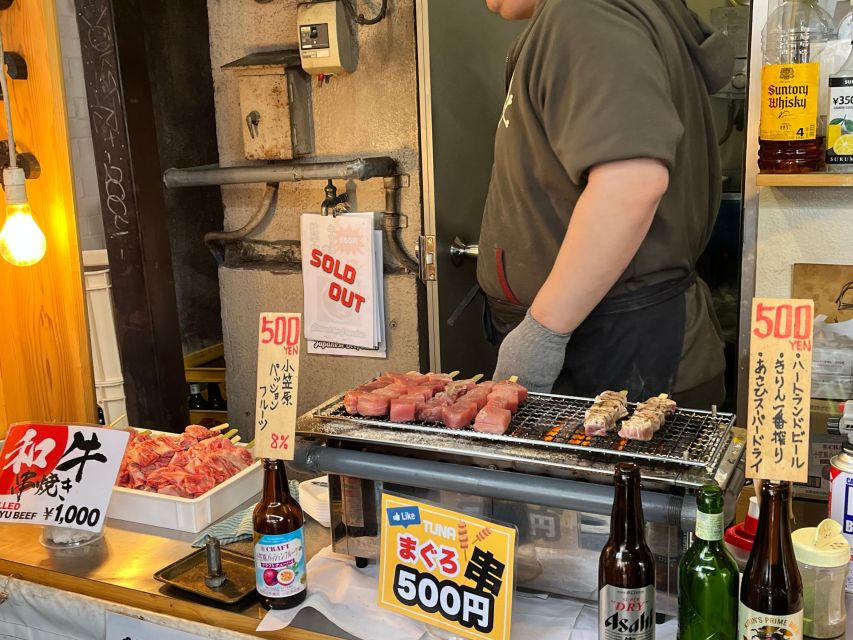
Tsukiji is no longer Tokyo’s main wholesale fish market. That function moved to Toyosu, but Tsukiji Outer Market kept its shops, food stalls, knives, seasonings, seafood counters, and old market character.
That difference matters. If you expect to see the giant wholesale auction halls or the working market shown in old television footage, this is not that experience. You are visiting the Outer Market, a public shopping and eating district where the old seafood culture remains visible.
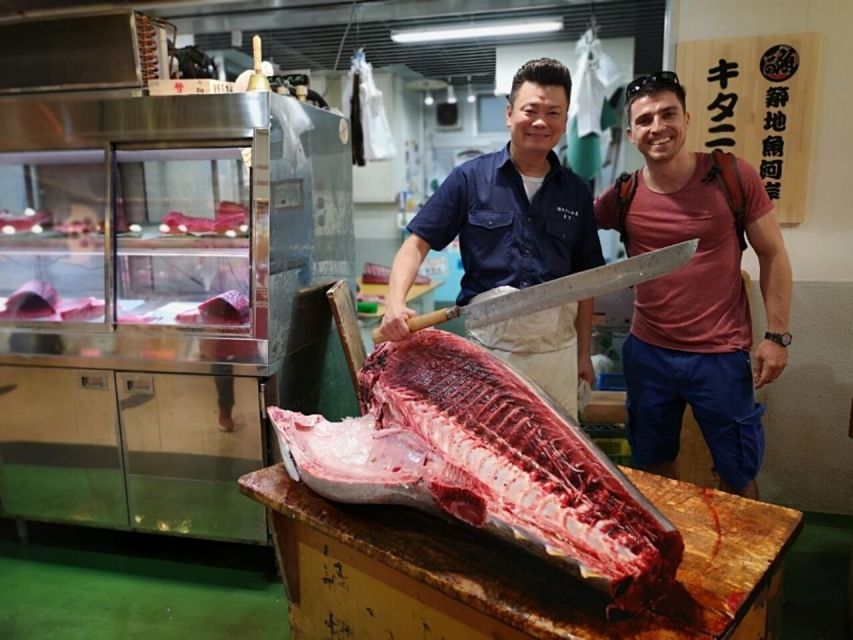
I like this setup for a first visit because you can see how Japanese food reaches the table. The market is not only about raw fish. You may encounter grilled items, rolled omelet, eel, sweets, rice dishes, sauces, and ingredients used in home cooking. A guide can explain what you are looking at and point you toward stalls that are easier to enjoy as a first-time visitor.
The setting is also intense. The lanes can be narrow and very crowded, especially around late morning and on Saturdays. You need to stay close to the group and accept that stopping for every photograph may not be possible.
More Markets and Food Halls in Tokyo
- Tokyo Tsukiji Fish Market Food and Culture Walking Tour
★ 5.0 · 3,184 reviews - Tokyo: Tsukiji Fish Market Food and Walking tour
★ 5.0 · 1,724 reviews - Senkyaku Banrai Toyosu Manyo Club Onsen Experience in Tokyo
★ 4.7 · 1,690 reviews
Starting at Tsukiji Hongan-ji
The meeting point is the main gate of Tsukiji Hongan-ji, near Tsukiji Station. Look for a guide holding a red or orange MagicalTrip sign. Pay close attention to the station name: Tsukiji Station is different from Tsukijishijo Station, and going to the wrong one can make you late.
The tour begins inside Tsukiji Hongan-ji, a Buddhist temple with about 300 years of local history. You spend around 20 minutes here, learning about Japanese worship customs and how people use the temple.
This is a smart opening. Food tours can turn into a string of snacks with no sense of place. Starting at the temple gives you a quick introduction to the religious traditions that shape daily life in Japan. Your guide may explain how to behave at a Buddhist temple, what to notice in the worship space, and how Japanese religious practice differs from the Western idea of belonging to one faith.
You do not need prior knowledge of Buddhism. The visit is short, so it will not take over the morning. It works best as context before the market rather than as a full temple tour.
Five or More Bites in Tsukiji Outer Market
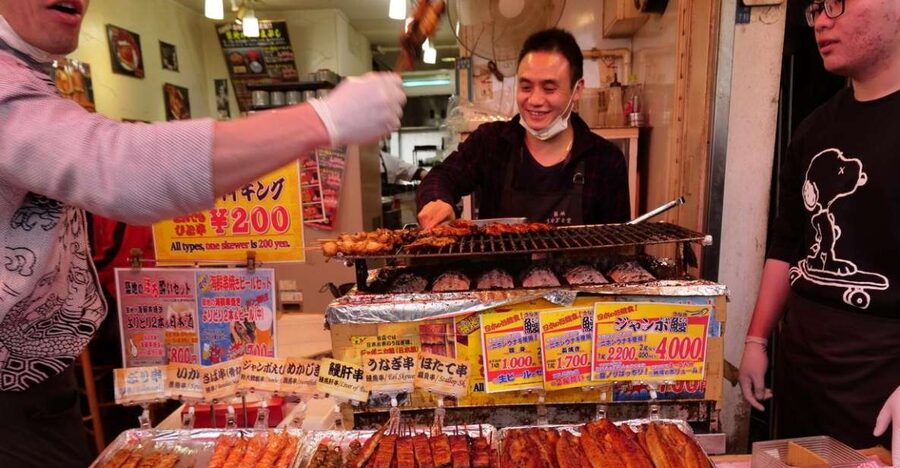
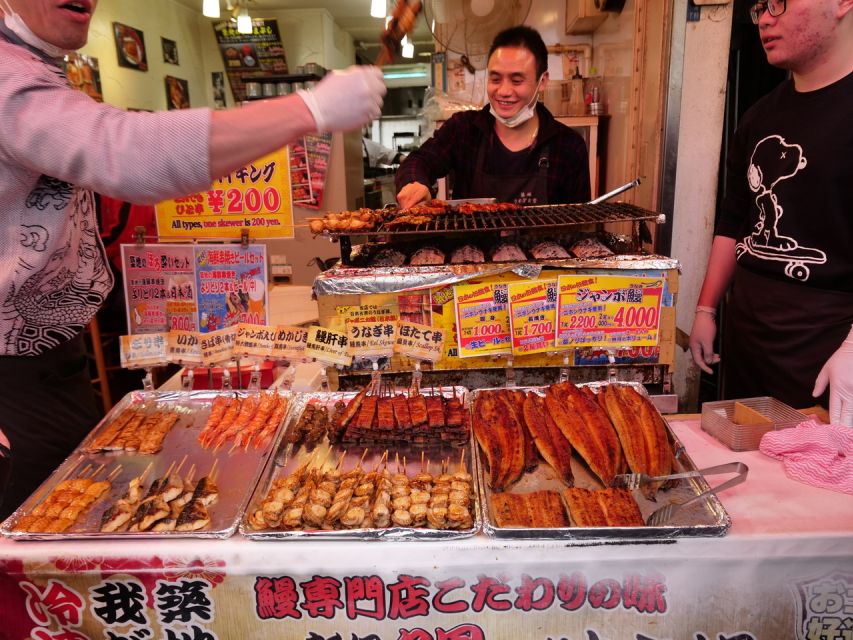
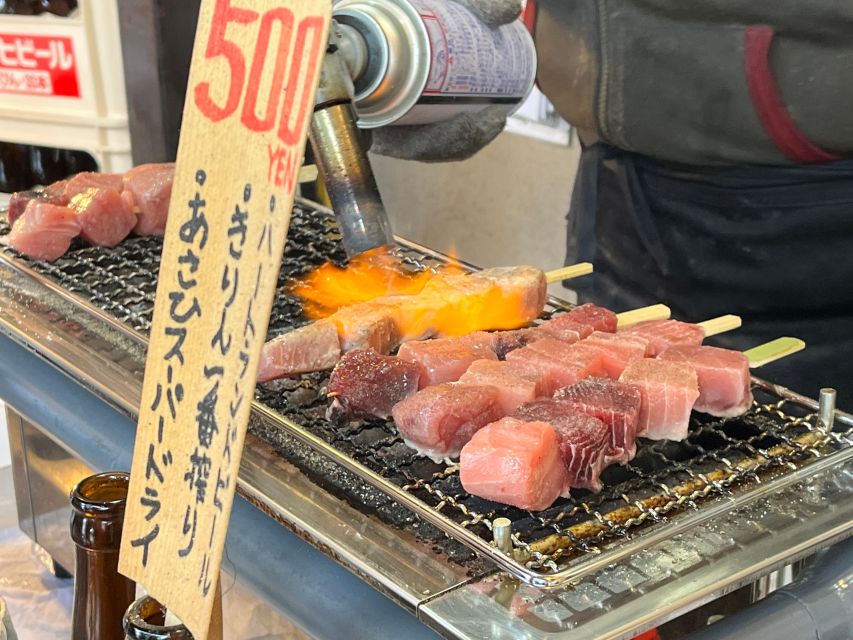
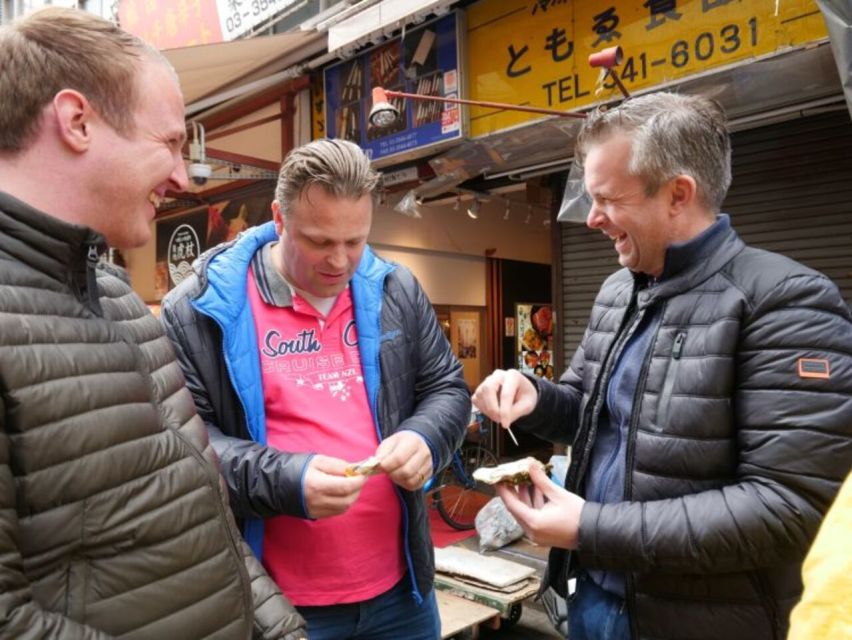
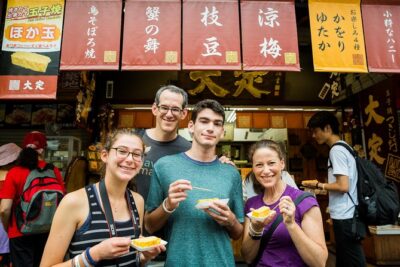
The main market walk lasts about an hour and combines guided exploration, food tasting, and time to shop. The exact foods can change, but the tour has included tuna sushi, rolled omelet, grilled eel skewers, oysters, ikura, mochi, and tuna-shaped taiyaki.
That variety is one of the tour’s strongest points. You are not simply handed one plate of sushi and sent on your way. You get to compare textures and styles, from fresh seafood to cooked snacks and sweets. For someone who does not know Japanese food well, this removes much of the guesswork.
The tastings also make the market less intimidating. It can be hard to understand which stalls welcome casual buyers, how much to order, or how to eat something while standing in a crowded lane. Guides such as Meg, Kiyo, Momo, and Taka have helped people select food, locate particular products, and decide what is worth buying.
You should still bring cash. The tour includes at least five tastings, but extra purchases and additional street food are your responsibility. Drinks are also separate. Japanese beer or sake may be a pleasant match for seafood, but you need to buy it yourself.
The main weakness is pace. One person found the market too crowded for a comfortable walk, while another wanted more time to browse, take photographs, and interact with vendors. That is a fair concern. The guide has to keep a small group together in a busy public market, so this is not a free afternoon to explore every shop.
If you want to shop seriously for knives, seasonings, dried seafood, or cooking tools, plan to return on your own. On the tour, ask your guide to point out the products that fit your interests, then make a note of the location.
The Namiyoke Inari Jinja Stop
After the market walk, the route includes Namiyoke Inari Jinja, a Shinto shrine. The visit lasts about 20 minutes.
The shrine adds a second view of Japanese religious life. The temple and shrine are not interchangeable, and seeing both in one morning helps you notice the differences in architecture, ritual, and local custom. The shrine is also tied to the working identity of the Tsukiji area, making it a fitting stop beside the market.
For you, the value is less about checking off another sight and more about understanding the neighborhood. Tsukiji is a place where commerce, food, tradition, and worship sit close together. A guide can explain customs that are easy to miss if you walk past on your own.
This stop is not designed as a long sightseeing visit. If you want extended time at religious sites, the 20-minute visit may feel brief. For a food-focused morning, though, it is a useful pause between tastings and lunch.
A completely different kind of day out:
- Tokyo Disney Resort – Tokyo Disneyland & Tokyo DisneySea Park Tickets
★ 4.8 · 99,488 reviews - SHIBUYA SKY Ticket
★ 4.7 · 46,509 reviews - JR Whole Japan Rail Pass
★ 4.8 · 29,150 reviews - Mt Fuji and Hakone 1-Day Bus Tour Return by Bullet Train
★ 5.0 · 26,383 reviews
Donburi Lunch in the Market
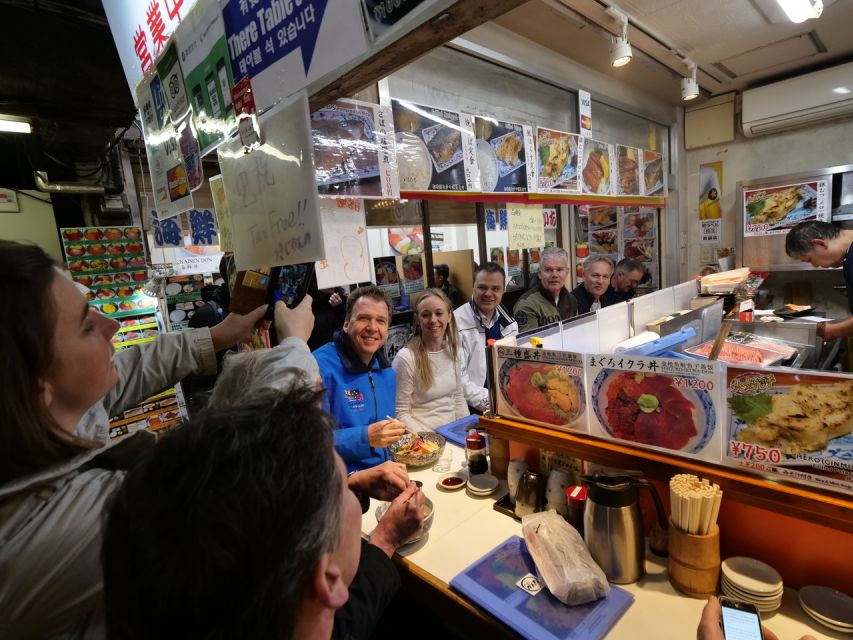
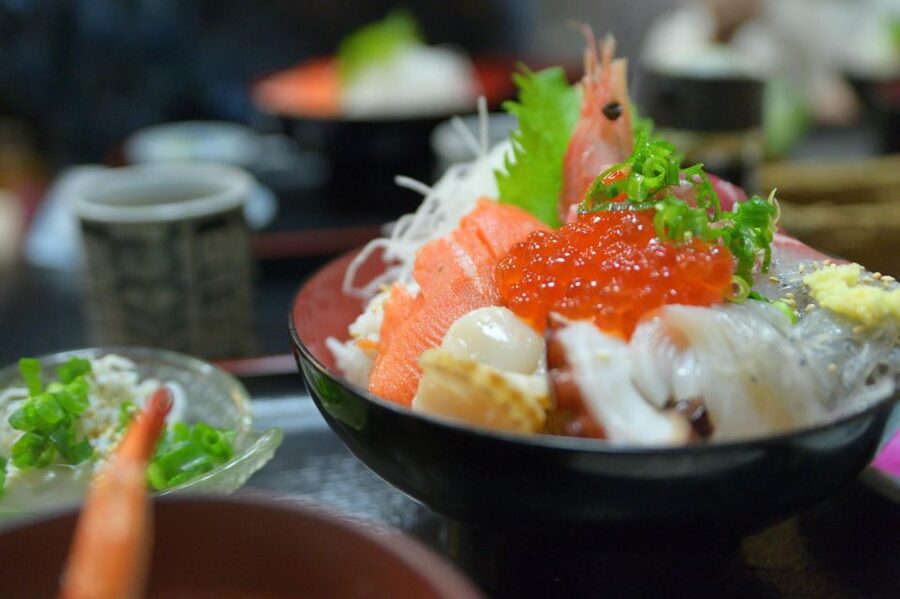
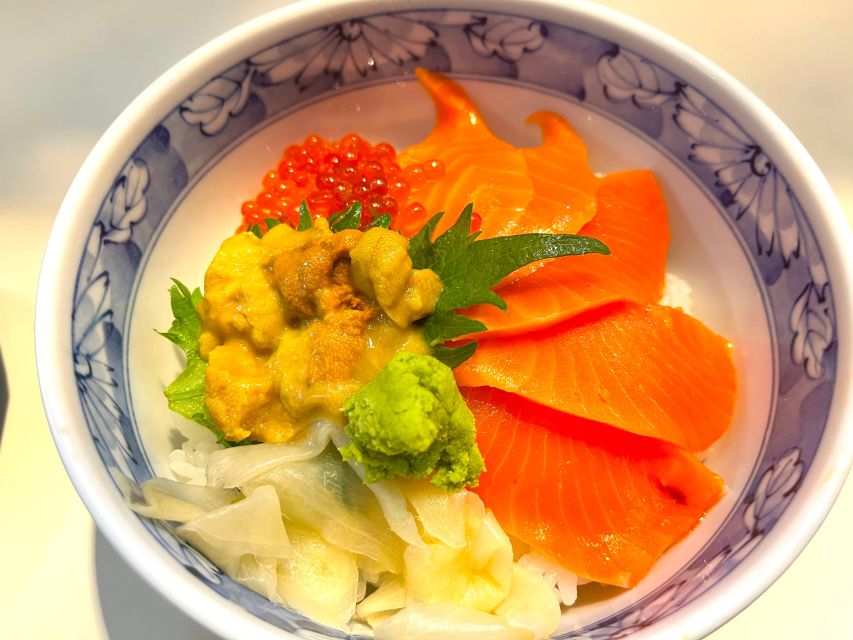
The tour finishes its food portion with a seated seafood lunch at a restaurant in Tsukiji Outer Market. You receive a donburi bowl, a Japanese rice bowl topped with seafood, with the included lunch allowance listed as up to 1,500 yen.
This is more satisfying than ending with snacks. You get a chance to sit down, rest your feet, and eat a proper meal after working through the crowded stalls. Several accounts describe the lunch as excellent, with particularly fresh raw fish and ikura.
The lunch also gives you a chance to ask questions about what you have eaten. If you are new to sashimi or unfamiliar with different fish, the guide can explain the ingredients and help you understand the meal.
There is a dietary warning here. The description says vegetarian choices may be available, but the important information also says vegan and vegetarian options are not available. The safest advice is to contact the operator before booking if you do not eat seafood or meat. Allergy-free food cannot be guaranteed, and substitutions may not be possible at every stop.
The same applies to allergies. Food is prepared in kitchens that do not belong to MagicalTrip, so cross-contact is possible. Tell the guide about restrictions, but do not assume the tour can provide a fully safe meal.
Tokyo Views From Shiodome Media Tower
After lunch, the tour heads to Shiodome Media Tower for roughly 20 minutes. The stop can include the Caretta Shiodome observation area on the 46th floor.
This is a clever finish. After close market lanes and food stalls, you get a wide view of Tokyo and the harbor area. It gives you a better sense of the city’s scale and offers a calm place for photographs.
The viewpoint is not the main reason to book the tour, but it adds value. A few people especially enjoyed seeing Tokyo Bay and Tsukiji from above. One guide, Kiyo, also used the viewpoint to add more local explanation rather than treating it as a quick photo stop.
The experience then returns to the main gate of Tsukiji Hongan-ji. Some guides have gone beyond the formal ending by helping people locate a train station or sort out tickets. That help can be useful if Tsukiji is your first stop in Tokyo, though it should not be treated as a guaranteed extra service.
How Much Value Do You Get for $94?
At $94 per person, this is not the cheapest way to eat at Tsukiji. You can walk through the Outer Market without a guide and pay for individual snacks as you go.
The price makes more sense if you value structure and explanation. It covers a certified English-speaking guide, five or more tastings, a seafood lunch, the temple and shrine visits, and tour photographs. You also save time choosing stalls and figuring out how to move through the market.
For a first morning in Tokyo, that package can be worthwhile. Several people used it as an introduction to the city and then received suggestions for other places to eat or visit. The small group limit of seven is important here. A large bus group would be awkward in the market, while a small group lets you ask for help with food and shopping.
The value is weaker if you already know Tsukiji well or mainly want unhurried shopping. You may feel that you are paying for guidance through a place you could explore independently. The tour also does not include beer or sake, despite mentioning them as popular accompaniments, so add that cost if you want a drink.
Free cancellation is available up to 24 hours before the start, and you can reserve now and pay later. Those terms help if your Tokyo plans are still shifting. The strict part is punctuality: if you miss the group, you cannot join later, reschedule, or receive a refund.
What the Guides Add
The guide is the heart of this experience. The strongest feedback focuses on clear English, friendly help, food explanations, and practical Tokyo advice.
Mai has been praised for her explanations of Tsukiji’s past and for suggesting places that match personal interests. Meg helped people choose food and arranged lunch at a place locals use. Kiyo kept the tour at a comfortable pace and helped with train directions afterward.
Ken and Ken Take were described as energetic and helpful, including assistance with subway routes. Taka created a relaxed morning, while Momo led the group through crowded lanes and arranged several unusual tastings. These details show what you are really paying for: not just facts, but a local companion who can reduce the friction of eating and moving around Tokyo.
Guide quality can vary from person to person, as it does on any small-group tour. The experience depends heavily on who leads your group. Still, the repeated praise for guides helping with food choices, explanations, and directions is a strong reason to consider booking.
Who Should Book This Tour?
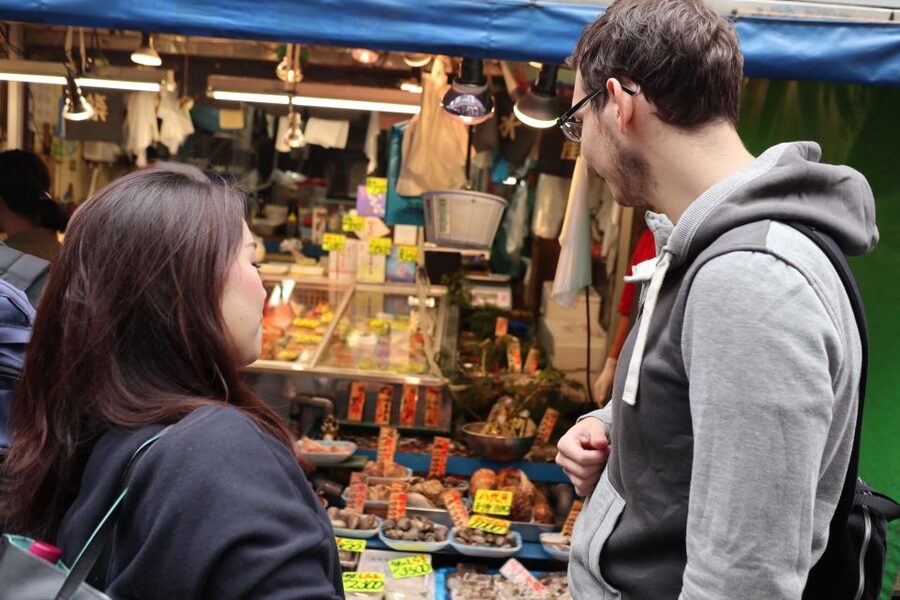
I would recommend it to first-time visitors who want an easy introduction to Tsukiji. It suits couples, families, solo visitors, and small groups who want to taste several foods without planning every stop.
It is also useful for cautious eaters. You can try unfamiliar dishes with someone nearby to explain them. Families may appreciate the short temple visit and the range of cooked foods and sweets, though the market crowds require close attention to children.
Solo visitors get particular value from the small group. You have company for lunch and someone to help you order. The tour can also fit a layover if you have enough time to reach Tsukiji and return to the airport, but you should allow a generous buffer because the start is strict.
I would hesitate to recommend it to wheelchair or stroller users because parts of the route are not accessible. I would also choose a self-guided visit if you want long shopping stops, quiet photography, or complete control over what you eat.
Practical Details Before You Go
The tour lasts three hours and runs in English. Starting times vary, so check availability for your date.
Wear comfortable shoes. You will walk through crowded market streets, visit religious sites, and spend time standing before lunch. Keep your belongings close and stay near the guide in the busiest sections.
Bring cash for extra food, shopping, beer, or sake. The included lunch has a maximum allowance of 1,500 yen, so confirm any amount above that with the guide or restaurant.
The meeting point is the main gate of Tsukiji Hongan-ji near Tsukiji Station. Do not confuse it with Tsukijishijo Station. Arrive before the start time, since late arrivals cannot join the group or claim a refund.
Should You Book the Tsukiji Fish Market Tour?
Book it if you want guided tastings, a seated seafood lunch, and cultural context in one compact morning. The temple, shrine, market, and observation deck make this broader than a simple food walk, and the small group gives you useful help in a confusing place.
Skip it if you already know Tsukiji, need a fully vegetarian or allergy-safe meal, or want hours to shop at your own pace. At $94, the tour earns its price through the guide, tastings, lunch, and local orientation, not through access to a private market area.
For most first-time visitors who want to understand what they are eating and avoid wandering past the best stalls, this is a sensible and enjoyable introduction to Tsukiji.
FAQ
Where does the Tsukiji tour meet?
The meeting point is the main gate of Tsukiji Hongan-ji near Tsukiji Station. Look for a guide holding a red or orange MagicalTrip sign.
Is the meeting point at Tsukijishijo Station?
No. The meeting point is Tsukiji Station. Tsukijishijo Station is a different station, so check your route carefully.
How long does the tour last?
The tour lasts three hours.
What language is the tour offered in?
The live tour guide speaks English.
How many people can join the group?
The group is limited to seven participants.
Is lunch included?
Yes. A seafood donburi lunch is included, with a maximum stated allowance of 1,500 yen.
Are food tastings included?
Yes. The tour includes five or more food tastings in Tsukiji Outer Market.
Can vegetarians or people with allergies join?
The information is conflicting about vegetarian food. One part says vegetarian choices may be available, while the important information says vegan and vegetarian options are not available. Allergy-free food cannot be guaranteed, and substitutions may not be possible at every stop. Contact the operator before booking if this affects your decision.
More Lunch Experiences in Tokyo
- Tokyo: Mt.Fuji & Lake Kawaguchiko 1-Day Bus Tour w/Optional Lunch
★ 4.5 · 839 reviews - Tokyo: Sumo Experience and Chanko Nabe Lunch
★ 4.8 · 257 reviews - Tokyo: 1 Day Bus Tour with Meiji-Jingu,Odaiba,lunch&Skytree
★ 4.6 · 156 reviews - Mt. Fuji, Oishi Park & Arakurayama Pagoda Bus Tour with Lunch
★ 5.0 · 128 reviews
Just added in Tokyo
- Very popular in Harajuku♡Animal petting zoo★ 4.6 · 39 reviews
- Yokohama Port: Private Customizable Tour with Transfer★ 5.0 · 19 reviews
- Wagyu & Sake 8 Course Tasting Dinner in Shinjuku★ 4.9 · 20 reviews
- Warner Bros. Studio Tour Tokyo – The Making of Harry Potter★ 4.8 · 181 reviews
- Yanaka District: Historical Walking Tour in Tokyo’s Old Town★ 4.8 · 117 reviews
- Tokyo: Classic Tsukiji Food Tour★ 4.9 · 78 reviews
- Tokyo Wagyu & Sake Pairing Tasting Experience with Local Flavors★ 5.0 · 108 reviews
- TOKYO Ultimate Samurai Armor Photo Experience!★ 5.0 · 16 reviews
Markets and Food Halls, compared.
Tokyo Tsukiji Fish Market Food and Culture Walking Tour
Read our review →
Senkyaku Banrai Toyosu Manyo Club Onsen Experience in Tokyo
Read our review →
Nishiki Market Brunch Walking Tour (7 Tastings + Brunch)
Read our review →
Tokyo Sushi Making Class in Tsukiji with Professional Chef
Read our review →
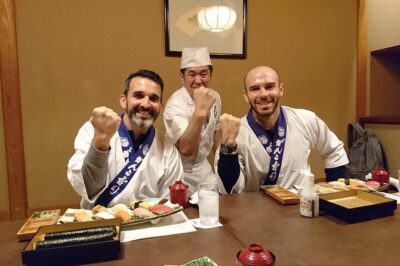
Tsukiji Fish Market Guided Tour and Sushi Making with Pro Chef
Read our review →Browse the lists this tour appears in