
Reviewed · SUMO EXPERIENCES
Tokyo: Sumo Experience and Chanko Nabe Lunch
Sumo is bigger than a shove. This lively two-hour workshop brings you close to retired professional wrestlers, who explain the sport in English, demonstrate its rituals, and invite willing participants into the ring for a playful bout. I like the small group of up to six and the hearty chanko nabe lunch prepared by the wrestlers themselves. The main consideration is timing: the session begins promptly at 1 PM, and the exact meeting place arrives with your voucher.
I also like how this goes beyond watching large athletes collide. You learn why wrestlers bow, stamp, and throw salt, then see how balance and technique matter more than simple size. The playful tone makes it a strong pick for families, but anyone wanting a quiet, formal look at sumo may find the audience participation a little much.
In This Review
- Key points at a glance
- Why this short Tokyo activity works
- Entering the ring for a friendly bout
- Understanding the rituals behind sumo
- Chanko nabe: the meal that completes the lesson
- Asakusa on Mondays, Ryogoku on Thursdays
- Is $95 a fair price?
- Who will enjoy this most?
- What the two hours feel like
- Should you book the Tokyo sumo experience?
- FAQ
- How long does the sumo experience last?
- What time does the activity start?
- Where does the experience take place?
- Is transportation included?
- Is the experience conducted in English?
- Can I wrestle a sumo wrestler?
- Is lunch included?
- Can I request a vegetarian or Halal meal?
Key points at a glance
- Former professionals lead the lesson: You get explanations in English from wrestlers who once competed in the sport.
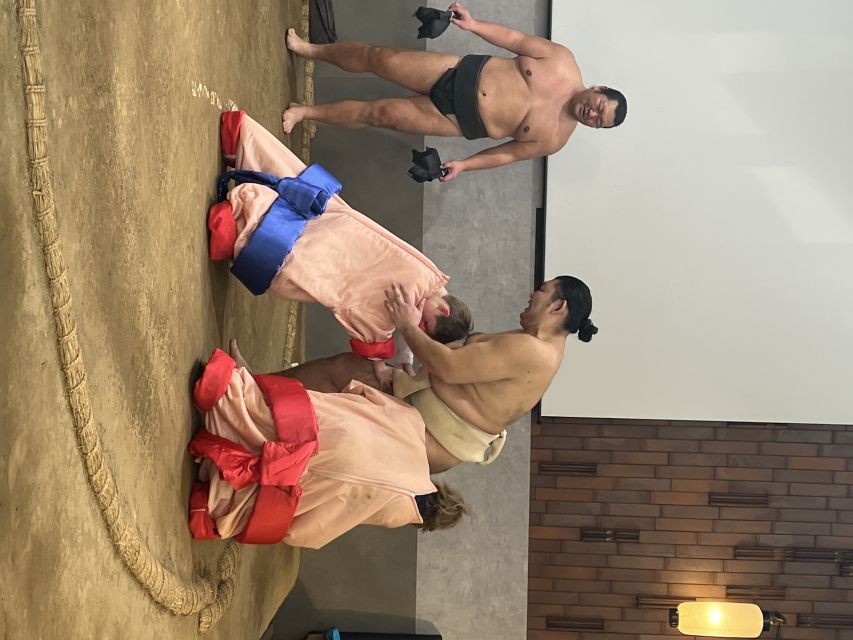
- You may enter the ring: Audience members can be chosen to wear a sumo costume and take part in a friendly demonstration.
- Chanko nabe is part of the show: The wrestlers prepare the Japanese hot pot served after the presentation.
- The format is compact: The full activity lasts about two hours, making it easy to fit into a Tokyo sightseeing day.
- The location changes by weekday: Monday sessions take place in Asakusa, while Thursday sessions are held in Ryogoku.
- It suits a wide age range: Children and adults can enjoy the humor, explanations, photos, and hands-on portion.
Why this short Tokyo activity works
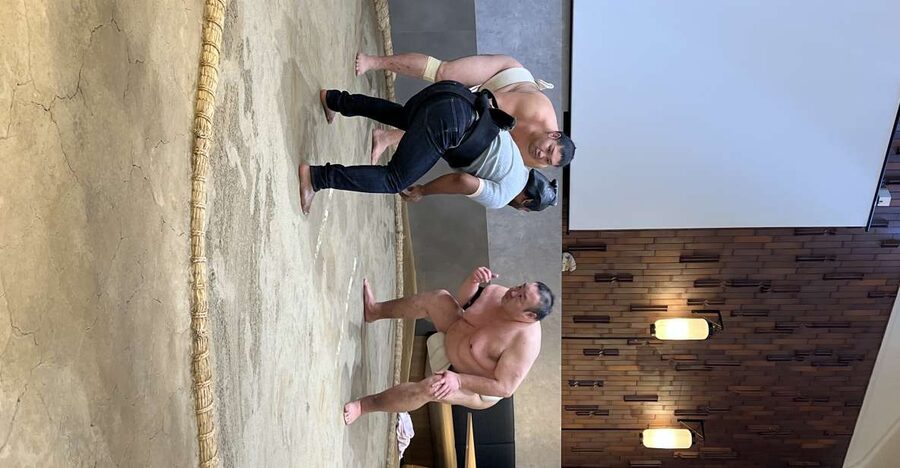
Sumo can look simple from a distance. Two wrestlers face each other, charge, and try to force the other out of the ring. The rules and rituals tell a bigger story, though, and this workshop gives you the missing pieces without asking you to sit through a long lecture.
The former wrestlers explain the customs in English and show how a bout begins. You learn about the formal movements, the training side of the sport, and the way wrestlers use footing, timing, and leverage. That context changes what you see. A quick shove becomes a contest of balance and control.
I like the mix of instruction and comedy. The wrestlers are not simply reciting facts. They demonstrate techniques, play to the room, and make space for questions and photographs. Reports of the event describe especially strong showmanship from Audrey and Jumbo, two wrestlers praised for combining clear English with a warm, playful manner.
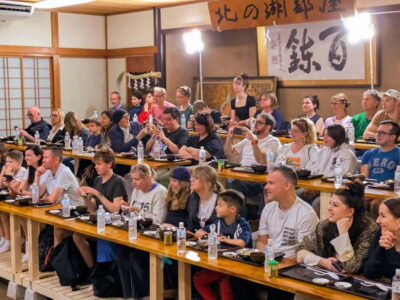
The small-group format is another real advantage. With a limit of six participants, you should have a better chance to see the demonstrations clearly and ask something without shouting across a large hall. That said, the room may sometimes hold more tables or audience members than the six-person activity limit suggests. The program can still run efficiently, but do not picture a private lesson for only you and two wrestlers.
More Sumo Experiences in Tokyo
- Tokyo: Sumo Show Experience with Chicken Hot Pot and a Photo
★ 4.8 · 6,678 reviews - Tokyo: Sumo Live Show with Photo in Shinjuku
★ 5.0 · 3,438 reviews - Tokyo: Sumo Show and Dining Experience
★ 4.8 · 2,742 reviews
Entering the ring for a friendly bout
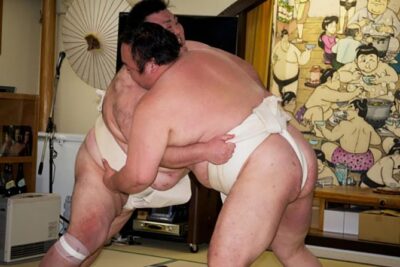
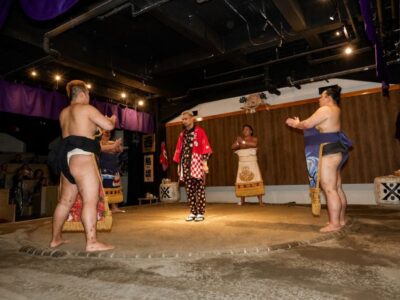
The interactive section is the part many people remember most. Some audience members are invited to put on a sumo wrestler costume and help with the demonstration. You may get a chance to face one of the former professionals yourself, although participation is not guaranteed for every person.
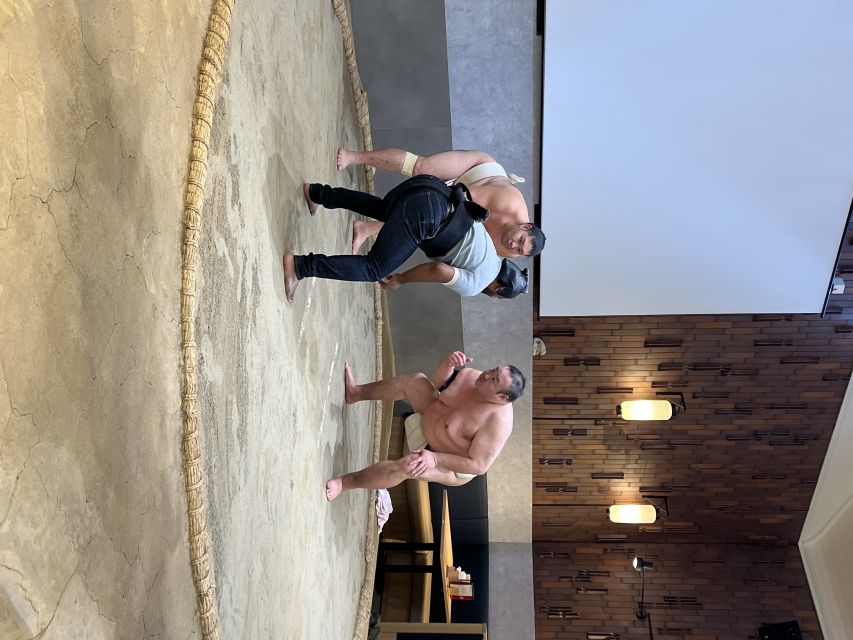
This is not a serious contest. It is a controlled, playful demonstration designed to show the power and technique of sumo while giving you a few laughs. Even a strong adult can feel surprisingly small against a trained wrestler. One participant weighing 105 kilograms described feeling like a child when facing the professional, which gives you a useful idea of the strength involved.
You do not need to be athletic to enjoy this part. The wrestlers guide the action and keep the mood friendly. Children can also be included when appropriate, and the activity has been praised as a family outing for children around six to ten years old.
If you are shy, you can watch rather than volunteer. The program still includes demonstrations, explanations, and photo time, so you are not left out if another person is selected. If you are eager to participate, arrive ready to raise your hand, but do not book this expecting a guaranteed wrestling turn.
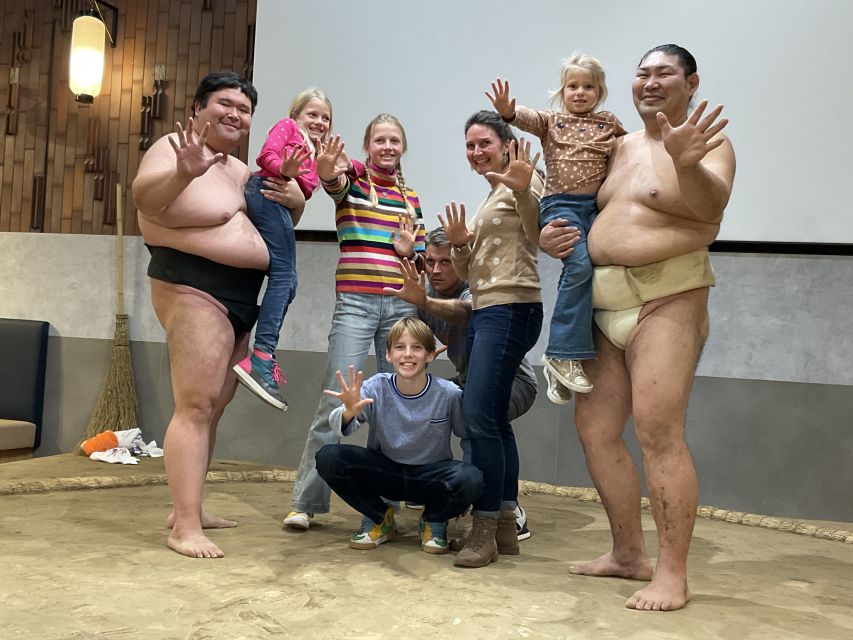
The photo opportunity adds value. You can take pictures with the wrestlers and, if selected, capture the moment in the ring. For many people, this becomes a more personal souvenir than a standard sports demonstration.
Understanding the rituals behind sumo
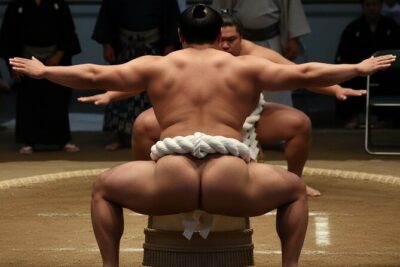
The best part of the lesson is the link between movement and meaning. Sumo has a long tradition, but visitors often see only the dramatic collision. Here, the wrestlers explain the rituals and help you understand why the pre-bout actions matter.
The demonstrations cover the basic structure of a match and the role of training and competition. You get a clearer sense of how the sport rewards preparation, balance, and timing. The English instruction is especially useful because the gestures can otherwise be easy to misread.
This is aimed at newcomers, not specialists. If you already follow professional sumo closely, the introductory material may feel familiar. For most people visiting Japan, though, that is exactly the point. You can arrive knowing little and leave with enough background to watch a real tournament or televised bout with sharper eyes.
The tone stays light. The presentation is informative without becoming solemn, and the humor helps younger children stay engaged. You should expect an organized show rather than a chance to observe an actual training stable or professional competition. Those are different experiences, and this one focuses on access, explanation, and interaction.
Chanko nabe: the meal that completes the lesson
After the demonstration, you sit down to chanko nabe, the hot pot traditionally associated with sumo wrestlers. The wrestlers prepare the meal themselves, which gives the lunch a direct connection to the subject rather than making it feel like an unrelated restaurant stop.
The soup is served hot and quickly, and portions are described as plentiful. The meal has been praised for its flavor, with some descriptions presenting it as a three-course Japanese lunch that includes a drink and dessert. Exact serving details can vary, so check the current booking information if specific courses matter to you.
Chanko nabe is a useful introduction to a familiar part of sumo life. It is filling, communal, and designed to give wrestlers plenty of energy. You are not merely eating lunch beside a display. You are sharing the food style most closely linked with the athletes you have just watched.
The meal also gives the room time to relax. You can talk with the wrestlers, ask follow-up questions, and take more photographs. This slower section balances the noisy comedy of the wrestling demonstrations.
Vegetarian and Halal meals can be requested, but you need to note the requirement during booking or contact the organizer by email at least two days before the activity. Do not wait until you arrive, since special meals need advance notice.
A completely different kind of day out:
- Tokyo Disney Resort – Tokyo Disneyland & Tokyo DisneySea Park Tickets
★ 4.8 · 99,488 reviews - SHIBUYA SKY Ticket
★ 4.7 · 46,509 reviews - JR Whole Japan Rail Pass
★ 4.8 · 29,150 reviews - Mt Fuji and Hakone 1-Day Bus Tour Return by Bullet Train
★ 5.0 · 26,383 reviews
Asakusa on Mondays, Ryogoku on Thursdays
The venue depends on the day you book. Monday sessions take place in Asakusa, while Thursday sessions are held in Ryogoku. Both areas connect naturally with a Tokyo itinerary, but you should plan around the listed district rather than assuming the same meeting point every day.
The exact starting address is supplied on your voucher with a map. There is no hotel pickup or drop-off, and the activity finishes back at its meeting point. Build in extra time for the journey, especially since the program starts at 1 PM and does not wait for late arrivals.
The stated door-opening time is 12:40, while the activity begins at 1 PM. The supplied information displays the door time as 12:40 AM, which conflicts with the afternoon start, so check the voucher and current instructions carefully. The practical advice is simple: arrive before 1 PM, not at the last minute.
A Monday booking in Asakusa can pair well with sightseeing in that district. A Thursday booking in Ryogoku puts you in Tokyo’s main sumo neighborhood, making it a natural choice if you want to connect this activity with other sumo-related sights. The experience itself does not include transportation between attractions, so leave enough space in your schedule.
Is $95 a fair price?
At $95 per person, this is not a cheap lunch. It is also more than the price of watching a sumo video or visiting a museum exhibit. The value comes from combining several pieces in one short session: an English-language lesson, live demonstrations, access to retired professionals, audience participation, photographs, and lunch.
I consider the price reasonable if you want direct contact with the sport. You are paying for people, not just a venue. The wrestlers explain, perform, answer questions, pose for photos, and prepare the hot pot. That personal element is difficult to reproduce independently.
The two-hour duration helps. You can fit the activity into a morning or afternoon without giving up a full day of sightseeing. Since lunch is included, the cost also replaces a meal, though you should not choose it only as a food stop. The demonstration and interaction are the heart of the outing.
The value is strongest for first-time visitors to sumo, families, and people who want an easy cultural activity in English. It is less compelling for someone looking for a serious study of professional sumo, a full tournament day, or a visit to an active training stable.
Who will enjoy this most?
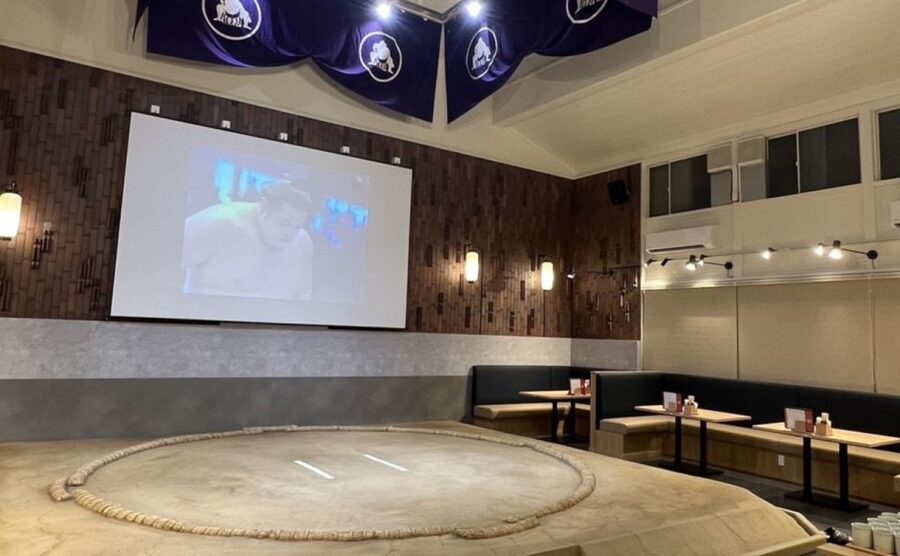
Families get a lot from the format. The wrestlers use humor, invite children into the action, and keep the explanations connected to what is happening in front of you. The gentle wrestling demonstrations are more accessible than sitting through a full tournament with no background.
Couples can also enjoy it, especially if you want an unusual birthday surprise or a shared activity that produces good photos. One birthday outing became a favorite memory because the food, comedy, and chance to wrestle came together so neatly.
It is a good match for solo visitors too, since the limited group size makes it easier to meet other participants. English instruction removes much of the uncertainty for people who have never watched sumo before.
You should think twice if you dislike audience participation or do not want to be photographed. The atmosphere is friendly, but the event clearly encourages volunteers and interaction. Also, wheelchair access is listed as available, though you should still confirm any personal access needs when booking.
What the two hours feel like
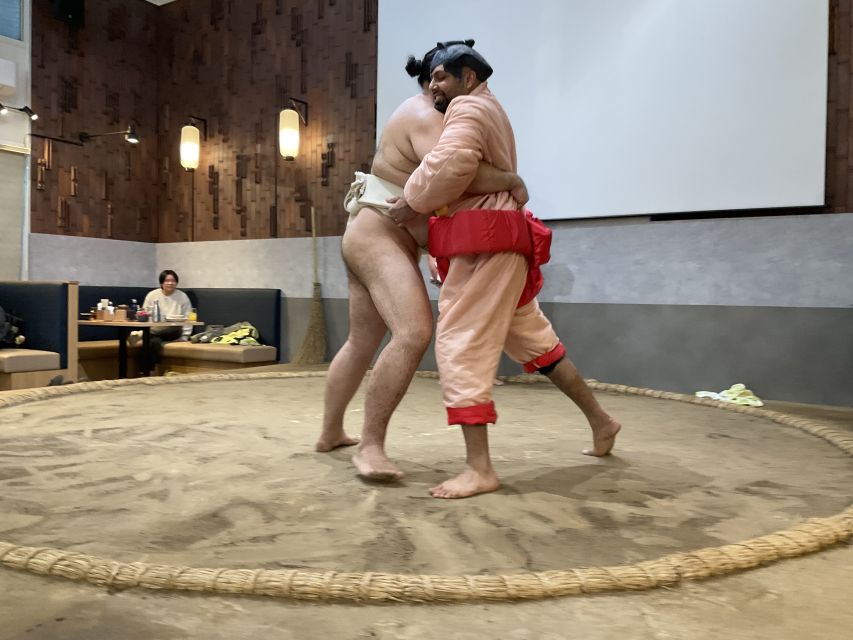
The session begins with the sumo explanation and demonstrations. The wrestlers introduce the sport, explain key rituals and rules, and show the physical side of a bout in a way that makes sense even if you know nothing about sumo.
The interactive portion follows, with selected audience members invited into the ring. You watch the wrestlers demonstrate their strength and technique, then may get your own turn in a playful contest. There is time for photographs, and the warm approach of the instructors keeps the event from feeling intimidating.
Lunch comes as the final major part of the visit. The chanko nabe is hot, filling, and prepared by the wrestlers. Depending on the current meal setup, you may also receive a drink and dessert, with some versions described as a three-course lunch.
The program finishes at the same meeting point. Since the total length is about two hours, you can continue sightseeing afterward, but allow extra time if you want to linger over photos or if the schedule runs slightly beyond the stated duration.
Should you book the Tokyo sumo experience?
Book it if you want friendly access to sumo, clear English explanations, a meal tied to the sport, and the chance to take part in a playful bout. The combination is especially strong for families and first-time visitors, and the two-hour format leaves room for other Tokyo plans.
Skip it if you want to watch an official tournament, visit an active sumo stable, or study the sport at an advanced level. You also need to accept that volunteer participation is optional and not guaranteed.
For most visitors, $95 buys more than a performance. You get an understandable introduction to sumo, time with retired wrestlers, a hearty lunch, and photos that show you doing more than simply looking on. Book early enough to arrange any vegetarian or Halal meal, confirm the Asakusa or Ryogoku location, and arrive well before the 1 PM start.
FAQ
How long does the sumo experience last?
The activity lasts two hours.
What time does the activity start?
It starts promptly at 1 PM. Participants need to arrive before the start time.
Where does the experience take place?
Monday sessions take place in Asakusa. Thursday sessions take place in Ryogoku. The exact meeting place and map are sent with the voucher.
Is transportation included?
No. Pickup and drop-off are not included, and the activity ends back at the meeting point.
Is the experience conducted in English?
Yes. The instructor language is English, and the sumo explanations are given in English.
Can I wrestle a sumo wrestler?
You may be invited to take part in a playful demonstration against a former wrestler. Some audience members may also be chosen to wear a sumo costume, but participation is not guaranteed for everyone.
Is lunch included?
Yes. The entrance fee, participation fee, and lunch are included. The meal is chanko nabe, a Japanese-style hot pot prepared by the wrestlers.
Can I request a vegetarian or Halal meal?
Yes. You need to note the request during your reservation or contact the organizer by email at least two days before the participation date.
More Lunch Experiences in Tokyo
- Tokyo: Mt.Fuji & Lake Kawaguchiko 1-Day Bus Tour w/Optional Lunch
★ 4.5 · 839 reviews - Tokyo: 1 Day Bus Tour with Meiji-Jingu,Odaiba,lunch&Skytree
★ 4.6 · 156 reviews - Nagano Snow Monkey 1 Day Tour with Beef Sukiyaki Lunch from Tokyo
★ 4.5 · 123 reviews - Tokyo: Family Sumo Workshop & Live Wrestling Show with Lunch
★ 4.9 · 99 reviews
Just added in Tokyo
- A One-of-a-Kind Sushi Experience in a Special Place of Japan★ 5.0 · 15 reviews
- Tokyo Cute Bento Cooking Class – Make a Kawaii Character Lunchbox★ 5.0 · 126 reviews
- Japanese Home Cooking Class & Walk in Todoroki Temple Tokyo★ 5.0 · 88 reviews
- Japan Tokyo Tower Observatory Deck E-Ticket★ 4.0 · 34 reviews
- Catch a Baseball Game in Tokyo with a Local – Tickets Included★ 5.0 · 24 reviews
- JDM Experience with Fast&Furious RX-7 (English speaking Driver)★ 5.0 · 57 reviews
- Tokyo Private Day Tour by Car with English speaking Driver Guide★ 4.0 · 29 reviews
- Japan Classic 10 Day – One Life Adventures★ 5.0 · 129 reviews
Sumo Experiences, compared.
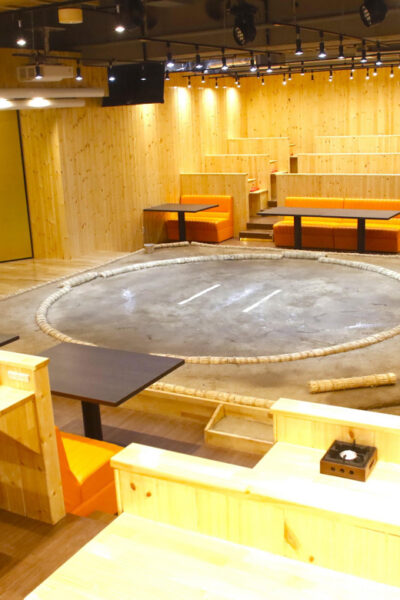
Sumo Show Experience with Chicken Hot Pot and a Photo
Read our review →
Tokyo Shinjuku Sumo Show & Experience with Photo
Read our review →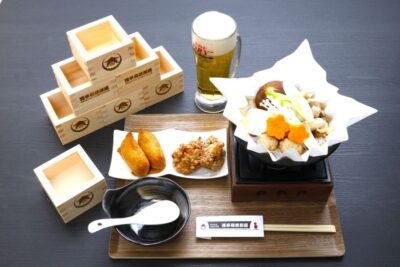
Asakusa Sumo Club Sumo Show Admission with Chankonabe in Tokyo
Read our review →
Tokyo Ginza Sumo Experience: Performance vs Pure Practice
Read our review →Browse the lists this tour appears in