
Reviewed · SUMO EXPERIENCES
Tokyo Ginza Sumo Experience: Performance vs Pure Practice
Sumo’s ring rituals, salt tosses, and explosive bouts make a lively introduction to Japan’s national sport, but this Ginza experience also lets you step into the action. Choose a crowd-friendly show led by retired wrestlers or a more physical training session with former pros.
I like the show’s mix of explanation and participation, especially the chance to try sumo gestures and perhaps face a wrestler in a lottery-selected challenge. I also like that the training plan offers real movement practice rather than just a demonstration.
One thing to weigh: this is a tourist-oriented performance, not a tournament or morning stable practice. The food details also vary across the available package information, so check exactly what is included before you book.
In This Review
- What to know before you book
- Two ways to meet sumo in Ginza
- Plan A: rituals, ring bouts, and a chance to challenge
- Plan B: one hour of sumo training
- How the food and drinks affect the value
- Who will get the most from this experience
- Getting to the Ginza venue and planning ahead
- Should you book the Ginza sumo experience?
- FAQ
- Is this an official sumo tournament?
- What is the difference between Plan A and Plan B?
- Is food included with Plan A?
- Is food available with Plan B?
- Can children take part?
- Can the venue accommodate dietary requirements?
- How do I pay for food and other purchases at the venue?
What to know before you book
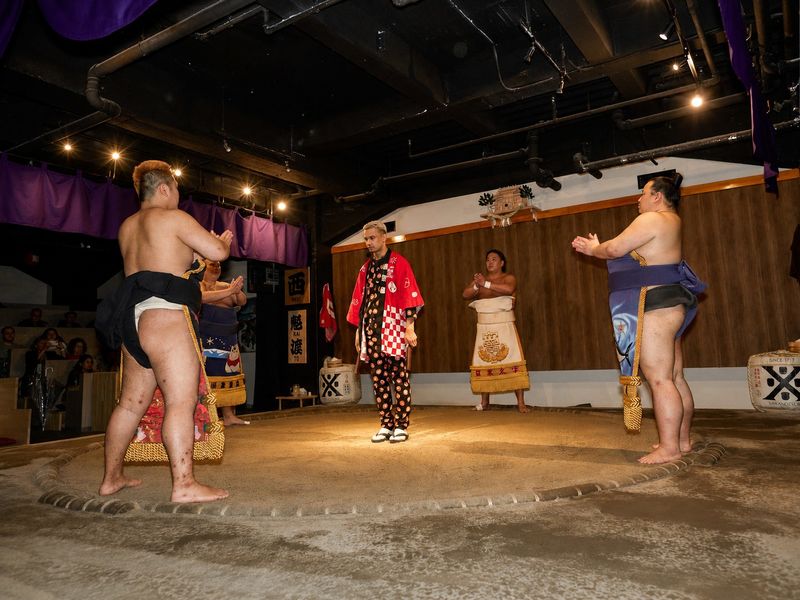
- The show brings you close to the dohyo: Watch retired wrestlers demonstrate sumo, its rituals, and ring battles.
- You can join in: Try leg stomps and salt throwing, and enter a lottery for a chance to challenge a wrestler.
- Training is a different kind of visit: Plan B is a 60-minute session covering shiko, suri-ashi, and butsukari-geiko.
- The show has two seating choices: Plan A is available in general or premium seating.
- Food needs a closer look: Plan A has an on-site menu, but the supplied package information is inconsistent about whether chanko-nabe is included.
- The setting is central Ginza: The venue is in the basement of Ginza Inz 1, at 3-3-1 Ginza-nishi.
Two ways to meet sumo in Ginza
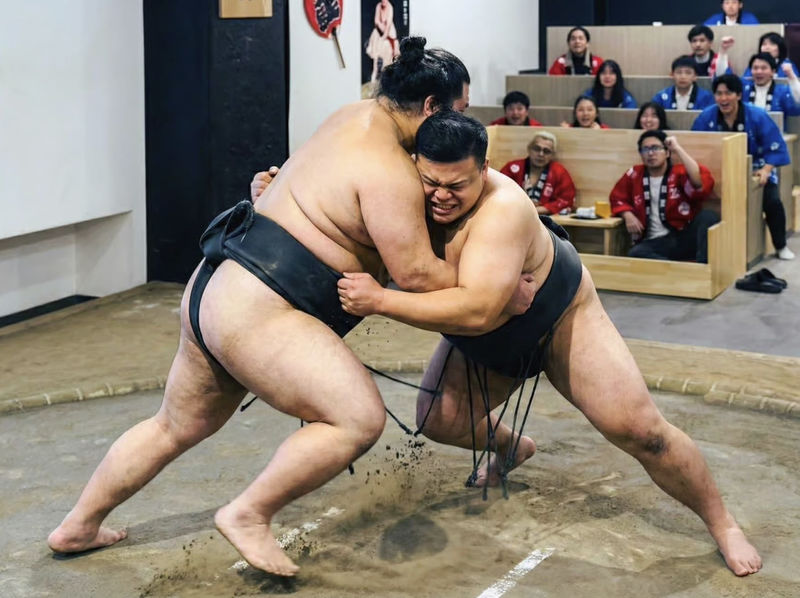
The Tokyo Sumo Festival offers two distinct plans, and choosing between them matters more than choosing a seat. Plan A is a guided, interactive performance designed to make sumo understandable and fun for a broad audience. Plan B is a hands-on training session for people who want to feel the physical work behind the sport.
Both are led by retired or former professional wrestlers, with English-speaking staff to explain the action. That makes the experience approachable even if you know little about sumo. The main difference is your role: in Plan A, you watch, learn, and take part in selected moments; in Plan B, you move through training drills yourself.
The event is held at Tokyo Sumo Festival in Ginza, in the basement of Ginza Inz 1. Its central location makes it easy to pair with a day in Ginza, though the venue is not a sumo stable or the site of an official tournament. If you want the intensity and formality of a live honbasho, this is not a substitute. If you want a compact introduction with clear explanations and a chance to interact, it may be a better fit.
More Sumo Experiences in Tokyo
- Tokyo: Sumo Show Experience with Chicken Hot Pot and a Photo
★ 4.8 · 6,678 reviews - Tokyo: Sumo Live Show with Photo in Shinjuku
★ 5.0 · 3,438 reviews - Tokyo: Sumo Show and Dining Experience
★ 4.8 · 2,742 reviews
Plan A: rituals, ring bouts, and a chance to challenge
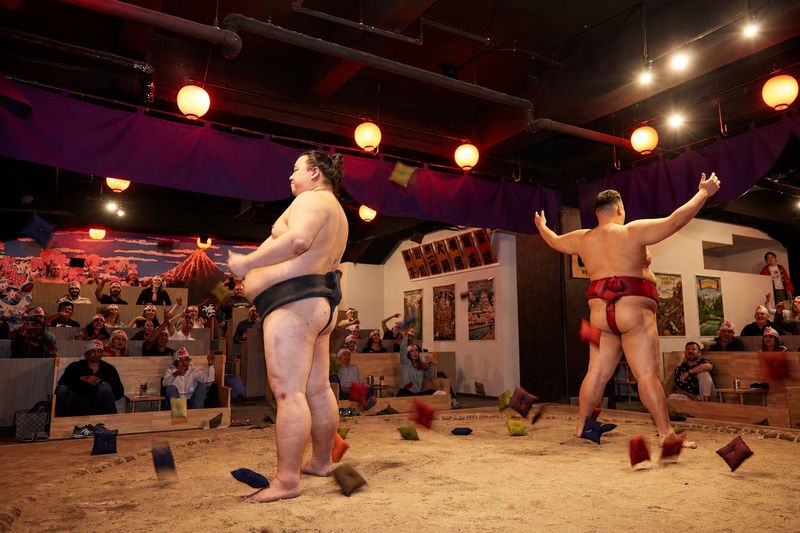
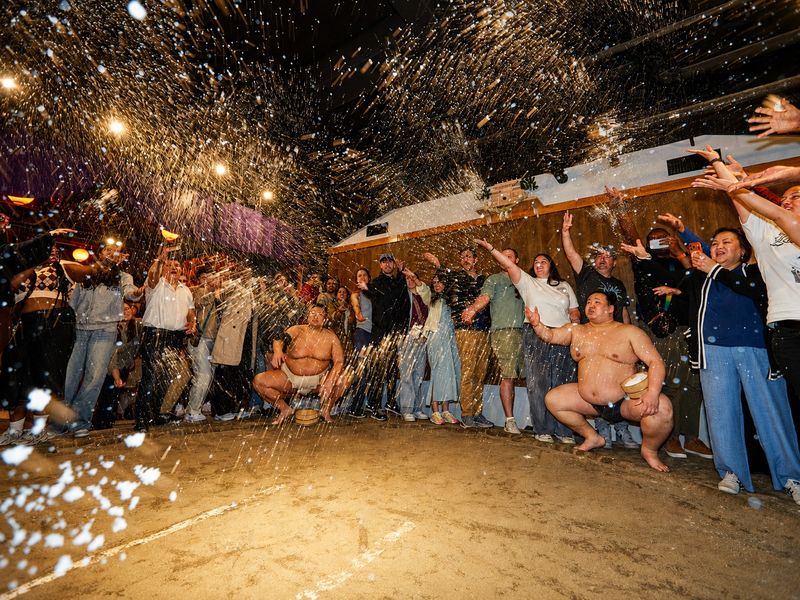
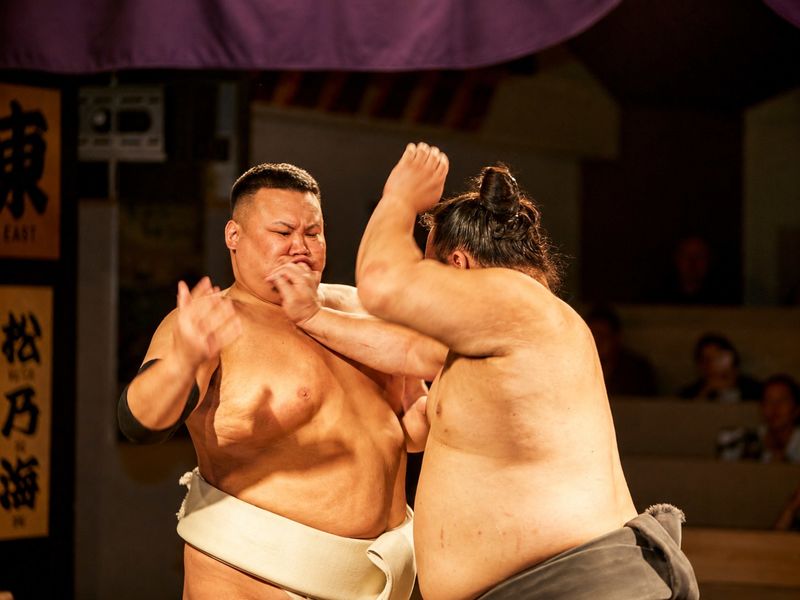
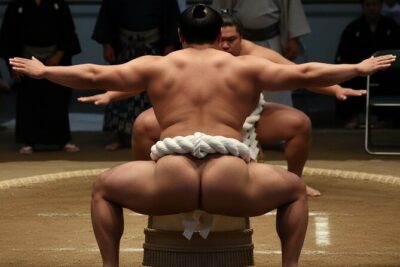
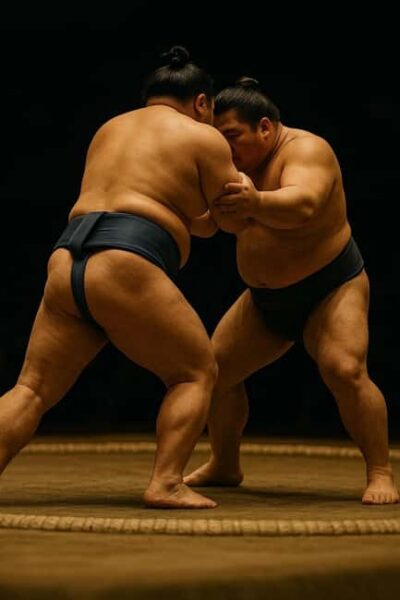
The show begins with the visual language of sumo: the dohyo, the wrestlers’ movements, and familiar rituals such as shiko, the high leg stomp, and salt throwing. The explanations help you see that these are not random flourishes. They give you a way to follow what the wrestlers are doing and why the sport looks as it does.
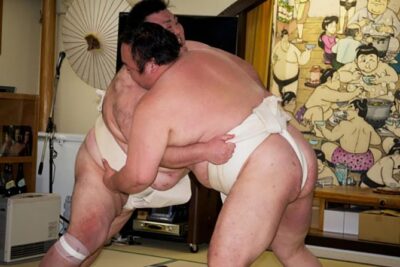
The retired wrestlers then demonstrate ring action. The bouts are part of an entertaining show, not competitive matches, and that distinction is worth keeping in mind. You are there for a welcoming introduction, not the quiet focus or stakes of a professional tournament.
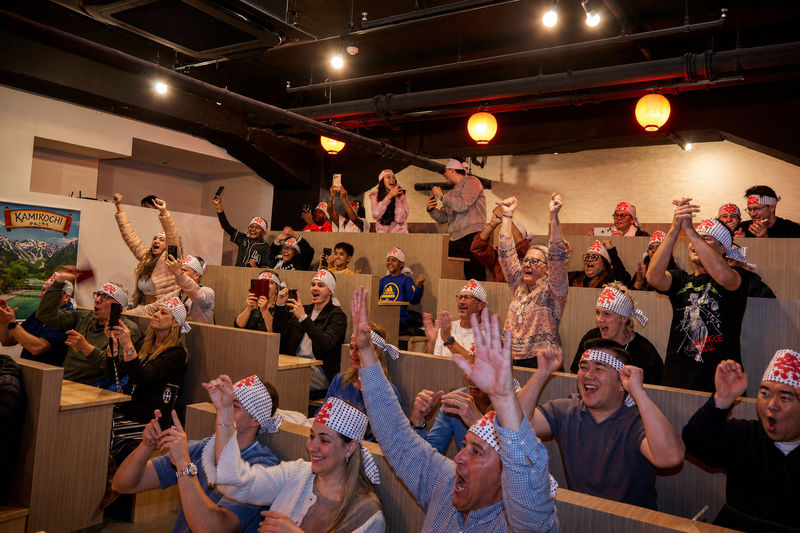
Audience participation is a major part of the appeal. You may be invited to try sumo gestures or toss salt, and a lottery selects someone for a chance to face a wrestler. Selection is not guaranteed, so don’t book on the assumption that you or your child will get into the ring. Still, it gives the event a fun sense of possibility, especially for families.
The host and wrestlers help keep the mood light while explaining sumo culture. Names associated with the event include hosts Nick and Hillary, and wrestlers such as Maru, Shido, Bun Go, and Matsu. The lineup may vary, but the format leaves room for questions and interaction rather than presenting the sport as a silent spectacle.
General seating is the straightforward choice; premium seating costs more, and may suit you if being nearer to the action is a priority. The venue has limited seating, so if you are booking for a group, buy all tickets in one transaction to improve your chances of sitting together.
Plan B: one hour of sumo training
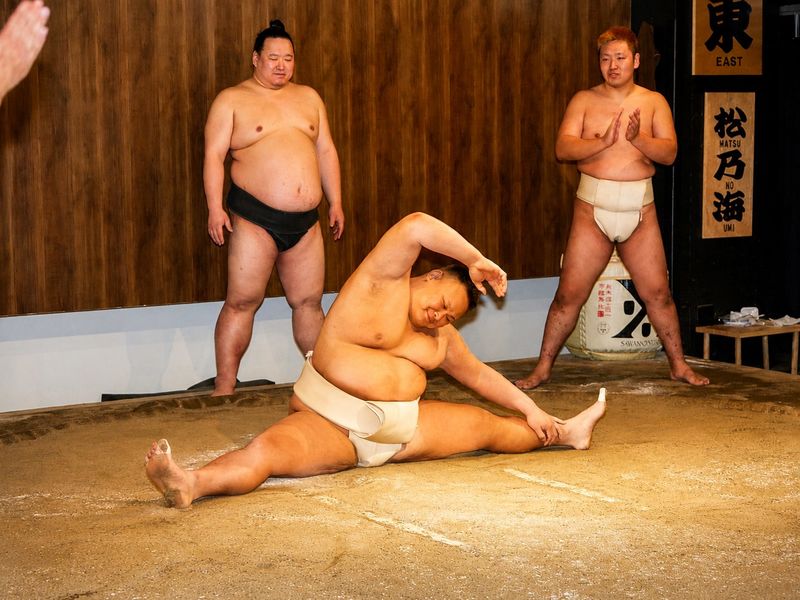
Plan B, called the Asa-Geiko or aspiring wrestler course, is for visitors who want to do more than watch. A retired wrestler leads a 60-minute session in basic sumo movements, including shiko, suri-ashi, and butsukari-geiko. These drills introduce balance, footwork, and the effort involved in pushing against an opponent.
The description says you can work at your own pace, but that should not be mistaken for a gentle photo opportunity. The session involves physical activity, and the experience may feel more demanding than you expect. One participant described working up a sweat while still finding the training manageable, but your comfort will depend on your own fitness and health.
The chance to wear a kesho-mawashi, the decorative apron worn for formal ring ceremonies, makes for a memorable photo. Plan B also includes a signed handprint board, called a tegata, as a souvenir. Food service is currently unavailable for this plan, so plan to eat before or after.
This plan is not suitable for children under five, pregnant participants, or people with health issues. Children must have a guardian, and infants and children count toward the booking headcount. The booking conditions also say each group may book only one plan, either A or B. If your party includes people who want different experiences, check with the operator before arranging separate reservations.
How the food and drinks affect the value
At a starting price of about $60.65 per person, Plan A can be good value if you want a guided cultural activity with demonstrations, audience participation, and a central Ginza location. More than 16,648 bookings are recorded, and the overall rating is 4.9 out of 5 from 1,057 ratings. Those numbers point to a popular event, but value still depends on what you expect: it is an accessible show, not an authentic tournament ticket.
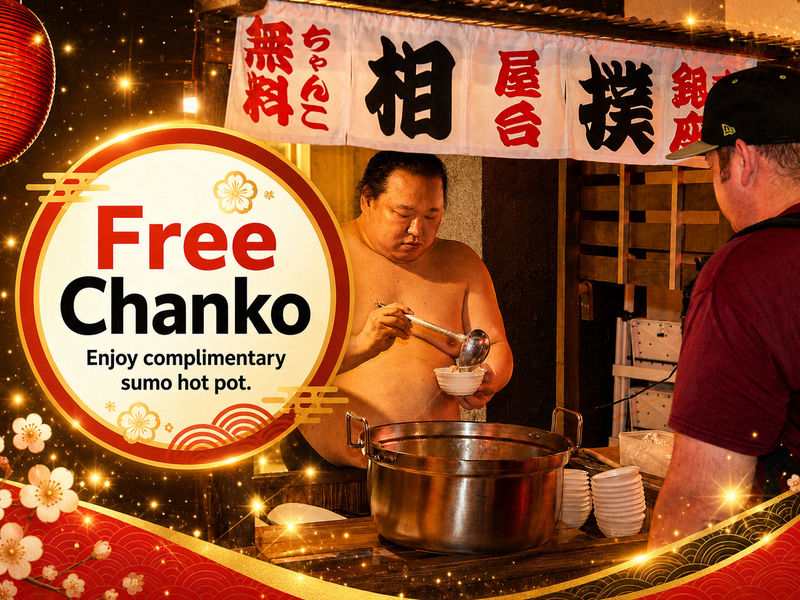
The food information needs particular care. Some package details say Plan A includes all-you-can-eat chanko-nabe, the hot pot associated with sumo wrestlers. Other information says meals are excluded and that Plan A guests can order from an on-site menu for an additional charge. The experience details also describe unlimited bowls of chanko, while noting that food and drinks can be expensive. Because these statements conflict, check the terms shown for your exact date and ticket before you book. Do not assume that food or drinks are included unless your selected package says so clearly.
Vegetarian and vegan meals are available on request, and the instructions say to tell staff when you arrive. Halal-certified and gluten-free food cannot be provided, and the venue also lists limits for certain allergies and dietary requirements. Outside food is permitted only for people with halal requirements or severe food allergies. The property is cashless, so bring a credit or debit card for any on-site purchases.
A completely different kind of day out:
- Tokyo Disney Resort – Tokyo Disneyland & Tokyo DisneySea Park Tickets
★ 4.8 · 99,488 reviews - SHIBUYA SKY Ticket
★ 4.7 · 46,509 reviews - JR Whole Japan Rail Pass
★ 4.8 · 29,150 reviews - Mt Fuji and Hakone 1-Day Bus Tour Return by Bullet Train
★ 5.0 · 26,383 reviews
Who will get the most from this experience
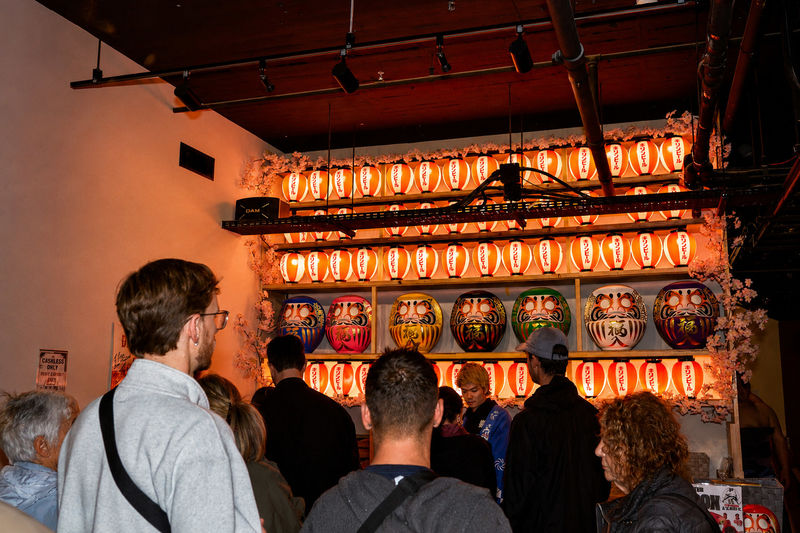
Plan A is the better fit if you are travelling with children, want an entertaining introduction, or have limited time for sumo. The explanations, jokes, short demonstrations, and audience involvement make the sport easier to follow than watching a match without context. It can also work well if tournament tickets are unavailable or if you would rather ask questions and join in than sit through a formal competition.
Plan B is for you if you want to try the basics with a former wrestler and are comfortable with physical activity. It offers a more direct connection to how sumo training feels, though it remains a guided visitor session rather than daily practice at a stable.
Neither plan is ideal if you are seeking a quiet, unscripted encounter with professional sumo life. Plan A is deliberately entertaining, and Plan B is structured as a short lesson. That is not a flaw if you know what you are booking. The show’s accessible format is precisely what makes it useful for families and first-time visitors.
Getting to the Ginza venue and planning ahead
The address is Ginza Inz 1, B1, 3-3-1 Ginza-nishi, Chuo-ku, Tokyo 104-0061. The event’s Japanese name is Tokyo Sumo Festival in Ginza. If you take a taxi, show the driver the venue’s instruction to drop you near the entrance to Ginza Inz 1 on Sotobori-dori; the event space is downstairs. This is more useful than asking a driver to find the basement venue directly.
Wheelchair users should contact staff in advance. Wheelchair seating is limited, and the venue asks you to mention access needs when making the reservation. The booking is date-specific, and groups should purchase together because seating is limited.
The stated cancellation terms allow a full refund if you cancel at least 24 hours before the activity date, using local destination time. The operator may cancel for extreme weather or unforeseen events, in which case you can reschedule or request a full refund.
Should you book the Ginza sumo experience?
Book Plan A if you want an upbeat, easy-to-follow introduction to sumo, especially with children or first-time visitors. Its strongest points are the explanations, playful interaction, and the possibility of a ring challenge. Choose premium seating if proximity matters to you, and confirm the food terms before paying.
Choose Plan B if your priority is physical participation and you are ready for a workout. It is the more hands-on option, but it has age and health restrictions and no food service.
Skip both if you want to see a serious tournament or observe authentic morning practice. For a compact, friendly way to learn what makes sumo distinctive, though, the show is an appealing Ginza stop, and the training course offers a more active alternative.
FAQ
Is this an official sumo tournament?
No. Plan A is an entertaining show with demonstrations and ring battles, not a competitive honbasho.
What is the difference between Plan A and Plan B?
Plan A is a sumo show with rituals, demonstrations, and a lottery-based chance to challenge a wrestler. Plan B is a 60-minute training session covering shiko, suri-ashi, and butsukari-geiko.
Is food included with Plan A?
The supplied package information is inconsistent. Some details describe chanko-nabe as included, while others say meals are extra and available from the on-site menu. Check the terms for your exact ticket before booking.
Is food available with Plan B?
No. Food service is currently unavailable for Plan B.
Can children take part?
Children must be included in the passenger headcount and have a guardian. Plan B is not suitable for children under five. Plan A is presented as an activity for all ages, though taking part in the wrestler challenge is selected by lottery.
Can the venue accommodate dietary requirements?
Vegetarian and vegan meals are available on request. Halal-certified and gluten-free food cannot be provided, and the venue lists limits for some allergies and dietary requirements. Outside food is allowed only for halal requirements or severe food allergies.
How do I pay for food and other purchases at the venue?
The venue is cashless. On-site payments for food, drinks, and other services must be made by credit card.
Just added in Tokyo
- Wonders Of Japan by Travel Talk – 10-Day Tokyo to Osaka Tour Review★ 4.5 · 14 reviews
- Wonders of Japan end Tokyo GO by Europamundo – 15-Day Tour Review★ 4.2 · 10 reviews
- Wonders of Japan end Tokyo by Europamundo – 15-Day Tour Review★ 4.2 · 10 reviews
- Wonders of Japan End Osaka by Europamundo – 12-Day Tour Review★ 4.2 · 58 reviews
- Wonders of Japan End Osaka (including Fukuyama) by Europamundo – 12-Day Tour★ 4.2 · 58 reviews
- Wonders of Japan End Osaka GO by Europamundo – 12-Day Tour Review★ 4.2 · 58 reviews
- Walk Japan – Kumano Kodo Trail by Explore! – 12-Day Tour Review★ 4.7 · 20 reviews
- Visions of Japan with Hiroshima & Osaka by Globus – 15-Day Tour Review★ 5.0 · 75 reviews
Sumo Experiences, compared.
Sumo Show Experience with Chicken Hot Pot and a Photo
Read our review →
Tokyo Shinjuku Sumo Show & Experience with Photo
Read our review →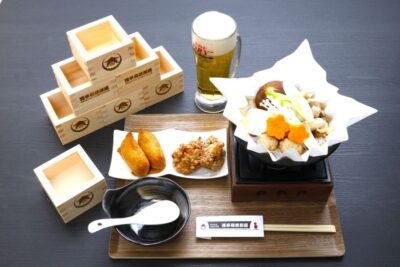
Asakusa Sumo Club Sumo Show Admission with Chankonabe in Tokyo
Read our review →
Browse the lists this tour appears in