
Reviewed · SUMO EXPERIENCES
Watch Sumo Morning Practice at Stable in Tokyo
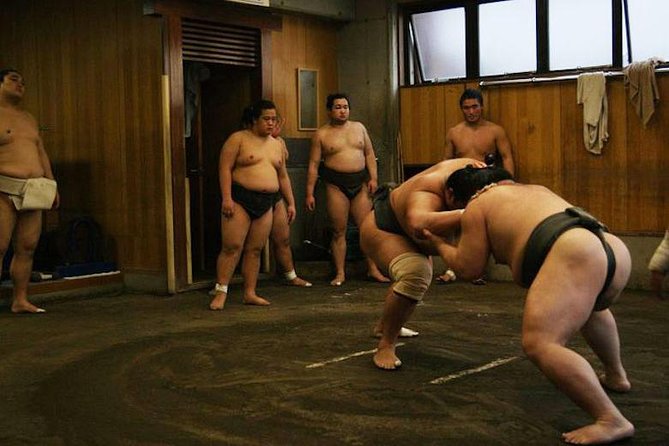
Sumo practice is far more intense up close. This early-morning visit takes you into a working sumo stable, where wrestlers stretch, repeat drills, and collide in the dohyo under strict traditional rules. I like the close view of real training and the chance to see a part of Japanese life most visitors never enter. I also like that the small-group format and prearranged meeting point make this unusual outing easier to manage.
The main drawback is comfort. You may sit on a thin mat over a hard floor for 60 to 90 minutes, with little chance to move around, and the practice can be shortened or run late. If you expect a narrated cultural tour or a staged show, this may feel quiet and slow.
In This Review
- Key points before you book
- Why this sumo visit feels different from a tournament
- Meeting in Tokyo and finding the stable
- Inside the stable: quiet observation from the floor
- The viewing position can make or break the morning
- The final photographs are useful, but not guaranteed
- Timing changes during Tokyo tournament months
- Is $95.77 a fair price?
- Who will enjoy this most?
- How to prepare for a better visit
- Should you book this sumo morning practice?
- FAQ
- How long does the sumo practice last?
- Where does the experience take place?
- What time does the activity operate?
- Do I have to sit on the floor?
- Are photos with the wrestlers included?
- Can I cancel for a refund?
Key points before you book
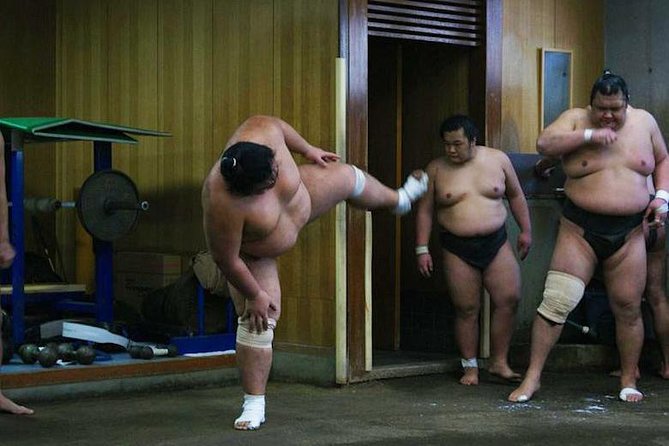
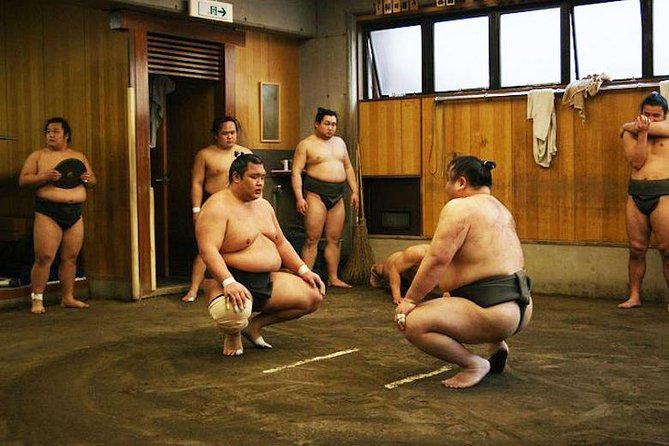
- This is real practice, not a performance: You watch warmups, stretching, technique work, and hard sparring as the wrestlers follow their normal routine.
- Silence is part of the experience: Eating, loud talking, bright flash photography, and intrusive camera sounds are not appropriate inside the stable.
- The floor seating matters: Participants need to sit on the floor for an extended period. A stool or chair may be available on request, but views can be poorer.
- The exact stable is confirmed late: Conditions depend on the stable’s schedule, and the final location can be confirmed only about one week before the visit.
- Tournament months change the practice: In Tokyo tournament periods in January, May, and September, practice may last only 30 to 40 minutes.
- The ending is not fixed: The listed morning window is 8:00 to 10:00, but the practice can finish at different times, and the photo session may be affected.
Why this sumo visit feels different from a tournament
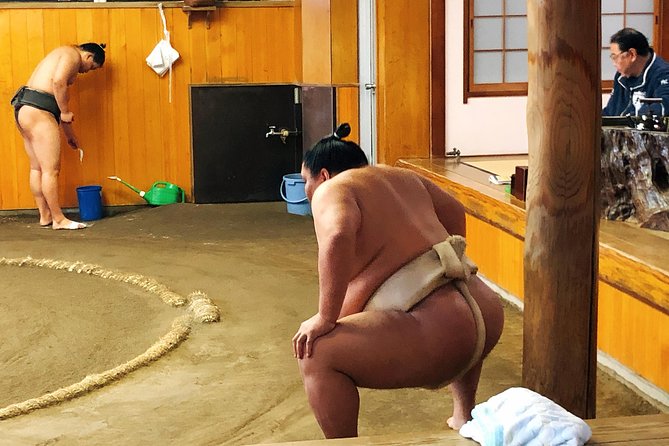
A sumo tournament is polished public sport. You buy a ticket, enter a large arena, and watch formal bouts before a crowd. Morning practice is quieter and more private. You are seeing athletes prepare, not entertainers perform.
That difference is the whole point. The wrestlers may spend long stretches warming up, repeating movements, and working through the same exercise. Then the pace changes. The initial impacts can be startling, and the strength required to move another large athlete becomes clear in a way television cannot quite convey.
The stable is also a workplace. The wrestlers are there to train, so the group must fit into their routine rather than the other way around. You sit to one side, keep still, and watch carefully. That restraint can feel unusual for a sightseeing activity, but it is also what gives the visit its value.
I especially like the gradual build. The morning may begin with stretching and basic movements, followed by increasingly forceful practice. You might see younger wrestlers work with more experienced members, receive corrections, and repeat techniques until the movement looks instinctive. The rituals and discipline are as important as the collisions.
More Sumo Experiences in Tokyo
- Tokyo: Sumo Show Experience with Chicken Hot Pot and a Photo
★ 4.8 · 6,678 reviews - Tokyo: Sumo Live Show with Photo in Shinjuku
★ 5.0 · 3,438 reviews - Tokyo: Sumo Show and Dining Experience
★ 4.8 · 2,742 reviews
Meeting in Tokyo and finding the stable
You make your own way to the Tokyo meeting point. The experience ends back at the meeting point after the stable visit, but the exact stable address is not always available far in advance. The provider confirms conditions based on the stable’s schedule, sometimes only around one week before the visit.
This late confirmation is worth understanding before you pay. You cannot plan your route with full certainty months ahead, and the meeting point or stable may not be the location you first picture from the tour title. One booking was described as taking place more than an hour outside central Tokyo, so keep your morning flexible until the final instructions arrive.
The Ryogoku Kokugikan area is the natural sumo district of Tokyo, but the listed itinerary identifies it as a stop rather than guaranteeing that the practice itself takes place inside the arena. Read the final meeting instructions carefully. If the address is provided in Japanese, keep it ready for a taxi driver. One useful tip is to allow extra time, since some people found the stable difficult to locate on foot.
Public transport and walking may work well once you have the exact address. A taxi can be easier if you are leaving from Asakusa or carrying luggage. The key is not to assume that a famous sumo landmark automatically puts you at the stable door.
Inside the stable: quiet observation from the floor
After meeting the guide and the rest of the group, you enter the stable and take a place along the side of the practice area. The group size is advertised at a maximum of 10, although some accounts describe a much larger gathering at particular sessions. That difference may reflect separate booking arrangements or stable capacity, so do not assume every visit will feel equally small.
The basic rules are simple but important. Do not eat inside. Keep your voice low. Turn off bright flashes and avoid camera sounds that could distract the wrestlers. You are not there to call attention to yourself.
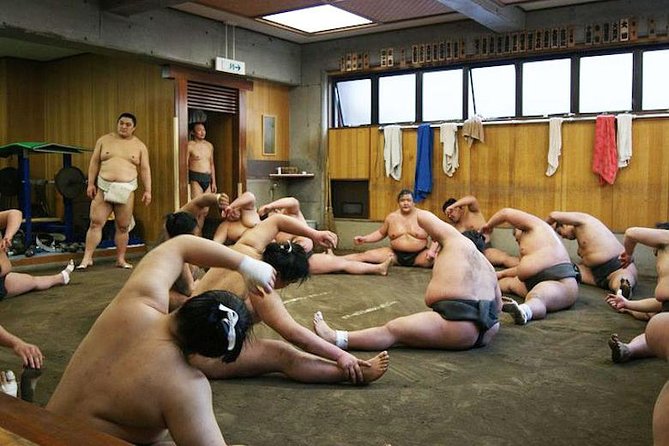
The first part may seem repetitive if you do not know what to watch for. Stretching, shiko-style leg work, warmups, and repeated drills can occupy a large portion of the session. I recommend learning a little about sumo rank and stable etiquette before you go. Even a basic idea of the wrestler hierarchy helps you notice who is correcting whom and why a particular exchange matters.
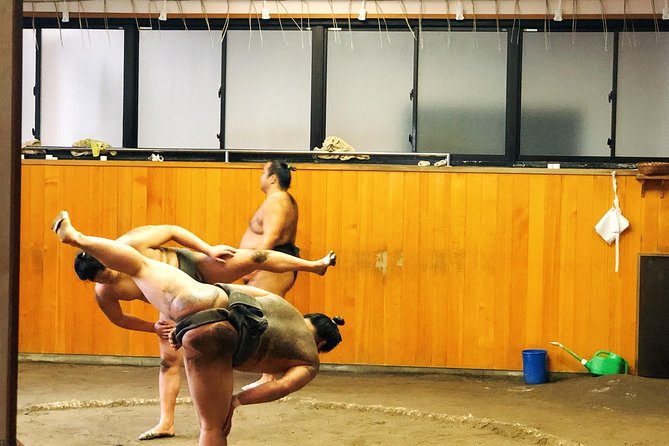
The practice often builds toward contact work. Wrestlers brace themselves, drive forward, and test balance and footwork. The force of the first impact can be impressive, especially from a close viewing position. You also might see humor and encouragement between wrestlers, along with the serious concentration that returns when the next drill begins.
This is not a guided lecture. Some visits include useful explanations of sumo history and practice, and a guide named Ricko was praised for arranging transport and helping with the experience. Other sessions provide little or no spoken explanation once the door is opened. If you want every ritual explained in your language, confirm what guiding is included before booking.
The viewing position can make or break the morning
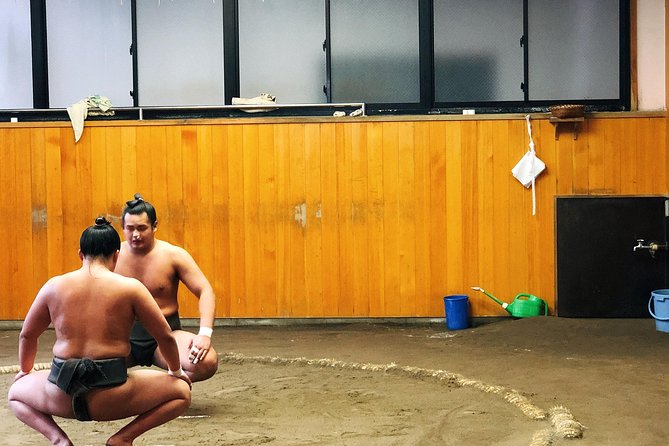
Arrive early if your instructions allow it. Several accounts stressed the value of getting a front position, since everyone sits low and people in the back may have trouble seeing through the group. The stable is not arranged like a theater, and there may be no raised seats for every person.
Floor seating is the biggest practical issue. The mat may be thin, and the surface underneath can feel hard. You may need to sit cross-legged or in another position for a long time, while avoiding pointing your feet toward the practice area. People with back, hip, or knee problems should think seriously about this before booking.
A small chair or stool may be available on request, but supply can be limited. One account noted that chairs offered a poorer view, while another warned that only two seats were available for a larger group. Requesting one in advance is sensible, but do not treat it as a guaranteed front-row seat unless the operator confirms that directly.
This is also not a good place for constant photography. You may have time for pictures at the end, but during practice your job is to watch quietly. Put your phone away when the action starts. You will see more, and the wrestlers will be able to train without disruption.
A completely different kind of day out:
- Tokyo Disney Resort – Tokyo Disneyland & Tokyo DisneySea Park Tickets
★ 4.8 · 99,488 reviews - SHIBUYA SKY Ticket
★ 4.7 · 46,509 reviews - JR Whole Japan Rail Pass
★ 4.8 · 29,150 reviews - Mt Fuji and Hakone 1-Day Bus Tour Return by Bullet Train
★ 5.0 · 26,383 reviews
The final photographs are useful, but not guaranteed
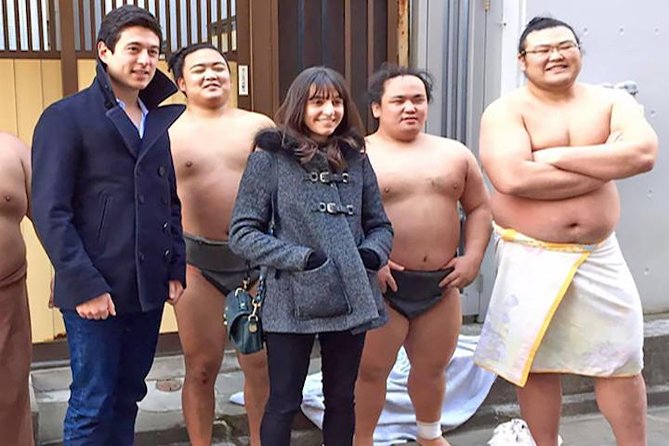
Photos with sumo wrestlers are included at the end. This gives the visit a clear finishing moment and lets you take home a record of a very unusual morning.
The timing, however, is outside the tour operator’s full control. Practice can run longer than expected, and one group missed the photo session because the wrestlers continued training. The advertised morning window is roughly 8:00 to 10:00, but the actual practice may end at a different time.
Do not book a tight connection, important appointment, or timed attraction immediately afterward. The practice normally lasts between 60 and 90 minutes, but tournament periods can shorten it to 30 to 40 minutes. A shortened practice is not necessarily a poor experience, since the session may still show intense training, but the price remains the same.
Timing changes during Tokyo tournament months
Sumo tournaments take place in Tokyo in January, May, and September, generally around the middle of the month. During those periods, many wrestlers are competing rather than following a normal stable practice schedule. The stable may be closed, and the available practice can be much shorter.
The published operating dates include Monday through Saturday, 8:00 to 10:00, for February 2 through February 14, March 31 through April 30, and May 1 through May 9, 2026. These dates do not mean every morning has identical practice conditions. The stable’s own schedule controls what you see.
The operator confirms availability within 48 hours of booking, subject to the stable’s schedule. The exact conditions may not be known until about one week before the activity. If seeing a full-length practice is your main goal, ask about the expected session length before finalizing your plans.
Is $95.77 a fair price?
At $95.77 per person, this is not a cheap way to spend an hour in Tokyo. You are paying for access to a restricted setting, coordination with a working stable, and the chance to observe athletes from close range. There is no meal, drink, tournament ticket, or long guided sightseeing program included.
The value depends on what you want. If you are curious about sumo and would otherwise have no realistic way to enter a stable, the fee can make sense. This is not simply a seat at a public sporting event. It is access to training that most visitors cannot arrange alone.
The value drops if you expect a two-hour educational tour with constant commentary. Much of the time may be silent observation, and some sessions contain little explanation. You should also remember that the practice can be shorter during tournament season without a lower price.
Group discounts and mobile tickets are available. Since the experience is often booked well ahead, around 62 days in advance on average, popular dates may disappear before your schedule is settled. At the same time, do not book blindly months ahead if the stable’s location and practice status are central to your plans.
Who will enjoy this most?
I would recommend this for people who enjoy seeing ordinary training rather than a staged attraction. Sumo fans will get the most from the session, especially if they already understand a little about ranks, rituals, and basic techniques.
It also suits families with children aged 13 or older who can stay quiet and sit still. One family found that teenagers remained interested through the warmup, technique work, and sparring. The close distance and heavy impacts can hold attention, but this is not an activity for restless young children.
You may also like it if you enjoy martial arts, professional sport, or behind-the-scenes access. The session shows discipline, repetition, teamwork, and physical strain. It is less suitable if you need comfortable seating, frequent movement, a lively guide, or a fixed finish time.
Most people can participate, but you must be able to sit on the floor for an extended period. If that is doubtful, ask about seating before booking rather than hoping the stable can solve the problem on the morning.
How to prepare for a better visit
Read a little about sumo before you arrive. Learn what the dohyo is, how wrestler ranks work, and why warmup rituals matter. That preparation turns a long stretch of repeated exercises into something you can follow.
Wear clothing that lets you sit comfortably. Keep your morning free after the session, and carry the address in Japanese once it is sent. If you plan to use a taxi, do not rely only on an English address.
Arrive early enough to improve your position, but follow the meeting instructions above all else. Inside, sit quietly, avoid sudden movement, and do not assume that a question can be asked during practice. Save your photos and conversation for the permitted time at the end.
Cancellation terms are strict close to the date. A full refund requires cancellation at least six full days before the start time. Cancelling two to six days ahead may bring a 50 percent refund, while cancelling less than two full days ahead brings no refund. Date changes are not accepted within three days, including for flight delays or illness. If poor weather cancels the activity, you should be offered another date or a full refund.
Should you book this sumo morning practice?
Book it if you want a close, respectful look at serious sumo training and you can handle floor seating, silence, and an uncertain finish. The strongest part is the authenticity: you watch wrestlers build from warmups to powerful contact work in a setting not designed for sightseeing.
Skip it if you need a comfortable chair, steady narration, or a guaranteed two-hour program. Before booking, ask about the stable location, expected practice length, seating, and whether a guide will explain what you are seeing. With those points clear, this can be one of Tokyo’s most memorable cultural experiences, especially outside the short-practice tournament periods.
FAQ
How long does the sumo practice last?
The practice usually lasts between 60 and 90 minutes. During Tokyo tournament periods in January, May, and September, it may last only 30 to 40 minutes.
Where does the experience take place?
The activity is in Tokyo at a sumo training stable. The exact stable conditions and location can be confirmed only about one week before the visit because they depend on the stable’s schedule. Ryogoku Kokugikan is listed as the itinerary stop.
What time does the activity operate?
The listed operating window is Monday through Saturday from 8:00 AM to 10:00 AM on the published dates. The practice may finish earlier or later within that window.
Do I have to sit on the floor?
Yes. Participants should be able to sit on the floor for an extended period. A chair or stool may be available on request, but seating can be limited and may offer a poorer view.
Are photos with the wrestlers included?
Yes. Photos with sumo wrestlers are included at the end of the practice. The photo session can be affected if the practice runs longer than expected.
Can I cancel for a refund?
You can receive a full refund if you cancel at least six full days before the experience start time. Cancelling two to six full days ahead may qualify for a 50 percent refund, while cancelling less than two full days ahead is nonrefundable.
Just added in Tokyo
- A One-of-a-Kind Sushi Experience in a Special Place of Japan★ 5.0 · 15 reviews
- Tokyo Cute Bento Cooking Class – Make a Kawaii Character Lunchbox★ 5.0 · 126 reviews
- Japanese Home Cooking Class & Walk in Todoroki Temple Tokyo★ 5.0 · 88 reviews
- Japan Tokyo Tower Observatory Deck E-Ticket★ 4.0 · 34 reviews
- Catch a Baseball Game in Tokyo with a Local – Tickets Included★ 5.0 · 24 reviews
- JDM Experience with Fast&Furious RX-7 (English speaking Driver)★ 5.0 · 57 reviews
- Tokyo Private Day Tour by Car with English speaking Driver Guide★ 4.0 · 29 reviews
- Japan Classic 10 Day – One Life Adventures★ 5.0 · 129 reviews
Sumo Experiences, compared.
Sumo Show Experience with Chicken Hot Pot and a Photo
Read our review →
Tokyo Shinjuku Sumo Show & Experience with Photo
Read our review →
Asakusa Sumo Club Sumo Show Admission with Chankonabe in Tokyo
Read our review →
Tokyo Ginza Sumo Experience: Performance vs Pure Practice
Read our review →Browse the lists this tour appears in