
Reviewed · SUMO EXPERIENCES
Tokyo: Sumo Show Experience with Chicken Hot Pot and a Photo
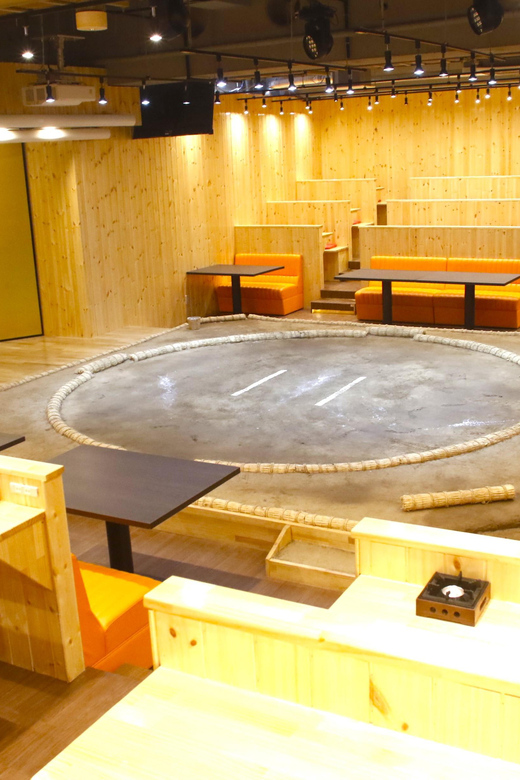
Sumo gets personal here. At the Asakusa Sumo Club, you watch retired professional wrestlers perform beside your table, learn the sport’s basic rituals, eat chicken hot pot, and perhaps step into the ring yourself. The two-hour program is made for entertainment, not for observing a serious training session or an official tournament.
I especially like the clear English and Japanese commentary and the way the show explains sumo without assuming you know the difference between a shove, a slap, and a winning ring maneuver. The geisha dance, audience participation, complimentary drink, printed photo, and souvenir bag also give the evening a generous feel for $103 per person. The main consideration is simple: this is a polished family show featuring retired wrestlers, not a quiet look at daily life inside an active sumo stable.
In This Review
- Key Points Before You Book
- Arriving at a Sumo Ring in Asakusa
- Morning Exercises and Sumo Basics
- A Geisha Dance Sets the Tone
- Chanko-Nabe and Japanese Side Dishes
- The Main Event: Retired Wrestlers in a Best-of-Three Match
- The Sumo Challenge: Your Chance in the Dohyo
- Seating: Standard, VIP, or VVIP
- What You Receive for $103
- How Family-Friendly Is the Experience?
- What This Show Does Not Provide
- Practical Tips for a Better Visit
- Should You Book the Asakusa Sumo Show?
- FAQ
- How long does the Tokyo Sumo Show Experience last?
- Is this a serious professional sumo match?
- Is English commentary available?
- Is food included in the ticket?
- Can I request a vegetarian or vegan meal?
- Can I challenge a sumo wrestler?
- What souvenirs are included?
- Is the experience wheelchair accessible?
Key Points Before You Book
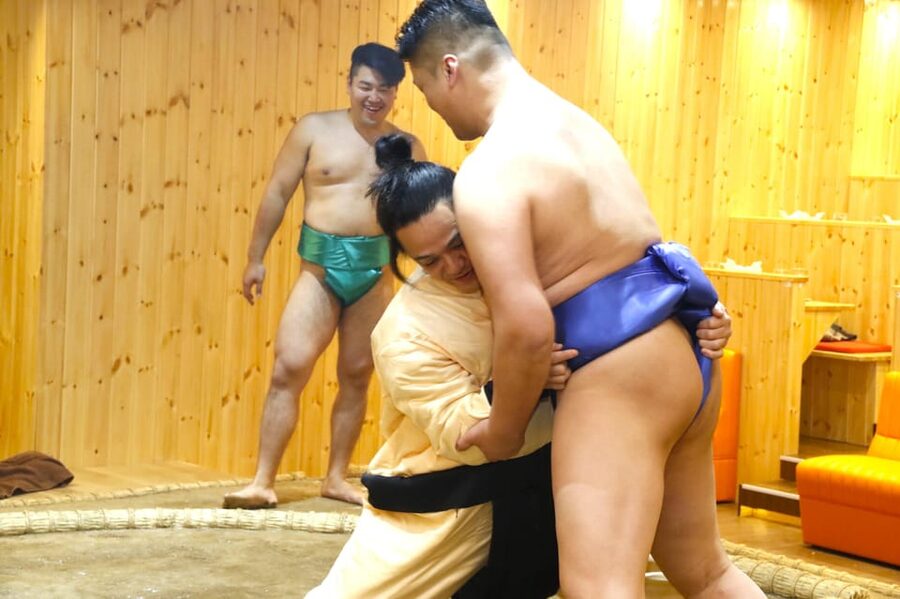
- Best for families: Children can follow the jokes, demonstrations, and challenge matches without needing much background in sumo.
- A real dohyo at the center: The restaurant is arranged around a genuine sumo ring, so every seat has a view.
- Food is part of the ticket: You receive all-you-can-eat chicken chanko-nabe, Japanese side dishes, and one complimentary drink.
- The sumo challenge is not guaranteed: A limited number of people can enter the ring, and a lottery may be used if too many apply.
- VIP seating changes the experience: Standard seats offer a clear view, while VIP and VVIP seats put you much closer to the action.
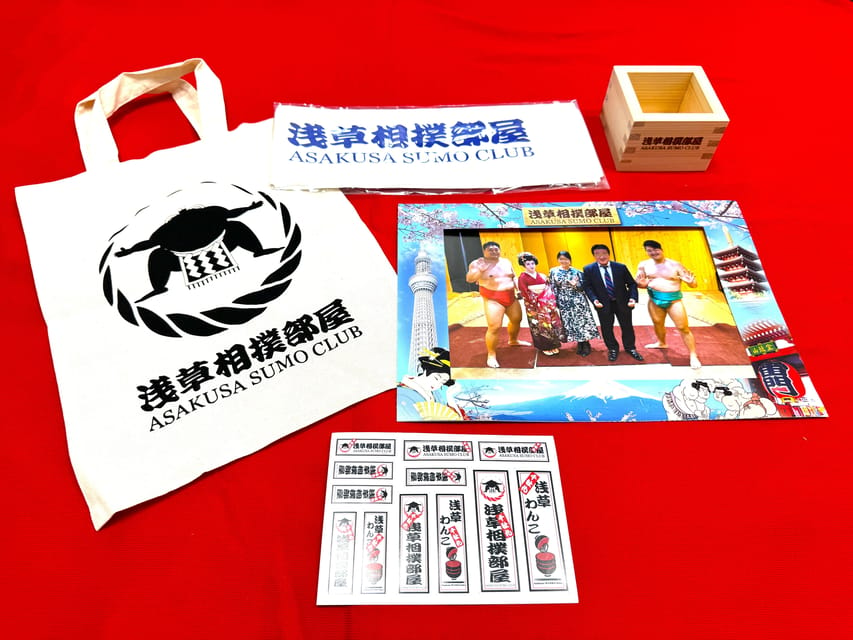
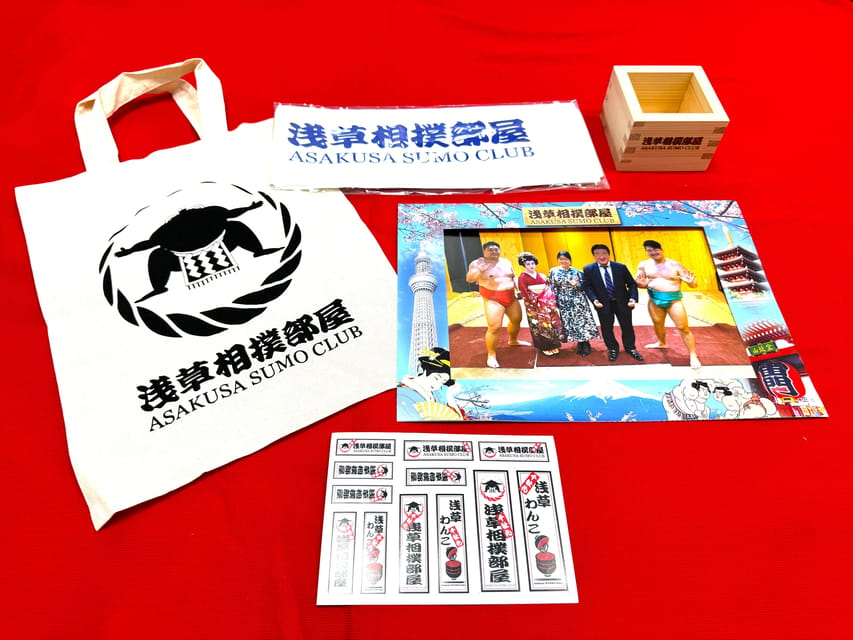
- You leave with more than memories: A printed photo with the wrestlers and geisha, plus a souvenir set, are included.
Arriving at a Sumo Ring in Asakusa
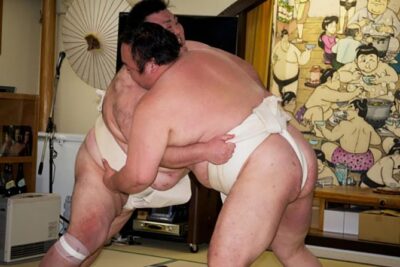
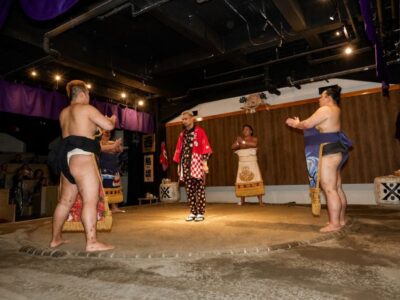
The Asakusa Sumo Club places the action indoors, with the dohyo at the center of the room. That layout matters. Instead of watching a distant stage, you sit around the ring and see the wrestlers close up as they warm up, explain movements, and perform their matches.
Your exact meeting point depends on the seating option you book, so check the booking details carefully before setting out. The experience lasts about two hours, and starting times vary. You should plan to arrive ready for a continuous program rather than treating this as a casual meal with a little entertainment added on.
The room has an intimate feel, but you may be seated with other parties. That can be useful if you enjoy a social evening, though it also means you should not expect a private dining experience. Wheelchair-accessible seating is limited, so mention that need when booking.
More Sumo Experiences in Tokyo
- Tokyo: Sumo Live Show with Photo in Shinjuku
★ 5.0 · 3,438 reviews - Tokyo: Sumo Show and Dining Experience
★ 4.8 · 2,742 reviews - the SUMO show
★ 5.0 · 1,960 reviews
Morning Exercises and Sumo Basics
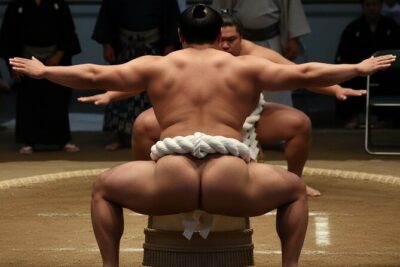
The presentation begins with demonstrations of morning exercises and familiar sumo rituals. You learn how wrestlers prepare, what they do before a bout, and which customs shape the sport. The bilingual moderator explains the action in English and Japanese, which keeps the program accessible even if sumo is completely new to you.
This educational part is one of the show’s strongest features. Sumo can look simple from a distance: two large wrestlers push until one falls or steps out. The explanations help you see the timing, balance, footwork, and use of force behind those few seconds of action.
You also learn classic techniques and basic rules, along with some of the sport’s important do’s and don’ts. The tone stays light. The presenter uses humor, and the wrestlers play along, but the information gives the comedy a useful foundation.
I would not expect a formal lecture on Japanese religion, history, or the full structure of professional sumo. Instead, you get a friendly introduction that gives you enough context to recognize what is happening when the matches begin.
A Geisha Dance Sets the Tone
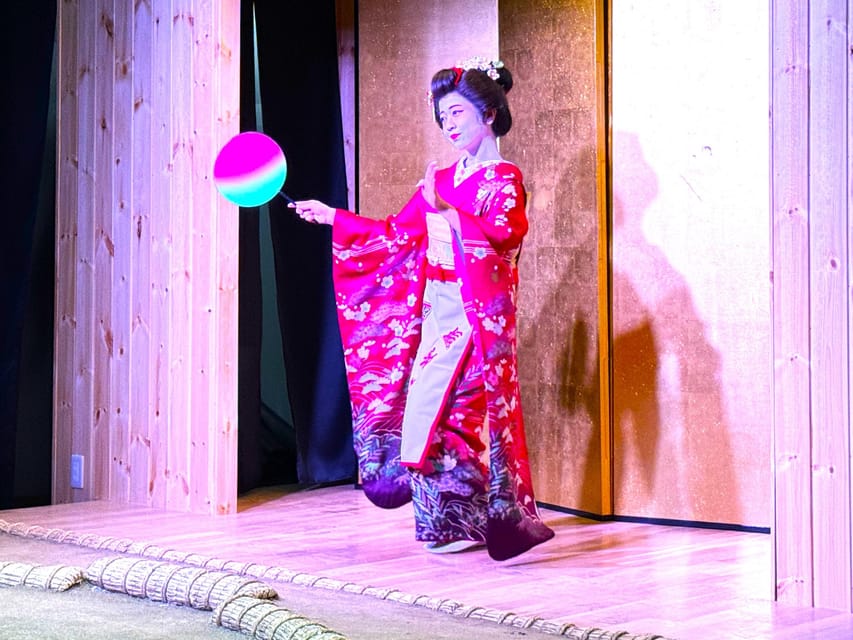
Before the sumo bouts, a geisha performs a traditional Japanese dance in an elegant kimono. This creates a clear contrast with the louder, more physical part of the program.
The dance is brief compared with the sumo presentation, but it adds a cultural element that many visitors will not encounter elsewhere on a short Tokyo visit. It also gives the evening a sense of occasion before the wrestlers take over the ring.
The final souvenir photo includes the sumo wrestlers and geisha, making this part more than a passing stage act. If you have children with you, the dance may be the quieter moment of the evening, while adults may appreciate the chance to see a traditional performance alongside the sumo program.
Chanko-Nabe and Japanese Side Dishes
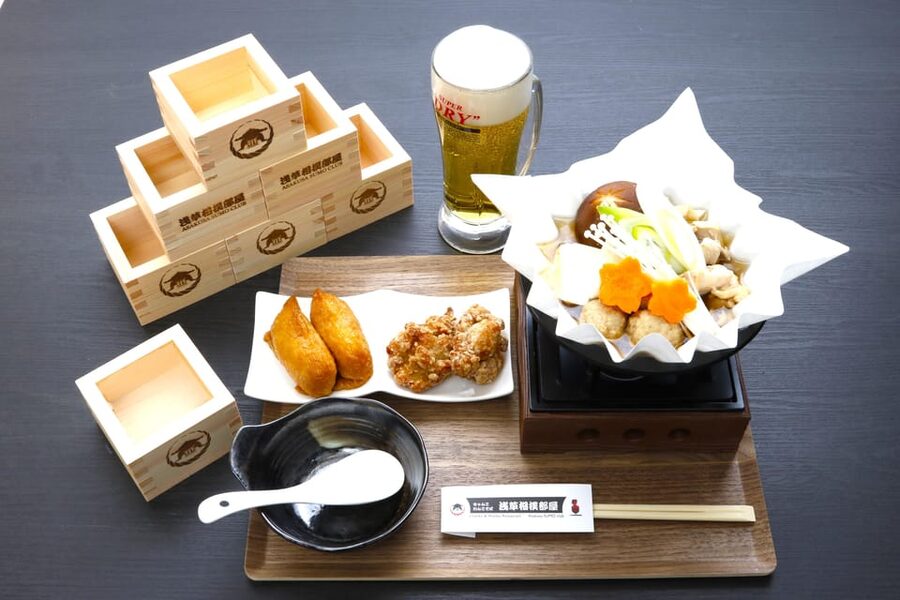
Food is served during the show, so you are not choosing between dinner and entertainment. The main dish is chicken chanko-nabe, the hearty hot pot traditionally associated with sumo wrestlers. It is served with Japanese dishes such as edamame, inari sushi, and sweet rolls.
You receive all-you-can-eat portions, and additional servings can be ordered with a QR code. That is a useful detail if you arrive hungry or if someone in your group wants more of one particular item. One complimentary drink is included, with additional drinks available for purchase.
The meal receives plenty of praise for its taste and value, but you should set your expectations correctly. This is a show with a substantial meal, not a specialist restaurant tasting menu. One person found the food somewhat limited compared with the entertainment, while others found it delicious and plentiful.
The hot pot is cooked at your table. One attendee felt nervous about the paper bowls over an open flame, so if that setup concerns you, pay attention while the meal is heating. Vegetarian and vegan meals can be arranged, but you must request them at least two days ahead.
The venue cannot provide gluten-free or halal meals. You may bring your own food if needed for those dietary requirements. Infants do not receive meals, seating, or souvenirs as part of the activity.
A completely different kind of day out:
- Tokyo Disney Resort – Tokyo Disneyland & Tokyo DisneySea Park Tickets
★ 4.8 · 99,488 reviews - SHIBUYA SKY Ticket
★ 4.7 · 46,509 reviews - JR Whole Japan Rail Pass
★ 4.8 · 29,150 reviews - Mt Fuji and Hakone 1-Day Bus Tour Return by Bullet Train
★ 5.0 · 26,383 reviews
The Main Event: Retired Wrestlers in a Best-of-Three Match
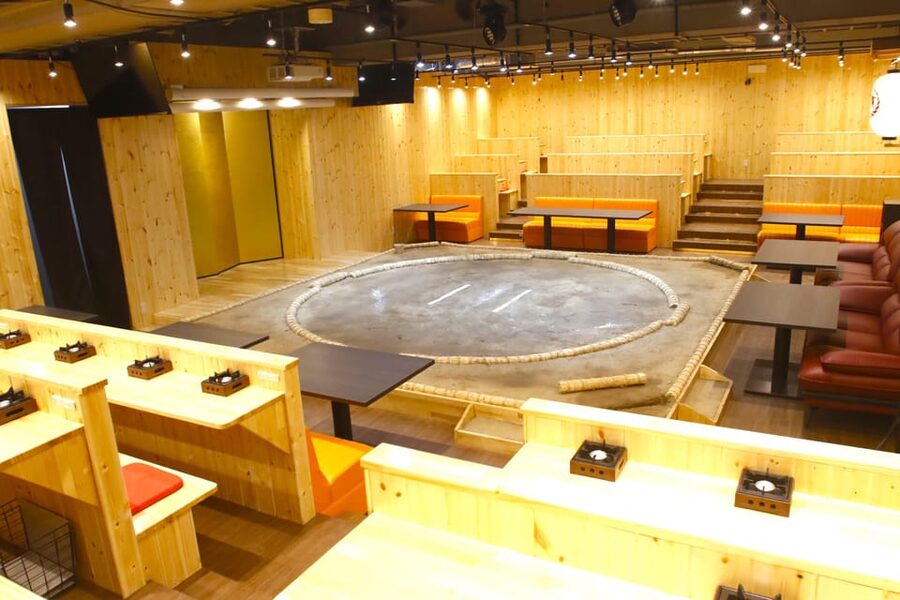
The central performance is a best-of-three match between retired professional sumo wrestlers. These bouts give you the visual drama of sumo without pretending to be an official tournament.
The distinction is important. The wrestlers are professionals with experience, but the tone is playful and theatrical. The matches are designed to entertain, and the participants interact with the room rather than maintaining the formal distance you might see at a major tournament.
That approach works especially well for first-time visitors. You can cheer, laugh, and follow the match without worrying about missing a complex rule. The moderator keeps explaining what you are seeing, while the wrestlers use comic timing and audience interaction to keep the energy high.
I would choose this show if you want a lively cultural evening. I would not choose it as a substitute for watching a serious professional tournament or visiting an active stable during morning practice. The organizers make that difference clear, and it is better to know it before paying.
The Sumo Challenge: Your Chance in the Dohyo
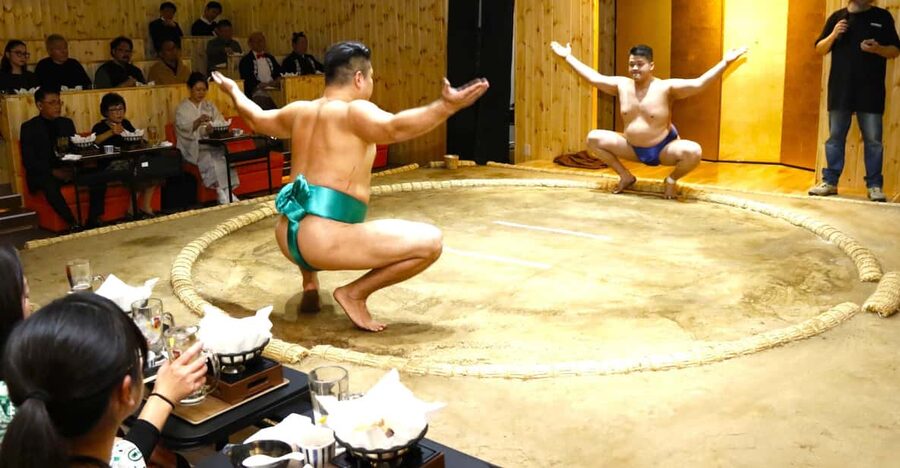
The most memorable section for many people is the chance to challenge a sumo wrestler. A small number of attendees can step into the ring and try their strength against one of the performers.
You should not assume you will be selected. Challenger places are limited, and if too many people volunteer, names are chosen by lottery. That keeps the opportunity fair, but it means the challenge should be treated as a bonus rather than a promised part of your visit.
The challenge is also carefully framed as entertainment. You are not being asked to compete in a serious bout against an active athlete. The fun comes from the scale difference, the crowd reaction, and the chance to take part in a ritual normally seen from the sidelines.
Families seem to get particular value from this section. Children can watch a parent, older relative, or another attendee test the ring. The show is suitable for a wide age range, although babies under one year are not permitted.
Seating: Standard, VIP, or VVIP
All seating categories provide a view of the dohyo, but the distance from the ring changes how much you feel part of the performance.
Standard seating is the practical choice if you want the full program without paying extra for proximity. You should still have a clear view, and the central room design keeps the action visible.
VIP seating places you in the front row. This is the better pick if you want close-up views of the wrestlers, facial expressions, and challenge matches. Several attendees felt the upgrade was worth the additional cost.
VVIP seating offers premium central seats with the most direct and unobstructed view. If this is a once-in-a-lifetime Tokyo activity and your budget allows it, this category gives you the strongest visual connection to the dohyo.
The best value depends on your priorities. I would stick with standard seating for a family watching its budget, especially since the program includes food, a drink, a photo, and souvenirs. I would consider VIP if you are especially interested in photography or want the closest possible view.
What You Receive for $103
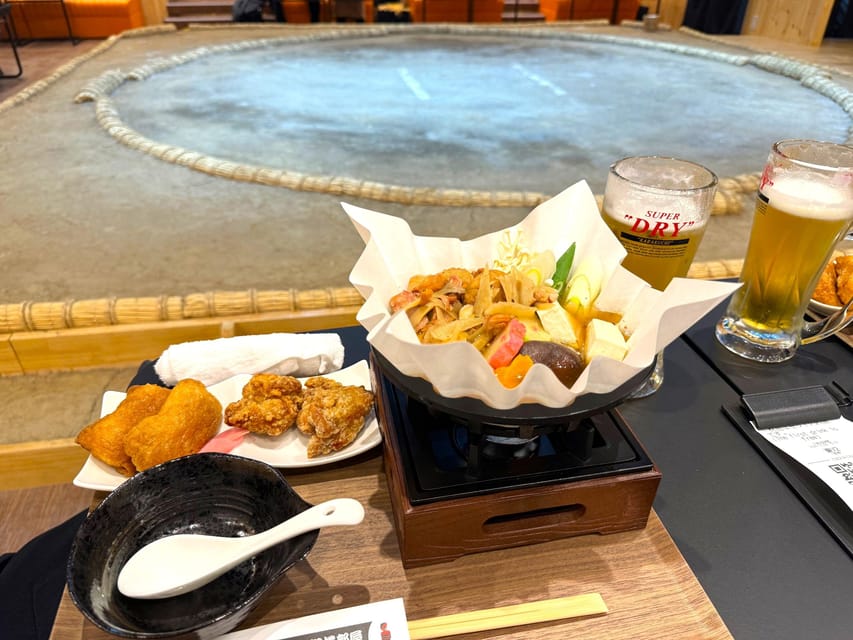
At $103 per person, this is not a cheap lunch. But the price covers a two-hour program with several separate elements:
- Bilingual commentary
- Live sumo demonstrations and matches
- A traditional geisha dance
- All-you-can-eat chicken hot pot and Japanese dishes
- One complimentary drink
- A printed photo with the wrestlers and geisha
- A souvenir set
- The possibility of entering the dohyo for a challenge
That package gives the experience good value for someone who wants a complete evening rather than a single performance. The printed photo and gift bag are small items, but they help the event feel finished rather than transactional.
Additional drinks cost extra, and souvenir contents can change by season. Still, you do not need to add many extras to receive the main experience. I see the price as reasonable for families and first-time visitors who want food, explanation, performance, and participation in one booking.
If you are mainly interested in seeing authentic competitive sumo, the value calculation changes. You may prefer to spend your money on tournament tickets or a serious morning practice visit. This show earns its price through convenience and entertainment.
How Family-Friendly Is the Experience?
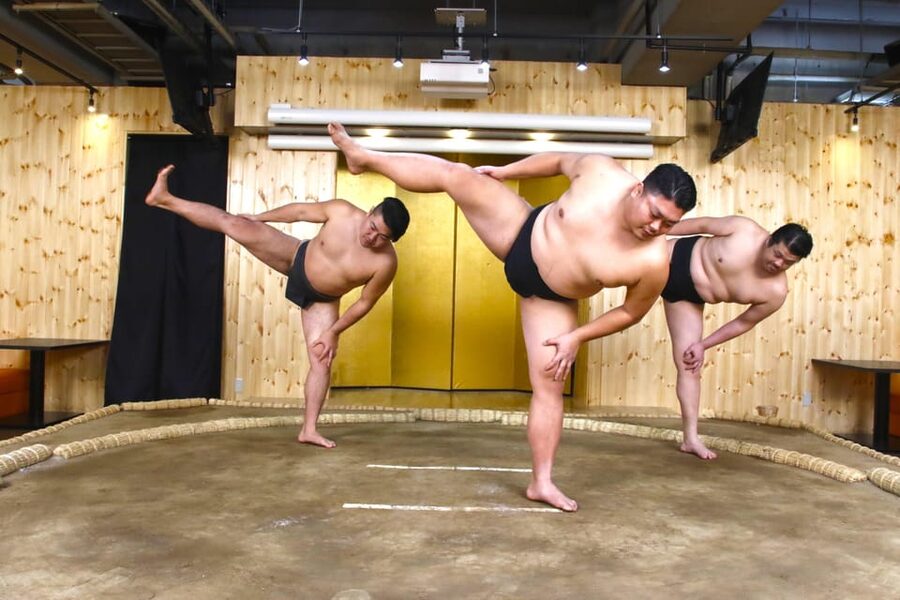
This is one of the strongest choices in Tokyo for a family that wants Japanese culture without a long, quiet museum visit. The program uses jokes, demonstrations, music, food, and audience participation, so children have several ways to stay engaged.
The age range can work surprisingly well. A young child may enjoy the large wrestlers and comic moments, while teenagers and adults can pay closer attention to the rules and traditions. Older relatives can enjoy the meal and the seated format without needing to walk between several locations.
The room’s intimate setup also helps. You are not watching from a huge arena, and the moderator addresses the audience throughout. The challenge section gives children a memorable story to take home, even if they do not enter the ring themselves.
The only family caveat is that meals and souvenirs are not included for infants, and babies under one year are not suitable for the activity. For everyone else, the two-hour length is manageable and the mix of quiet and noisy sections works well.
What This Show Does Not Provide
A good review should draw a firm line around the experience. This is not an active sumo stable visit. You will not be watching current wrestlers go through a private morning practice or seeing the behind-the-scenes routine of a working stable.
It is also not an official tournament. The matches are performed by retired wrestlers and are shaped for a broad audience. You can learn real techniques and customs, but the show has comic timing, audience interaction, and a relaxed atmosphere.
That is not a flaw unless you book it expecting something else. I would describe it as a cultural dinner show with genuine sumo knowledge and experienced performers. If you want to laugh, learn the basics, eat well, and perhaps wrestle for a few seconds, it fits. If you want silent concentration and strict competition, choose another sumo activity.
Practical Tips for a Better Visit
Reserve vegetarian or vegan food at least two days before the show. The venue cannot prepare gluten-free or halal meals, so plan to bring your own food if those restrictions apply.
Check the meeting point attached to your chosen option. It can vary by seating category, and the Asakusa area offers plenty to do before or after a two-hour booking.
If a close view matters to you, compare the VIP and VVIP options before paying. Standard seats are suitable, but front-row seating brings more detail and makes the audience challenge easier to see.
Do not promise your children that they will wrestle. Explain that challenger places are limited and may be assigned by lottery. That keeps the surprise fun instead of turning it into a disappointment.
You may be seated with other parties, so this is best approached as a shared event. The friendly, noisy atmosphere is part of the appeal.
Free cancellation is available up to 24 hours before the start time, and you can reserve now and pay later. Those terms help if your Tokyo schedule is still shifting, but always check the exact starting time and option before confirming.
Should You Book the Asakusa Sumo Show?
I would book this experience if you want an easy, entertaining introduction to sumo with dinner included. The bilingual commentary, geisha dance, retired wrestlers, hot pot, audience challenge, photo, and souvenir set make it feel like a full evening rather than a short demonstration.
It is especially well suited to families, multigenerational groups, and anyone who wants culture presented with plenty of humor. The program works for adults too, but it does not hide its family-friendly character.
I would skip it if your main goal is to observe serious sumo training or official competition. For that, look for a separate stable visit or tournament experience. For everyone else, $103 buys a well-organized, interactive introduction with food and keepsakes included. Choose standard seating for value, VIP for closeness, and VVIP for the most direct view of the dohyo.
FAQ
How long does the Tokyo Sumo Show Experience last?
The experience lasts two hours. Starting times vary, so check availability for the date and seating option you choose.
Is this a serious professional sumo match?
No. The show features retired professional sumo wrestlers and is designed as family-friendly entertainment. It is different from an official tournament or a serious morning practice.
Is English commentary available?
Yes. A moderator provides live commentary in English and Japanese, explaining sumo rules, techniques, customs, and the action in the ring.
Is food included in the ticket?
Yes. The ticket includes all-you-can-eat chicken chanko-nabe and Japanese dishes, plus one complimentary drink. Additional drinks are available for purchase.
Can I request a vegetarian or vegan meal?
Yes, but you must request a vegetarian or vegan meal at least two days in advance. Gluten-free and halal meals are not available, although you may bring your own food.
Can I challenge a sumo wrestler?
You can apply for the sumo challenge, but places are limited. If too many people apply, participants are selected by lottery, so entry into the ring is not guaranteed.
What souvenirs are included?
You receive a printed photo with the sumo wrestlers and geisha, along with a souvenir set. The contents of the souvenir set may vary by season.
Is the experience wheelchair accessible?
Yes, but wheelchair-accessible seating is limited. You should state your requirements when booking so suitable seating can be arranged if available.
More Show in Tokyo
- Mt Fuji & Hakone Cruise, Drum Show Bullet Train 1 Day from Tokyo
★ 4.0 · 7,413 reviews - Tokyo Shinjuku Sumo Show & Experience with Photo
★ 5.0 · 1,750 reviews - Asakusa Sumo Club Sumo Show Admission with Chankonabe in Tokyo
★ 4.8 · 1,669 reviews - Mt Fuji & Hakone Cruise, Drum Show Bus 1 Day from Tokyo
★ 4.0 · 1,287 reviews
Just added in Tokyo
- Japanese Home Cooking Class & Walk in Todoroki Temple Tokyo★ 5.0 · 88 reviews
- A One-of-a-Kind Sushi Experience in a Special Place of Japan★ 5.0 · 15 reviews
- Tokyo Cute Bento Cooking Class – Make a Kawaii Character Lunchbox★ 5.0 · 126 reviews
- Japan Tokyo Tower Observatory Deck E-Ticket★ 4.0 · 34 reviews
- Catch a Baseball Game in Tokyo with a Local – Tickets Included★ 5.0 · 24 reviews
- JDM Experience with Fast&Furious RX-7 (English speaking Driver)★ 5.0 · 57 reviews
- Tokyo Private Day Tour by Car with English speaking Driver Guide★ 4.0 · 29 reviews
- Japan Classic 10 Day – One Life Adventures★ 5.0 · 129 reviews
Sumo Experiences, compared.
Tokyo Shinjuku Sumo Show & Experience with Photo
Read our review →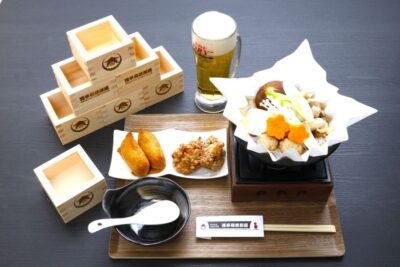
Asakusa Sumo Club Sumo Show Admission with Chankonabe in Tokyo
Read our review →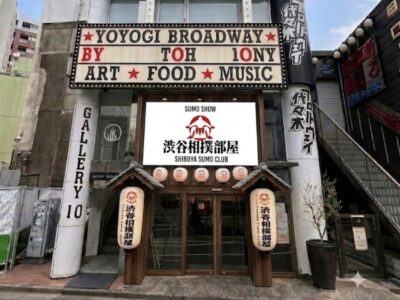
Tokyo Ginza Sumo Experience: Performance vs Pure Practice
Read our review →
Browse the lists this tour appears in