
Reviewed · SUMO EXPERIENCES
the SUMO show
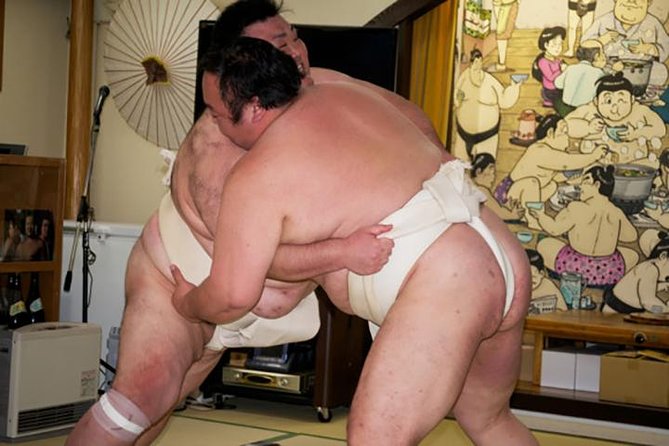
Big men, bigger personalities, and lunch too. The SUMO show gives you a friendly, hands-on introduction to Japan’s national sport, with retired wrestlers explaining the rules, demonstrating techniques, and inviting willing audience members into the ring. I especially like the small-audience feel and the chance to learn directly from former professionals rather than simply watch a staged performance. The tonkatsu and chanko soup are also a real plus, since the meal makes this more than a short cultural presentation.
The format works well for families, first-time visitors, and anyone who wants a lighthearted look at sumo without committing to a full tournament day. I like that you may participate as much or as little as you wish. The main consideration is value: at about $89.54 per person, this is not a cheap lunch, and some seating can put you farther from the dohyo, or sumo ring.
The show is entertaining and easy to follow, but it is not a detailed study of professional sumo. Expect a lively overview, demonstrations, crowd participation, photos, and food in about 90 minutes. If you want an academic lecture or a full tournament match, this is not it. If you want to laugh, learn the basics, and perhaps test your strength against a retired wrestler, it makes a memorable Tokyo stop.
In This Review
- Key points to know before booking
- What the 90-minute SUMO show is really like
- Learning sumo through movement, not just talk
- The crowd participation is the heart of the experience
- Why the retired wrestlers make the show special
- Tonkatsu and chanko soup: a better-than-expected lunch
- Seating, timing, and getting to the Sumida meeting point
- Is $89.54 a fair price?
- Who should book the SUMO show?
- FAQ
- Where does the SUMO show begin?
- What time does the SUMO show start?
- How long does the experience last?
- Is food included?
- Can I participate in a sumo bout?
- Can dietary restrictions be accommodated?
- Should you book the SUMO show?
Key points to know before booking
- You can challenge a retired wrestler: Volunteers may enter the ring for a friendly bout, with technique and comedy often mattering more than brute force.
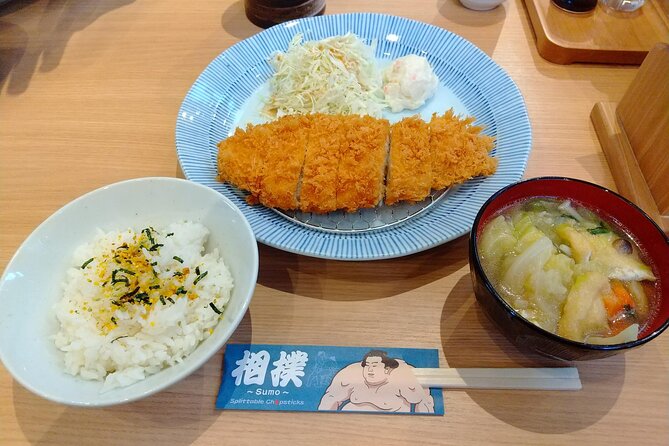
- The meal is part of the experience: Tonkatsu and chanko soup are included, while drinks cost extra.
- It suits families especially well: Children and adults can watch, ask questions, pose for photos, or join the action.
- The show explains the basics clearly: You learn sumo history, rules, exercises, rituals, and techniques before the demonstrations begin.
- Seating is not fully in your control: Seats are assigned according to reservation order, and some tables may be farther from the ring.
- Plan for the Sumida area: The meeting point is Yokozuna Tonkatsu at 3-chōme-1-11 Tatekawa, Sumida City, with the activity returning there.
What the 90-minute SUMO show is really like
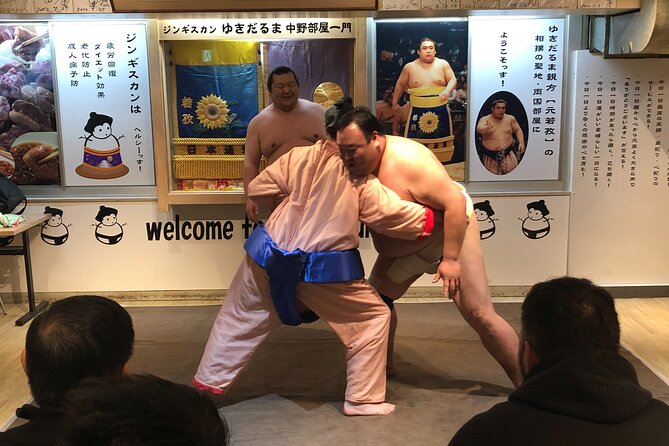
You make your own way to the venue and meet the host, other members of the group, and the retired wrestlers. The activity begins at 1:00 pm and lasts about an hour and a half, including the meal.
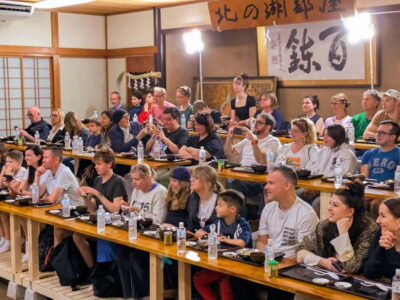
The setting is built for an audience rather than a formal tournament crowd. The group can include as many as 60 people, though the atmosphere may feel more intimate when attendance is lower. You may be asked to share a table with another group, and a larger party may not all sit together.
That shared-table setup is worth knowing in advance. It helps more people take part, but it also means this is not a private dining experience. I would arrive with an easygoing attitude and treat the table as part of the social side of the event.
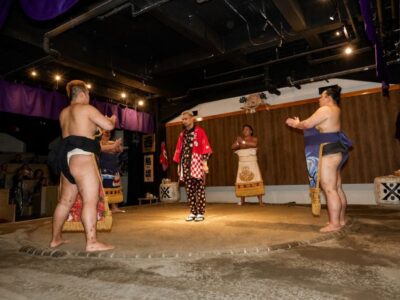
The show is led by retired sumo wrestlers, supported by staff who explain what is happening and keep the pace moving. You are not simply watching men push each other around. The program introduces the sport’s history, basic rules, training rituals, and techniques, then shows how those elements look in practice.
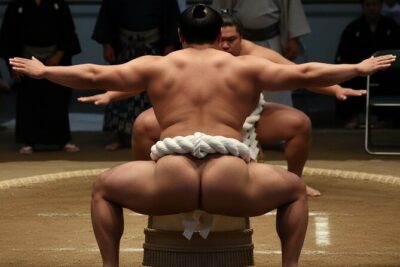
The explanations are designed for people who may know little about sumo. That matters because the rules can seem strange at first. A bout may be won by forcing an opponent outside the ring or making part of the body other than the soles of the feet touch the ground. The demonstrations give you a practical sense of how balance, timing, footwork, and body position shape a match.
More Sumo Experiences in Tokyo
- Tokyo: Sumo Show Experience with Chicken Hot Pot and a Photo
★ 4.8 · 6,678 reviews - Tokyo: Sumo Live Show with Photo in Shinjuku
★ 5.0 · 3,438 reviews - Tokyo: Sumo Show and Dining Experience
★ 4.8 · 2,742 reviews
Learning sumo through movement, not just talk
The most useful part of the program is the combination of explanation and demonstration. You hear about sumo techniques, then see them performed. You also get a look at exercises and training habits that help explain why wrestlers develop such strength, balance, and control.
The retired wrestlers bring humor to the teaching. That keeps the mood relaxed, especially for children who might not sit patiently through a long cultural lecture. The tone is friendly and playful, but the sport itself is treated with respect.
I like this approach because sumo can be hard to understand from a distance. On television, a bout may last only seconds. Here, the wrestlers slow things down and show you what to watch for. You begin to notice the opening charge, the attempt to gain position, and the ways a smaller competitor might use timing or leverage.
A short video may also be part of the explanation. One useful tip is to sit where you can hear clearly, since the sound can make it harder to catch every word during the video portion. If you care about the explanations, do not assume the action alone will tell the whole story.
The program gives you a basic introduction rather than a serious technical course. One former participant described it as a cursory history and overview, which is a fair way to set your expectations. You will leave with a better grasp of the sport, but not with the full story of sumo schools, rankings, tournament life, or the long daily routine of a professional stable.
The crowd participation is the heart of the experience
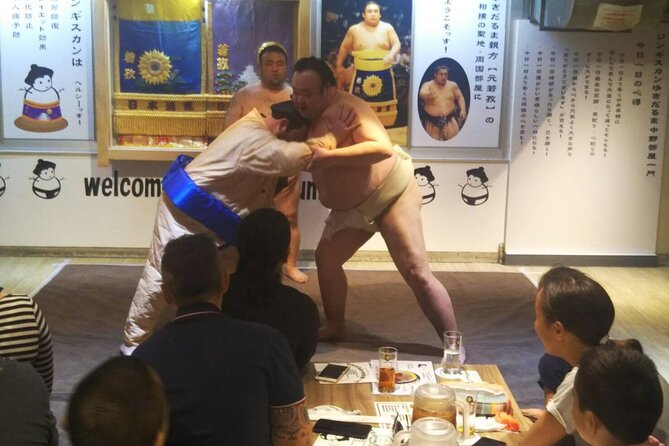
The biggest difference between this show and a standard cultural performance is the chance to take part. If you are willing, you can put on a sumo costume and challenge one of the retired wrestlers.
You do not need to participate. You can watch others, take photos, and enjoy the jokes from your seat. That choice makes the activity work for mixed groups, since the bold member of your family can enter the ring while everyone else cheers.
For those who volunteer, the bout is a friendly skirmish, not a serious contest. The former wrestlers know how to keep it entertaining and safe, while still giving you the thrill of facing someone who once trained at a very high level. Several parts of the event encourage you to use tricks and technique rather than trying to win by force.
The participation also helps explain the sport better. You feel how difficult it is to shift a larger body once it has a stable base. Even a short bout can make the lessons about balance and leverage more memorable.
Children appear to enjoy this part most, but adults are often just as eager to try. A family with children ages 9 and 11 found the activity especially engaging, and the warm, humorous tone makes it comfortable for first-time participants.
You should follow the staff’s instructions and use good judgment. Anyone causing trouble can be asked to leave without a refund. That is standard advice for a physical activity, but it is worth taking seriously when the event involves audience participation and a ring.
Why the retired wrestlers make the show special
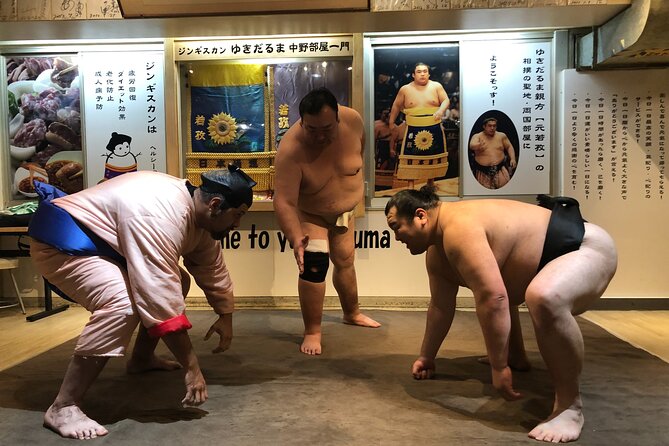
The former wrestlers are the reason this experience feels connected to real sumo rather than a generic stage act. They can demonstrate the movements, explain training, and answer questions from personal experience.
Their role also gives the meal a nice connection to the sport. The food is prepared by the wrestlers, and you eat while learning more about what it takes to train and compete. That combination of talk, performance, and lunch gives the afternoon a clear rhythm.
The wrestlers are described as friendly, funny, and willing to spend time with each table. Staff members also take photos, so you are not left trying to organize a group picture on your own. The photo opportunity with the wrestlers, especially in a traditional sumo costume, is one of the most distinctive souvenirs you can take from the activity.
The tone is lighthearted, but the access is still meaningful. You are meeting people who have actually lived within the demanding world of sumo. For a visitor who has never attended a tournament, that personal contact can be more useful than simply seeing a bout from the stands.
Still, keep the limits in mind. This is a public show with a maximum of 60 participants, not a private conversation with a retired champion. The quality of your interaction can depend on the group size, seating, and timing.
A completely different kind of day out:
- Tokyo Disney Resort – Tokyo Disneyland & Tokyo DisneySea Park Tickets
★ 4.8 · 99,488 reviews - SHIBUYA SKY Ticket
★ 4.7 · 46,509 reviews - JR Whole Japan Rail Pass
★ 4.8 · 29,150 reviews - Mt Fuji and Hakone 1-Day Bus Tour Return by Bullet Train
★ 5.0 · 26,383 reviews
Tonkatsu and chanko soup: a better-than-expected lunch
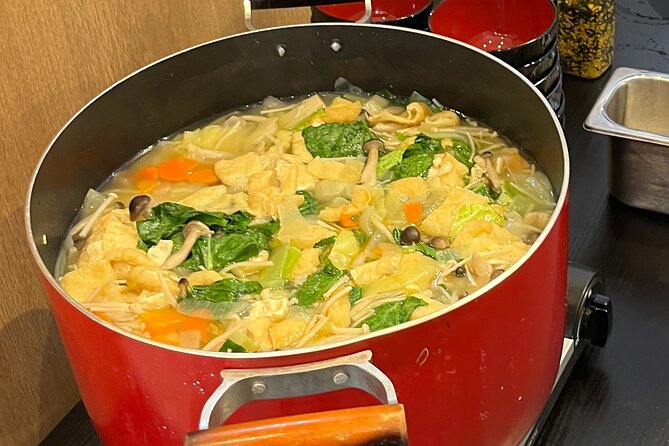
The included meal is tonkatsu and chanko soup. Tonkatsu is breaded cutlet, usually served with cabbage and a savory sauce. Chanko is the hearty hot pot associated with sumo wrestlers, made to provide a filling meal during intense training.
The food receives strong praise for flavor, and several people find it better than expected. The chanko soup in particular can be a favorite, with some wishing they could order a larger bowl. If you enjoy Japanese comfort food, the meal adds real value to the afternoon.
Portion size is the one area where expectations should stay moderate. One diner felt that the meal was not quite filling enough, especially at dinner, and another noted that the cabbage portion was smaller than what they were used to in Japan. I would think of it as a satisfying cultural lunch, not an all-you-can-eat feast.
Drinks are not included, so budget for those separately. Dietary restrictions and allergies should be written in the special notes when you book. Requests made less than five days before the event may not be accommodated, so this is not something to leave until the last minute.
Vegetarian and other dietary arrangements are available upon request, but you should provide the details early. The supplied information does not promise that every last-minute request can be met.
Seating, timing, and getting to the Sumida meeting point
The meeting point is Yokozuna Tonkatsu at 3-chōme-1-11 Tatekawa in Sumida City. The venue is near public transportation, and the activity ends back at the same location.
The Sumida setting can work well with other nearby plans, but the exact travel time depends on where you are staying. Leave enough time to find the restaurant and arrive without rushing. A late arrival can mean missing the opening explanation, which is when the host establishes the rules and context for the demonstrations.
Seating is assigned based on the order in which reservations are received. Arriving early does not guarantee a better seat, so do not build your entire plan around showing up far ahead of time.
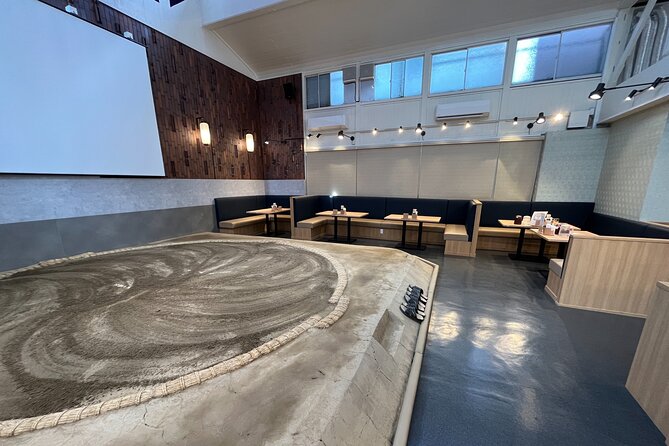
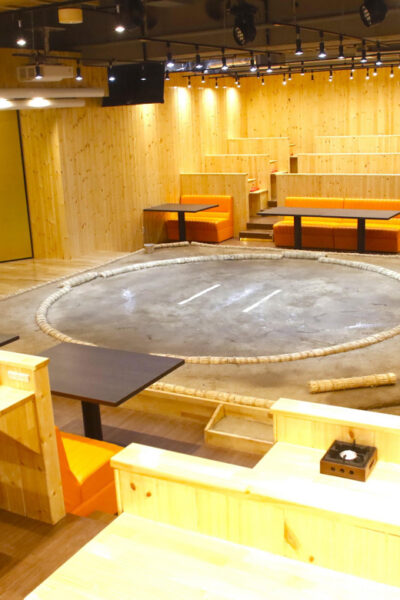
Some tables are farther from the dohyo. In a crowded session, you may need to stand at times to see the action clearly. If you have a large group, you may also be split across tables or asked to share with another party.
That is the main practical weakness of the format. The event is designed to fit many people, and the trade-off is less control over your seat. The upside is that the show remains accessible to a broad range of visitors and does not require the price or planning of a major sumo tournament.
Is $89.54 a fair price?
At approximately $89.54 per person, the SUMO show sits in the middle to upper range for a short Tokyo cultural activity. You are paying for the retired wrestlers, the hosted presentation, the demonstrations, audience participation, photos, and lunch.
The value is strongest if you take part. If you only watch from your table and eat, the price may feel high for a 90-minute program. If you join the ring, ask questions, learn the techniques, and use the photo opportunity, the event becomes a fuller experience rather than a simple meal with entertainment.
I would also compare it with the cost and effort of attending a professional sumo tournament. A tournament offers real competition and a far larger spectacle, but tickets, schedules, and availability can be difficult for a short Tokyo visit. This show gives you a clear introduction at a fixed time and lets you get close to the performers.
The high satisfaction level is also worth noting. The experience has a 4.9 rating from 1,960 reviews, with 98 percent recommending it. That does not mean every person will find it perfect, but it does show that the mix of food, humor, and participation works for most people.
The lone serious criticism focused on the high price and confusion around reminders and booking details. Read the meeting information carefully, check the local start time, and understand the change rules before paying. Free cancellation is available up to 24 hours before the start, but changes or cancellations inside that window are not refunded.
Who should book the SUMO show?
I would recommend this for families, couples, and first-time visitors who want a fun introduction to Japanese sport and culture. It is particularly good for children because the presentation keeps moving and offers something to watch, eat, photograph, and possibly try.
It also suits anyone who feels uncertain about attending a formal sumo tournament. You get the basic rules explained in plain language and can see the techniques close up. The friendly atmosphere removes much of the mystery.
This is a good choice for people who enjoy audience participation, but it also works if you prefer to stay seated. You can choose your level of involvement, which is helpful for mixed groups.
I would hesitate if you are looking for a quiet meal, a large portion, or a serious training session. The meal may not satisfy a very large appetite, drinks cost extra, seating can be less than ideal, and the history lesson remains fairly brief.
The experience is also less suitable for someone with strict dietary needs who has not given advance notice. Send allergies and food restrictions at least five days ahead, and remember that the staff’s instructions must be followed during the interactive parts.
FAQ
Where does the SUMO show begin?
The activity begins at Yokozuna Tonkatsu, located at 3-chōme-1-11 Tatekawa, Sumida City, Tokyo 130-0023, Japan. It ends back at the same meeting point.
What time does the SUMO show start?
The scheduled start time is 1:00 pm.
How long does the experience last?
The sumo demonstration and meal last about 1 hour and 30 minutes.
Is food included?
Yes. Tonkatsu and chanko soup are included. Drinks are not included.
Can I participate in a sumo bout?
Yes. If you feel comfortable, you may challenge a retired wrestler in a friendly bout. Participation is optional.
Can dietary restrictions be accommodated?
Vegetarian and other dietary accommodations may be available if requested in the special notes when booking. Allergy and dietary requests received less than five days before the event may not be accommodated.
Should you book the SUMO show?
Book it if you want a lively, family-friendly introduction to sumo with real retired wrestlers, a decent meal, and the chance to enter the ring. The best value comes from joining in, asking questions, and treating the experience as cultural entertainment rather than a formal sporting event.
At $89.54, it is not a bargain lunch. But for a well-organized 90-minute program that combines instruction, comedy, food, personal contact, and photos, it can earn its place in a Tokyo itinerary. I would book it for a first visit, especially if you cannot fit a professional tournament into your schedule.
More Show in Tokyo
- Mt Fuji & Hakone Cruise, Drum Show Bullet Train 1 Day from Tokyo
★ 4.0 · 7,413 reviews - Tokyo Shinjuku Sumo Show & Experience with Photo
★ 5.0 · 1,750 reviews - Asakusa Sumo Club Sumo Show Admission with Chankonabe in Tokyo
★ 4.8 · 1,669 reviews - Mt Fuji & Hakone Cruise, Drum Show Bus 1 Day from Tokyo
★ 4.0 · 1,287 reviews
Just added in Tokyo
- MT. FUJI/ Private Tour delivered and guided by a top-tier driver★ 5.0 · 27 reviews
- Mt fuji & Hakone customizable day tour w/ English speaking driver★ 5.0 · 45 reviews
- Fuji Speedway Self Drive & Mt. Fuji Private Tour pickup & dropoff★ 5.0 · 14 reviews
- Mt.Fuji Trekking 1 Day Tour up to the summit★ 5.0 · 14 reviews
- Seasonal Mt. Fuji Scenic Views, Fruit Picking and Ropeway Ride!★ 4.5 · 35 reviews
- Customisable Mt.Fuji Private Day Trip, English Speaking Driver★ 5.0 · 22 reviews
- Private Mt Fuji Tour from Tokyo: Scenic BBQ and Hidden Gems★ 5.0 · 146 reviews
- Private Mount Fuji Tour in Luxury Vehicle with English Guide★ 4.5 · 39 reviews
Sumo Experiences, compared.
Sumo Show Experience with Chicken Hot Pot and a Photo
Read our review →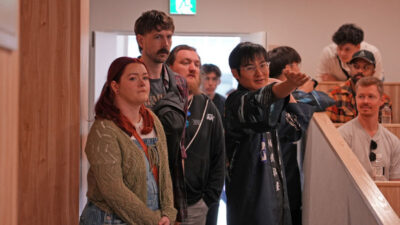
Tokyo Shinjuku Sumo Show & Experience with Photo
Read our review →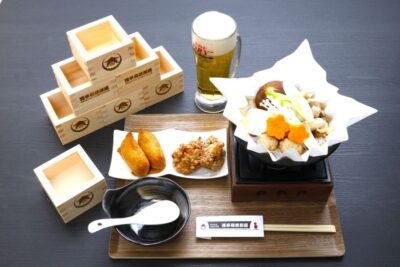
Asakusa Sumo Club Sumo Show Admission with Chankonabe in Tokyo
Read our review →
Tokyo Ginza Sumo Experience: Performance vs Pure Practice
Read our review →
Browse the lists this tour appears in