
Reviewed · SUMO EXPERIENCES
Morning Sumo Practice Viewing in Tokyo
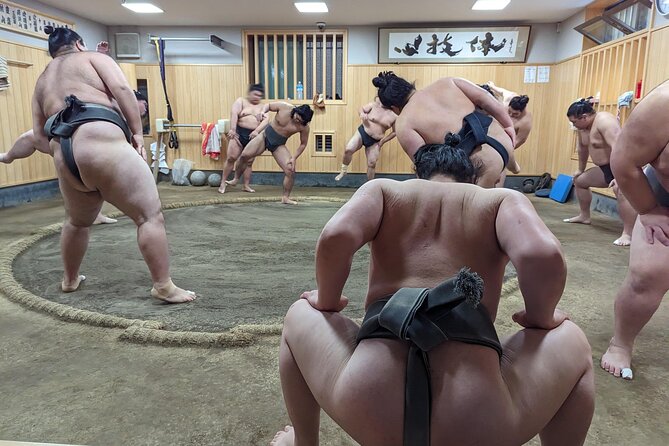
Sumo begins before most of Tokyo wakes. This three-hour experience takes you into a working sumo stable, where you can watch wrestlers warm up, practice throws, and prepare for competition at close range. It is a rare look at a private side of Japanese sport and culture that is difficult to arrange on your own.
I like the small group limit of 10, which helps the English-speaking guide give clear explanations and answer questions. I also like that the price includes a donation to the stable, so part of your fee supports the place granting access. The main drawback is simple: you sit on a cushion on a flat floor for about two hours, with no chairs available.
The early start is another consideration. You meet at Tokyo Skytree Station at 7:30 am, and the practice takes place in the Sumida area. But that early hour is part of the appeal. You see the city begin its day while the wrestlers are already hard at work.
In This Review
- Key points before you book
- Why morning practice feels different from a sumo tournament
- The 7:30 am meeting at Tokyo Skytree Station
- Entering the Sumida sumo stable
- What you will watch during the two-hour practice
- The rituals and Shinto roots of sumo
- Photos and the possible chanko nabe meal
- Is $99.08 good value for Tokyo?
- Which guide style makes the visit work
- Who should book this experience?
- Practical planning for your morning
- Should you book the Naruto-beya sumo visit?
- FAQ
- Where does the sumo practice tour begin?
- Where does the tour end?
- How long does the experience last?
- Do I sit on chairs during the practice?
- Is a photo with the sumo wrestlers included?
- Can I cancel for a full refund?
Key points before you book
- Watch practice inside a real sumo stable: You are not viewing a staged show or a public exhibition. The wrestlers train in their own stable.
- Arrive early for the best experience: The tour begins at 7:30 am, with a briefing near Tokyo Skytree before you enter the stable.
- Expect floor seating for about two hours: Everyone sits on a cushion, and chairs are not available.
- Learn how to follow the action: Your guide explains basic rules, movements, rituals, and the Shinto roots of sumo.
- Photos may be possible afterward: A photo session with the wrestlers is most probably included, though it should not be treated as guaranteed.
- The $99.08 price covers more than admission: It includes a local certified English-speaking guide and a donation to the stable.
Why morning practice feels different from a sumo tournament
A professional sumo tournament is a polished public event. Morning practice is quieter, closer, and more focused on the wrestlers’ daily discipline.
Inside the stable, you watch athletes warm up and engage in practice bouts. The action can be intense, but the setting is not built for spectators in the usual sense. You are entering a place where wrestlers train, and your conduct matters.
That is why the briefing near Tokyo Skytree is useful. Your guide explains how to watch sumo and which simple rules you must follow inside the stable. You learn when to remain quiet, where to sit, and how to observe without getting in the way.
I value this kind of preparation because sumo has many details that can pass quickly if you do not know what to watch. A push, grip, foot movement, or brief ritual can mean more once someone explains it.
The morning setting also gives the experience a strong sense of routine. These wrestlers are not performing a special demonstration for tourists. You are seeing a working practice session, which makes the visit feel more personal and less polished than a tournament.
More Sumo Experiences in Tokyo
- Tokyo: Sumo Show Experience with Chicken Hot Pot and a Photo
★ 4.8 · 6,678 reviews - Tokyo: Sumo Live Show with Photo in Shinjuku
★ 5.0 · 3,438 reviews - Tokyo: Sumo Show and Dining Experience
★ 4.8 · 2,742 reviews
The 7:30 am meeting at Tokyo Skytree Station
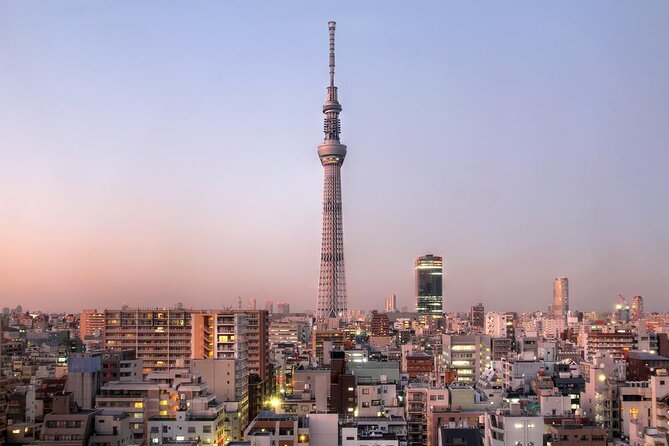
The tour starts at Tokyo Skytree Station, at 1-chōme-1-4 Oshiage in Sumida City. Tokyo Skytree provides an easy landmark, but the meeting time requires planning. You do not want to be searching for the station entrance while the rest of the group is ready to leave.
The first part lasts about 30 minutes. The tower itself is not the main event, and there is no admission ticket included or needed for this short meeting stop. Instead, the guide uses the area to explain the visit and prepare you for the stable.
This is also a good point to ask questions before the quiet period begins. Guides such as Joji, Dawn, Jeff, and Aki have received especially warm praise for explaining the sport clearly and helping the group understand what is happening.
Aki is noted for providing written information about the rules and moves. Another guide prepared handouts and profiles of the wrestlers in training. Details like these can make a real difference, especially if this is your first contact with sumo.
The short lesson also gives you a better way to judge the value of the next two hours. You are not simply watching large athletes collide. You are learning to notice technique, preparation, rank, and ritual.
Entering the Sumida sumo stable
From Tokyo Skytree, the tour continues to a sumo stable in Sumida. The listed stable is Naruto-beya, at 1-chōme-22-16 Mukōjima. The tour ends there, so you will need to arrange your own way back to your hotel or onward destination.
The stable is the heart of the experience. Access can be difficult to arrange without a local connection, which is one of the strongest reasons to book this tour rather than try to find a practice session independently.
Once inside, you sit on a cushion on the flat floor. There are no chairs, and you should expect to remain seated for roughly two hours. The information does not specify a toilet stop, and one review specifically warns that there are no toilets, so plan carefully before entering.
This floor seating is not a minor detail. It may be uncomfortable if you have knee, hip, or back problems, or if you find it difficult to rise from the floor. Most people can participate, but the seating arrangement deserves serious thought before you pay.
The setting is also not designed for constant conversation. You are there to watch. A good guide helps you understand the action before practice begins, then gives you space to observe.
What you will watch during the two-hour practice
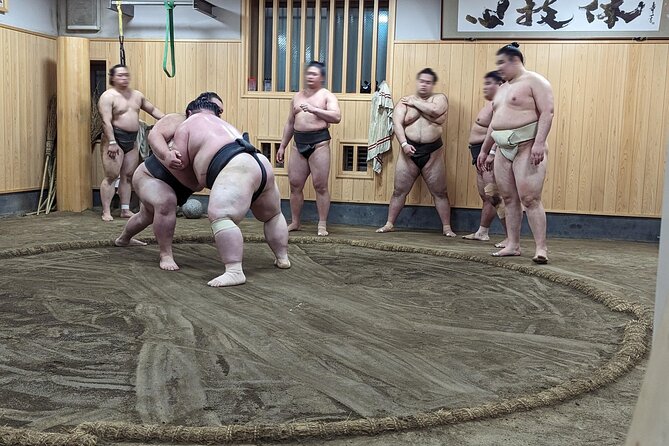
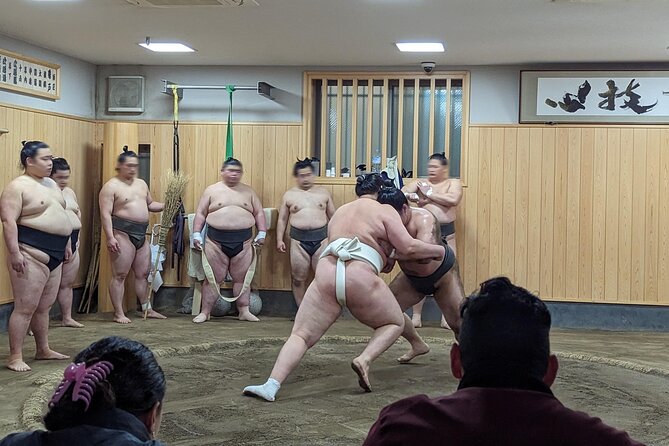
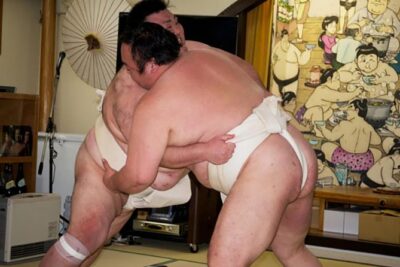
The practice includes warmups and bouts between wrestlers. You may see repeated drills, physical contests, and short exchanges that end quickly. Sumo can look simple at first, but the movement is precise and the training is demanding.
The close distance is a major part of the experience. You are not far away in stadium seating, watching tiny figures across a large arena. You sit inside the stable and watch the athletes train nearby.
That closeness also means you should keep expectations realistic. This is practice, not a full tournament program with formal public presentation. The focus is training, and the pace may include quiet periods between bouts.
Your guide helps fill in those gaps by explaining the sport’s traditions and its Shinto roots. Sumo is both athletic and ceremonial, and the cultural context gives meaning to actions that might otherwise seem repetitive.
The stable master may be close to the practice area. One family found that their son had an especially good view while sitting near the stable master. You cannot count on a particular seat, but arriving early appears to matter, since the guide aims to secure access before practice is fully underway.
The group size helps here. With no more than 10 people, you are less likely to feel lost in a large tour crowd. The guide can focus attention on small details and make sure everyone understands the etiquette.
A completely different kind of day out:
- Tokyo Disney Resort – Tokyo Disneyland & Tokyo DisneySea Park Tickets
★ 4.8 · 99,488 reviews - SHIBUYA SKY Ticket
★ 4.7 · 46,509 reviews - JR Whole Japan Rail Pass
★ 4.8 · 29,150 reviews - Mt Fuji and Hakone 1-Day Bus Tour Return by Bullet Train
★ 5.0 · 26,383 reviews
The rituals and Shinto roots of sumo
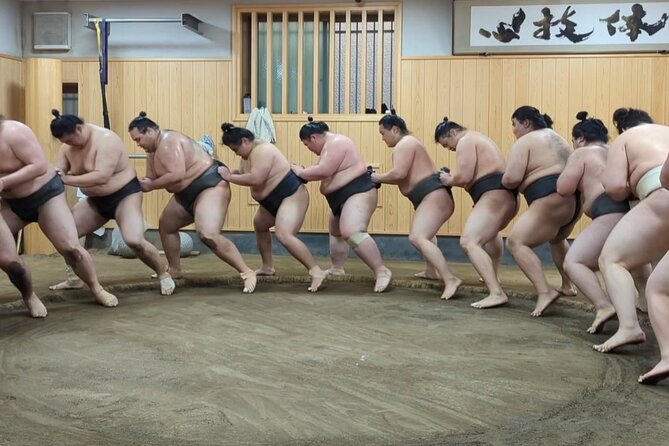
Sumo grew from Japanese religious and cultural traditions, and the guide introduces this side of the sport during the visit. You learn that the contest is not only about strength. Ritual, respect, preparation, and discipline all shape the practice.
This cultural explanation is one of the best reasons to choose a guided visit. A solo observer might see powerful bodies, stomps, pushes, and throws without understanding the meaning behind them. With an explanation, the practice becomes easier to follow.
You should also expect the guide to explain basic rules and common moves. This is particularly helpful for children and first-time spectators, who may otherwise struggle to understand why a bout ends so quickly.
I would not book this only for a sports fan. The experience suits anyone interested in Japanese customs, traditional institutions, or daily life behind a public spectacle. The sport is the entry point, but the visit also reveals how carefully a stable operates.
Photos and the possible chanko nabe meal
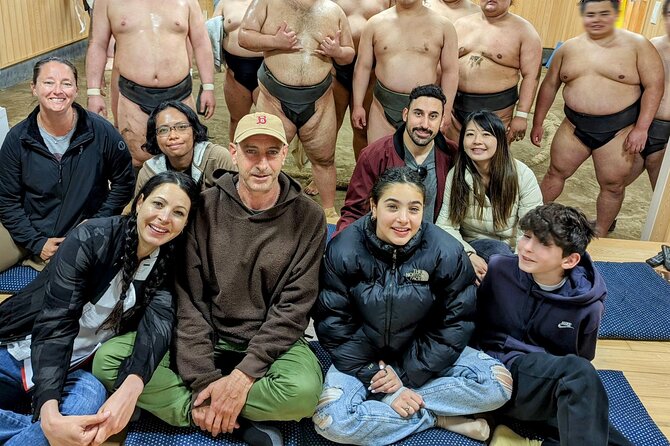
The experience includes the possibility of a photo session with the sumo wrestlers after practice. The wording makes this conditional, so do not book solely on the promise of a posed photograph.
If photos do take place, they can provide a memorable ending to a morning spent watching the wrestlers at close range. Follow the guide’s instructions and keep the session brief and respectful. The stable is still a working place, not a photo studio.
The tour description also refers to lunch with chanko nabe, the traditional hot-pot food associated with sumo wrestlers. However, the detailed inclusion list names the stable donation, possible photo session, and English guiding, but does not clearly list lunch as an included item.
For that reason, I would confirm the meal details before booking if chanko nabe is important to you. The food is an appealing part of the concept, but you should not assume that lunch is guaranteed or included in the $99.08 price without checking the current booking terms.
Is $99.08 good value for Tokyo?
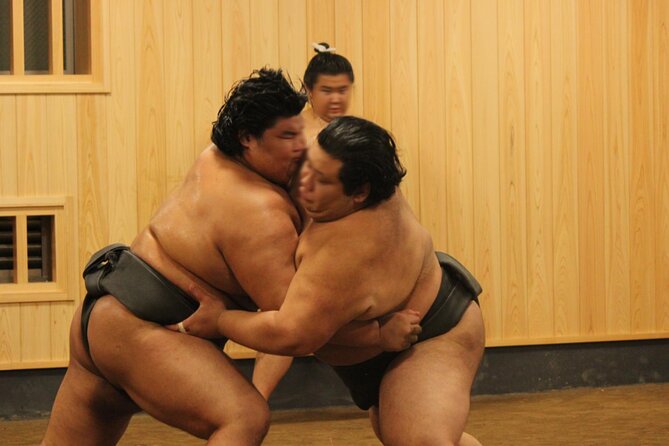
At $99.08 per person, this is not a budget morning activity. You are paying for access, organization, guiding, and a donation to the stable rather than for a long list of attractions.
The stable access is the key value. It is difficult to arrange alone, and the tour handles the local connection, meeting point, cultural explanation, and etiquette briefing. You also receive an English-speaking local certified guide, which matters when the activity depends on quiet observation and cultural context.
The small group limit improves the value. A maximum of 10 people gives the guide a better chance to answer questions and help everyone follow the practice. It also keeps the visit more personal than a large sightseeing group.
The price makes less sense if you want a guaranteed photograph, a guaranteed meal, or a theatrical show. Those features are either conditional or unclear in the detailed information. You are mainly paying for a rare look inside a working stable.
The 98 percent recommendation rate and 4.9 rating from 64 reviews suggest that the experience has delivered strong value for many people. The repeated praise focuses on the close view, the early morning atmosphere, and guides who explain the sport well.
Which guide style makes the visit work
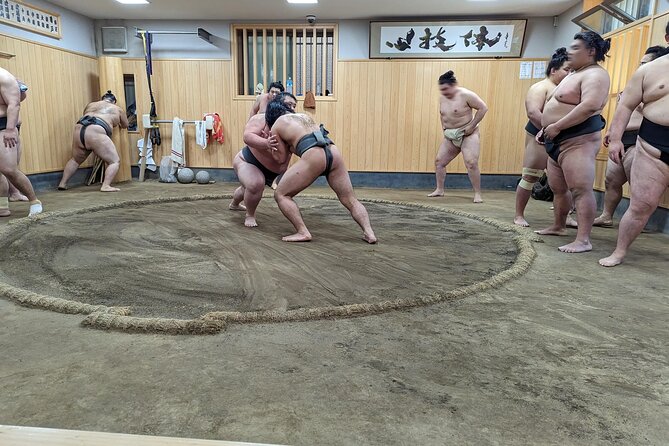
A guide can make or break a sumo practice visit. Without context, two hours of training may feel long. With a clear introduction, handouts, and explanations at the right moments, you can follow the action and appreciate the discipline.
Joji is praised for making sure the group was prepared and for giving a short lecture before the visit. Dawn is described as an excellent source of information about the sport. Jeff is praised for explaining the background of sumo in a clear way, while Aki is noted for teaching the rules and moves in advance.
These comments point to the same practical strength: the guiding is not just a walk to the stable. The best part of the service happens before you sit down, when the guide gives you the tools to understand what you are about to see.
You may also receive printed material, such as basic information and profiles of the wrestlers in training. This is useful because the action can be fast, and you may want something to refer to while you watch.
Who should book this experience?
I would recommend it to first-time visitors who want something beyond temples, observation decks, and major sights. It offers a direct look at a Japanese tradition in its working setting.
It is a strong choice for:
- Sports fans who want close-up training rather than only a tournament
- Families with older children who can sit quietly for a long period
- Visitors interested in Shinto customs and Japanese culture
- People who value local guiding and small groups
- Anyone who has not been able to secure a sumo stable visit independently
I would be more cautious if you cannot sit on the floor for two hours. The stable has no chairs, and the experience depends on remaining quiet and attentive.
I would also avoid scheduling it on a morning when you have a tight onward reservation. The start is early, the practice may last two hours, and the tour ends at the stable rather than returning you to your hotel.
Practical planning for your morning
Set an alarm early and allow enough time to reach Tokyo Skytree Station. The meeting point is near public transportation, but the tour starts promptly at 7:30 am.
Wear clothing that allows comfortable floor sitting. You will not need special sporting equipment, but comfort matters more than appearance during a long seated practice.
Eat and use the toilet before entering the stable. The available information specifically notes floor seating and no chairs, while a detailed account warns that there are no toilets during the visit.
Keep your phone use restrained. You may receive a chance to take photos, but the practice itself calls for attention and respect. Listen to the guide’s instructions about photography and movement inside the stable.
The tour allows free cancellation up to 24 hours before the start time. Changes or cancellations made later are not refunded, and poor weather may lead to a different date or a full refund. This activity also requires good weather, so keep the local cancellation time in mind.
Should you book the Naruto-beya sumo visit?
Book it if you want close access to real sumo training, can handle floor seating, and appreciate a quiet cultural experience more than a polished show. The stable access, small group, donation, and strong guiding make the $99.08 cost reasonable for a special morning in Tokyo.
Skip it if you need chairs, a toilet during the session, a guaranteed meal, or a fixed photo opportunity. You should also choose another activity if a 7:30 am meeting feels too early.
For the right visitor, this is one of Tokyo’s most personal sports experiences. You leave with a better sense of how sumo works, why its rituals matter, and how much discipline takes place before the public ever sees a bout.
FAQ
Where does the sumo practice tour begin?
The tour begins at Tokyo Skytree Station, at 1-chōme-1-4 Oshiage, Sumida City, Tokyo. The start time is 7:30 am.
Where does the tour end?
The tour ends at Naruto-beya Sumo Stable at 1-chōme-22-16 Mukōjima, Sumida City, Tokyo. Hotel pickup and drop-off are not included.
How long does the experience last?
The activity lasts approximately three hours. About 30 minutes are spent near Tokyo Skytree for the briefing, followed by about two hours watching practice at the stable.
Do I sit on chairs during the practice?
No. All participants sit on cushions on a flat floor, and chairs are not available.
Is a photo with the sumo wrestlers included?
A photo session with the wrestlers will most probably take place, but it is not presented as an absolute guarantee.
Can I cancel for a full refund?
Yes. You can cancel at least 24 hours before the experience start time for a full refund. Cancellations or changes made less than 24 hours before the start are not refunded.
Just added in Tokyo
- Very popular in Harajuku♡Animal petting zoo★ 4.6 · 39 reviews
- Yokohama Port: Private Customizable Tour with Transfer★ 5.0 · 19 reviews
- Wagyu & Sake 8 Course Tasting Dinner in Shinjuku★ 4.9 · 20 reviews
- Warner Bros. Studio Tour Tokyo – The Making of Harry Potter★ 4.8 · 181 reviews
- Yanaka District: Historical Walking Tour in Tokyo’s Old Town★ 4.8 · 117 reviews
- Tokyo: Classic Tsukiji Food Tour★ 4.9 · 78 reviews
- Tokyo: Tsukiji Fish Market Tour with 6 Stops & Seafood Lunch★ 4.5 · 165 reviews
- Tokyo Wagyu & Sake Pairing Tasting Experience with Local Flavors★ 5.0 · 108 reviews
Sumo Experiences, compared.
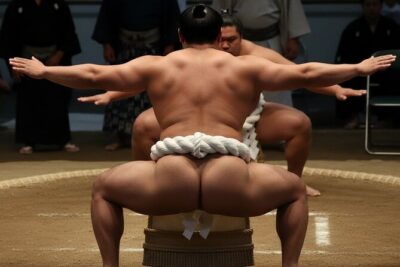
Sumo Show Experience with Chicken Hot Pot and a Photo
Read our review →
Tokyo Shinjuku Sumo Show & Experience with Photo
Read our review →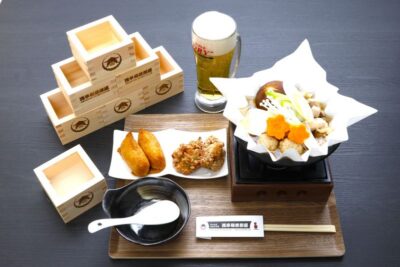
Asakusa Sumo Club Sumo Show Admission with Chankonabe in Tokyo
Read our review →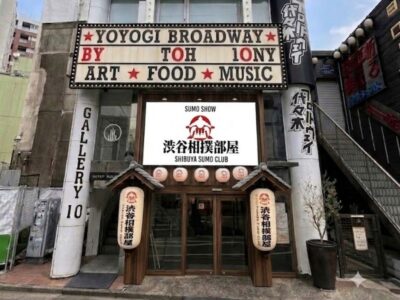
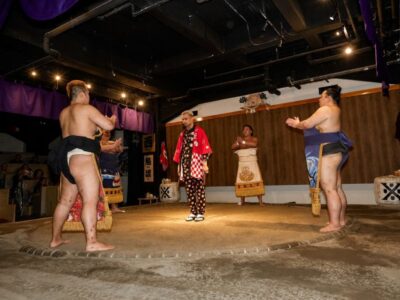
Tokyo Ginza Sumo Experience: Performance vs Pure Practice
Read our review →Browse the lists this tour appears in