
Reviewed · SUMO EXPERIENCES
Chair Seat Guaranteed SUMO Practice +Photo +Culture Option
Sumo gets very close here. This early-morning Tokyo experience takes you inside an active sumo stable, where you watch wrestlers train from a guaranteed chair rather than sitting on the floor. I especially like the front-row view and the chance to speak with an active wrestler, two features that give the visit more substance than a simple look through a doorway.
The local guide also helps make sense of the quiet practice session, explaining sumo’s history, training methods, and customs afterward. Guides Max and Masao have earned particular praise for making the experience friendly and easy to follow. The main drawback is the strict etiquette: you must not talk, eat, drink, or record video during practice, and one booking noted that the seating was not perfectly comfortable.
In This Review
- Key points to know before booking
- Why a sumo stable is different from a tournament
- Meeting at Kiyosumi-shirakawa Station at 8:00 a.m.
- Watching the morning practice from a chair
- What makes the close view worth the early alarm
- Meeting an active wrestler after practice
- The 25-minute sumo explanation adds needed context
- Price and value at $102.47
- Family suitability and physical comfort
- A few practical ways to make the morning easier
- Who should book this sumo experience
- Should you book the chair-seat sumo practice?
- FAQ
- Where does the sumo practice experience meet?
- What time does the tour start?
- How long does the experience last?
- Is chair seating guaranteed?
- Can I take photographs?
- Can I eat or drink during the practice?
- Will I meet a sumo wrestler?
- Is a group photo included?
- Can I cancel for a full refund?
Key points to know before booking
- Guaranteed chair seating: You watch the practice seated, which is a major help if sitting on the floor is difficult.
- Front-row training view: The wrestlers practice at very close range, with warm-ups, ritual movements, and forceful training bouts happening in front of you.
- Small group format: The group is limited to 10 people, allowing a more personal visit and a better chance to ask questions.
- Wrestler Q&A and photo: After practice, you can speak with active sumo wrestlers and may have the chance to take individual photos, along with the included group photo.
- Useful cultural explanation: A local guide gives a 25-minute presentation that explains what you have just watched.
- Early start in Koto: Meet at 8:00 a.m. at Kiyosumi-shirakawa Station, then allow about three hours for the full experience.
Why a sumo stable is different from a tournament
A sumo tournament is a public sporting event with grand entrances, formal bouts, judges, and a cheering crowd. This visit offers something quieter and more direct: a look at the daily practice that prepares wrestlers for those public matches.
You watch wrestlers warm up and work through training routines inside a real stable. The focus is not on a scheduled contest or polished show. You see the repetitive work, physical contact, coaching, and concentration that shape a wrestler’s day.
That difference matters. If you want the noise and ceremony of a tournament, this is not a substitute. If you want to understand how wrestlers train when no tournament crowd is present, this can be far more revealing.
The room is quiet by design. You are asked not to talk, eat, or drink while practice is underway. Video is not allowed, but still photography is permitted. These rules can feel strict, especially for families or anyone used to taking constant phone footage, but they protect the stable’s normal routine.
I see the silence as part of the experience. You are not watching a performance arranged for tourists. The wrestlers are carrying out their training, and your role is to observe respectfully.
More Sumo Experiences in Tokyo
- Tokyo: Sumo Show Experience with Chicken Hot Pot and a Photo
★ 4.8 · 6,678 reviews - Tokyo: Sumo Live Show with Photo in Shinjuku
★ 5.0 · 3,438 reviews - Tokyo: Sumo Show and Dining Experience
★ 4.8 · 2,742 reviews
Meeting at Kiyosumi-shirakawa Station at 8:00 a.m.
The meeting point is at Kiyosumi-shirakawa Station in Koto City, served by the Hanzomon and Oedo lines. You meet at Exit B1, at ground level, near a FamilyMart convenience store.
This is a place where you should slow down and read the station signs carefully. The instructions identify Exit B1, but some of the supplied directions and past booking information have caused confusion about the exact meeting point. The practical fix is simple: arrive early, find the FamilyMart beside the exit, and wait at ground level.
The early hour is useful once you understand the schedule. One reason for the 8:00 a.m. start is that it can place you among the first groups to arrive at the stable. That may help you secure the best available chair positions, including front-row seats.
From the station, the group transfers to and from the stable. The listed transfer time is about 20 minutes in total, and the meeting and arrival process takes around 15 minutes. The entire activity lasts about three hours, although the individual times are approximate.
You should be ready to walk and stand during transfers. The activity asks for a moderate level of physical fitness, though the main viewing period is seated.
Watching the morning practice from a chair
The central part of the visit lasts about one hour and 40 minutes. You sit close to the action and watch the practice unfold at short range.
This chair is the tour’s most practical feature. Many sumo stable visits use floor cushions, which can be hard on knees, hips, or ankles. A guaranteed chair removes that concern for most people and makes it easier to concentrate on the wrestling rather than shifting position.
Still, do not expect a padded theater seat. One person found the seating uncomfortable, so the word comfortable should be read as better than floor sitting, not luxury seating. If you have serious mobility concerns, you should consider the moderate fitness requirement and the transfer to the stable before booking.
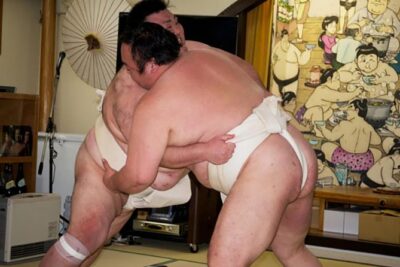
From the front row, the physical impact is hard to miss. You may see wrestlers in traditional loincloths working through repeated movements and colliding with great force. One description compared the impact to tanks, which gives you a fair idea of the sound and energy at close range.
The practice can include warm-ups, repeated training bouts, and coaching. The supplied information does not promise a fixed sequence, and that is important. Sumo practice is not a staged demonstration with a guaranteed program. The session unfolds according to the stable’s own routine.
Photography is allowed during the practice, but video is not. You must also remain quiet and avoid eating or drinking. Make sure children understand these rules before arriving. The experience has worked well for families, including a seven-year-old, but young children need to manage a long silent viewing period.
What makes the close view worth the early alarm
The value of this visit comes from access and distance. You are not watching tiny figures from the upper rows of an arena. You are close enough to see the wrestlers prepare, brace, push, and respond to their coaches.
That closeness also helps you notice the difference between raw strength and technique. Without an explanation, a practice session can look like a series of huge men crashing into each other. With the guide’s help, you can begin to watch for stance, balance, footwork, timing, and the formal habits surrounding the sport.
The quiet setting gives the practice a serious tone. There is no crowd noise to soften the impact and no announcer telling you what to think. You need to pay attention to the movement itself, then use the later presentation to fill in the missing context.
This is also a good choice if your Tokyo schedule does not line up with a tournament. You get a genuine sumo-related experience outside the tournament calendar, with a smaller group and direct contact with the stable.
A completely different kind of day out:
- Tokyo Disney Resort – Tokyo Disneyland & Tokyo DisneySea Park Tickets
★ 4.8 · 99,488 reviews - SHIBUYA SKY Ticket
★ 4.7 · 46,509 reviews - JR Whole Japan Rail Pass
★ 4.8 · 29,150 reviews - Mt Fuji and Hakone 1-Day Bus Tour Return by Bullet Train
★ 5.0 · 26,383 reviews
Meeting an active wrestler after practice
After the training session, you receive an opportunity to speak with active sumo wrestlers. This Q&A lasts about 20 minutes and may also include personal photos.
That conversation is one of the strongest reasons to choose this experience instead of simply visiting a public tournament. You can ask about the life of a wrestler, training, and the sport’s customs, although the exact questions and answers will depend on the available wrestler and the day’s schedule.
The photo has a fun personal angle. If the wrestler later rises through the ranks, your photograph could become a memorable record of an earlier stage in his career. The tour also includes a group photo, giving you something to take home even if an individual photo is not possible.
The wording makes clear that an individual photograph is a possibility rather than an absolute guarantee. Go in expecting the Q&A and group photo, while treating the personal picture as an added chance.
You should also remain respectful during this part. The wrestlers are active athletes, not entertainers hired to pose on demand. The small group size, capped at 10 people, should make the exchange calmer and less rushed than a large bus tour.
The 25-minute sumo explanation adds needed context
After practice and the wrestler session, the local guide gives a presentation lasting about 25 minutes. It covers the history and context of sumo, including what the sport is and how it developed.
This talk is not filler. The training itself is quiet, and much of what you see may be unfamiliar. The guide helps connect the movements, customs, and daily discipline to the larger world of sumo.
Max has received especially warm praise for his clear introduction and historical explanation. Masao is also described as entertaining and helpful. The guide’s role is important because you are observing a working practice rather than receiving a constant narration inside the stable.
I like this arrangement. Explaining everything during the training would break the stable’s quiet rules. Saving the detailed talk for afterward lets you watch first and ask questions later.
The presentation also gives you a better basis for watching sumo in the future. If you later attend a tournament or see a match on television, you will have some sense of what the wrestlers’ practice involves before the public bout begins.
Price and value at $102.47
At $102.47 per person, this is not a cheap morning activity. The price needs to be judged against what you receive, not just the number of hours.
You are paying for entry to an active stable, a reserved chair, transport time to and from the stable, a small group setting, a local presentation, a wrestler Q&A, and a group photo. The chair alone may justify part of the cost if you would otherwise avoid a floor-seated experience.
The strongest value comes from the combination. A basic practice visit might give you a seat and a view, but this experience adds explanation and personal contact. That makes it more suitable for a first introduction to sumo, especially if you do not already understand the sport.
The value is weaker if your only goal is to take video or spend a few minutes seeing wrestlers. Video is forbidden, the practice requires silence, and the morning schedule is firm. You are paying for respectful observation, not an interactive show.
A small group of no more than 10 people also matters. It should be easier to hear the guide, stay close to the group, and take part in the Q&A. The price is reasonable for someone who values access and context, but less attractive to a budget-focused visitor who only wants a quick glimpse.
Family suitability and physical comfort
This can work with children, but you need to prepare them. The rules during practice are firm: no talking, eating, drinking, or video. A child who can sit quietly and follow directions can enjoy the powerful close-up view, while a restless child may struggle during the 100-minute session.
The activity is not described as fully accessible, and it asks for moderate physical fitness. You need to reach the station meeting point, transfer to the stable, and return afterward. The guaranteed chair helps during practice, particularly if floor seating is a problem, but it does not remove the need to manage the transfers.
Service animals are allowed, and the activity is near public transportation. Those details make the morning easier to plan, though you should still account for the early start and the station’s correct exit.
A few practical ways to make the morning easier
Arrive before 8:00 a.m. and go straight to Exit B1. Look for the FamilyMart at ground level, since that is the clearest landmark provided for the meeting point.
Wear clothing that allows you to sit comfortably for an extended period. The chair is a major advantage over a floor cushion, but one person still found the seating less than ideal.
Charge your phone for still photographs, but do not plan to record video. Keep food and drinks for before or after the practice, not inside the viewing area.
If you are bringing children, explain the quiet rules before leaving your hotel. This small bit of preparation can make the difference between a respectful visit and a stressful one.
The confirmation is sent within 48 hours of booking, subject to availability. Since the experience is commonly booked about 25 days ahead, I would not leave it until the last minute if this is a priority for your Tokyo schedule.
Free cancellation is available up to 24 hours before the local start time for a full refund. Changes or cancellations inside that window are not accepted for a refund, and the activity may be canceled if its minimum number is not reached.
Who should book this sumo experience
I would recommend it most strongly to a first-time Tokyo visitor who wants an authentic cultural activity without sitting on the floor. It also suits anyone who likes sports, behind-the-scenes access, photography, and small groups.
It is a particularly good fit if you cannot attend a tournament during your visit. The practice offers a different view of sumo and lets you see the daily work behind the public spectacle.
Families can book it if their children can remain quiet and still. The experience is also worth considering for older adults or anyone with sensitive knees, since the chair is guaranteed rather than left to chance.
I would hesitate if you need a fully predictable show, want continuous narration, or plan to film everything. The practice is governed by the stable’s routine, and the rules are not optional.
Should you book the chair-seat sumo practice?
Book it if you want a close, respectful look at sumo training and value the chair, small group, guide, wrestler Q&A, and photos. The practice itself is the star, but the explanation afterward turns a silent observation into something you can understand.
Skip it if $102.47 feels high for a three-hour morning, if you cannot manage the early meeting time, or if strict no-talking and no-video rules would spoil the experience. For most first-time visitors who want more than a quick photograph outside a stadium, this is a strong and memorable use of a Tokyo morning.
FAQ
Where does the sumo practice experience meet?
The meeting point is Kiyosumi-shirakawa Station in Koto City, Tokyo. Meet at Exit B1 at ground level, near the FamilyMart convenience store.
What time does the tour start?
The experience starts at 8:00 a.m.
How long does the experience last?
It lasts approximately three hours. The listed times are approximate and include the transfer to and from the sumo stable.
Is chair seating guaranteed?
Yes. The experience includes chair seating instead of floor sitting during the morning practice.
Can I take photographs?
Yes, still photography is allowed during the practice. Video recording is not allowed.
Can I eat or drink during the practice?
No. You must not eat or drink during the practice, and talking is also not allowed.
Will I meet a sumo wrestler?
The experience includes a Q&A session with an active sumo wrestler. You may also have an opportunity to take photographs with a wrestler.
Is a group photo included?
Yes. A group photo of the session is included.
Can I cancel for a full refund?
Yes, if you cancel at least 24 hours before the experience’s local start time. Cancellations or changes made less than 24 hours before the start are not refunded.
Just added in Tokyo
- MT. FUJI/ Private Tour delivered and guided by a top-tier driver★ 5.0 · 27 reviews
- Mt fuji & Hakone customizable day tour w/ English speaking driver★ 5.0 · 45 reviews
- Fuji Speedway Self Drive & Mt. Fuji Private Tour pickup & dropoff★ 5.0 · 14 reviews
- Mt.Fuji Trekking 1 Day Tour up to the summit★ 5.0 · 14 reviews
- Seasonal Mt. Fuji Scenic Views, Fruit Picking and Ropeway Ride!★ 4.5 · 35 reviews
- Customisable Mt.Fuji Private Day Trip, English Speaking Driver★ 5.0 · 22 reviews
- Private Mt Fuji Tour from Tokyo: Scenic BBQ and Hidden Gems★ 5.0 · 146 reviews
- Private Mount Fuji Tour in Luxury Vehicle with English Guide★ 4.5 · 39 reviews
Sumo Experiences, compared.
Sumo Show Experience with Chicken Hot Pot and a Photo
Read our review →
Tokyo Shinjuku Sumo Show & Experience with Photo
Read our review →
Asakusa Sumo Club Sumo Show Admission with Chankonabe in Tokyo
Read our review →
Tokyo Ginza Sumo Experience: Performance vs Pure Practice
Read our review →Browse the lists this tour appears in