
Reviewed · SUMO EXPERIENCES
Tokyo: Sumo Morning Practice with journalists. Not fake show
Sumo is best seen before the crowds arrive. This three-hour Tokyo experience takes you to a working sumo stable, not a staged tourist show, where you watch wrestlers train in close quarters. I especially like the access to real morning practice and the chance to question a guide with years of sumo reporting experience. The main drawback is simple: you sit on the floor, and the traditional stable setup is not suitable for wheelchair users despite the general accessibility note.
The tour costs $103 per person, which is not pocket change for three hours. Still, I think the price makes sense if you value rare access, expert explanation, and a serious look at daily sumo life rather than a quick photo opportunity. Arrive early and ready to be quiet, since practice follows the stable’s rules, not a visitor-friendly schedule.
In This Review
- Key points at a glance
- Why this is not a fake sumo show
- Meeting in Ryogoku and moving to the stable
- Inside Takasago-beya: two hours of real training
- The photo opportunity after practice
- The walk through Ryogoku after training
- What the journalist-led explanation adds
- Is $103 good value?
- Practical advice before you go
- Who will enjoy this sumo morning?
- Should you book this Tokyo sumo experience?
- FAQ
- Where does the sumo morning practice tour meet?
- How long does the experience last?
- What will I see at the sumo stable?
- Can I take photos during practice?
- Can I ask questions about sumo?
- Who leads the tour?
- What should I wear?
- Is transportation included?
- Is the tour suitable for wheelchair users?
- What is the cancellation policy?
Key points at a glance
- Watch actual morning training: See rikishi work through demanding practice in a real stable, with no choreographed show.
- Learn from a sumo journalist: Guides such as Shinya Setsu bring reporting experience, personal stories, and clear explanations of the sport.
- Stay quiet during practice: Preparation materials help you understand what is happening without interrupting the wrestlers.
- Take commemorative photos: A photo opportunity with the wrestlers follows the practice, subject to the stable’s arrangements.
- Explore Ryogoku afterward: The walk includes sumo-related sights, with time around Ryogoku Edo NOREN and the nearby stadium area.
- Plan for floor seating: Wear comfortable clothes and expect a traditional indoor setup without shoes.
Why this is not a fake sumo show
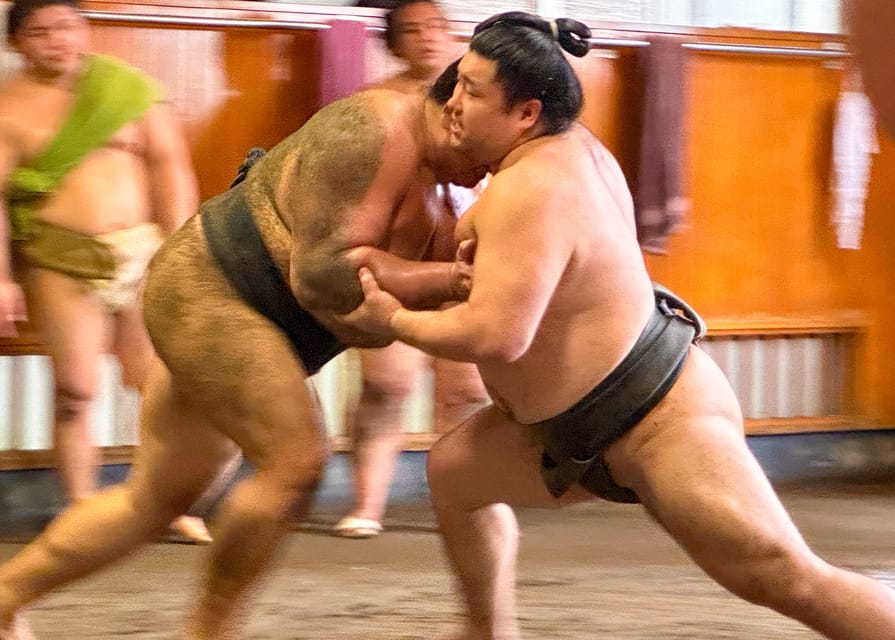
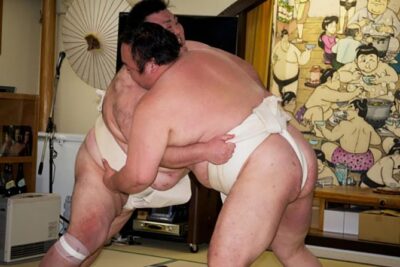
The value of this experience begins with what it does not offer. You are not watching performers repeat a routine for applause. You are observing wrestlers in their daily training environment, where the focus is discipline, technique, strength, and respect.
Morning practice can be surprisingly quiet. The wrestlers work while visitors watch from the side, and flash photography is forbidden. That silence matters. It lets you notice the rhythm of training, the contrast between newer wrestlers and established professionals, and the effort behind the polished matches you may have seen on television.
This is also a rare kind of Tokyo access. The sumo stables are private places, and permission is not normally something an independent visitor can arrange with a quick phone call. The operator has secured special permission from the stable, which is a major part of what you are paying for.
The practice is held at Takasago-beya Sumo Stable. The exact training session can vary, so you should not expect a fixed performance or guaranteed appearance by a particular wrestler. That is part of the authenticity, but it also means the experience is less predictable than a museum visit.
More Sumo Experiences in Tokyo
- Tokyo: Sumo Show Experience with Chicken Hot Pot and a Photo
★ 4.8 · 6,678 reviews - Tokyo: Sumo Live Show with Photo in Shinjuku
★ 5.0 · 3,438 reviews - Tokyo: Sumo Show and Dining Experience
★ 4.8 · 2,742 reviews
Meeting in Ryogoku and moving to the stable
You meet at Ryogoku, Tokyo’s sumo district, near the Toei Oedo Line station. Use Exit A2 at street level. The meeting point is about a five-minute walk from the east exit of JR Ryogoku Station, so the tour works well if you arrive by either railway system.
The operator sends further meeting details before the date. Read them carefully. One useful lesson from the experience is that the group leaves on time, and arriving late can mean missing the walk to the stable. I would arrive early enough to find the correct exit, especially since large Tokyo stations can turn a five-minute walk into a small navigation project.
The transfer to Takasago-beya takes about five minutes. Transportation to and from the stable is not included, so you should allow for that small cost and plan to follow the guide rather than make your own way.
Inside Takasago-beya: two hours of real training
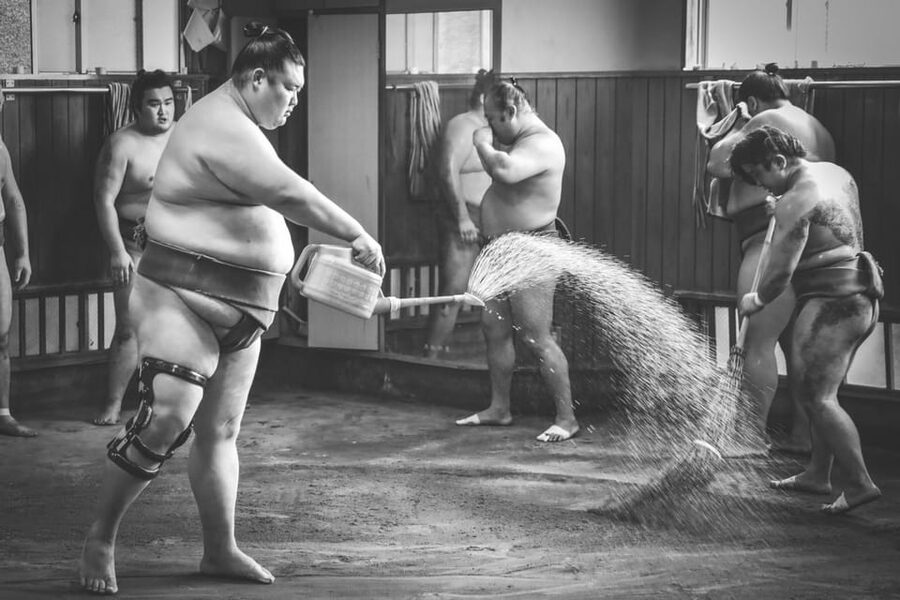
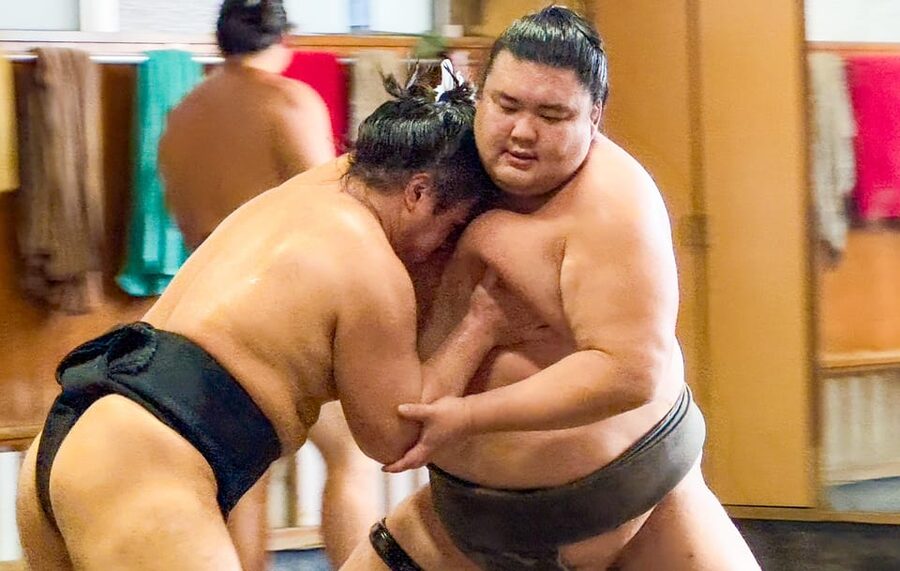
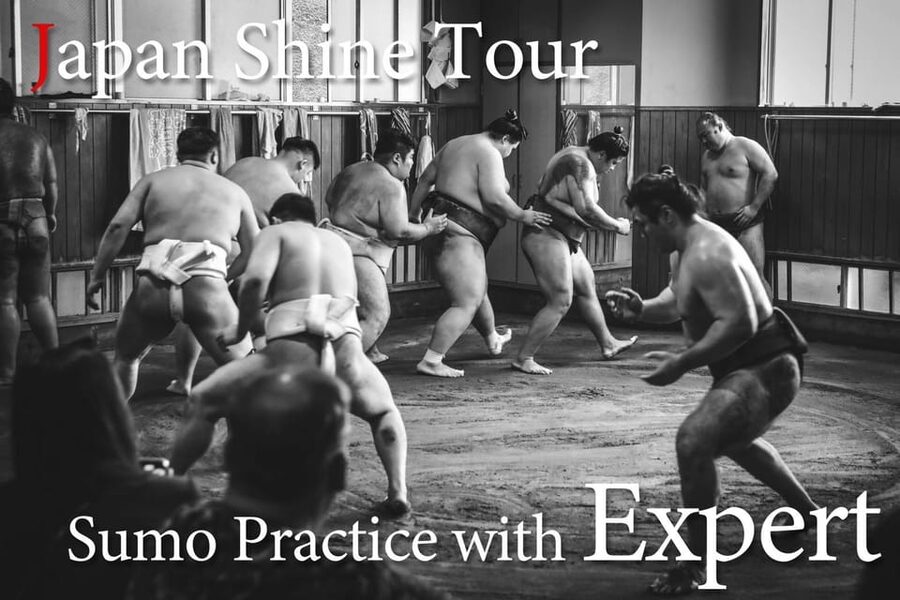
The main portion lasts about two hours, although the actual practice time can vary. You enter a traditional sumo stable and sit on the floor while the wrestlers train. Shoes must be removed indoors, and comfortable clothing is essential.
You may see younger rikishi practicing alongside more experienced wrestlers. The physical work can be intense, but sumo is not only about pushing hard. The guide helps explain the movements, hierarchy, rituals, and daily routines that are easy to miss if you watch without context.
That explanation is especially useful because visitors are expected to remain quiet during practice. You cannot simply interrupt to ask what a gesture means or why a particular wrestler is waiting. The best guides prepare you beforehand and then answer questions afterward.
Shinya Setsu is described as a national newspaper journalist and sumo reporter, and that background is one of the tour’s strongest features. His reporting experience gives the conversation a practical edge. Instead of only explaining formal rules, he can discuss the people, customs, training patterns, and stories that make the sport easier to understand.
Other guide team members named by participants include Shin, Karen, and Ray. The common thread is an entertaining, friendly approach. The guides have also shared video links, documentaries, and extra material after the tour, which is helpful if the morning leaves you wanting to learn more.
Do not expect to roam around the stable. This is a controlled visit, not an open-house tour. You observe from the designated area, follow instructions, and respect the fact that the wrestlers are training rather than posing for visitors.
The photo opportunity after practice
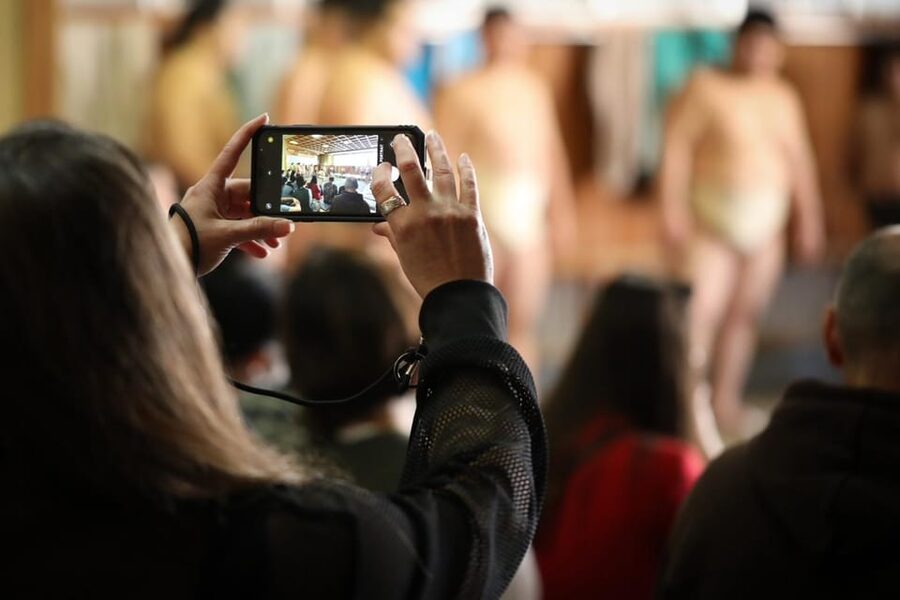
After training, you get a chance to take commemorative photos with the wrestlers. This is a memorable part of the morning because the photo comes after you have watched the hard work, not instead of it.
Bring a camera or phone, but keep the flash off during practice. The stable’s rules take priority, and you should wait for the guide’s instructions before taking photos with anyone.
The photo session is not a promise that every wrestler will be available or that you can request unlimited time. Think of it as a gracious closing moment arranged through the stable. Be polite, quick, and ready when your turn comes.
A completely different kind of day out:
- Tokyo Disney Resort – Tokyo Disneyland & Tokyo DisneySea Park Tickets
★ 4.8 · 99,488 reviews - SHIBUYA SKY Ticket
★ 4.7 · 46,509 reviews - JR Whole Japan Rail Pass
★ 4.8 · 29,150 reviews - Mt Fuji and Hakone 1-Day Bus Tour Return by Bullet Train
★ 5.0 · 26,383 reviews
The walk through Ryogoku after training
The tour then moves back toward Ryogoku. The itinerary allows about 30 minutes for a guided visit around Ryogoku Edo NOREN, followed by a short walk to Ryogoku Station.
This portion gives the morning a useful second layer. The stable shows you sumo as work. Ryogoku shows you how the sport fits into the neighborhood around the Kokugikan, Tokyo’s major sumo venue.
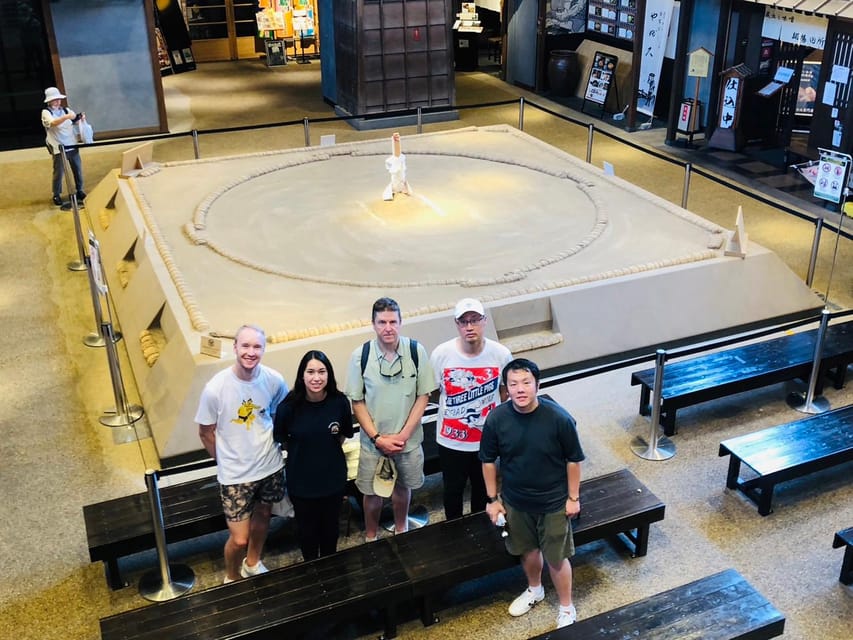
The guide may point out the stadium area, a sumo museum, a replica ring, or a sumo souvenir shop depending on the day’s route and access. One practical point: the stop at the shop may feel less important if you are mainly interested in training and culture. A short retail stop is easy to skip mentally, but the surrounding explanations can still help you understand the district.
The Kokugikan itself may be closed, so do not book this experience expecting a full stadium tour or guaranteed access to the competition ring. One person found that the ring viewed afterward seemed to be a nearby replica. The tour’s central promise is stable practice, not entry into every part of the stadium.
What the journalist-led explanation adds
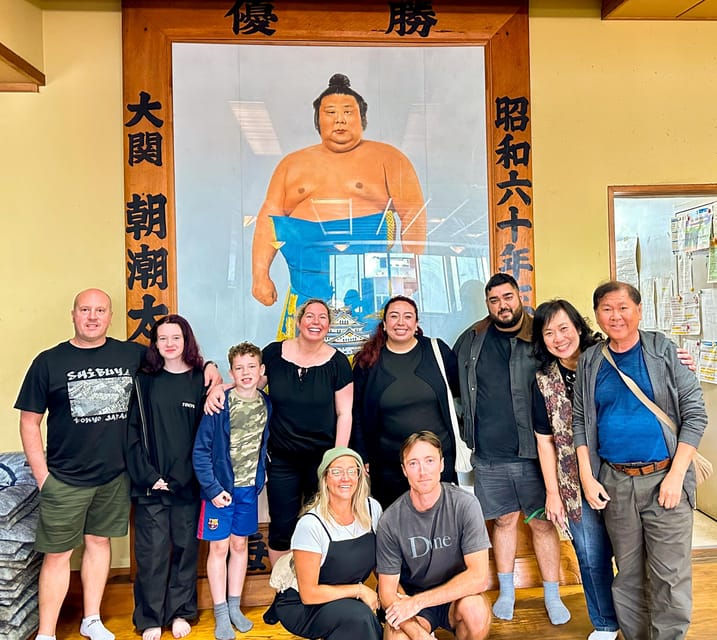
You can watch sumo on television and learn the basic rules in minutes. The harder part is understanding why the sport carries such weight in Japanese culture and why the rituals are treated so seriously.
That is where the guide earns his place. You can ask about the hierarchy within a stable, the life of a rikishi, training routines, rules of the bout, and the meaning behind familiar rituals. Guides have also used match clips and stories from years of covering sumo, giving the explanation a human side.
I like that the question period comes after observation. You first see the practice with your own eyes, then ask about what puzzled you. That makes the conversation feel less like a lecture and more like a useful decoding session.
If you already follow sumo on NHK, you will likely appreciate the extra detail about wrestlers and practice. If you know little about the sport, the guide’s background information prevents the morning from becoming two hours of impressive but confusing movement.
Is $103 good value?
At $103 per person, this is one of the more expensive short activities in Tokyo. You are not paying for a meal, a long bus trip, or a major attraction ticket. You are paying for a small-group access arrangement, a specialist guide, and the chance to observe a private training session.
Comparable sumo practice visits often sit in a similar price range because stable permission is difficult to obtain. That makes the cost easier to justify, especially if tournament tickets are sold out or your visit falls outside a tournament period.
The value is strongest for three types of visitors:
- You already follow sumo and want to see training away from the tournament arena.
- You care about Japanese customs and want a close look at a living tradition.
- You want a personal guide who can answer detailed questions rather than give a short scripted talk.
The value is weaker if you only want a quick photo with a large wrestler or if you dislike floor seating and quiet observation. You may also find the price high if the stable practice is shorter than expected or if you hoped for a full Kokugikan visit.
Practical advice before you go
Wear comfortable clothing because you sit on the floor during practice. The traditional setup can be tiring for some people, even though the activity lasts only three hours.
Do not bring food, drinks, alcohol, or drugs into the stable. Baby carriages, electric wheelchairs, fireworks, and shoes indoors are also not allowed. Wheelchair users should not book this tour because the stable’s traditional arrangement makes access unsuitable, despite the separate general note describing the activity as wheelchair accessible.
Arrive early. The group leaves the meeting point on schedule, and the operator’s pre-tour emails may include useful instructions, videos, and background material. Read those materials before the morning, since you will need to stay quiet once practice begins.
Bring a camera, but never use flash. Keep your phone silent and follow the guide’s directions about when photos are permitted.
The tour is offered in English with a live guide. Babies under one year old are not suitable for the activity, and the floor seating may also be difficult for very young children.
Who will enjoy this sumo morning?
I would choose this for anyone who has tried and failed to get tournament tickets. It gives you something more intimate than a seat in the Kokugikan, although it does not replace the excitement of a formal bout.
It is also a good fit for a couple or small group with mixed interests. One person can arrive as a serious sumo fan, while another knows little about the sport. The journalist-led explanation helps both people follow along, and the human stories make the morning accessible without reducing it to a simple tourist attraction.
I would be cautious if your mobility is limited, you cannot sit on the floor, or you need a highly predictable schedule. I would also skip it if you expect to enter the main stadium, tour the locker rooms, or photograph freely during practice.
Should you book this Tokyo sumo experience?
Yes, if authentic access matters more to you than convenience. The strongest part is the chance to watch real morning practice in a private stable, then make sense of it with a sumo journalist who can answer the questions that ordinary sightseeing leaves unanswered.
Book it early in your Tokyo planning if sumo is a priority, and arrive well before the meeting time. Bring a camera, leave the flash off, wear clothes suited to floor seating, and treat the stable as a working place rather than a show venue.
At $103, it is a special-interest experience, not a bargain activity. For sumo fans and curious visitors who value genuine cultural access, I think it is worth the cost. If you mainly want a stadium match, wait for tournament tickets instead.
FAQ
Where does the sumo morning practice tour meet?
It meets at Ryogoku Station near the Toei Oedo Line, Exit A2 at ground level. The location is about a five-minute walk from the east exit of JR Ryogoku Station.
How long does the experience last?
The full experience lasts three hours. The main guided visit at Takasago-beya Sumo Stable takes about two hours, followed by a shorter guided visit around Ryogoku.
What will I see at the sumo stable?
You will watch a live morning practice session involving sumo wrestlers training in their stable. The session is a real practice, not a staged performance.
Can I take photos during practice?
Yes, but flash photography is not allowed. You also receive a chance to take commemorative photos with the wrestlers after practice.
Can I ask questions about sumo?
Yes. The English-speaking guide provides time for questions and explains sumo rules, customs, training, hierarchy, and daily life.
Who leads the tour?
The experience is led by a sumo specialist who is also a national newspaper journalist. Guides named in the tour team include Shinya Setsu, Shin, Karen, and Ray.
What should I wear?
Wear comfortable clothes because you will sit on the floor during practice. Shoes must be removed indoors.
Is transportation included?
Transportation to and from the sumo stable is not included. The transfer from the meeting point to the stable takes about five minutes.
Is the tour suitable for wheelchair users?
No. The traditional setup inside the sumo stable is not suitable for wheelchair users. Electric wheelchairs are also not allowed.
What is the cancellation policy?
You can cancel up to 24 hours before the experience for a full refund. You can also reserve now and pay later, subject to availability.
More Show in Tokyo
- Mt Fuji & Hakone Cruise, Drum Show Bullet Train 1 Day from Tokyo
★ 4.0 · 7,413 reviews - the SUMO show
★ 5.0 · 1,960 reviews - Tokyo Shinjuku Sumo Show & Experience with Photo
★ 5.0 · 1,750 reviews - Asakusa Sumo Club Sumo Show Admission with Chankonabe in Tokyo
★ 4.8 · 1,669 reviews
Just added in Tokyo
- A One-of-a-Kind Sushi Experience in a Special Place of Japan★ 5.0 · 15 reviews
- Tokyo Cute Bento Cooking Class – Make a Kawaii Character Lunchbox★ 5.0 · 126 reviews
- Japanese Home Cooking Class & Walk in Todoroki Temple Tokyo★ 5.0 · 88 reviews
- Japan Tokyo Tower Observatory Deck E-Ticket★ 4.0 · 34 reviews
- Catch a Baseball Game in Tokyo with a Local – Tickets Included★ 5.0 · 24 reviews
- JDM Experience with Fast&Furious RX-7 (English speaking Driver)★ 5.0 · 57 reviews
- Tokyo Private Day Tour by Car with English speaking Driver Guide★ 4.0 · 29 reviews
- Japan Classic 10 Day – One Life Adventures★ 5.0 · 129 reviews
Sumo Experiences, compared.
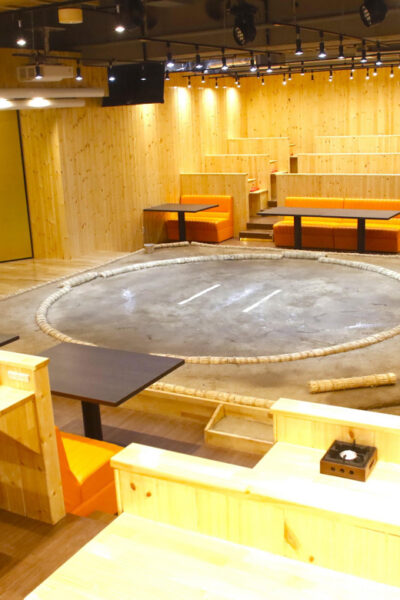
Sumo Show Experience with Chicken Hot Pot and a Photo
Read our review →
Tokyo Shinjuku Sumo Show & Experience with Photo
Read our review →
Asakusa Sumo Club Sumo Show Admission with Chankonabe in Tokyo
Read our review →
Tokyo Ginza Sumo Experience: Performance vs Pure Practice
Read our review →Browse the lists this tour appears in