
Reviewed · TEMPLES AND SHRINES
Kyoto: Fushimi Inari, Kinkakuji, Bamboo Grove 1 Day Bus Tour
Kyoto packs centuries of beauty into a surprisingly small space. This full-day coach tour links the city’s biggest sights, from Kiyomizu-dera and the Golden Pavilion to Arashiyama’s bamboo paths and the red gates of Fushimi Inari. I especially like the efficient route and the steady help from guides such as At-Chan, Den, Sakura, and Tommy, who explain what you are seeing instead of simply pointing at it. The main tradeoff is simple: you cover a lot, but each stop has a firm time limit.
I also like that the tour includes admission to four temples and a comfortable, air-conditioned bus with Wi-Fi. At $122 per person, it can be good value if you have only one day for Kyoto or would rather not piece together several train and bus connections. You should expect a full, active day, with stairs, hills, crowds, and roughly nine hours from start to finish.
In This Review
- Quick facts about the Kyoto bus tour
- Meeting the coach near Kyoto Station
- Kiyomizu-dera and the classic Kyoto view
- Sanjusangen-do and its forest of Kannon figures
- Arashiyama lunch beside Togetsukyo Bridge
- Walking through the Sagano Bamboo Forest
- Tenryuji’s garden and Arashiyama’s calmer side
- Kinkaku-ji, Kyoto’s Golden Pavilion
- Fushimi Inari and thousands of red torii gates
- What the guides add to the day
- Is $122 a fair price?
- Who should book this Kyoto day trip?
- Final verdict: a smart first look at Kyoto
- FAQ
- Where does the Kyoto bus tour start?
- Does the tour provide hotel pickup and drop-off?
- Which sights are included?
- Is lunch included?
- Does the buffet cater to special diets?
- What languages are available?
- Is the tour suitable for people with limited mobility?
Quick facts about the Kyoto bus tour
- Seven major Kyoto sights in one day: The route includes Kiyomizu-dera, Sanjusangen-do, Arashiyama, the Sagano Bamboo Forest, Tenryuji Temple, Kinkaku-ji, and Fushimi Inari Taisha.
- Four temple admissions included: Entry is covered for Kiyomizu-dera, Sanjusangen-do, Tenryuji, and Kinkaku-ji.
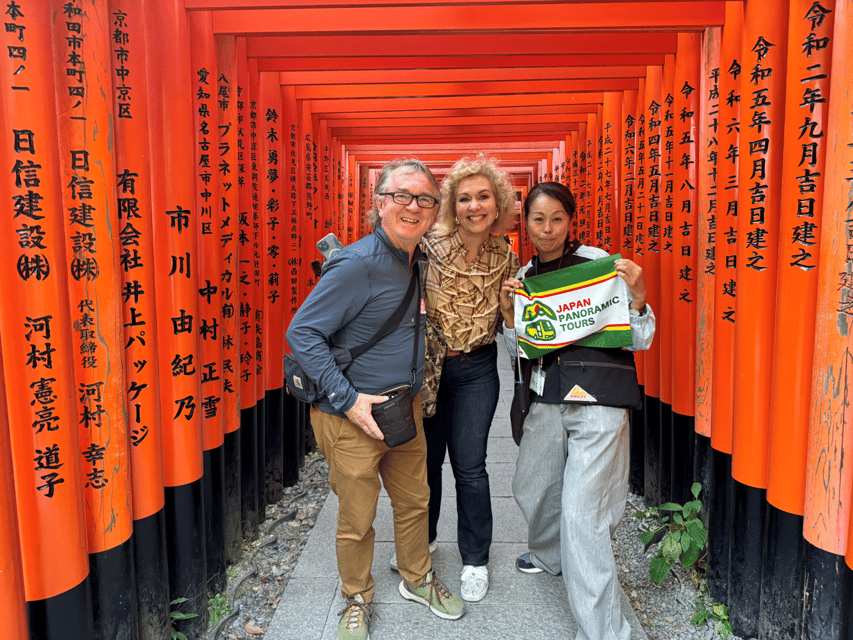
- Fushimi Inari comes last: You finish among thousands of vermilion torii gates, a fitting final scene for a packed day.
- Japanese buffet lunch is optional: Vegetarian dishes are available, but the meal does not accommodate Muslim-friendly, gluten-free, lactose-free, or allergy-specific diets.
- English guide, multilingual audio: Live commentary is in English, with audio guidance in Spanish, French, Italian, German, Portuguese, and Ukrainian.
- A good short-stay strategy: If your Kyoto time is limited, this tour lets you reach far-flung sights without handling the transport yourself.
Meeting the coach near Kyoto Station
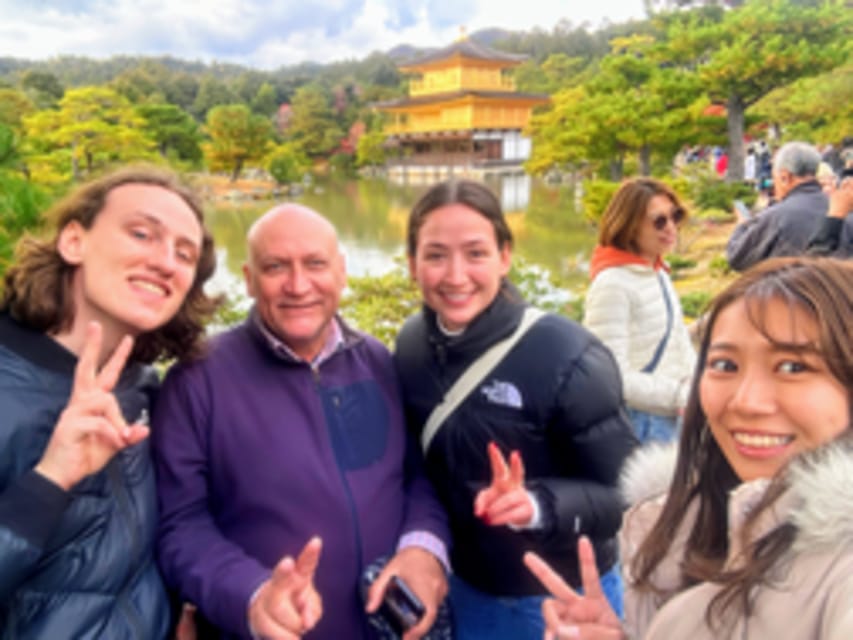
The tour begins at Tully’s Coffee outside the Kyoto Avanti Store, at 31 Higashikujo Nishisannocho. Check-in is at 7:50 a.m., and the coach leaves at 8:00 a.m. Look for the green and white Japan Panoramic Tours flag.
This is not a pickup service. You need to reach the meeting point on your own, and late arrivals or no-shows do not receive a refund. I would arrive early, especially if you are unfamiliar with Kyoto Station’s many exits.
The tour lasts about 510 minutes, or roughly nine hours. The coach is air-conditioned, regularly ventilated, treated with antibacterial coating, and fitted with free Wi-Fi. That matters on a day with several long transfers. You get a place to sit between sights instead of navigating Kyoto’s crowded public transport while trying to keep track of the next temple.
The order can change because of traffic, weather, or other operating needs. If a location closes, the company says it will substitute another place. That flexibility is useful, but you should treat the published sequence as a plan rather than a promise.
More Temples and Shrines in Kyoto
- [Kyoto & Nara Day Tour] Sagano Scenic Railway & Nara Park & Fushimi Inari Taisha Thousand Torii Gates & Togetsukyo Bridge & Bamboo Grove & Kimono Forest (Departing from Osaka)
★ 4.9 · 10,942 reviews - Kyoto: Tea Ceremony in a Traditional Tea House in Kiyomizu
★ 4.9 · 3,519 reviews - Kyoto Nara Day Trip │ Kiyomizu-dera Temple + Fushimi Inari-taisha Shrine + Nara Park (Departing from Osaka/Kyoto)
★ 4.7 · 3,408 reviews
Kiyomizu-dera and the classic Kyoto view
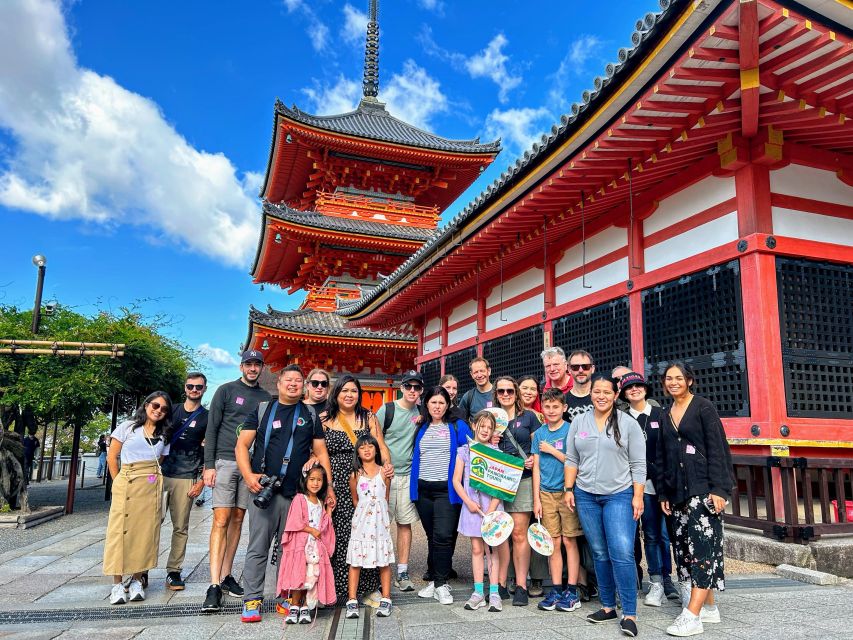
The first stop is Kiyomizu-dera, with about an hour to explore. The temple reportedly dates to 778 and is one of Kyoto’s major World Heritage sites.
The famous wooden terrace gives you a broad view over the city and surrounding hills. The approach is part of the experience, with a climb through the historic Higashiyama area. You will have to walk uphill and use stairs, so comfortable shoes are not optional decoration here.
An hour lets you see the principal areas and enjoy the view, but it does not allow for a slow examination of every corner. That is the pattern for the entire day. You get a strong first look at Kyoto’s landmarks, along with enough explanation to understand their place in the city, but independent visitors with a special interest in temple architecture may want more time.
This early stop also shows why a coach is useful. Kiyomizu-dera, Arashiyama, Kinkaku-ji, and Fushimi Inari sit in different parts of Kyoto. Reaching all of them independently in one day requires careful planning and very little tolerance for delays.
Sanjusangen-do and its forest of Kannon figures
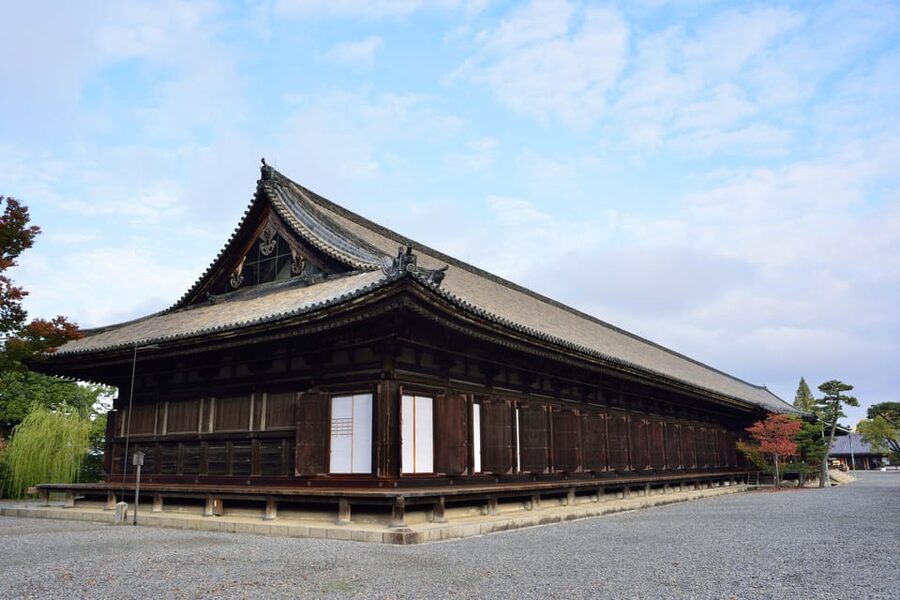
Next comes Sanjusangen-do, officially called Rengeo-in, for about 40 minutes. The name Sanjusangen-do refers to the hall’s 33 spaces, created by the way its 35 columns divide the long wooden building.
Inside, the main spectacle is a vast arrangement of Kannon statues. The temple is known for one thousand and one images of the Buddhist deity, lined up in the long hall. The setting feels very different from the open views at Kiyomizu-dera. Here, the focus is the scale and repetition of the interior.
The visit is relatively short, so listen closely to the guide’s explanation before entering or while moving through the temple. The audio system can help if you prefer information in a language other than English, but the live guide adds useful context and keeps the group moving.
This is a strong stop for anyone who likes art, religious imagery, and unusual buildings. If your main goal is outdoor scenery, it may feel quieter and less immediately dramatic than the other stops. Its value comes from seeing something you are unlikely to encounter in the same form elsewhere in Kyoto.
Arashiyama lunch beside Togetsukyo Bridge
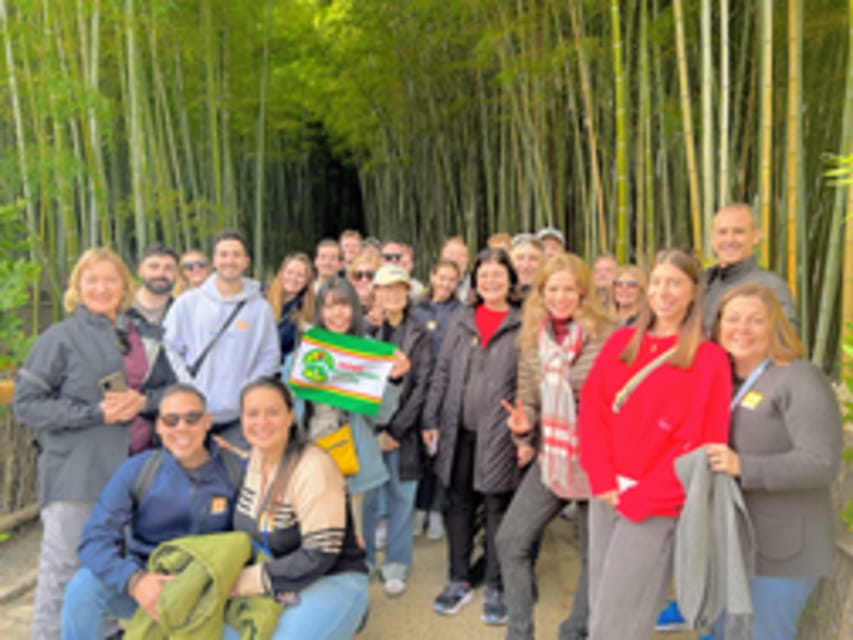
The coach then crosses Kyoto to the Arashiyama area. Lunch is scheduled for about 50 minutes and is served as a Japanese buffet when you choose the lunch option.
The setting is tied to Togetsukyo Bridge, Arashiyama’s central landmark. Small shops, restaurants, and other sights cluster around this area, so the location gives you a useful introduction to one of Kyoto’s best-known sightseeing districts.
The buffet is convenient. You do not need to search for a restaurant during a short break, and several menu choices make it easier for families or groups with different preferences. Vegetarian dishes are available.
There are clear limits. The meal does not provide Muslim-friendly, allergy-friendly, lactose-free, or gluten-free dishes. If you have a serious allergy, choose the no-lunch option. You can bring food or use your free time in Arashiyama to buy something yourself.
Food quality may not be the main reason to choose this tour. One recent assessment praised the meal, while another found some buffet items cold and less fresh than expected. I would choose the lunch option for convenience, not for a carefully planned food experience. If eating well is central to your Kyoto visit, skipping the buffet gives you more control.
A completely different kind of day out:
- PERFECT KYOTO 1-Day Bus Tour
★ 5.0 · 13,518 reviews - Kyoto: Gion Make Your Own Chopsticks with Engraving Option
★ 5.0 · 3,465 reviews - Kyoto Geisha Walking Tour: Gion District & Hidden Gems
★ 4.7 · 3,273 reviews - Kyoto: Tea Ceremony Ju-An at Jotokuji Temple
★ 4.9 · 3,207 reviews
Walking through the Sagano Bamboo Forest
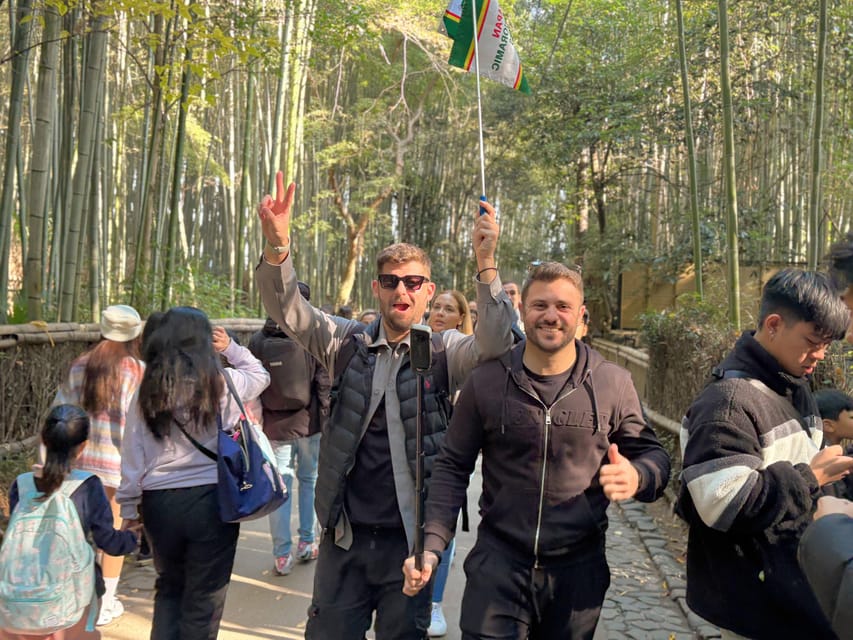
After lunch, you get around 20 minutes for the Sagano Bamboo Forest. The path cuts through tall bamboo, forming a green corridor where the stalks sway in the wind.
This is one of Kyoto’s most photographed scenes, and the short visit reflects the reality of the place. You will have time for a walk and photographs, but not a long, quiet wander. Crowds can affect the mood, and the path is shared with many other people.
Still, the bamboo grove is worth seeing. The sudden change from busy streets to towering stalks gives the day a welcome pause. I recommend staying close to the guide’s instructions and keeping an eye on the time. It is easy to stop for one more photo and then discover that the group has moved on.
Because this stop involves walking, stairs, and possible uneven ground, wear shoes that can handle a full day. The tour is not suitable for wheelchair users or people with mobility impairments.
Tenryuji’s garden and Arashiyama’s calmer side
Tenryuji Temple follows the bamboo grove, with about 30 minutes for the visit. It is another World Heritage site and one of the key cultural stops in the Arashiyama district.
The temple garden is the main attraction here. Its design works across the seasons, combining water, trees, stones, and views toward the surrounding hills. After the narrow bamboo path, the garden provides a more open and measured setting.
Thirty minutes is enough for a first impression and a few photographs. It is not enough for a slow garden visit or a detailed look at every feature. If you have already spent time in Arashiyama on another day, you may wish this portion were longer. For a first visit, though, it gives you a useful taste of Tenryuji without requiring another transport connection.
The included admission helps the $122 price make more sense. You are not paying only for a ride between famous locations. Several entry fees and a guide are built into the day.
Kinkaku-ji, Kyoto’s Golden Pavilion
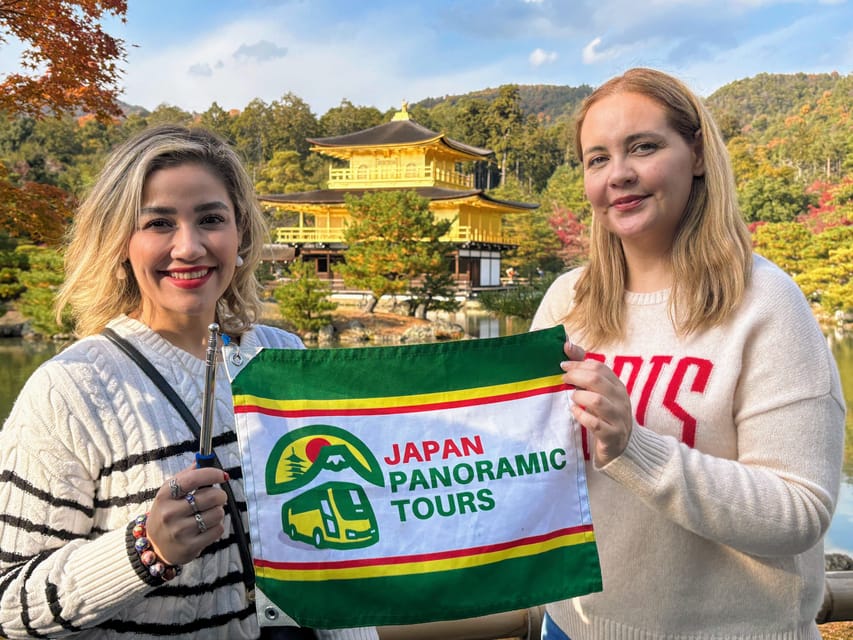
The next major stop is Kinkaku-ji, also called Rokuon-ji or the Golden Temple. You have about 40 minutes to walk through the grounds and see the pavilion reflected in its pond.
The building’s gold exterior is instantly recognizable, but the setting is what makes the visit work. The pavilion, water, garden, and surrounding trees create the polished image most people associate with Kyoto.
This is another place where timing matters. The grounds are designed for a set walking route, and the tour gives you enough time to see the famous view without lingering for an hour. You may encounter crowds around the best photo areas, so patience helps.
The Golden Pavilion is a visual highlight, but it is also one of the least intimate stops on the route. It attracts large numbers of visitors, and the visit can feel more like moving through a viewing path than discovering a quiet temple. The benefit of arriving by coach is that you do not have to arrange the connection from Arashiyama yourself.
The tour passes by Nijo Castle rather than stopping there. That is useful to know before booking. If Nijo Castle is a priority, plan a separate visit.
Fushimi Inari and thousands of red torii gates
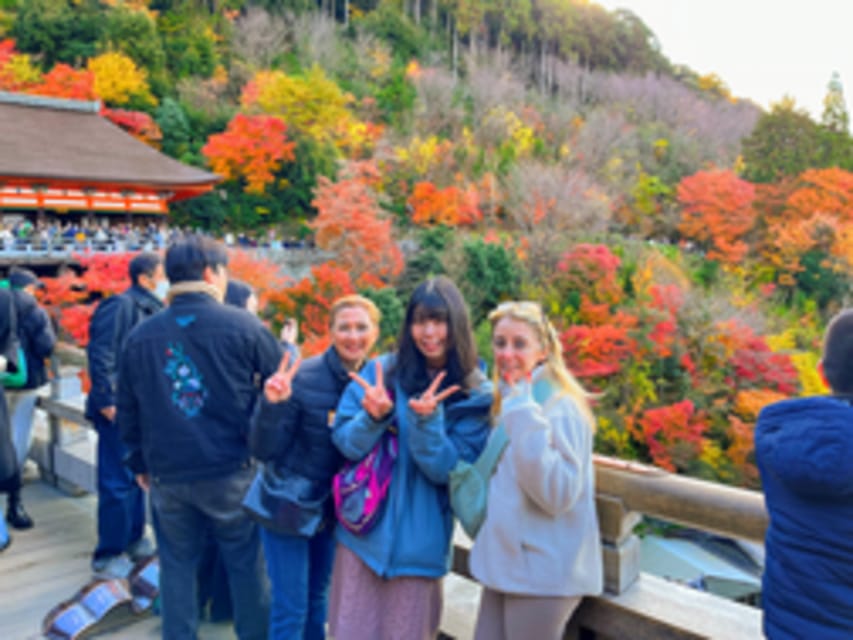
The final major stop is Fushimi Inari Taisha, with about one hour. This is the tour’s most atmospheric finish.
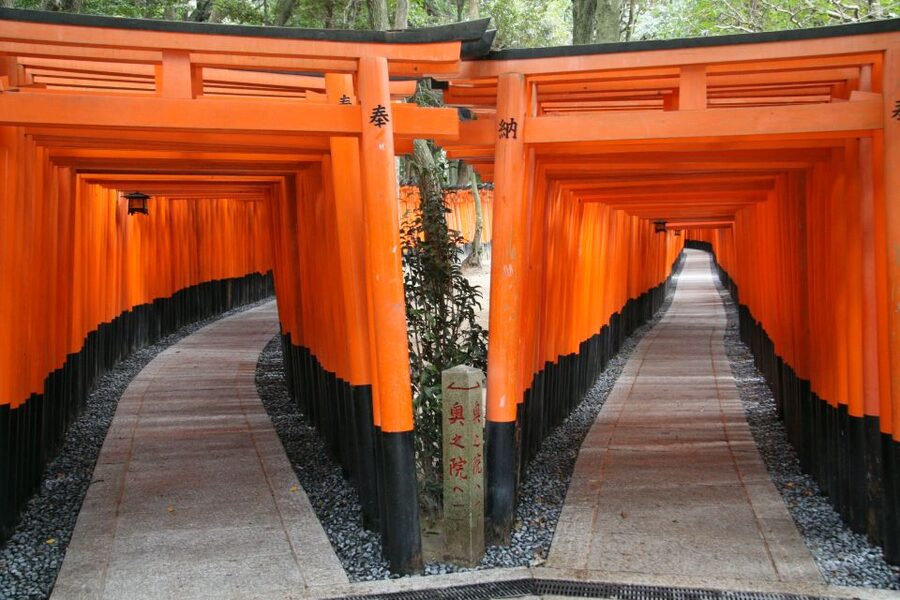
The shrine is famous for its long corridors of vermilion torii gates. Walking beneath them gives you a strong sense of movement and repetition, with the path rising into the wooded mountain behind the shrine.
You will not walk the entire shrine complex in one hour. The gates continue far beyond the portion most short visits can cover. That is not a flaw so much as a reason to return if you want the full mountain route.
The timing is clever in practical terms. After a day of temples, gardens, and coach rides, Fushimi Inari offers a more active final walk. It also gives you one of Kyoto’s most memorable images just before returning to the city.
Keep your group’s meeting instructions in mind. Fushimi Inari has many paths and busy areas, and stopping for photographs can quickly eat into the available time. The red gates are the main attraction, but the shrine grounds also deserve respectful attention.
What the guides add to the day
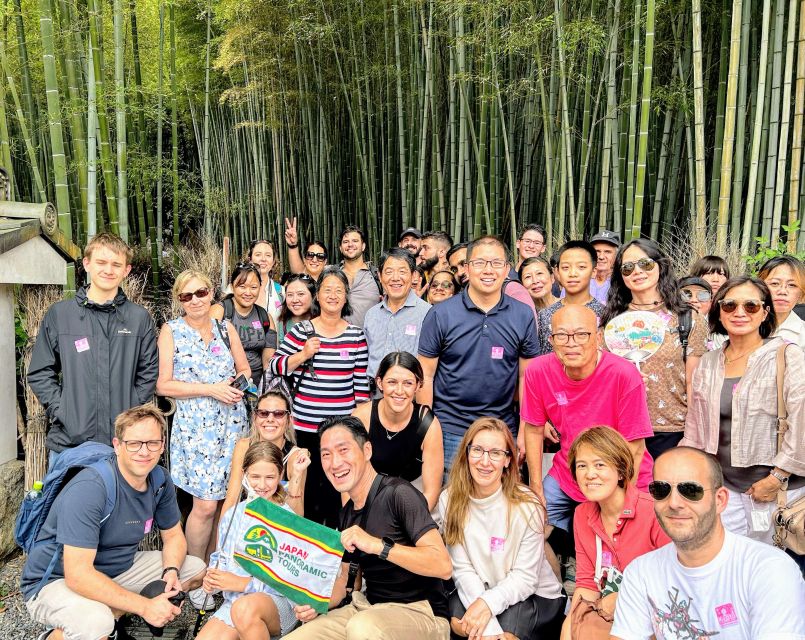
The guide can make or break a schedule this tight, and this tour receives especially strong praise for its staff. At-Chan is repeatedly described as warm, attentive, and energetic. Den is praised for clear explanations, a bright manner, and careful attention to the group. Sakura, Tommy, Ciel, Nagomi, Hiroko, Mai, and Nanari also receive strong approval for their English, humor, historical explanations, and help with photographs.
That last detail matters if you are traveling alone. At-Chan and other guides have helped solo participants take photos, offered practical suggestions for Kyoto, and taught simple Japanese words and phrases.
The best guides also help with the small pressure points of group travel. They keep people on schedule, answer questions, explain customs, and help the day feel less like a race between bus doors and temple gates. The published guide language is English, and multilingual audio is available in six additional languages: Spanish, French, Italian, German, Portuguese, and Ukrainian.
Guide quality can vary from one departure to another because you may not receive a particular person. Still, the repeated praise for the guide team is one of the tour’s strongest reasons to book.
Is $122 a fair price?
The price is $122 per person. That is not a bargain-basement bus ride, but the comparison should be with the full cost and effort of doing this independently.
You receive coach transport across Kyoto, an English-speaking guide, Wi-Fi, admissions to four temples, and the option of a buffet lunch. You also avoid researching routes between sites that sit in separate parts of the city. For a first visit or a short stay, that convenience has real value.
The price is less attractive if you already know Kyoto well, dislike fixed schedules, or want long, quiet visits at one or two temples. You may spend less by using public transport and selecting only your top sights, though you will give up the guide and the ease of having the tickets handled for you.
I would call it good value for families, first-time visitors, and anyone with only a few days in Kyoto. It is also useful for a stopover when every sightseeing hour counts.
Who should book this Kyoto day trip?
I would choose this tour if you want to see Kyoto’s famous sights without managing the city’s transport system. Families with older children and preteens can benefit from the clear structure, seated transfers, and guide support. Solo visitors may appreciate the help with photos and the company during a long day.
You should be comfortable walking for much of the day. Hills and stairs appear at several temples, and the bamboo grove and Fushimi Inari require time on foot. The tour is not suitable for wheelchair users or people with mobility limitations.
I would skip it if your priority is slow travel, serious temple study, or a carefully chosen food itinerary. The schedule is efficient, not leisurely. You see many highlights, but you do not get to linger.
Book lunch for ease, unless you have dietary restrictions or care strongly about food quality. In that case, choose the no-lunch option and bring food or buy lunch during the Arashiyama break. Comfortable shoes, an early start, and realistic expectations will improve the day considerably.
Final verdict: a smart first look at Kyoto
This is a packed but practical introduction to Kyoto. You get the city’s major visual symbols, several World Heritage temples, a bamboo walk, a buffet option, and a guide who can add meaning to what might otherwise become a blur of famous names.
I would book it for a first Kyoto visit with limited time, especially at $122 when transport and admissions are included. I would not book it for a slow, independent exploration of Arashiyama or Fushimi Inari. Think of it as an efficient first chapter, not the entire Kyoto story.
FAQ
Where does the Kyoto bus tour start?
It starts in front of Tully’s Coffee at the Kyoto Avanti Store, 31 Higashikujo Nishisannocho, Minami Ward, Kyoto. Check-in is at 7:50 a.m., with departure at 8:00 a.m. Look for the green and white Japan Panoramic Tours flag.
Does the tour provide hotel pickup and drop-off?
No. Hotel pickup and drop-off are not included. You must reach the Kyoto Avanti meeting point yourself, and the tour returns there at the end of the day.
Which sights are included?
The tour visits Kiyomizu-dera, Sanjusangen-do, Arashiyama, the Sagano Bamboo Forest, Tenryuji Temple, Kinkaku-ji, and Fushimi Inari Taisha. The coach passes by Nijo Castle without a scheduled visit.
Is lunch included?
Lunch depends on the option you select. The lunch option includes a Japanese buffet with vegetarian dishes. You can choose the no-lunch option and bring food or buy lunch during free time in Arashiyama.
Does the buffet cater to special diets?
The buffet does not provide Muslim-friendly, allergy-friendly, lactose-free, or gluten-free meals. If you have a serious allergy, choose the option without lunch.
What languages are available?
The live guide speaks English. Audio guidance is available in Spanish, French, Italian, German, Portuguese, and Ukrainian.
Is the tour suitable for people with limited mobility?
No. The tour includes stairs, hills, and considerable walking, and it is not suitable for wheelchair users or people with mobility impairments. Comfortable shoes are recommended for all participants.
Just added in Kyoto
- The “Golden Route” and Ancient Japan by DIAMIR Erlebnisreisen – 14-Day Tour★ 2.0 · 2 reviews
- Japan: Castles & Cuisine by G Adventures – 6-Day Kyoto to Osaka Tour★ 4.5 · 4 reviews
- Cycle Japan by Explore! – 13-Day Kyoto to Tokyo Tour★ 4.7 · 12 reviews
- Cycle Japan by Intrepid Travel – 11-Day Kyoto to Tokyo Tour★ 4.8 · 2 reviews
- Classic Japan by Intrepid Travel – 11-Day Kyoto to Tokyo Tour★ 4.4 · 14 reviews
- Ancient & Modern Japan 14-Day Tour by Exodus Adventure Travels★ 4.4 · 40 reviews
- 5 Day Cultural Adventure of Kyoto, Nara & Osaka by Tourist Journey★ 2.5 · 2 reviews
- 12 Days Kinosaki Onsen Escape: A Journey Through Japan’s Timeless Towns by UME Travel★ 4.8 · 5 reviews
Temples and Shrines, compared.
![[Kyoto & Nara Day Tour] Sagano Scenic Railway & Nara Park & Fushimi Inari Taisha Thousand Torii Gates & Togetsukyo Bridge & Bamboo Grove & Kimono Forest (Departing from Osaka)](https://media.japanvisits.com/wp-content/uploads/kyoto-nara-day-tour-sagano-scenic-railway-nara-park-fushimi-inari-taisha-thousand-torii-gates-togetsukyo-bridge-bamboo-grove-kimono-forest-departing-from-osaka-k110001-400x257.jpg)
Kyushu One-Day Tour: Yufuin no Mori Train & Yufuin Town & Nyoirin-ji Temple & Dazaifu & Hell Hot Springs (Departing from Fukuoka)
Read our review →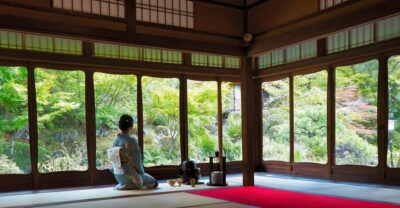
Tea Ceremony in a Traditional Tea House in Kiyomizu
Read our review →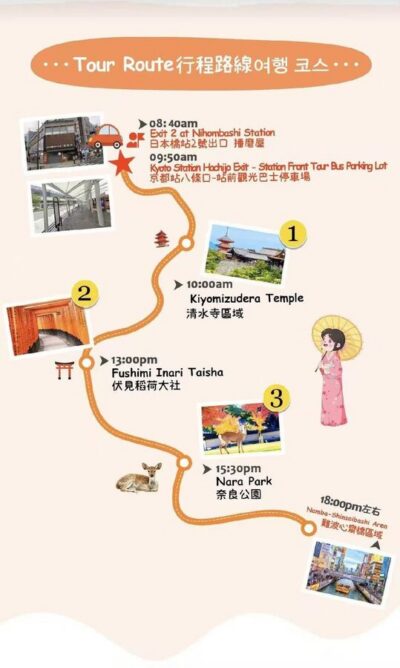
Kyoto Nara Day Trip │ Kiyomizu-dera Temple + Fushimi Inari-taisha Shrine + Nara Park (Departing from Osaka/Kyoto)
Read our review →
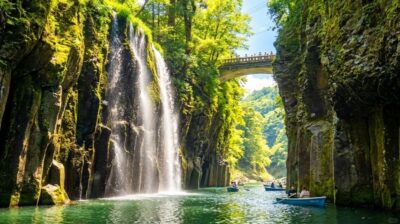
Meiji Shrine, Asakusa, Skytree Bus Tour and Cruise
Read our review →Browse the lists this tour appears in