Reviewed · KYOTO TOURS
PERFECT KYOTO 1-Day Bus Tour
Kyoto rewards planning, but this tour does the planning for you. In roughly eight to nine hours, you visit Kiyomizu-dera, Sanjusangendo, Arashiyama, Tenryu-ji, Kinkaku-ji, and Fushimi Inari without piecing together several train and bus routes.
I like the wide range of major sights and the fact that admission to four temples is included. I also like having an English-speaking guide, multilingual audio on the bus, and a clean air-conditioned coach between stops. The tradeoff is clear: this is a fast sightseeing sweep, not a slow, reflective day at one or two temples.
The tour begins at 7:50 am near Kyoto Station at Tully’s Coffee inside Kyoto Avanti and returns there at the end. Guides such as Sakura, Mai, At-Chan, Hiroko, and Nagomi have earned especially warm praise for their energy, humor, organization, and clear explanations. Still, the group can reach up to 42 people, and some stops may feel rushed when Kyoto is crowded.
In This Review
- Key points before you book
- What $129.25 buys you in Kyoto
- Starting at Kiyomizu-dera with Kyoto below
- Sanjusangendo and its remarkable rows of statues
- Arashiyama lunch and a short taste of the district
- Walking the Bamboo Forest Trail
- Tenryu-ji’s garden and seven centuries of design
- Kinkaku-ji, Kyoto’s Golden Pavilion
- Passing Nijo Castle on the return route
- Fushimi Inari and the thousand torii gates
- The guide and coach make the long day work
- Who will enjoy this tour most
- Should you book the PERFECT KYOTO tour?
- FAQ
- How long does the PERFECT KYOTO 1-Day Bus Tour last?
- Where does the tour start and end?
- Is hotel pickup and drop-off included?
- Is lunch included?
- Which admissions are included?
- Is the tour available in languages besides English?
- Is the tour suitable for people who cannot walk long distances?
Key points before you book
- Six major Kyoto sights in one day: You cover Kiyomizu-dera, Sanjusangendo, Arashiyama, Tenryu-ji, Kinkaku-ji, and Fushimi Inari.
- Admission is included at four temples: Kiyomizu-dera, Sanjusangendo, Tenryu-ji, and Kinkaku-ji are covered in the tour price.
- Expect a busy day on foot: Hills, stairs, temple floors, and long walks make moderate fitness important.
- The morning may feel calmer: Kiyomizu-dera and Sanjusangendo come before the afternoon sights, which can be more crowded.
- Lunch is optional: You can add a Japanese-style buffet, but food is not included unless you select the lunch option.
- The meeting point is central: Tully’s Coffee at Kyoto Avanti is close to Kyoto Station and public transportation.
What $129.25 buys you in Kyoto
At $129.25 per person, this tour is priced as a convenience package rather than a bargain bus ride. You are paying for transportation across widely separated parts of Kyoto, a guide, audio support, and entrance fees at four significant temples.
That matters in Kyoto. Kiyomizu-dera, Arashiyama, Kinkaku-ji, and Fushimi Inari sit in different parts of the city. Using public transportation for all of them in a single day would require careful timing, transfers, walking, and constant attention to directions. The coach removes much of that work.
You also avoid buying several individual admission tickets during the day. The tour includes Kiyomizu-dera, Sanjusangendo, Tenryu-ji, and Kinkaku-ji. Fushimi Inari and the bamboo forest are free to enter, while Arashiyama includes the lunch break and time to walk around.
The value is strongest if you have only one free day in Kyoto, dislike navigating unfamiliar transit, or want a first look at the city’s famous sights. It is weaker if you prefer lingering, shopping, taking long photographs, or choosing your own lunch and route.
The lunch option deserves a careful look. It is a Japanese-style buffet with local foods and seasonal dishes, served in Arashiyama. It is convenient, but the food experience can vary. One meal was described as cold because dishes such as fried chicken, grilled chicken, and shrimp tempura were not kept on warmers. Vegetarian diners should also note that the buffet is the same for vegetarians, rather than a separately prepared vegetarian menu.
You may bring snacks and drinks, since the day is long and the schedule leaves little room for an unplanned meal. If you decide to add lunch on the day, the charge is 3,000 yen, so selecting it in advance is the better financial choice.
A few more options to weigh up in Kyoto
- [Kyoto & Nara Day Tour] Sagano Scenic Railway & Nara Park & Fushimi Inari Taisha Thousand Torii Gates & Togetsukyo Bridge & Bamboo Grove & Kimono Forest (Departing from Osaka)
★ 4.9 · 10,942 reviews - Kyoto: Fushimi Inari, Kinkakuji, Bamboo Grove 1 Day Bus Tour
★ 4.8 · 4,316 reviews - Kyoto: Tea Ceremony in a Traditional Tea House in Kiyomizu
★ 4.9 · 3,519 reviews
Starting at Kiyomizu-dera with Kyoto below
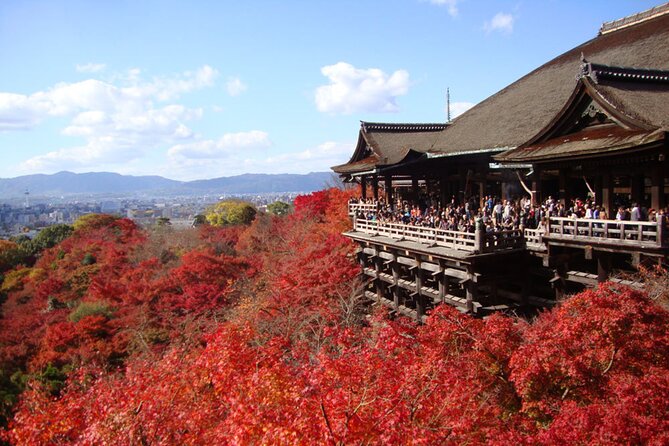
The first stop is Kiyomizu-dera, one of Kyoto’s essential temples and a UNESCO World Heritage site. The temple sits on a Higashiyama hillside, giving you a broad view across Kyoto from its elevated position.
You have about one hour here, including admission. That sounds generous, but the approach involves hills and stairs. Wear shoes that you can walk in comfortably, and keep your group meeting instructions in mind before wandering too far.
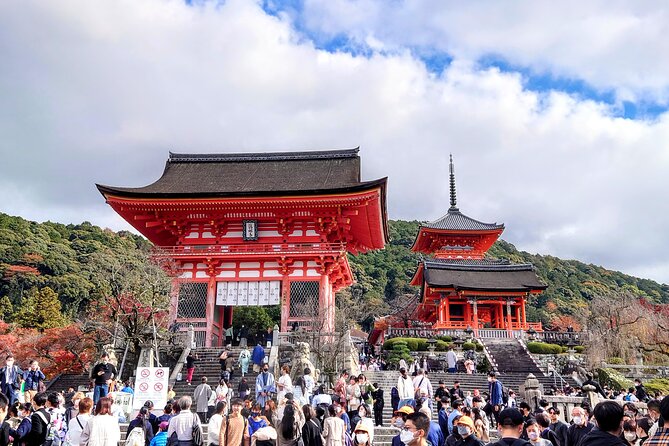
Kiyomizu-dera is a good opening stop because it gives you both architecture and a sense of Kyoto’s size. You can study the temple buildings, look over the city, and take photographs from the hillside. The drawback is crowding. The approach and main temple areas can become packed, especially during popular seasons and school visits.
This is also one of the places where the tour’s pace becomes important. You can see the main areas in an hour, but you will not have time to explore every lane and side path around the temple. If Kiyomizu-dera catches your attention, make a note to return independently.
Sanjusangendo and its remarkable rows of statues
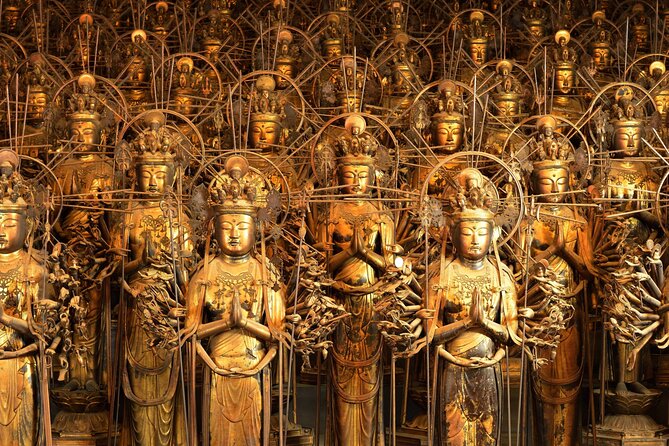
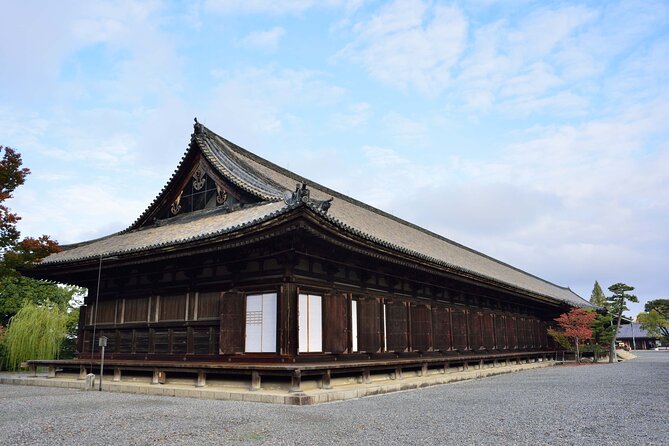
Next comes Sanjusangendo Temple, with about 40 minutes inside. Its main hall is famous for rows of statues of Senju Kannon, the thousand-armed form of the Buddhist bodhisattva of compassion.
This stop offers a different kind of temple experience. Kiyomizu-dera gives you a hilltop setting and open views, while Sanjusangendo is about the interior and the repeated figures arranged inside the long hall. The visual effect is powerful, even if you know little about Buddhist sculpture.
Forty minutes is enough for a focused visit. You can enter, take in the hall, and listen to the guide’s explanation without needing to plan your route. As with many Japanese temples, you may need to remove your shoes, and some people find the floors cold. Socks are a small but useful comfort.
The stop also gives your feet a short break before the tour heads west toward Arashiyama. Keep your expectations realistic: this is an organized introduction, not an art-history seminar.
Arashiyama lunch and a short taste of the district
Arashiyama is the middle section of the day and includes a 50-minute break. If you choose the lunch option, you eat at a Japanese-style buffet featuring local and seasonal food. If you do not choose lunch, you have time to arrange food independently in the area.
Fifty minutes is useful but tight. Arashiyama is more than a meal stop, and this tour does not give you a full afternoon there. You will not have much time for extended shopping, riverside walks, or a relaxed visit to every attraction.
The advantage is that lunch is placed near the bamboo forest and Tenryu-ji, so you do not lose time traveling to another part of town. The disadvantage is that the meal can make the schedule feel even more fixed. If you prefer choosing your own food, skipping the buffet may give you more control, but you must pay attention to the group’s meeting time.
Arashiyama is also a point where crowd levels can affect the day. The district is popular, and the bamboo path may be full. Keep your guide’s directions clear in your mind, particularly if you leave the main route to take photographs.
A completely different kind of day out:
- Kyoto: Gion Make Your Own Chopsticks with Engraving Option
★ 5.0 · 3,465 reviews - Kyoto Nara Day Trip │ Kiyomizu-dera Temple + Fushimi Inari-taisha Shrine + Nara Park (Departing from Osaka/Kyoto)
★ 4.7 · 3,408 reviews - Kyoto Geisha Walking Tour: Gion District & Hidden Gems
★ 4.7 · 3,273 reviews - Kyoto: Tea Ceremony Ju-An at Jotokuji Temple
★ 4.9 · 3,207 reviews
Walking the Bamboo Forest Trail

The Bamboo Forest Trail receives about 20 minutes, and the group walks through the path toward Tenryu-ji. Bamboo stays green throughout the year, giving this short walk a distinctive Kyoto setting in every season.
This is the kind of stop where your camera will be busy, but twenty minutes passes quickly. You should focus on enjoying the central path rather than trying to cover every nearby lane. The forest is photogenic, though it is not a private or silent retreat when crowds are present.
The tour’s route links the bamboo walk with Tenryu-ji, which makes efficient use of the area. You also avoid having to work out the correct walking direction on your own. Still, anyone hoping for a long, quiet forest walk will find this portion brief.
Tenryu-ji’s garden and seven centuries of design

Tenryu-ji is allotted about 30 minutes, with admission included. The temple is another UNESCO World Heritage site and is known for its traditional garden, whose design has remained largely unchanged for more than 700 years.
This is one of the tour’s most rewarding stops for garden lovers. The garden gives you a calmer visual counterpoint to the bamboo path and the shiny spectacle of Kinkaku-ji later in the day. Depending on the season, flowers and plants add different colors and textures.
Thirty minutes is enough to understand why Tenryu-ji matters, but it does not allow a leisurely garden visit. If you enjoy Japanese garden design, this is another place to mark for a longer return visit.
The walk from the bamboo forest to the temple also shows why comfortable footwear matters. The day includes repeated transitions from coach to temple grounds, along paths and sometimes stairs.
Kinkaku-ji, Kyoto’s Golden Pavilion
Kinkaku-ji, also called the Golden Pavilion, gets about 40 minutes. The pavilion is covered in gold leaf and reflected in the surrounding pond, making it one of Kyoto’s most recognizable sights.
This is a highly visual stop. You do not need a long explanation to understand its appeal, but a guide can add useful context about the pavilion’s place in Kyoto’s religious and architectural story. The route around the grounds is straightforward, though you should expect a crowd and a fixed return time.
Forty minutes gives you time for the main view, photographs, and a walk along the designated path. It does not give you the freedom to sit and study the garden at length. I would treat Kinkaku-ji as a focused highlight rather than a complete visit to the grounds.
The order of stops can change because of traffic, weather, and daily operations. If Kinkaku-ji comes later than expected, afternoon crowds may make the visit feel less relaxed. Your guide will help keep the group moving, but the pace is part of the bargain.
Passing Nijo Castle on the return route
On the way back, the coach passes Nijo Castle. The tour does not list an extended visit here, so you should think of it as a narrated glimpse rather than another full attraction.
Nijo Castle is tied to the end of the Tokugawa shogunate and the return of political power to the emperor. The guide may provide commentary as you pass, giving you a useful piece of Japanese history without adding another stop to an already packed schedule.
This is a good example of the tour’s approach: cover many major names and places, but reserve actual walking time for the core itinerary. If Nijo Castle is high on your list, plan a separate visit.
Fushimi Inari and the thousand torii gates
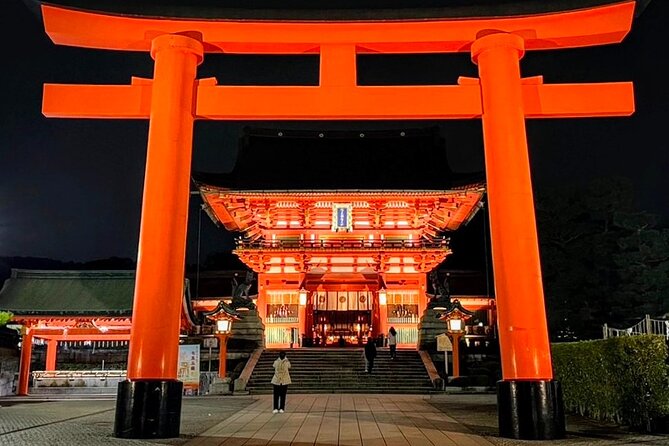
The final major stop is Fushimi Inari-taisha Shrine, with about one hour. Its famous rows of orange torii gates form one of Kyoto’s most memorable walks.
An hour lets you enter the shrine area and pass through a section of the torii tunnel. You will not walk the full mountain route in that time, so do not arrive expecting to reach the highest points of Mount Inari. The lower sections are the practical focus for a group tour.
Fushimi Inari is free to enter, but its popularity makes timing important. The paths can be crowded, and the site includes stairs and uphill walking. Stay aware of the meeting time, since returning late means you may not be able to rejoin the tour.
This is a fitting final stop because it feels different from the formal temple visits. The repeated gates create a strong sense of movement and place, and even a short walk gives you one of Kyoto’s signature experiences.
The guide and coach make the long day work
The tour includes a professional English-speaking guide, multilingual audio guidance on the bus, and WiFi onboard. Audio support is available in English, Spanish, French, Italian, German, Portuguese, and Ukrainian.
Guide quality can shape the entire day. Specific guides praised for clear English, humor, care, and energy include Sakura, Mai, At-Chan, Hiroko, Nagomi, Nanami, Harry, and Ciel. At-Chan was noted for teaching Japanese words and numbers, while Nagomi was praised for keeping the bus rides lively and organized.
English delivery may vary by guide. One person found a guide’s speech difficult to follow, so the multilingual audio system is a useful backup. If you sit toward the back of the bus, you may find commentary harder to hear, particularly when the coach is full.
The vehicle is air-conditioned and has been described as clean and comfortable. One particularly useful detail is that the bus may have a restroom with a sink. WiFi is included, though the available information does not promise a specific connection speed.
The maximum group size is 42 people. That is not a small private tour, but the coach format is practical for covering Kyoto’s spread-out sights.
Who will enjoy this tour most
I would choose this tour if you have one day in Kyoto and want the famous temples and shrines without handling the transport plan yourself. It suits first-time visitors, families with limited time, and people arriving in Kyoto after a busy schedule in Tokyo.
It is also useful for anyone who wants a broad introduction before deciding which places deserve a second visit. Take notes during the day. Kiyomizu-dera, Tenryu-ji, Arashiyama, and Fushimi Inari can each fill a separate half-day if you return later.
I would not choose it if you dislike fixed schedules or want quiet temple time. The day involves hills, stairs, long walks, and repeated boarding times. It is not recommended for people who cannot walk long distances.
The tour starts promptly at 7:50 am. If you are late, you cannot join halfway through, and there is no hotel pickup or drop-off. The meeting point is Tully’s Coffee at Kyoto Avanti, 1F, near Kyoto Station, so allow enough time to find the building and check in.
Free cancellation is available up to 24 hours before the start time. Changes or cancellations inside that window are not refunded.
Should you book the PERFECT KYOTO tour?
Book it if your goal is to see Kyoto’s headline sights in one organized day. The combination of Kiyomizu-dera, Sanjusangendo, Arashiyama, Tenryu-ji, Kinkaku-ji, and Fushimi Inari is hard to arrange independently without spending much of your day on maps and transfers.
Go in expecting a brisk sampler, not a leisurely cultural study. Eat breakfast, carry water and snacks, wear supportive shoes, and listen carefully to the return times. For a first day in Kyoto, the $129.25 price is reasonable when you value convenience, included admissions, and a guide who keeps the whole operation moving.
FAQ
How long does the PERFECT KYOTO 1-Day Bus Tour last?
The tour lasts approximately eight to nine hours and begins at 7:50 am.
Where does the tour start and end?
It starts at Tully’s Coffee at Kyoto Avanti, on the first floor, near Kyoto Station. The tour ends back at the same meeting point.
Is hotel pickup and drop-off included?
No. The tour does not provide hotel pickup or drop-off. You must make your own way to the meeting point.
Is lunch included?
Lunch is included only if you select the lunch option when booking. The meal is a Japanese-style buffet. Food and drinks are not included otherwise.
Which admissions are included?
Admission is included for Kiyomizu-dera, Sanjusangendo, Tenryu-ji, and Kinkaku-ji. Fushimi Inari and the Bamboo Forest Trail do not require an included admission ticket.
Is the tour available in languages besides English?
A professional English-speaking guide attends the tour. Multilingual audio guidance is available on the bus in English, Spanish, French, Italian, German, Portuguese, and Ukrainian.
Is the tour suitable for people who cannot walk long distances?
No. The tour includes considerable walking, stairs, and hills. A moderate level of physical fitness is recommended.
Just added in Kyoto
- The “Golden Route” and Ancient Japan by DIAMIR Erlebnisreisen – 14-Day Tour★ 2.0 · 2 reviews
- Japan: Castles & Cuisine by G Adventures – 6-Day Kyoto to Osaka Tour★ 4.5 · 4 reviews
- Cycle Japan by Explore! – 13-Day Kyoto to Tokyo Tour★ 4.7 · 12 reviews
- Cycle Japan by Intrepid Travel – 11-Day Kyoto to Tokyo Tour★ 4.8 · 2 reviews
- Classic Japan by Intrepid Travel – 11-Day Kyoto to Tokyo Tour★ 4.4 · 14 reviews
- Ancient & Modern Japan 14-Day Tour by Exodus Adventure Travels★ 4.4 · 40 reviews
- 5 Day Cultural Adventure of Kyoto, Nara & Osaka by Tourist Journey★ 2.5 · 2 reviews
- 12 Days Kinosaki Onsen Escape: A Journey Through Japan’s Timeless Towns by UME Travel★ 4.8 · 5 reviews
Kyoto Tours, compared.
![[Kyoto & Nara Day Tour] Sagano Scenic Railway & Nara Park & Fushimi Inari Taisha Thousand Torii Gates & Togetsukyo Bridge & Bamboo Grove & Kimono Forest (Departing from Osaka)](https://media.japanvisits.com/wp-content/uploads/kyoto-nara-day-tour-sagano-scenic-railway-nara-park-fushimi-inari-taisha-thousand-torii-gates-togetsukyo-bridge-bamboo-grove-kimono-forest-departing-from-osaka-k110001-400x257.jpg)
Fushimi Inari, Kinkakuji, Bamboo Grove 1 Day Bus Tour
Read our review →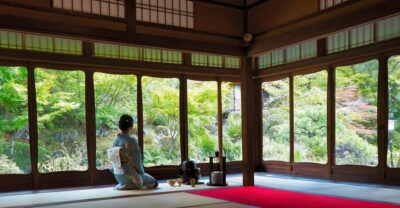
Tea Ceremony in a Traditional Tea House in Kiyomizu
Read our review →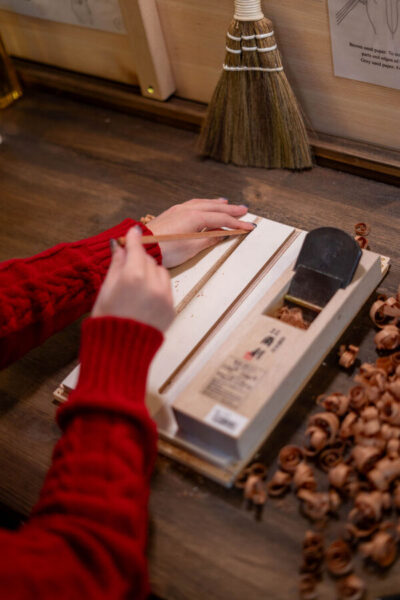
Gion Make Your Own Chopsticks with Engraving Option
Read our review →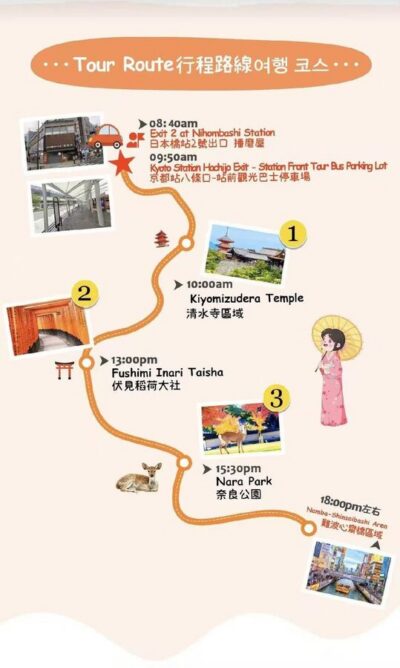
Kyoto Nara Day Trip │ Kiyomizu-dera Temple + Fushimi Inari-taisha Shrine + Nara Park (Departing from Osaka/Kyoto)
Read our review →
Kyoto Geisha Walking Tour: Gion District & Hidden Gems
Read our review →