
Reviewed · KIMONO AND CULTURAL DRESS
Kyoto Geisha Walking Tour: Gion District & Hidden Gems
Kyoto’s old lanes reward a slower walk. This two-hour Gion tour brings you past teahouses, machiya townhouses, temples, and streets where Geiko and Maiko may be heading to appointments. I like the clear cultural context and the way the guides, especially Michael, Anton, and Yuri, bring the district to life with stories and practical advice. I also like the route’s mix of famous sights and quieter corners, which gives you more than a quick stroll down Gion’s best-known street.
The main consideration is that seeing a Geiko or Maiko is never guaranteed, and the tour involves plenty of walking. Winter visitors should dress warmly, since one tour participant found the cold difficult and noted there was no planned warm-up stop. For $25, though, the price is easy to justify if you want a well-explained introduction to Gion rather than a simple photo walk.
In This Review
- Key points to know before booking
- Why Gion works best with a guide
- Starting beside Hotel Alza Kyoto
- Hanamikoji, teahouses, and the world of Geiko
- Spotting Geiko and Maiko respectfully
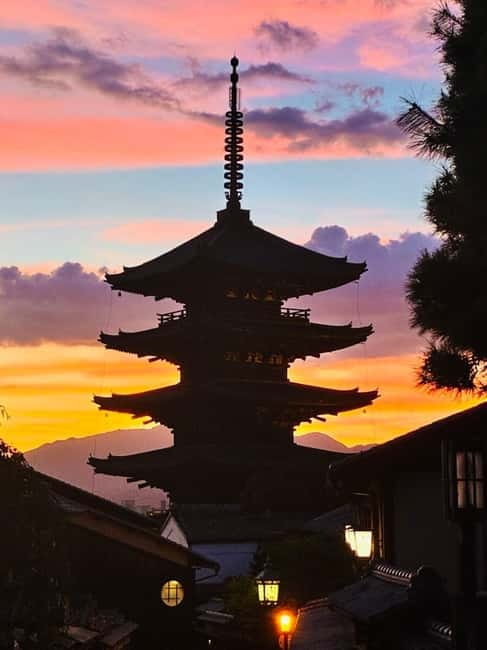
- Hõkan Ji Pagoda and the famous Kyoto view
- Kennin-ji, Kyoto’s oldest Zen temple
- Chion In and the less obvious side of Gion
- Lanterns, photographs, and the best departure time
- The guide’s recommendations may be worth $25 alone
- Price, pace, and who will enjoy it most
- Should you book the Kyoto Geisha Walking Tour?
- FAQ
- How long is the Kyoto Geisha Walking Tour?
- How much does the tour cost?
- Is the tour conducted in English?
- Where is the meeting point?
- Will I definitely see a Geiko or Maiko?
- What places are included on the walk?
- Is the tour suitable for wheelchair users?
- Can I cancel the booking?
Key points to know before booking
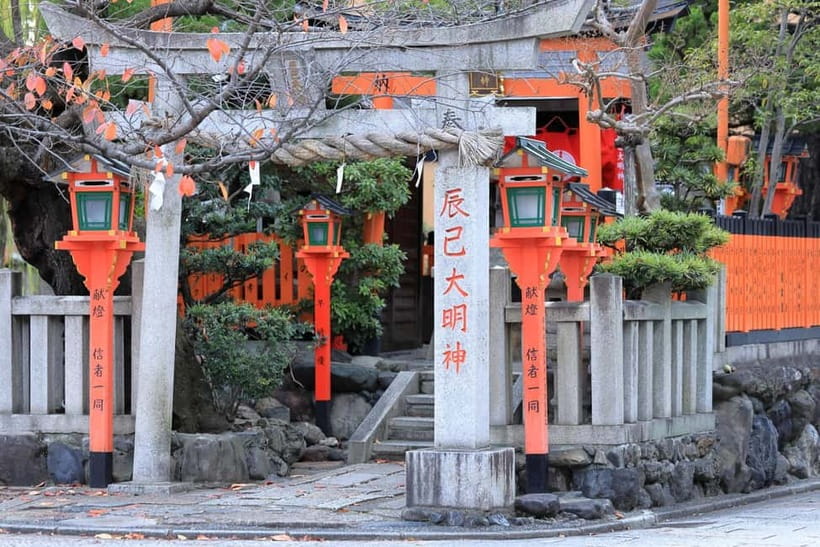
- Geiko sightings are possible, not promised: You may see elegantly dressed Geiko or Maiko traveling to appointments, but the cultural explanation remains worthwhile even if the streets are quiet.
- The route covers more than Hanamikoji: Expect teahouses, machiya houses, boutique shops, Hõkan Ji Pagoda, Kennin-ji Temple, and Chion In Temple.
- Michael receives especially strong praise: His humor, historical knowledge, language skills, and restaurant recommendations are frequent highlights, though guides can vary by departure.
- The 3 p.m. departure has a practical advantage: You get daylight for photographs, while a 6 p.m. start offers lantern-lit streets and a calmer evening mood.
- This is an orientation walk, not a private geisha performance: The teahouses are viewed from outside, and private performances are reserved for wealthy clientele.
- Plan dinner afterward: The guide provides suggestions for food, bars, shops, and further sights, and the route leaves you in a useful part of Kyoto for an evening meal.
Why Gion works best with a guide
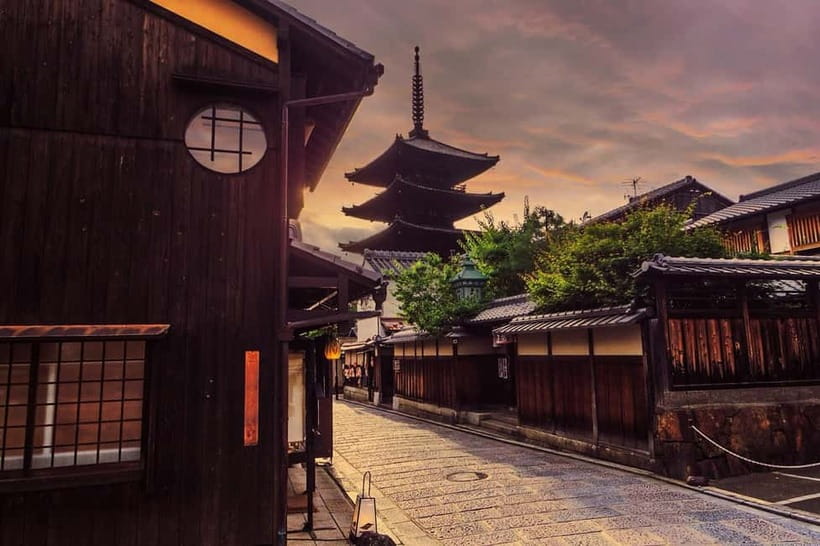
Gion can look simple at first: narrow lanes, dark wooden facades, paper lanterns, and a steady stream of people taking photographs. The details are easy to miss when you walk alone. A guide helps you understand which buildings are preserved machiya houses, how the teahouse district developed, and why some streets feel more private than others.
The tour focuses on geisha culture and its place in modern Kyoto, rather than treating Geiko and Maiko as costumed attractions. You learn about the origins of the tradition, the role of the teahouses, and the difference between seeing a performer on the street and attending a private engagement.
That distinction matters. You are not promised a show, a conversation, or a posed photograph. If a Geiko or Maiko passes by, the respectful approach is to watch from a distance and avoid blocking the lane. The tour gives you a framework for seeing the district as a working cultural neighborhood, not just a backdrop.
The guides also add useful historical context about Kyoto itself. Michael is repeatedly praised for explaining facts clearly, answering questions, and connecting the district to broader periods in Japanese history. Anton and Yuri also receive warm praise for friendly, engaging tours, so the quality appears to depend less on a fixed script than on the individual guide leading your group.
More Kimono Experiences in Kyoto
- [Kyoto & Nara Day Tour] Sagano Scenic Railway & Nara Park & Fushimi Inari Taisha Thousand Torii Gates & Togetsukyo Bridge & Bamboo Grove & Kimono Forest (Departing from Osaka)
★ 4.9 · 10,942 reviews - Kyoto: Gion Magical Night Walking Tour with Geisha Trivia
★ 4.9 · 2,393 reviews - Kyoto: Gion Geisha District Walking Tour – Stories of Geisha
★ 4.7 · 2,187 reviews
Starting beside Hotel Alza Kyoto
The meeting point is on the side street next to Hotel Alza Kyoto. Look for the red parasols and marble seats underneath. This is a specific landmark, which is helpful in a neighborhood where several narrow streets can look alike.
Arrive with comfortable shoes and a little spare time. The tour stays on foot for two hours, and the route includes cobblestones, temple grounds, and ordinary city streets. It is not suitable for wheelchair users or people with mobility impairments.
The experience is offered in English with a live guide. Group size can vary, but smaller groups are possible. One participant found themselves alone with Michael and Ron, effectively turning the scheduled group walk into a private experience. That cannot be counted on, but a smaller group would make it easier to ask questions and adjust the conversation to your interests.
Hanamikoji, teahouses, and the world of Geiko
The early part of the walk introduces you to Gion’s best-known streets and its traditional architecture. The cobblestones and wooden buildings create the old-Kyoto setting people come to see, but the guide’s explanation is what gives those streets meaning.
You will see teahouses connected with private Geiko and Maiko performances. These are not ordinary restaurants where you can simply walk in and book a casual evening. The guide explains how the teahouse system works and why access has traditionally been limited.
That is one of the tour’s most useful features. Many short Gion walks reduce the area to lanterns and costumes. Here, you get a clearer sense of the social world behind the doors, including the difference between public sightseeing and private entertainment.
The route may also pass boutique-style souvenir shops and smaller lanes that are easy to miss on your own. These stops are not grand attractions, but they help break up the walk and give you ideas for later shopping. One useful tip from the tour is to leave time afterward for nearby food, shopping, or small activities such as perfume-making or pottery.
Spotting Geiko and Maiko respectfully
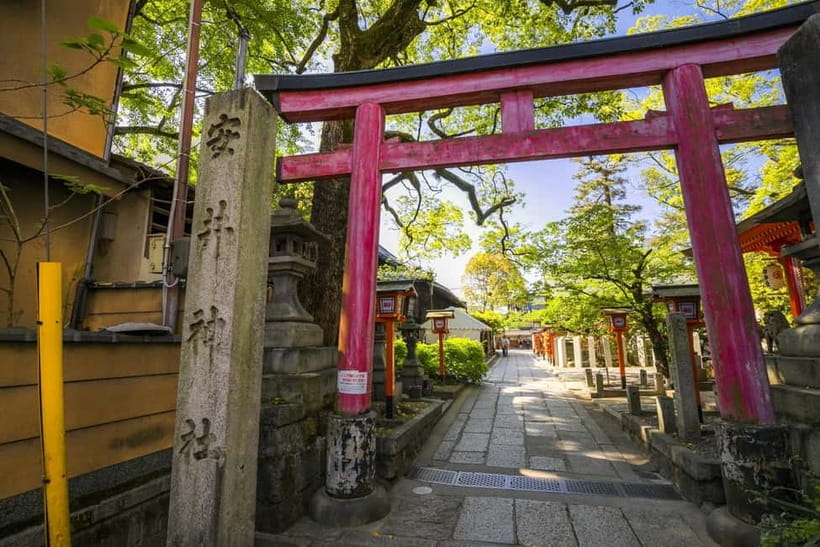
The chance to see Geiko or Maiko is the most obvious draw, and some departures do succeed. One participant saw a Geisha going about her day, while another group saw several Geisha. Other visitors did not see any, yet still rated the walk highly because the history and district tour carried the experience.
The timing affects the atmosphere. A 3 p.m. start gives you better daylight for photographs and helps you appreciate the architecture. An evening departure, especially around 6 p.m., can be more atmospheric as lanterns come on and Gion grows quieter. One participant specifically found 6 p.m. peaceful, with enough space to take in the surroundings and ask questions.
There is a tradeoff. Later departures are better for the evening mood but less useful for daylight photography. If seeing buildings clearly and taking photographs are your priorities, choose an earlier available time. If you prefer lantern-lit lanes and a more subdued feel, the later slot may suit you better.
Do not book this tour on the assumption that a sighting is guaranteed. Treat it as a bonus. The dependable part is the explanation of Geiko and Maiko culture, the architecture, and the district’s role in Kyoto.
More Walking Tours in Kyoto
- Night Walk in Gion: Kyoto’s Geisha District
★ 4.5 · 2,003 reviews - Kyoto Gion Geisha District Walking Tour – The Stories of Geisha
★ 5.0 · 1,441 reviews - Nishiki Market Brunch Walking Tour (7 Tastings + Brunch)
★ 5.0 · 1,355 reviews - Kyoto Arashiyama Walking Tour: Bamboo, Monkeys, Gardens & Secrets
★ 5.0 · 1,216 reviews
Hõkan Ji Pagoda and the famous Kyoto view
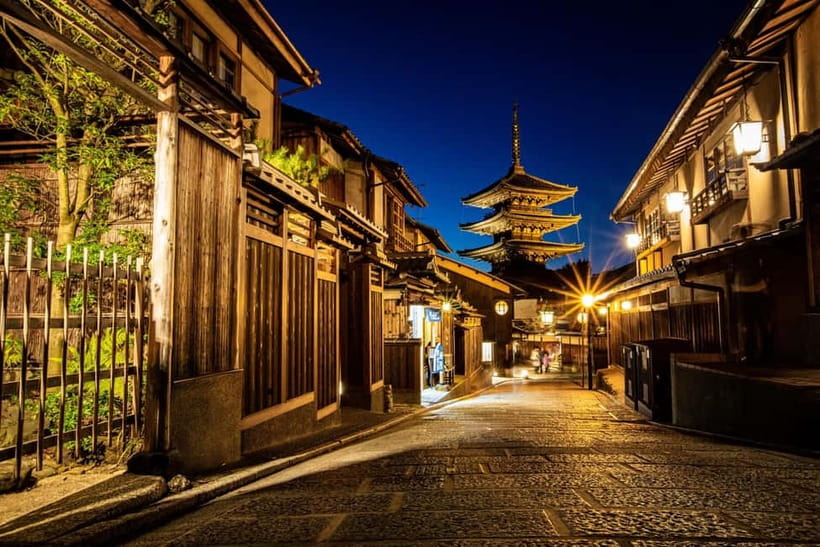
Hõkan Ji Pagoda is one of the route’s most recognizable sights. Its shape makes it an excellent photo subject, and the surrounding streets show how old religious landmarks sit beside homes, shops, and tourist businesses.
The pagoda is especially valuable as a visual anchor. After hearing about Gion’s teahouses and traditional streets, you get a clear image of the district’s broader cultural setting. The walk is not only about geisha culture. It also shows how religion, architecture, commerce, and daily life overlap in central Kyoto.
Expect other people in this area, particularly at popular photo spots. The tour’s quieter lanes help balance the more famous views, but you should not expect every stop to feel secluded. Your guide can help you find better angles and explain what you are looking at instead of simply moving you from one photograph to the next.
Kennin-ji, Kyoto’s oldest Zen temple
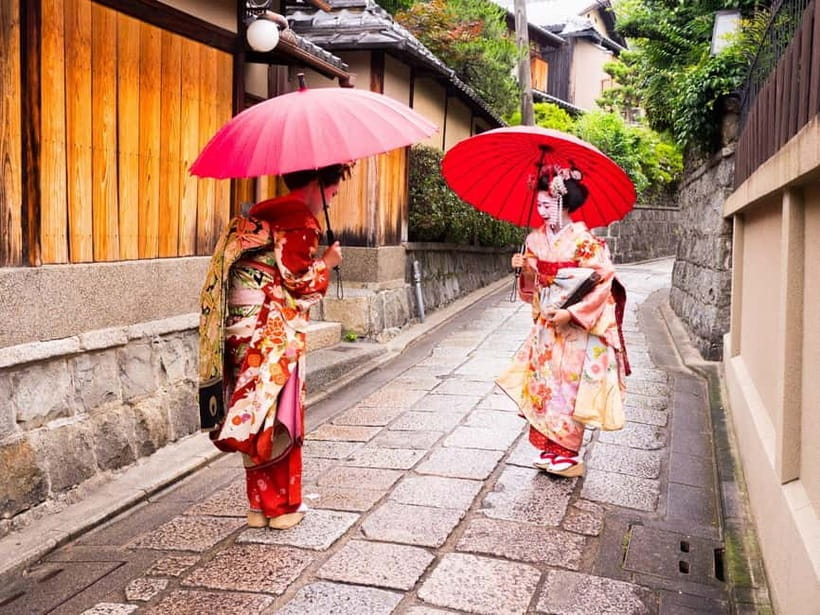
Kennin-ji Temple provides a change of pace. After the narrow streets and teahouse district, the temple offers a more settled atmosphere and a chance to consider Kyoto’s Zen tradition.
The tour presents Kennin-ji as the oldest Zen temple in Kyoto. Its importance is not only its age. The grounds help you see the contrast between Gion’s entertainment district and the city’s religious institutions, both of which have shaped Kyoto’s identity.
The temple stop also gives the guide room to discuss architecture, customs, and stories connected with the area. Several participants appreciated that the explanations went beyond Geiko culture and covered Kyoto’s wider past. That makes this tour a better choice for someone who wants a general introduction to the district, not just a chance to spot a Maiko.
Keep in mind that two hours is not a lot of time for extended temple visits. You should think of Kennin-ji as part of a walking overview rather than a full temple tour. If you want a slower visit, return on your own later.
Chion In and the less obvious side of Gion
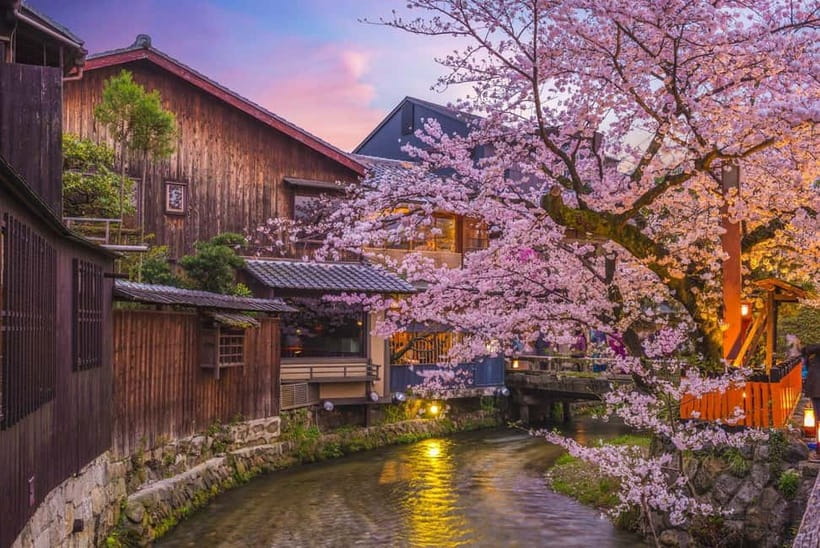
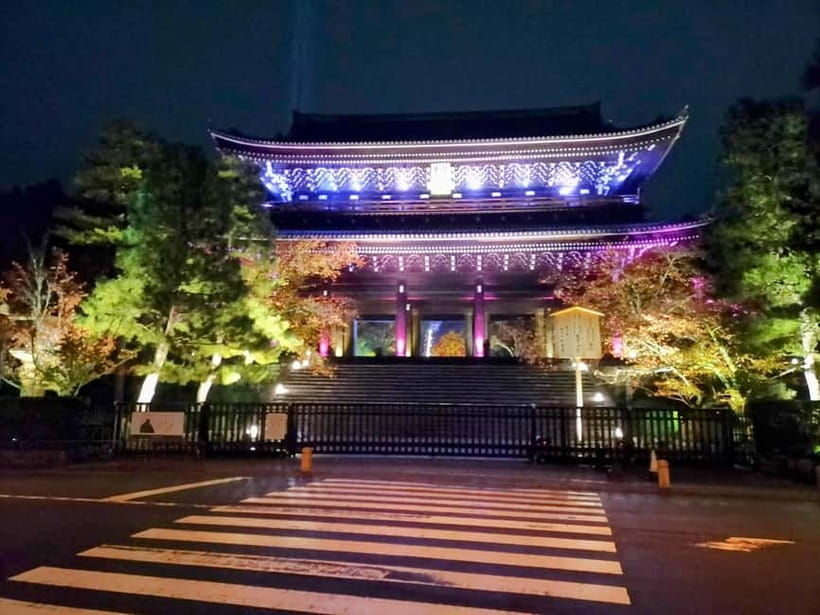
Chion In Temple is presented as an often-overlooked stop, with vast, picturesque grounds and three designated national treasures. This is where the route broadens beyond the narrow image of Gion’s teahouses.
The temple grounds offer a different kind of beauty, with more space and a calmer setting. They also give you another chance to understand how Kyoto’s religious sites shaped the neighborhoods around them. The guide’s stories about architecture and traditions are particularly useful here, since large temple complexes can be confusing without context.
As with Kennin-ji, the time available is limited. You will not have the leisure of a full independent temple visit during a two-hour route. I would treat Chion In as a preview, then return if the grounds capture your interest.
The combination of Hõkan Ji, Kennin-ji, and Chion In is one of the strongest reasons to book this walk. You get several different types of Kyoto sight in one compact route: a famous pagoda, a Zen temple, and a large temple complex. That variety gives the tour more substance than a narrow focus on geisha sightings.
Lanterns, photographs, and the best departure time
Gion is highly photogenic, but the light changes the experience. Earlier tours show the texture of the wooden buildings and temple details. Evening tours create a more dramatic scene, with lantern-lit streets and the softer mood of nightlife beginning.
Guides point out suitable photo locations, including less obvious places away from the busiest viewpoints. The promise of good photographs should not be read as a guarantee of empty streets or perfect light. Still, the route gives you more options than simply stopping at one famous corner.
One participant who chose 3 p.m. advised against a later start because of limited sunlight. Another found 6 p.m. ideal because the area was quiet. Both observations make sense. Choose based on your priorities:
- Choose around 3 p.m. for daylight, clearer building details, and stronger daytime photographs.
- Choose around 6 p.m. for lanterns, a quieter mood, and the atmosphere of Gion after dark.
Check the available start times when booking, since departure options can change. In winter, also remember that the walk is outdoors for two hours. Warm layers are a sensible idea, and there is no stated scheduled café break.
The guide’s recommendations may be worth $25 alone
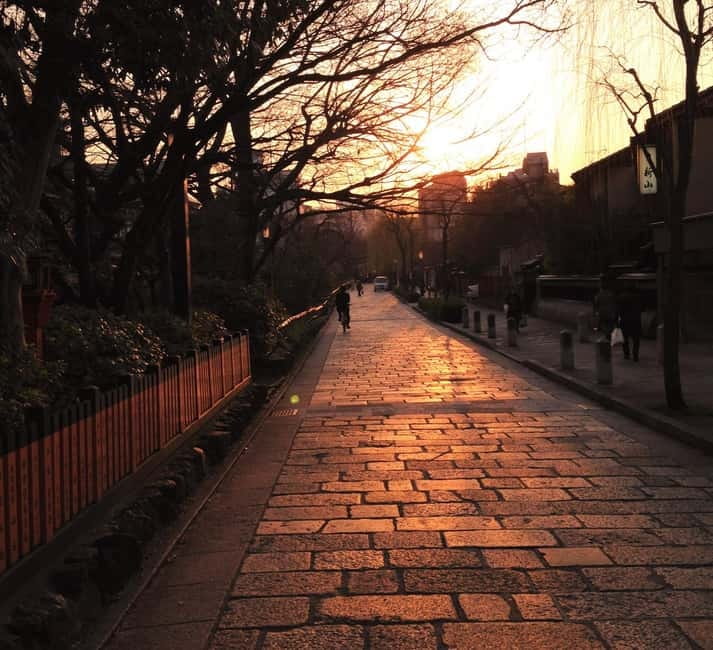
The final part of the walk includes recommendations for restaurants, bars, shops, and more places to visit in Kyoto and elsewhere in Japan. This is not filler. Good local advice can save you from choosing a restaurant solely because it is near a famous street.
Michael is praised repeatedly for practical food suggestions and for answering questions about the rest of a Kyoto stay. One participant planned to eat after the tour and recommended doing the same. That is a useful strategy because Gion offers plenty of places to continue the evening.
The advice is also valuable at the start of a visit. Several people used the walk as their first Kyoto activity because it helped them understand the city and choose what to see next. If you book this early in your stay, bring a note on your phone for restaurant names, shops, and temple ideas.
The guide’s personality is part of the value. Michael is described as funny, warm, passionate, and good with children. Other guides receive praise for being friendly and easygoing. The exact style will vary, but the strongest pattern is clear: this is a conversation-led tour, with room for questions rather than a silent march between landmarks.
Price, pace, and who will enjoy it most
At $25 per person, this is a strong-value introduction to Gion. You receive two hours with an English-speaking guide, cultural background, a route through several important places, photo opportunities, and personal suggestions for the rest of your trip.
The value is highest if you are new to Kyoto. You gain orientation quickly and can return to the places that deserve more time. It is also useful if you are curious about Geiko culture but do not want to pay for a private dinner or performance.
The tour suits:
- First-time visitors to Kyoto
- History and culture enthusiasts
- Families whose children can manage two hours of walking
- People who want restaurant and sightseeing suggestions
- Visitors who prefer context over a quick photo stop
It may not suit you if you have mobility limitations, dislike walking on uneven streets, or want a guaranteed Geiko encounter. It is also not a substitute for a full temple visit or a private cultural performance.
The overall score of 4.7 from 3,273 ratings reflects strong satisfaction, and the repeated praise focuses on the same things: clear explanations, friendly guides, historical detail, comfortable pacing, and useful recommendations. The criticism is limited but fair: cold weather can be uncomfortable, and the route offers an overview rather than long visits at each site.
Should you book the Kyoto Geisha Walking Tour?
I would book this tour if you want a well-priced first look at Gion and care about understanding what you see. The best reason to go is not the promise of a Geiko sighting. It is the guide’s ability to explain the district, its teahouses, temples, architecture, and customs in a way that makes the streets easier to read.
Book an earlier departure for daylight photographs. Choose an evening start for lanterns and a quieter mood. Wear good shoes, bring warm layers in cold weather, and plan dinner afterward so you can use the guide’s recommendations while you are still in the area.
If you expect a private performance or a guaranteed encounter with Geiko or Maiko, skip it. If you want an informative, friendly walk that gives you a useful base for the rest of your Kyoto visit, this is an easy recommendation.
FAQ
How long is the Kyoto Geisha Walking Tour?
The tour lasts two hours and takes place on foot through Gion and surrounding areas.
How much does the tour cost?
The price is $25 per person.
Is the tour conducted in English?
Yes. The activity includes a live English-speaking guide.
Where is the meeting point?
Meet at the side street next to Hotel Alza Kyoto. Look for the red parasols or umbrellas with marble seats underneath.
Will I definitely see a Geiko or Maiko?
No. The tour offers an opportunity to spot Geiko and Maiko as they travel to appointments, but sightings are not guaranteed.
What places are included on the walk?
The route includes Gion’s teahouses and machiya townhouses, Hõkan Ji Pagoda, Kennin-ji Temple, and Chion In Temple, along with quieter streets and boutique-style shops.
Is the tour suitable for wheelchair users?
No. The tour is not suitable for wheelchair users or people with mobility impairments.
Can I cancel the booking?
Yes. You can cancel up to 24 hours in advance for a full refund. A reserve-now, pay-later option is also available.
Just added in Kyoto
- The “Golden Route” and Ancient Japan by DIAMIR Erlebnisreisen – 14-Day Tour★ 2.0 · 2 reviews
- Japan: Castles & Cuisine by G Adventures – 6-Day Kyoto to Osaka Tour★ 4.5 · 4 reviews
- Cycle Japan by Explore! – 13-Day Kyoto to Tokyo Tour★ 4.7 · 12 reviews
- Cycle Japan by Intrepid Travel – 11-Day Kyoto to Tokyo Tour★ 4.8 · 2 reviews
- Classic Japan by Intrepid Travel – 11-Day Kyoto to Tokyo Tour★ 4.4 · 14 reviews
- Ancient & Modern Japan 14-Day Tour by Exodus Adventure Travels★ 4.4 · 40 reviews
- 5 Day Cultural Adventure of Kyoto, Nara & Osaka by Tourist Journey★ 2.5 · 2 reviews
- 12 Days Kinosaki Onsen Escape: A Journey Through Japan’s Timeless Towns by UME Travel★ 4.8 · 5 reviews
Kimono and Cultural Dress, compared.
![[Kyoto & Nara Day Tour] Sagano Scenic Railway & Nara Park & Fushimi Inari Taisha Thousand Torii Gates & Togetsukyo Bridge & Bamboo Grove & Kimono Forest (Departing from Osaka)](https://media.japanvisits.com/wp-content/uploads/kyoto-nara-day-tour-sagano-scenic-railway-nara-park-fushimi-inari-taisha-thousand-torii-gates-togetsukyo-bridge-bamboo-grove-kimono-forest-departing-from-osaka-k110001-400x257.jpg)

Tokyo Asakusa Kimono&Yukata Rental at Kimono Miyabi Asakusa Station
Read our review →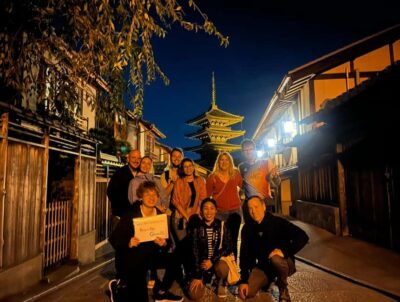
Gion Magical Night Walking Tour with Geisha Trivia
Read our review →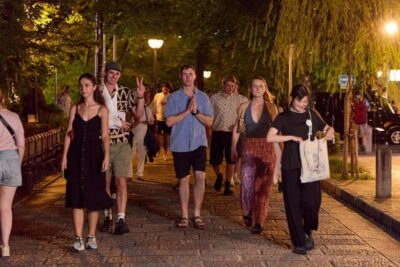
Gion Geisha District Walking Tour – Stories of Geisha
Read our review →
Best of Kyoto: Gion, Geisha, Pagodas & Cobblestones
Read our review →
Kyoto Kimono Rental Experience (Optional Exquisite Hair Styling/Japanese Makeup/Photography) (Ookini Kiyomizu-dera Main Store)
Read our review →
Kyoto Gion Geisha District Walking Tour – The Stories of Geisha
Read our review →Browse the lists this tour appears in