
Reviewed · KIMONO AND CULTURAL DRESS
Night Walk in Gion: Kyoto’s Geisha District
Gion reveals itself after dark. This 100-minute walk gives you a respectful introduction to Kyoto’s geiko and maiko culture while leading you through the district’s classic lanes, waterways, tea houses, and quiet corners. I especially like the local English-speaking guides, who explain details you would likely miss alone, and the tour’s clear focus on respectful behavior around geiko and maiko. The main drawback is simple: seeing one is never guaranteed, and photography may be restricted.
The $21 price is fair for a guided evening in one of Kyoto’s most confusing districts. You get much more than a stroll and a few movie-set views. Guides such as Mia, Mie, Chako, and Toko have been praised for explaining training, clothing, hairstyles, tea-house customs, and modern daily life in a warm, easygoing way. Still, this is a walking tour, not an indoor geisha performance, and you should not expect to enter a boarding house or tea house.
In This Review
- Key points to know before booking
- Starting beside Gion Shijo Station
- Walking the streets seen in Memoirs of a Geisha
- Following the stream through Gion
- Learning what geiko and maiko really do
- Seeing geiko and maiko, without treating them like attractions
- Why the guides make the difference
- Is $21 good value for Kyoto?
- Timing, weather, and practical planning
- Who will enjoy this Gion walk most?
- Should you book the Night Walk in Gion?
- FAQ
- How long does the Night Walk in Gion last?
- How much does the tour cost?
- Where does the tour meet?
- Is the tour conducted in English?
- Will I definitely see a geiko or maiko?
- Can I record video during the walk?
- Can I cancel and receive a refund?
Key points to know before booking
- The walk begins near Gion Shijo Station, in front of the Gion Omoide Museum, connected to the Izutsu Yatsuhashi pastry shop.
- The tour lasts about 100 minutes, though it is also described as a roughly two-hour guided walk.
- Geiko and maiko sightings are possible but not promised, since they may be heading to private appointments.
- Guides explain proper etiquette, including how to observe quietly and avoid disrupting people at work.
- Video recording is not allowed, and guides may ask you not to photograph geiko or maiko.
- The $21 fee includes a professional English-speaking guide, but not transport or hotel pickup.
Starting beside Gion Shijo Station
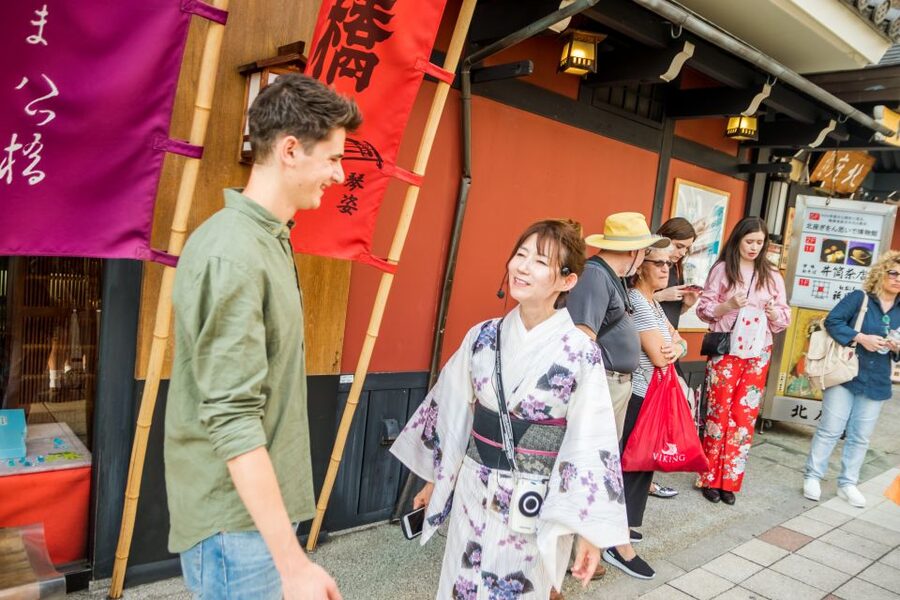
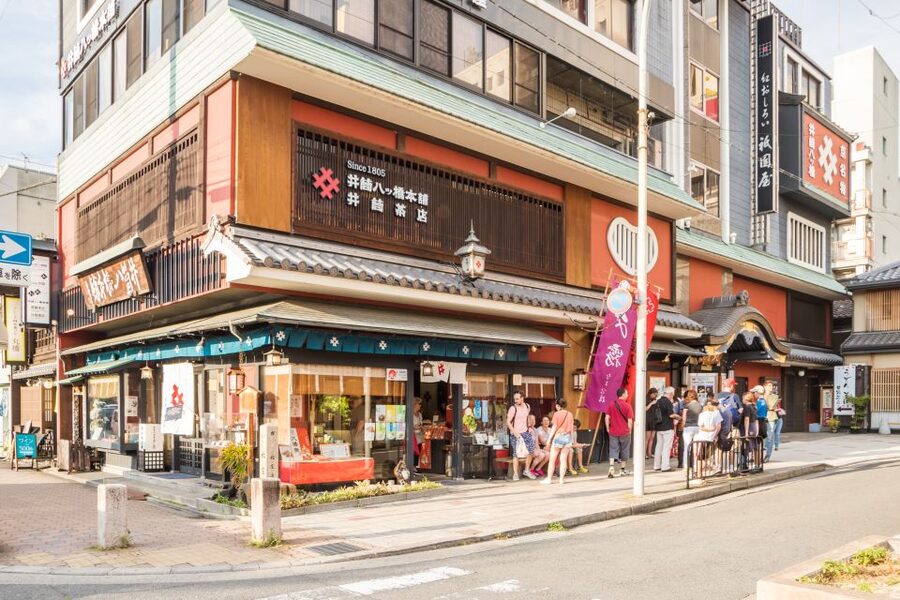
The meeting point is in front of the Gion Omoide Museum, connected to the Izutsu Yatsuhashi pastry shop. The location is near Gion Shijo Station, making it practical to reach from central Kyoto. I would arrive a little early because Gion’s lanes can feel confusing, especially after sunset.
The pastry-shop landmark matters. It gives you a clear fixed point instead of asking you to search for a guide somewhere inside a large station. The supplied coordinates are 35.0044519, 135.7723814, which can help if you use a map app.
Your guide leads the group on foot through the Gion district. The group size can vary, but several people specifically appreciated having a smaller group than the large walking tours they saw nearby. That makes a real difference in narrow streets. You can hear the guide better, keep together at crossings, and avoid forming a noisy crowd.
This is not a tour with hotel pickup, private transport, or a ride between sights. You must make your own way to Gion and back. That is no hardship for most visitors already spending an evening in eastern Kyoto, but it is worth planning around if you are staying far from the center.
More Kimono Experiences in Kyoto
- [Kyoto & Nara Day Tour] Sagano Scenic Railway & Nara Park & Fushimi Inari Taisha Thousand Torii Gates & Togetsukyo Bridge & Bamboo Grove & Kimono Forest (Departing from Osaka)
★ 4.9 · 10,942 reviews - Kyoto Geisha Walking Tour: Gion District & Hidden Gems
★ 4.7 · 3,273 reviews - Kyoto: Gion Magical Night Walking Tour with Geisha Trivia
★ 4.9 · 2,393 reviews
Walking the streets seen in Memoirs of a Geisha
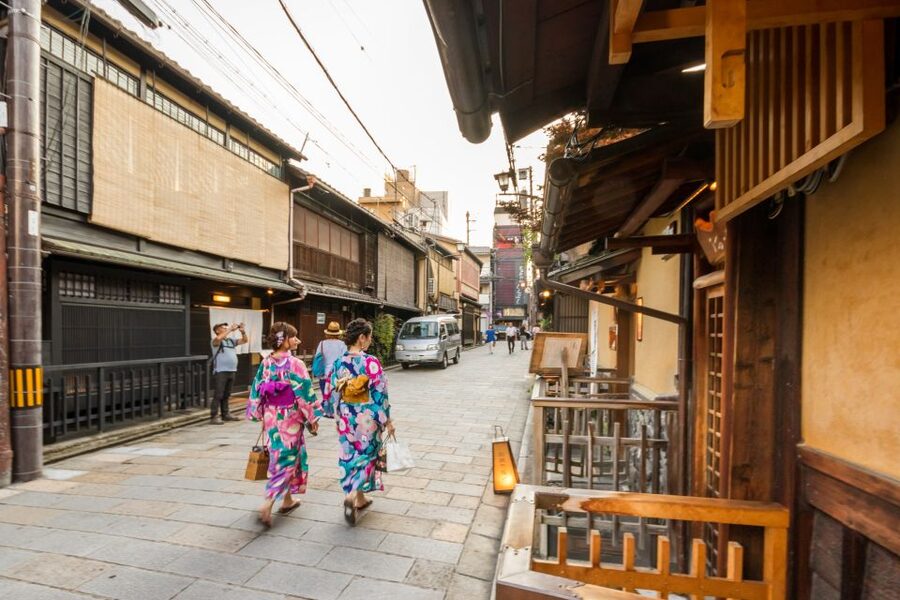
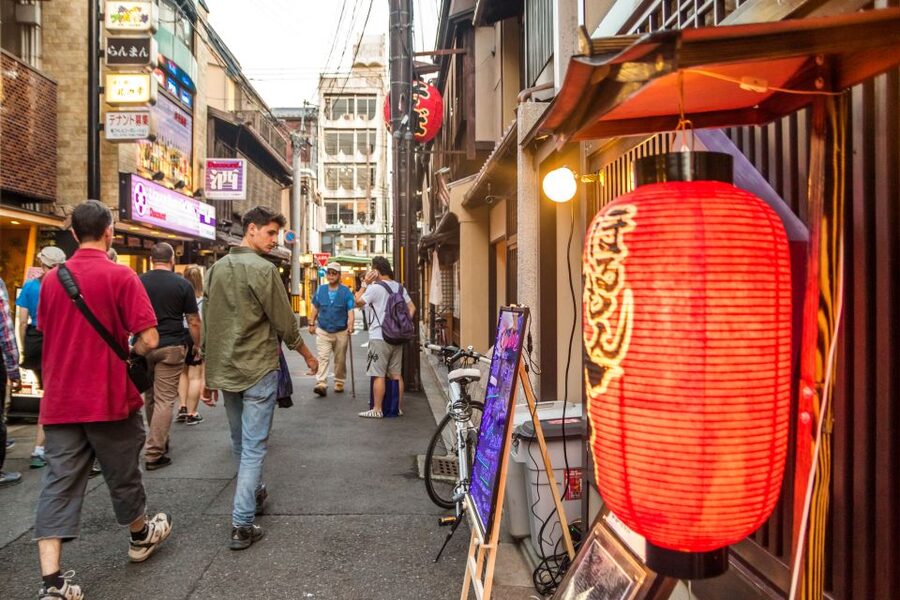
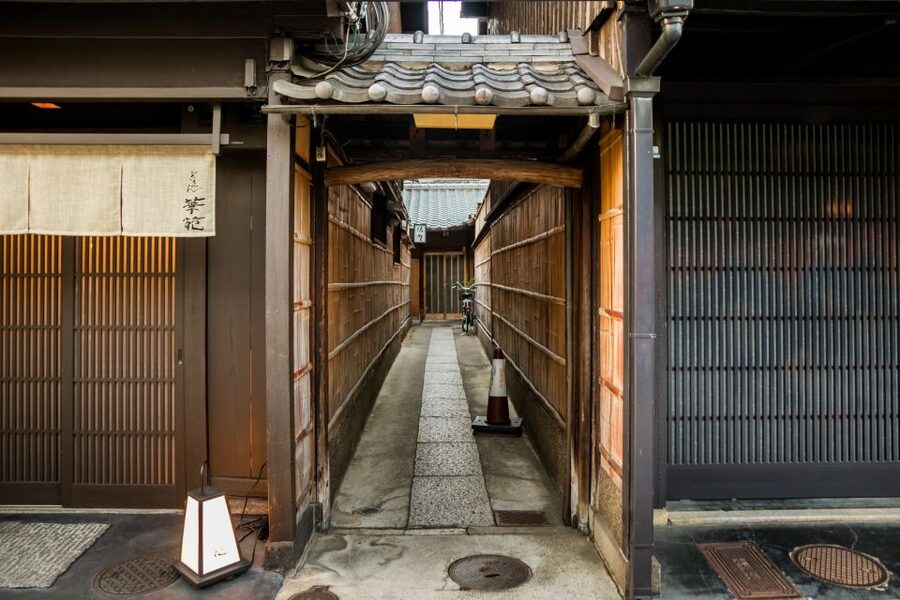
The first part of the route takes you along the traditional streets of Gion. These are the scenes many people recognize from photographs, books, and the film Memoirs of a Geisha. You will see wooden facades, narrow lanes, old-style entrances, and the carefully preserved appearance that makes Gion feel separate from modern Kyoto.
The beauty here is in the details. A plain doorway may belong to a tea house. A quiet lane may be used by geiko or maiko heading to an evening engagement. Your guide helps explain what you are looking at, rather than leaving you to guess which buildings are historic, private, or part of the entertainment district.
One useful distinction from the tour is the difference between a formal Tea House and an ordinary tea shop. The English translation can blur that difference. A traditional tea house is tied to the world of geiko and maiko, private gatherings, music, dance, conversation, and long-standing social customs. It is not simply a place where you walk in for a cup of tea.
That explanation gives the street scenes more meaning. Without it, Gion can look like a beautiful collection of old buildings. With it, you begin to understand how the district still functions after centuries of change.
Following the stream through Gion
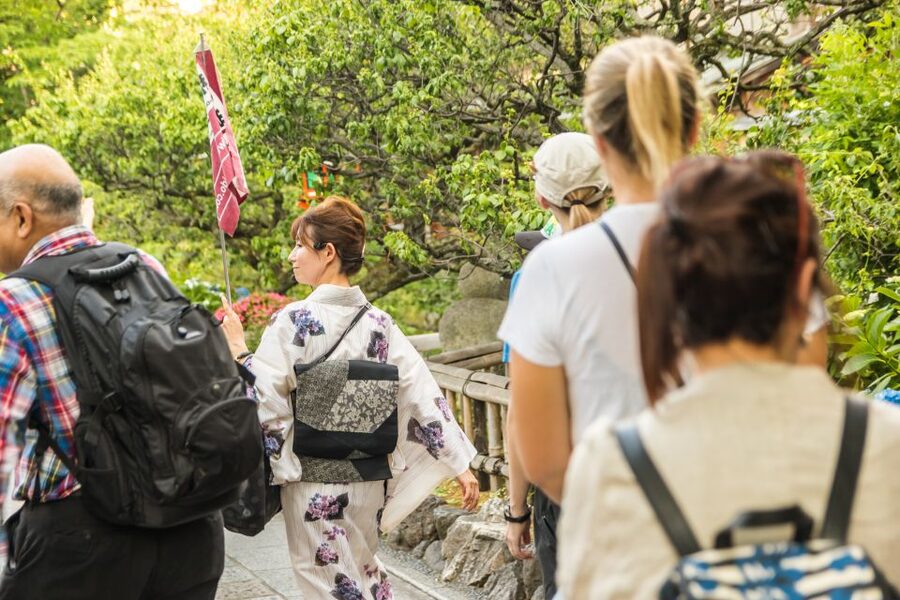
The route also follows a beautiful stream, adding a quieter side to the walk. Water, old buildings, and evening light create some of the best scenery on the tour. The streamside setting is especially pleasant because it gives the guide room to talk without the same pressure found on a tight lane.
This section is also useful for understanding why Gion attracts so much attention. The area is photogenic, but it is not an open-air stage. People who live and work here still need to move through these streets. A good guide makes that point early and often.
The walking pace is generally manageable. One review described the pace as good, and another family completed the tour with children, including a child in a pram. Still, the official information says the experience is not suitable for people with mobility impairments. You should expect an outdoor walk through traditional streets, not a route designed around accessible facilities.
Rain does not necessarily ruin the evening. Guides such as Chako have kept groups engaged during wet weather, but you should dress for conditions. The activity takes place outdoors for its full duration, so comfortable shoes and weather protection are sensible choices.
Learning what geiko and maiko really do
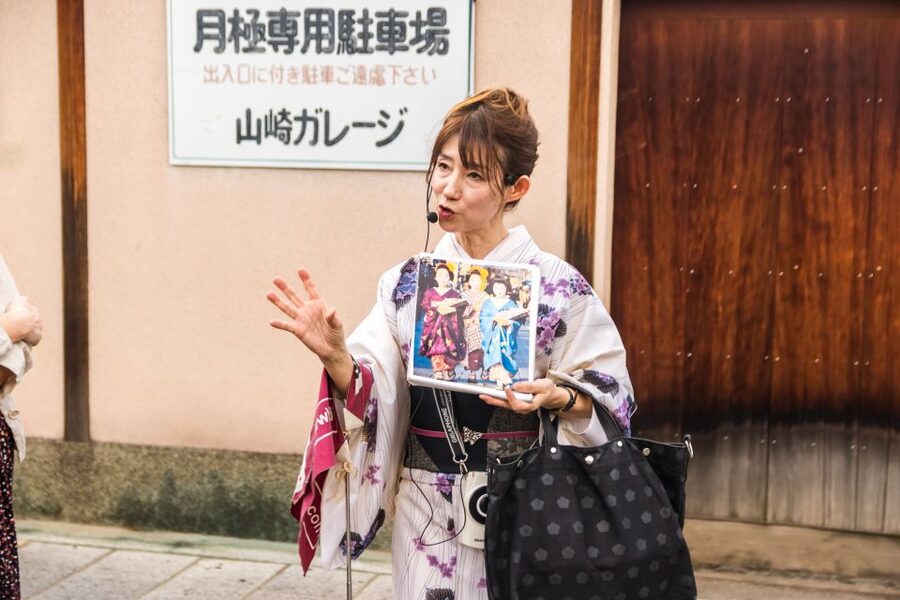
The strongest part of the tour is the explanation of geiko and maiko life. Your guide discusses their history, training, daily routine, clothing, hairstyles, and traditional rules. These details help correct the oversimplified image created by films and popular culture.
In Kyoto, the term geiko is commonly used for a professional entertainer trained in traditional arts. Maiko are apprentices, usually recognizable by different clothing and hairstyles. The guide explains the visual clues, so you can better understand who you are seeing and why their appearance changes over time.
The clothing itself becomes easier to read once someone points out the details. Kimono, hair ornaments, makeup, and footwear are not random costume choices. They communicate age, training stage, season, and role. Several guides have used photographs and visual charts to explain these points, which is helpful because the differences can be hard to spot at night.
The tour also covers the human side of the work. You learn about training, appointments, tea-house culture, and the demands of maintaining traditional arts in present-day Kyoto. This is where the experience earns its price. You are not just looking for an unusual photo. You are learning how a living profession fits into the city today.
Guides have also added small cultural details that are easy to miss in a standard sightseeing tour, including Japanese slang and everyday customs. That kind of material helps keep the walk from feeling like a memorized history lecture.
More Walking Tours in Kyoto
- Kyoto: Gion Geisha District Walking Tour – Stories of Geisha
★ 4.7 · 2,187 reviews - Kyoto Gion Geisha District Walking Tour – The Stories of Geisha
★ 5.0 · 1,441 reviews - Nishiki Market Brunch Walking Tour (7 Tastings + Brunch)
★ 5.0 · 1,355 reviews - Kyoto Arashiyama Walking Tour: Bamboo, Monkeys, Gardens & Secrets
★ 5.0 · 1,216 reviews
Seeing geiko and maiko, without treating them like attractions
You may encounter geiko or maiko walking through Gion. Some groups have seen several in one evening, including accounts of four maiko and one geiko, or even more than eight people. Other groups may see none. These sightings depend on timing, appointments, weather, and luck.
The guide may take you toward less crowded streets or areas where a sighting is more likely. That does not mean you are being promised access. Geiko and maiko are going to work, not performing for the sidewalk.
This is where the tour’s emphasis on manners matters. You may be told to keep your distance, bow appropriately, greet quietly, and avoid blocking the path. Guides have also been praised for protecting geiko and maiko from intrusive groups. Some people may find that frustrating if they hoped for a close photograph, but I consider it an important part of the experience.
Video recording is not allowed. In some situations, guides may also ask you not to take photographs of geiko or maiko. Respect that request immediately. The best memory may be the sight of someone passing through the lamplight, not a rushed image taken while several people crowd the lane.
The possibility of seeing a geiko or maiko adds excitement, but it should not be your only reason to book. The tour remains worthwhile for its street scenes and cultural explanation even if the evening produces no sighting.
Why the guides make the difference
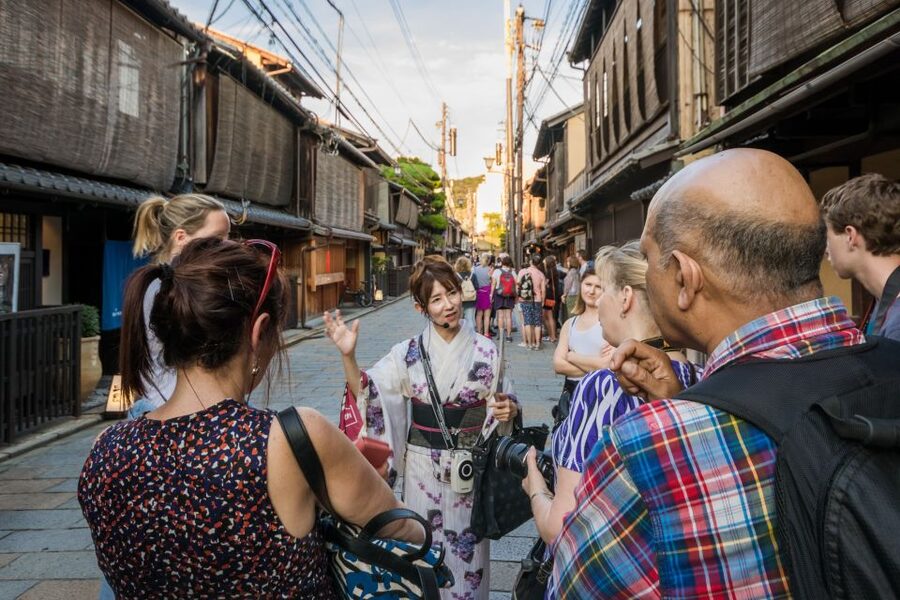
The quality of this walk depends heavily on the individual guide. The named guides praised in the supplied feedback include Mia, Mie, Chako, Chaco, Toko, Mai, and Haruto. Names can appear with slightly different spellings, but the pattern is clear: guides bring humor, personal interest, and strong English to the walk.
Mia has been especially praised for explaining etiquette and for knowing local details about geiko and maiko. Mie has been noted for clear English, lively anecdotes, photographs, and even Japanese slang. Chako has been praised for patience, humor, and keeping a large group together in the rain. Haruto was singled out for clear explanations of history, training, daily life, and tea-house culture.
You should not assume you will receive a particular guide. That is one limitation of a rotating guide team. But the experience appears designed around people who can make a difficult subject approachable. Children have enjoyed the humor and stories, while adults have appreciated the more serious discussion of privacy and tradition.
The best guides do not simply point at a passing figure and name her. They explain why she is dressed that way, where she may be going, and how you should behave. That turns a fleeting sight into a useful cultural lesson.
Is $21 good value for Kyoto?
At $21 per person, this is a reasonably priced guided activity in one of Kyoto’s most famous areas. The fee includes an English-speaking guide, which is the part that gives the tour its value. You are paying for interpretation, local context, route planning, and etiquette advice, not admission to a site.
The price is particularly fair if you are unfamiliar with Gion. You could walk these streets alone for free, but you would likely miss the meaning behind the buildings and the differences between geiko, maiko, and other performers. You might also make an awkward mistake when a working geiko or maiko passes by.
It is less suitable if you want a guaranteed performance, a meal, a tea ceremony, or entry into a private tea house. None of those is included. The activity is best seen as a cultural orientation and evening walk.
The operator has offered this walk since 2007, and more than 100,000 people have joined over time. That long run suggests a well-established format, but it also means you should choose the tour for its content, not because a large number automatically guarantees a perfect evening.
Timing, weather, and practical planning
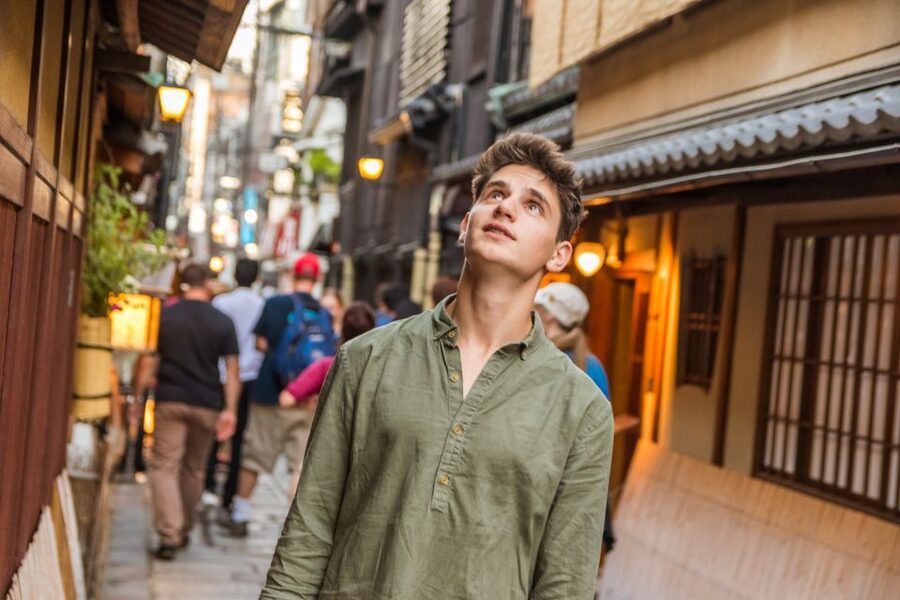
The walk is scheduled at night, with starting times that vary. One start time mentioned in the supplied feedback was 5:30 p.m., which can be useful for avoiding the strongest daytime heat and seeing Gion shift into its evening routine.
You should check the exact start time when booking. Plan to eat either before or after the walk, since food is not listed as part of the activity. The tour does not include transportation to attractions or hotel transfers.
Wear shoes you can walk in for about 100 minutes. Bring an umbrella or rain protection if the forecast looks uncertain. The route is outdoors, and even a passionate guide cannot make soaked socks comfortable.
Cancellation is flexible: you can cancel up to 24 hours in advance for a full refund. You can also reserve and pay later, which helps if your Kyoto schedule is still moving around. For children, a valid ID is required to receive the child discount.
Who will enjoy this Gion walk most?
I would recommend it to first-time Kyoto visitors, anyone curious about traditional Japanese arts, and people who want more context than a self-guided stroll provides. It also suits families better than you might expect, especially when the guide uses humor and stories to keep younger children involved.
It is a good choice for visitors who feel uneasy about geisha tourism. The tour makes privacy and respectful observation part of the lesson, rather than treating geiko and maiko as scenery. That ethical approach may mean fewer photographs, but it creates a better understanding of the neighborhood.
You may want to skip it if you have limited mobility, dislike walking outdoors at night, or want a guaranteed encounter. You should also think twice if your main goal is to photograph geiko or maiko up close. The tour’s rules are designed to prevent that kind of contact.
Should you book the Night Walk in Gion?
Book it if you want a clear, respectful introduction to Gion and the geiko and maiko tradition. At $21, the walk offers strong value because the guide supplies the context you cannot get from scenery alone.
Go in with the right expectation: you are joining a cultural walk, not buying a sighting. If you meet a geiko or maiko, observe quietly and let the moment pass naturally. If you do not, you still get a well-paced tour of Gion’s lanes, streamside views, tea-house customs, and living traditions.
FAQ
How long does the Night Walk in Gion last?
The activity duration is 100 minutes. It is also described as a roughly two-hour guided walk, so allow a little extra time around the scheduled start and finish.
How much does the tour cost?
The listed price is $21 per person.
Where does the tour meet?
It meets in front of the Gion Omoide Museum, connected to the Izutsu Yatsuhashi pastry shop. The meeting point is near Gion Shijo Station.
Is the tour conducted in English?
Yes. The tour includes a live English-speaking guide.
Will I definitely see a geiko or maiko?
No. Encounters often happen, but sightings are not guaranteed because geiko and maiko may be working at private appointments or using different streets.
Can I record video during the walk?
No. Video recording is not allowed. Guides may also ask you to avoid photographing geiko or maiko so they can pass without being disturbed.
Can I cancel and receive a refund?
Yes. You can cancel up to 24 hours in advance for a full refund. The activity also offers a reserve-now, pay-later option.
Just added in Kyoto
- The “Golden Route” and Ancient Japan by DIAMIR Erlebnisreisen – 14-Day Tour★ 2.0 · 2 reviews
- Japan: Castles & Cuisine by G Adventures – 6-Day Kyoto to Osaka Tour★ 4.5 · 4 reviews
- Cycle Japan by Explore! – 13-Day Kyoto to Tokyo Tour★ 4.7 · 12 reviews
- Cycle Japan by Intrepid Travel – 11-Day Kyoto to Tokyo Tour★ 4.8 · 2 reviews
- Classic Japan by Intrepid Travel – 11-Day Kyoto to Tokyo Tour★ 4.4 · 14 reviews
- Ancient & Modern Japan 14-Day Tour by Exodus Adventure Travels★ 4.4 · 40 reviews
- 5 Day Cultural Adventure of Kyoto, Nara & Osaka by Tourist Journey★ 2.5 · 2 reviews
- 12 Days Kinosaki Onsen Escape: A Journey Through Japan’s Timeless Towns by UME Travel★ 4.8 · 5 reviews
Kimono and Cultural Dress, compared.
![[Kyoto & Nara Day Tour] Sagano Scenic Railway & Nara Park & Fushimi Inari Taisha Thousand Torii Gates & Togetsukyo Bridge & Bamboo Grove & Kimono Forest (Departing from Osaka)](https://media.japanvisits.com/wp-content/uploads/kyoto-nara-day-tour-sagano-scenic-railway-nara-park-fushimi-inari-taisha-thousand-torii-gates-togetsukyo-bridge-bamboo-grove-kimono-forest-departing-from-osaka-k110001-400x257.jpg)

Tokyo Asakusa Kimono&Yukata Rental at Kimono Miyabi Asakusa Station
Read our review →
Kyoto Geisha Walking Tour: Gion District & Hidden Gems
Read our review →
Gion Magical Night Walking Tour with Geisha Trivia
Read our review →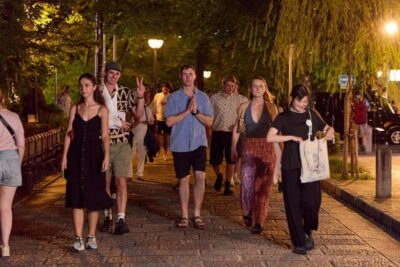
Gion Geisha District Walking Tour – Stories of Geisha
Read our review →
Best of Kyoto: Gion, Geisha, Pagodas & Cobblestones
Read our review →
Kyoto Kimono Rental Experience (Optional Exquisite Hair Styling/Japanese Makeup/Photography) (Ookini Kiyomizu-dera Main Store)
Read our review →
Kyoto Gion Geisha District Walking Tour – The Stories of Geisha
Read our review →Browse the lists this tour appears in