
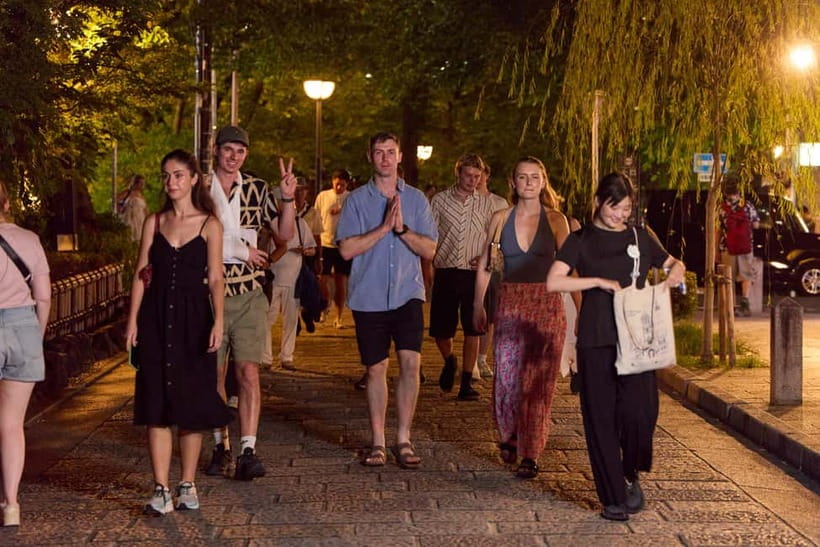
Reviewed · KIMONO AND CULTURAL DRESS
Kyoto: Gion Geisha District Walking Tour – Stories of Geisha
Kyoto’s evening streets tell a different story. This two-hour walk through Gion and Pontocho gives you a clear introduction to geiko and maiko traditions, old teahouse districts, and the customs that still shape Kyoto’s nighttime culture. I like the route because it combines famous sights with narrow lanes where the atmosphere feels far removed from modern Kyoto.
I especially like the friendly, question-focused guiding and the reasonable $20 price. Guides such as Yuki, Nami, Deborah, Yukari, Manuel, and Kenji have earned praise for making the subject easy to follow, even for people starting with little knowledge. The main consideration is that seeing a geiko or maiko is possible, not promised, and evening darkness can make some buildings and details harder to see.
In This Review
- The key things to know before you go
- Starting at Ben’s Cookies Kyoto Shijo
- Pontocho Alley and Kyoto after dark
- Izumo-no-Okuni and the story behind kabuki
- Entering Gion, Kyoto’s most famous geisha district
- Yasaka Shrine after sunset
- Gion Corner and the meaning of performance
- Hanamikoji Street and the final walk
- What the guides do best
- How much walking and waiting should you expect?
- Is $20 good value?
- Who should book this evening walk?
- FAQ
- Where does the tour meet?
- How long does the tour last?
- What areas does the tour visit?
- Is the tour held at night?
- Can I see a geiko or maiko?
- What languages are available?
- Is food included?
- How much does the tour cost?
- Are children under 10 allowed?
- What should I bring?
- Should you book it?
The key things to know before you go
- Pontocho Alley comes first, with traditional eateries, old wooden buildings, and an introduction to Kyoto’s elite entertainment districts.
- The statue of Izumo-no-Okuni connects the walk to the origins of kabuki and gives the tour a wider cultural frame.
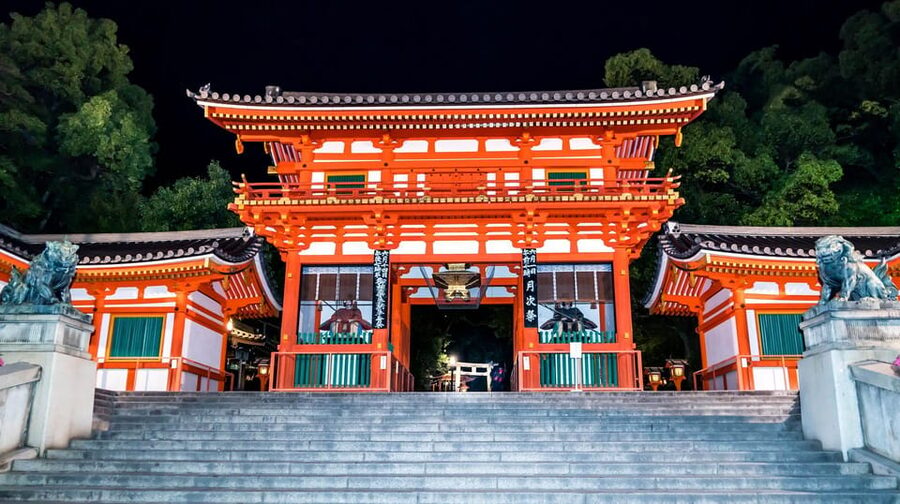
- Yasaka Shrine adds a major Kyoto landmark to a tour that might otherwise focus only on geisha culture.
- Hanamikoji is the best place to watch the evening rhythm, though you must give working geiko and maiko plenty of space.
- Guide quality is a major strength, with repeated praise for Yuki, Nami, Deborah, Yukari, Manuel, Kenji, Shin, and others.
- The tour costs $20 and lasts two hours, making it a useful first-night orientation rather than a full study of Kyoto.
Starting at Ben’s Cookies Kyoto Shijo
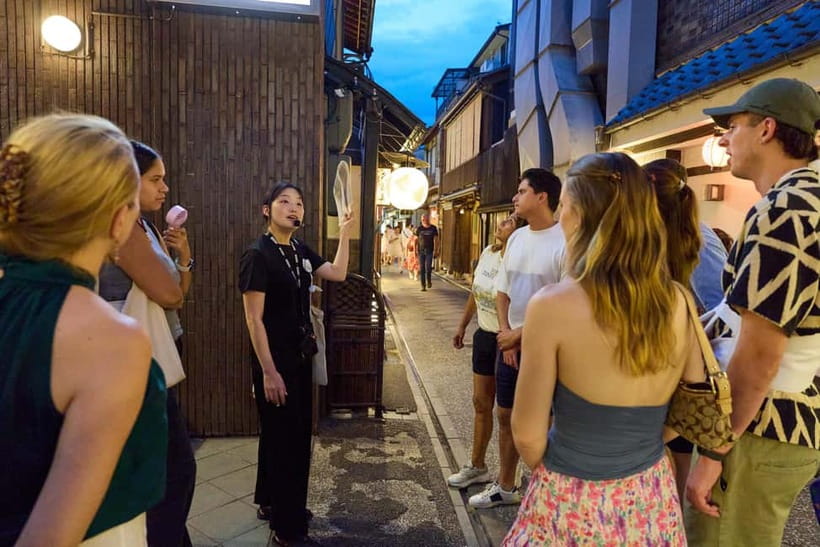
The meeting point is in front of Ben’s Cookies Kyoto Shijo, where your guide holds a sign board. This is a practical central location, but you should arrive with the name and appearance of the shop clear in your mind. A busy Kyoto street can look confusing at night, especially if you are watching for a guide while also navigating crowds and shopfronts.
The opening section lasts about 10 minutes. Treat it as a chance to get comfortable with the group, meet your guide, and learn how the walk will work. Guides use English or Spanish, depending on the booking, and the tone is generally conversational rather than formal.
The best guides adjust their explanations to the group. Ann, for example, was praised for adapting the content for people with no prior knowledge as well as those who already understood something about geisha culture. That matters because the subject has unfamiliar terms, customs, and social rules. A good explanation keeps the walk from becoming a string of pretty streets with no context.
Bring water. You will be on your feet for two hours, and the route includes narrow lanes and ordinary city streets rather than a series of indoor stops. Wear comfortable shoes, since the value here comes from walking slowly enough to listen and look around.
More Kimono Experiences in Kyoto
- [Kyoto & Nara Day Tour] Sagano Scenic Railway & Nara Park & Fushimi Inari Taisha Thousand Torii Gates & Togetsukyo Bridge & Bamboo Grove & Kimono Forest (Departing from Osaka)
★ 4.9 · 10,942 reviews - Kyoto Geisha Walking Tour: Gion District & Hidden Gems
★ 4.7 · 3,273 reviews - Kyoto: Gion Magical Night Walking Tour with Geisha Trivia
★ 4.9 · 2,393 reviews
Pontocho Alley and Kyoto after dark
The first main stop is Pontocho Alley, visited for about 15 minutes. This narrow lane is lined with Japanese restaurants and elite clubs, many in traditional wooden buildings. At night, the low light and compact architecture help you see why this part of Kyoto has become linked with discreet dining and entertainment.
Your guide explains how the district works and points out details you could easily miss alone. The walk is not about entering private clubs or trying to force your way into places that are not open to you. Instead, you learn to read the street from outside and understand its role in Kyoto’s traditional entertainment culture.
This is one of the tour’s useful features: it places geiko and maiko within a working district, not on a stage built only for sightseeing. You are seeing the streets they may use on the way to appointments, while also learning that these lanes are people’s workplaces. That distinction helps you behave properly later in Gion.
The route then crosses the river toward the statue of Izumo-no-Okuni. Depending on the season and weather, the transition may feel brisk. One autumn report noted that darkness came early, so some sights were easier to appreciate in daylight. If you want bright architectural photographs, plan other daytime visits around this evening walk.
Izumo-no-Okuni and the story behind kabuki
The statue of Izumo-no-Okuni gets roughly 15 minutes. Your guide uses the stop to explain the woman associated with the creation of kabuki, one of Japan’s best-known performance arts.
This is a smart pause in the itinerary. Without it, a tour about geiko and maiko could become too narrow. The statue reminds you that Kyoto’s entertainment traditions developed through performance, music, costume, dance, and changing social customs. It also helps connect the old districts to Japanese theatre more generally.
The stop is short, so do not expect a full account of kabuki. Its purpose is to give you a memorable reference point and show how different parts of Kyoto’s cultural life overlap. Guides often use photographs and visual aids, which can help when the surrounding streets are dim.
I like this part because it gives the tour a clear thread. You are not simply being led from one picturesque lane to the next. You are moving through places connected to performance and formal hospitality, with the guide explaining why those traditions mattered.
Entering Gion, Kyoto’s most famous geisha district
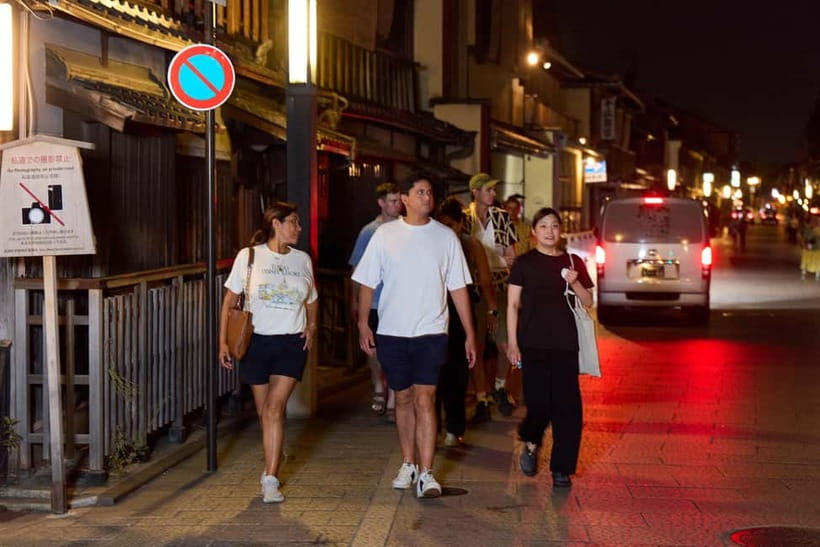
The walk continues into Gion for about 30 minutes. This is the section most people anticipate, but it is also the section where respectful behavior matters most.
Gion’s old wooden teahouses and narrow lanes create the setting people associate with Kyoto’s geiko culture. Your guide explains the difference between geiko and maiko, their training, and the importance of ceremony, presentation, and artistic skill. The exact amount of detail depends on the guide and the questions from your group, but the strongest guides make the subject feel human rather than mysterious.
Yuki received especially warm praise for his pride in Kyoto and his respect for local heritage. Other strong guide names include Nami, Deborah, Yukari, Manuel, Michael, Kenji, Shin, and Melanie. The repeated pattern is clear: the quality of the experience depends heavily on who leads your group.
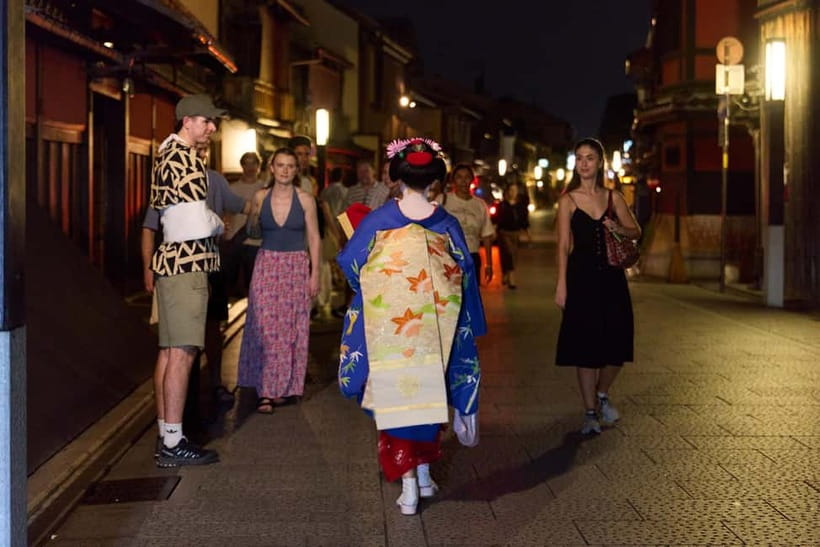
Do not expect a staged appearance. You may see a maiko or geiko heading to an appointment, as several people did, but sightings depend on the evening. One group saw a maiko, another saw a geiko, and another had few sightings but still found the explanations worthwhile.
That unpredictability is part of the honest value of the tour. If your only goal is a photograph of a geiko, this walk cannot guarantee success. If you want to understand the districts and learn how to recognize the difference between geiko and maiko, the tour remains useful even on a quiet night.
More Walking Tours in Kyoto
- Night Walk in Gion: Kyoto’s Geisha District
★ 4.5 · 2,003 reviews - Kyoto Gion Geisha District Walking Tour – The Stories of Geisha
★ 5.0 · 1,441 reviews - Nishiki Market Brunch Walking Tour (7 Tastings + Brunch)
★ 5.0 · 1,355 reviews - Kyoto Arashiyama Walking Tour: Bamboo, Monkeys, Gardens & Secrets
★ 5.0 · 1,216 reviews
Yasaka Shrine after sunset
Yasaka Shrine receives about 25 minutes, making it one of the longer stops. The shrine is one of Kyoto’s major landmarks and gives the tour a welcome change of pace after the close lanes of Gion.
Your guide explains the shrine and its place in the area, while also tying it back to local customs and daily life. This is a good moment to ask questions. Several guides were praised for regularly checking that everyone could keep up and had time to speak.
At night, the shrine has a different feel from a daytime temple visit. Some details may be less visible, and photography can be harder, but the quieter setting helps you focus on the guide’s story. If you have already visited Yasaka Shrine during the day, the evening stop still provides a useful connection between the shrine and the surrounding entertainment district.
The shrine stop also helps pace the walk. Two hours in narrow streets can feel repetitive if there are no pauses. Here, you have room to stop, listen, and reset before continuing to the final streets of Gion.
Gion Corner and the meaning of performance
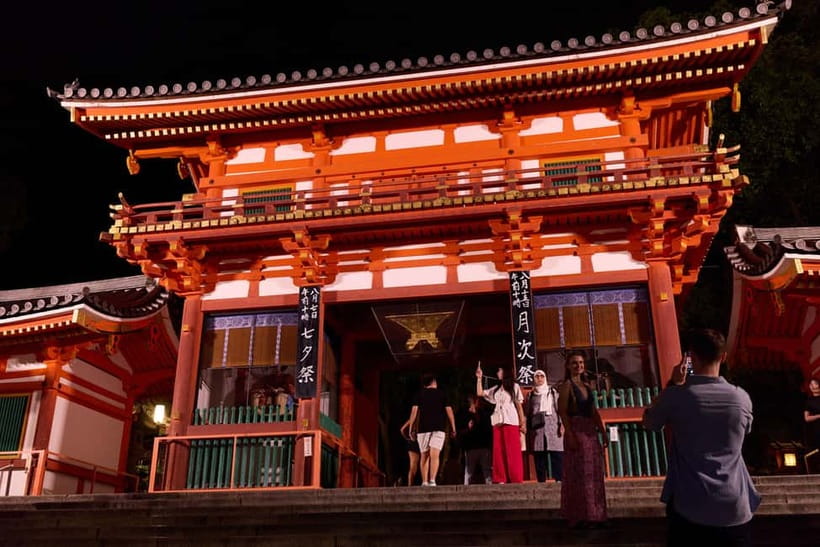
Gion Corner is covered for about 10 minutes. The stop is brief, but it reinforces the connection between Kyoto’s entertainment districts and the performing arts.
Do not assume that this tour includes a formal show or a performance ticket. The activity includes a walking tour and a local guide, not an advertised stage performance. Gion Corner is visited as part of the route, with the guide explaining its relevance.
This distinction is important when comparing prices. At $20, you are paying for interpretation and access to a well-planned walk, not a theatre evening, meal, or geisha makeover. The price is modest for Kyoto, especially if you want an orientation before spending more on other cultural activities.
Hanamikoji Street and the final walk
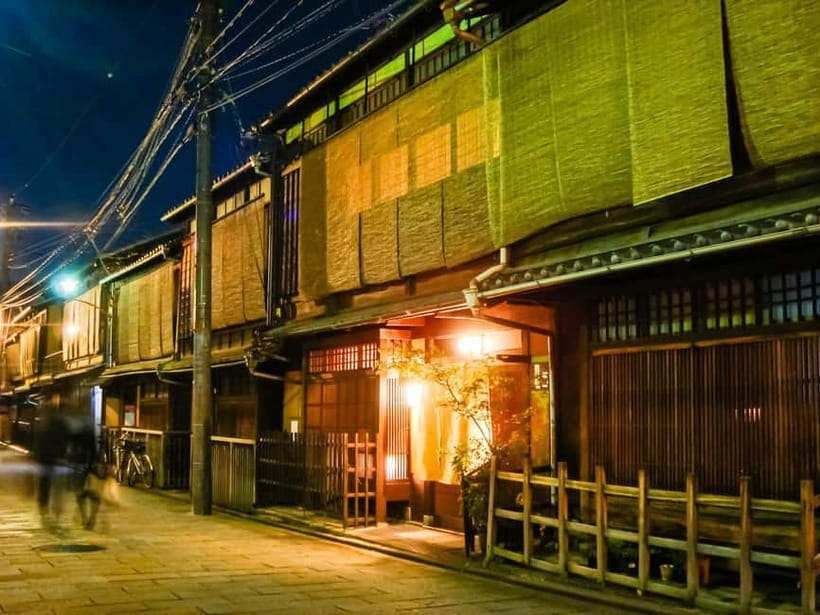
The final listed stop is Hanamikoji Street, with about 15 minutes of guided time. This is one of Gion’s best-known streets, with traditional facades and lanes leading toward teahouses and other establishments.
The street is a good place to put the tour’s etiquette advice into practice. If you see a geiko or maiko, keep your distance, avoid blocking the lane, and do not treat someone going to work as a public attraction. Your guide can help you spot people respectfully, but the experience should never become a chase.
Hanamikoji is also where the tour’s mix of history and present-day life comes together. The old buildings are not museum scenery. They form part of an active district, and the people walking through it are managing appointments, work, and ordinary errands.
One useful practical point: the walk finishes in the Gion or Hanamikoji area rather than simply returning you to the original cookie shop. A person on one autumn tour was surprised by this and had to find the way back. It was not difficult, but you should pay attention to the ending point and keep your phone ready for directions.
What the guides do best
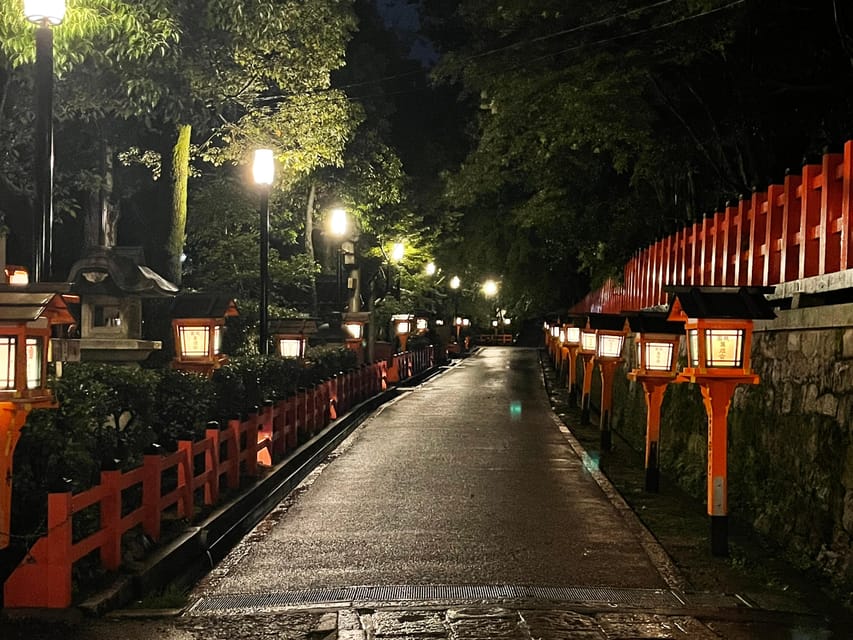
The strongest part of this experience is the guiding. The overall rating is 4.7 from 2,187 reviews, and the praise focuses less on scenery than on the people explaining it.
Nami is repeatedly described as clear, friendly, and attentive. She has been praised for sending useful meeting information, checking the group’s pace, and explaining the subject in a way that makes two hours pass quickly. Deborah is praised for enthusiasm, humor, photographs, and her ability to make complicated traditions understandable.
Yuki is another frequent favorite. His local connection to Kyoto and respect for geiko and maiko culture give his explanations a personal tone. Kenji is praised for a well-paced walk and strong background information, while Manuel is valued for keeping the subject interesting and answering questions carefully.
Other guides, including Yukari, Shin, Melanie, Michael, Adrian, Akari, and Nami, are also described as warm and engaging. You cannot always choose your guide, so I would judge the tour as a well-run experience rather than book it solely for one particular name.
The guide’s personality matters because geisha culture can be misunderstood. A good guide replaces clichés with practical explanations about training, performance, etiquette, and the difference between a cultural tradition and a tourist show.
How much walking and waiting should you expect?
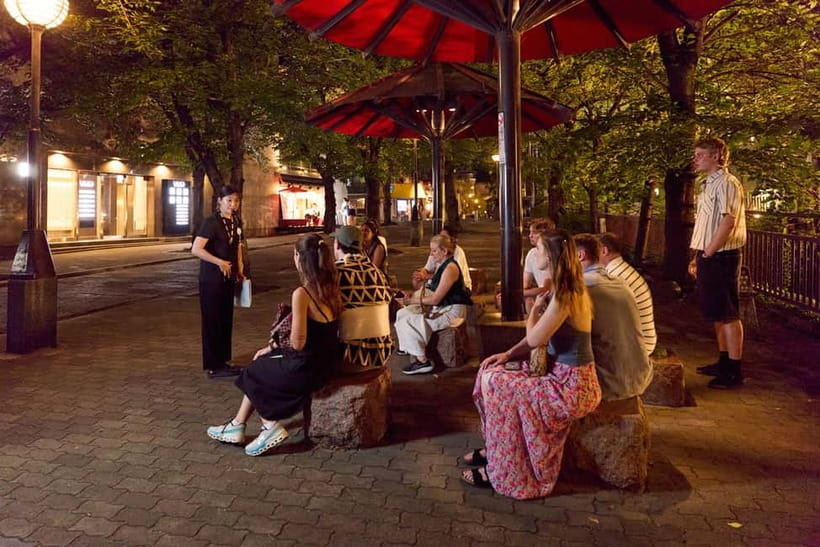
The tour lasts two hours and includes several short stops. The walking is described as easy, but you should still expect to remain on your feet for most of the activity.
The schedule totals approximately:
- 10 minutes at the starting point
- 15 minutes in Pontocho Alley
- 15 minutes at the Izumo-no-Okuni statue
- 30 minutes in Gion
- 25 minutes at Yasaka Shrine
- 10 minutes at Gion Corner
- 15 minutes on Hanamikoji Street
These times are a guide rather than a promise of exact minute-by-minute movement. Questions, photographs, weather, and the pace of the group can alter the rhythm.
Small groups can make the walk more personal. One group of six found the pace comfortable, while another group of about 13 still found it easy to follow. Group size can vary, so do not assume every departure will feel intimate.
Rain does not automatically ruin the experience. One group completed the walk in heavy rain, with the guide using sheltered places for explanations. Still, poor weather can reduce visibility and make the old lanes slippery, so suitable shoes and a light rain layer are sensible.
Is $20 good value?
Yes, if you want context rather than a luxury experience. For $20, you receive a two-hour guided walk through two important Kyoto districts, a local guide, explanations in English or Spanish, and visits to several major points.
The value is strongest if this is your first time in Kyoto. The walk helps you understand what you are seeing before you explore Gion alone. It can also help you decide how to spend the rest of your stay, since guides sometimes offer suggestions for restaurants and other Kyoto activities.
The price does not include food, drinks, entrance fees, or a performance. The tour provider’s name includes food tours, but this particular experience is a walking tour only. Bring water and plan your meal separately.
Free cancellation up to 24 hours before the start gives you some flexibility, and you can reserve now and pay later. Children under 10 are not suitable for this activity. Alcohol and drugs are not allowed.
Who should book this evening walk?
I would recommend it to first-time Kyoto visitors, adults, older children aged 10 and above, and anyone who wants a respectful introduction to geiko and maiko traditions.
It suits you especially well if you enjoy local stories, historic streets, and asking questions. It is also a strong choice early in your Kyoto stay, since the background can help you understand later visits to Gion and other traditional districts.
I would think twice if you want a guaranteed geisha sighting, a private tour, a seated performance, or a food tasting. You should also consider a daytime visit to Gion if architecture and photography are your main goals, since evening darkness can hide details.
FAQ
Where does the tour meet?
Meet your guide in front of the Ben’s Cookies Kyoto Shijo shop. The guide will be holding a sign board.
How long does the tour last?
The walking tour lasts two hours.
What areas does the tour visit?
The route visits Pontocho Alley, the statue of Izumo-no-Okuni, Gion, Yasaka Shrine, Gion Corner, and Hanamikoji Street.
Is the tour held at night?
Yes. This is a nighttime walking tour of Gion and Pontocho.
Can I see a geiko or maiko?
You may encounter a geiko or maiko heading to an appointment, but sightings are not guaranteed.
What languages are available?
Live guiding is available in English and Spanish.
Is food included?
No. The included services are the walking tour and local guide. Food and drinks are not listed as included.
How much does the tour cost?
The price is $20 per person.
Are children under 10 allowed?
The tour is not suitable for children under 10.
What should I bring?
Bring water. Comfortable walking shoes and weather-appropriate clothing are also sensible for a two-hour outdoor walk.
Should you book it?
Book this tour if you want a low-cost, well-explained introduction to Kyoto’s geiko districts. Its greatest strength is not the promise of a sighting. It is the chance to walk through Pontocho and Gion with someone who can explain what you are seeing and why it matters.
I would book it near the start of a Kyoto visit, then return to Gion later on your own if you want more time for photographs and quiet exploration. Choose this walk for stories, etiquette, and local context. Skip it only if you are looking for a guaranteed performance, a meal, or a private experience.
Just added in Kyoto
- The “Golden Route” and Ancient Japan by DIAMIR Erlebnisreisen – 14-Day Tour★ 2.0 · 2 reviews
- Japan: Castles & Cuisine by G Adventures – 6-Day Kyoto to Osaka Tour★ 4.5 · 4 reviews
- Cycle Japan by Explore! – 13-Day Kyoto to Tokyo Tour★ 4.7 · 12 reviews
- Cycle Japan by Intrepid Travel – 11-Day Kyoto to Tokyo Tour★ 4.8 · 2 reviews
- Classic Japan by Intrepid Travel – 11-Day Kyoto to Tokyo Tour★ 4.4 · 14 reviews
- Ancient & Modern Japan 14-Day Tour by Exodus Adventure Travels★ 4.4 · 40 reviews
- 5 Day Cultural Adventure of Kyoto, Nara & Osaka by Tourist Journey★ 2.5 · 2 reviews
- 12 Days Kinosaki Onsen Escape: A Journey Through Japan’s Timeless Towns by UME Travel★ 4.8 · 5 reviews
Kimono and Cultural Dress, compared.
![[Kyoto & Nara Day Tour] Sagano Scenic Railway & Nara Park & Fushimi Inari Taisha Thousand Torii Gates & Togetsukyo Bridge & Bamboo Grove & Kimono Forest (Departing from Osaka)](https://media.japanvisits.com/wp-content/uploads/kyoto-nara-day-tour-sagano-scenic-railway-nara-park-fushimi-inari-taisha-thousand-torii-gates-togetsukyo-bridge-bamboo-grove-kimono-forest-departing-from-osaka-k110001-400x257.jpg)

Tokyo Asakusa Kimono&Yukata Rental at Kimono Miyabi Asakusa Station
Read our review →
Kyoto Geisha Walking Tour: Gion District & Hidden Gems
Read our review →
Gion Magical Night Walking Tour with Geisha Trivia
Read our review →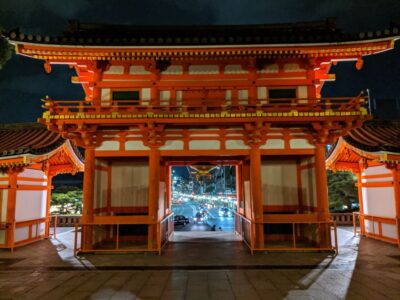
Best of Kyoto: Gion, Geisha, Pagodas & Cobblestones
Read our review →
Kyoto Kimono Rental Experience (Optional Exquisite Hair Styling/Japanese Makeup/Photography) (Ookini Kiyomizu-dera Main Store)
Read our review →
Kyoto Gion Geisha District Walking Tour – The Stories of Geisha
Read our review →Browse the lists this tour appears in