
Reviewed · KIMONO AND CULTURAL DRESS
Kyoto Gion Geisha District Walking Tour – The Stories of Geisha
Lanterns make Gion feel like another Kyoto. This two-hour evening walk brings you through the city’s famous geisha quarter after the largest daytime crowds have gone, with clear explanations of geiko, maiko, local customs, and the streets themselves. I especially like the small maximum group of 15 and the chance to see places such as Tatsumi Bridge, Hanamikoji Street, and Yasaka Shrine in one compact outing. The main drawback is that you spend much of the tour on foot, and winter evenings can be seriously cold.
I also like the price: $25 per person is modest for a guided introduction to one of Kyoto’s most culturally important areas. Guides such as Ben, Shin, Deborah, Melanie, Nami, Kenji, and Joy have been praised for making the subject easy to understand, though the exact guide and group chemistry will vary by departure.
In This Review
- Key Things to Know Before You Go
- Why an Evening Walk Works So Well in Gion
- Meeting in Shijo and Reaching the Old Quarter
- Izumo-no-Okuni and the Kabuki Connection
- Minamiza, Kyoto’s Kabuki Theater
- Tatsumi Bridge and Gion Shinbashi
- Hanamikoji Street and the Most Famous Gion Views
- Gion Corner and the Living Arts of Kyoto
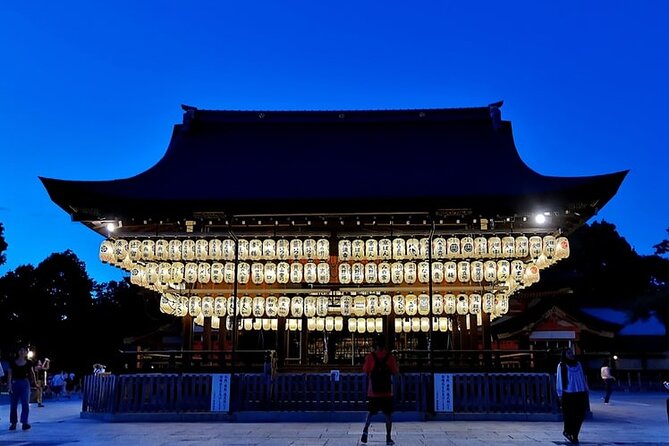
- Yasaka Shrine: Ending Beneath the Lanterns
- What the Guides Add to the Experience
- How Much Walking and What to Wear
- Is $25 a Fair Price?
- Who Should Book This Gion Walk?
- Cancellation and Practical Details
- Should You Book the Kyoto Geisha Walking Tour?
- FAQ
- How long does the Kyoto Gion Geisha District Walking Tour last?
- What is the price of the tour?
- Where does the tour begin?
- Where does the tour end?
- What places are included on the walking route?
- Is the tour conducted after dark?
- How large can the group be?
- Are admission fees included?
- Is bottled water provided?
- Can I cancel for a full refund?
- What happens if bad weather cancels the tour?
- Is the tour suitable for most people?
Key Things to Know Before You Go
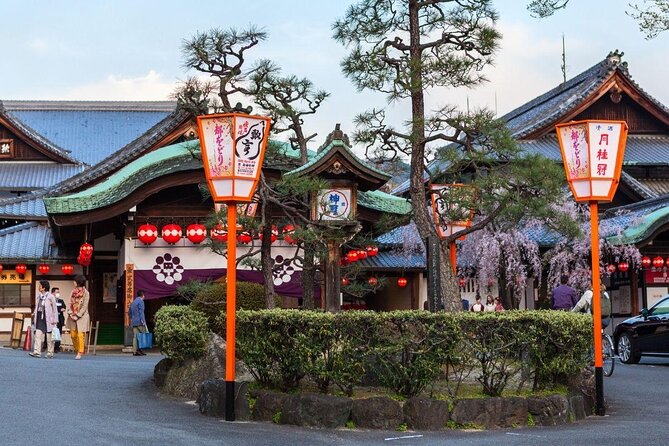
- Gion after dark: The tour takes place when the district is lit by lanterns and the biggest daytime crowds have thinned.
- A compact cultural lesson: You learn about geiko, maiko, the entertainment districts, and Kyoto’s past while walking between major sights.
- Small-group format: The group is capped at 15 people, making it easier to hear the guide and ask questions.
- Useful first-night activity: The route helps you understand Gion and nearby areas early in your Kyoto stay.
- Mostly outdoor sightseeing: Bring suitable clothing, since the experience runs in the open air and requires a fair amount of walking.
- Strong overall rating: The experience is rated 4.8 out of 5 from 1,441 ratings, with 96 percent recommending it.
Why an Evening Walk Works So Well in Gion
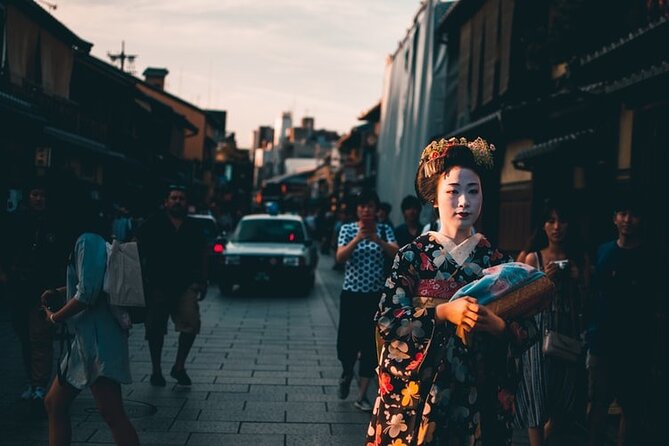
Gion is one of Kyoto’s most recognizable districts, but it is not always easy to understand on your own. During the day, visitors fill the main lanes, stop for photographs, and often pass traditional buildings without knowing what they are seeing. At night, the mood changes.
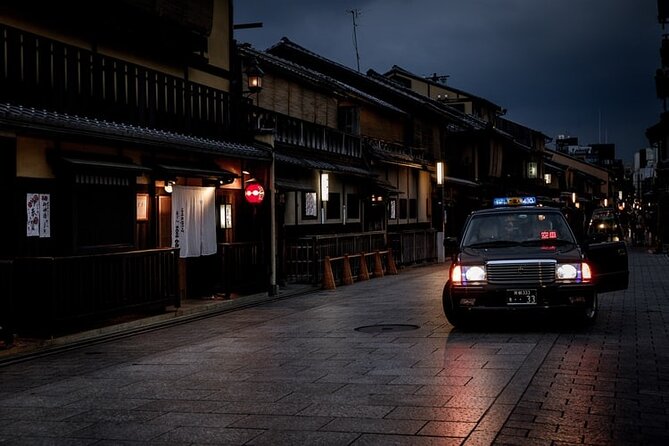
The wooden facades, narrow lanes, restaurant entrances, and lanterns become easier to appreciate when you are not trying to see them through a large daytime crowd. The tour does not promise a private encounter with a geiko or maiko, and you should not treat it as a guaranteed sighting experience. Its real value is the setting and the explanation.
Your guide helps connect the streets to the people who work there. You learn why some buildings matter, how the flower districts operate, and how geiko and maiko fit into Japanese entertainment culture. Several guides have also brought in wider stories about Kyoto and Japan, which helps the tour feel like more than a quick photo walk.
I would place this activity early in a Kyoto visit. It gives you a framework for later visits to Gion, traditional performances, shrines, and tea-related cultural sites. You may return to the same streets afterward and notice details you would have missed before.
More Kimono Experiences in Kyoto
- [Kyoto & Nara Day Tour] Sagano Scenic Railway & Nara Park & Fushimi Inari Taisha Thousand Torii Gates & Togetsukyo Bridge & Bamboo Grove & Kimono Forest (Departing from Osaka)
★ 4.9 · 10,942 reviews - Kyoto Geisha Walking Tour: Gion District & Hidden Gems
★ 4.7 · 3,273 reviews - Kyoto: Gion Magical Night Walking Tour with Geisha Trivia
★ 4.9 · 2,393 reviews
Meeting in Shijo and Reaching the Old Quarter
The starting point is Ben’s Cookies Kyoto Shijo, at 89 Shinchō in Kyoto’s Shimogyo Ward. The meeting point is near public transportation, which makes it a practical place to reach from central Kyoto.
You receive confirmation at the time of booking, and the ticket is mobile, so you do not need to arrange a printed voucher. Since the tour begins in a busy central part of the city and ends at Yasaka Shrine, you should think of it as a one-way introduction rather than a loop back to the starting point.
That end point is useful. Yasaka Shrine is near the heart of Gion, so you can continue exploring afterward or make your own way to dinner. The tour does not include bottled water, so carry your own if you need it.
Izumo-no-Okuni and the Kabuki Connection
One early stop is the statue of Izumo-no-Okuni, a bronze monument dedicated to the figure traditionally regarded as the founder of Kabuki theater. The stop lasts about 10 minutes and has no admission charge.
This is a smart opening subject because Gion is not only about geisha. It is also part of Kyoto’s long tradition of theater, dance, music, and public entertainment. The statue gives your guide a chance to explain how performance culture shaped this part of the city.
The connection between Kabuki and the geisha districts helps correct a common misunderstanding. Geiko and maiko are not simply costumed entertainers for tourists. Their work belongs to a formal artistic tradition involving performance, conversation, music, dance, and carefully observed customs.
If you know little about Japanese theater, this section may be especially useful. It places the evening in a larger cultural setting before you start looking closely at the streets and tea houses.
Minamiza, Kyoto’s Kabuki Theater
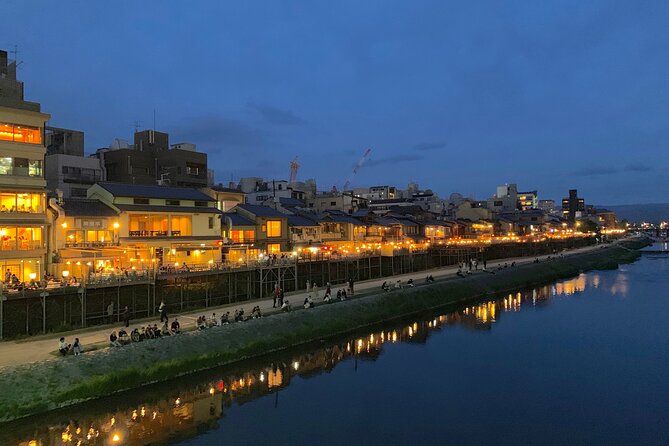
The route also includes Minamiza, a famous Kyoto theater associated with Kabuki performances. The theater is known for elaborate costumes, dramatic storytelling, and a highly stylized form of stagecraft.
The stop is valuable because it gives you a physical landmark for the performing arts discussed at the statue. You are not just hearing abstract facts about Japanese entertainment. You are seeing one of Kyoto’s best-known traditional theater venues.
The supplied timing does not list a separate duration for every stop, so expect the guide to balance explanation with walking. This is not a theater performance, and admission to a Kabuki show is not included. The benefit is context, not a ticketed stage experience.
If you already have plans to attend a traditional performance, this part of the walk can help you understand what you are about to see. If not, it still gives the district more meaning than a simple evening stroll.
More Walking Tours in Kyoto
- Kyoto: Gion Geisha District Walking Tour – Stories of Geisha
★ 4.7 · 2,187 reviews - Night Walk in Gion: Kyoto’s Geisha District
★ 4.5 · 2,003 reviews - Nishiki Market Brunch Walking Tour (7 Tastings + Brunch)
★ 5.0 · 1,355 reviews - Kyoto Arashiyama Walking Tour: Bamboo, Monkeys, Gardens & Secrets
★ 5.0 · 1,216 reviews
Tatsumi Bridge and Gion Shinbashi
Tatsumi Bridge is one of the prettiest stops on the route. It sits in the Gion Shinbashi area, known for traditional tea houses, old-style streets, and links to geisha culture. The stop lasts about 10 minutes and is free.
This is the kind of place where a guide adds real value. A bridge and a quiet lane can look pleasant but ordinary if you do not know their place in the district. Your guide may point out buildings that seem plain at first and explain why they matter to the flower-town tradition.
The area is also well suited to evening sightseeing. Lantern light and traditional facades create a calmer atmosphere than the main daytime streets. You will want to take photographs, but listen to the guide too. The stories about local customs are often more memorable than another picture of a wooden doorway.
The group size matters here. A group capped at 15 is still large enough to have energy, but small enough that the guide can usually be heard in a narrow street. You can also ask about details that puzzle you, including the difference between geiko and maiko or how the entertainment districts developed.
Hanamikoji Street and the Most Famous Gion Views
Hanamikoji Street is perhaps the route’s best-known stretch. It is lined with traditional machiya houses, restaurants, and tea houses, and it offers the classic Gion streetscape many people hope to see in Kyoto.
The tour gives you about 10 minutes here, although the walk between stops also contributes to your time in the district. Your guide can explain how the buildings function and why the street has become such a powerful symbol of old Kyoto.
This is also where respectful behavior matters most. The presence of a guide helps you understand that Gion is a working neighborhood, not a theme park. Geiko and maiko may be moving to professional appointments, but they are not performers on demand. You should listen to local instructions, avoid blocking lanes, and keep photography polite.
The evening timing is a real advantage, but do not expect an empty street. Gion remains popular, and the tour is designed to reduce exposure to the largest daytime crowds, not to remove all other people. If you want complete quiet, this is not that kind of experience.
Gion Corner and the Living Arts of Kyoto
Gion Corner is a cultural center and performance venue in the district. It presents a compact introduction to several traditional Japanese arts, making it a useful reference point during the walk.
The tour does not include a performance at Gion Corner, so check your plans if you want to attend a show separately. Here, the value is mainly explanatory. Your guide can connect the venue to the arts practiced in Kyoto’s entertainment districts and help you understand why Gion remains culturally important.
This section may appeal to families and mixed-age groups. A number of guides have made the tour accessible for adults, teenagers, and multigenerational groups. The subject is serious, but the walk is not presented as a lecture. Guides such as Tommy have been praised for mixing local history and cultural information with personal stories, while others, including Manny and Nami, have been noted for giving especially clear explanations.
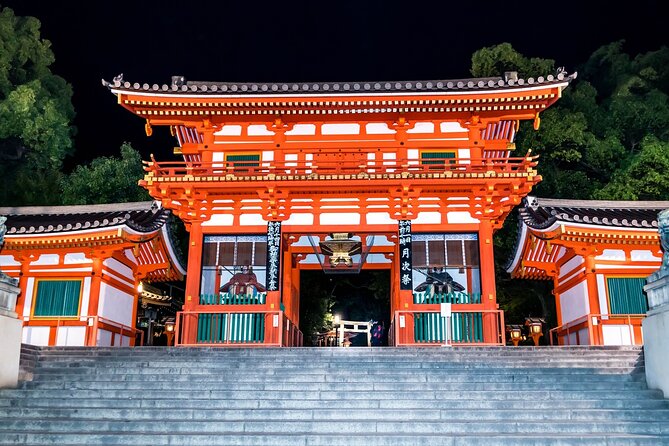
Yasaka Shrine: Ending Beneath the Lanterns
The walk ends at Yasaka Shrine, also called Yasaka Jinja or Gion Shrine. It is one of Kyoto’s best-known Shinto shrines and is closely tied to the Gion area.
Ending here gives the tour a useful final contrast. You begin with theater and entertainment culture, move through tea-house streets, and finish at an important religious site. That combination shows how several parts of Kyoto’s identity overlap in a relatively small area.
The shrine is free to enter, according to the tour information. Since the experience ends there, you can continue your evening in Gion or use the nearby area to make your way elsewhere. The guide may finish with questions, but the tour is not designed as a long free period at the shrine.
If you want a full shrine visit, allow extra time after the official two-hour tour. The walk offers an introduction, not an exhaustive exploration of the shrine grounds.
What the Guides Add to the Experience
The guide is the biggest variable, but the strongest pattern is clear: this tour works best when the guide turns unfamiliar customs into ordinary, understandable ideas.
Ben has been praised for explaining the hidden codes of the flower towns and for answering questions carefully. Shin has been described as friendly and well informed about both Gion and Kyoto in general. Deborah has brought detailed historical background, while Melanie has been praised for making Gion and geisha culture feel vivid and approachable.
Kenji appears especially suited to families with teenagers because he keeps the material fun while covering plenty of detail. Joy, Adrian, Ikari, Sakuri, Nikki, and Tommy have also been praised for their warmth, clear stories, and ability to point out details you might miss alone.
You should not book this as a way to guarantee a particular guide. Staff assignments can change. But the range of strong guide feedback suggests that the experience depends on a shared teaching approach rather than one individual personality.
How Much Walking and What to Wear
The tour lasts about two hours and involves walking through several parts of Gion. One rating specifically described a fair amount of walking, while another noted that cold weather made the distance feel harder.
That makes footwear important. Wear comfortable shoes and dress for the forecast. Winter evenings in Kyoto can be very cold, so a warm coat is not optional. One participant specifically credited a big coat with making an Arctic-feeling evening manageable.
Because the activity requires outdoor walking, weather can affect the departure. If poor weather causes cancellation, you are offered another date or a full refund. Service animals are allowed, and most people can participate, but you should still consider your own comfort with two hours on foot.
The tour does not provide bottled water. Bring your own, especially if you have been sightseeing all day.
Is $25 a Fair Price?
At $25 per person, this is a good-value cultural introduction. You are paying for roughly two hours with a guide, all listed fees and taxes, a small group capped at 15, and an evening route through some of Kyoto’s most recognizable cultural areas.
The price becomes even more reasonable if you are new to Gion. Without a guide, you can see the bridge, street, theater, shrine, and old buildings, but you may not understand the difference between a geiko and maiko or why an unmarked building matters.
It is not the right value for someone seeking a private experience, a formal tea ceremony, or a guaranteed meeting with geiko or maiko. Those are different activities. This tour is best understood as a short, guided orientation with cultural background.
The overall score of 4.8 from 1,441 ratings and a 96 percent recommendation rate support the idea that the tour delivers what it promises. Still, one rating described the content as a useful overview that could have included more material. If you already know a great deal about Kyoto’s flower districts, you may find the two-hour format introductory.
Who Should Book This Gion Walk?
I would recommend it to first-time Kyoto visitors who want a clear introduction before exploring Gion alone. It also suits couples, families with older children or teenagers, and anyone who prefers learning through streets and buildings instead of sitting indoors.
You will get the most from it if you enjoy cultural background, ask questions, and pay attention to the guide’s explanations. The walk is also a good choice for an early evening when you want something more purposeful than simply wandering around.
You may want to skip it if you dislike walking, strongly dislike cold weather, or expect a staged geisha encounter. It is also less useful if your main goal is attending Kabuki or a Gion Corner performance, since those admissions are not included.
Cancellation and Practical Details
You can cancel at least 24 hours before the local start time for a full refund. Cancellations or changes made within 24 hours are not refunded or accepted.
The booking includes all fees and taxes, but not bottled water. Confirmation arrives when you book, and the mobile ticket is convenient for an evening meeting.
Should You Book the Kyoto Geisha Walking Tour?
Yes, if you want a reasonably priced, well-paced introduction to Gion’s geiko and maiko traditions, theater connections, and old streets. The small group, evening timing, and strong guide record make it more useful than simply walking Hanamikoji Street with a camera.
Book it early in your Kyoto stay if you want cultural bearings for the rest of your visit. Wear warm clothes, bring water, and approach the district respectfully. If you do that, this two-hour walk offers a thoughtful look at Gion without demanding a full evening or a large budget.
FAQ
How long does the Kyoto Gion Geisha District Walking Tour last?
The tour lasts approximately two hours.
What is the price of the tour?
The listed price is $25 per person.
Where does the tour begin?
The meeting point is Ben’s Cookies Kyoto Shijo, at 89 Shinchō, Shimogyo Ward, Kyoto, 600-8001, Japan.
Where does the tour end?
The tour ends at Yasaka Shrine, 625 Gionmachi Kitagawa, Higashiyama Ward, Kyoto, 605-0073, Japan.
What places are included on the walking route?
The route includes the Izumo-no-Okuni Statue, Minamiza, Tatsumi Bridge, Hanamikoji Street, Gion Corner, and Yasaka Shrine.
Is the tour conducted after dark?
Yes. The experience is an evening walking tour through Gion.
How large can the group be?
The group has a maximum of 15 participants.
Are admission fees included?
All fees and taxes are included. The listed stops have no admission charge, but the tour does not include admission to separate performances.
Is bottled water provided?
No. Bottled water is not included, so bring your own if needed.
Can I cancel for a full refund?
Yes. You can cancel at least 24 hours before the local start time for a full refund. Cancellations within 24 hours are not refunded.
What happens if bad weather cancels the tour?
If poor weather causes cancellation, you are offered a different date or a full refund.
Is the tour suitable for most people?
Most people can participate, and service animals are allowed. The experience requires outdoor walking for about two hours.
Just added in Kyoto
- The “Golden Route” and Ancient Japan by DIAMIR Erlebnisreisen – 14-Day Tour★ 2.0 · 2 reviews
- Japan: Castles & Cuisine by G Adventures – 6-Day Kyoto to Osaka Tour★ 4.5 · 4 reviews
- Cycle Japan by Explore! – 13-Day Kyoto to Tokyo Tour★ 4.7 · 12 reviews
- Cycle Japan by Intrepid Travel – 11-Day Kyoto to Tokyo Tour★ 4.8 · 2 reviews
- Classic Japan by Intrepid Travel – 11-Day Kyoto to Tokyo Tour★ 4.4 · 14 reviews
- Ancient & Modern Japan 14-Day Tour by Exodus Adventure Travels★ 4.4 · 40 reviews
- 5 Day Cultural Adventure of Kyoto, Nara & Osaka by Tourist Journey★ 2.5 · 2 reviews
- 12 Days Kinosaki Onsen Escape: A Journey Through Japan’s Timeless Towns by UME Travel★ 4.8 · 5 reviews
Kimono and Cultural Dress, compared.
![[Kyoto & Nara Day Tour] Sagano Scenic Railway & Nara Park & Fushimi Inari Taisha Thousand Torii Gates & Togetsukyo Bridge & Bamboo Grove & Kimono Forest (Departing from Osaka)](https://media.japanvisits.com/wp-content/uploads/kyoto-nara-day-tour-sagano-scenic-railway-nara-park-fushimi-inari-taisha-thousand-torii-gates-togetsukyo-bridge-bamboo-grove-kimono-forest-departing-from-osaka-k110001-400x257.jpg)

Tokyo Asakusa Kimono&Yukata Rental at Kimono Miyabi Asakusa Station
Read our review →
Kyoto Geisha Walking Tour: Gion District & Hidden Gems
Read our review →
Gion Magical Night Walking Tour with Geisha Trivia
Read our review →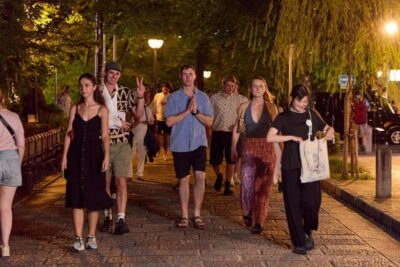
Gion Geisha District Walking Tour – Stories of Geisha
Read our review →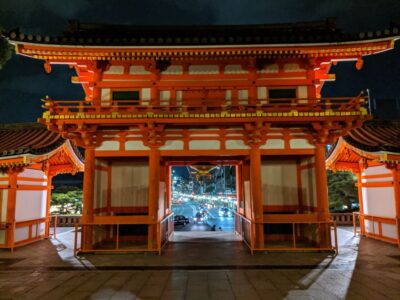
Best of Kyoto: Gion, Geisha, Pagodas & Cobblestones
Read our review →
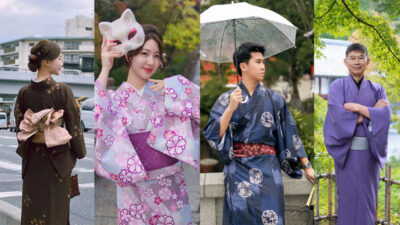
Kyoto Kimono Rental Experience (Optional Exquisite Hair Styling/Japanese Makeup/Photography) (Ookini Kiyomizu-dera Main Store)
Read our review →Browse the lists this tour appears in