
Reviewed · COOKING CLASSES
Tokyo: Roll and Authentic Sushi Making Class in Asakusa
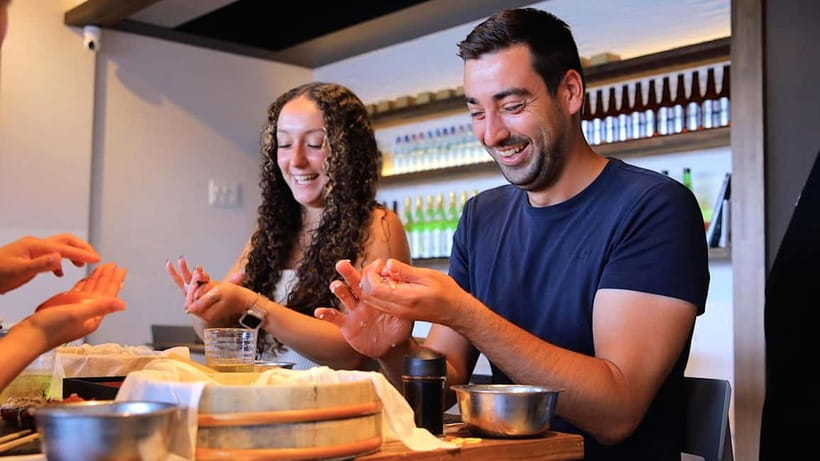
Sushi tastes better when you make it yourself. This 100-minute class in Asakusa combines a lighthearted sushi-history quiz with hands-on lessons in maki rolls and nigiri, making Japanese food culture easy to enjoy even if you have never cooked before. I especially like the friendly English-speaking instructors and the convenient setting near Sensoji Temple and Tokyo Skytree. The fresh ingredients and generous meal add real value to the $58 price.
The class is also a good pick for solo visitors, couples, and families. Instructors such as Hitomi, Moe, Jun, Kaori, Ken, and Hide are praised for patient teaching and plenty of humor. One thing to consider is the pace. Most people find the 100 minutes well organized, but some would appreciate another half hour for a more relaxed session.
In This Review
- Key points to know before booking
- Why this Asakusa sushi class works so well
- The first lesson: sushi history without a lecture
- Making maki, the roll that looks easier than it is
- Making nigiri and learning why hand shape matters
- Eating your own sushi at the end
- The 100-minute schedule and its one weakness
- Is $58 a good value in Tokyo?
- Who should book this experience?
- Practical details for your Tokyo day
- My recommendation: book it for the experience, not just the sushi
- FAQ
- How long does the sushi-making class last?
- Where does the class meet?
- Is the class close to Sensoji Temple?
- Is the class taught in English?
- Do I need previous sushi-making experience?
- What types of sushi will I make?
- Are dietary accommodations available?
- Is hotel pickup and drop-off included?
- Is the activity wheelchair accessible?
Key points to know before booking
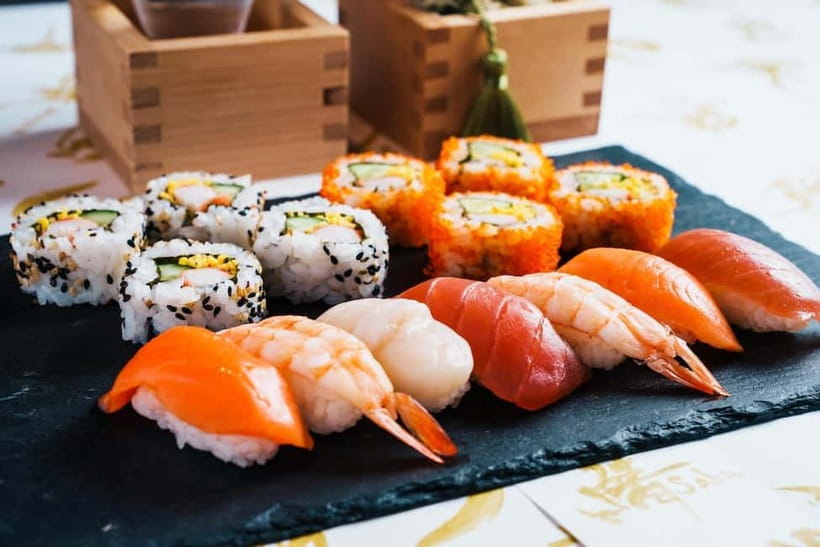
- Make two sushi styles: Learn both maki, the rolled sushi, and nigiri, the hand-shaped sushi topped with fish or another selected ingredient.
- Start with sushi culture: An interactive quiz introduces the history and changing forms of sushi before you begin preparing food.
- Expect a cheerful class: The instructors use humor, demonstrations, and encouragement to keep the room involved.
- Eat what you prepare: You make enough sushi for a proper meal, with fresh, high-quality ingredients praised throughout the class.
- Use Asakusa as your base: The meeting point is about three minutes from Asakusa Station, close to Sensoji Temple and Tokyo Skytree.
- Ask about dietary needs early: Vegan, vegetarian, gluten-free, halal, and allergy-friendly menu changes are available with advance contact.
Why this Asakusa sushi class works so well
Asakusa is one of Tokyo’s best places for a traditional food activity. Sensoji Temple, old shopping lanes, and the nearby Sumida River give the neighborhood a strong sense of place. You are not attending a cooking class in an anonymous commercial district. You are making sushi in an area closely tied to the Tokyo most visitors hope to see.
The meeting point is roughly three minutes from Asakusa Station, which makes the class easy to add to a sightseeing day. It is also convenient if you plan to visit Sensoji before or after the lesson. Tokyo Skytree is nearby as well, so you can pair the class with one of the city’s most famous views.
I like the way the class connects the food to its background. Instead of simply handing you rice, seaweed, and fish, the instructors begin with a quiz about sushi history. It is designed to be fun rather than academic, but it gives you useful context for the two styles you will prepare.
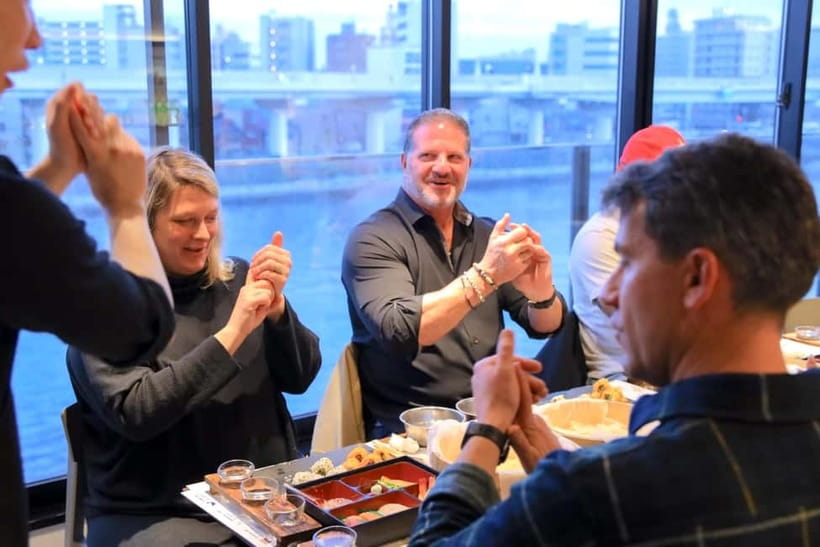
The tone is lively. Several instructors may help during the session, and names frequently praised include Hitomi, Moe, Jun, Kaori, Ken, Ryouko, Yoko, and Hide. The staff’s energy is a major part of the experience. They clap, joke, demonstrate, and step in when your sushi starts to look less like dinner and more like a rice-based engineering project.
That cheerful approach suits families and first-time cooks. It also helps solo participants feel included. A solo visitor can join the group without needing a partner, and the social format gives you a simple way to meet people from different countries.
More Cooking Classes in Tokyo
- Sushi Making Tokyo Roll and Authentic Japanese Sushi Class
★ 5.0 · 3,971 reviews - Tokyo Shinjuku Chopsticks Making Class
★ 5.0 · 1,763 reviews - Tokyo: Sushi Making Class in a Happi Coat near a Famous Spot
★ 4.9 · 1,377 reviews
The first lesson: sushi history without a lecture
The opening quiz is a smart choice. Sushi has changed over time, and the class uses simple questions and explanations to show how Japanese sushi developed. You do not need to memorize dates or terminology. The goal is to understand the difference between traditional forms and the many versions of sushi now served around the world.
This short introduction adds meaning to the hands-on work. When you shape nigiri or roll maki, you know you are not just assembling a snack. You are practicing two recognizable Japanese styles, each with its own shape and handling method.
The teaching is in English, and the class is structured for beginners. You do not need prior cooking experience. The instructors show each step, then give you a chance to copy it. That balance matters. A long explanation would leave you hungry, while a rushed demonstration would leave you guessing.
You should expect an interactive atmosphere rather than a quiet chef’s lesson. The clapping and group encouragement will appeal to many families and couples, although one person found the format a little more tourist-oriented than traditionally Japanese. That is a fair point. This is a social activity built for international visitors, not a formal apprenticeship at a sushi counter.
Making maki, the roll that looks easier than it is
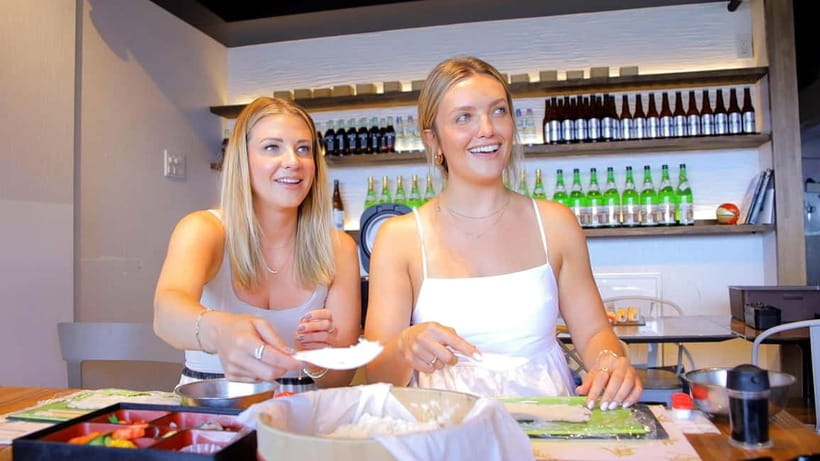
Maki is the familiar rolled sushi wrapped in seaweed. It looks simple until you try to spread rice evenly, place the fillings neatly, and roll everything tightly enough to hold together.
The instructor demonstrates the process clearly, using physical examples and visual guidance. You then prepare your own roll with help nearby. If your first attempt is crooked, too loose, or overfilled, that is part of the fun. The staff are patient, and their job is to help you finish with food that looks good enough to photograph and eat.
The class gives you a useful feel for proportion. Too much rice can make the roll heavy. Too much filling can make it difficult to close. Those small lessons are more memorable because you learn them with your own hands.
Maki is often the easiest part for children to enjoy. It has a clear sequence and a satisfying final step when the roll is cut into pieces. Families with children have found the activity manageable, and teenagers also have enough to do to stay involved.
The food itself receives consistent praise. The ingredients are described as fresh and high quality, and the finished sushi is considered delicious. One participant wanted a little more rice, while another felt there was plenty of food for a full meal. Portions can feel different depending on how efficiently you work, but you should not expect a tiny tasting plate.
Making nigiri and learning why hand shape matters
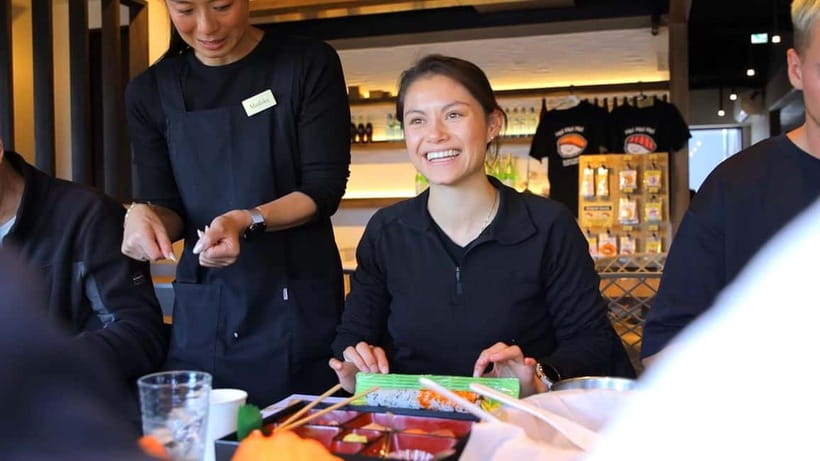
Nigiri is the more delicate of the two preparations. Instead of being rolled in seaweed, it is formed by shaping seasoned rice with your hand and placing a topping over it. The finished piece looks spare, but getting the rice to hold its shape without crushing it takes practice.
This is where the class feels especially useful. You learn that sushi is not simply rice plus fish. The way you handle the rice, control its size, and place the topping affects both appearance and texture.
The instructors explain the process in clear steps and correct mistakes without making beginners feel awkward. Hitomi is repeatedly praised for being thoughtful and patient, while Kaori is noted for keeping the presentation engaging. Other teachers, including Ken and Kenshin, are described as both skilled and entertaining.
The ingredients make a difference here. Fresh fish and good-quality staples are easier to appreciate in nigiri because the preparation is so direct. You are not hiding everything inside a large roll. The finished pieces give you a simple taste of why balance and freshness matter in Japanese food.
Do not expect to leave with professional knife skills or the precision of a trained sushi chef. In 100 minutes, you learn the basic handling and assembly methods. The achievement is practical and modest: you can make attractive maki and passable nigiri, and you understand the process far better than you did before.
A completely different kind of day out:
- Tokyo Disney Resort – Tokyo Disneyland & Tokyo DisneySea Park Tickets
★ 4.8 · 99,488 reviews - SHIBUYA SKY Ticket
★ 4.7 · 46,509 reviews - JR Whole Japan Rail Pass
★ 4.8 · 29,150 reviews - Mt Fuji and Hakone 1-Day Bus Tour Return by Bullet Train
★ 5.0 · 26,383 reviews
Eating your own sushi at the end
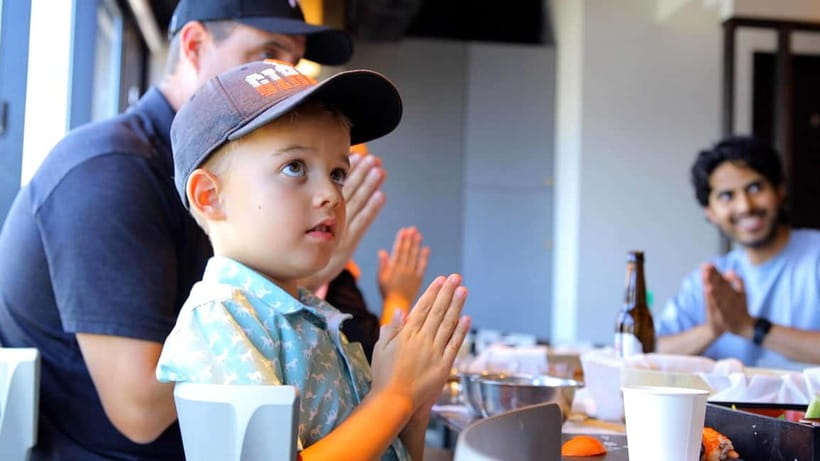
The best part comes after the work. You sit down and eat the sushi you made, which turns the class from a demonstration into a proper food experience.
The meal is one reason the $58 price feels reasonable. You are paying for instruction, ingredients, and a cultural activity, but you also receive enough sushi to leave satisfied. Several people describe being full at the end, and one family of six with four children found there was plenty to eat.
The food is not an afterthought. Freshness and quality come up again and again, and vegetarian participants have also been accommodated. If you have dietary restrictions, contact the provider when booking. The available alternatives include vegan, vegetarian, gluten-free, halal, and allergy-related menu changes.
There are limits. Meat, nuts, fruit, and dairy are not used, and the provider cannot accept ingredient specifications. Same-day changes are not possible, so you should communicate your needs before the class. The menu may be changed to suit the stated options, but you should not assume every individual ingredient can be replaced.
Beer and sake flights may also be available, according to participant experiences. The supplied information does not state that these are included in the $58 price, so treat them as possible extras and confirm when booking.
The 100-minute schedule and its one weakness
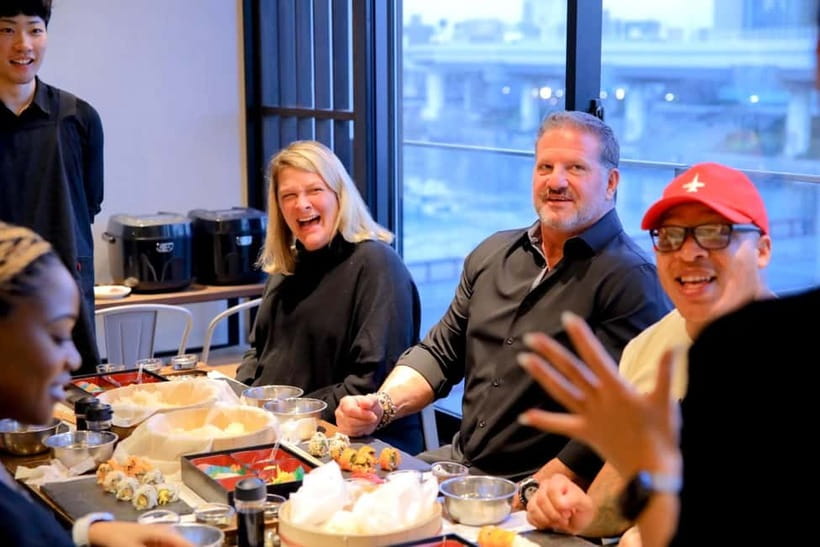
The stated duration is 100 minutes, although one participant described the activity as lasting about 80 minutes and another rounded it to two hours. Timing may vary with the group and the session format. Plan on roughly an hour and forty minutes, while allowing a little flexibility around the advertised duration.
The structure is efficient:
- Welcome and introduction
- Sushi-history quiz
- Demonstration of maki and nigiri
- Hands-on preparation
- Eating and final photos or conversation
The compact schedule is useful if you have a busy Tokyo plan. You can fit the class between temple visits, shopping, or a trip toward Tokyo Skytree. The downside is that the practical work can feel slightly rushed, especially if you want to repeat a technique or ask many questions.
I would choose an earlier session if your schedule allows. One participant who attended an early time found the group smaller and received nearly private attention. That is not guaranteed, but fewer people can make it easier to hear instructions and get help with your roll.
The class is generally well organized, with staff moving around to support participants. That matters when a group includes children, solo participants, and people with no cooking experience. You are not left to figure out the tricky parts alone.
Is $58 a good value in Tokyo?
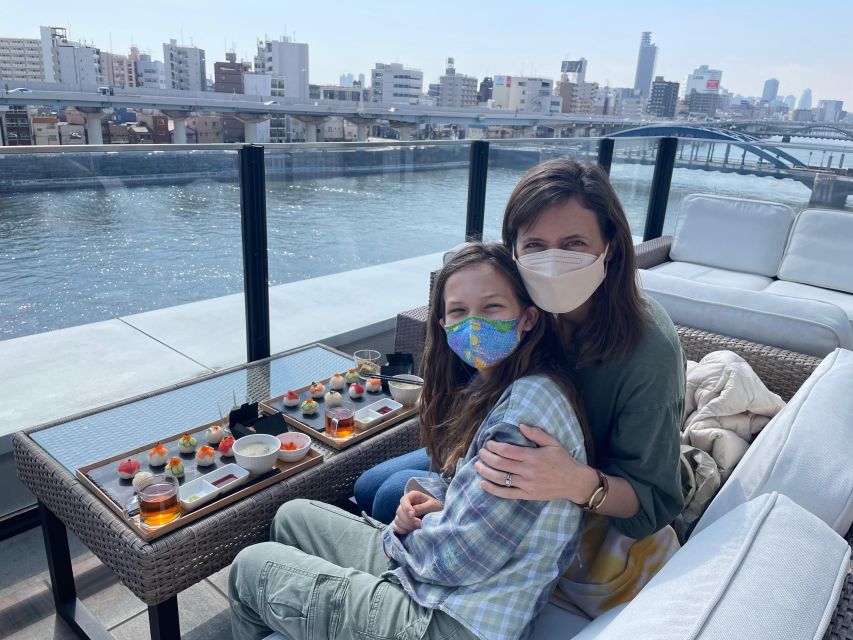
At $58 per person, this is not the cheapest meal you will have in Tokyo. You can eat excellent sushi for less, especially if you choose a casual counter or supermarket food. The value here comes from the combination of a meal, instruction, cultural background, and a memorable activity in a prime sightseeing area.
I think the price works best for people who want more than a restaurant visit. You spend the session learning why the food is shaped as it is, practicing the techniques, and eating the results. The experience also removes the pressure of ordering unfamiliar sushi in a restaurant.
The price includes the cooking class, ingredients, and English-speaking instructor. Hotel pickup and drop-off are not included, but the location is close to public transport, so that omission is not a serious problem.
For families, the value improves because everyone has a role. A parent and child can make sushi together rather than simply sitting across a table. Couples also get a shared activity, and solo participants can join a group without paying for a private booking.
The value is less convincing if you already make sushi regularly or want an advanced lesson. The course is built for beginners, and the teaching style is broad, social, and upbeat. You are paying for an enjoyable introduction, not professional culinary training.
Who should book this experience?
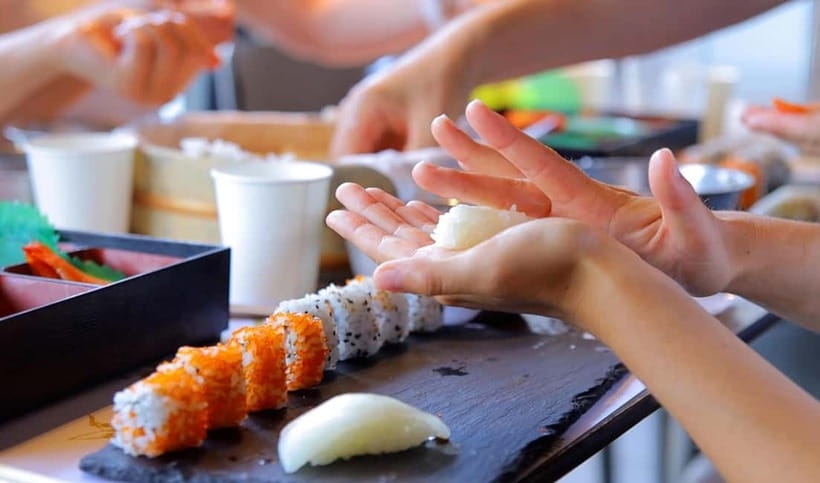
I would recommend it to first-time visitors who want a hands-on introduction to Japanese food. It is especially suitable if you are staying in or visiting Asakusa, since the class pairs naturally with Sensoji Temple and nearby sightseeing.
Families are a strong match. Children can take part in the quiz, rolling, shaping, and eating. The staff’s patient style helps when little hands produce imperfect sushi, which they almost certainly will.
Couples and friends will enjoy the shared challenge. Making sushi together gives you something to talk about, and the final meal feels more satisfying because you prepared it yourselves.
Solo visitors should also feel comfortable booking. The class welcomes individuals, and the friendly staff help create an easy social setting. The earlier session may be worth considering if you prefer more individual attention.
I would be more cautious if you dislike group activities, clapping, or lively instruction. The atmosphere is intentionally energetic. It is warm and welcoming, but it is not hushed or formal.
Practical details for your Tokyo day
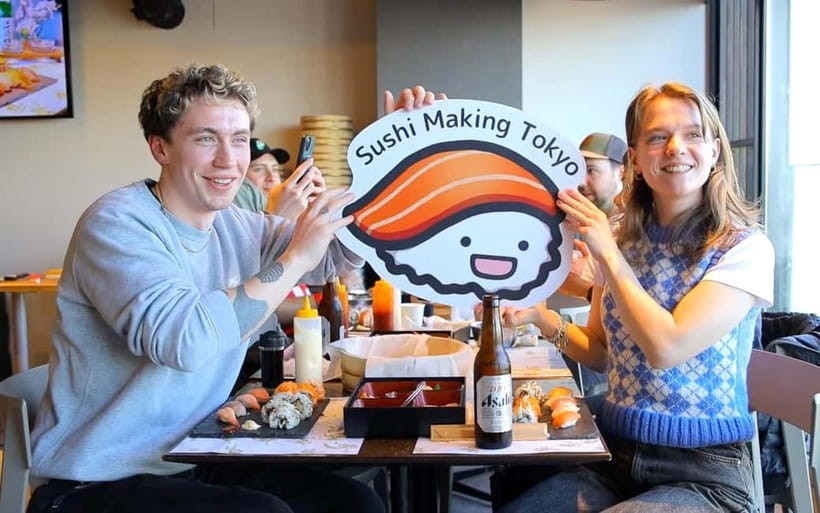
The meeting point is about three minutes from Asakusa Station. Give yourself enough time to find the exact entrance, especially if you are arriving after a crowded temple visit or navigating Tokyo for the first time.
The class is wheelchair accessible. Instruction is in English, and no previous sushi-making experience is required.
You can cancel up to 24 hours before the activity for a full refund. The reserve-now-and-pay-later option also helps if your Tokyo schedule is still changing.
I would avoid placing the class immediately before a tight train connection. The advertised duration is 100 minutes, and sessions can vary slightly. Afterward, you will likely want time to enjoy the meal and perhaps continue exploring Asakusa.
My recommendation: book it for the experience, not just the sushi
You should book this class if you want a friendly, practical way to connect with Japanese food culture. The strongest reasons are the patient English-speaking staff, the fresh ingredients, the chance to make both maki and nigiri, and the excellent Asakusa location.
You should skip it if you want an advanced chef-led course or a quiet, strictly traditional lesson. The presentation is designed for international participants and can feel a little theatrical at times.
For most people, though, the balance is right. You learn something useful, eat a satisfying amount of sushi, and leave with a story better than simply saying you had lunch in Tokyo. At $58, that makes it a good choice for a family day, a couple’s activity, or a solo afternoon near Sensoji.
FAQ
How long does the sushi-making class last?
The advertised duration is 100 minutes. Some sessions may run slightly shorter or longer depending on the group and activity flow.
Where does the class meet?
The meeting point is about three minutes from Asakusa Station in Tokyo.
Is the class close to Sensoji Temple?
Yes. The experience takes place in the Asakusa area, close to Sensoji Temple and Tokyo Skytree.
Is the class taught in English?
Yes. The instructor language is English, and English-speaking local staff guide you through the activity.
Do I need previous sushi-making experience?
No. The class is designed for beginners, and the instructors explain and demonstrate each step.
What types of sushi will I make?
You will make two styles: maki sushi, which is rolled sushi, and nigiri sushi, which is hand-shaped rice topped with an ingredient.
Are dietary accommodations available?
Yes. Vegan, vegetarian, gluten-free, halal, and allergy-related menu changes are available. You must contact the provider when making your reservation because same-day changes are not accepted.
Is hotel pickup and drop-off included?
No. Hotel pickup and drop-off are not included.
Is the activity wheelchair accessible?
Yes. The activity is listed as wheelchair accessible.
Just added in Tokyo
- Tokyo Cute Bento Cooking Class – Make a Kawaii Character Lunchbox★ 5.0 · 126 reviews
- Japanese Home Cooking Class & Walk in Todoroki Temple Tokyo★ 5.0 · 88 reviews
- A One-of-a-Kind Sushi Experience in a Special Place of Japan★ 5.0 · 15 reviews
- Japan Tokyo Tower Observatory Deck E-Ticket★ 4.0 · 34 reviews
- Catch a Baseball Game in Tokyo with a Local – Tickets Included★ 5.0 · 24 reviews
- JDM Experience with Fast&Furious RX-7 (English speaking Driver)★ 5.0 · 57 reviews
- Tokyo Private Day Tour by Car with English speaking Driver Guide★ 4.0 · 29 reviews
- Japan Classic 10 Day – One Life Adventures★ 5.0 · 129 reviews
Cooking Classes, compared.
Sushi Making Tokyo Roll and Authentic Japanese Sushi Class
Read our review →
Ramen Cooking Class at Ramen Factory in Kyoto
Read our review →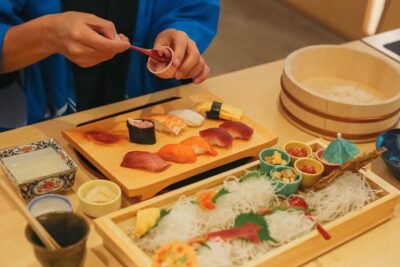
Sushi Making Class in a Happi Coat near a Famous Spot
Read our review →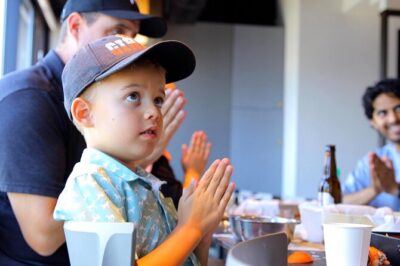
Sushi Making Osaka Roll and Authentic Japanese Sushi Class
Read our review →
Tokyo Sushi Making Class in Tsukiji with Professional Chef
Read our review →
Ramen & Gyoza Cooking Class in Tokyo with Local Supermarket Visit
Read our review →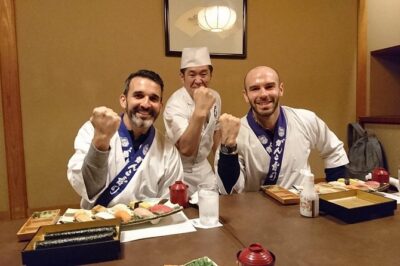
Tsukiji Fish Market Guided Tour and Sushi Making with Pro Chef
Read our review →Browse the lists this tour appears in