
Reviewed · COOKING CLASSES
Ramen & Gyoza Cooking Class in Tokyo with Local Supermarket Visit
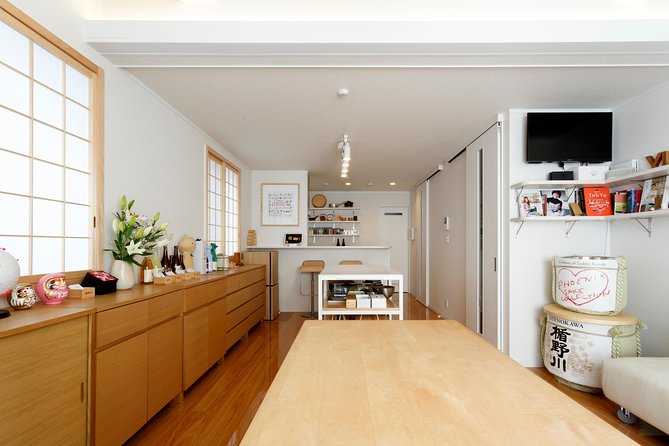
Tokyo rewards curious eaters. This small class takes you beyond restaurant counters and into YUCa’s home kitchen, where you learn to prepare ramen and gyoza with a local teacher. I like the friendly, personal setting and the chance to learn dishes you can try again at home. I also like the neighborhood location, which gives you a look at a quieter side of Tokyo. The main point to check is the optional supermarket visit, since it has not always taken place.
YUCa leads the class with warmth, patience, and plenty of energy. You will cook, eat, ask questions, and meet other people around the kitchen table. Still, this is not a full professional cookery course, and some steps involve adding prepared ingredients rather than making every element from scratch.
In This Review
- Key points to know before booking
- A home kitchen instead of a cooking school
- 10 a.m. arrival and the home-cooking introduction
- Making ramen with approachable techniques
- Folding gyoza while the ramen cooks
- Eating what you made at 12:30
- The optional supermarket visit from 12:30 to 1 p.m.
- How hands-on is the class?
- What makes YUCa an effective host
- Is $122.70 a fair price?
- Getting there and planning your morning
- Who should book this Tokyo cooking class?
- Should you book it?
- FAQ
- Where does the ramen and gyoza class take place?
- What time does the experience start?
- How long does the class last?
- What food will I make?
- Is the supermarket visit included?
- Is a vegetarian option available?
- Can I advise the operator about dietary requirements?
- How many people can join the class?
- Is there a minimum number of people required?
- Can I cancel for a full refund?
Key points to know before booking
- YUCa teaches in her own Tokyo home kitchen, creating a more personal setting than a large commercial cooking studio.
- Ramen and gyoza are prepared in one morning, with cooking and tasting scheduled from 10:30 a.m. to 12:30 p.m.
- The class suits beginners, families, and mixed-age groups, including children and older relatives.
- The group is capped at seven people, although the single-kitchen setup can make parts of the class demonstration-led.
- A local supermarket visit is optional, scheduled for 12:30 to 1 p.m., so confirm its availability if it is a major reason for booking.
- The price is $122.70 per person, which is a fair amount if you value instruction, lunch, and cultural conversation in a small group.
A home kitchen instead of a cooking school
The meeting point is YUCa’s Japanese Cooking at 2-chōme-34-8 Nishiogu, Arakawa City, Tokyo 116-0011. The activity begins at 10 a.m. and ends at the same address.
That address matters. Nishiogu is outside the usual central Tokyo sightseeing circuit, so you are not simply adding another activity around Shibuya or Asakusa. You are going into a residential part of Arakawa City, where the experience feels tied to everyday Japanese life.
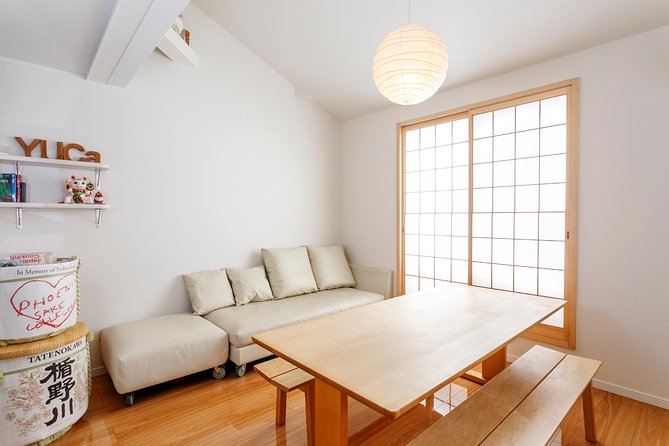
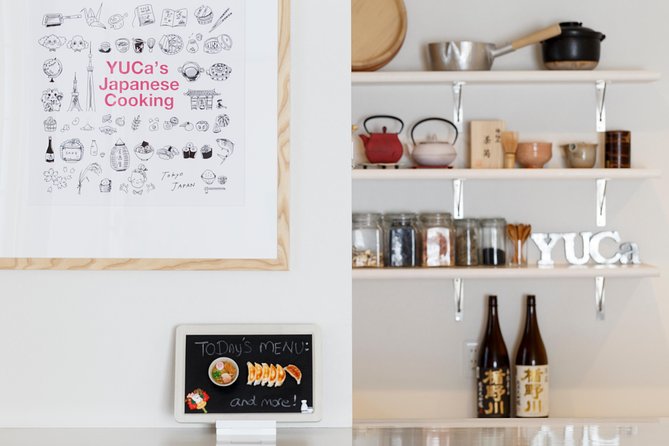
Several useful details come together here. YUCa teaches in her own home and kitchen, the space is described as cute and well prepared, and the group size is limited to a maximum of seven. You should not expect a grand cooking studio with a separate station for every person. Instead, you get an intimate class built around one kitchen and a host who does much of the explaining.
That arrangement has a clear benefit: the class feels social. You can chat with people from other countries, learn a few Japanese expressions, and see how a local home kitchen functions. YUCa has even taught participants to write their names in Japanese characters based on pronunciation, adding a small cultural touch to the morning.
The tradeoff is hands-on time. If you want to chop, mix, fold, and cook continuously for two and a half hours, you may find the format a little light. One person specifically found some steps limited to adding a small amount of powder or liquid. YUCa’s own explanation makes the structure clearer: with one kitchen and a larger group, some parts are demonstration-style.
More Cooking Classes in Tokyo
- Sushi Making Tokyo Roll and Authentic Japanese Sushi Class
★ 5.0 · 3,971 reviews - Tokyo: Roll and Authentic Sushi Making Class in Asakusa
★ 4.9 · 1,957 reviews - Tokyo Shinjuku Chopsticks Making Class
★ 5.0 · 1,763 reviews
10 a.m. arrival and the home-cooking introduction
The schedule starts with a 10 a.m. meeting. From 10:15 to 10:30, YUCa gives a short talk about Japanese home cooking and lifestyle.
This opening helps place the recipes in context. Ramen and gyoza are familiar worldwide, but they are not just restaurant dishes. In Japan, they connect with home meals, convenience, regional preferences, supermarket ingredients, and the practical habits of everyday cooking.
You will also get a sense of YUCa’s teaching style at this stage. She is warm and outgoing, and her English is clear enough for international visitors to follow the instructions. That matters in a cooking class, where a small misunderstanding can turn a dumpling wrapper into a sticky little disaster.
The introduction is short, which is a good choice. You are not sitting through a long lecture before touching the food. By 10:30, the class moves into cooking and tasting.
Making ramen with approachable techniques
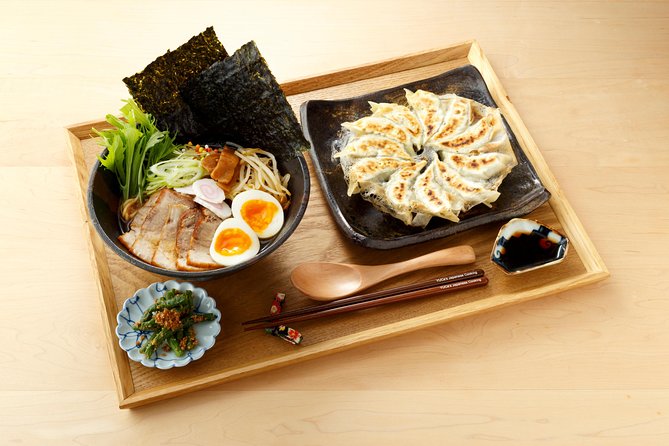
Ramen is the centerpiece of the meal. The class teaches you how to prepare noodle soup with vegetables and meat, then assemble the finished bowl.
The value here is not only the final dish. You see how separate ingredients come together into a meal that looks more complicated than it is. YUCa explains the steps clearly, and the recipes are designed to be approachable for people with different levels of cooking experience.
You should keep your expectations realistic. This class is not presented as advanced noodle-making or a long lesson in preparing broth from bones. The available details point to a practical ramen lesson using different vegetables and meat, with some ingredients and flavor components prepared in advance.
That can be a strength for a holiday activity. You leave with a recipe that feels possible to repeat at home rather than a technique requiring specialist equipment and an entire day. Several people specifically looked forward to recreating the ramen after returning home.
The meal is assembled once the components are ready. This gives you a useful lesson in timing: ramen preparation involves waiting for parts to cook, and that pause becomes the bridge to the gyoza portion of the class.
Folding gyoza while the ramen cooks
While the ramen cooks, you make gyoza by hand. This is likely to be the most tactile part of the morning.
You work with dumpling wrappers and a minced pork filling, along with vegetables and other ingredients. The class shows you how to fill and fold the dumplings, then cook them as part of the meal.
Gyoza folding is well suited to a group because everyone can work at the same time. It is also forgiving. Your first dumpling may look less like a neat crescent and more like a small edible envelope, but it will still taste good.
Families should pay attention to this part. Children aged 9, 13, and 14 have enjoyed the class, and the gyoza activity gives younger cooks a clear job to do. Older relatives and complete beginners can take part without needing professional knife skills.
The recipe is also useful beyond the class. Ramen can require careful timing, but gyoza can become a repeatable home project. You will have the basic idea of working with wrappers, filling them without overstuffing, and shaping them before cooking.
A completely different kind of day out:
- Tokyo Disney Resort – Tokyo Disneyland & Tokyo DisneySea Park Tickets
★ 4.8 · 99,488 reviews - SHIBUYA SKY Ticket
★ 4.7 · 46,509 reviews - JR Whole Japan Rail Pass
★ 4.8 · 29,150 reviews - Mt Fuji and Hakone 1-Day Bus Tour Return by Bullet Train
★ 5.0 · 26,383 reviews
Eating what you made at 12:30
The cooking and tasting period runs until 12:30 p.m. You then sit down to eat the ramen and gyoza you helped prepare.
This is where the class earns much of its appeal. You are not watching a chef produce a polished lunch while you receive a small sample. You take part in making the meal, then eat it in the same home setting.
The food has been praised as delicious, and many people found the ramen especially memorable. One practical note is worth keeping in mind: at least one person found the portions a little small. I would treat this as a satisfying tasting lunch rather than an enormous meal, particularly if you arrive very hungry.
The shared meal also gives the class a social rhythm. You cook beside people you have just met, then sit together to compare results and talk about Tokyo. That informal exchange is part of what you are paying for. If you only want recipes and no conversation, a printed cookbook or ordinary restaurant meal will cost less.
The optional supermarket visit from 12:30 to 1 p.m.
The listed schedule includes an optional local supermarket tour from 12:30 to 1 p.m. This can be one of the most useful parts for anyone hoping to cook Japanese food at home.
A supermarket teaches practical things that a recipe alone cannot. You can ask YUCa about unfamiliar ingredients, packaging, labels, and the products Japanese cooks actually buy. The visit also gives you a reason to see a neighborhood outside the central sightseeing areas.
The tour is especially helpful if you are curious about unusual Japanese foods or want to bring home ingredients. YUCa can explain what you are looking at instead of leaving you to guess from a row of nearly identical packages.
There is an important catch. The supermarket visit is optional, and it has not always happened. Some people completed the cooking class without going to a store, while others found the tour informative and fun. In one case, YUCa explained that she understood the participant needed to return to a hotel because of a family illness.
The practical lesson is simple: ask ahead if the supermarket tour is operating on your date. Do not book this activity solely for the store visit unless you have confirmed it. The cooking class remains the main experience.
How hands-on is the class?
This is the biggest decision point.
The class does involve participation. You will help create ramen and gyoza, fold dumplings, assemble your bowl, and eat the results. Families and beginners have found it easy to follow, and YUCa works to give everyone a role.
At the same time, the format is not fully hands-on from start to finish. There is one kitchen, and YUCa demonstrates some steps for the group. You may add selected ingredients, follow an explanation, then wait while she handles a cooking stage.
I see this as a good fit for you if your goal is to learn the basics in a relaxed setting. It is less suitable if you want intensive practice with every technique or plan to compare several broth styles and dough methods.
The small maximum group of seven helps, but it does not turn the kitchen into a private workstation for each person. Couples and families can expect a pleasant shared activity, not a one-to-one lesson.
What makes YUCa an effective host
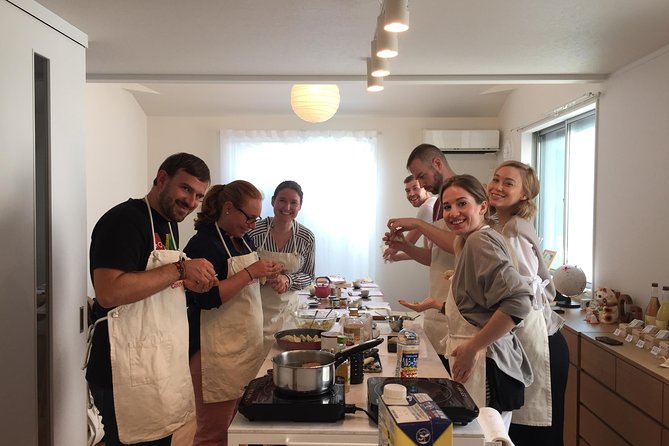
YUCa receives the strongest praise for her manner. She is described as kind, welcoming, patient, energetic, and easy to understand. Those qualities matter more than fancy equipment in a home cooking class.
She also brings cultural explanation into the activity. You are not only told what to add. You learn a little about Japanese food habits, home cooking, and daily life. That makes the class feel more like a personal exchange than a recipe demonstration.
Her home is part of the lesson. You get a glimpse of a real Japanese kitchen rather than a staged restaurant room. For many people, that is worth the trip to Nishiogu.
The class also works across generations. Teenagers have enjoyed it, younger children have taken part in folding gyoza, and grandparents have found it accessible. You do not need to arrive as a cook. You only need enough interest to participate and listen.
Is $122.70 a fair price?
At $122.70 per person, this is not a bargain lunch. You can eat ramen and gyoza in Tokyo for far less.
The comparison is not quite fair, though. The fee includes a roughly two-and-a-half-hour activity, instruction from a local host, hands-on preparation, the meal you create, and the chance to visit a residential neighborhood. If the supermarket tour operates, that adds another useful layer.
I think the price works best for someone who values access and conversation. You are paying for a small-group cultural activity as much as for food. A family may find it worthwhile because children and adults can share the same project. A couple may like it as a relaxed morning away from crowded attractions.
The value drops if you are mainly seeking a technical cooking course. The class has demonstration elements, and the portions may not satisfy a very hungry eater. You should also consider the time and cost of reaching Arakawa City from your accommodation.
The activity has a mobile ticket, confirmation is provided at booking, and free cancellation is available up to 24 hours before the start time. Changes or cancellations inside that 24-hour window are not accepted for a refund. A minimum of two people is required per booking, and if the minimum is not met, you are offered another date or experience, or a full refund.
Getting there and planning your morning
The class begins at 10 a.m., so give yourself enough time to reach 2-chōme-34-8 Nishiogu. The location is near public transportation, but the address is outside the usual inner-Tokyo sightseeing zone.
Some people have used a taxi or Uber for convenience. Public transportation is also relevant because the meeting point is near transit, though the supplied details do not name a specific station or route. Check the exact route from your hotel before booking, especially if you are traveling with children or carrying luggage.
Arrive ready to take part. Wear practical clothing, and tell the operator about dietary requirements when booking. A vegetarian option is available, but you must request it in advance.
The group can include up to seven people, and the end point is the same as the starting point. The scheduled morning finishes at 1 p.m. if you join the optional supermarket visit.
Who should book this Tokyo cooking class?
I would recommend it most strongly to:
- Families looking for an activity that works for children, parents, and grandparents
- Couples who want a personal food experience outside central Tokyo
- First-time cooks who prefer clear instruction over advanced technique
- Ramen and gyoza fans who want recipes they can repeat at home
- Visitors interested in Japanese homes, supermarkets, and daily food habits
- Solo bookers who enjoy meeting a small group, provided they understand that two people are required for a booking
I would hesitate if you want a fully private class, a restaurant-level professional kitchen, large portions, or a guaranteed supermarket tour. The class is friendly and practical, but it is not an intensive culinary workshop.
Should you book it?
Yes, if you want a warm, social introduction to Japanese home cooking. YUCa’s personality is a major part of the experience, and the combination of ramen, handmade gyoza, cultural conversation, and a residential Tokyo setting gives the morning real character.
Before paying, confirm two things: the supermarket tour and the dietary arrangements. Also decide how much hands-on cooking you need. If you are happy with a mix of demonstration and participation, $122.70 can be good value. If you expect to prepare every ingredient yourself, you may leave wishing for more kitchen time.
For most families, couples, and curious food lovers, this is a worthwhile change from eating another meal at a restaurant. You learn something, make lunch, and see a side of Tokyo that many visitors miss.
FAQ
Where does the ramen and gyoza class take place?
The class takes place at YUCa’s Japanese Cooking, 2-chōme-34-8 Nishiogu, Arakawa City, Tokyo 116-0011, Japan.
What time does the experience start?
The meeting time is 10 a.m.
How long does the class last?
The activity lasts approximately two hours and 30 minutes. Cooking and tasting run from 10:30 a.m. to 12:30 p.m., followed by an optional supermarket tour from 12:30 to 1 p.m.
What food will I make?
You will learn to prepare ramen and gyoza. The recipes use vegetables, meat, and minced pork for the dumplings.
Is the supermarket visit included?
The supermarket visit is listed as optional. It is scheduled after the cooking and tasting portion, but it may not take place on every date. Confirm its availability before booking if it is important to you.
Is a vegetarian option available?
Yes, a vegetarian option is available. You should advise the operator of this requirement when booking.
Can I advise the operator about dietary requirements?
Yes. You should provide any specific dietary requirements at the time of booking.
How many people can join the class?
The experience has a maximum of seven people.
Is there a minimum number of people required?
Yes. A minimum of two people per booking is required.
Can I cancel for a full refund?
Yes, if you cancel at least 24 hours before the experience start time. Cancellations or changes made less than 24 hours before the start time are not refunded or accepted.
Just added in Tokyo
- MT. FUJI/ Private Tour delivered and guided by a top-tier driver★ 5.0 · 27 reviews
- Mt fuji & Hakone customizable day tour w/ English speaking driver★ 5.0 · 45 reviews
- Fuji Speedway Self Drive & Mt. Fuji Private Tour pickup & dropoff★ 5.0 · 14 reviews
- Mt.Fuji Trekking 1 Day Tour up to the summit★ 5.0 · 14 reviews
- Seasonal Mt. Fuji Scenic Views, Fruit Picking and Ropeway Ride!★ 4.5 · 35 reviews
- Customisable Mt.Fuji Private Day Trip, English Speaking Driver★ 5.0 · 22 reviews
- Private Mount Fuji Tour in Luxury Vehicle with English Guide★ 4.5 · 39 reviews
- Mt. Fuji Highlight Photo Spots One Day Tour from Tokyo★ 4.5 · 36 reviews
Cooking Classes, compared.
Sushi Making Tokyo Roll and Authentic Japanese Sushi Class
Read our review →
Roll and Authentic Sushi Making Class in Asakusa
Read our review →
Ramen Cooking Class at Ramen Factory in Kyoto
Read our review →
Sushi Making Class in a Happi Coat near a Famous Spot
Read our review →
Sushi Making Osaka Roll and Authentic Japanese Sushi Class
Read our review →
Tokyo Sushi Making Class in Tsukiji with Professional Chef
Read our review →
Tsukiji Fish Market Guided Tour and Sushi Making with Pro Chef
Read our review →Browse the lists this tour appears in