
Reviewed · MUSEUMS AND GALLERIES
teamLab Botanical Garden Osaka Ticket
After sunset, Nagai Botanical Garden becomes the canvas: trees glow and chime, lamps send light across a lake, and wind can change the patterns around you. This is a walk through a working garden, not a sequence of indoor galleries, so the natural setting is part of the art.
I like two things in particular: the installations react to weather and movement, making the scene feel different from one moment to the next, and the quiet nighttime walk offers a gentler change of pace from Osaka’s city streets. The light and music can turn an ordinary stroll into a memorable evening.
The main caveat is that this is an outdoor attraction. Rain can affect the artwork or close sections, and the dim paths, uneven ground, and possible mosquitoes call for sensible shoes and a little preparation.
In This Review
- What to know before you go
- Entering Nagai Botanical Garden after dark
- Following the artworks through the garden
- Why the outdoor setting matters
- Timing, walking, and getting there
- Is the ticket good value?
- Should you book teamLab Botanical Garden Osaka?
- FAQ
- How long should I allow for the visit?
- Is teamLab Botanical Garden Osaka indoors or outdoors?
- What is the ticket price?
- What are the opening hours?
- How do I get to the garden by train?
- Can children visit?
- Is the route accessible for wheelchairs and strollers?
- Can I get a refund if I cancel?
- What should I bring or leave behind?
What to know before you go
- Trees become part of the artwork: Light and gentle tones spread from one tree to another as people pass.
- Weather changes the show: Wind, rain, and birds can alter the installations, but poor weather may also limit what is open.
- Expect a garden walk, not an indoor spectacle: The atmosphere is quiet and nature-focused, with around 10 installations spread through the grounds.
- Allow 1 to 2 hours: Take your time, but know that the walk may feel long for young children or anyone who wants to leave early.
- The ticket starts at $12.65: Admission is included, but transport, food, and personal expenses are not.
- Prepare for darkness and insects: Wear shoes suited to uneven paths and consider bringing mosquito repellent.
Entering Nagai Botanical Garden after dark
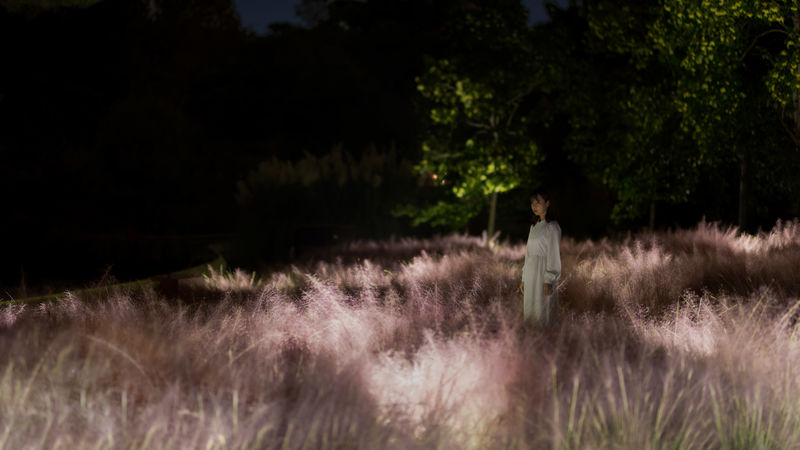
teamLab Botanical Garden Osaka is a permanent night museum inside Nagai Botanical Garden, part of Nagai Park. After sunset, the plants, trees, ponds, and open spaces become part of the exhibition. The effect depends on the setting: instead of looking at art on a wall, you move through a garden where light and sound mingle with the living environment.
There are about 10 artworks across the grounds. The named installations include glowing trees, light-reactive forms, flexible pillars, bird-inspired sculptures, illuminated flowers, and lamps floating on a pond. Each area has its own mood, but the larger idea is consistent: the work changes in response to nature and people.
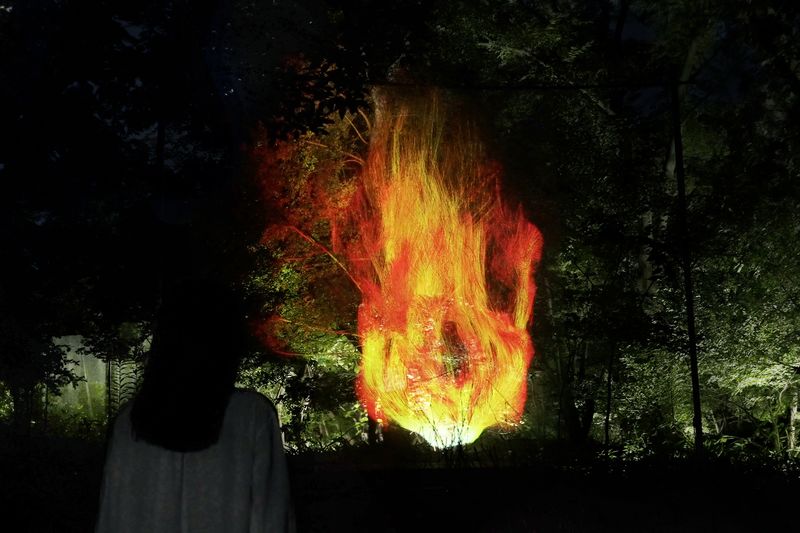
That makes the visit less like following a timed performance and more like taking a slow evening walk. A breeze might shift the pillars; a passing bird may change a projected form; your movement can prompt a glow or a note. The artists use generative algorithms to create light and sound as conditions change, so you are not simply watching a fixed display repeat on a loop.
There is no guide included with the admission ticket. You can explore at your own pace, and the official app can add information and interactive features. Download it before you arrive if you want to use those options while walking.
More Entry Tickets in Osaka
- Universal Studios Japan Studio Pass
★ 4.8 · 89,883 reviews - Universal Studios Japan Express Pass
★ 4.7 · 53,138 reviews - Osaka Amazing Pass
★ 4.7 · 21,697 reviews
Following the artworks through the garden
The exact order and availability of installations can change with the season, weather, crowding, and maintenance. Think of the following as a guide to the kinds of work you may encounter, rather than a guaranteed sequence.
Resonating Trees gives the garden a musical quality. As you walk by, trees glow and produce soft tones; the light and sound can then spread to nearby trees. The effect rewards a pause. If you hurry past, you may see the illumination but miss the way it moves through the space.
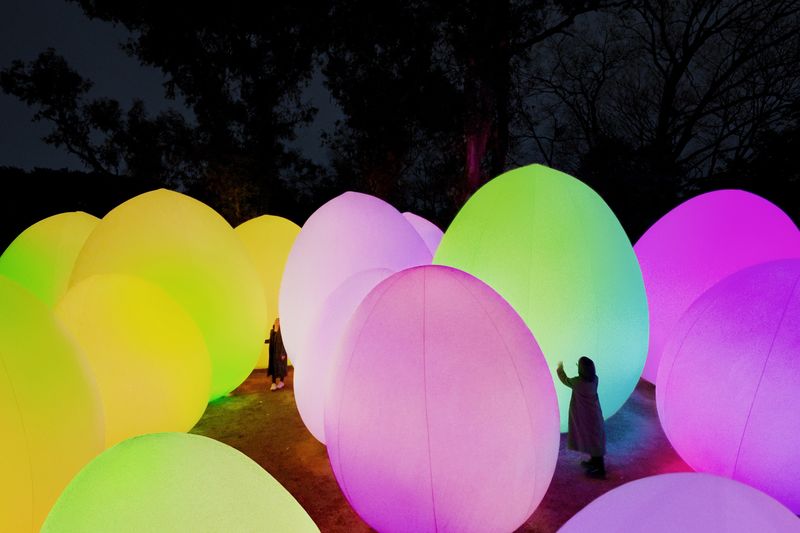
At the Common Camellia Garden, Resonating Microcosms uses ovoid forms that reflect daylight and glow after dark. They can shine in 61 colors, responding to touch, wind, or raindrops. The color changes offer a more direct interactive moment than the tree installation, though some people may find the glowing forms less compelling than the surrounding garden.
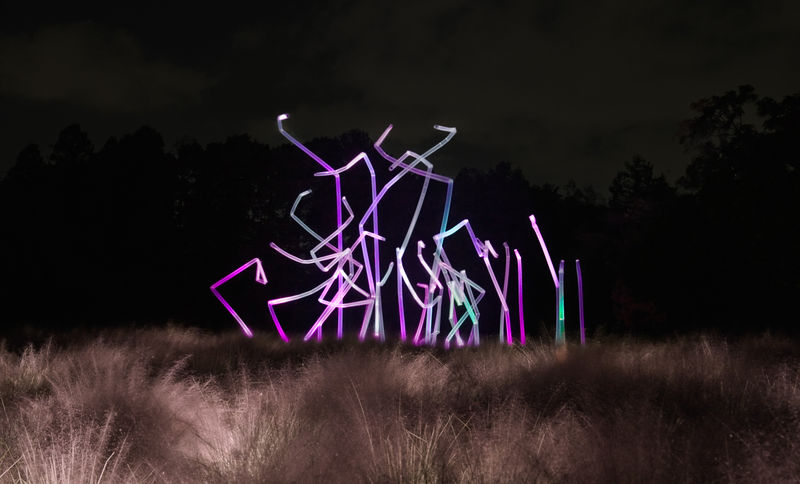
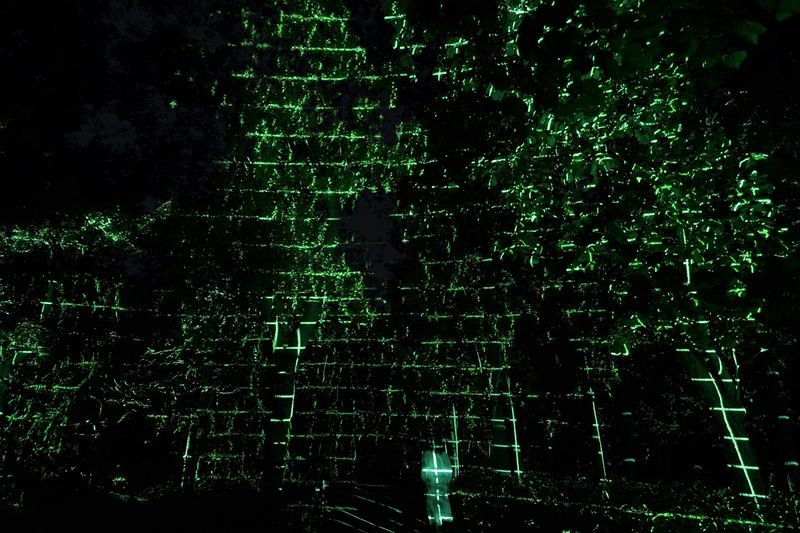
Pillars that Dance with the Wind makes weather visible in a different way. Flexible pillars move with wind, conditions, and nearby people, creating patterns that are never quite the same. It is an especially useful reminder that the garden is not just a backdrop. The air and the people moving through it help shape what you see.
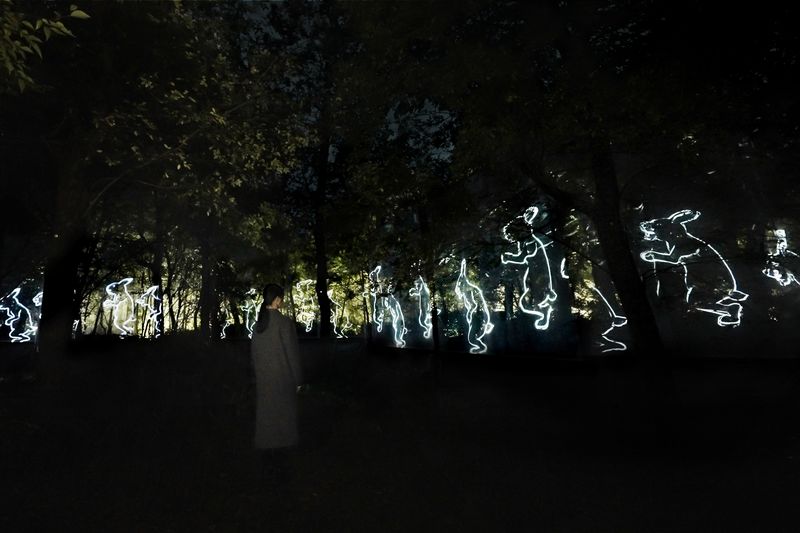
Sculptures of Dissipative Birds in the Wind draws on the movement of birds and the wider ecosystem. Large forms appear and fade as the living environment changes around them. Like several works here, it is more atmospheric than literal. You may find it striking if you enjoy watching a scene unfold, but less satisfying if you want a clear story or a hands-on activity at every stop.
In Life is Flickering Light Floating in the Dark – Cosmos, flowers glow and sound in response to people, sending light outward to reveal others nearby. Across the water, Floating Resonating Lamps on Oike Lake – Fire responds to people and wind with glowing lamps and ripples of light that extend toward the trees. These lake views can be among the more memorable parts of the walk because the reflections make the artwork feel larger than the objects themselves.
The installations share a calm, sometimes dreamlike mood. They are not all equally dramatic, and several rely on colored light, sound, or glowing forms. If you have visited other teamLab sites, approach this one as a nature walk shaped by digital art, not as a repeat of a large indoor exhibition.
Why the outdoor setting matters
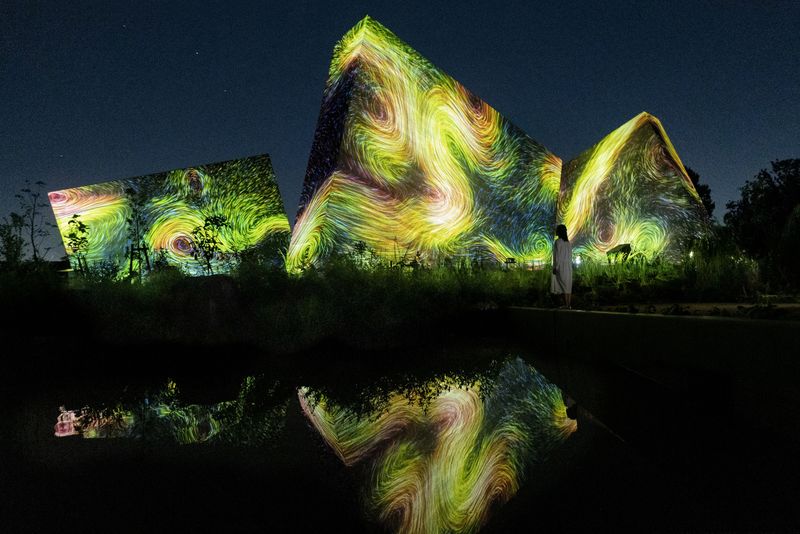
The garden is the central attraction here. teamLab’s stated concept connects the art with a botanical space shaped by land restoration and tree planting. That context gives the installations a different purpose from simply decorating a park: they draw attention to the plants, water, wind, and wildlife already present.
You will notice the contrast between the dark paths and small pools of color. Light can outline a tree or draw your eye across a pond, while a sound from one installation may carry into another part of the garden. When the weather cooperates, the whole place can feel quiet and restorative.
But nature is not a stagehand who follows a schedule. Rain may affect the experience or lead to the closure of some areas, and wind can change what you see. A rainy evening may still be atmospheric, but it is not a safe bet if you are counting on every installation working as advertised. Check the official website close to your visit for current conditions and operating details.
There can also be mosquitoes, particularly in a garden with ponds and plants. Repellent is a practical addition to your evening bag. Avoid bringing food or open drinks; food and alcoholic beverages are prohibited, and drinks without lids are not allowed apart from plastic or water bottles.
Timing, walking, and getting there
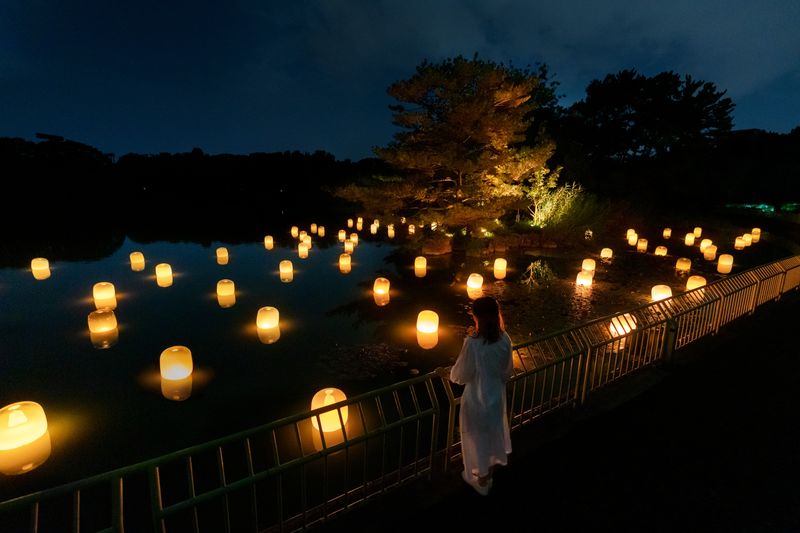
Plan for about 1 to 2 hours, depending on your pace and how long you spend at each artwork. A leisurely visit gives you time to watch the lights change and enjoy the garden. If you are travelling with children, keep in mind that one visitor found the route tiring for a child, especially because leaving early may mean walking back through the garden to the entrance.
The venue is open after dark, with hours that vary by season. The schedule provided lists many dates with opening hours of 18:00 to 21:30 and last entry at 20:30; other dates extend to 22:30 with last entry at 21:30. Check the official website for the hours on your chosen date. Do not assume the opening time is the only time worth arriving: the dark is essential to the visual effect.
Nagai Station is the most direct rail option. From Exit 3 on the Midosuji Subway Line, the garden is about 800 metres east on foot. From the east exit of Nagai Station on the JR Hanwa Line, it is about 1,000 metres away. Tsurugaoka Station on the JR Hanwa Line is about 1,200 metres southeast of the garden. Osaka City Bus No. 4 also stops at Nagai Higashi, about 400 metres from the entrance.
The address is 1-23 Nagaikoen, Higashisumiyoshi Ward, Osaka. Allow time for the walk from the station, especially if you have a timed entry. There is no luggage storage at the venue, and bags longer than 50 centimetres are prohibited, so travel light.
A completely different kind of day out:
- Osaka Aquarium Kaiyukan Ticket
★ 4.8 · 14,894 reviews - Osaka Castle Ticket
★ 4.7 · 12,450 reviews - Umeda Sky Building & Kuchu Teien Observatory Ticket in Osaka
★ 4.7 · 10,062 reviews - HARUKAS 300 Observatory Ticket
★ 4.8 · 9,924 reviews
Is the ticket good value?
Admission starts at $12.65, with the price depending on the ticket offer and date. For that amount, you get access to an open-air exhibition with multiple installations and a setting that changes with the weather and your movement. If you enjoy illuminated gardens, sound art, or a relaxed evening stroll, the price is reasonable for a distinctive way to spend an hour or two.
Value depends on your expectations. This is not a full evening of entertainment, nor is every installation a large-scale spectacle. If you expect an indoor teamLab experience with dramatic rooms and constant hands-on interaction, the outdoor format may feel quieter and simpler. If you enjoy looking closely at light, reflections, trees, and changes in the air, that simplicity can be the point.
I would treat it as an appealing evening option, not an essential stop if your time in Osaka is very limited. Its strongest qualities are the nighttime atmosphere, the connection between art and nature, and the chance to slow down. Its weak points are also clear: weather can restrict the route, insects may be present, and some of the visual ideas can feel similar as you move from one area to the next.
The ticket includes admission only. Meals, drinks, transport, and personal expenses are extra. Children aged 0 to 5 can enter free; children aged 0 to 15 must be with an adult aged 18 or older, and each adult may accompany up to three children. The venue is dark, with uneven ground and unstable footholds. It is listed as stroller and wheelchair accessible, but unpaved sections mean some artworks may not be accessible by wheelchair.
Mobile entry is available with a voucher, and you may be asked to show identification. Tickets are valid only for the selected date and time, and the standard booking is non-refundable except if the operator cancels the activity. Changes may be allowed up to two hours before the activity, subject to the booking conditions.
Should you book teamLab Botanical Garden Osaka?
Book it if you want a calm, unusual evening walk and like the idea of art responding to wind, rain, birds, and your movement. It suits couples, families with older children, and anyone who would rather explore a garden than spend another evening indoors.
Think twice if rain is forecast, you have a tight Osaka schedule, or you are hoping for a string of high-impact interactive rooms. Check the current opening hours and artwork notices, pack mosquito repellent, and wear shoes that feel steady on dark, uneven paths. With the right expectations, this is a lovely way to see a familiar garden in a different light.
FAQ
How long should I allow for the visit?
Plan for about 1 to 2 hours. Your pace and the time you spend at each installation will affect the total.
Is teamLab Botanical Garden Osaka indoors or outdoors?
It is an open-air night museum inside Nagai Botanical Garden. The installations use the garden’s trees, plants, ponds, and surrounding environment.
What is the ticket price?
Tickets start at $12.65. The ticket includes admission; transportation, meals, drinks, and personal expenses are not included.
What are the opening hours?
Hours vary by season and date. The schedule provided lists many dates from 18:00 to 21:30, with last entry at 20:30; some dates run until 22:30, with last entry at 21:30. Check the official website before visiting.
How do I get to the garden by train?
From Nagai Station on the Midosuji Subway Line, walk about 800 metres east from Exit 3. From Nagai Station on the JR Hanwa Line, walk about 1,000 metres east from the east exit.
Can children visit?
Yes. Children aged 0 to 5 can enter free. Children aged 0 to 15 must be accompanied by an adult aged 18 or older; each adult can accompany up to three children.
Is the route accessible for wheelchairs and strollers?
The activity is listed as stroller and wheelchair accessible, but some areas are unpaved. Wheelchair users may not be able to experience every artwork.
Can I get a refund if I cancel?
Standard bookings are non-refundable and cannot be cancelled, except if the operator cancels the activity. Changes may be allowed until two hours before the activity, subject to the booking conditions.
What should I bring or leave behind?
Wear shoes suitable for dark, uneven paths, and consider bringing mosquito repellent. Luggage over 50 centimetres long, food, alcoholic beverages, and drinks without lids other than plastic bottles and water bottles are prohibited.
More Museums and Galleries in Osaka
- Osaka Castle: Museum and Tower Entry Ticket
★ 4.5 · 2,380 reviews - Osaka: Osaka Castle & Historical Museum Guided Tour
★ 4.8 · 28 reviews - (Ticket Included) Explore Osaka Castle & Museum of History
★ 4.8 · 21 reviews - teamLab Borderless Tickets: MORI Building DIGITAL ART MUSEUM
★ 4.7 · 24,126 reviews
Just added in Osaka
- 9D Splendid Japan-Private 3 Star Hotels-Osaka to Tokyo★ 4.5 · 393 reviews
- Osaka Wonder Cruise★ 4.6 · 600 reviews
- Osaka Go Karting Experience by Akiba Kart★ 4.8 · 2,276 reviews
- Osaka Sumo Show Experience with Food & Drinks★ 4.5 · 656 reviews
- Tennoji Zoo Ticket in Osaka★ 4.6 · 311 reviews
- Osaka Tsutenkaku Tower Ticket★ 4.5 · 729 reviews
- Osaka: Sumo Experience with Live Show & Audience Challenge★ 4.9 · 721 reviews
- Osaka MIRACLEWORLD Admission Pass★ 4.5 · 223 reviews
Museums and Galleries, compared.

teamLab Borderless Tickets: MORI Building DIGITAL ART MUSEUM
Read our review →
teamLab Planets TOKYO Digital Art Museum Entry Ticket
Read our review →



Browse the lists this tour appears in