
Reviewed · BOAT TRIPS AND CRUISES
Yokosuka : Scenic Hidden Gem Hike and Naval Port Cruise
Japan’s naval past meets quiet mountain trails. This seven-hour Yokosuka outing pairs the peaceful Jinmuji Temple area and Mount Takatori with a close look at Japanese and American naval vessels in port. I like the rare mix of local nature and military history, and I also like the small group limit of four, which lets guide Mayuko Tanabe adjust the pace and explain what you are seeing.
I especially like the outdoor tea break, the rock-carved Buddha, and the chance to see wildflowers, birds, old quarry walls, and Tokyo Bay in one morning. The main consideration is physical: the walk is easy to moderate, but rocky sections and uneven paths may be tiring if you have limited mobility or rarely hike.
In This Review
- Five useful things to know before you book
- Why Yokosuka makes a fine change from Tokyo
- Jinmuji Temple begins the day quietly
- Mount Takatori rewards a patient climb
- The rock-carved Buddha is a short but special stop
- Tea, forest bathing, and a slower moment
- A short train ride leads to lunch
- Yokosuka’s naval harbor gives the day its punch
- What the $63 price really covers
- Who will enjoy this day most
- Timing, weather, and a few practical cautions
- Should you book the Yokosuka hike and cruise?
- FAQ
- Where does the tour start?
- Where does the tour finish?
- How long does the experience last?
- What languages does the guide speak?
- Is the naval cruise included in the price?
- Is lunch included?
- How difficult is the hike?
- What happens if it rains?
Five useful things to know before you book
- The tour begins at JR Higashi Zushi Station, not Zushi Station, and ends at Shioiri Station.
- Mount Takatori combines a forest walk, old quarry, rock Buddha, and wide views toward Yokosuka, Tokyo Bay, Mt. Fuji, and the Izu Peninsula.
- Mayuko Tanabe is a nationally licensed guide who speaks English, Spanish, and Japanese and also has strong local mountain experience.
- The naval cruise ticket is included, with a stated value of ¥2,200 for adults and ¥1,100 for children.
- Lunch, drinks, and local train fare are extra, so bring water, comfortable shoes, and money for food.
- The cruise can change or be canceled in poor weather, and the route is not suitable for wheelchairs, strollers, or people with serious mobility limits.
Why Yokosuka makes a fine change from Tokyo
Tokyo gives you temples, department stores, neon streets, and crowded train stations. Yokosuka gives you a different view of the greater Tokyo area: wooded hills, coastal air, a working naval harbor, and a city shaped by Japan’s contact with France and the United States.
That contrast is the point of this outing. You do not spend the whole day checking off famous sights. Instead, you move from a quiet religious site to a mountain trail, then into a port city where submarines and large naval ships may be visible from the water.
The route is also practical for a day trip from Tokyo. You meet at JR Higashi Zushi Station, take a short walk to the first stop, ride a train later in the day, and finish near Shioiri Station. Since the starting and ending stations differ, you get a moving tour rather than a loop back to the first place.
Mayuko’s local connection adds value. She spent part of her younger life in Yokosuka and knows the nearby hills well. Her mountain guiding experience matters most on paths where a first-time visitor could take a wrong turn or miss a smaller feature beside the trail.
More Boat Trips in Japan:
- Mt Fuji & Hakone Cruise, Drum Show Bullet Train 1 Day from Tokyo
★ 4.0 · 7,413 reviews - Tokyo Mt Fuji 5th St & Hakone Cruise Bus Tour w/Bullet Train
★ 4.4 · 5,024 reviews - Kyushu: Mount Aso, Kusasenri & Takachiho Gorge Day Tour (Optional Takachiho Boat Ride Experience)
★ 4.9 · 4,957 reviews
Jinmuji Temple begins the day quietly
From Higashi Zushi Station, you walk for about 15 minutes to Jinmuji Okunoin. This first section helps you leave the station area behind without wasting time on a long transfer.
The temple is described as peaceful and surrounded by nature, which makes it a good opening stop. You get about 20 minutes for a guided visit and photographs. The value here is not a long temple tour with a dozen buildings. It is the feeling of reaching a calm, local religious place before the more active part of the walk begins.
Mayuko can explain local customs and the spiritual side of the area in English, Spanish, or Japanese. If you are used to major temple sites in Kyoto or Kamakura, you should set your expectations differently. This is a smaller, quieter stop, chosen for its setting and connection to the mountain route.
From the temple, the walk continues for roughly 30 minutes toward Takatoriyama. The pace is intentionally relaxed, and Mayuko can slow down for the group. That makes the experience more welcoming to a casual walker, though it does not remove the need for steady footing.
Mount Takatori rewards a patient climb
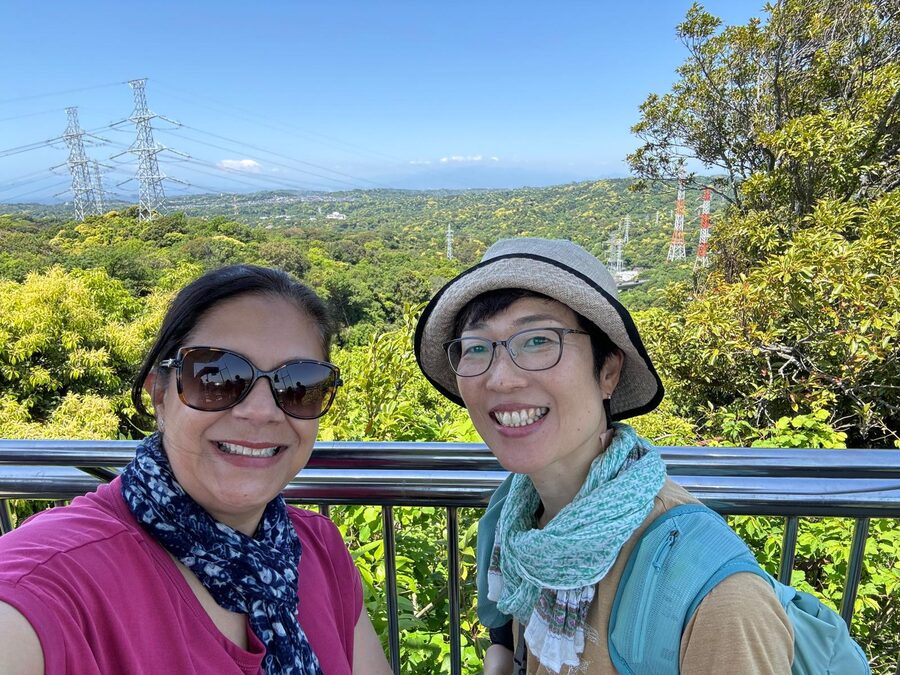
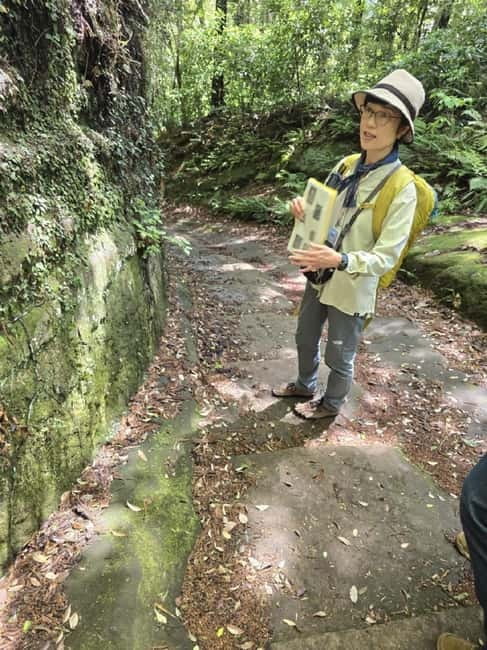
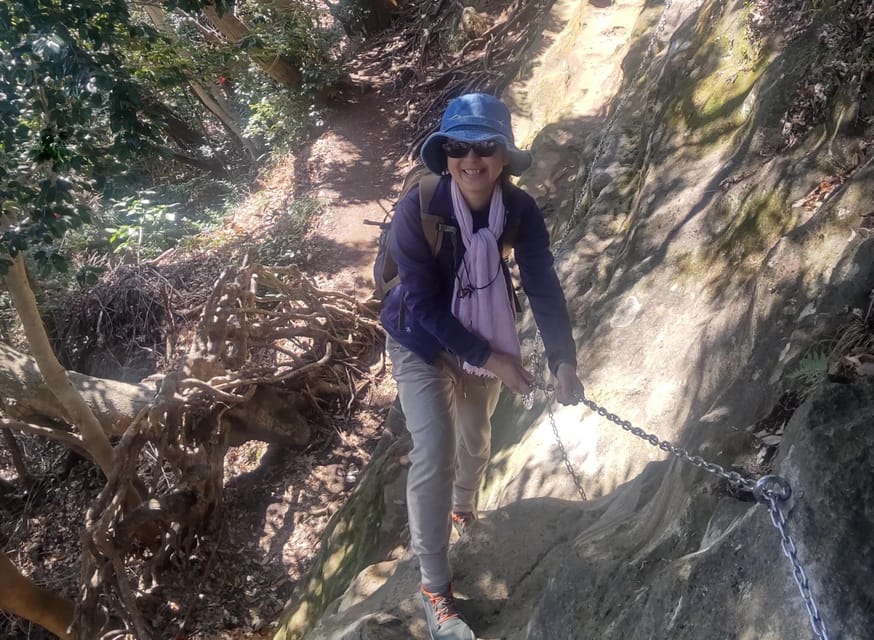
Mount Takatori is the heart of the day. The trail passes through wooded sections where you may notice flowers, birds, and changes in the terrain that are easy to miss when walking alone. One useful advantage of a local guide is that Mayuko can point out these small details instead of treating the hike as a race to the viewpoint.
The climb is generally easy to moderate. People with hiking experience should find it comfortable, while beginners may find some sections challenging. You may need to step over small rocks and manage uneven ground, so trekking shoes are the sensible choice. Long pants or leggings are also recommended to protect your legs.
The mountain has a religious past as well as a natural one. It was once used as a training place for monks, and women were not allowed to enter at that time. That history gives the wooded path a more serious atmosphere than an ordinary city park.
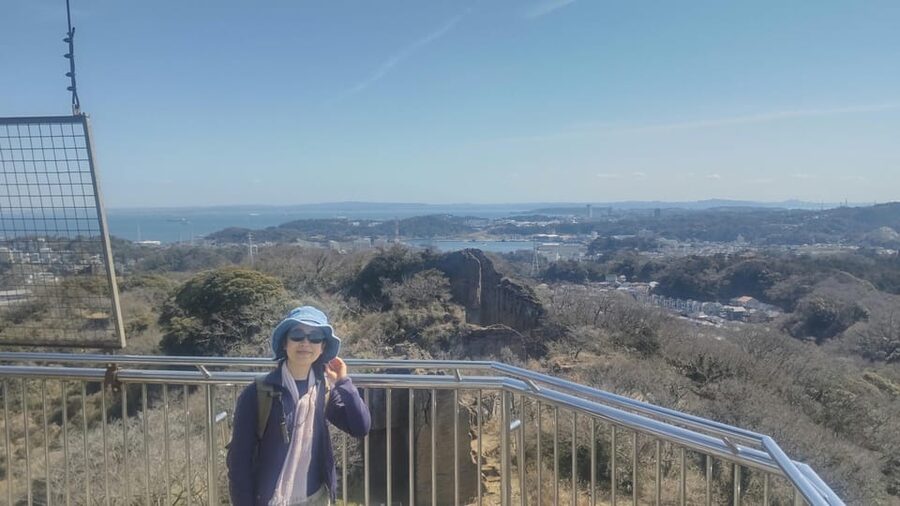
At the top, you can see a broad view over Yokosuka and its port. On a clear day, the sight extends toward Tokyo Bay, Mt. Fuji, and the Izu Peninsula. Views depend on weather and visibility, but the high point is still worthwhile when distant mountains are hazy.
The old quarry is another memorable feature. Rock was cut vertically from the mountain, leaving tall, deep surfaces that show how people worked here more than a century ago. It is a striking place for photographs, and it gives the hike a human story beyond trees and scenery.
The rock-carved Buddha is a short but special stop
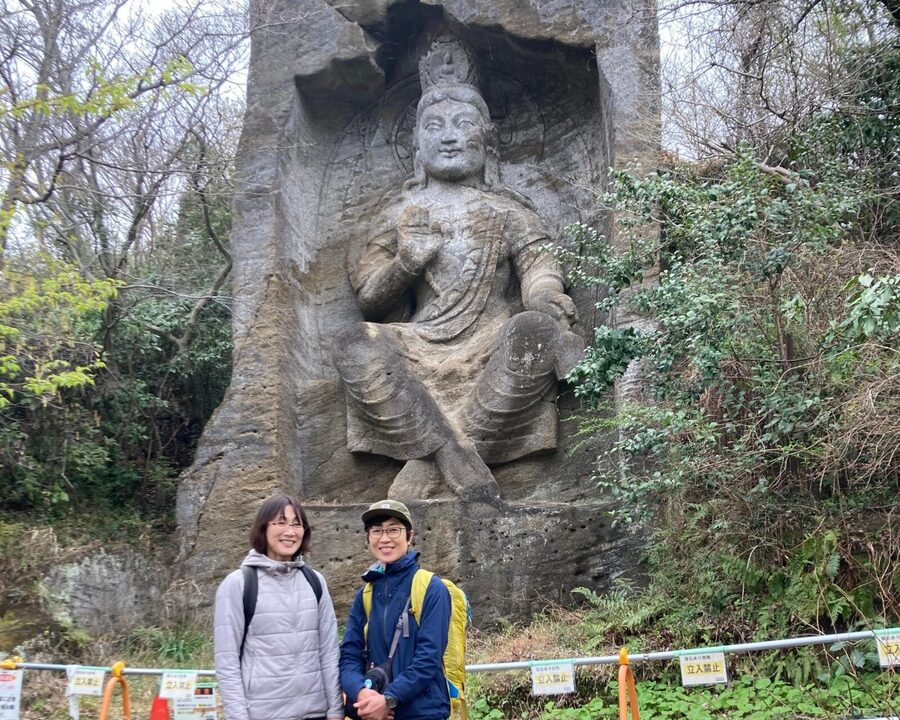
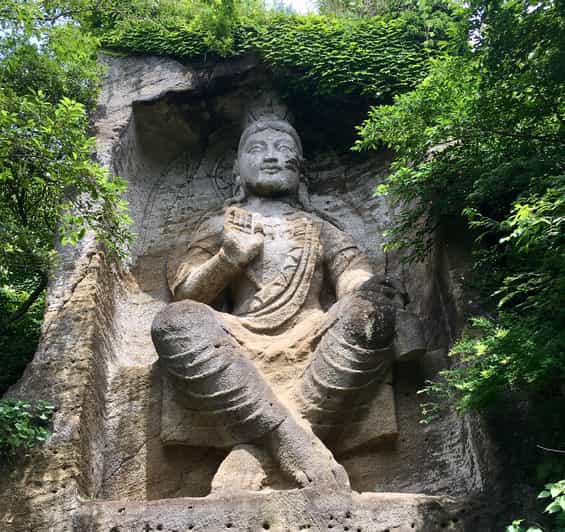
Takatoriyama Buddha receives about 10 minutes of guided attention. The statue is carved directly into the rock, making it different from a freestanding temple image. Its setting is part of the appeal: you see the religious artwork as part of the mountain itself.
This is a short stop, so do not expect a long meditation session or a major temple complex. Instead, it is one of those compact sights that becomes more meaningful when you know why it is there and how it relates to the mountain’s religious past.
The route also has an active side. A local account describes seeing people rock climbing near the quarry. That does not mean climbing is part of your tour, but it shows how the old quarry is used today as well as remembered for its earlier work.
More Hiking and Trekking in Japan:
- Fushimi Inari Hidden Hiking Tour (Private Option Available)
★ 5.0 · 1,750 reviews - [Nagoya Kamikochi Hiking Tour] One-Day Nature Forest Hiking Tour of Kamikochi & Taisho Pond & Tashiro Pond & Kappa Bridge & Myojin Pond & Hotaka Mountain Range & Hotaka Shrine Okumiya (Departure from Nagoya)
★ 4.7 · 423 reviews - Kyoto: 3-Hour Fushimi Inari Shrine Hidden Hiking Tour
★ 4.9 · 270 reviews - Hiroshima Local guided Hiking Tour&Open-air Tea Ceremony
★ 5.0 · 213 reviews
Tea, forest bathing, and a slower moment
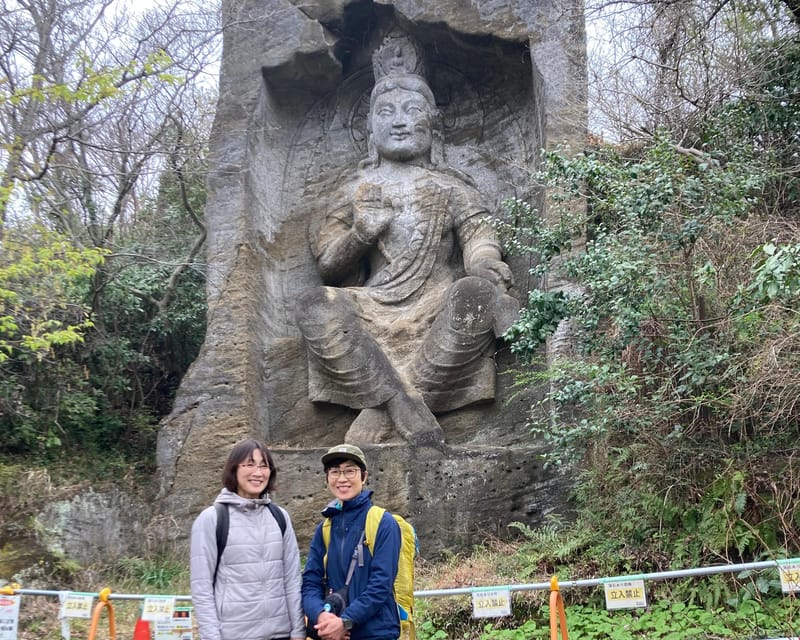
One feature I would not overlook is the outdoor tea break. Mayuko provides hot drinks and sweets during the mountain portion, giving you time to rest at the viewpoint and take in the surroundings.
This pause matters because the day is not designed as a hard hike. You get a chance to listen to birds, notice the trees, and enjoy the air without rushing to the next train or attraction. The experience describes this as traditional forest bathing, a simple way to spend time in nature with attention rather than speed.
Bring your own drink as well. The included tea break is a pleasant touch, but the tour also advises you to carry drinks, and lunch and other beverages are not included. In warm weather, water is especially important.
A short train ride leads to lunch
After the mountain stops, you walk for about 30 minutes before taking a train for roughly 15 minutes. The train fare is not included and is stated as ¥230 per person.
This transfer is useful rather than decorative. It connects the wooded hills with the port area and saves you from walking a longer urban stretch. It also gives the day a local rhythm: hike, ride public transport, eat, then board the cruise.
The lunch period lasts about an hour and includes a food market visit and regional food. You pay for lunch and drinks yourself, which lets you choose according to appetite and budget. The exact meal is not fixed in the supplied details, so you should think of this as flexible local eating rather than a prepaid restaurant course.
If you need a substantial meal, plan accordingly. The morning includes walking and climbing, and a light snack may not be enough for everyone. Carrying a small snack is sensible, provided it fits comfortably in your day bag.
Yokosuka’s naval harbor gives the day its punch
The final major stop is Gunko Meguri from the Shioiri Sanbashi Bridge. You spend about 40 minutes at the port, including photographs, a guided visit, sightseeing, and the naval cruise.
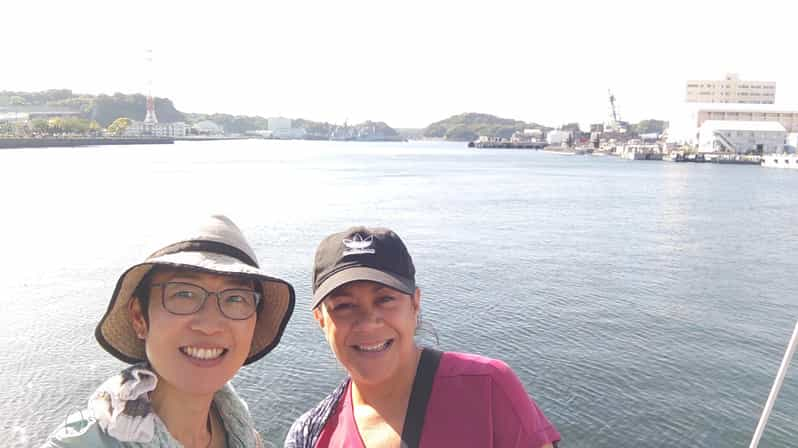
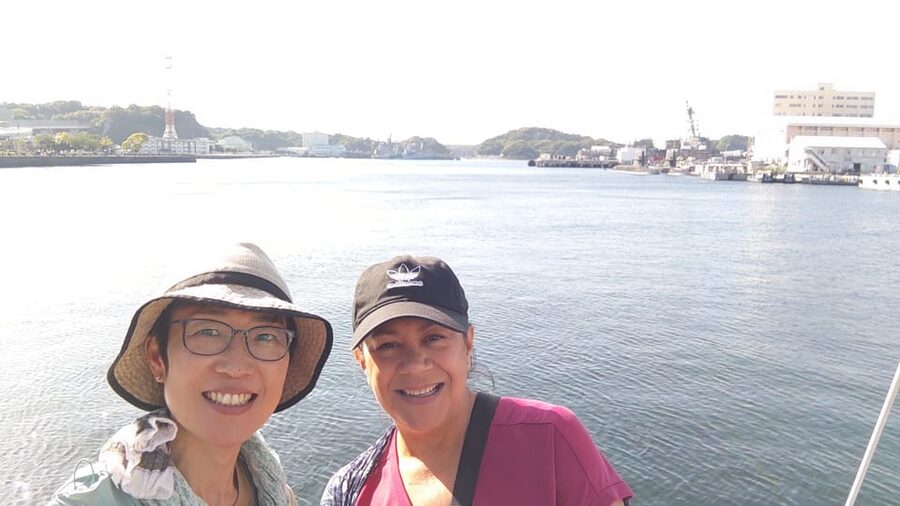
The boat ride lets you view naval vessels from close range, including submarines and large ships when they are in port. That is a very different experience from looking at military history in a museum. You are seeing a working harbor and the physical setting that has made Yokosuka important to Japan’s modern development.
A professional navigator provides information during the cruise. Mayuko can translate for English-speaking participants, which is especially useful because the standard harbor commentary may not otherwise be available in English. She also prepares reference material about the vessels, giving you more context than a quick ride past ships.
Yokosuka’s position has made it important to both Japanese and foreign naval forces. The city’s connections with Japan, France, and the United States help explain why the port feels international and why the harbor has played such a major role since the Meiji period.
The cruise is included in the tour price. That is a meaningful saving because the stated individual fare is ¥2,200 for an adult and ¥1,100 for a child. Still, the boat schedule and route can change with weather, and the whole cruise may be canceled in rain or extreme conditions.
If you are prone to seasickness, think carefully before booking. The ride is short, but the experience specifically lists seasickness as a concern.
What the $63 price really covers
At $63 per person, this is a strong value if you want both a guided hike and a harbor cruise. The price includes a nationally licensed English, Spanish, or Japanese-speaking guide, the naval cruise ticket, and photographs taken during the day.
The photos are more useful than they may sound. You can focus on footing, flowers, birds, and views instead of stopping constantly to take pictures. Mayuko’s camera also helps preserve group moments that are hard to capture when you are walking alone.
You still need to budget for the ¥230 train fare, lunch, and drinks. Hotel pickup and drop-off are not included. The starting and ending locations are different, so check your route home from Shioiri Station before you set out.
The four-person maximum is one of the best parts of the price. A larger group would make the narrow trail and pace adjustments less personal. With only a few people, Mayuko can answer questions, help with navigation, and alter the walking speed.
Who will enjoy this day most
I would choose this outing if you have already seen central Tokyo and want a more local-feeling day. It is also a good fit if you like combining outdoor activity with history instead of spending the whole day at one type of sight.
You should be comfortable walking for several hours with breaks. The route is not presented as strenuous, but it includes uphill sections, rocks, uneven paths, and a total duration of about seven hours. People with hiking experience will likely find it easy to moderate; beginners should be ready for a few challenging spots.
The tour is not suitable for wheelchair users, people with mobility impairments, or people with heart problems. Baby strollers and oversized luggage are not allowed. Wear trekking shoes or another pair with a firm grip, and choose long pants or leggings.
Families with older children may appreciate the mix of nature, boats, and unusual rock features. Children should still be able to manage the walking. Since the group is limited to four, private options may suit you better if you want a slower or more personal pace.
Timing, weather, and a few practical cautions
The experience is advertised as seven hours, while the walking and stop times add up to roughly six hours. Allow the full seven hours because train connections, lunch, group pace, and harbor timing can affect the day.
Rain and extreme weather can cancel the tour. The boat portion is especially weather-sensitive, so ask about the plan if conditions look uncertain. Free cancellation and date changes are available up to 24 hours before the start time, subject to availability for a new date.
Meet at the ticketing booth at JR Higashi Zushi Station, where Mayuko waits with a sign. Do not go to Zushi Station by mistake. That small station-name difference could create a frustrating start.
The tour starts and ends in different places, so ask Mayuko about the schedule if you have a train reservation, dinner booking, or other fixed plan. A little flexibility will make the day easier.
Should you book the Yokosuka hike and cruise?
Book it if you want a small-group day with real local texture, gentle adventure, and a naval harbor that most standard Tokyo tours do not include. Mayuko’s strengths are clear in the way this route works: she knows the mountain paths, explains the natural and historical details, takes photographs, and can translate the boat commentary.
Skip it if you want a fully urban sightseeing day, dislike uneven trails, need accessible transport, or feel uneasy on boats. Also skip it if Mt. Fuji views are your only reason for going, since those views depend on clear weather.
For the right person, $63 buys a lot: a quiet temple, a rock-carved Buddha, an old quarry, mountain views, tea in the woods, local food time, and a close look at Yokosuka’s naval port. That is a full day with a pleasing change of pace from Tokyo.
FAQ
Where does the tour start?
It starts at the ticketing booth at JR Higashi Zushi Station. The guide waits there with a sign board. This is Higashi Zushi Station, not Zushi Station.
Where does the tour finish?
The tour finishes at Shioiri Station after the harbor cruise and a final walk of about 15 minutes.
How long does the experience last?
The stated duration is seven hours. The scheduled walking and sightseeing portions take approximately six hours, but you should allow the full seven hours.
What languages does the guide speak?
The live guide service is available in English, Spanish, and Japanese. Mayuko Tanabe is a nationally licensed guide.
Is the naval cruise included in the price?
Yes. The cruise ticket is included. The stated ticket value is ¥2,200 for an adult and ¥1,100 for a child.
Is lunch included?
No. Lunch and drinks are not included. The route allows about one hour for lunch, a food market visit, and regional food.
How difficult is the hike?
The hike is easy to moderate. Some sections may feel challenging for beginners, and the route includes small rocks and uneven ground. Trekking shoes are recommended.
What happens if it rains?
The tour may be canceled because of rain or extreme weather. The boat cruise may also be changed because of weather conditions. For a full refund, cancel at least 24 hours before the starting time.
Just added in Japan
- Yokosuka: Boat Trip to an Uninhabited Island★ 5.0 · 16 reviews
- Very popular in Harajuku♡Animal petting zoo★ 4.6 · 39 reviews
- Yokohama Port: Private Customizable Tour with Transfer★ 5.0 · 19 reviews
- Yokohama Private Tour with a Local: Highlights & Hidden Gems★ 4.4 · 13 reviews
- Yokohama Half Day Tour with a Local Expert Guide★ 4.0 · 20 reviews
- Yokohama Full Day Tour with a Local Expert Guide★ 4.3 · 23 reviews
- Kamakura: Private Guided Walking Tour with Local Guide★ 4.8 · 60 reviews
- Wagyu & Sake 8 Course Tasting Dinner in Shinjuku★ 4.9 · 20 reviews
Boat Trips and Cruises, compared.
Mt Fuji & Hakone Cruise, Drum Show Bullet Train 1 Day from Tokyo
Read our review →
Tokyo Mt Fuji 5th St & Hakone Cruise Bus Tour w/Bullet Train
Read our review →
Kyushu: Mount Aso, Kusasenri & Takachiho Gorge Day Tour (Optional Takachiho Boat Ride Experience)
Read our review →
Japan’s Three Scenic Views & Kyoto by the Sea: Amanohashidate Cable Car + Ine Bay Boat Tour Day Trip (Departing from Osaka or Kyoto)
Read our review →
Mt. Fuji 5th Station & Hakone Cruise 1-Day Bus Tour
Read our review →
Meiji Shrine, Asakusa, Skytree Bus Tour and Cruise
Read our review →Browse the lists this tour appears in