
Reviewed · TEA CEREMONIES
Hiroshima Local guided Hiking Tour&Open-air Tea Ceremony
Quiet trails begin near the station. This three-hour outing takes you from Hiroshima Station into the wooded Futaba Mountains, where you visit Shinto shrines, climb to a peace pagoda, pause for forest bathing, and share a Nodate tea ceremony with views toward Hiroshima, the Seto Inland Sea, and Miyajima. I especially like the small group size, limited to six people, and the way the guide connects local religious customs with Hiroshima’s past. The mountaintop tea service also gives this tour a calm, personal finish that a standard city tour cannot match.
The main consideration is the physical effort. You need to climb about 500 steps on uneven and sometimes steep paths, so this is not a stroll through a flat city park. The hike is manageable for many people because the guide builds in regular stops, but hot weather can make it much harder.
In This Review
- Key points to know before booking
- Why this hike adds something different to Hiroshima
- Starting at Hiroshima Station at 7:30
- Hiroshima Toshogu Shrine: a cultural opening
- Kinko Inari Shrine and the 500-step climb
- Futabayama Peace Pagoda and the Hiroshima view
- Forest bathing: a slower pause on the way down
- Nodate tea at Kinko Inari’s Okumiya Shrine
- What the guides add to the morning
- Price, timing, and overall value
- Who should book this experience?
- FAQ
- Where does the tour begin and end?
- How long does the experience last?
- How many steps are involved?
- What is included in the tea ceremony?
- Can young children participate?
- What happens if the weather is poor?
- Should you book the Futaba Mountains hike?
Key points to know before booking
- Start near Hiroshima Station: You can meet at the Shinkansen exit, making this easy to fit into a sightseeing day.
- Five hundred steps matter: The route is described as easy to moderate, but steep sections and uneven ground require sensible shoes.
- A rare city-and-forest combination: The tour moves from shrines and urban edges into quiet woodland surprisingly close to central Hiroshima.
- Nodate tea comes with a view: The open-air tea ceremony takes place near Kinko Inari Shrine’s Okumiya Shrine.
- Small groups improve the experience: With a maximum of six people, it is easier to ask questions and move at a comfortable pace.
- Five percent supports conservation: Part of your fee helps maintain Futaba Mountain’s natural areas.
Why this hike adds something different to Hiroshima
Most first visits to Hiroshima focus on the Peace Memorial Park, the Atomic Bomb Dome, and perhaps Miyajima. Those places are essential, but this morning hike gives you another way to understand the city.
The Futaba Mountains rise close to Hiroshima Station. Within a short walk, the noise of trains and streets gives way to shrine paths, forest, stone steps, and broad views. The route also brings together Shinto worship, Buddhist symbolism, local customs, and the city’s recovery after the atomic bombing.
I like that the experience does not treat Hiroshima only as a place of wartime memory. From the mountain, you see a living city surrounded by water and hills. The view toward Miyajima and the Seto Inland Sea helps put Hiroshima in its wider setting.
The guide is central to the tour. Guides named Nana, Michi, Naomi, and Micchi have been praised for being warm, patient, and well-informed. Their role is not simply to point out buildings. They explain how to approach a shrine, what offerings mean, and why certain spaces matter.
More Tea Ceremonies in Hiroshima:
- Kimono and Tea Ceremony in Miyajima
★ 5.0 · 73 reviews - An Amazing set of Cultural experience: Kimono, Tea Ceremony and Calligraphy
★ 5.0 · 69 reviews - Hiroshima: Morning Hiking Tour with Open-air Tea Ceremony
★ 4.8 · 58 reviews
Starting at Hiroshima Station at 7:30
The earliest departure is listed at 7:30 a.m., with later start times also available. The morning option is the best choice if you want a full afternoon for Peace Memorial Park, the Hiroshima Castle area, or a trip to Miyajima.
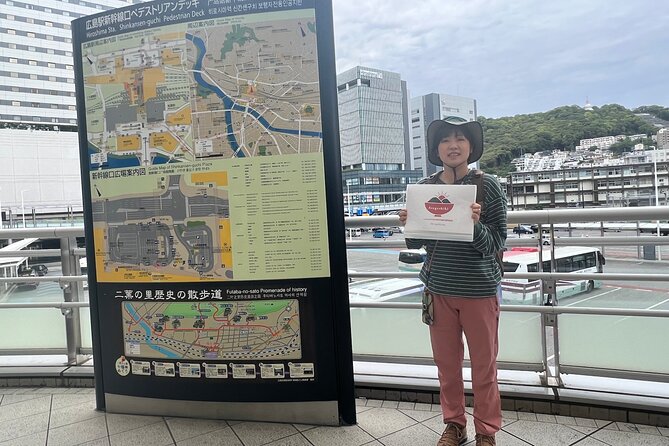
The meeting point is at the Hiroshima Station Shinkansen exit. That location is practical, especially if you are arriving by train or staying near the station. Arrive early. If you are more than 10 minutes late without contacting the operator, the booking is automatically canceled and the full fee is charged.
At the start, the guide introduces the route and explains what lies ahead. This matters because the hike is not one continuous climb with no breaks. You stop at religious sites, scenic points, and a forest clearing, so you can catch your breath while learning about the area.
The advertised duration is about three hours. Departure times and the exact rhythm of the stops can vary, but the activity ends back at Hiroshima Station.
Hiroshima Toshogu Shrine: a cultural opening
The first major stop is Hiroshima Toshogu Shrine. Here, the guide introduces important cultural assets and explains the setting before the climb becomes more demanding.
A shrine visit can feel confusing if you do not know the basic customs. Your guide can show you how to approach the grounds and explain the meaning behind common Shinto practices. This is one of the strongest reasons to book a guided walk rather than follow the route alone.
You may also have time to make an offering or write a wish. One family described a young visitor posting a wish for good school results, a small moment that shows how these places remain part of ordinary life, not just historic sites for photographs.
The stop lasts about 30 minutes. It gives you a gentle start and helps you understand the spiritual thread that continues up the mountain.
Kinko Inari Shrine and the 500-step climb
From Hiroshima Toshogu, the route continues toward Kinko Inari Shrine and into Mt. Futaba. This is where the physical part begins in earnest.
The route includes about 500 steps. Some people will find this a pleasant workout, while others may need to take it slowly. Several people described the walk as easy to moderate because the guide pauses often, but the path can be steep and uneven. That distinction is important: the hike is not technically extreme, yet it is more demanding than a level sightseeing tour.
Good footwear is a sensible choice. You should also be prepared for heat. On one reported outing, temperatures reached 36 degrees Celsius, with the perceived heat close to 40 degrees. The guide made frequent stops and checked that everyone drank enough water, but you should still arrive ready for warm conditions.
The shrine route gives the climb a purpose. Instead of counting steps toward an abstract summit, you move through a series of sacred places. Your guide explains the customs and symbols along the way, making the ascent feel connected to the area’s religious life.
More Hiking and Trekking in Hiroshima:
- Fushimi Inari Hidden Hiking Tour (Private Option Available)
★ 5.0 · 1,750 reviews - [Nagoya Kamikochi Hiking Tour] One-Day Nature Forest Hiking Tour of Kamikochi & Taisho Pond & Tashiro Pond & Kappa Bridge & Myojin Pond & Hotaka Mountain Range & Hotaka Shrine Okumiya (Departure from Nagoya)
★ 4.7 · 423 reviews - Kyoto: 3-Hour Fushimi Inari Shrine Hidden Hiking Tour
★ 4.9 · 270 reviews - Hiking the Historic Nakasendo Trail [1 Day Tour from Nagoya]
★ 5.0 · 104 reviews
Futabayama Peace Pagoda and the Hiroshima view
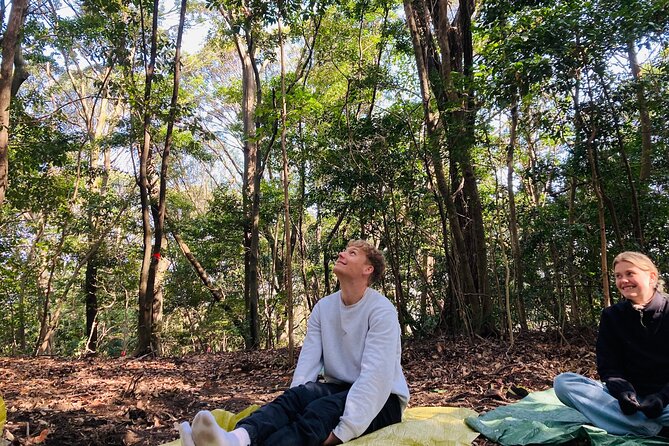
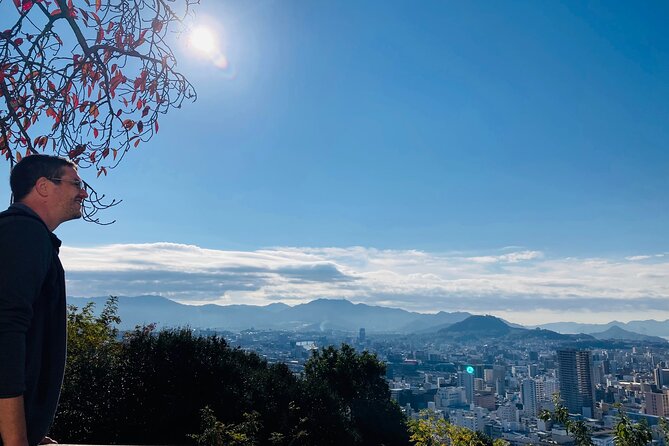
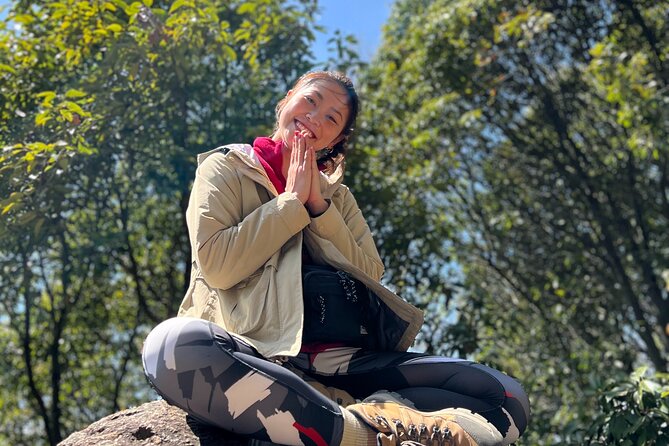
At the top, Futabayama Peace Pagoda provides the tour’s big visual reward. From here, you can look over Hiroshima City, the Seto Inland Sea, and Miyajima.
The view carries more weight than a simple photo stop. Hiroshima is a city associated around the world with destruction, but from Futabayama you see the scale of its recovery. Streets, neighborhoods, waterways, and distant islands form a living picture of what the city is today.
The guide adds context about the places you can see. That makes the view more useful than simply reaching a high point, taking a picture, and walking away. If the weather is clear, this should be one of the most memorable parts of the morning.
The pagoda also brings together different strands of Japanese religious tradition. The route includes Shinto shrines and a Buddhist relic site, giving you a chance to see how spiritual traditions can exist side by side in Japan.
Forest bathing: a slower pause on the way down
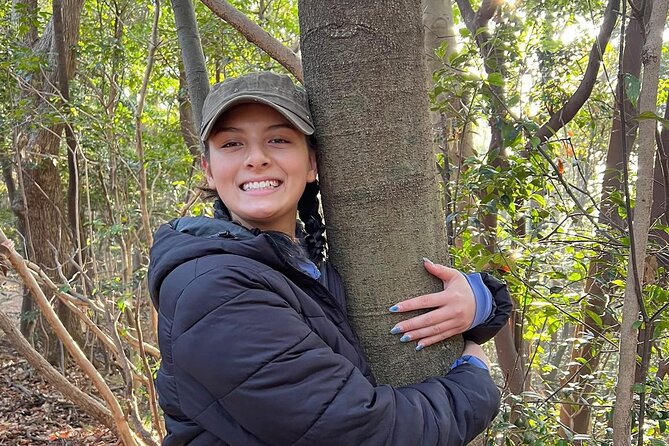
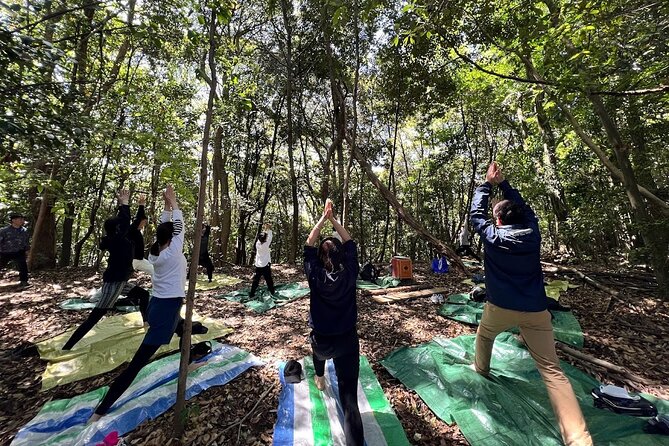
After the summit, the group takes time for Shinrinyoku, often translated as forest bathing. This is not a bath and does not involve special equipment. It is a guided pause in the woods, focused on slowing down and noticing your surroundings through the senses.
A clearing is used for meditation, with groundsheets placed on the forest floor. The exercise may ask you to focus on different senses and pay attention to the sounds, air, and feel of the forest.
I like this portion because it changes the pace. The shrine visits involve learning and the climb requires effort. The forest pause gives you room to be quiet. It also helps explain why the mountain matters as a natural place, not only as a route to a view.
The value depends partly on your expectations. If you want nonstop sightseeing, this may feel slow. If you have spent several days in crowded city centers, it can be a welcome reset.
Nodate tea at Kinko Inari’s Okumiya Shrine
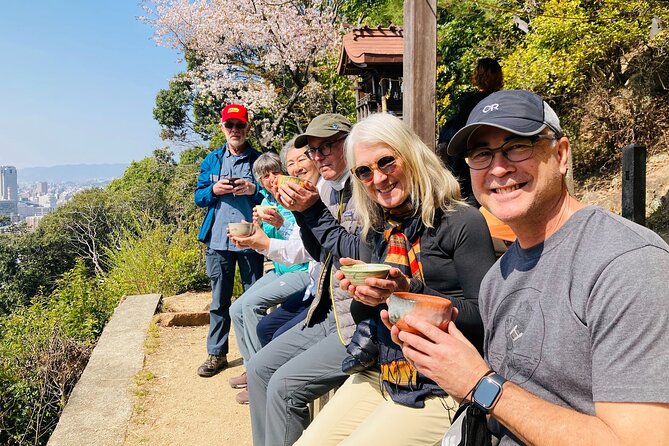
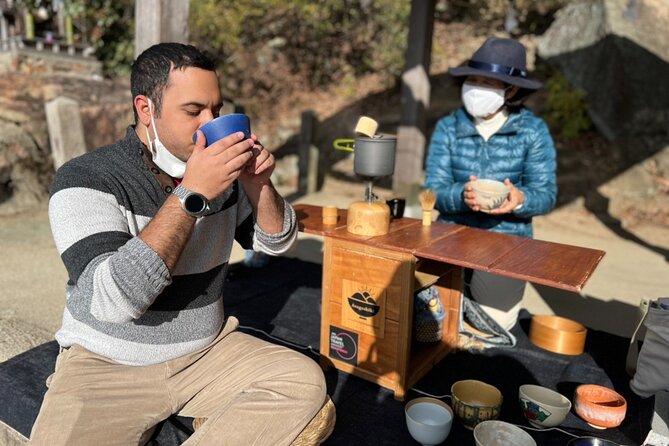
The final major activity is the Nodate tea ceremony, an open-air tea service held near the Okumiya Shrine. The guide prepares and serves the tea in the mountain setting, with the city and surrounding scenery nearby.
This is not presented as a formal, elaborate tea-school performance in a dedicated tea house. That is part of its appeal. You experience the ceremony outdoors, after walking through the forest and visiting shrines. The setting gives the tea a direct connection to the mountain.
The service has been described as a particularly refreshing end to the climb. On a hot day, cold green tea was especially welcome. Other outings included matcha tea. The exact preparation may vary, but the central idea remains the same: pause, share tea, and appreciate the view.
Your guide explains the customs rather than expecting you to know what to do. That makes the ceremony approachable for first-time visitors. You can ask questions, take part without feeling awkward, and enjoy the quiet moment.
The tea stop is scheduled for about an hour, so this is not a rushed cup before returning to town. It gives the tour a human scale. You are not simply moving from one attraction to the next.
What the guides add to the morning
The guides receive unusually strong praise for their kindness and personal attention. Nana is repeatedly described as upbeat, thoughtful, and full of local information. Michi is praised for a gentle manner and careful attention to the group. Naomi is remembered for making the tea ceremony feel welcoming and relaxed.
Those qualities matter here because the tour mixes several subjects. You may ask about shrine etiquette, Hiroshima’s history, Buddhist and Shinto customs, the mountain view, or the meaning of forest bathing. A good guide keeps those topics connected without turning the walk into a lecture.
The group limit of six is another real advantage. You get more chances to ask questions, and the guide can adjust the pace more easily than on a large bus excursion. For families, this can make the climb feel less stressful. A family with children aged 13 and 16 found the outing enjoyable, and children aged five and under can join free.
The small group also supports the quieter mood. You are less likely to feel like you are being moved through a procession of stops. The experience works best when you allow the guide to set a measured pace.
Price, timing, and overall value
The price is $109.43 per person. That is not a bargain-basement walking tour, but it includes about three hours with a guide, shrine visits, the mountain route, forest bathing, and the open-air tea ceremony.
The value is strongest if you would otherwise struggle to find the route or understand the religious customs. You are paying for local guidance, interpretation, a small group, and an activity that combines several parts of Hiroshima in one morning.
It is also useful that the tour begins and ends at Hiroshima Station. You do not lose extra time getting to a distant trailhead. The early departure lets you continue sightseeing afterward, which improves the value for a short stay.
Five percent of the fee goes toward Futaba Mountain conservation. That is a modest contribution, but it gives the outing a practical link to the place you are visiting.
Free cancellation is available if you cancel at least 24 hours before the start time. Changes or cancellations within 24 hours are not refunded, and poor weather may lead to a new date or a full refund.
Who should book this experience?
I would recommend this tour to you if you want a break from Hiroshima’s busiest sights and enjoy walking with a purpose. It suits people interested in Japanese religion, local customs, nature, and the city’s recovery.
It is also a strong choice for repeat visitors who have already seen the Peace Memorial Park and want a different side of Hiroshima. Families can enjoy it too, provided everyone is ready for the steps and heat.
You may want to skip it if you have difficulty with stairs, dislike uneven paths, or want a completely relaxed morning. The guide can provide pauses, but the climb remains part of the experience. You should also be cautious about booking during very hot weather unless you are comfortable exercising outdoors.
FAQ
Where does the tour begin and end?
It begins at the Hiroshima Station Shinkansen exit in Minami Ward and ends back at the same meeting point.
How long does the experience last?
The tour lasts approximately three hours.
How many steps are involved?
The hike includes about 500 steps, along with uneven and sometimes steep sections.
What is included in the tea ceremony?
The tour includes a Nodate, or open-air, tea ceremony performed by the guide near Kinko Inari Shrine’s Okumiya Shrine.
Can young children participate?
Children aged five and under can participate free of charge. Most people can take part, but the 500-step climb should be considered before booking.
What happens if the weather is poor?
The activity requires good weather. If it is canceled because of poor weather, you will be offered another date or a full refund.
Should you book the Futaba Mountains hike?
Book it if you want Hiroshima to feel less like a checklist of famous sights and more like a place with living customs, quiet woods, and a close connection between nature and memory. The combination of shrine visits, a guided climb, forest bathing, a wide city view, and tea outdoors is unusual.
The decision comes down to the steps. If you can manage a moderate climb and arrive prepared for heat, this is a thoughtful and personal way to spend a morning. If you want flat paths and easy transport from one attraction to the next, choose a different activity. For everyone in between, the guide’s frequent pauses and the small group make this a worthwhile introduction to a quieter side of Hiroshima.
Just added in Hiroshima
- Hiroshima Peace Memorial Museum Ticket★ 4.8 · 2,727 reviews
- Hiroshima Peace Memorial Museum Admission★ 4.6 · 1,308 reviews
- Private Full Day Hiroshima Tour★ 4.5 · 29 reviews
- The Peace Memorial to Miyajima : Icons of Peace and Beauty★ 4.5 · 31 reviews
- Shore Excursion from Hiroshima Port : Private Tour in Hiroshima★ 5.0 · 17 reviews
- Hiroshima & Miyajima All-Inclusive Tour w/Licensed guide Pancho★ 5.0 · 54 reviews
- Hiroshima Country Cycling: Explore Rural Life 1 HR from City★ 5.0 · 22 reviews
- Hiroshima Saijo Sake Tasting Tour with visit to 7 Breweries★ 5.0 · 104 reviews
Tea Ceremonies, compared.
Tea Ceremony in a Traditional Tea House in Kiyomizu
Read our review →
World Heritage Kyoto & Nara Uji Authentic Matcha Experience
Read our review →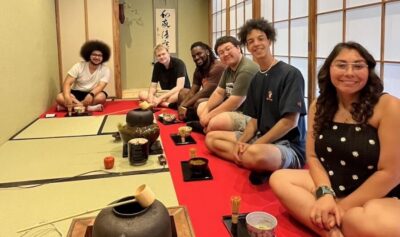

Browse the lists this tour appears in