
Reviewed · TEA CEREMONIES
Kyoto: Table-Style Tea Ceremony at a Kyo-Machiya
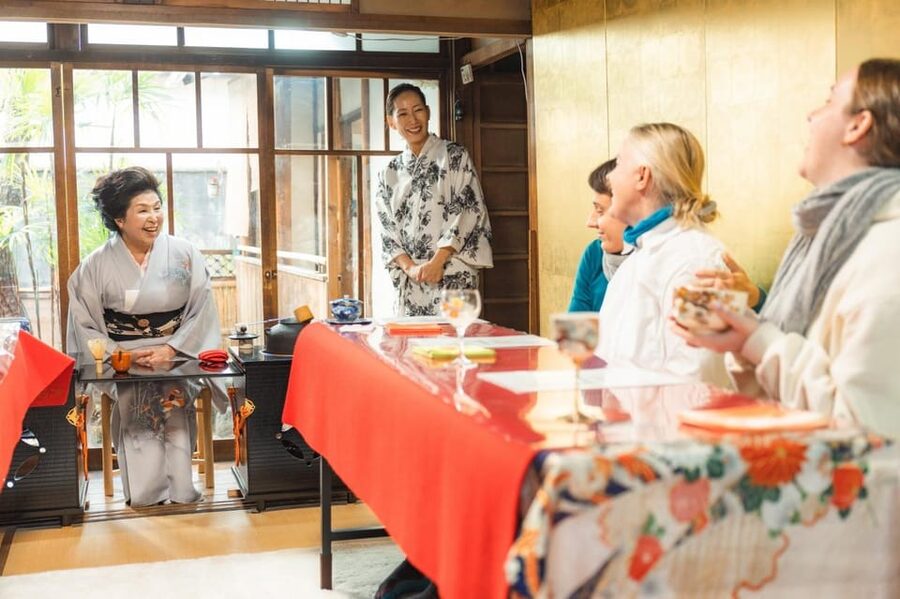
Tea tastes better with a little history around it. This 90-minute experience takes you into a more than 100-year-old Kyoto townhouse in Fushimi, where you learn tea ceremony manners, prepare your own matcha, and see a quieter side of Japanese culture. The table-and-chair format is a welcome touch if sitting on your knees sounds less like cultural discovery and more like a medical event.
I like the warm English-speaking hosts, who guide you patiently through each step rather than expecting you to know the rules. I also like the variety packed into the visit: tea, sweets, calligraphy, flower arranging, photos, and a stroll through an old home with Buddhist and Shinto altars.
The main consideration is location. This is not central Kyoto, and the townhouse sits about 20 to 25 minutes by train from the main sightseeing areas. That is not a serious problem, since Fushimi is a worthwhile stop in its own right, but you should allow time for the train ride and directions through the shopping arcade.
In This Review
- Key points at a glance
- A quiet Fushimi setting outside central Kyoto
- Entering a 100-year-old Kyo-machiya
- What the welcome drinks and sweets add
- Learning the ceremony without sitting on the floor
- Making your own frothy matcha
- The optional kimono changes the whole visit
- Calligraphy and your name in Japanese
- Flower arranging and the small cultural details
- Is $45 a good value?
- How to fit it into a Kyoto day
- Who will enjoy this most?
- Should you book it?
- FAQ
- How long does the Kyoto tea ceremony experience last?
- Do I have to sit on the floor?
- What is included in the standard price?
- Is kimono rental included?
- Can I make my own matcha?
- Is the activity taught in English?
- Where does the tea ceremony take place?
- Can I combine this with Fushimi Inari or Uji?
- Is the experience suitable for wheelchair users?
Key points at a glance
- A chair-based tea ceremony: You can take part at a table instead of sitting on the floor, making the experience easier for many people.
- A real old Kyoto townhouse: The 100-year-old Kyo-machiya offers a look at domestic architecture, old altars, antiques, and everyday Kyoto atmosphere.
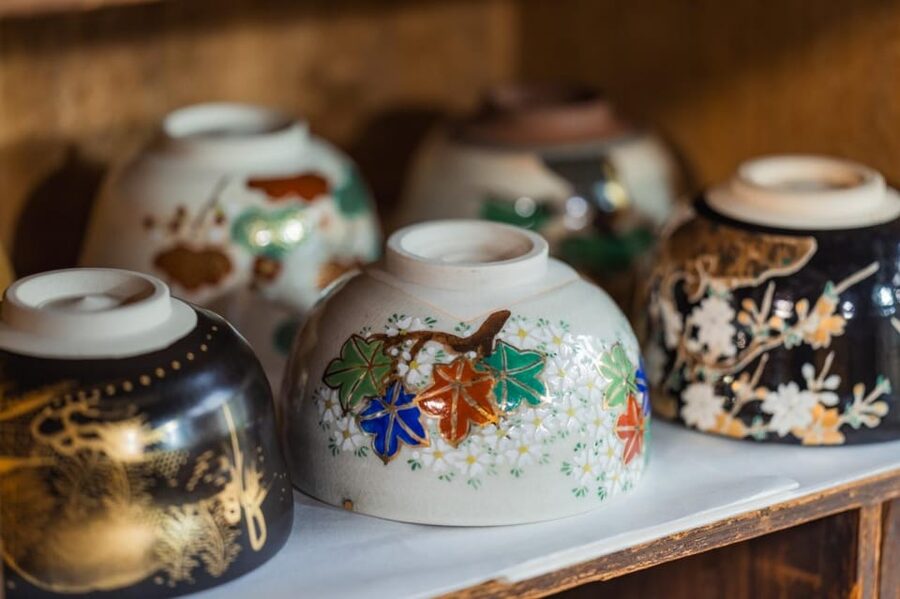
- Hands-on matcha preparation: You whisk thick green tea yourself and learn how to create the creamy foam.
- Kimono, garden, and photo time: The optional kimono rental adds dressing, hairstyling, and pictures with umbrellas and folding fans.
- More than tea: Traditional sweets, sake or juice, calligraphy, flower arranging, and a Japanese name written on a scroll or envelope are included.
- Easy to pair with Fushimi: The experience is near Fushimi’s sake district and works well before or after Fushimi Inari Shrine or a trip to Uji.
A quiet Fushimi setting outside central Kyoto
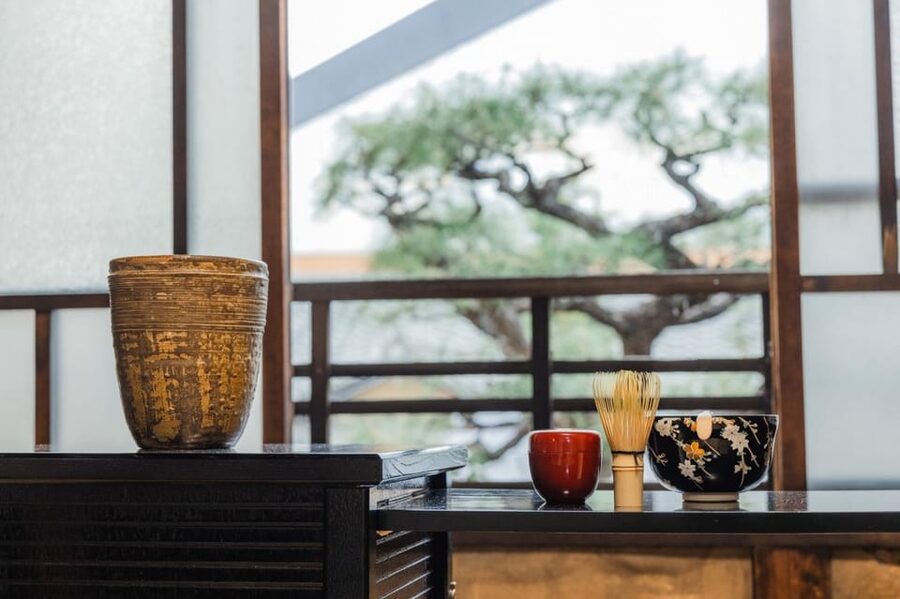
The experience takes place in southern Kyoto, in the historic Fushimi area. This district is known for sake, casual restaurants, shopping streets, and its connection to Toyotomi Hideyoshi, the shogun who helped shape the town.
You reach the townhouse from Kintetsu Kyoto Station in roughly 25 minutes, or about 20 minutes from Keihan Gion-Shijo Station. From Kintetsu Momoyama-Goryo-mae Station, walk west along the Otesuji shopping arcade for about three minutes. Turn right at Mizuho Bank or the Rakuten mobile shop.
From JR Momoyama Station, walk northwest, pass Gokogu Shrine on your right after about 300 meters, and continue to Otesuji Arcade. Turn right at the same bank or mobile shop, then walk for about two minutes. Look for an old townhouse with a blue curtain and guides in kimono.
Those directions are useful because this is not the sort of place you spot from a major avenue. Give yourself a little spare time, especially if you are adding the kimono option. You can also visit Fushimi Inari Shrine on the same outing, or continue by train to Uji, the town associated with Japanese tea.
More Tea Ceremonies in Kyoto
- Kyoto: Tea Ceremony in a Traditional Tea House in Kiyomizu
★ 4.9 · 3,519 reviews - Kyoto: Tea Ceremony Ju-An at Jotokuji Temple
★ 4.9 · 3,207 reviews - Kyoto: 45-Minute Tea Ceremony Lesson Experience
★ 4.3 · 2,378 reviews
Entering a 100-year-old Kyo-machiya
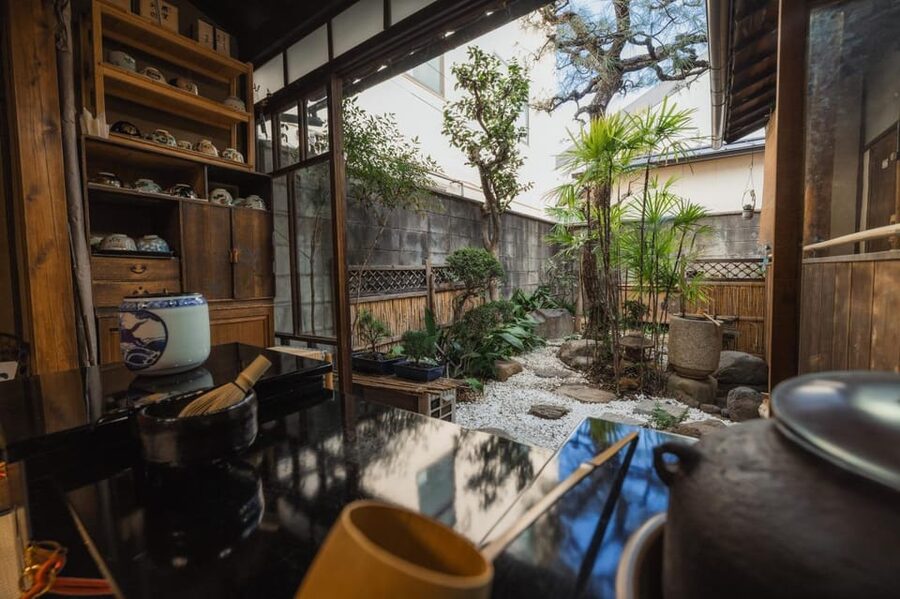
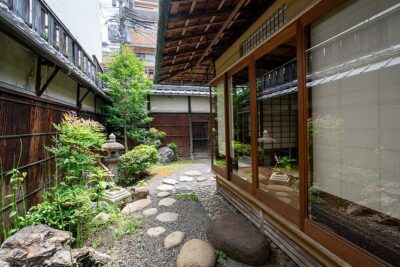
The townhouse may have a simple exterior, but the setting gives the activity much of its character. Rather than meeting in a modern event room, you enter a traditional Kyoto house that reflects the scale and feel of ordinary domestic life.
A stroll through the home lets you see old Buddhist and Shinto altars, antiques, and traditional architectural details. The house itself becomes part of the lesson. Tea ceremony is not just a sequence of hand movements performed in a blank room. It grew from a wider Japanese culture of hospitality, order, seasonal awareness, and respect for the space shared by host and visitor.
Before the ceremony, you may also see the garden and learn how to purify yourself at a stone basin, in a manner similar to the cleansing ritual used at a shrine. It is a small action, but it helps explain how Japanese customs often connect physical gestures with mental preparation.
The setting is especially valuable if you have already seen Kyoto’s famous temples and shrines but want something closer to home life. You are not only looking at a grand religious building from the outside. You are stepping into a house and being shown how objects, spaces, and manners fit together.
What the welcome drinks and sweets add
The visit begins with a welcome drink. Depending on the arrangement, this may be sake, juice, Japanese tea, or another offered drink. It gives you a relaxed start before the more formal part of the ceremony.
Traditional sweets are served with the tea. These are not just a sugary extra. In Japanese tea practice, the sweet prepares your palate for the strong, slightly bitter taste of matcha. The contrast makes the tea easier to appreciate, particularly if this is your first time drinking powdered green tea.
The tone is friendly rather than stiff. The English instruction helps you understand why you are handling a cup, bowing, or moving an item in a certain way. You are not left trying to copy a series of gestures without context.
That matters because tea ceremony can look mysterious from a distance. The hosts explain the meaning of the utensils, movements, and etiquette in plain English, often pausing so you can ask questions. Several families with teenagers have found the format accessible because it combines explanation with activities instead of relying on a long lecture.
Learning the ceremony without sitting on the floor
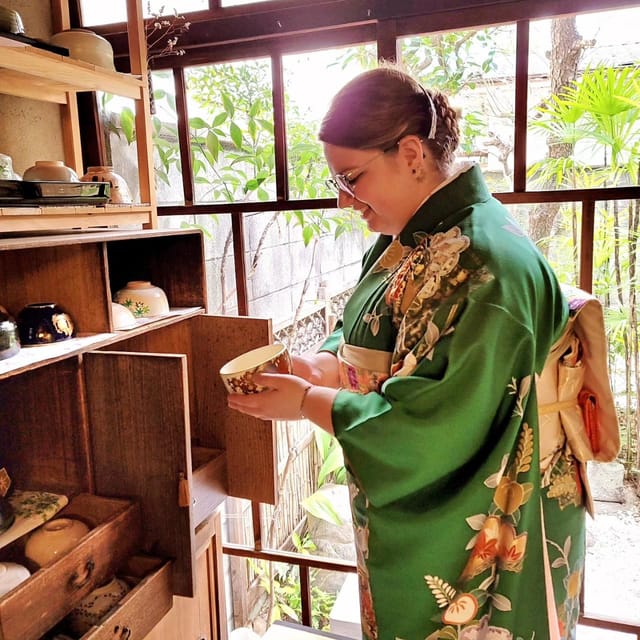
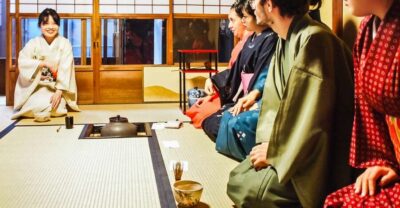
The biggest practical advantage here is the furniture. You take part at tables and chairs, not from a kneeling position on tatami.
Traditional tea ceremonies may involve sitting in seiza, with your legs folded beneath you. That can be uncomfortable even for people accustomed to it, and it may be difficult for anyone with knee, hip, back, or leg problems. This table-style version keeps the focus on the tea and manners rather than on how long your legs can remain folded.
You still learn the order and spirit of the ceremony. The hosts demonstrate the preparation and serving of matcha, explain the etiquette, and guide you through the motions as you try them yourself. You can watch a proper tea service before taking part.
The format is adapted for an international audience, but it does not strip away the cultural details. You learn about purification, respectful handling of tea equipment, the relationship between sweets and tea, and the care given to each movement.
I would not book this expecting an advanced tea-school lesson. Ninety minutes is enough for a clear introduction, not years of formal study. The reward is a friendly first look at the practice, with enough background to help you recognize its values when you visit other Japanese cultural sites.
A completely different kind of day out:
- PERFECT KYOTO 1-Day Bus Tour
★ 5.0 · 13,518 reviews - [Kyoto & Nara Day Tour] Sagano Scenic Railway & Nara Park & Fushimi Inari Taisha Thousand Torii Gates & Togetsukyo Bridge & Bamboo Grove & Kimono Forest (Departing from Osaka)
★ 4.9 · 10,942 reviews - Kyoto: Fushimi Inari, Kinkakuji, Bamboo Grove 1 Day Bus Tour
★ 4.8 · 4,316 reviews - Kyoto: Gion Make Your Own Chopsticks with Engraving Option
★ 5.0 · 3,465 reviews
Making your own frothy matcha
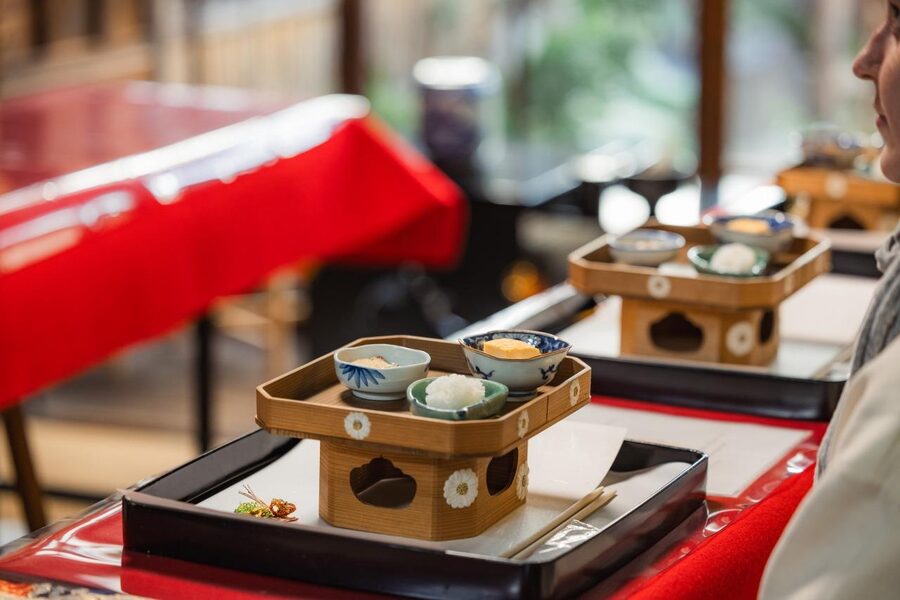
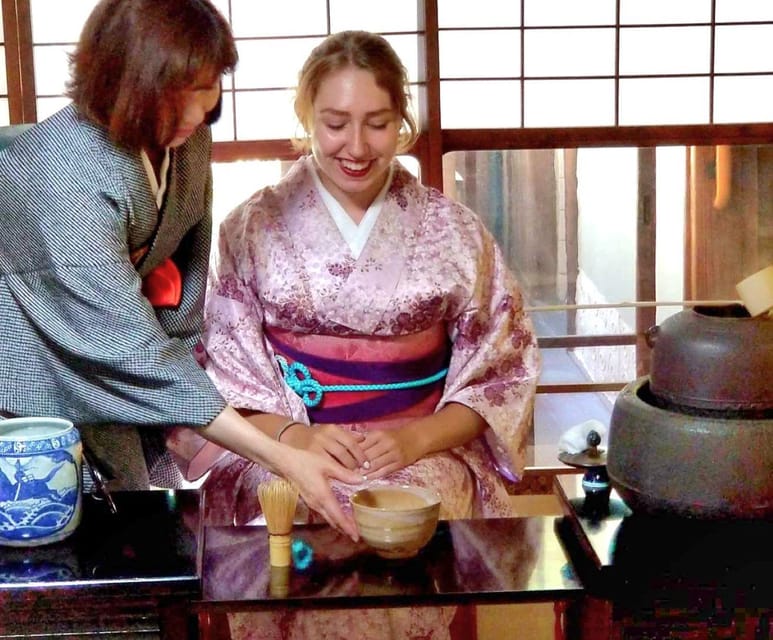
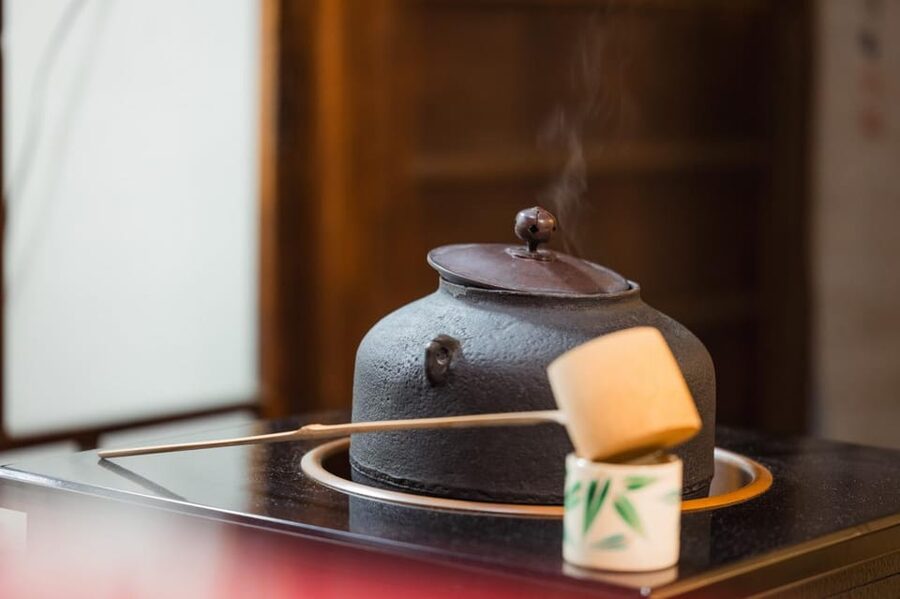
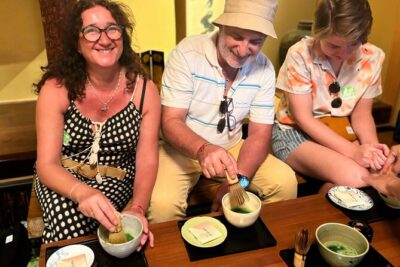
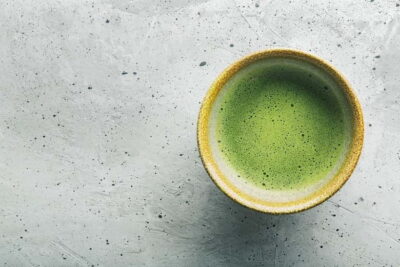
The hands-on matcha portion is one of the strongest parts of the visit. You use a bamboo whisk to mix the powdered tea with hot water, working until the surface becomes creamy and frothy.
This is simple in theory and surprisingly satisfying in practice. The whisking motion takes some coordination, and the hosts can correct your technique so you get a better result. You are not merely watching a tea master perform behind a screen. You are responsible for making your own cup.
The experience also includes latte art using thick tea. This adds a playful modern touch to the traditional setting. It gives you another way to work with matcha while keeping the focus on texture, preparation, and presentation.
Matcha has a firm taste, so the sweets matter here. Eat the sweet before drinking if you prefer a softer introduction. If you already enjoy green tea, you may appreciate the stronger flavor and the chance to see how much technique goes into a small bowl of tea.
Some participants have also purchased matcha powder after the session. That is a useful option if you want to repeat the process at home, though the provided information does not specify a purchase price or stock level.
The optional kimono changes the whole visit
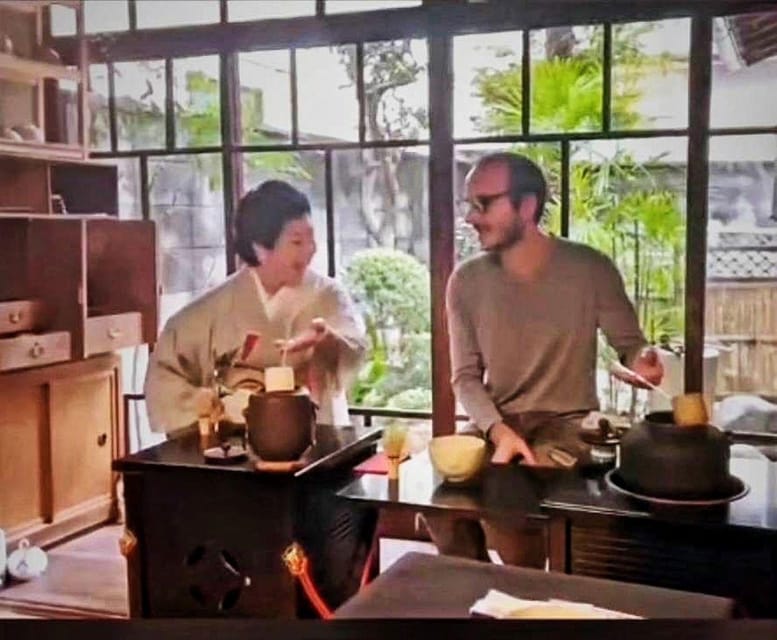
Kimono rental is an optional addition, and it requires arriving 30 minutes before the scheduled start. That extra time is needed for dressing and preparation, so do not treat it as a last-minute decision at the door.
The hosts help you choose from a variety of kimono and assist with fitting. Several visitors also received hairstyling, and the careful dressing became a major part of the experience. You then wear the kimono during the tea ceremony and photo time.
Photos can be taken around the townhouse and garden using traditional props such as umbrellas, folding fans, and a katana sword. The setting gives you more than a quick costume snapshot. You can walk through the old house, pose in the garden, and use the architecture as part of the picture.
The kimono option is particularly appealing for couples, families, and anyone who wants a memorable visual record of the day. It also adds cultural context, since clothing changes how you move, sit, and pay attention to formal manners.
There are practical limits. A kimono is not casual clothing, and the activity includes stairs inside the townhouse. Pregnant participants are asked not to wear one for health and safety reasons. Wheelchair users cannot take part in this experience.
If you skip the kimono, you still receive the tea ceremony, sweets, matcha preparation, calligraphy, and other cultural activities included in the standard experience. The rental is an enhancement, not a requirement.
Calligraphy and your name in Japanese
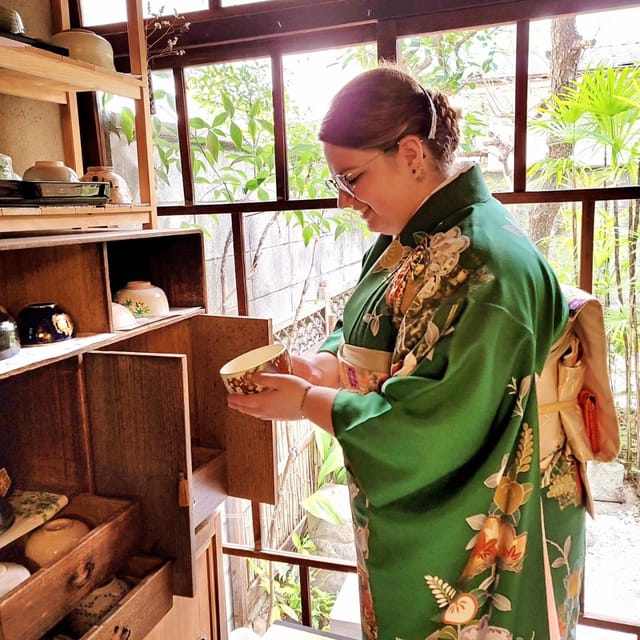
Near the end, you practice Japanese calligraphy and write your name in Japanese script. Depending on the session, you may work with hiragana, katakana, or kanji.
This gives the activity a good change of pace. Tea ceremony asks you to slow down and follow precise movements. Calligraphy lets you use your own hands to create a souvenir, even if your brushwork looks more like an adventurous first draft than museum material.
The hosts can write your name in Japanese kanji or hiragana on a hanging scroll or envelope for you to keep. Some participants receive their names in more than one writing style, making the result personal rather than a generic souvenir.
The calligraphy is also suitable for children and teenagers. They get a concrete activity to take home, and adults can enjoy the same challenge without needing any Japanese language skill.
Flower arranging and the small cultural details
Flower arranging, or ikebana, is another included activity. The information provided does not specify how long this portion lasts or the exact arrangement you create, so expect an introduction rather than a full ikebana class.
Still, it adds another view of Japanese aesthetics. Tea ceremony, calligraphy, and flower arranging all reward attention to proportion, placement, and restraint. Together, they show how the same ideas appear in different parts of Japanese culture.
The additional details help the session feel varied. You may ring a ceremonial bell, examine tea utensils, listen to a presentation about the development of tea ceremony, and learn about Japanese spirit and manners through PowerPoint slides.
That mix is useful for people who want cultural context but do not want to spend 90 minutes sitting silently. The hosts keep you involved, and the questions can be asked freely in English. One participant also received explanations in French, though English is the stated language for the activity.
Is $45 a good value?
At $45 per person, the standard experience offers a fair amount for a 90-minute session. You receive the tea ceremony, traditional sweets, a welcome drink, matcha preparation, calligraphy, a personalized Japanese name, and flower arranging.
The value improves if you were already planning to pay separately for a kimono photo session or a short cultural workshop. Here, the clothing, tea, instruction, and photos belong to one compact visit. You also get access to a historic townhouse rather than a generic studio.
The price is less attractive if you only want to drink matcha. You can find tea elsewhere in Kyoto for less, and this activity is not designed as a quick cup and go stop. You are paying for instruction, hospitality, cultural explanation, and the chance to try several activities.
The strongest value comes from the hosts. Their patient approach is repeatedly praised, and that matters when the etiquette is unfamiliar. Good instruction keeps the experience from feeling like a costume photo opportunity with a tea bowl added at the end.
Private and small-group options are available. A smaller group should make it easier to ask questions and receive help with the whisk, calligraphy, kimono, or flower arranging. The exact group size and price variation are not provided, so check the available option before booking.
How to fit it into a Kyoto day
Plan this as part of a southern Kyoto day, not as a quick detour from Kiyomizu-dera or Arashiyama.
You could visit Fushimi Inari Shrine first, then continue to Fushimi-Momoyama for the tea ceremony. The trip from Keihan Fushimi Inari Station to the activity area takes about 15 minutes, according to the provided guidance. Afterward, explore the sake district, Otesuji shopping arcade, and nearby restaurants.
Another good pairing is Uji. The tea town is about 20 minutes away by train, and the combination gives you both a hands-on tea activity and a place strongly associated with tea production and culture.
Osaka is about 40 minutes away by express train, while Nara takes about 50 minutes. Those connections make the activity possible as part of a broader Kansai itinerary, though I would avoid squeezing it between tight train reservations. The kimono option needs a 30-minute early arrival, and finding a small townhouse takes more attention than walking into a station-front attraction.
Who will enjoy this most?
I would recommend it to first-time visitors who want an approachable introduction to Japanese customs. You get enough explanation to understand what is happening, then enough hands-on practice to remember it.
It also suits families. Teenagers and children can make matcha, try calligraphy, arrange flowers, and take photos. Couples may particularly enjoy the kimono option and the old-house setting.
People with limited mobility should read the restrictions carefully. The chair-based tea ceremony removes the problem of kneeling, but the townhouse has stairs, and wheelchair users cannot take part. Pregnant participants should not choose the kimono option.
You should also know that this is a hosted cultural workshop, not a silent, formal tea ceremony for specialists. The atmosphere is warm, interactive, and designed to help international visitors feel comfortable. If you want strict ceremonial austerity, this may feel too relaxed. If you want to understand the basics without feeling intimidated, that relaxed style is a benefit.
Should you book it?
Book this experience if you want more than a bowl of matcha and a quick photo in costume. The old townhouse, friendly English instruction, chair-based format, calligraphy, flower arranging, and hands-on tea preparation make it a well-rounded introduction to Kyoto culture.
I would choose the kimono option if you have room in your budget and can arrive 30 minutes early. It adds dressing, hairstyling, garden photos, and a stronger sense of occasion. Skip it if you prefer a simpler visit or have health reasons that make traditional clothing uncomfortable.
The location is the only real tradeoff. Fushimi is outside central Kyoto, but that works in your favor if you pair the visit with Fushimi Inari, the sake district, or Uji. At $45 for 90 minutes, this is a good choice for families, couples, and first-time visitors who want patient guidance and several cultural activities in one visit.
FAQ
How long does the Kyoto tea ceremony experience last?
The experience lasts 90 minutes. If you reserve the kimono option, arrive 30 minutes before the scheduled start time for dressing.
Do I have to sit on the floor?
No. The tea ceremony uses tables and chairs, so you do not need to sit on the floor or kneel in seiza.
What is included in the standard price?
The $45 price includes the tea ceremony, traditional sweets, a welcome drink, matcha preparation, latte art using thick tea, calligraphy, flower arranging, and a hanging scroll or envelope with your name written in Japanese kanji or hiragana.
Is kimono rental included?
Kimono rental is included only if you select the kimono option. The option must be reserved through the availability selection, and you need to arrive 30 minutes early.
Can I make my own matcha?
Yes. You learn to whisk matcha with a bamboo whisk and prepare your own creamy, frothy tea.
Is the activity taught in English?
Yes. English is the stated language, and the hosts guide you through the ceremony, history, etiquette, and activities in English.
Where does the tea ceremony take place?
It takes place in a more than 100-year-old traditional Kyoto townhouse in the southern part of Kyoto, near the Fushimi-Momoyama area.
Can I combine this with Fushimi Inari or Uji?
Yes. Fushimi Inari Shrine is nearby, and Uji is about 20 minutes away by train. The experience also fits well with exploring Fushimi’s sake district and shopping streets.
Is the experience suitable for wheelchair users?
No. Wheelchair users cannot take part. Pregnant participants are also asked not to wear a kimono for health and safety reasons.
Just added in Kyoto
- The “Golden Route” and Ancient Japan by DIAMIR Erlebnisreisen – 14-Day Tour★ 2.0 · 2 reviews
- Japan: Castles & Cuisine by G Adventures – 6-Day Kyoto to Osaka Tour★ 4.5 · 4 reviews
- Cycle Japan by Explore! – 13-Day Kyoto to Tokyo Tour★ 4.7 · 12 reviews
- Cycle Japan by Intrepid Travel – 11-Day Kyoto to Tokyo Tour★ 4.8 · 2 reviews
- Classic Japan by Intrepid Travel – 11-Day Kyoto to Tokyo Tour★ 4.4 · 14 reviews
- Ancient & Modern Japan 14-Day Tour by Exodus Adventure Travels★ 4.4 · 40 reviews
- 5 Day Cultural Adventure of Kyoto, Nara & Osaka by Tourist Journey★ 2.5 · 2 reviews
- 12 Days Kinosaki Onsen Escape: A Journey Through Japan’s Timeless Towns by UME Travel★ 4.8 · 5 reviews
Tea Ceremonies, compared.
Tea Ceremony in a Traditional Tea House in Kiyomizu
Read our review →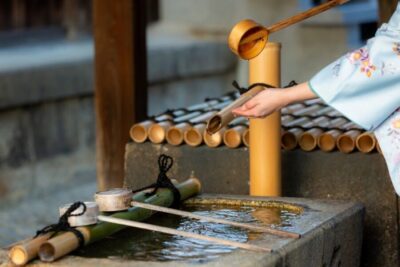
World Heritage Kyoto & Nara Uji Authentic Matcha Experience
Read our review →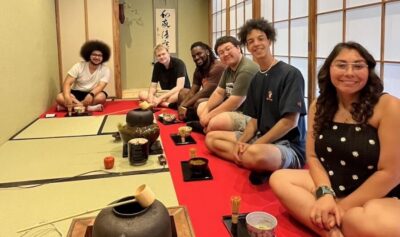

Arashiyama Bamboo Forest, Monkeys, Matcha & Temple Tour
Read our review →Browse the lists this tour appears in