
Reviewed · TEA CEREMONIES
Kanazawa: Kenrokuen Tea Ceremony Experience
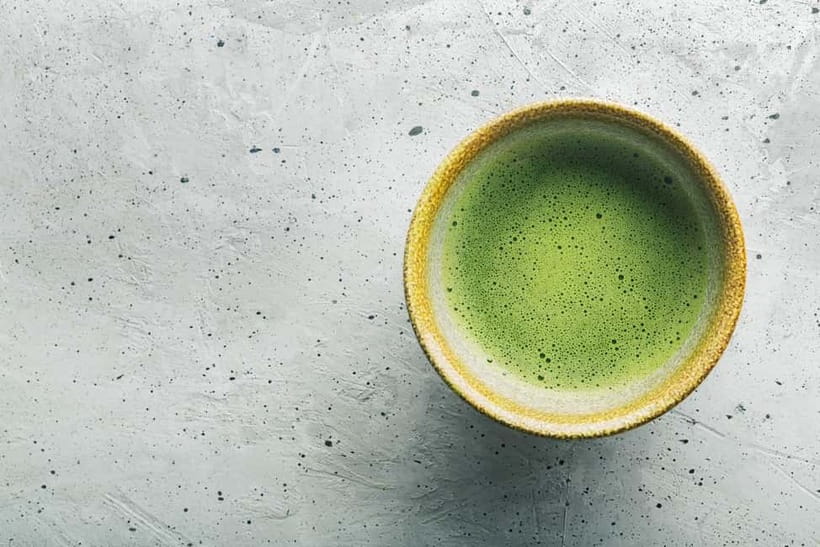
Tea becomes a ritual here. Inside historic Kenrokutei, this one-hour experience gives you a clear, friendly introduction to Japanese tea culture, not just a quick cup of matcha. I like the hands-on chance to whisk your own tea, and I like the calm setting inside one of Kanazawa’s most important gardens. The main catch is practical: you must pay the Kenrokuen entrance fee separately, and the tea room itself does not overlook the garden.
You’ll watch a formal ceremony led by a tea master, learn why each movement matters, taste wagashi sweets from traditional confectioners, then try the process yourself. English-speaking guides such as Océane and Nana have been praised for clear explanations and warm hosting. Ask for a chair if sitting on the floor is difficult, and arrive early. More than 10 minutes late means cancellation.
In This Review
- Key points to know before you book
- Entering Kenrokuen and finding Kenrokutei
- A one-hour introduction to the way of tea
- Wagashi and matcha, a well-matched pair
- Watching the master, then whisking your own tea
- Why the explanations matter
- A quiet room, with one important expectation
- Sitting on the floor and other practical details
- Is $35 a fair price?
- Who will enjoy this Kenrokuen experience most?
- Should you book the Kanazawa Kenrokuen Tea Ceremony?
- FAQ
- Where does the tea ceremony take place?
- Is the Kenrokuen entrance fee included?
- How long does the experience last?
- What does the $35 price include?
- Is the experience conducted in English?
- Can I make my own matcha?
- Are Japanese sweets included?
- Can I take photographs?
- Can I use a chair instead of sitting on the floor?
- What is the minimum age?
- What happens if I arrive late?
- Can I cancel for a refund?
Key points to know before you book
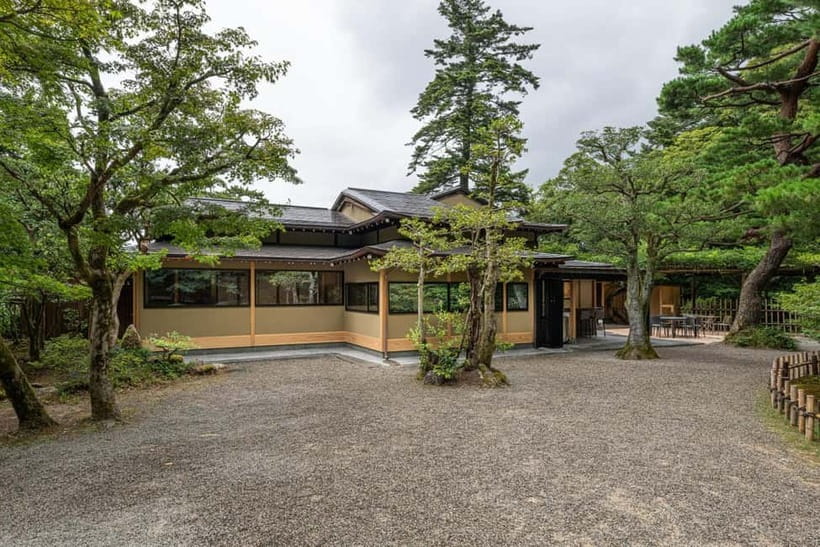
- Historic meeting place: Kenrokutei once welcomed important guests of the Maeda lords and now serves as the meeting point inside Kenrokuen.
- A real ceremony in shortened form: You observe a formal preparation before learning the basic actions yourself.
- Wagashi comes first: Traditional Japanese sweets balance the strong, grassy flavor of matcha.
- English guidance throughout: The process, etiquette, local history, and meaning of gestures are explained as you go.
- Kenrokuen admission costs extra: You need a separate 320-yen garden ticket, but it lets you enjoy the garden before or after the ceremony.
- Quiet participation matters: The activity runs alongside other groups, so children under the stated age limit and noisy behavior are not suitable.
Entering Kenrokuen and finding Kenrokutei
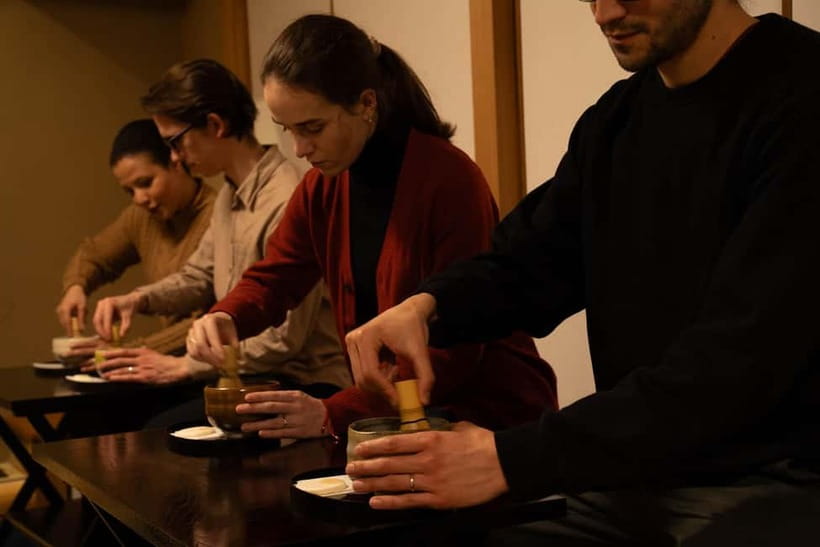
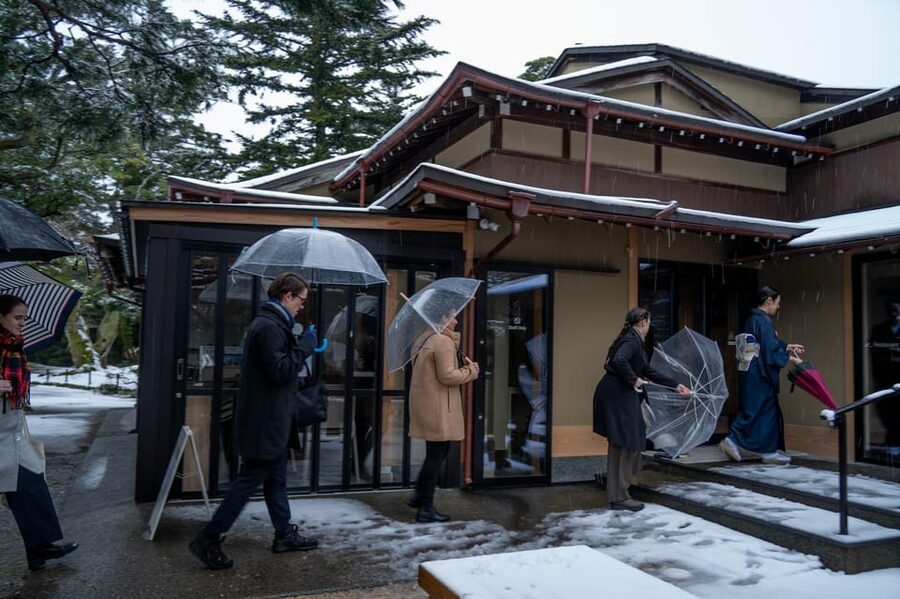
Your experience begins before the tea is poured. You first enter Kenrokuen Garden, one of Kanazawa’s essential sights, then walk to the fountain inside the grounds. Kenrokutei is located in front of that fountain.
This detail matters because the meeting point can sound a little vague if you are hurrying through the garden. Look for the shop and its tea ceremony signboard rather than expecting to meet outdoors at the fountain itself. Give yourself enough time to pay the 320-yen garden entrance fee and find the building without rushing.
Kenrokuen admission is not included in the $35 experience price. That extra charge is small, and the garden ticket is valid all day, so it is sensible to visit the garden either before or after your appointment. The ceremony room does not provide garden views, which is worth knowing. You are paying for a quiet cultural experience inside the grounds, not for a tea table facing Kenrokuen’s ponds and trees.
Kenrokutei also gives the activity a useful sense of place. It is a historic building where important visitors were entertained by the Maeda lords. A short introduction connects the tea ceremony with Kanazawa’s past and gives you more context than a generic matcha demonstration in a modern shop.
More Tea Ceremonies in Kanazawa:
- Kanazawa: Samurai, Matcha, Gardens and Geisha Full-Day Tour
★ 4.9 · 75 reviews - Full-Day Tour from Kanazawa: Samurai, Matcha, Gardens and Geisha
★ 5.0 · 68 reviews - Kyoto: Tea Ceremony in a Traditional Tea House in Kiyomizu
★ 4.9 · 3,519 reviews
A one-hour introduction to the way of tea
The experience starts with an explanation of the way of tea. Your guide introduces the setting, the etiquette, and the broad meaning behind the ceremony. The goal is not to test you. It is to make sure you understand how to sit, watch, receive the tea, and respond without feeling awkward.
That guidance is one of the strongest reasons to choose this activity. Japanese tea ceremony can look mysterious if you only see it from a distance. Here, the English-speaking host explains the actions as they happen, so you can follow the quiet rhythm instead of wondering what every movement means.
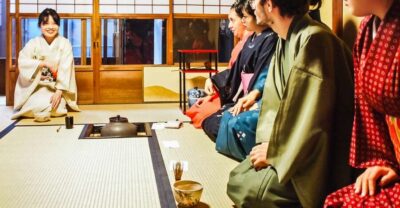
You’ll then watch a tea master prepare matcha in the formal tea room. The ceremony is careful and deliberate. The bowl, whisk, scoop, cloth, and gestures each have a place, and the guide explains the purpose of the process rather than treating it as a performance with no background.
This is not a full traditional tea ceremony lasting several hours. It is a shorter tourist-friendly version designed to fit into a Kanazawa sightseeing day. That is a fair trade for many people. You get a meaningful look at the ritual without giving up half a day, though anyone seeking advanced study or a complete formal ceremony should keep expectations in check.
Wagashi and matcha, a well-matched pair
Before or alongside the tea, you taste Japanese wagashi sweets from traditional confectionery shops. These small sweets are not just decoration. Their sweetness helps balance matcha’s firm, slightly bitter flavor.
The sweets are repeatedly singled out as a highlight, and that makes sense even if you are trying matcha for the first time. Several people found the tea especially smooth and enjoyable when paired with wagashi. If previous matcha experiences have seemed harsh, this pairing may change your mind.
The confectionery connection also adds local character. You are not simply handed a packaged cookie with green tea. You get a taste of a Japanese sweet-making tradition that fits the ceremony’s attention to season, appearance, and balance.
You may receive sweets more than once during the session, depending on the format that day. The supplied details specifically promise wagashi, while individual accounts describe tasting traditional sweets twice. Either way, the treat is an important part of the experience, not an afterthought.
Watching the master, then whisking your own tea
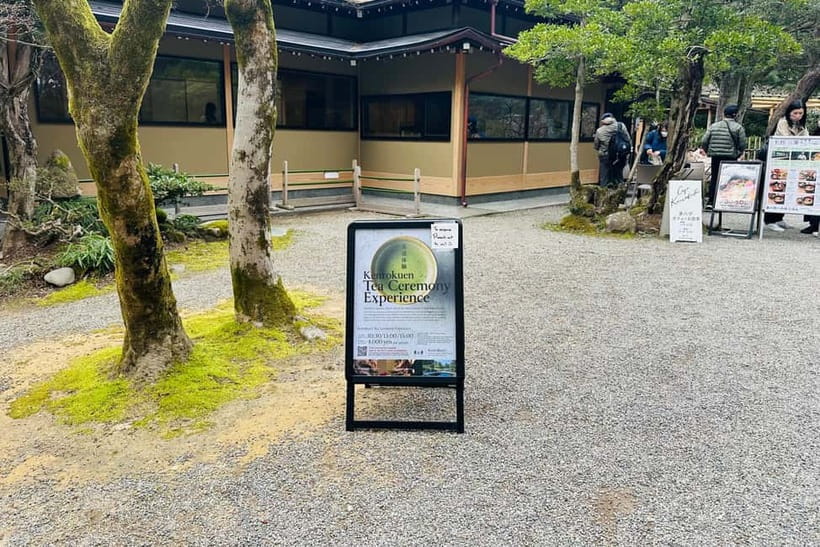
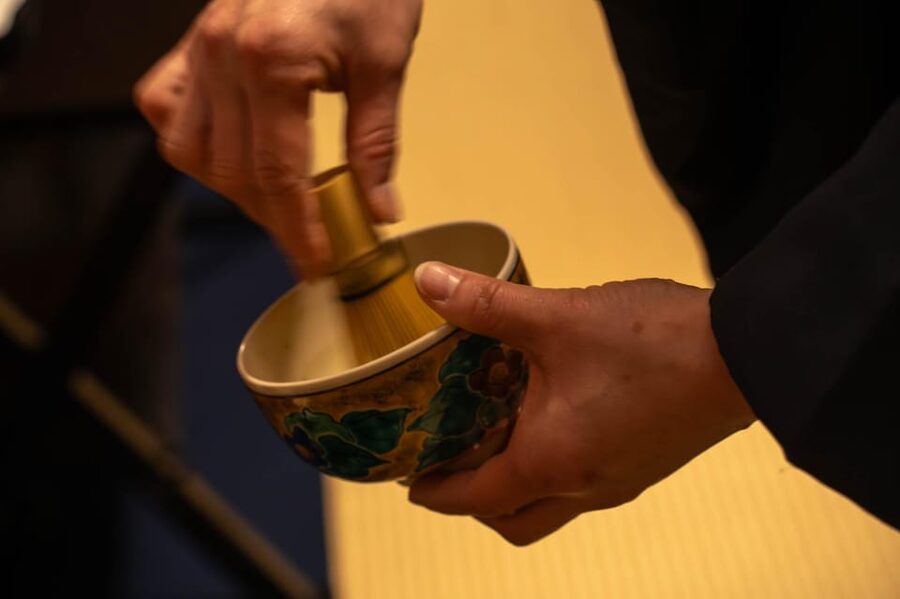
The most useful part comes after you have watched the master. With help from the guide, you prepare matcha yourself.
This is where the ceremony stops being something you simply observe. You learn how to handle the bowl and whisk, and you see how much care is needed to produce a smooth cup. The task looks easy when an experienced practitioner does it. Your own turn may prove otherwise, which is part of the fun.
The activity is gentle and encouraging rather than strict. The guide explains what to do, answers questions, and gives you room to try. The point is not to become a tea master in one hour. It is to understand the basic motions and appreciate the care behind the finished drink.
The hands-on portion also helps you remember the ceremony. History and etiquette can fade after a busy day of sightseeing. Making the tea yourself gives you a physical connection to the lesson, and you can take a photograph to remember the occasion.
A few more options to weigh up in Kanazawa
- World Heritage Shirakawa-go and Experience Tours from Kanazawa
★ 5.0 · 4,049 reviews - Kanazawa Half Day Tour (Private Guide)
★ 5.0 · 361 reviews - Kanazawa Full Day Tour (Private Guide)
★ 5.0 · 323 reviews - 1 Day Private Charter Tour to Shirakawa-go & Takayama
★ 4.5 · 253 reviews
Why the explanations matter
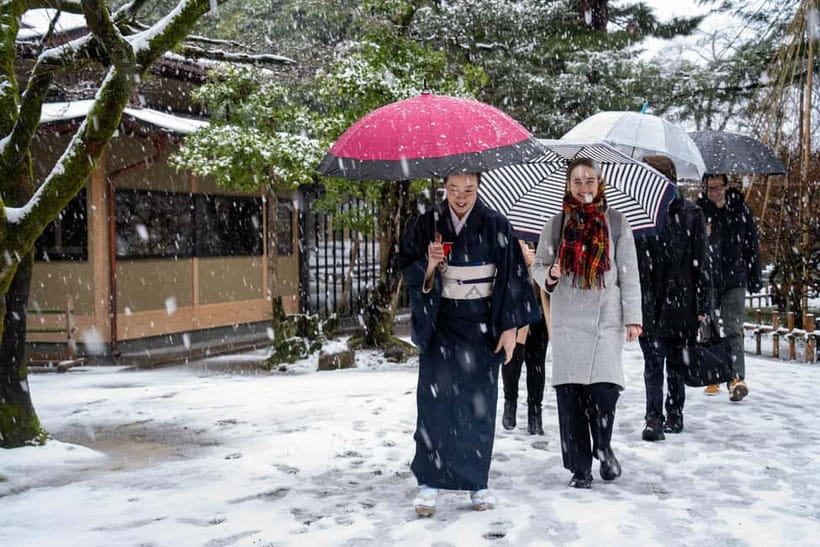
A tea ceremony is built from small gestures. Without explanation, you might notice the grace but miss the meaning. The English guides make the experience accessible by explaining the historical background, the role of etiquette, and the reasons for the careful movements.
The strongest praise is directed at the hosts’ clarity and patience. Océane has been noted for communicating clearly and answering questions at the right moments. Nana has been praised for bringing enthusiasm and feeling to the preparation. Other hosts have been described as warm, welcoming, and easy to understand.
That range of hosting styles can be a plus. Some guides focus more on history, while others bring more energy and humor. The common thread is that you are not left to copy gestures without knowing why they matter.
If English is not comfortable for you, consider the language limitation. The standard activity is conducted in English. Translation into another language requires a private reservation arranged by email, so it is not something to count on during a regular shared session.
A quiet room, with one important expectation
The formal tea room is away from the outside views. That separation is intentional. You are there to pay attention to the ceremony, not to watch the garden while someone prepares tea.
Most of the experience is described as peaceful, calm, and relaxing. The quiet setting helps you slow down after walking through Kanazawa. One person did note some noise from a nearby room during a ceremony, so perfect silence cannot be guaranteed. The hosts apologized and offered a small gift, but the point remains: this is a working venue with other groups, not a private meditation room.
The activity takes place at the same time as other groups. You are expected to keep your voice low and follow the host’s instructions. That makes it a better fit for adults, older children, and anyone interested in a respectful cultural activity than for very young children who may struggle with the quiet pace.
The age information needs careful attention. One section says participants must be at least seven, while another says children under eight are not suitable. To avoid a problem at check-in, I would treat eight as the safe minimum and confirm directly if you are booking for a seven-year-old.
Sitting on the floor and other practical details
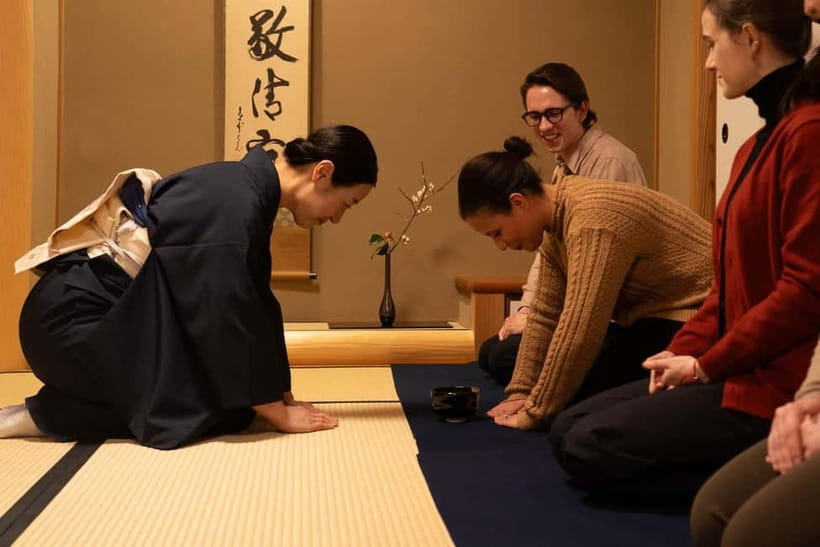
The traditional arrangement involves sitting on mats, which may mean kneeling or sitting on the floor for part of the ceremony. You can request a chair if you have difficulty with floor sitting. Make that request in advance if possible, rather than waiting until the ceremony begins.
Punctuality is not a minor detail. If you arrive more than 10 minutes after the scheduled starting time, the reservation will be canceled. The garden entrance, finding Kenrokutei, and taking a wrong turn can all eat into those minutes, so arrive early.
The full activity lasts one hour. That makes it easy to fit around Kenrokuen, Kanazawa Castle, or other central sightseeing. I would schedule the garden visit before the tea ceremony if you want to arrive relaxed, or afterward if you prefer to make the ceremony the quiet end of your visit.
Photography is allowed, giving you a way to keep a record of the experience. Be sensible with your camera and follow the guide’s directions during the formal preparation. The ceremony depends on calm attention, and a phone screen can quickly become the loudest object in the room.
Is $35 a fair price?
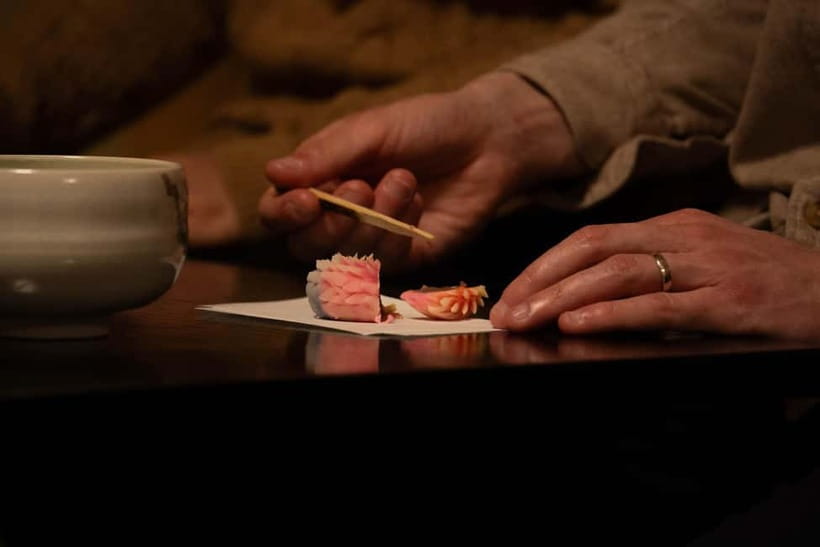
At $35 per person, the value is strong if you want more than a matcha tasting. Your fee covers the tea ceremony, sweets, instruction, and a photograph, but not Kenrokuen’s 320-yen admission.
The price pays for access to a guided cultural lesson in a historic setting. You watch a master, receive explanations in English, eat traditional sweets, and prepare tea yourself. Comparable sightseeing stops may show you a garden or a historic building, but this experience asks you to participate.
The value is less clear if you only want a quick drink or a garden view. The tea room does not face Kenrokuen, and the ceremony follows a shortened format. You should book it for the ritual, the explanation, and the chance to make matcha, not as a replacement for exploring the garden.
The flexible booking terms also help if your Kanazawa schedule is still taking shape. You can reserve now and pay later, and cancellation is free up to 24 hours before the activity. That is useful when weather or train plans may affect your day.
Who will enjoy this Kenrokuen experience most?
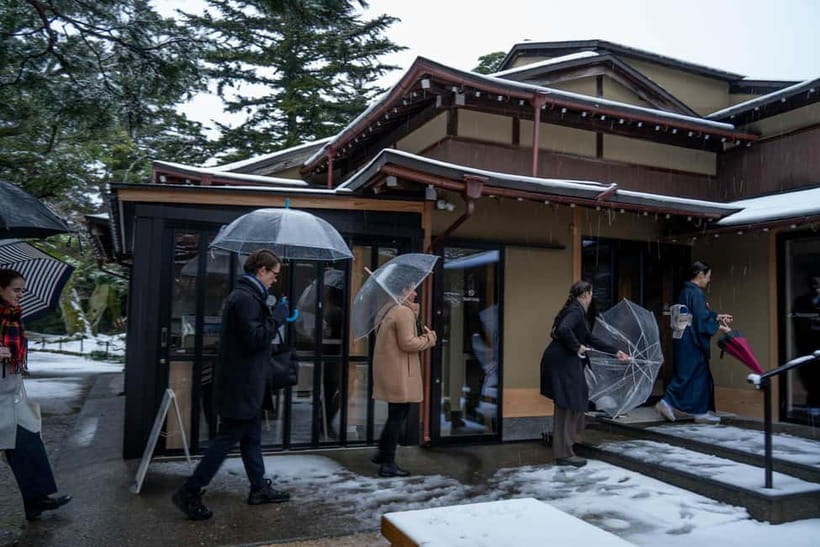
I would recommend it to first-time visitors who want a clear introduction to Japanese tea culture without committing to a long formal ceremony. It is also a good choice if you have tried matcha but never learned how it is prepared or why the etiquette matters.
You will likely enjoy it if you value:
- A calm indoor activity after walking through a garden
- English explanations rather than silent observation
- A chance to make your own matcha
- Traditional Japanese sweets
- A cultural experience with a strong connection to Kanazawa’s history
It may not suit you if you dislike sitting on mats, need a private session, want uninterrupted garden views, or prefer a fast, casual tasting. Families should also check the age rule carefully. The quiet format is not designed for children under eight.
Should you book the Kanazawa Kenrokuen Tea Ceremony?
Yes, if you want a well-paced and practical introduction to matcha and Japanese etiquette. The best parts are the master’s careful demonstration, the English explanations, the wagashi pairing, and your own attempt at whisking the tea.
Book it as part of a Kenrokuen visit, and allow time for the separate garden admission and the walk to Kenrokutei. Request a chair if needed, arrive well before the start, and choose a private booking if you require translation into a language other than English.
I would skip it only if your main goal is scenery from the tea room or a full-length ceremonial study. For most visitors, $35 plus the modest garden fee buys a peaceful hour, a useful lesson, and a personal taste of Kanazawa’s tea tradition.
FAQ
Where does the tea ceremony take place?
It takes place at Kenrokutei inside Kenrokuen Garden in Kanazawa. The meeting point is in front of the fountain inside the garden, near the shop and its tea ceremony signboard.
Is the Kenrokuen entrance fee included?
No. You must pay the separate Kenrokuen Garden entrance fee, listed as 320 yen.
How long does the experience last?
The tea ceremony experience lasts one hour.
What does the $35 price include?
The price includes the tea ceremony, Japanese sweets, and a photograph.
Is the experience conducted in English?
Yes. English instruction is provided. Translation into another language requires a private reservation arranged by email.
Can I make my own matcha?
Yes. After watching the master prepare the tea, you receive help preparing matcha yourself.
Are Japanese sweets included?
Yes. The experience includes wagashi sweets from traditional Japanese confectionery shops.
Can I take photographs?
Yes. Photography is allowed during the experience, so you can keep a picture as a memory.
Can I use a chair instead of sitting on the floor?
Yes. You can request a chair if sitting on the floor is difficult.
What is the minimum age?
The information gives two age limits: participants must be at least seven, while children under eight are listed as unsuitable. If you are booking for a seven-year-old, confirm the rule directly before reserving.
What happens if I arrive late?
If you arrive more than 10 minutes after the scheduled start, the reservation will be canceled. Arrive early enough to pay the garden fee and find Kenrokutei.
Can I cancel for a refund?
Yes. You can cancel up to 24 hours in advance for a full refund. You can also reserve now and pay later.
Just added in Kanazawa
- Taste of Kanazawa (Food tasting in Omicho Market & Higashi Chaya)★ 5.0 · 58 reviews
- Shirakawago & Kanazawa from Kanazawa★ 5.0 · 51 reviews
- Takayama and Shirakawago/Photoshoot by professional photographer★ 5.0 · 67 reviews
- Kanazawa: Sushi & Japanese Cooking Class at a Historic School★ 5.0 · 66 reviews
- Private Tour of Shirakawago from Kanazawa (Half Day)★ 5.0 · 24 reviews
- Kanazawa private 1 day/Photoshoot by professional photographer★ 5.0 · 33 reviews
- Private Tour of Shirakawago and Gokayama from Kanazawa★ 5.0 · 50 reviews
- Kanazawa private half day/Photoshoot by professional photographer★ 5.0 · 38 reviews
Tea Ceremonies, compared.
Tea Ceremony in a Traditional Tea House in Kiyomizu
Read our review →
World Heritage Kyoto & Nara Uji Authentic Matcha Experience
Read our review →

Arashiyama Bamboo Forest, Monkeys, Matcha & Temple Tour
Read our review →Browse the lists this tour appears in