
Reviewed · TEA CEREMONIES
Osaka: Tea Ceremony Experience
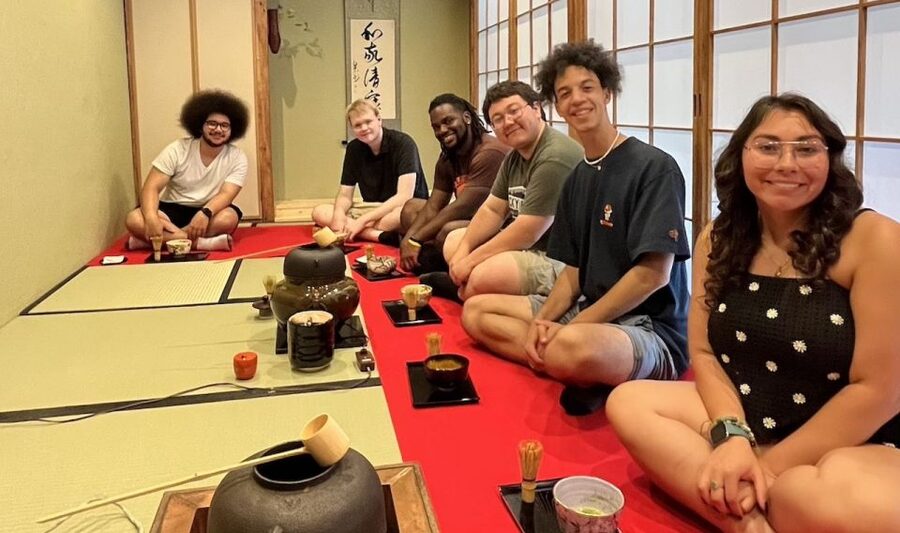
Slow down with a bowl of matcha. This 45-minute tea ceremony offers a gentle introduction to Japanese culture in a traditional tatami room, with English-speaking instructors in kimono guiding you through the meaning, manners, and movements. I especially like the hands-on chance to whisk your own matcha and the small seasonal sweets served alongside it. The main drawback is practical: the meeting point can be hard to find, and there is little room to wait if you arrive too early.
This is not a grand, formal tea gathering lasting several hours. It is a short, well-organized cultural lesson in central Osaka, priced at $25 per person. I like the balance between watching an expert demonstration and trying the tea yourself. You should also know that you sit on the floor for much of the experience, which may be uncomfortable for some people.
In This Review
- Key Points at a Glance
- Why This Osaka Tea Ceremony Works for First-Time Visitors
- Finding the Second-Floor Meeting Point in Dotonbori
- Step One: Welcome, Tatami, and the Meaning of Tea
- Step Two: Watch the Demonstration Before Touching the Tools
- Step Three: Whisk Your Own Bowl of Matcha
- Seasonal Sweets Make the Matcha More Enjoyable
- The Calm Contrast With Central Osaka
- Price, Duration, and Overall Value
- Sitting on the Floor and Other Practical Details
- Who Will Enjoy This Experience Most?
- Should You Book the Osaka Tea Ceremony?
- FAQ
- How long does the Osaka tea ceremony last?
- How much does the experience cost?
- Is the tea ceremony conducted in English?
- Do I get to make my own matcha?
- Are Japanese sweets included?
- Where is the meeting point?
- Can children participate?
- Can I cancel for a refund?
- Are strollers allowed?
Key Points at a Glance
- Traditional tatami setting: Enjoy the ceremony in a peaceful Japanese-style room, a welcome change from the busy streets around Dotonbori.
- English instruction: Japanese instructors explain the background, tools, etiquette, and symbolism in clear English.
- You make your own matcha: After watching the demonstration, you whisk powdered green tea with traditional equipment and drink your own bowl.
- Seasonal Japanese sweets: Delicate confections are included and provide a sweet counterpoint to matcha’s earthy, slightly bitter flavor.
- Short and affordable: At $25 and 45 minutes, this fits easily into a sightseeing day and offers solid value for a first cultural experience.
- Allow time to find the entrance: The activity is on the second floor at 5-26 Dotonbori 1-chome Higashi, Osaka, and finding it may take longer than expected.
Why This Osaka Tea Ceremony Works for First-Time Visitors
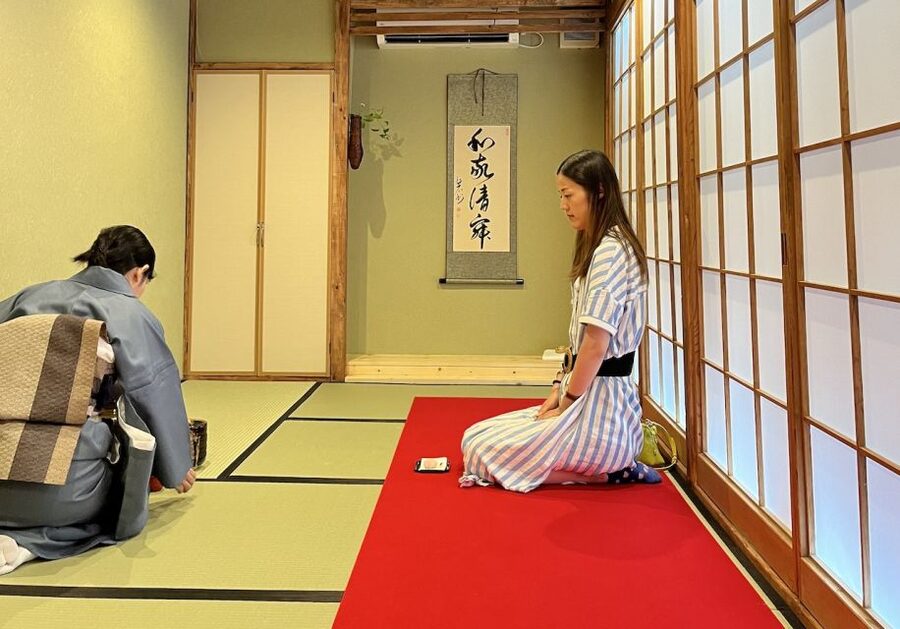
Japanese tea ceremony can seem mysterious from the outside. There are careful gestures, particular ways to handle a bowl, and manners that are not obvious if you have never seen the practice before.
This experience makes those details approachable. The instructor first explains the meaning and background of the ceremony, then shows you how the tools are used. You are not expected to know the rules in advance, and the guides encourage questions.
That friendly teaching style is one of the strongest parts of the activity. Instructors such as Yuki, Akiko, Kazu, Mayumi, Ayaka, Kana, and Hise have been praised for being patient, warm, and clear in English. The exact instructor depends on the session, but the standard is consistently high across the available feedback.
I would choose this activity if you want more than a quick photograph in a kimono or a taste of matcha from a café. You get context, a demonstration, and your own turn with the whisk. It gives you enough cultural background to understand why the ceremony is performed with such care.
At the same time, keep your expectations sensible. This is an introduction, not an advanced study of Japanese tea schools or a full-day traditional gathering. The 45-minute format keeps it accessible, but it also means the lesson stays focused on the basic flow and meaning of the ceremony.
More Tea Ceremonies in Osaka
- Tea Ceremony Experience in Osaka Doutonbori
★ 5.0 · 754 reviews - Matcha Making Class in Osaka with Authentic Japanese Sweets Set
★ 5.0 · 509 reviews - Osaka: Matcha Making Experience with Japanese Sweets
★ 5.0 · 146 reviews
Finding the Second-Floor Meeting Point in Dotonbori
The address is 5-26 Dotonbori 1-chome Higashi, Chuo Ward, Osaka, written in Japanese as 大阪市中央区道頓堀1丁目東5-26. The experience is on the second floor.
The directions specifically advise you to use Google Maps and search for tea ceremony osaka the osaka. That wording matters. Do not rely only on a general search for tea ceremonies in Osaka, since similar names and nearby venues can make the location confusing.
The supplied coordinates are 34.66885079999999, 135.5063291. I would save both the address and the coordinates before setting out, especially if you are coming from the crowded Dotonbori area.
Give yourself extra time. One participant found the location difficult to locate and also noted that there was nowhere to sit while waiting. The best approach is to arrive with enough time to find the building, but not so early that you are left standing outside for a long period.
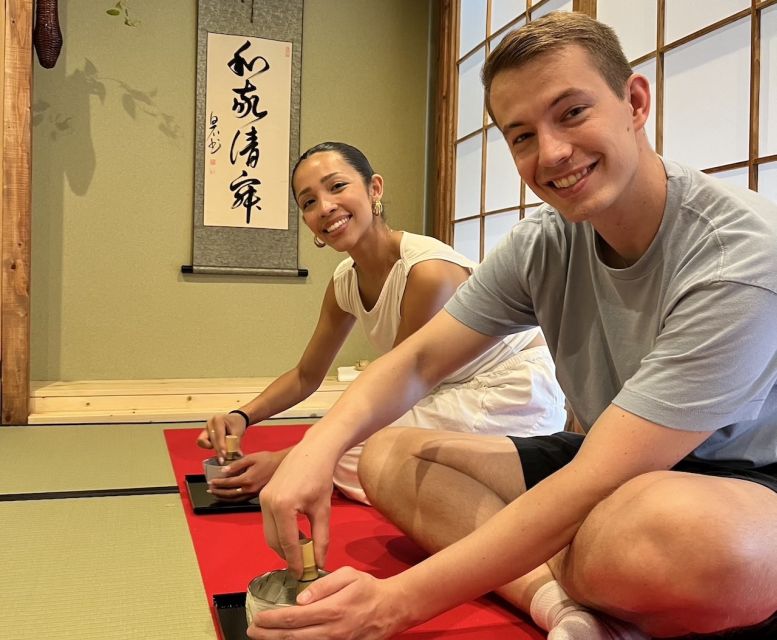
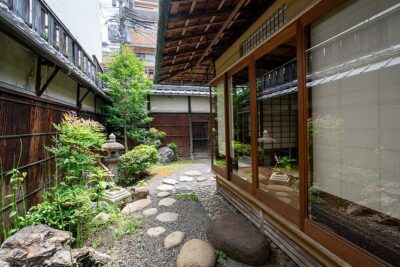
Once inside, the second-floor room provides a useful change of mood. Dotonbori is famous for noise, bright signs, restaurants, and constant movement. The quiet tatami setting feels deliberately removed from that energy, even though the venue is nearby.
Step One: Welcome, Tatami, and the Meaning of Tea
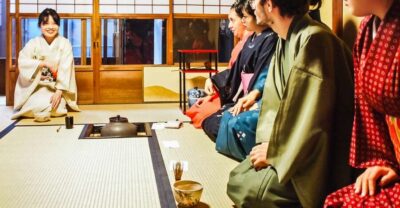
The session begins with a welcome in a traditional Japanese room. The instructor wears a kimono and introduces the history and meaning of the tea ceremony before any tea is prepared.
This opening is important because it gives the gestures a purpose. Without an explanation, the movements might look like a set of elaborate rules. With context, you begin to see the ceremony as a practice built around attention, respect, hospitality, and the careful sharing of tea.
The instructors have more than ten years of tea ceremony experience, according to the activity information. That background shows in the way the demonstration is explained. Several people have particularly praised the guides for answering questions patiently and for explaining the symbolism behind each part of the process.
Kazu, for example, has been singled out for explaining the meaning of the ceremony and even the significance of the tea bowls. That is the kind of detail that turns a pleasant activity into a useful cultural lesson. The bowls are not just containers for a drink. Their appearance and handling form part of the experience.
The room is also a practical advantage. You are not trying to follow a cultural presentation while standing in a busy public space. The tatami floor and quiet atmosphere encourage you to slow your pace and pay attention.
Step Two: Watch the Demonstration Before Touching the Tools
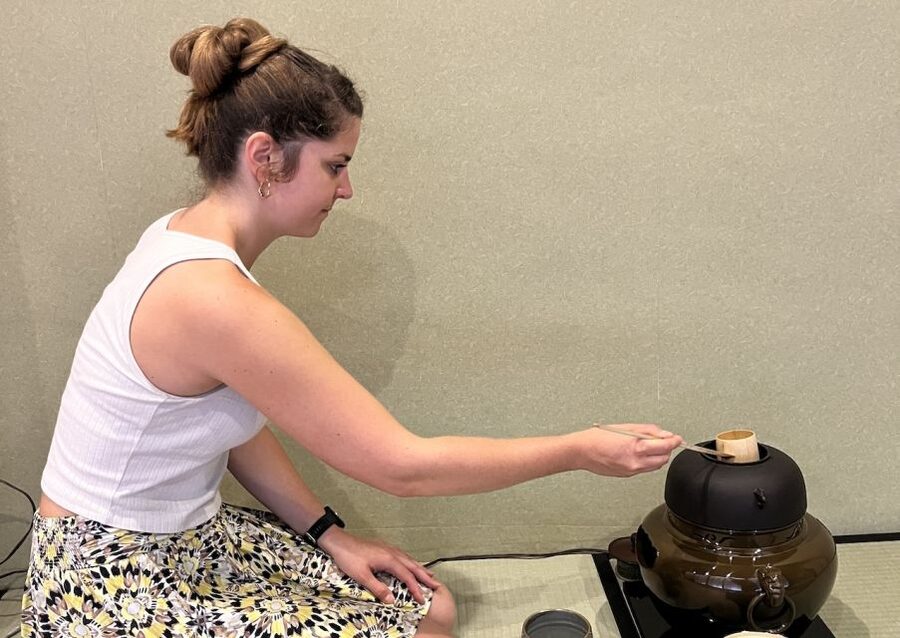
Next, the instructor performs the tea ceremony. You watch the preparation of matcha and learn the basic manners involved in serving and receiving it.
The demonstration is calm and precise. The repeated movements can be soothing, but the point is not simply to watch something pretty. The instructor explains what is happening, so you can connect the physical actions with their cultural meaning.
This is where the experience earns much of its praise. The best guides do not rush through the performance. They explain the tools, show how they are handled, and give you a clear idea of what to do when it is your turn.
You may also receive matcha prepared by the instructor before making your own. One person specifically noted drinking matcha twice, which suggests that the session can include both a sampled bowl and the hands-on preparation. The exact flow may vary slightly by group or instructor, so I would treat the demonstration and your own bowl as the main elements.
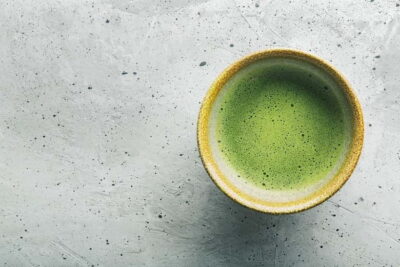
The taste itself deserves realistic expectations. Matcha is powdered green tea with a concentrated, grassy flavor and some bitterness. The seasonal sweets are not an afterthought. They help balance the tea and make the tasting more enjoyable, especially if you are new to matcha.
More Tea Ceremonies in Japan:
- Kyoto: Tea Ceremony in a Traditional Tea House in Kiyomizu
★ 4.9 · 3,519 reviews - Kyoto: Tea Ceremony Ju-An at Jotokuji Temple
★ 4.9 · 3,207 reviews - Kyoto: 45-Minute Tea Ceremony Lesson Experience
★ 4.3 · 2,378 reviews - World Heritage Kyoto & Nara Uji Authentic Matcha Experience
★ 5.0 · 1,573 reviews
Step Three: Whisk Your Own Bowl of Matcha
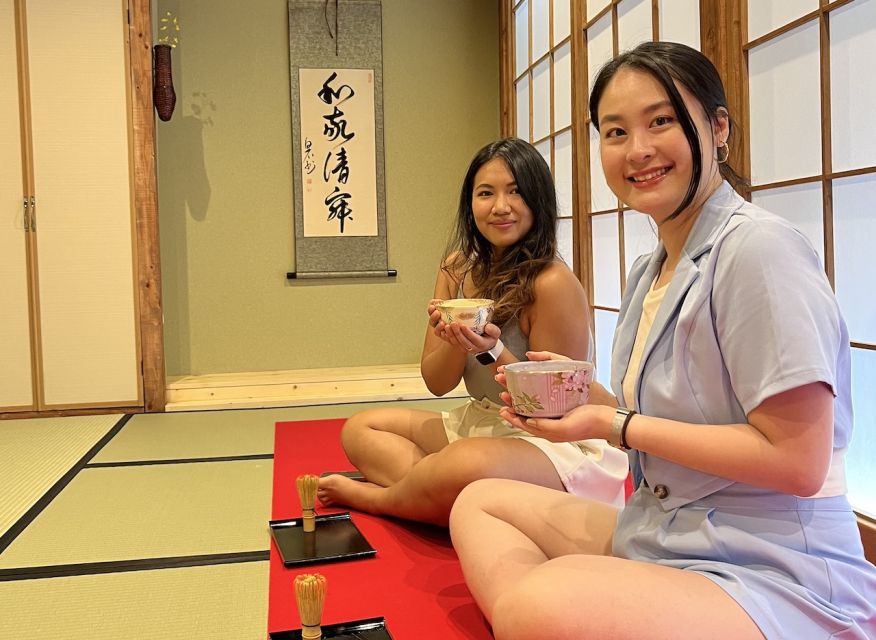
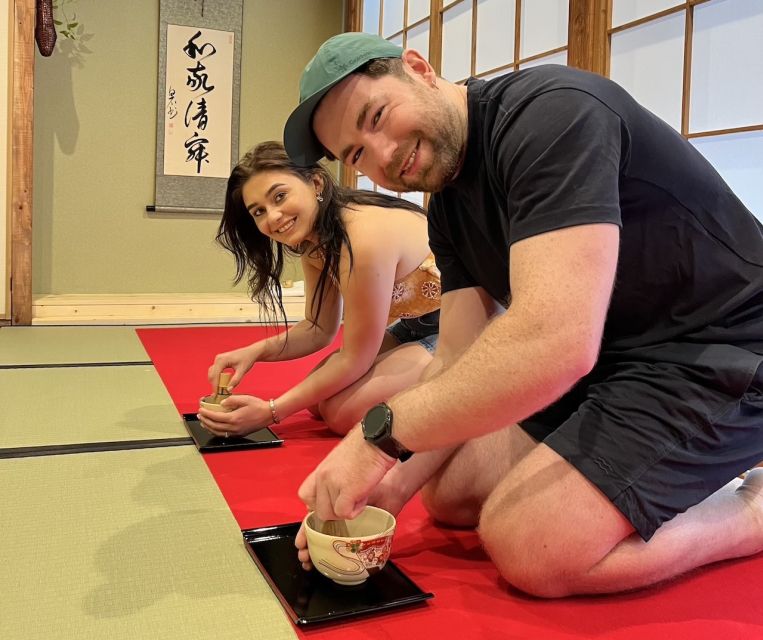
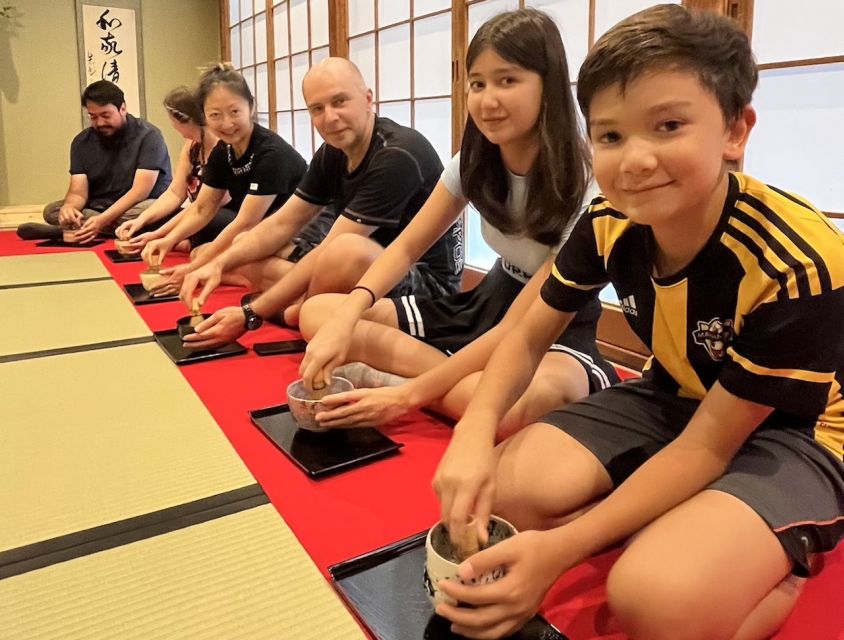
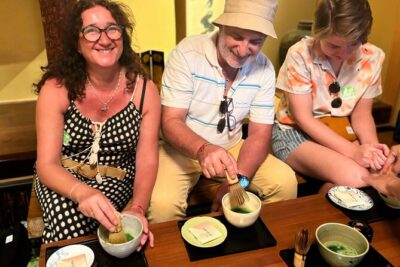
The most engaging part comes when you use the traditional tea tools yourself. Under the instructor’s direction, you prepare a bowl of matcha, whisk it, and drink what you have made.
This is simple enough for beginners, but it is not entirely automatic. The motion of the whisk matters, and you will quickly understand why it helps to watch the demonstration first. The instructor can show you how to use the equipment and guide you through the basic method without making the activity feel like a test.
I like this format because you do not remain a passive observer. You see the ceremony performed correctly, then take part in a simplified version of it. That combination makes the process easier to remember.
Do not worry about producing a perfect bowl. The value is in learning how the tea is made and understanding the care involved. You get to taste the result, and the instructors are there to help rather than judge.
Several sessions have been praised for making this part fun and relaxing. Mayumi, in particular, has been described as gentle and thorough when explaining the steps. Other instructors have been praised for their excellent English and warm manner.
The tea tools also give the activity a physical connection to Japanese culture. Handling the bowl and whisk is more memorable than hearing a short explanation about them. You leave with a better sense of the ceremony as a sequence of respectful actions, not just a recipe for green tea.
Seasonal Sweets Make the Matcha More Enjoyable
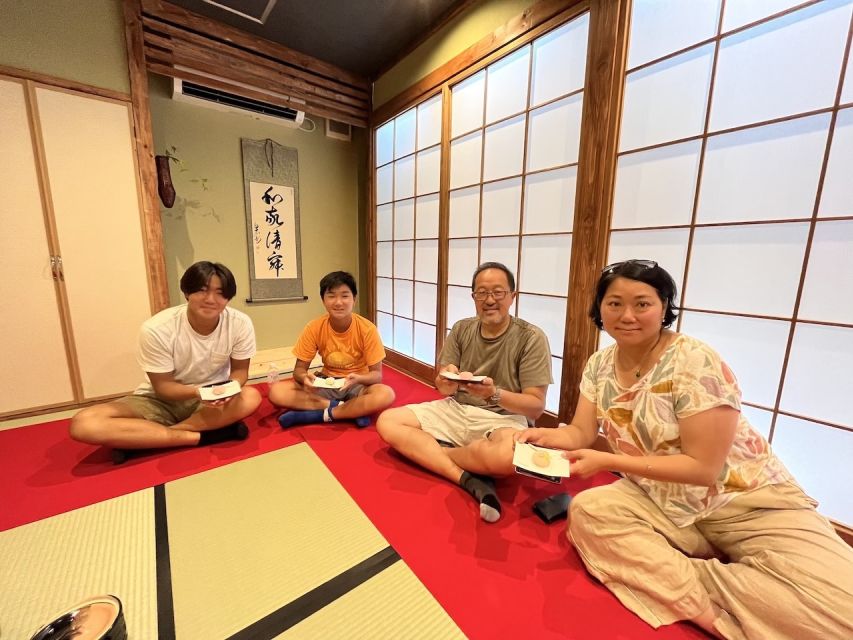
The included confections are small, seasonal Japanese sweets served with the tea. They provide a pleasant contrast to matcha’s strong flavor and add a tasting element to the lesson.
The sweets have received unusually warm praise. Several people described them as delicious, delicate, or divine, and one person said they added real value to the experience. If you have a sweet tooth, this will be one of the highlights.
The order of eating may vary. One session included sweets before the participants made their own matcha, while another description places the sweets alongside the tea. Either way, they are part of the included experience, not an extra purchase.
You should not expect a full meal. The confections are a small cultural tasting, and food is not allowed in the activity area. If you need lunch, plan that separately before or after the ceremony.
The Calm Contrast With Central Osaka
The activity’s setting is more than decoration. A traditional room with tatami flooring creates a quiet pause in the middle of Osaka’s busiest entertainment district.
That contrast has real value. You can spend the morning or afternoon surrounded by signs, restaurants, crowds, and traffic, then step into a room where the pace changes. The tea ceremony gives you a chance to concentrate on one carefully ordered activity.
I would use it as a break in a Dotonbori sightseeing plan. One person described it as a good way to interrupt a busy day in Osaka, and that is exactly how I would schedule it. You do not need to devote half a day to the experience, yet it feels more substantial than a quick snack stop.
The calm mood also suits people who want a cultural activity without a demanding performance. You do not need special knowledge, language ability beyond English, or prior experience with Japanese customs.
Price, Duration, and Overall Value
At $25 per person, this is a strong-value cultural activity. The price includes entrance, matcha, and the Japanese confections, so you are not paying extra for the central elements of the session.
The 45-minute length is another advantage. You can fit it between sightseeing stops, use it as a mid-day pause, or schedule it when you want a shorter activity. Several people described the session as a good value, particularly because it combines explanation, live demonstration, tasting, and hands-on participation.
There is a tradeoff. If you want a long, highly formal tea ceremony with extensive discussion of tea schools, utensils, architecture, and seasonal philosophy, this will feel brief. The price reflects an introductory experience rather than an advanced workshop.
For most first-time visitors, I think the balance is right. You receive enough information to understand the basics, and you get to make the tea yourself. That is a lot of cultural content for less than the cost of many ordinary Osaka attractions.
The activity also offers free cancellation up to 24 hours before the start time, with a full refund, and a reserve-now, pay-later option. Those terms help if your Osaka schedule is still changing.
Sitting on the Floor and Other Practical Details
You will sit on the floor in the tatami room for much of the session. One person specifically noted sitting on the floor for about an hour, even though the stated duration is 45 minutes. Allow for the possibility that the total time in the room may feel slightly longer.
This is worth considering if you have knee, hip, or mobility concerns. The available information does not specify chairs or alternative seating, so you should ask the provider in advance if floor sitting may be difficult for you.
Baby strollers and baby carriages are not allowed. Food is also not permitted, and the activity asks participants not to jump or make noise. Those rules fit the quiet nature of the ceremony.
The age information needs careful attention because it is worded inconsistently. One instruction says children over five cannot participate, while another says children aged five and above need their own ticket. Children under five are not allowed to enter, and families with a child under four are asked to contact the provider in advance. I would confirm the age rule before booking rather than assume a young child can join.
English is available from the host or greeter, and an English audio guide is included. The live instruction is the more important feature here, since the guides explain the process directly and answer questions during the demonstration.
Who Will Enjoy This Experience Most?
I would recommend this tea ceremony to:
- First-time visitors who want an easy introduction to Japanese customs
- Couples looking for a peaceful activity in central Osaka
- Families with children who meet the stated age requirements
- People curious about matcha but unsure how it is prepared
- Anyone who enjoys hands-on cultural activities
- Visitors who want a short break from Dotonbori’s noise and crowds
It is especially useful if you have limited time in Osaka. You do not need a full day, and the experience gives you something more meaningful than simply ordering matcha at a café.
I would be more cautious if you dislike sitting on the floor, have strict mobility needs, or want a long and highly formal ceremony. I would also skip it if you are looking for a food-focused activity, since the sweets are small confections rather than a meal.
Should You Book the Osaka Tea Ceremony?
I think you should book it if you want a friendly, affordable cultural activity that explains what you are seeing instead of asking you to copy movements without context.
The strongest reasons to go are the clear English instruction, the kimono-clad hosts, the quiet tatami room, and the chance to whisk your own matcha. The sweets are a welcome bonus, and the 45-minute format makes the activity easy to fit into a busy Osaka itinerary.
Book with extra arrival time, save the exact address and coordinates, and confirm the child policy if you are traveling with young children. If you can manage floor sitting and want a calm change of pace near Dotonbori, this is one of the better-value ways to meet an important part of Japanese culture.
FAQ
How long does the Osaka tea ceremony last?
The stated duration is 45 minutes. Some participants found that the overall time felt closer to an hour, so allow a little extra time around the scheduled session.
How much does the experience cost?
The listed price is $25 per person. The price includes the entrance fee, matcha, and Japanese confections.
Is the tea ceremony conducted in English?
Yes. The host or greeter speaks English, the instructors guide the activity in English, and an English audio guide is included.
Do I get to make my own matcha?
Yes. After watching a demonstration, you use traditional tea tools to prepare your own bowl of matcha, then drink it.
Are Japanese sweets included?
Yes. Seasonal Japanese confections are included with the experience and are served with the matcha.
Where is the meeting point?
The venue is on the second floor at 大阪市中央区道頓堀1丁目東5-26, or 5-26 Dotonbori 1-chome Higashi, Chuo Ward, Osaka. The coordinates are 34.66885079999999, 135.5063291.
Can children participate?
The age instructions are inconsistent. They state that children over five cannot participate, while also saying that children aged five and above need their own ticket. Children under five are not allowed to enter, and you should contact the provider in advance if you have a child under four. Confirm the rule before booking.
Can I cancel for a refund?
Yes. You can cancel up to 24 hours in advance for a full refund. A reserve-now, pay-later option is also available.
Are strollers allowed?
No. Baby strollers and baby carriages are not allowed.
Just added in Japan
- MT. FUJI/ Private Tour delivered and guided by a top-tier driver★ 5.0 · 27 reviews
- Fuji Speedway Self Drive & Mt. Fuji Private Tour pickup & dropoff★ 5.0 · 14 reviews
- Mt.Fuji Trekking 1 Day Tour up to the summit★ 5.0 · 14 reviews
- Mt fuji & Hakone customizable day tour w/ English speaking driver★ 5.0 · 45 reviews
- Seasonal Mt. Fuji Scenic Views, Fruit Picking and Ropeway Ride!★ 4.5 · 35 reviews
- Customisable Mt.Fuji Private Day Trip, English Speaking Driver★ 5.0 · 22 reviews
- Private Mt Fuji Tour from Tokyo: Scenic BBQ and Hidden Gems★ 5.0 · 146 reviews
- Private Mount Fuji Tour in Luxury Vehicle with English Guide★ 4.5 · 39 reviews
Tea Ceremonies, compared.
Tea Ceremony in a Traditional Tea House in Kiyomizu
Read our review →
World Heritage Kyoto & Nara Uji Authentic Matcha Experience
Read our review →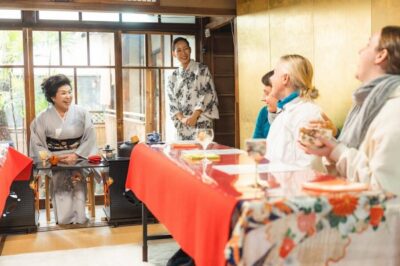

Arashiyama Bamboo Forest, Monkeys, Matcha & Temple Tour
Read our review →Browse the lists this tour appears in