
Reviewed · TEA CEREMONIES
Tea Ceremony Experience in Osaka Doutonbori
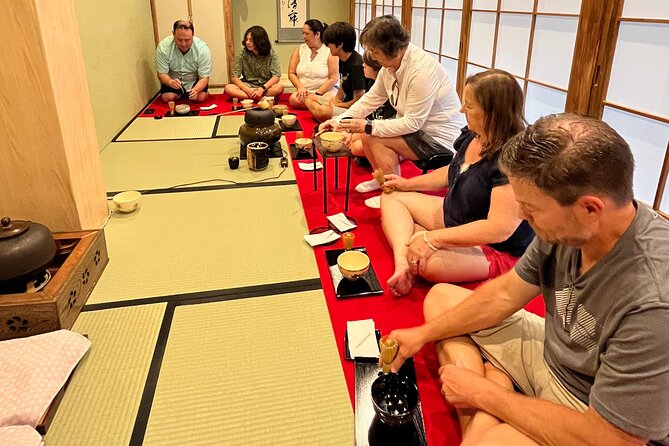
Osaka’s loudest street hides a quiet ritual. This 45-minute tea ceremony gives you a calm, hands-on introduction to Japanese tea culture just a short distance from Dotonbori’s bright signs and busy lanes. You watch the teacher prepare matcha, learn the meaning behind the ceremony, enjoy a Japanese sweet, and then whisk your own bowl of tea.
I especially like the small-group format, which gives the teacher time to explain the tools, manners, and movements instead of rushing you through a photo stop. I also like the family-friendly approach, including caffeine-free matcha milk for children. The main drawback is finding the exact entrance: the address is easy to misread, and children under five may not be accepted even when accompanied by an adult.
In This Review
- Key points to know before booking
- A traditional tea room in the middle of Dotonbori
- What happens during the 45-minute ceremony
- The teachers make the lesson feel personal
- Why the small group improves the experience
- The cultural lesson goes beyond making green tea
- Matcha, sweets, and the hands-on reward
- Is $20.69 good value in Osaka?
- Who will enjoy this experience most?
- What may not suit you
- Booking and cancellation details
- Should you book the Dotonbori tea ceremony?
- FAQ
- Where does the tea ceremony take place?
- How long does the experience last?
- Do I make my own matcha?
- Are Japanese sweets included?
- Is the ceremony suitable for children?
- How many people can join the activity?
- How do I find the meeting point?
- Can I cancel for a refund?
Key points to know before booking
- A quiet cultural break near Dotonbori: The ceremony takes place in central Osaka, close to one of the city’s busiest entertainment areas.
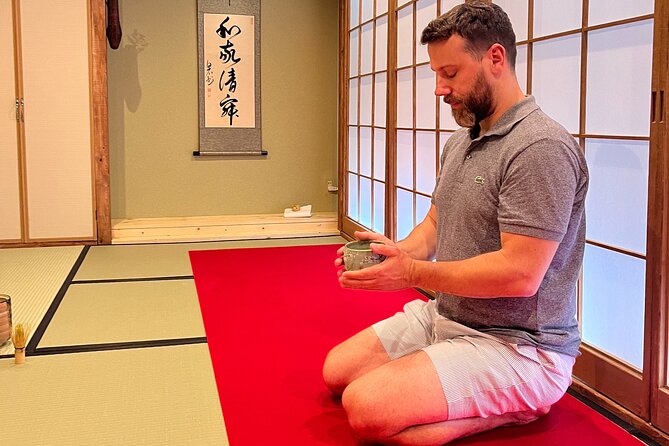
- You make your own matcha: The teacher first demonstrates the process, then helps you prepare and drink your own tea.
- Teachers explain more than technique: You learn about tea etiquette, customs, history, serving, and drinking.
- Small groups matter: The maximum is 15 people, with many sessions operating at a more intimate size.
- Children have a caffeine-free choice: Matcha milk is available for children, but ask ahead about children under five.
- Check the address carefully: Search Google Maps for Tea Ceremony Osaka The Osaka and use 1-chome Higashi-5-26, not simply 1-5-26.
A traditional tea room in the middle of Dotonbori
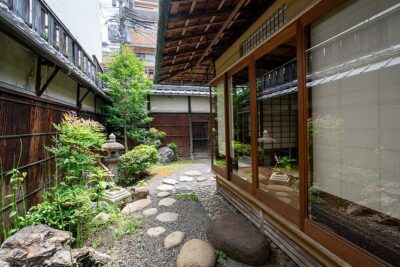
The meeting point is Tea Ceremony Osaka The Osaka, at 1-chome Higashi-5-26 Dotonbori Building 2F in Osaka’s Chuo Ward. It is an amusing contrast: outside, Dotonbori is full of signs, restaurants, crowds, and neon. Inside, the experience turns your attention to a bowl, a whisk, a sweet, and the careful movements of the tea preparation.
That contrast is part of the appeal. You do not need to travel to a remote temple or reserve half a day outside Osaka to encounter a formal Japanese custom. You can fit this activity into a morning, afternoon, or evening around sightseeing in Namba and Dotonbori.
The address deserves special care. The operator warns that some map links point to the wrong place. Search Google Maps using tea ceremony osaka the osaka, and look for the address containing Higashi, written as 1-chome Higashi-5-26. The common mistake is entering 1-5-26, which is not the same address.
A mobile ticket is provided, and booking confirmation arrives at the time of reservation. The activity begins and ends at the same meeting point, so you are not left wondering where the final part of the tour finishes.
More Tea Ceremonies in Osaka
- Osaka: Tea Ceremony Experience
★ 4.9 · 1,426 reviews - Matcha Making Class in Osaka with Authentic Japanese Sweets Set
★ 5.0 · 509 reviews - Osaka: Matcha Making Experience with Japanese Sweets
★ 5.0 · 146 reviews
What happens during the 45-minute ceremony
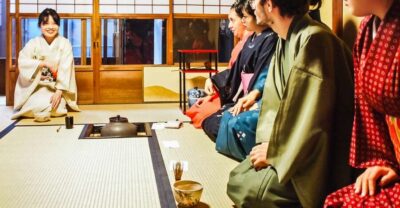
The experience is short, but it is not just a quick cup of green tea. The teacher introduces the culture, customs, and etiquette connected with the ceremony, then demonstrates how matcha is prepared and served.
You watch the teacher work first. This gives you a chance to notice the order of the movements before you are asked to try them yourself. The lesson also covers how to receive and drink the tea properly, so you learn both sides of the ritual: preparing the bowl and showing respect when it is served.
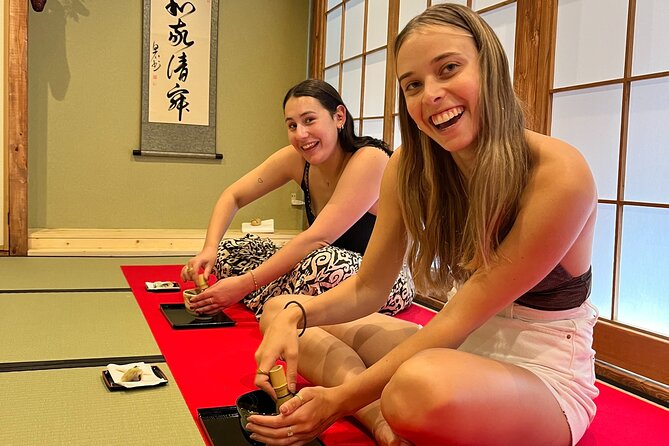
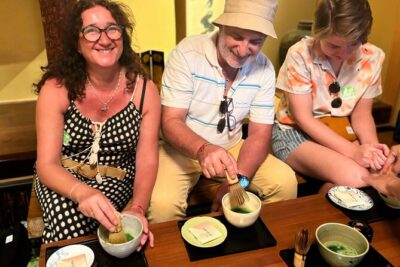
You then make your own matcha. The hands-on part is important because matcha preparation looks simple until you hold the whisk yourself. The session lets you try the process without turning the class into a test. The teacher’s role is to guide you through each step and explain what you are doing.
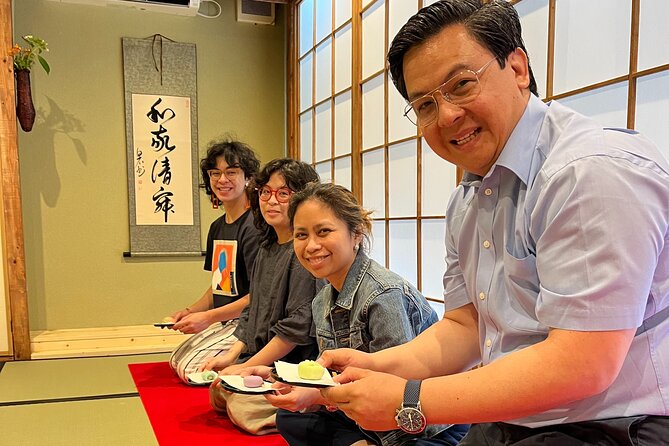
A traditional Japanese sweet is served with the tea. Seasonal sweets are part of the experience, and the sweet balances the strong, slightly bitter taste of matcha. One session included a matcha pastry, while other descriptions refer to sweets connected with the seasons, so the exact item may vary.
The whole activity lasts about 45 minutes, although some descriptions call it close to an hour. Plan for roughly an hour so you do not schedule your next activity too tightly.
The teachers make the lesson feel personal
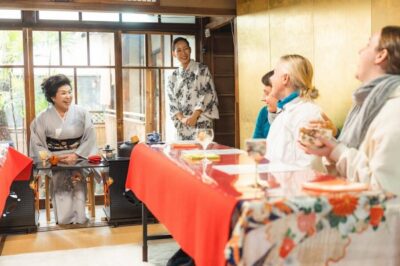
The strongest part of this experience is the teaching. The instructors are described as warm, patient, friendly, and well prepared, with some sessions led by Kazu, Mai, or Soda. The teacher has more than a decade of experience, and the instruction is offered in English.
Kazu receives particular praise for being relaxed and engaging. Her explanations include the history of tea culture, but she also adds humor and light touches, including playful sound effects and instructions for moving around the tea space. That helps the ceremony feel less intimidating if you have never encountered Japanese tea etiquette before.
Mai is praised for explaining the background, preparation, and drinking of tea in a clear way. Soda’s session included an introduction to the ceremony, a demonstration, and time for each person to make matcha. These details suggest that the experience is not dependent on simply watching the instructor perform.
The teacher’s attitude also matters if you are nervous about making a mistake. The ceremony has formal movements, but the class is designed for beginners. You can learn the proper way to handle the bowl and tools while still enjoying the process.
English ability is another practical plus. The guide is described as speaking very good English, and the teaching covers cultural meaning as well as physical technique. You should come away understanding why the actions matter, not only copying a set of movements.
Why the small group improves the experience
The maximum group size is 15 people, but sessions may be much smaller. One family had a private ceremony, another session had six people, and another included only two couples. Group size can vary, so you should not assume every booking will be private. Still, the share plan is intended for people who are happy to take part with others.
A small class gives you more than a better view. It lets you ask questions, receive help with the whisk, and take your time with the etiquette. The ceremony is interactive, so a packed room would make the practical part less satisfying.
For families, the group setting can work well because everyone can take part together. The experience is described as family-friendly, and children can receive caffeine-free matcha milk rather than regular matcha. That gives younger participants something similar in appearance and presentation without the caffeine.
There is an important age restriction. If you are bringing a child under five, contact the operator before booking. Children under five may not be allowed to enter the regular plan, even if an adult has purchased a ticket. Do not rely on showing up and sorting it out at the door.
More Tea Ceremonies in Japan:
- Kyoto: Tea Ceremony in a Traditional Tea House in Kiyomizu
★ 4.9 · 3,519 reviews - Kyoto: Tea Ceremony Ju-An at Jotokuji Temple
★ 4.9 · 3,207 reviews - Kyoto: 45-Minute Tea Ceremony Lesson Experience
★ 4.3 · 2,378 reviews - World Heritage Kyoto & Nara Uji Authentic Matcha Experience
★ 5.0 · 1,573 reviews
The cultural lesson goes beyond making green tea
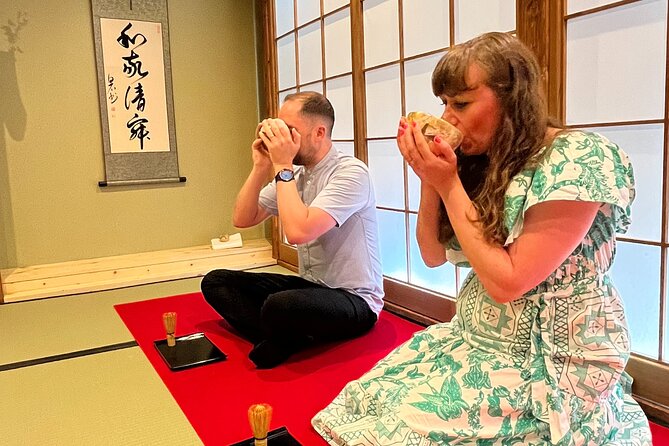
The ceremony gives you a useful introduction to Japanese customs. You learn about etiquette, the correct way to serve tea, and the proper way to drink it. That may sound minor, but these small details help you understand the care built into the ritual.
The lesson also places tea in a wider social setting. One account of the class explained how tea gatherings were connected with the samurai class and could provide a setting for political discussion and strategy. The ceremony also encouraged people to meet as equals, an idea that adds weight to the careful gestures and shared bowl of tea.
You will not become a tea master in 45 minutes. That is not the point. The value is in gaining enough background to recognize the ceremony as more than a tourist performance. You see how tools, movements, sweets, manners, and hospitality fit together.
The quiet pace is another benefit. Several sessions are described as calming, relaxing, mindful, and peaceful. After a day of Osaka shopping or street food, a slower hour can feel like a welcome reset. The ceremony does not try to compete with Dotonbori. It offers the opposite mood.
Matcha, sweets, and the hands-on reward
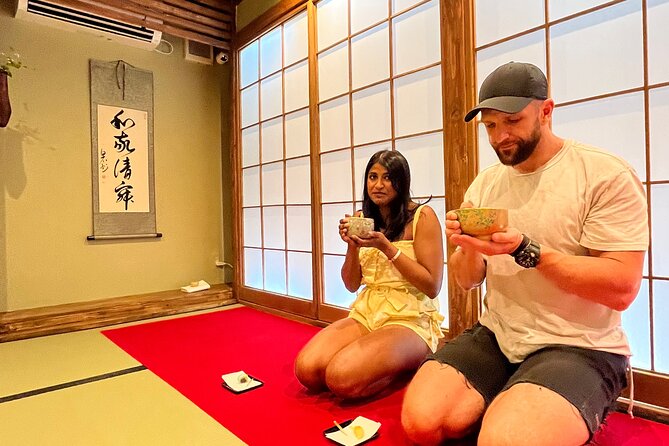
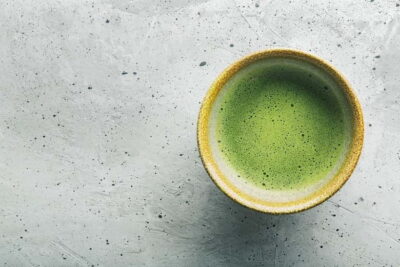
Matcha is not like ordinary brewed green tea. It is powdered tea whisked directly into water, so the flavor can be strong and grassy. Some people love it right away. Others need the sweet served alongside it to soften the taste.
The teacher prepares a bowl for you to try, then you make your own. This two-part approach works well because you can taste the difference between an expert’s preparation and your first attempt. You also get a clear look at the consistency and technique before picking up the whisk.
The sweets are not just an extra snack. In a tea ceremony, the sweet helps prepare your palate for the tea and adds a seasonal element. The exact sweet may differ, but you can expect a small Japanese treat served as part of the ritual.
Children can receive caffeine-free matcha milk. If you are booking for a family, confirm the arrangement when you arrive, especially if your child is sensitive to new flavors or does not drink tea.
Is $20.69 good value in Osaka?
At $20.69 per person, this is a fairly accessible cultural activity for Osaka. The price includes instruction, the demonstration, the chance to make and drink your own matcha, and a traditional sweet. You are paying for a guided lesson rather than only a cup of tea.
I think the value is strongest if you want context. You could buy matcha elsewhere for less, but you would not receive the explanation of etiquette, the teacher’s demonstration, or the chance to take part in a formal ritual. The instructor’s experience and English explanations add to the usefulness.
The 45-minute length also keeps the cost practical. You can place the class between other plans instead of giving up a full morning. If you are visiting Osaka for only a short stay, that makes the experience easier to fit into your schedule.
The value is weaker if you expect elaborate costumes, a long temple visit, or a full-day historical program. This is a compact indoor lesson in central Osaka. It offers a focused introduction, not an extensive study of tea ceremony schools or Japanese architecture.
Who will enjoy this experience most?
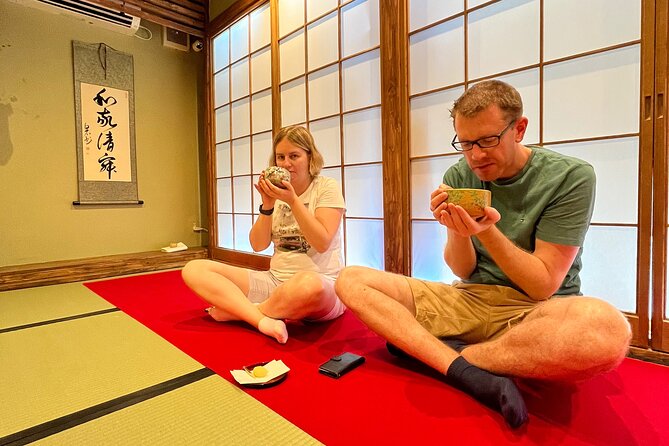
I would recommend it to first-time visitors who want a manageable introduction to Japanese culture. You do not need prior tea knowledge, and the practical format gives you something to do rather than asking you to sit silently for the entire session.
It also suits families, provided you confirm the rules for children under five. The caffeine-free matcha milk makes the activity more welcoming for younger participants, and the group can learn together.
Couples and solo visitors may like the smaller sessions, especially if they want a calm change of pace from Osaka’s food and shopping districts. The share plan means you may meet other participants, but the group size is limited to 15.
This is also a good choice for anyone who wants an activity with gentle structure. The class is organized, starts on time according to the available feedback, and moves from explanation to demonstration to participation. You have enough guidance to feel comfortable without needing to prepare beforehand.
What may not suit you
The session is not completely private unless you book an arrangement that specifically provides that. The share plan is designed for people joining with other participants, and group size can vary.
The formal movements may feel unfamiliar at first. You may need to kneel or follow traditional ways of handling the bowl and tools, although the available details do not specify seating arrangements or physical requirements. If you have concerns, ask the operator before booking.
The address is another weak point. A wrong map pin or a missing Higashi in the address could send you to the wrong building. Give yourself extra time, and use the exact search instructions rather than relying on the booking page’s map link.
Finally, matcha has a distinct taste. If you dislike green tea, you may enjoy the cultural lesson more than the drink itself. The sweet helps, and children have a caffeine-free alternative, but the class remains centered on tea.
Booking and cancellation details
The experience costs $20.69 per person and includes a mobile ticket. Confirmation is sent at booking, and the activity is near public transportation.
You can cancel for a full refund if you do so at least 24 hours before the local start time. Cancellations or changes made less than 24 hours before the start are not accepted for a refund.
Should you book the Dotonbori tea ceremony?
Yes, if you want a short, well-guided cultural activity that gives you real participation. The best reasons to book are the friendly English-speaking teachers, the chance to make your own matcha, the traditional sweet, and the calm atmosphere so close to Dotonbori.
I would especially choose it for a first visit to Japan, a family outing with older children, or a final-day activity when you want something quieter than shopping and sightseeing. Kazu, Mai, and Soda are all associated with warm, clear instruction, and the small-group format gives the lesson a personal feel.
Skip it if you want a private ceremony guaranteed from the start, a long formal performance, or a major historic site included in the price. Otherwise, this is a sensible $20.69 introduction to tea etiquette and Japanese hospitality. Just confirm the age rules, search the address carefully, and allow about an hour rather than rushing in at the last minute.
FAQ
Where does the tea ceremony take place?
It takes place at Tea Ceremony Osaka The Osaka, Tea Ceremony Experience The Osaka, at 1-chome Higashi-5-26 Dotonbori Building 2F, Osaka, Chuo Ward, 542-0077.
How long does the experience last?
The stated duration is about 45 minutes. Some descriptions refer to an experience close to one hour, so allow roughly an hour in your schedule.
Do I make my own matcha?
Yes. The teacher demonstrates the ceremony and prepares tea for you to try. You can then make and drink your own matcha.
Are Japanese sweets included?
Yes. Traditional Japanese sweets are included with the tea. The specific sweet may vary, and some sessions include seasonal sweets or a matcha pastry.
Is the ceremony suitable for children?
It is family-friendly, and caffeine-free matcha milk is available for children. If you are bringing a child under five, contact the operator in advance because children under five may not be allowed on the regular plan.
How many people can join the activity?
The maximum group size is 15 participants. The share plan is designed for people who want to join with other participants, although some sessions may be smaller.
How do I find the meeting point?
Use Google Maps and search for Tea Ceremony Osaka The Osaka. Make sure the address includes 1-chome Higashi-5-26. Do not use the commonly mistaken version, 1-5-26, and be cautious with the map link provided by Viator.
Can I cancel for a refund?
Yes. You can receive a full refund if you cancel at least 24 hours before the experience begins. Changes or cancellations made less than 24 hours before the start time are not accepted for a refund.
Just added in Japan
- A One-of-a-Kind Sushi Experience in a Special Place of Japan★ 5.0 · 15 reviews
- Tokyo Cute Bento Cooking Class – Make a Kawaii Character Lunchbox★ 5.0 · 126 reviews
- Japanese Home Cooking Class & Walk in Todoroki Temple Tokyo★ 5.0 · 88 reviews
- Japan Tokyo Tower Observatory Deck E-Ticket★ 4.0 · 34 reviews
- Catch a Baseball Game in Tokyo with a Local – Tickets Included★ 5.0 · 24 reviews
- JDM Experience with Fast&Furious RX-7 (English speaking Driver)★ 5.0 · 57 reviews
- Tokyo Private Day Tour by Car with English speaking Driver Guide★ 4.0 · 29 reviews
- Japan Classic 10 Day – One Life Adventures★ 5.0 · 129 reviews
Tea Ceremonies, compared.
Tea Ceremony in a Traditional Tea House in Kiyomizu
Read our review →
World Heritage Kyoto & Nara Uji Authentic Matcha Experience
Read our review →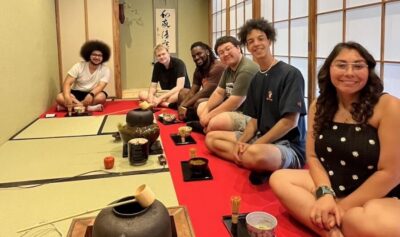
Browse the lists this tour appears in