
Reviewed · TEA CEREMONIES
World Heritage Kyoto & Nara Uji Authentic Matcha Experience
History comes with deer and green tea. This eight-and-a-half-hour day trip links Nara’s grand temples with Uji’s famous matcha culture, making it a smart choice if you want to cover several major sights without planning several train rides and local connections yourself. An English-speaking guide leads the day, while an air-conditioned coach handles the long stretches between Kyoto, Nara, and Uji.
I especially like the mix of Todai-ji Temple and Nara Park, followed by the more hands-on matcha session in Uji. The guides, including Nanami, Yuta, Mai, Den, At-Chan, Ciel, and others, receive repeated praise for clear explanations, good energy, and keeping the group together. The main drawback is the amount of walking, often in heat and humidity, with stairs and hills along the way. This is not a gentle sightseeing ride.
The tour costs $129.25 per person and has a current rating of 4.9 from 1,573 ratings, with 99 percent recommending it. That price can be good value if you select lunch and want transport, temple admission, guiding, and the tea activity handled in one day. You do give up some freedom, though, since a group of up to 38 people must follow a fixed schedule.
In This Review
- What makes this Nara and Uji day trip useful
- Starting early at Kyoto Station
- Passing Fushimi Castle and Heijo Palace
- Kasuga Grand Shrine and Nara’s sacred woodland
- Meeting Nara’s deer in the park
- Nandaimon and Todai-ji’s Great Buddha
- Lunch beside the Uji River
- Byodoin Temple and the 10 yen coin
- Making matcha at a 500-year-old tea shop
- Matcha sweets and Uji’s riverside setting
- What the guides add to the day
- Is $129.25 a fair price?
- Who should book this tour?
- FAQ
- How long does the tour last?
- Where does the tour begin?
- Is hotel pickup included?
- Is lunch included?
- Is the matcha activity included?
- How much walking is involved?
- What happens if the weather or traffic changes the program?
- Should you book it?
What makes this Nara and Uji day trip useful
- Nara’s Great Buddha: Enter Todai-ji, one of the world’s largest wooden buildings, and see the enormous Great Buddha.
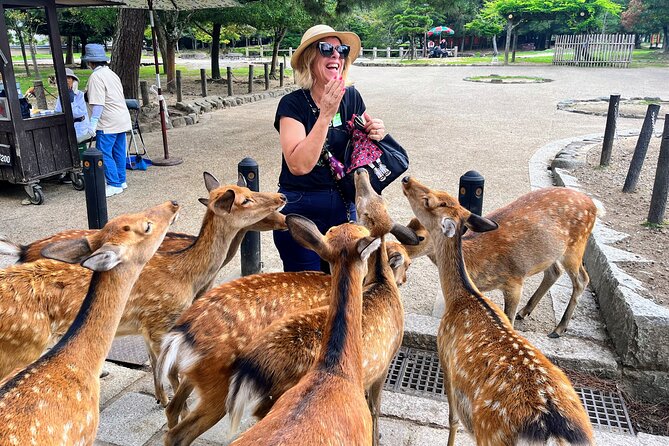
- Deer in Nara Park: Meet around 1,400 deer, with time to walk among them and buy crackers if you want to feed them.
- A proper Uji tea activity: Prepare your own bowl of matcha at a tea shop with more than 500 years of tradition.
- Lunch with a local flavor: Choose a Japanese-style set meal beside the Uji River, with a vegetarian option available if arranged in advance.
- Air-conditioned transport: The coach saves time and gives you a cool place to rest between sites.
- A guide-led historical day: English explanations come from the guide, with audio commentary also available in several languages.
Starting early at Kyoto Station
The meeting point is Tully’s Coffee on the first floor of Kyoto Avanti, near Kyoto Station. You meet at 7:50 a.m., and the coach returns to the same place at the end of the day. Hotel pickup and drop-off are not provided, so you need to make your own way to Kyoto Avanti.
That early start matters. Nara and Uji are close enough to visit in one day, but traffic and parking can eat up time. Starting before the day gets fully moving gives the group a better chance of reaching the main sites on schedule.
The vehicle is air-conditioned and has WiFi on board. Reviews also describe the bus as comfortable, with charging outlets available. Multilingual audio guidance is offered in English, Spanish, French, Italian, German, Portuguese, and Ukrainian, but the live guide is English-speaking.
I would arrive early rather than cut it close. Late arrivals are not accepted, and joining the group partway through is not practical. The maximum group size is 38, so this is a proper coach outing rather than a private tour.
More Tea Ceremonies in Nara:
- Nara:Authentic Tea Ceremony(Max 5 ppl) -Master Matcha Making
★ 5.0 · 119 reviews - Nara:5 Type of Tea Tasting & Mindful Tea Ceremony
★ 5.0 · 28 reviews - Nara:Tea Tasting&Private Tea Ceremony -Master Matcha Making-
★ 5.0 · 19 reviews
Passing Fushimi Castle and Heijo Palace
The first part of the day gives you a moving introduction to the Kansai region. The route passes Fushimi Castle and Heijo Palace, with the palace site connected to Nara’s World Heritage status.
These are not long, independent sightseeing stops in the same way as Todai-ji or Byodoin Temple. Think of them as useful context from the coach, not as places where you will have a long period to wander. If you want detailed time inside every monument, this tour will feel too brisk. If you want a broad first look at the area, the route works well.
The coach format also solves a practical problem. Nara’s major sights are spread across a large area, and a full day of local buses, walking, and train connections can be tiring. Here, you can sit down between visits while the guide explains what you are seeing.
Kasuga Grand Shrine and Nara’s sacred woodland
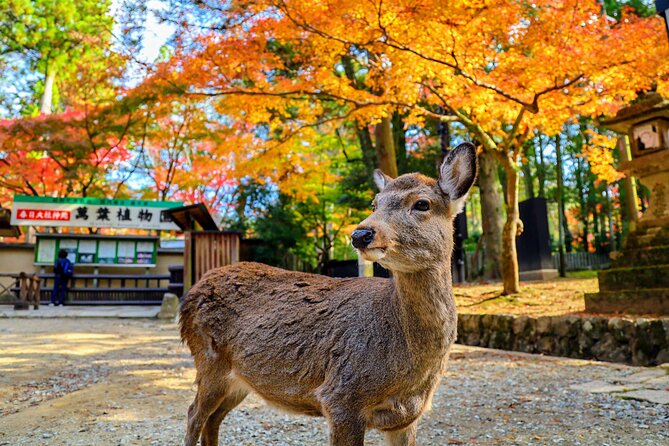
Kasuga Grand Shrine is one of Nara’s best-known shrines, and the tour allows about 30 minutes here. That is enough for a focused visit and photographs, though not enough for a slow exploration of every path and feature.
The shrine is especially appealing if you want to see a different side of Nara from the giant Buddha. Todai-ji demonstrates monumental Buddhist architecture, while Kasuga offers a Shinto setting with a quieter, more atmospheric feel. The guide can help connect the two traditions within the wider story of the city.
I would use this stop to stay close to the group and listen for the cultural details. Thirty minutes passes quickly, and there are several later stops where you will also want time for photos and browsing.
Meeting Nara’s deer in the park
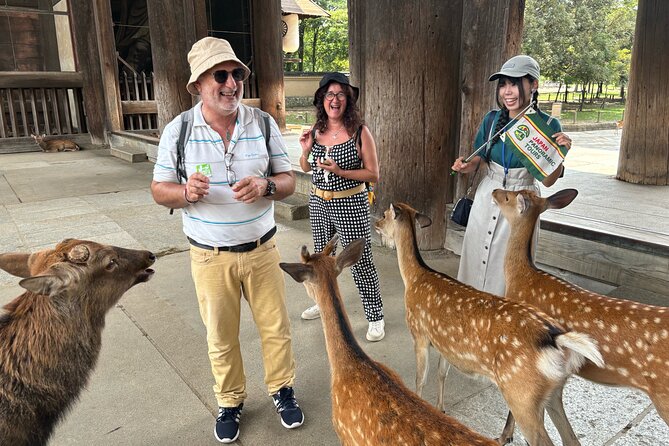
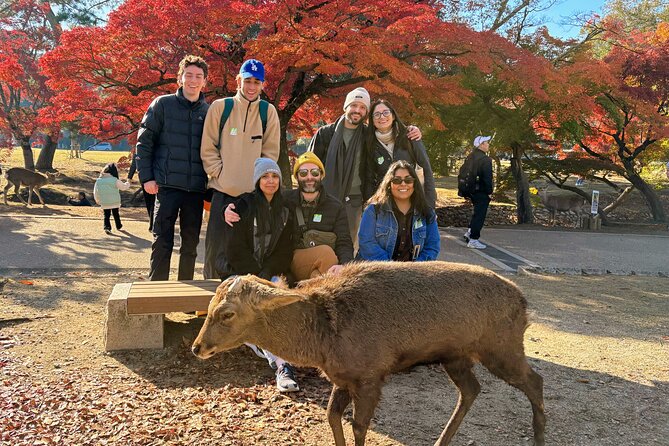
Nara Park is the tour’s most playful stop. Around 1,400 deer live in the park and surrounding area, and you get about 30 minutes to see them at close range.
You can buy deer crackers locally if you want to feed them. The deer are generally calm, but they can nip or give a forceful pinch when you hold food and ignore them. Keep your hands visible after the crackers are gone, and pay attention to the animals instead of treating them like statues with fur.
This part works well for families. One family with a four-year-old found the deer and matcha activity especially enjoyable. Still, young children should be watched closely, and anyone nervous around animals may prefer to admire the deer without feeding them.
The time is short for such a large park, so you will not cover every corner. The advantage is that the tour places you near the main cultural sights without asking you to organize the route yourself.
A few more options to weigh up in Nara
- Nara Half Day Trip Walking Tour (Private Option Available)
★ 5.0 · 937 reviews - Nara Early Morning Tour (Kyoto or Osaka Departure Available)
★ 5.0 · 676 reviews - Osaka: Nara and Uji Day Trip with Deer Park and Hot Spring
★ 4.4 · 302 reviews - Kyoto/Osaka: Kinkakuji, Bamboo Forest, and Nara Deer Park
★ 4.4 · 265 reviews
Nandaimon and Todai-ji’s Great Buddha
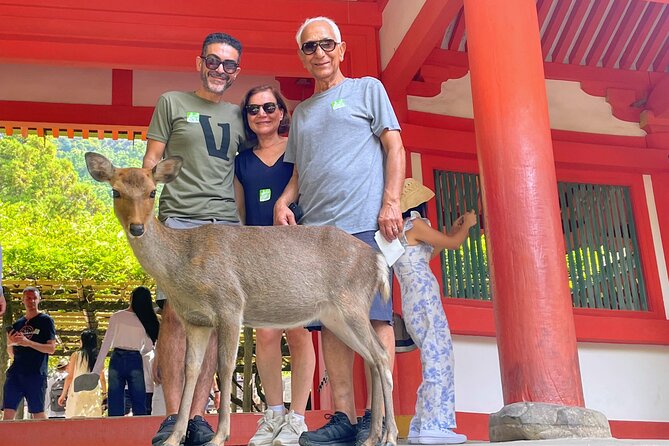
The magnificent Nandaimon, or Great South Gate, receives a brief five-minute stop. That may sound short, but the gate itself is an impressive example of traditional Japanese architecture and a natural approach to Todai-ji.
The main visit comes next. You have about 40 minutes at Todai-ji Temple, where the Great Buddha is housed inside one of the world’s largest wooden buildings. The scale is the point here. Even visitors who have seen many temples in Kyoto often find this building memorable because of its size and the huge seated Buddha within.
Admission to Todai-ji is included. The guide provides background and directions, then gives you time to look around. Several guides are praised for finding a good balance between explanation and independent exploring, so you should not expect every minute to be a lecture.
The walk from the bus parking area to the historic sites can take more than 15 minutes in some conditions. Add stairs, slopes, crowds, and summer heat, and this becomes one of the day’s more demanding sections. Wear comfortable shoes and bring water. The tour is not recommended for anyone who cannot walk long distances.
Lunch beside the Uji River
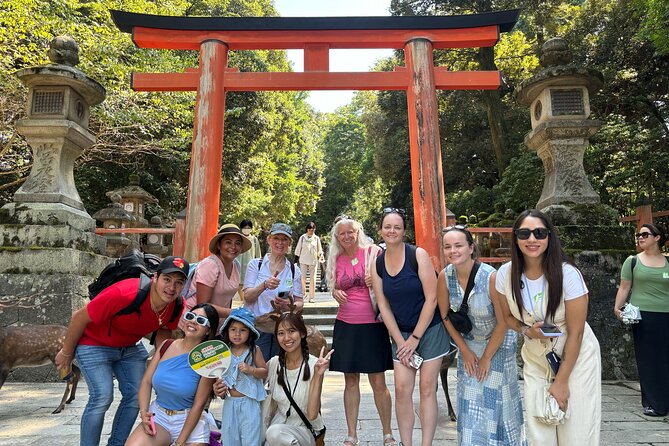
The Uji portion begins with lunch, if you choose the lunch option. The meal is a traditional Japanese set served at a restaurant along the Uji River, and a vegetarian meal can be arranged if you note it at least two days before the tour date.
The food presentation receives strong praise, with one meal described as both artistic and tasty. Other diners enjoyed the traditional set meal as a useful chance to try Japanese food without having to decipher a menu during a busy sightseeing day.
The restaurant may change for operational reasons. Last-minute bookings receive the regular meal, and vegetarian arrangements are not guaranteed if requested too late. Food and drinks are not included unless specified in your booking, so check the exact option you select.
At 50 minutes, lunch is long enough to eat without turning into a long restaurant break. It also gives your feet a rest before the afternoon tea experience.
Byodoin Temple and the 10 yen coin
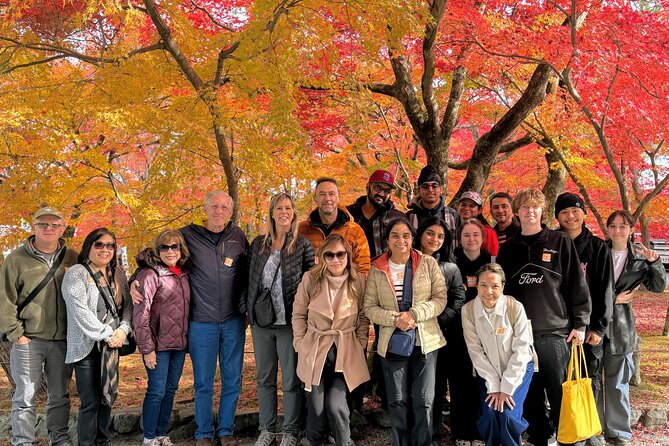
Byodoin Temple is one of Uji’s signature sights. Its Phoenix Hall appears on the Japanese 10 yen coin, so having a coin in your pocket gives you a fun visual comparison when you visit.
Admission is included, and the stop lets you see one of Uji’s most recognizable buildings in person. The temple adds a graceful contrast to Todai-ji. Nara gives you vast wooden architecture and the Great Buddha, while Byodoin offers a more refined temple setting associated with Uji’s long connection to tea and culture.
The schedule allows about 30 minutes for the temple area. That is enough to see the main feature, but you should not expect a slow, detailed visit to every part of the grounds. Traffic and weather can change the order of stops, so keep your camera ready and listen carefully when the guide gives meeting instructions.
Making matcha at a 500-year-old tea shop
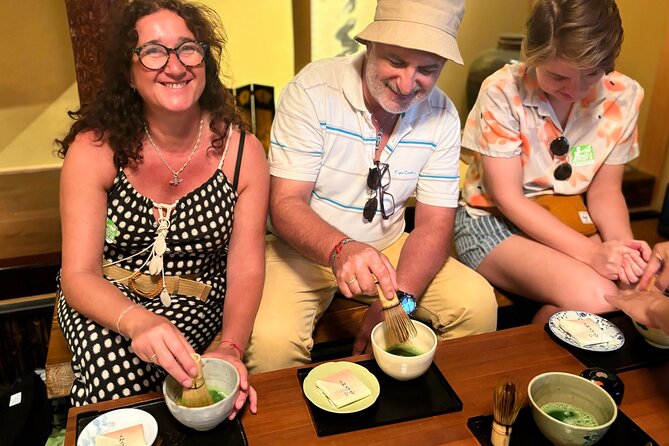
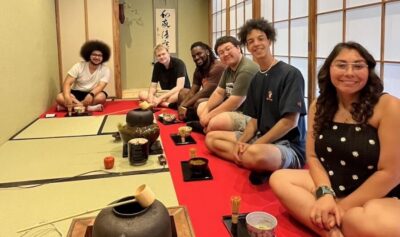
The best part of the Uji visit for many people is the matcha-making activity. At a historic tea shop with more than 500 years of tradition, you prepare your own bowl of matcha and learn the proper traditional way to drink it.
This is not simply a tasting where someone hands you a cup. You get to whisk the tea yourself, which makes the experience more memorable and gives you a better sense of the care behind the drink. It also offers a welcome change of pace after the temple visits.
The activity lasts about 30 minutes. The tea shop owner is described as funny and engaging, and the matcha itself receives warm praise. If you normally find green tea bitter, the guided preparation may help you appreciate how texture, technique, and serving style affect the drink.
The experience is included in the tour price. You will also have time to sample matcha sweets while walking along Byodoin Omotesando, the shopping street near the temple.
Matcha sweets and Uji’s riverside setting
Byodoin Omotesando gives you about 30 minutes to walk, browse, and taste matcha-flavored sweets. This is a modest amount of free time, but it adds a pleasant shopping and food element to a day otherwise centered on temples and formal sites.
Uji feels different from the busier parts of central Kyoto. The river, tea shops, temple approaches, and traditional sweets give the stop a distinct identity. You are not just checking off another temple. You are seeing how a place can build its everyday culture around tea.
The free time is also useful for anyone who wants souvenirs. Do not expect a long shopping session, but you should have enough time to look around if you avoid wandering too far from the meeting point.
What the guides add to the day
The strongest part of this experience is the human guidance. Nanami receives especially high praise for her historical explanations, enthusiasm, organization, and care with the group. Yuta is noted for clear communication, cultural context, helpful suggestions, and allowing enough time to explore independently.
Mai, Den, At-Chan, Ciel, Keigo, Harry, Tommy, and other guides also receive warm recognition for friendliness and strong pacing. That matters on a full day with several stops. A good guide makes the difference between a tiring sequence of monuments and a connected story about Nara, Kyoto, Buddhism, Shinto, deer, and tea.
The guide will not be the same person on every departure, so you should not book solely in the hope of getting one particular guide. The broader pattern is encouraging: the staff are repeatedly praised for being attentive, upbeat, and clear in English.
There is one serious caution. One participant reported being separated from the group at the first stop after unclear meeting instructions and criticized the guide’s organization. That appears to be an isolated but important warning. Keep the guide’s contact information available, confirm the meeting point before walking off, and stay alert when the group regathers.
Is $129.25 a fair price?
At $129.25 per person, this is not the cheapest way to reach Nara. You could use public transport and visit fewer sites at your own pace for less. That comparison misses what you are paying for here: a full-day route, air-conditioned transport, an English-speaking guide, admission to Todai-ji and Byodoin, the matcha-making session, WiFi, and lunch if selected.
The value is strongest for a first visit to the Kansai region, especially if you have limited time. You see Nara’s major sights and add Uji in one organized day, without figuring out local connections or worrying about parking.
The value is weaker if you dislike group schedules, want long visits at each temple, or prefer choosing your own restaurants. A group of up to 38 people must move together, and traffic, weather, or closures can alter the order or replace a stop. No refunds are provided for changes caused by those conditions.
Free cancellation is available until 24 hours before the 7:50 a.m. start time. Changes or cancellations inside that window are not accepted for a refund.
Who should book this tour?
I would recommend it to first-time visitors who want a broad introduction to Nara and Uji in one day. Families can enjoy the deer and matcha activity, while couples and solo visitors benefit from the simple transport and built-in historical context.
It is also a good fit if you want a traditional Japanese lunch and a practical cultural activity rather than temple sightseeing alone. The combination gives the day variety: sacred sites, wildlife, food, tea, and a little shopping.
I would think twice if you have limited mobility, tire quickly in hot weather, or dislike walking between coach parking areas and monuments. You should also choose a different arrangement if your priority is quiet photography or extended time at one temple.
FAQ
How long does the tour last?
The tour lasts approximately 8 hours and 30 minutes. It starts at 7:50 a.m. and ends back at the Kyoto Avanti meeting point.
Where does the tour begin?
It begins at Tully’s Coffee on the first floor of Kyoto Avanti, near Kyoto Station, at 31 Higashikujō Nishisannōchō, Minami Ward, Kyoto, 601-8003.
Is hotel pickup included?
No. Hotel pickup and drop-off are not included. You must reach the Kyoto Avanti meeting point yourself, and the tour returns there at the end.
Is lunch included?
A Japanese-style lunch is available if you select that option. Vegetarian meals can be arranged if requested in the booking notes at least two days before the tour date. Last-minute bookings receive the regular meal.
Is the matcha activity included?
Yes. The Uji matcha-making experience is included, and you prepare and sample your own bowl of matcha at a historic tea shop.
How much walking is involved?
The tour includes substantial walking, stairs, and hills. The walk from the bus parking area to some historic sites can take more than 15 minutes, and the experience is not recommended for anyone unable to walk long distances.
What happens if the weather or traffic changes the program?
The itinerary order may change, and a closed or unavailable site may be replaced with an alternative. Weather, traffic, or suspended operations can also prevent some activities, with a possible alternative visit or gift offered instead. These changes do not qualify for a refund.
Should you book it?
Book this tour if you want maximum sightseeing with minimum transport planning. The Nara deer, Todai-ji’s Great Buddha, Byodoin Temple, Japanese lunch, and hands-on matcha session make a satisfying full day, especially for a first visit.
Skip it if you want a slow day or have difficulty walking in heat. For everyone else, the price is reasonable for the number of included elements, and the guides appear to be the real strength. Arrive early, wear sturdy shoes, bring water and some yen for deer crackers, and keep the meeting instructions close. You will get a lot from the day if you treat it as an energetic overview rather than a leisurely private tour.
Just added in Nara
- Hammer a Pattern on Your Ring Workshop★ 5.0 · 57 reviews
- All must-sees in 3 hours – Nara Park Classic Tour! From JR Nara!★ 5.0 · 108 reviews
- Nara Private Tour: Flexible Pickup from Kyoto, Osaka, or Nara★ 5.0 · 17 reviews
- Private Nara Tour and Sake Tasting (Departing from Kyoto/Nara)★ 5.0 · 40 reviews
- Nara Highlight Walking Tour with Furoshiki Experience with Lunch★ 5.0 · 73 reviews
- Nara Sake Tasting Tour at Local Brewerie(tasting fee included)★ 5.0 · 12 reviews
- Nara World Heritage PRIVATE TOUR★ 4.5 · 15 reviews
- Nara – Highlights Bike Tour★ 4.5 · 89 reviews
Tea Ceremonies, compared.
Tea Ceremony in a Traditional Tea House in Kiyomizu
Read our review →

Arashiyama Bamboo Forest, Monkeys, Matcha & Temple Tour
Read our review →Browse the lists this tour appears in