
Reviewed · DAY TRIPS
Nara Half Day Trip Walking Tour (Private Option Available)
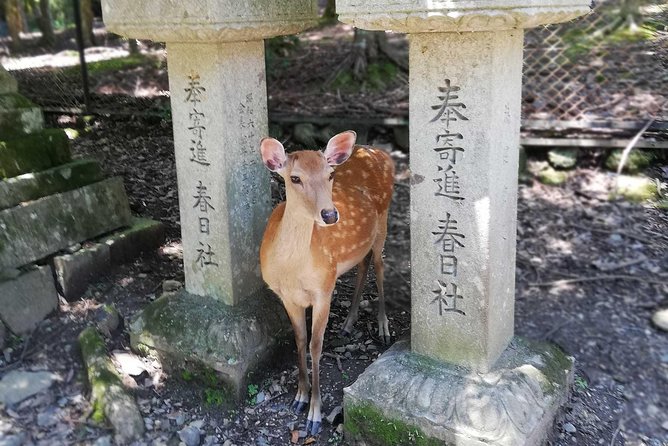
Deer make a grand first impression. This five-hour Nara walking tour brings together the city’s biggest sights, from Kofuku-ji’s five-story pagoda to the Great Buddha at Todaiji, then adds lunch, Naramachi streets, and time with the famous deer. I especially like the small maximum of eight people and the mix of headline temples with quieter local stops. The main catch is simple: you will walk for most of the day, and the pace may feel brisk in hot, humid weather.
The included lunch and temple admissions make the $105.45 price easier to justify, especially if you are visiting Nara for only one day. I also like that guides such as Shin, Yuki, Miyabi, Yuuki, Eri, and Nao have been praised for adjusting the pace, explaining customs clearly, taking photos, and helping families or vegetarians. Food allergies and gluten-free diets need careful planning, however, since special meals cannot be guaranteed.
In This Review
- Key points to know before booking
- Why this tour works for a first visit to Nara
- Kofuku-ji and the five-story pagoda
- Todaiji and the Great Buddha
- A traditional lunch in an old Nara restaurant
- Kasuga Taisha and the forest edge
- Nara Park and the famously polite deer
- Naramachi and the old merchant houses
- What the five-hour schedule feels like
- Is $105.45 a fair price?
- Who should book this Nara walk?
- Should you book it?
- FAQ
- How long does the Nara walking tour last?
- What is the tour price?
- What sights are included?
- Are admission tickets included?
- Is lunch included?
- Can the tour accommodate dietary requests?
- How large is the group?
- Where does the tour start and finish?
- What happens if the weather is poor?
Key points to know before booking
- A compact five-hour route: You see Nara’s main religious sights without giving up a full day in the city.
- The Great Buddha is the centerpiece: Entry to Todaiji and its main hall is included, along with Kasuga Taisha.
- Lunch is part of the cultural experience: The meal takes place at a traditional Japanese restaurant in an old town setting.
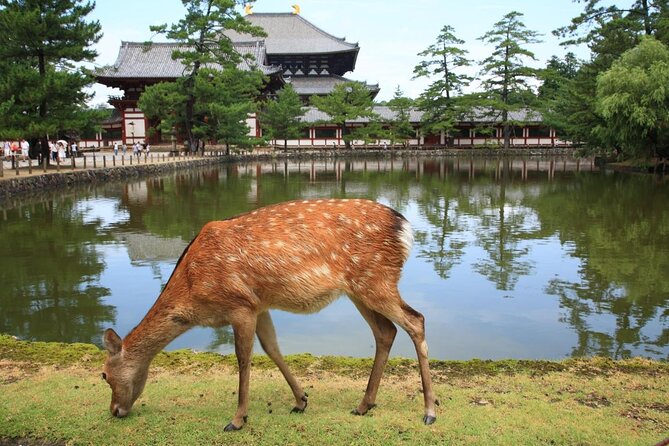
- The deer need respectful handling: Your guide explains how to feed them and avoid being crowded by eager animals.
- Naramachi adds a different side of Nara: Old merchant houses and traditional streets balance the grand temples.
- Small-group attention matters: With no more than eight people, it is easier to ask questions and adjust the walk.
Why this tour works for a first visit to Nara
Nara can look easy on a map. The temples sit near one another, the deer roam freely, and the main park paths are simple to follow. Yet the meaning of the shrines, temple customs, old neighborhoods, and religious symbols is much harder to grasp on your own.
This tour gives you a useful framework in five hours. You visit Kofuku-ji, Todaiji, Kasuga Taisha, Nara Park, and Naramachi. That is a strong first look at Nara’s sacred center and historic town streets, with lunch placed in the middle so the day is not just one long march between monuments.
I like the balance. Todaiji delivers scale and spectacle. Kasuga Taisha offers a more atmospheric Shinto setting, with lanterns and forest. Naramachi gives you a feel for ordinary town life, old homes, shops, and craft traditions. The deer are the comic relief, though they can be pushy when food appears.
The group size is another real advantage. The maximum is eight people, but some departures may be smaller. Several guide experiences have ended up with only two participants, creating a more personal outing. That small scale also helps when someone needs a slower pace, extra time for photographs, or a clearer explanation of a custom.
The tour begins at the Statue of Gyoki-bosatsu at 27 Higashimuki Nakamachi. It returns to the same meeting point, which makes the end of the day easy to plan. The starting area is near public transportation, though you should allow time to identify the statue before the scheduled start.
More Walking Tours in Nara:
- Nara Highlight Walking Tour with Furoshiki Experience with Lunch
★ 5.0 · 73 reviews - Nara: Private Walking Tour with a Local
★ 4.3 · 36 reviews - Kyoto Geisha Walking Tour: Gion District & Hidden Gems
★ 4.7 · 3,273 reviews
Kofuku-ji and the five-story pagoda
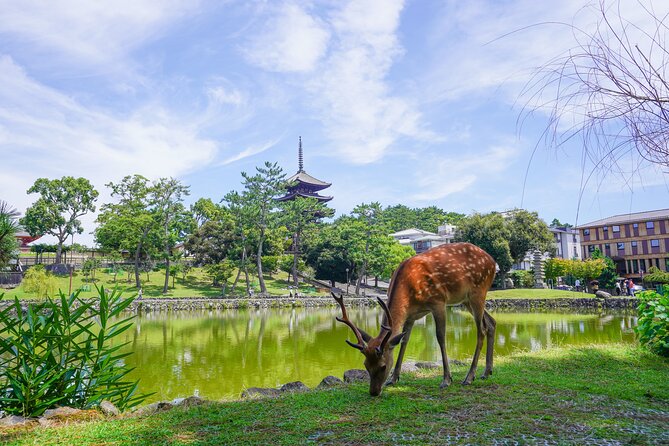
The first stop is Kofuku-ji’s famous five-story pagoda. Built by the Fujiwara clan in 730, the pagoda is one of Nara’s most recognizable sights and a quick way to begin placing the city in its long religious and political story.
You have about 15 minutes here, and admission is free. That short stop works well for photographs and an opening explanation, but it does not leave much room for a slow look at every part of the temple grounds. If Kofuku-ji is a personal priority, you may want to return later on your own.
The pagoda also sets up an important contrast. Nara is not just a deer park with a few old buildings. Its major monuments were tied to powerful clans, Buddhist institutions, and the development of Japan’s early capital. A good guide can make that connection clear without turning the walk into a lecture.
Todaiji and the Great Buddha
Todaiji is the tour’s biggest visual moment. You enter through Nandaimon, the Great South Gate, where two imposing Kongorikishi guardian statues greet you. These figures are meant to protect the temple, and their muscular poses give the entrance a forceful, almost theatrical quality.
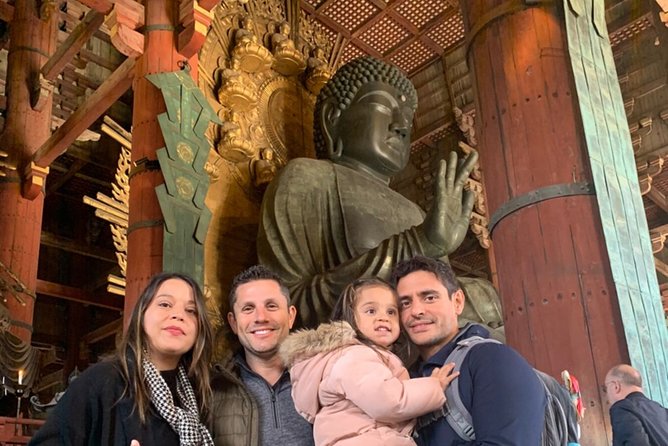
Inside the main hall, the Great Buddha dominates the visit. The scale is difficult to appreciate from photographs, so this is one place where entry adds real value. Admission is included, and the planned visit lasts about 30 minutes.
Thirty minutes is enough for a guided introduction and photographs, but the temple can be crowded. One useful benefit of going with a guide is help with orientation and movement through a busy complex. Shin was praised for helping his group reach temples smoothly even when crowds were heavy.
You will also receive context about religious customs, including how to make wishes and behave at sacred sites. Guides have explained bowing, prayer, and shrine etiquette in a way that connects the gestures to everyday Japanese culture. That kind of explanation can make a short visit feel far more meaningful.
The only limitation is timing. Todaiji is large and important enough to fill several hours by itself. If you want a quiet, unhurried visit, plan to return after the tour.
A traditional lunch in an old Nara restaurant
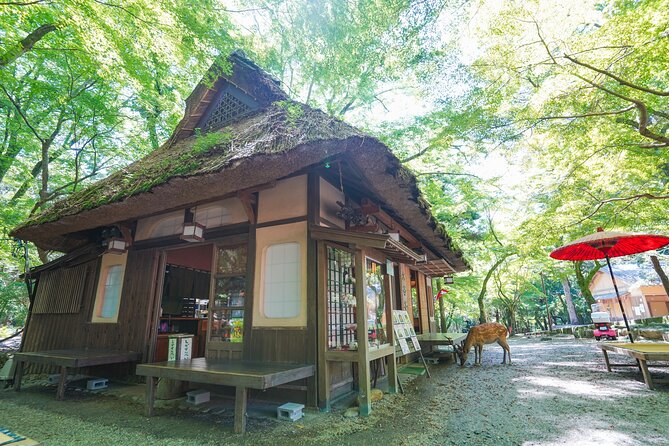
Lunch takes about 45 minutes at a traditional Japanese restaurant at 107 Zoshicho. The setting is part of the appeal. Rather than eating quickly beside a station, you are brought to a well-established restaurant in an older town area.
The meal has received especially strong praise. Guests have described it as filling, tasty, and full of local dishes. One guide arranged a generous spread, and another meal included a vegan teishoku that became a highlight of the day. Vegetarian needs have also been accommodated on some departures, but you should request this by the day before.
Do not assume every dietary request can be handled. Gluten-free meals are not available, and allergy-free preparation cannot be guaranteed because the food is made in kitchens outside the tour company. Substitutions may not be possible at every stop, though the company says it will try to compensate at other stops.
You do not need to pay for the guide’s meal or drinks. Bring cash for extra snacks and beverages. It is also wise to arrive with water, especially in summer, when Nara can become intensely hot and humid.
More Day Trips in Nara:
- Osaka: Nara and Uji Day Trip with Deer Park and Hot Spring
★ 4.4 · 302 reviews - Mt. Fuji Instagram-Worthy Spots Day Tour: Ladder Town, Oshino Hakkai, Lake Kawaguchi, Lawson Convenience Store (Departing from Tokyo Station or Shinjuku Station)
★ 4.8 · 35,467 reviews - 【Mount Fuji Magnificent Scenery Exploration Day Tour】Arakurayama Sengen Park & Kawaguchiko Oishi Park & Oshino Hakkai & INS Famous Lawson & Hikawa Clock Shop (Departing from Tokyo)
★ 4.9 · 12,075 reviews - [Kyoto & Nara Day Tour] Sagano Scenic Railway & Nara Park & Fushimi Inari Taisha Thousand Torii Gates & Togetsukyo Bridge & Bamboo Grove & Kimono Forest (Departing from Osaka)
★ 4.9 · 10,942 reviews
Kasuga Taisha and the forest edge
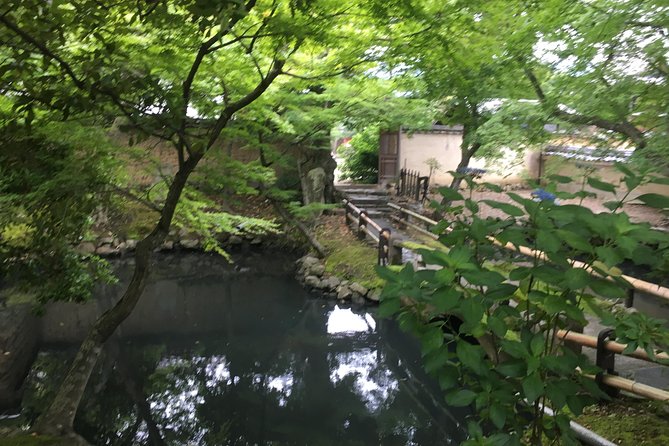
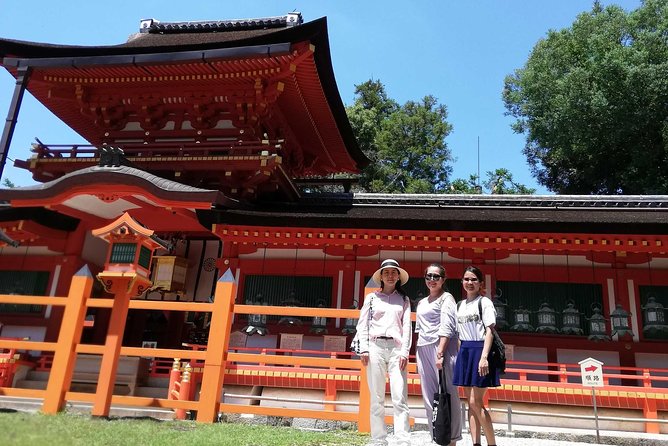
Kasuga Taisha brings a different mood from Todaiji. This is a major Shinto shrine, known for its red buildings and hundreds of lanterns. The approach and surrounding forest give the stop a quieter, more enclosed feeling, even when the wider park is busy.
The planned visit lasts about 30 minutes and admission is included. You may explore parts of Kasugayama Primeval Forest and the shrine area, though the short schedule means this is an introduction rather than a full forest walk.
This is where a guide’s explanation is particularly useful. Shinto shrines have their own customs, and small actions such as bowing, washing, and making a wish can feel mysterious if you have not seen them before. Guides including Eri and Miyabi have been praised for explaining Japanese religious traditions in clear, friendly terms.
The lanterns are a visual highlight, but do not expect a long, slow photographic session. You are moving through several major places in one morning or afternoon. I would treat this stop as a chance to understand the shrine and enjoy its setting, not as a complete exploration of the forest.
Nara Park and the famously polite deer
Nara Park is the tour’s most playful stop. The deer are wild animals, not a petting zoo, and they have learned that people often carry special crackers. Some will bow for food. Others will crowd you, tug at clothing, or follow you with surprising determination.
About 30 minutes is set aside for the park. Your guide can show you how to feed the deer without encouraging a whole herd to surround you. This advice matters, especially for children and anyone carrying food. Eri was praised for finding younger, gentler deer near the forest, and one group even saw a fawn.
The deer are not the only reason to pay attention here. The park connects the temples and shrines, and walking through it helps you understand how closely nature and sacred places are linked in Nara. You will also see red shrine buildings and lanterns that make attractive photographs.
Families tend to get a lot from this section. Children have room to enjoy the animals, while adults can focus on temple views and local customs. Keep your hands clear once the crackers are gone. The deer know when the supply has ended.
Naramachi and the old merchant houses
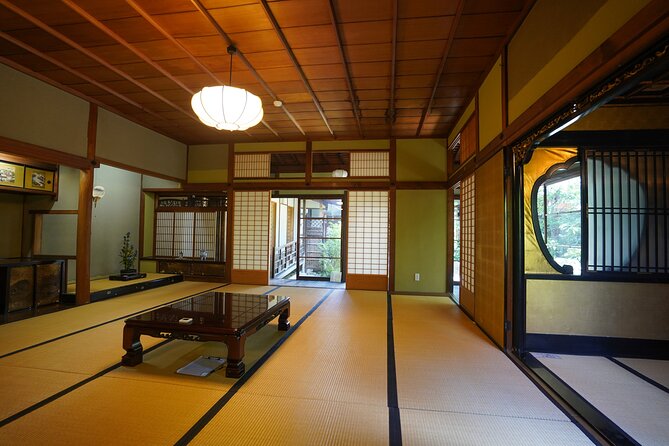
Naramachi changes the subject from grand religious buildings to daily life. This historic district has older wooden buildings and a street pattern quite unlike modern Tokyo. The tour takes about 35 minutes here and includes entry to Naramachi Nigiwai no Ie, an old merchant’s house.
That house gives you a look at how commerce and home life once shared the same building. The stop is valuable because it adds human scale to a day filled with enormous temples and formal shrines. You are not only looking at monuments. You are seeing the kind of neighborhood where people lived, worked, stored goods, and welcomed customers.
The route may also include smaller sights, traditional shops, artisan goods, Nara sweets, and mochi recommendations. One guide pointed out knives and persimmon cakes, while another suggested a favorite kakigori shop after the tour. These small suggestions can be useful if you have free time afterward.
Some groups have also enjoyed a sake tasting or received help finding a furoshiki, the traditional Japanese wrapping cloth. These extras appear to depend on the guide and the day, so do not treat them as guaranteed parts of the route. Still, they show why a small group can be more rewarding than a fixed bus circuit.
What the five-hour schedule feels like
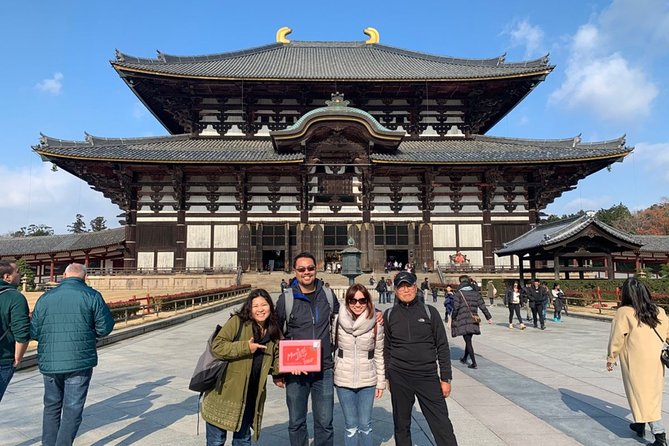
The listed sightseeing stops total roughly three hours, leaving about two hours for walking, explanations, transitions, and lunch. That is a sensible structure for a half-day introduction, but you should not expect long breaks at every monument.
The route includes several short pauses, and most people can participate. Still, you should be comfortable walking for much of five hours. Let the company know in advance if anyone in your party has health concerns or needs a gentler pace. Mari has adjusted routes for mobility and energy levels, and other guides have allowed time for photographs.
Weather will affect the experience. Summer can reach 40°C, with high humidity, while winter temperatures can fall to about -5°C. Wear a hat, carry water, and choose shoes you can walk in comfortably. Rain may lead to a different date or a full refund if the outing is canceled, but light rain can still make the day pleasant if you dress properly.
The tour is listed as suitable for all ages. Families have enjoyed it, especially because the deer break up the temple visits. For older adults, young children, or anyone who dislikes long walks, the five-hour length deserves careful thought.
Is $105.45 a fair price?
At $105.45 per person, this is not the cheapest way to see Nara. You can visit several outdoor areas independently for little money, and some temple grounds are free. The price makes more sense when you add the guide, included admissions, a full lunch, route planning, and the chance to cover several major sites in one organized outing.
I see the strongest value in three things. First, you avoid spending time figuring out the order of the sights. Second, you get explanations at places where a quick look would otherwise tell you very little. Third, lunch is not an afterthought. It is part of the local setting and has been one of the most praised portions of the day.
The value is highest for first-time visitors, families, and people staying in Kyoto or Osaka with only one day for Nara. It is less compelling if you prefer to wander slowly, linger inside temples, or choose every meal yourself.
The 4.9 rating from 937 reviews and 99 percent recommendation rate suggest strong consistency, particularly in guide quality. Still, individual guides shape the tone of the day. Names such as Shin, Yuki, Yuuki, Miyabi, Nao, Eri, Mari, Hide, and Yusuke appear in particularly warm feedback, with repeated praise for clear explanations, patience, humor, photography, and local suggestions.
Who should book this Nara walk?
I would choose this tour if you want a well-rounded first look at Nara without spending a full day planning. It suits families, couples, small friend groups, and solo visitors who would enjoy company and cultural explanation.
It is also a good fit if you want more than the deer. The itinerary gives you the Great Buddha, a major Shinto shrine, a historic pagoda, an old merchant house, lunch, and time in the park. That range helps you see Nara as a living town, not just a collection of famous photographs.
I would hesitate if you need gluten-free food, have serious allergies, or strongly dislike walking in heat. I would also skip it if you have already seen all the main sights and want a slow, specialized visit to one temple or shrine.
The free cancellation policy allows a full refund when you cancel at least 24 hours before the start time. Changes made inside that window are not accepted, so check the weather and your wider Japan schedule early.
Should you book it?
Book this tour if you want efficient sightseeing with real local color. The strongest reasons are the small group, included lunch, temple admissions, and guides who explain customs rather than simply pointing at buildings.
The tour will not give you hours inside each monument, and the food policy requires care. But for a first Nara visit, it offers a smart five-hour route with the Great Buddha, lantern-lit Kasuga Taisha, old Naramachi, and deer that may bow before demanding another cracker. That is a lot of Nara in one manageable day.
FAQ
How long does the Nara walking tour last?
The tour lasts approximately five hours, including sightseeing, walking, explanations, and lunch.
What is the tour price?
The listed price is $105.45 per person. Group discounts may be available.
What sights are included?
The route includes Kofuku-ji Temple, Todaiji Temple, a traditional lunch stop, Kasuga Grand Shrine, Nara Park, and Naramachi.
Are admission tickets included?
Admission to Todaiji, Kasuga Grand Shrine, and the included Naramachi merchant house visit is included. Kofuku-ji and Nara Park are listed as free stops.
Is lunch included?
Yes. Lunch at a traditional Japanese restaurant is included.
Can the tour accommodate dietary requests?
Requests must be made by the day before the tour. Vegetarian and some vegan meals have been provided, but gluten-free meals are unavailable, and allergy-free preparation or substitutions cannot be guaranteed.
How large is the group?
The maximum group size is eight people. A private option is also available.
Where does the tour start and finish?
It starts at the Statue of Gyoki-bosatsu at 27 Higashimuki Nakamachi in Nara. The tour ends back at the same meeting point.
What happens if the weather is poor?
The tour requires good weather. If it is canceled because of poor weather, you will be offered another date or a full refund.
Just added in Nara
- Hammer a Pattern on Your Ring Workshop★ 5.0 · 57 reviews
- All must-sees in 3 hours – Nara Park Classic Tour! From JR Nara!★ 5.0 · 108 reviews
- Nara Private Tour: Flexible Pickup from Kyoto, Osaka, or Nara★ 5.0 · 17 reviews
- Private Nara Tour and Sake Tasting (Departing from Kyoto/Nara)★ 5.0 · 40 reviews
- Nara Highlight Walking Tour with Furoshiki Experience with Lunch★ 5.0 · 73 reviews
- Nara Sake Tasting Tour at Local Brewerie(tasting fee included)★ 5.0 · 12 reviews
- Nara World Heritage PRIVATE TOUR★ 4.5 · 15 reviews
- Nara – Highlights Bike Tour★ 4.5 · 89 reviews
Day Trips, compared.

![[Kyoto & Nara Day Tour] Sagano Scenic Railway & Nara Park & Fushimi Inari Taisha Thousand Torii Gates & Togetsukyo Bridge & Bamboo Grove & Kimono Forest (Departing from Osaka)](https://media.japanvisits.com/wp-content/uploads/kyoto-nara-day-tour-sagano-scenic-railway-nara-park-fushimi-inari-taisha-thousand-torii-gates-togetsukyo-bridge-bamboo-grove-kimono-forest-departing-from-osaka-k110001-400x257.jpg)
Kyoto Amanohashidate & Ine Funaya & Ine Bay Scenic Day Trip (Departing from Osaka or Kyoto)
Read our review →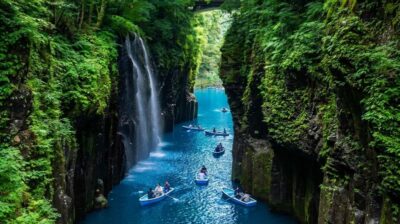
Kyushu: Mount Aso, Kusasenri & Takachiho Gorge Day Tour (Optional Takachiho Boat Ride Experience)
Read our review →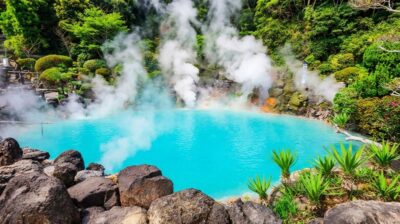
Kyushu One-Day Tour: Yufuin no Mori Train & Yufuin Town & Nyoirin-ji Temple & Dazaifu & Hell Hot Springs (Departing from Fukuoka)
Read our review →
Browse the lists this tour appears in