
Reviewed · NARA TOURS
Kyoto/Osaka: Kinkakuji, Bamboo Forest, and Nara Deer Park
Three famous sights, one busy day. This Kyoto and Nara day trip brings together the Sagano Bamboo Forest, Kinkakuji, Nara Park, and Todaiji Temple without making you puzzle out several train lines and local buses. I especially like the comfortable air-conditioned coach and the chance to see both ancient capitals in one outing.
I also like the guides’ practical help. Guides such as Eiko, Yuki, Jewel, Maki, and Hama earned praise for clear directions, local stories, photographs, and careful timekeeping. The main drawback is simple: the schedule is tight, and you will not have the freedom to linger at every temple, path, or deer enclosure.
In This Review
- Key points to know before booking
- What this day trip is really designed to do
- Starting from Kyoto or Osaka
- Arashiyama bamboo forest and the Katsura River
- The optional Kyoto lunch
- Kinkakuji, the Golden Pavilion
- Nara Park and the bowing deer
- Todaiji and the Great Buddha
- Guides, transport, and the value of a group tour
- Is $69 a good price?
- Who should book this experience?
- Final booking advice for Kyoto and Nara
- FAQ
- Where does the Kyoto departure meet?
- Where does the Osaka departure meet?
- Is hotel pickup included?
- Is lunch included?
- Are temple entrance tickets included?
- Can I feed the Nara deer?
- What should I bring?
Key points to know before booking
- Arashiyama comes first, with the famous bamboo grove, Katsura River, and Togetsukyo Bridge nearby.
- Kinkakuji’s gold-leaf pavilion is viewed from an elegant garden beside a mirror-like pond.
- Nara Park has about 1,200 wild deer, and you can feed them only with approved shika-senbei crackers.
- Todaiji houses Japan’s enormous Great Buddha, one of the country’s three great Buddha statues.
- Lunch and entrance tickets depend on the option you select, so check the booking choice carefully.
- The $69 price is strong value if you want transport, a guide, and several admissions arranged in one day.
What this day trip is really designed to do
This is a sightseeing sweep, not a slow cultural walk. In a single day, you move from Kyoto’s wooded western edge to one of Japan’s most recognizable temples, then continue south to Nara’s deer park and massive Buddhist temple.
That makes the outing especially useful if your time in the Kansai region is short. You see four major sights that are awkward to combine on your own, particularly if you are still getting used to Japanese rail stations and bus routes.
The tradeoff is time. You will have free periods at each stop, but the group must leave on schedule. One visitor felt rushed at nearly every location, while another found the timing quite manageable. Your experience will depend on traffic, crowd levels, weather, and how long you want to spend taking pictures.
The overall rating is 4.4 out of 5 from 265 ratings, which fits the experience well. The strongest part is the organization and the guides. The weakest parts are the packed timetable and inconsistent lunch quality.
A few more options to weigh up in Nara
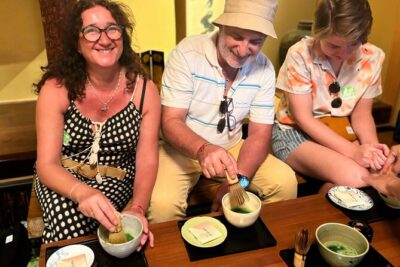
- World Heritage Kyoto & Nara Uji Authentic Matcha Experience
★ 5.0 · 1,573 reviews - Nara Half Day Trip Walking Tour (Private Option Available)
★ 5.0 · 937 reviews - Nara Early Morning Tour (Kyoto or Osaka Departure Available)
★ 5.0 · 676 reviews
Starting from Kyoto or Osaka
The Kyoto departure meets at the Tourist Bus Parking area at Kyoto Station’s Hachijo Exit at 9:05 in the morning. The Osaka departure meets at the first floor of the OCAT Building in Namba at 8:50.
Neither departure includes hotel pickup, so you need to reach the meeting point yourself. Give yourself extra time at Kyoto Station, especially if you are carrying luggage or have never used the Hachijo Exit before. One person had trouble identifying the group at the station, even though the meeting point itself was considered easy to find.
The Osaka start can be the better choice if you are staying in Osaka and want to avoid traveling north to Kyoto first. It also lets you settle into the day before the main sightseeing begins. The exact meeting point can vary with the selected option, so check your confirmation rather than relying only on a map pin.
The bus has air conditioning and Wi-Fi, and the ride gives the guide a chance to explain Japanese customs and the day’s plan. Several guides were praised for giving clear meeting instructions, which matters because a missed departure can be hard to fix.
The tour ends back at the original meeting point. It does not provide hotel drop-off.
Arashiyama bamboo forest and the Katsura River
Arashiyama is the most atmospheric stop of the day. The Sagano Bamboo Forest is a green corridor of tall bamboo, with slender trunks rising on both sides of the walking path. Listen for the dry rustle of the leaves, one of the few sounds that can cut through the chatter and camera clicks.
The grove became a popular nature-viewing site during the Heian Period, when Kyoto was Japan’s imperial capital. You do not need a lecture to enjoy it, but a good guide can explain why Arashiyama has long been linked with courtly leisure and seasonal beauty.
The important practical point is that the bamboo path can be very crowded. One person called it the favorite stop but also noted that the grove was packed. Expect to walk, stop for photographs, and keep moving with the group rather than finding a quiet private corner among the bamboo.
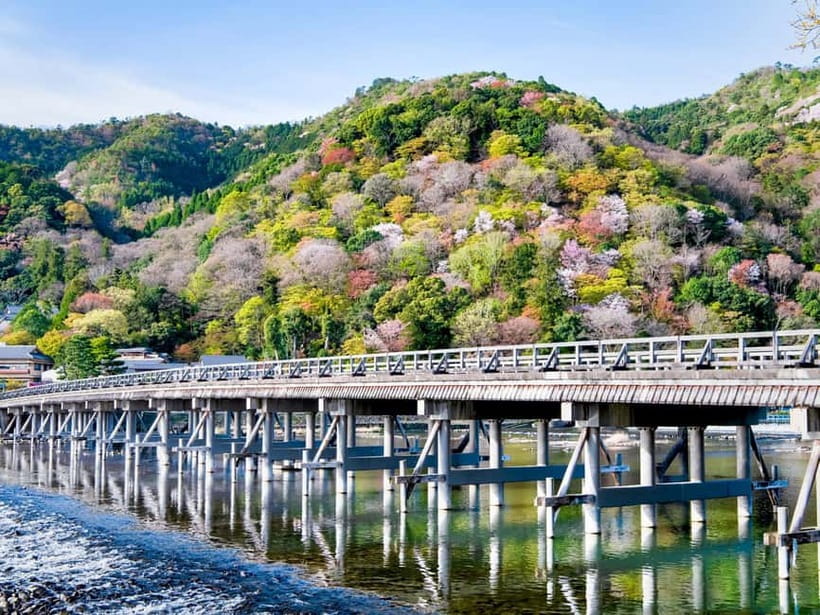
Arashiyama offers more than the grove. The nearby Katsura River and Togetsukyo Bridge, often translated as Moon Crossing Bridge, provide a broader view and a welcome change from the narrow bamboo path. If the weather is clear, the river area gives you room to breathe and take photographs.
The visit is a good introduction to Kyoto’s scenic side, but it is not a full exploration of Arashiyama. You will not have time to cover every temple, garden, shop, and riverside path in the district. If Arashiyama is your main reason for visiting Kyoto, stay in the area separately on another day.
The optional Kyoto lunch
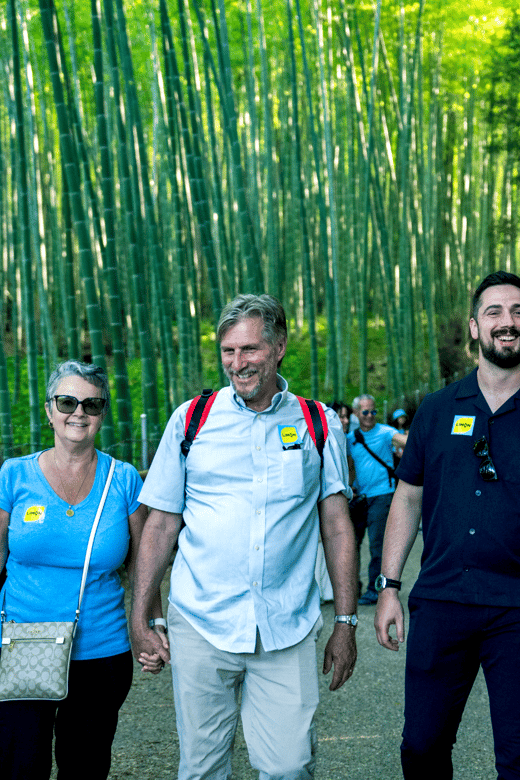
The tour can include a traditional Japanese lunch featuring seasonal Kyoto specialties. Other descriptions and comments refer to the meal as a buffet, with one person praising the wide selection and another calling it delicious.
The food is not a sure highlight for everyone. One person found the dining room cramped and the meal similar to school-cafeteria food, while others considered it good, filling, or excellent. That split is useful advice: choose lunch for convenience, not because it is the main culinary event of your Japan trip.
A buffet can save time on a tightly planned day. You will not need to search for a restaurant, wait for a table, or work out a menu while the group is watching the clock. If you prefer to choose your own meal or want a more personal dining experience, select the option without lunch if available.
Halal and vegan lunches are not offered. Vegetarian requests require direct contact with the activity provider at least three days before departure. That deadline is important, since a last-minute request may not be possible.
A completely different kind of day out:
- Osaka: Nara and Uji Day Trip with Deer Park and Hot Spring
★ 4.4 · 302 reviews - Nara 6hr Private Tour with Government-Licensed Guide
★ 5.0 · 219 reviews - E-Bike Nara Highlights – Todaiji, Knives, Deer, Shrine
★ 4.8 · 186 reviews - Nara Early Bird Tour (Kyoto Departure Option Available)
★ 4.9 · 142 reviews
Kinkakuji, the Golden Pavilion
Kinkakuji is the visual centerpiece of the Kyoto portion. The pavilion is covered in gold leaf and sits beside a reflective pond, where the building’s bright surface can double in the water when the light is right.
The image is famous for good reason, but the setting is more than a photo stop. After viewing the pavilion, you walk through a garden that retains its original design from the 14th century. The combination of architecture, water, rocks, and carefully placed trees gives the visit more depth than a quick look at the gold facade.
The gold surface can appear warm and soft under cloudy skies, then almost dazzling when sunlight reaches it. You cannot enter the pavilion, so the experience is about viewing it from the garden and understanding how the building fits into the surrounding design.
The admission ticket is included only with selected booking options. Check this before paying, because the advertised price may change depending on whether you add Kinkakuji admission, lunch, and the Todaiji ticket.
Kinkakuji can also be crowded, particularly around the main viewpoint. Your guide may offer context and point out details, but you should expect some time to move with the flow of people. One person felt there was barely enough time to stop for photographs, while another found the tour well timed.
My advice is to take your main photograph early, then put the camera away for a few minutes. The garden is where the visit becomes calmer and more rewarding.
Nara Park and the bowing deer
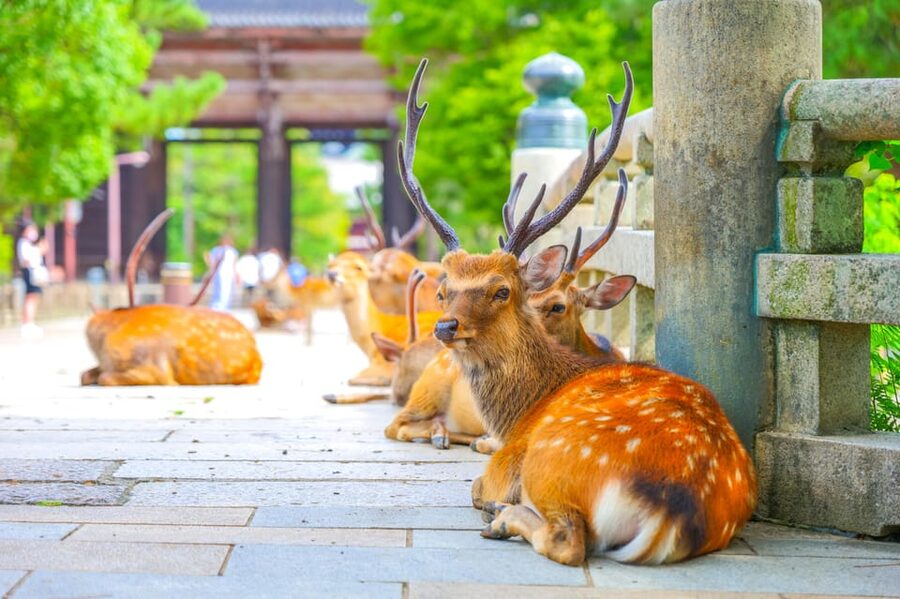
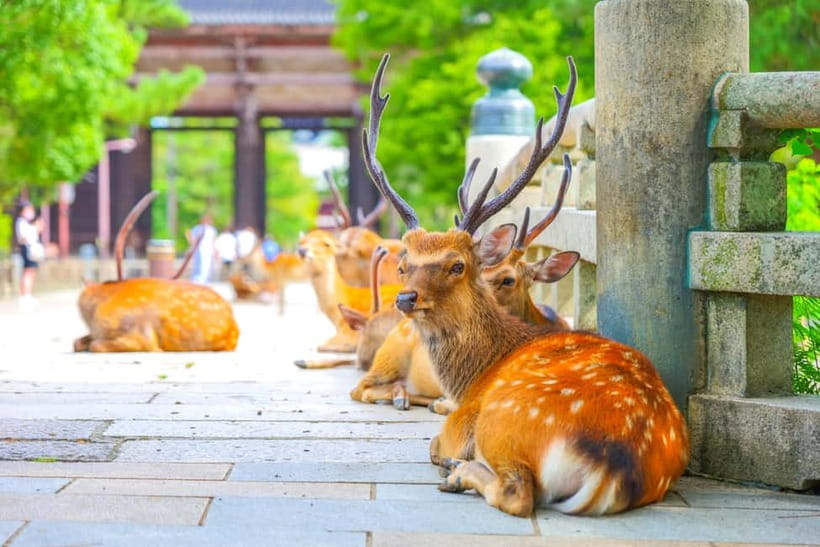
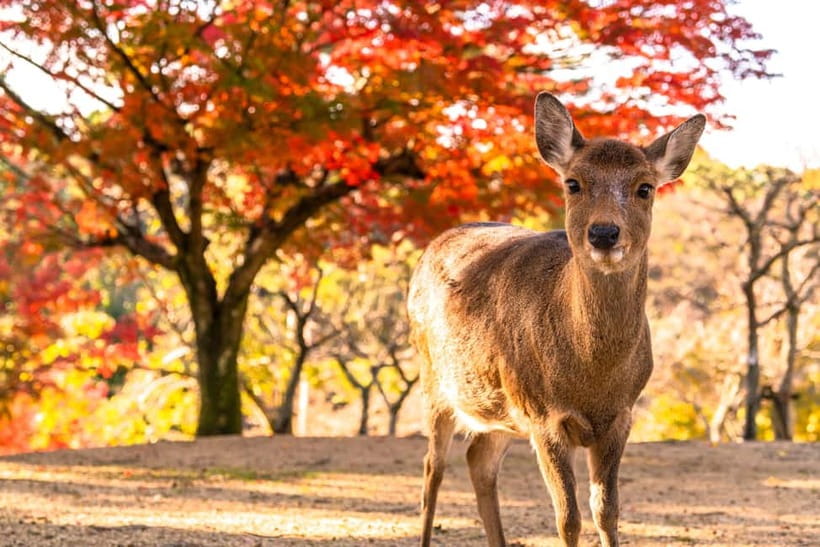
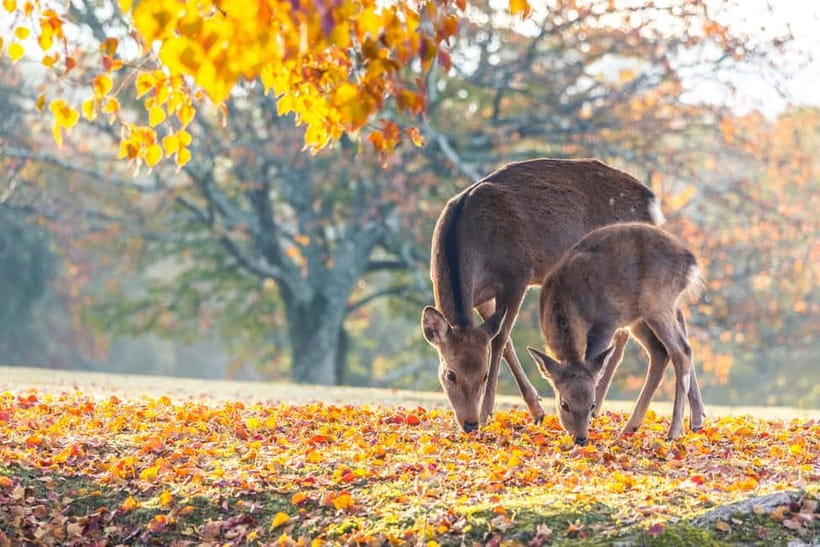
The day continues south to Nara, Japan’s first permanent capital and a place where the boundary between city park and wildlife habitat feels unusually loose. Nara Park is home to about 1,200 wild deer, which roam freely around paths, lawns, and temple grounds.
You can buy special shika-senbei crackers and feed the deer. These deer are famous for bowing, but do not expect every animal to perform on command. Some will bow repeatedly once they spot the crackers, while others may simply follow you with determined interest.
There is one firm rule: feed the deer nothing except shika-senbei. Do not offer them snacks, wrappers, or food from your own bag. Keep the crackers visible only while you are ready to feed, and follow the guide’s instructions around the animals.
The timing here matters. One person arrived late in the day and found that the deer crackers had sold out at nearby shops. Another guide, Eiko, managed to find crackers for the group even at around 4 in the afternoon. That is a nice example of why a helpful guide can add real value, but I would still try to buy the crackers as soon as you have the chance.
Nara Park is also a place to slow down mentally, even if the schedule does not allow a long stay. The deer give the visit a playful side, while the surrounding temples and old paths point to Nara’s role as an early center of Japanese Buddhism and government.
The park can be confusing, with many paths and large numbers of people. Pay close attention to the meeting instructions and keep track of the time.
Todaiji and the Great Buddha
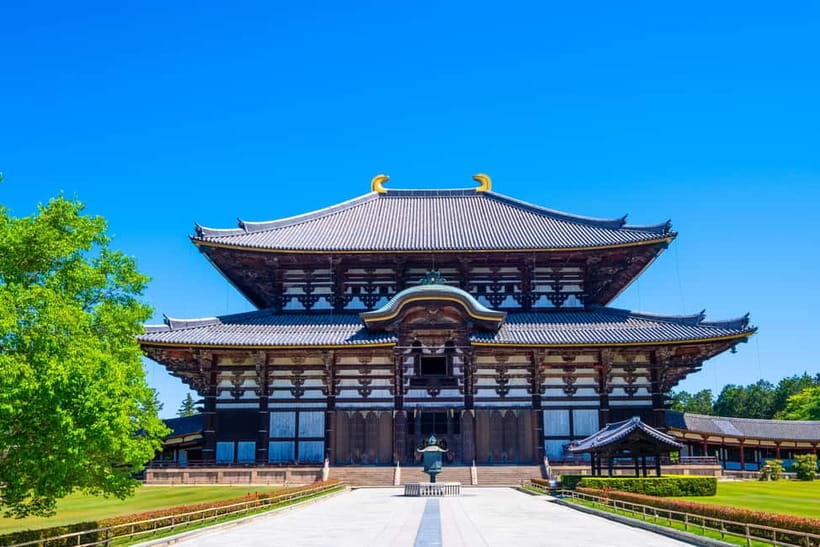
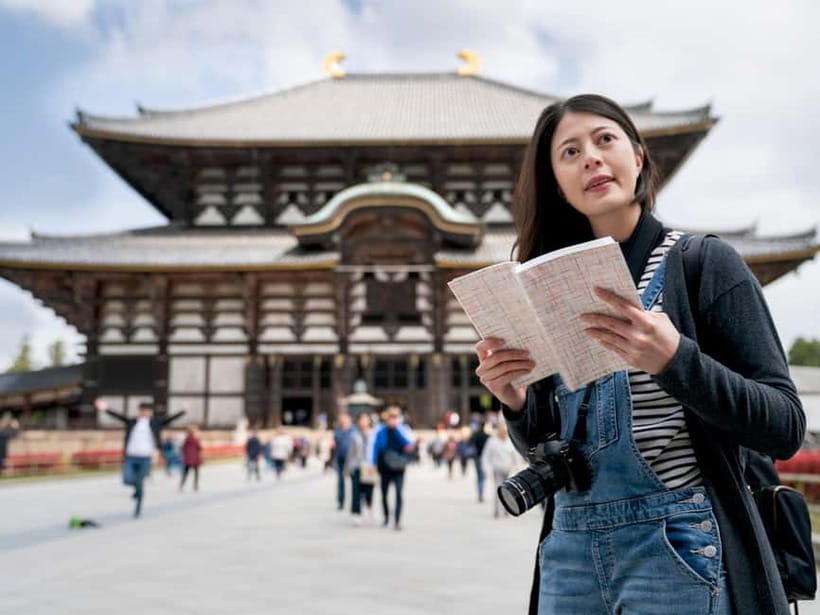
Inside Nara Park, Todaiji Temple provides the day’s most powerful interior sight. The temple is home to one of Japan’s three enormous Great Buddha statues, a scale that is difficult to grasp from photographs alone.
The statue is the reason many people remember Nara long after the deer and bamboo have blurred together. The hall, the Buddha, and the surrounding religious setting show the sheer ambition of early Japanese Buddhist architecture.
The Todaiji entrance ticket is included only with certain options, just like the Kinkakuji admission. If you want to enter the temple, confirm that both admission tickets are part of your selected package.
Time is the main limitation. You will have a short walk through the park and time to visit Todaiji, but this is not a full Nara temple tour. If you want to explore the wider park, see additional shrines, or spend a long time with the deer, an independent Nara day would give you more room.
The final stop also carries the greatest risk of confusion. One person and three companions missed the bus after getting lost among the crowds at Nara Park. Keep your guide’s meeting instructions in hand, note the bus location, and return early rather than trying to squeeze in one last photograph.
Guides, transport, and the value of a group tour

The guides are one of the strongest reasons to book this experience. Eiko was praised for local stories and for helping the group find deer crackers. Yuki, Jewel, Hama, Maki, Lydia, Satoshi, and others were described as friendly, clear, caring, funny, or well organized.
Some guides take photographs for solo visitors or couples. Others explain how to pray at a temple, teach a few Japanese words, or give a detailed plan for free time. The level of English may vary by guide, and one person found Eiko difficult to understand despite her efforts. Still, the general pattern is positive.
The air-conditioned coach is a major practical benefit. Kyoto and Nara are easy to visit independently, but moving between Arashiyama, Kinkakuji, and Nara in one day requires planning and transfers. Here, you can sit down between stops while the guide explains what you are seeing.
Wi-Fi is listed on the coach, though you should still bring water and use comfortable shoes. The walking is not presented as a strenuous hike, but the day includes temple grounds, park paths, and city walking. Comfortable footwear will make the final stop much more pleasant.
The group format also keeps you moving. You may be able to break away briefly during free time, but you must return to the assigned meeting point. This suits you if you value convenience more than complete independence.
Is $69 a good price?
At $69 per person, the tour can offer good value, particularly when your selected package includes lunch, Kinkakuji admission, and Todaiji admission. You are also paying for the coach, an English-speaking guide, and the time saved by avoiding public transport connections.
The price is less attractive if you want to spend a full morning in Arashiyama or a relaxed afternoon in Nara. An independent visit can give you more control over meals, temple choices, and departure times, although you will handle every train, bus, ticket, and transfer yourself.
I would compare the exact package contents before booking. Lunch and both temple admissions may be optional, so two people looking at the same starting price could receive different inclusions.
The strongest value comes from using the tour as a first look at western Japan. You see the essentials, learn enough to return on your own, and avoid wasting a day on navigation.
Who should book this experience?
I recommend it for a first visit to Kyoto and Nara, especially if you are based in Osaka or have only one free day. It also suits families and small groups who prefer a fixed plan, air conditioning, and an English-speaking guide.
It is a good match if your priority is seeing major sights rather than spending hours in one garden. The schedule is efficient, and many guides add useful cultural details without turning the day into a lecture.
I would think twice if you dislike group travel, take long photography breaks, or want to explore lesser-known corners of Arashiyama and Nara. The stops are beautiful, but the day is built around coverage, not solitude.
Children aged two and under are free, but they do not receive a seat or meal and must sit on an adult’s lap. Only foldable strollers are allowed, and they will be stored beneath the bus with luggage. Pets, oversized luggage, and smoking in the vehicle are not allowed.
Final booking advice for Kyoto and Nara
Book this day trip if you want a practical introduction to four major sights and prefer someone else to manage the transport. The guides are the tour’s best feature, and the coach makes an ambitious route feel workable.
Choose the Kyoto or Osaka departure based on where you are staying, and confirm the meeting point, lunch choice, and admission tickets before you pay. Wear comfortable shoes, carry water, buy deer crackers early, and treat the final meeting time as non-negotiable.
If you want quiet bamboo paths, leisurely temple visits, and a long meal, plan Kyoto and Nara separately. If you want a well-organized sweep of western Japan at a reasonable starting price, this is a sound choice.
FAQ
Where does the Kyoto departure meet?
The Kyoto departure meets at the Kyoto Station Hachijo Exit Tourist Bus Parking area at 9:05 in the morning.
Where does the Osaka departure meet?
The Osaka departure meets at the first floor of the OCAT Building in Namba at 8:50 in the morning.
Is hotel pickup included?
No. Hotel pickup and drop-off are not included. The activity begins and ends at the assigned meeting point.
Is lunch included?
Lunch is included only if you select the lunch option. Halal and vegan lunches are not available. Vegetarian requests must be sent to the activity provider at least three days before the tour.
Are temple entrance tickets included?
Kinkakuji and Todaiji entrance tickets are included only with the options that list them. Check your selected package before booking.
Can I feed the Nara deer?
Yes. You can feed them special shika-senbei crackers. Do not feed the deer anything else.
What should I bring?
Bring comfortable shoes and water. Only foldable strollers are allowed, and pets, oversized luggage, and smoking in the vehicle are not permitted.
Just added in Nara
- Hammer a Pattern on Your Ring Workshop★ 5.0 · 57 reviews
- All must-sees in 3 hours – Nara Park Classic Tour! From JR Nara!★ 5.0 · 108 reviews
- Nara Private Tour: Flexible Pickup from Kyoto, Osaka, or Nara★ 5.0 · 17 reviews
- Private Nara Tour and Sake Tasting (Departing from Kyoto/Nara)★ 5.0 · 40 reviews
- Nara Highlight Walking Tour with Furoshiki Experience with Lunch★ 5.0 · 73 reviews
- Nara Sake Tasting Tour at Local Brewerie(tasting fee included)★ 5.0 · 12 reviews
- Nara World Heritage PRIVATE TOUR★ 4.5 · 15 reviews
- Nara – Highlights Bike Tour★ 4.5 · 89 reviews
Nara Tours, compared.
World Heritage Kyoto & Nara Uji Authentic Matcha Experience
Read our review →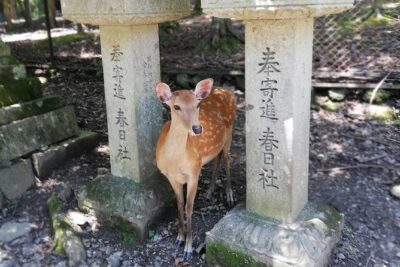
Nara Half Day Trip Walking Tour (Private Option Available)
Read our review →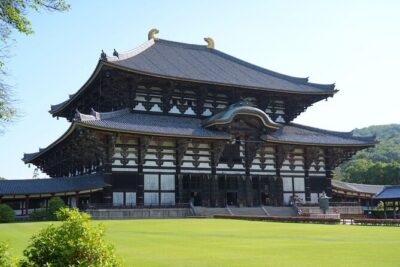
Nara Early Morning Tour (Kyoto or Osaka Departure Available)
Read our review →
Nara and Uji Day Trip with Deer Park and Hot Spring
Read our review →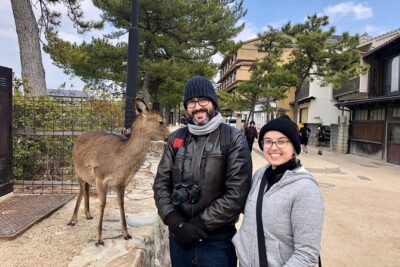
Nara 6hr Private Tour with Government-Licensed Guide
Read our review →
E-Bike Nara Highlights – Todaiji, Knives, Deer, Shrine
Read our review →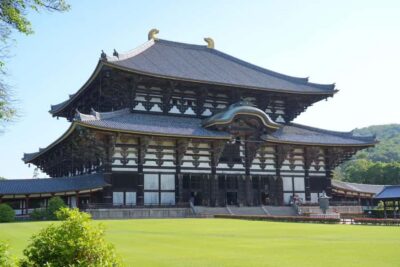
Nara Early Bird Tour (Kyoto Departure Option Available)
Read our review →
Nara:Authentic Tea Ceremony(Max 5 ppl) -Master Matcha Making
Read our review →Browse the lists this tour appears in