
Reviewed · NARA TOURS
Nara 6hr Private Tour with Government-Licensed Guide
Nara rewards a slower, curious walk. This six-hour private tour lets you shape the day around three or four chosen sights, rather than follow a fixed parade of monuments. I like the personal attention and the chance to ask direct questions about Buddhism, Shinto, Japanese history, food, and daily life. I also like that several guides, including Junichi, Ken, Rie, Toshi, and Yoshii, have earned praise for clear English and flexible planning. The main catch is simple: this is a serious walking day, and entrance fees, meals, and local transport are extra.
You meet your licensed English-speaking guide at Nara Station and travel on foot within the designated area. The price is $155.86 per person, which makes the most sense for families or small groups who want context and an adaptable route. It is less appealing if you prefer to wander alone, dislike changing buses and trains, or want to spend a long time inside each temple.
In This Review
- Key points to know before booking
- Why a private guide helps in ancient Nara
- Start with Todai-ji and Nara Park
- Kasuga Taisha brings Shinto into the story
- Choose Wakakusayama only if you want the climb
- Horyu-ji offers Japan’s oldest Buddhist architecture
- Naramachi slows the pace with old merchant streets
- Kofuku-ji and the Fujiwara connection
- The quieter temples: Yakushi-ji and Shin-Yakushi-ji
- Nara National Museum adds art and shelter
- Nara Palace Site and the two special gardens
- How the six hours really work
- Price, group value, and who should book
- Final call: a strong choice for the right walking style
- FAQ
- Where does the tour begin?
- How long does the tour last?
- Is this a private tour?
- How many sights can I choose?
- Is transportation included?
- Are temple and museum admission fees included?
- Is lunch included?
- Is Nara Park free to enter?
- Can most people participate?
- Can I cancel for a refund?
Key points to know before booking
- Choose three or four sights: The prepared list covers major temples, shrines, gardens, museums, old streets, and former palace grounds.
- Expect six hours on foot: Nara Park is spacious, and routes can include stairs, hills, and long walks between stops.
- Todai-ji is the essential stop: Its Great Buddha and enormous wooden temple are the day’s biggest historical payoff.
- Guides add cultural context: Strong guides explain how Shinto and Buddhism developed side by side in Japan.
- Transport and admission cost extra: The tour has no private vehicle, and entry fees are not generally included.
- Private means private: Only your own group participates, so the pace and interests can be adjusted.
Why a private guide helps in ancient Nara
Nara is easy to reach and easy to underestimate. The famous deer are hard to miss, but the meaning of the temples, shrine rituals, gardens, and old streets is less obvious without some explanation. A good guide turns separate sights into a connected story about Japan’s early capital.
The private format is the strongest feature. You can ask why a shrine uses certain symbols, how Buddhism arrived in Japan, or why Nara’s old buildings survived. You can also tell your guide when your children need a break, when you want more architecture, or when you would rather stop for noodles than hurry toward another gate.
Junichi receives especially warm praise for shaping the day around each group’s interests. He has taken families toward mochi shops, a katana collection, sake tasting, a knife shop, and a small noodle restaurant. Ken has helped guests plan trains, buses, and walking connections, and has used handouts to explain where Nara fits into Japanese and Asian history.
That level of help matters if this is your first day in Japan. It can also help if you have already seen Kyoto and want a clearer understanding of what came before it.
More Private Tours in Nara:
- Nara: Private Tour with Private Guide
★ 4.8 · 66 reviews - Nara: Private Walking Tour with a Local
★ 4.3 · 36 reviews - Nara: Essential Private Tour with Deer Park and Temples
★ 5.0 · 24 reviews
Start with Todai-ji and Nara Park
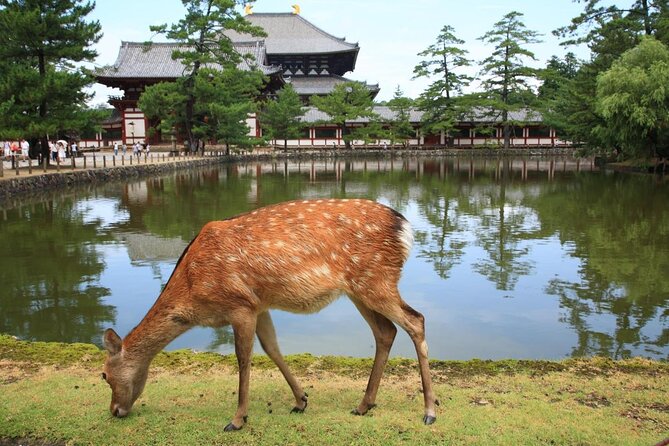
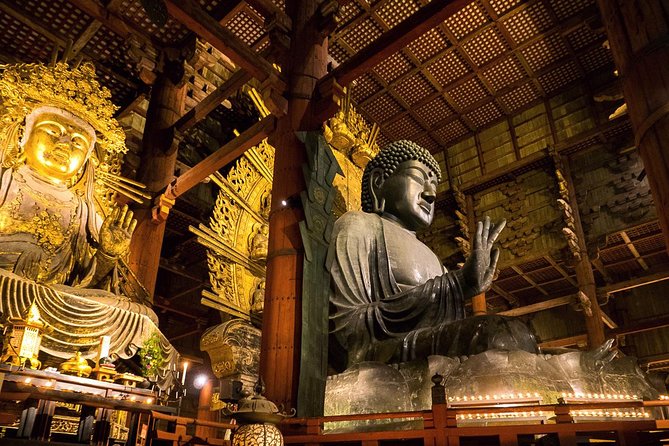
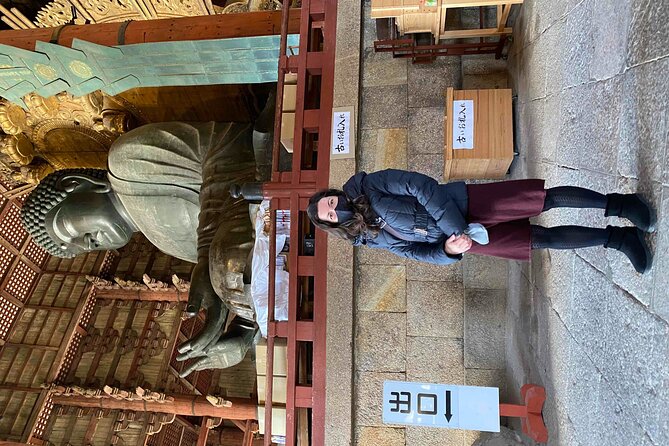
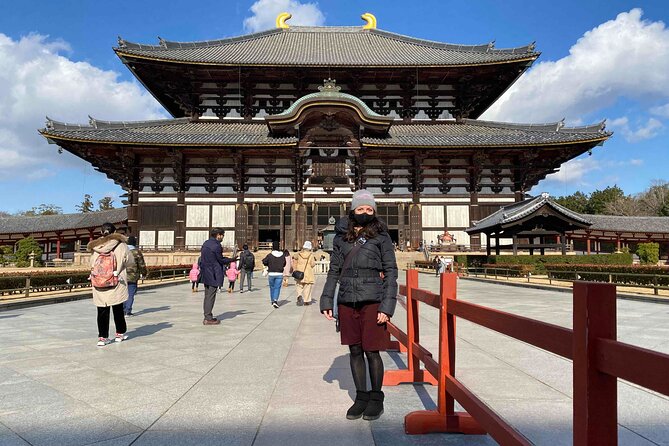
Todai-ji is the natural anchor for the day. Founded in 752, it was once the head temple of Japan’s provincial Buddhist network. The main hall houses the Great Buddha, an immense image of Vairocana Buddha that gives the visit a sense of scale you cannot get from photographs.
The supplied schedule allows about 30 minutes at Todai-ji, but the actual time should be discussed before you begin. Thirty minutes can work for a focused visit, though it may feel short if you want to study the hall, pause before the Buddha, and hear a full explanation of the temple’s place in Nara’s past. Admission is extra.
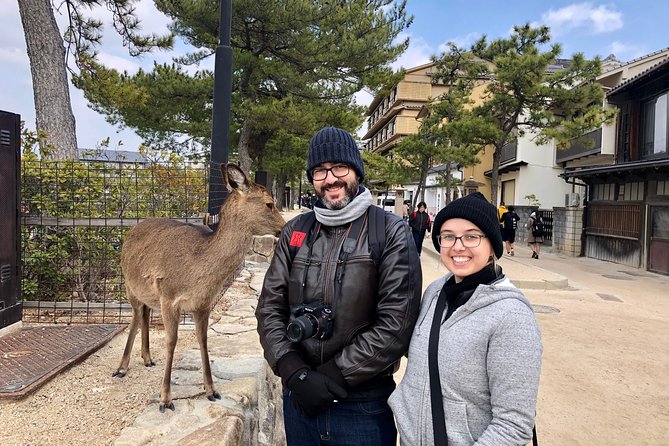
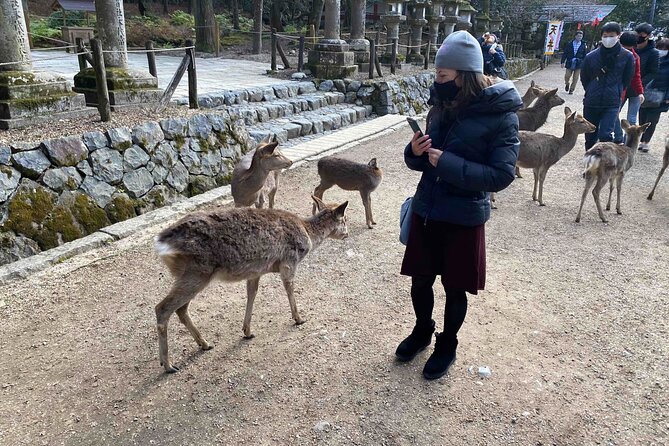
Nara Park surrounds many of the city’s main sights. It was established in 1880 and is free to enter. Deer roam through the park and often approach people carrying food, creating one of Japan’s most memorable city experiences.
The deer are beautiful, but do not treat them like tame farm animals. One guide specifically warned that they can be aggressive, and another helped a child learn how to make a deer bow. Keep your attention on the animals when feeding them, and remember that the park itself involves plenty of walking.
A private guide is useful here because the park can feel scattered. Your guide can help place Todai-ji, Kasuga Taisha, Kofuku-ji, and the museum into one route instead of leaving you to work out the order on your own.
Kasuga Taisha brings Shinto into the story
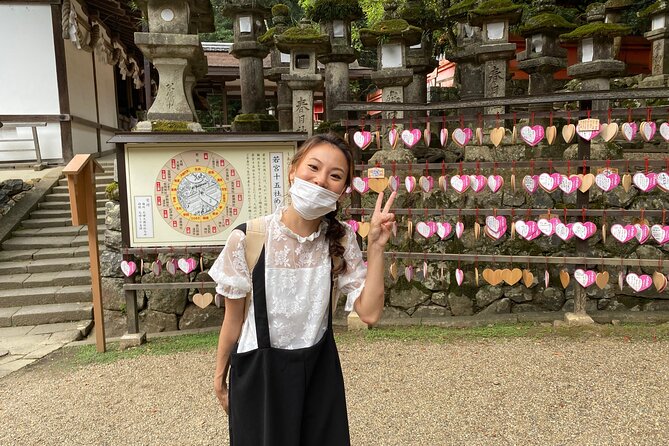
Kasuga Taisha is Nara’s most celebrated shrine. It was established when the capital was founded and is dedicated to the deity believed to protect the city. The shrine also served as the Fujiwara family’s tutelary shrine, linking religion with one of the most powerful aristocratic clans in early Japan.
This is an important contrast with Todai-ji. At the Buddhist temple, you focus on monumental buildings and a giant Buddha. At Kasuga Taisha, the atmosphere centers on Shinto traditions, sacred space, and the relationship between nature and worship.
Your guide can help explain how Buddhism and Shinto have shared space in Japan for centuries. That context was one of the most praised parts of the experience. Guides such as Junichi and Ken have been singled out for making religious customs easier to understand without turning the walk into a lecture.
Kasuga Taisha is free to enter, though some areas may have separate admission. The approach through Nara Park adds distance, so wear shoes that can handle a full day outdoors.
Choose Wakakusayama only if you want the climb
Mount Wakakusayama rises behind Nara Park between Todai-ji and Kasuga Taisha. The grass-covered hill is about 350 meters tall and offers broad views across Nara.
It is a strong choice for anyone who wants fresh air and a view rather than another interior. It is a weaker choice for people with limited mobility, tired children, or a packed list of temple visits. The route includes climbing, and the day already requires substantial walking.
One guide described the hill as a rewarding challenge, while another noted the amount of walking and stairs around Nara. Discuss the hill early in the day. If you want to climb, it may be better to place it before fatigue sets in. If you prefer a gentler route, use the time for a garden, museum, or old-town walk instead.
A few more options to weigh up in Nara
- World Heritage Kyoto & Nara Uji Authentic Matcha Experience
★ 5.0 · 1,573 reviews - Nara Half Day Trip Walking Tour (Private Option Available)
★ 5.0 · 937 reviews - Nara Early Morning Tour (Kyoto or Osaka Departure Available)
★ 5.0 · 676 reviews - Osaka: Nara and Uji Day Trip with Deer Park and Hot Spring
★ 4.4 · 302 reviews
Horyu-ji offers Japan’s oldest Buddhist architecture
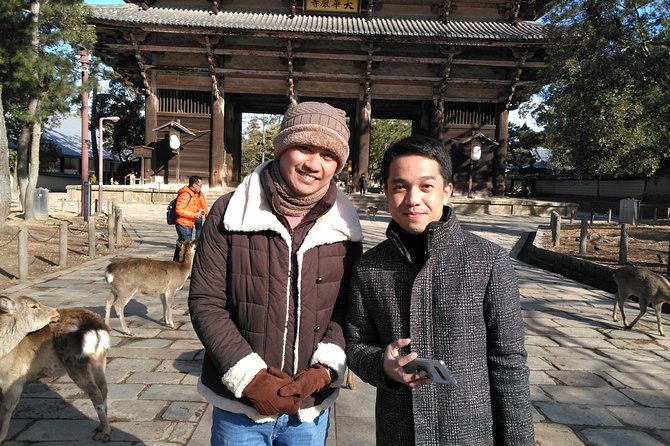
Horyu-ji is one of Japan’s oldest temples. Prince Shotoku founded it in 607, and the temple contains what is described as the world’s oldest surviving wooden structure.
This is a major historical site, but it does not sit as neatly inside the central Nara Park route as Todai-ji, Kasuga Taisha, and Kofuku-ji. You should ask about transport and timing before choosing it. The tour does not include a private vehicle, and transportation fees are your responsibility.
The payoff is substantial for people interested in early Buddhism, architecture, and Japan’s connections with the Asian mainland. One guide planned a route including Horyu-ji, Toshodai-ji, the Nara Palace Site, and Todai-ji, timing trains, buses, and walks so all four could fit into six hours. That is exactly where a private guide earns the fee, though the day will feel brisk.
Admission is extra.
Naramachi slows the pace with old merchant streets
Naramachi is the former merchant district of Nara. Traditional houses and warehouses survive here, alongside boutiques, shops, and cafes. It gives you a view of urban life rather than imperial or religious power.
I would choose Naramachi if you want a break from large temple compounds. It is also a good fit for families, food-focused visitors, and anyone who wants to see how historic Nara connects with the modern city.
The district is free to explore, though individual buildings or attractions may charge admission. A guide can point out the difference between a merchant home, a storehouse, and a religious site, then suggest a suitable lunch nearby. Junichi has taken groups to small noodle shops, sushi restaurants, and mochi stores. Lunch itself is not included.
Kofuku-ji and the Fujiwara connection
Kofuku-ji was the family temple of the Fujiwara clan, a dominant aristocratic family during the Nara and Heian periods. It was established in Nara around the same time as the capital, making it a useful stop for understanding how political power and religion worked together.
The temple is near the central attractions, so it can fit neatly into a walking route. It also pairs well with Kasuga Taisha, since both are tied to the Fujiwara family but express different religious settings.
Allow extra time if you want to enter paid areas. The listed visit length is about 30 minutes, and admission is not included.
The quieter temples: Yakushi-ji and Shin-Yakushi-ji
Yakushi-ji was built by Emperor Tenmu in the late seventh century for the recovery of his sick wife. Its strictly symmetrical layout and main hall give it a different character from the massive, crowded feel of Todai-ji.
Shin-Yakushi-ji was founded during the Nara Period for an ailing emperor and is devoted to Yakushi Buddha, the Buddhist patron of medicine. Both temples suit visitors who want a more focused look at religious art and healing traditions.
These are not the easiest choices to combine with every central Nara sight in six hours. Select them when your priority is Buddhist history, temple design, or a less crowded route. Admission fees are extra, and transport is not included.
Nara National Museum adds art and shelter
The Nara National Museum was established in 1889 and mainly displays Japanese Buddhist art. Its location in Nara Park makes it an easy alternative to an outdoor stop when weather or energy becomes a problem.
The museum can add depth to what you see at Todai-ji and the other temples. Instead of viewing statues and rituals only in their original setting, you can examine Buddhist art in a museum context.
Admission is extra. The standard stop is about 30 minutes, so ask your guide if that is enough for the exhibits you care about. Art lovers may want to give the museum priority over a quick extra temple.
Nara Palace Site and the two special gardens
Heijo Palace Site Historical Park marks the former palace of Heijo-kyo, the capital during most of the Nara Period from 710 to 794. The palace once covered roughly one kilometer by one kilometer, so the site helps you picture the scale of the ancient government center.
The suggested visit is only 15 minutes, which makes this a quick historical overview rather than a long archaeological visit. It is best for people who want the political story of Nara.
Toshodai-ji was founded in 759 by Ganjin, a Chinese priest invited to Japan to train priests and improve Japanese Buddhism. It offers an important link between Nara and the Chinese culture that influenced the capital.
Isuien Garden uses Todai-ji’s Nandaimon Gate and Mount Wakakusayama as borrowed scenery. It is a fine place to slow down and look carefully at how a Japanese garden frames distant features. Yoshikien, beside the Yoshikigawa River, is another pleasant garden built on the former grounds of Kofuku-ji priests.
The gardens received some of the warmest personal praise. One guide remembered a quiet moment when a visitor listened to the stream at Isuien. If you like gardens, silence, and careful design, do not let the short listed timing decide for you. Ask for more time and cut a less important stop.
How the six hours really work
The tour is described as a walking experience, with pickup offered on foot within a designated Nara area. There is no private vehicle. If you choose sites outside the central park, you pay your own train, bus, or taxi costs.
The prepared list gives you 14 possibilities, but you select only three or four. That limit is sensible. Nara’s sites are spread out, and trying to collect everything would turn the day into a race.
Tell the guide your priorities before meeting. History lovers might choose Todai-ji, Horyu-ji, Toshodai-ji, and the Nara Palace Site. Families might prefer Todai-ji, Nara Park, Naramachi, and a garden. Art lovers could focus on Todai-ji, the museum, Isuien, and Kofuku-ji.
The one serious caution is pacing. One dissatisfied participant felt hurried, spent too little time with the guide inside some places, and walked farther than expected at the end of the day. That does not cancel out the many strong experiences, but it shows why you should agree on the route, walking ability, rest stops, and meal plan at the start.
Price, group value, and who should book
At $155.86 per person, the tour is not a cheap sightseeing add-on. Still, the value improves as your group grows because you receive a private guide rather than joining a large group. A family of five or six can gain a great deal from help with directions, questions, meals, and changing interests.
You still pay entrance fees, food, transportation, and personal expenses. Guide admission is covered only for sights included on the prepared list, so ask before adding anything outside the planned route.
I would book this tour if you want history explained in plain English, have several people with different interests, or feel unsure about combining Nara’s scattered sights. I would skip it if you are happy reading signs, following maps, and setting your own pace.
The agency has a 99 percent recommendation rate and a five-star rating from 219 reviews. More important than the numbers is the repeated praise for flexible planning, clear English, humor, and strong knowledge of Japanese history and culture. Requesting a guide such as Junichi, Ken, Rie, Toshi, Yoshii, or Hiro may be worth asking, though guide availability is not stated.
Cancellation is free up to 24 hours before the start time. After that, the payment is not refunded, and changes are not accepted.
Final call: a strong choice for the right walking style
Book this private Nara tour if you want more than deer photos and a quick look at the Great Buddha. Its best moments come from connecting Todai-ji with Shinto at Kasuga Taisha, old merchants’ homes in Naramachi, Japanese gardens, and the long story of Nara as an early capital.
Go in with realistic expectations. You will walk a lot, pay several costs separately, and may need to choose between ambitious sites. Set the pace clearly, wear good shoes, and protect time for the place you care about most. Done that way, this is a flexible and unusually personal way to understand Nara.
FAQ
Where does the tour begin?
You meet your licensed English-speaking guide at Nara Station or within the designated pickup area in Nara. Pickup is on foot.
How long does the tour last?
The tour lasts approximately six hours.
Is this a private tour?
Yes. Only your group participates, and you cannot combine your group with another tour group.
How many sights can I choose?
You choose three or four sites from the prepared list of Nara highlights.
Is transportation included?
No. The tour does not include a private vehicle, and transportation fees are your responsibility.
Are temple and museum admission fees included?
Generally, no. Entrance fees are at your own expense. Guide admission is covered only for sights listed under the prepared tour choices.
Is lunch included?
No. Lunch and other personal expenses are not included.
Is Nara Park free to enter?
Yes. Nara Park has no admission fee.
Can most people participate?
Most travelers can participate, and service animals are allowed. Keep in mind that this is a walking tour with substantial walking and, on some routes, stairs or a hill.
Can I cancel for a refund?
Yes, if you cancel at least 24 hours before the experience start time. Cancellations made less than 24 hours in advance are not refunded, and late changes are not accepted.
Just added in Nara
- Hammer a Pattern on Your Ring Workshop★ 5.0 · 57 reviews
- All must-sees in 3 hours – Nara Park Classic Tour! From JR Nara!★ 5.0 · 108 reviews
- Private Nara Tour and Sake Tasting (Departing from Kyoto/Nara)★ 5.0 · 40 reviews
- Nara Private Tour: Flexible Pickup from Kyoto, Osaka, or Nara★ 5.0 · 17 reviews
- Nara Highlight Walking Tour with Furoshiki Experience with Lunch★ 5.0 · 73 reviews
- Nara Sake Tasting Tour at Local Brewerie(tasting fee included)★ 5.0 · 12 reviews
- Nara World Heritage PRIVATE TOUR★ 4.5 · 15 reviews
- Nara – Highlights Bike Tour★ 4.5 · 89 reviews
Nara Tours, compared.
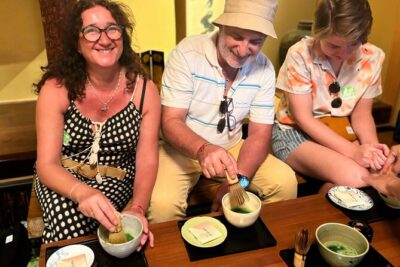
World Heritage Kyoto & Nara Uji Authentic Matcha Experience
Read our review →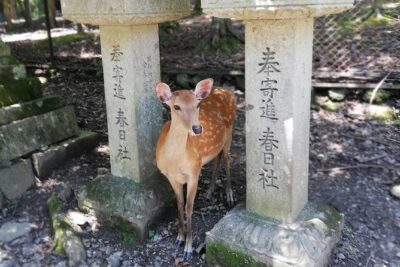
Nara Half Day Trip Walking Tour (Private Option Available)
Read our review →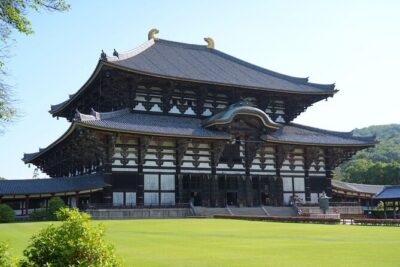
Nara Early Morning Tour (Kyoto or Osaka Departure Available)
Read our review →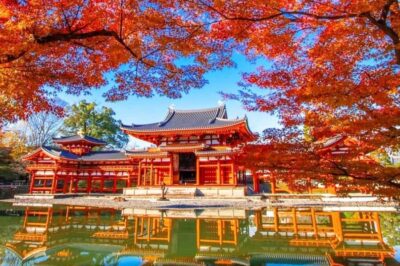
Nara and Uji Day Trip with Deer Park and Hot Spring
Read our review →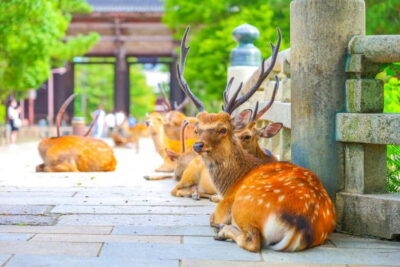
Kyoto/Osaka: Kinkakuji, Bamboo Forest, and Nara Deer Park
Read our review →
E-Bike Nara Highlights – Todaiji, Knives, Deer, Shrine
Read our review →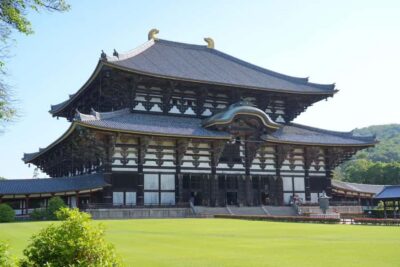
Nara Early Bird Tour (Kyoto Departure Option Available)
Read our review →
Nara:Authentic Tea Ceremony(Max 5 ppl) -Master Matcha Making
Read our review →Browse the lists this tour appears in