
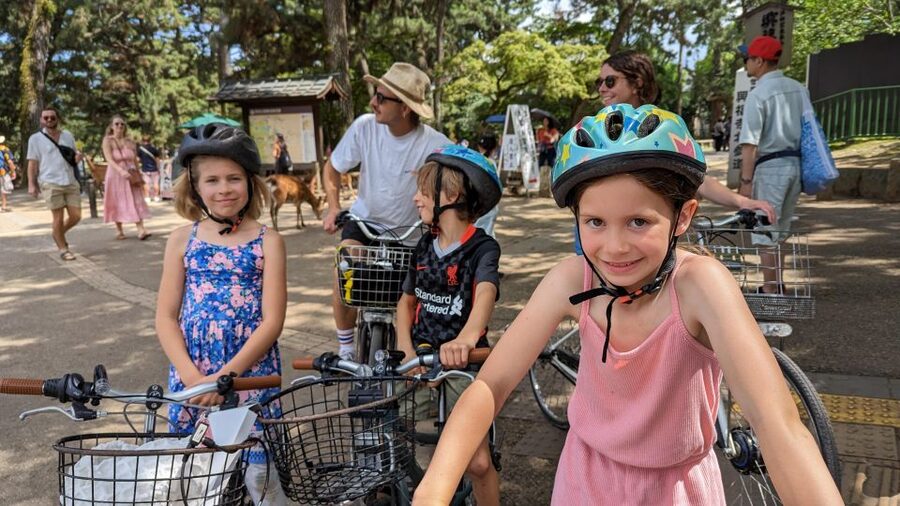
Reviewed · CYCLING AND E-BIKE TOURS
E-Bike Nara Highlights – Todaiji, Knives, Deer, Shrine
Nara is easier on two wheels. This 3.5-hour e-bike outing links Todaiji Temple and its huge Nandaimon Gate with deer-filled paths, Kasuga Taisha, Ukimido, and a Japanese knife shop. I like the way it covers a large area without turning your day into a march, and I like the mix of famous sights and useful local context. The one caution is that the riding can move at a fairly brisk pace, and one recent rider found the bikes less suitable for taller cyclists.
Your guide may be Chris, Remi, Robert, Melody, Elodie, Jean-Yves, Mattheus, or another member of the local team. The strongest guide feedback centers on clear explanations, patience, safety, and flexibility. Arrive 15 minutes early at the bike base near Kintetsu Nara Station, not JR Nara Station, and bring comfortable clothes, shoes, cash, and your passport.
In This Review
- Key points at a glance
- Starting near Kintetsu Nara Station
- Riding through Nara Park with the deer
- Nandaimon Gate and the first look at Todaiji
- Inside Todaiji, Nara’s heavyweight attraction
- Passing Mt. Wakakusa by e-bike
- Japanese knives at Kikuichimonjushirokanenaga
- Kasuga Taisha and its rows of lanterns
- Ukimido and the ride back through the park
- How much value do you get for $90?
- Who should book this Nara e-bike tour?
- Should you book it?
- FAQ
- Where does the tour meet?
- How early should I arrive?
- How long does the tour last?
- What languages are available?
- Is Todaiji Temple admission included?
- Are deer crackers included?
- Are helmets available?
- Can children under 10 join?
- What happens if I book alone?
Key points at a glance

- A smart route through Nara Park: Cover Todaiji, Kasuga Taisha, Mt. Wakakusa, Ukimido, and deer areas in one outing.
- Todaiji admission is included: You can enter the famous temple without paying an extra entrance fee.
- The deer stop includes the proper feeding method: Your guide provides deer crackers and explains how to feed the animals safely and respectfully.
- The knife visit adds a local craft connection: Kikuichimonjushirokanenaga honten introduces Japanese cutlery and offers shopping help.
- E-bikes save your legs: The electric assistance is useful on hills and in hot weather, though this is not a slow, leisurely bicycle ride.
- Small groups and private outings are available: This gives you a better chance to ask questions and set the pace around major stops.
Starting near Kintetsu Nara Station
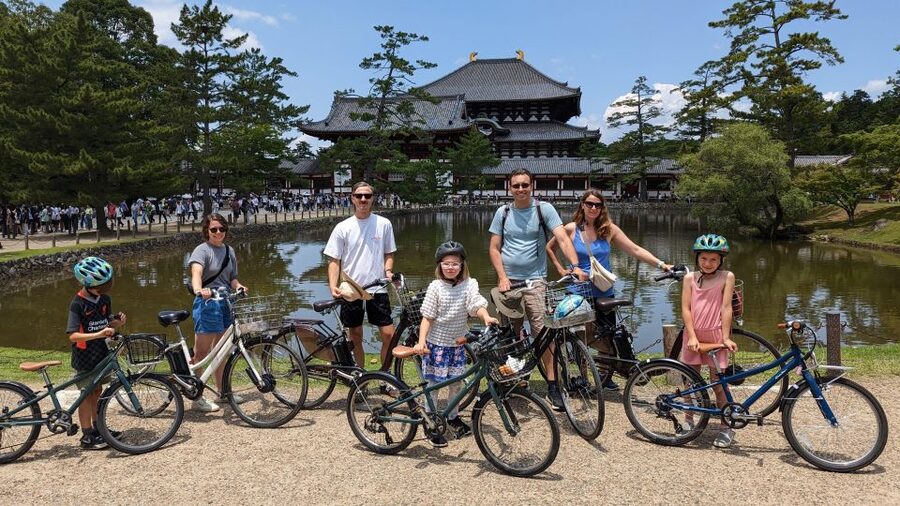
The meeting point is at 16-1 Takamaichichō, in front of Building LIFE 21, less than a five-minute walk from Kintetsu Nara Station. That location is handy if you are arriving from Kyoto or Osaka on the Kintetsu line. It is not near JR Nara Station, so check your route before setting out.
Look for a guide in the JTA uniform, with a navy cap and red polo shirt. The early arrival request matters here. You need time to meet the guide, get fitted to an e-bike, and prepare before the group heads into the park.
The bikes have received strong marks for being easy to use and generally in good condition. One rider, however, found a bike poorly suited to taller people and not as well maintained as expected. I would mention your height and riding needs when booking, especially if you are particular about frame size or posture.
A helmet is available if requested, but only while supplies last. Bicycle insurance is not included, so you should be comfortable riding in ordinary city and park conditions before booking. This is a guided bicycle tour, not a lesson.
More Temples and Shrines in Nara:
- Nara: Great Buddha, Kasuga Shrine & Deer Park Tour
★ 4.8 · 62 reviews - E-Bike Nara Highlights – Todaiji, Knives, Deer, Shrine, and Gems
★ 4.5 · 34 reviews - Nara: Essential Private Tour with Deer Park and Temples
★ 5.0 · 24 reviews
Riding through Nara Park with the deer
The first major section takes you into Nara Park, where the ride itself becomes part of the sightseeing. Instead of walking from one end of the park to the other, you move between temple grounds, wooded paths, open views, and deer areas with electric assistance.
Nara’s deer are the park’s famous residents, but the useful part of this stop is learning how to behave around them. Each participant receives deer crackers, and the guide shows you the local way to feed the animals. Keep the crackers moving, bow when the deer bow, and do not tease an animal with an empty hand. The guide’s instructions help turn a cute photo opportunity into a more respectful encounter.
The deer are wild animals, not tame pets. Some are gentle, while others can be pushy once they see food. You will want to keep loose papers, maps, and snacks away from curious mouths. Extra deer crackers cost extra, so use the supplied portion wisely.
The bike makes a real difference in warm weather. One rider specifically noted that the heat made an e-bike preferable to walking, while another used the outing to get moving after a long flight. You still pedal, but the motor takes the sting out of longer distances and small climbs.
Nandaimon Gate and the first look at Todaiji
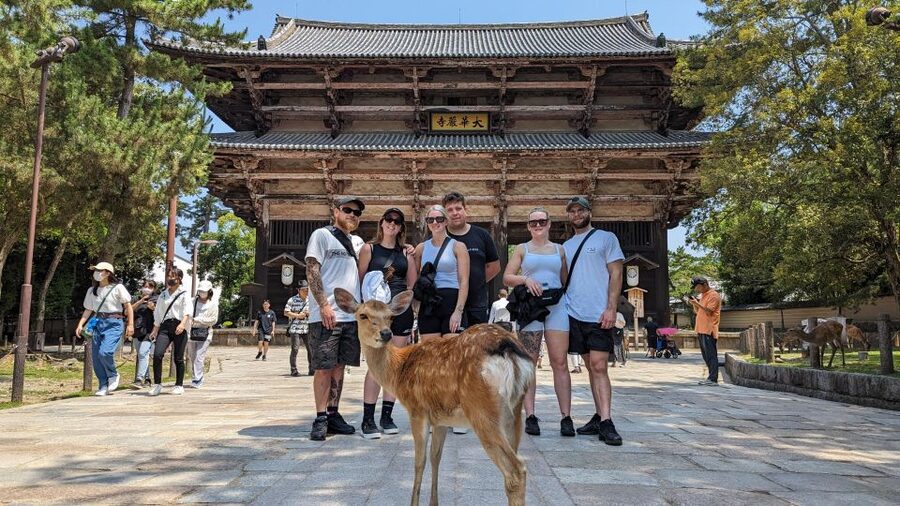
Nandaimon Gate gives you a powerful preview of Todaiji before you even enter the temple grounds. The timber gate is guarded by two enormous muscular figures, and its scale helps explain the ambition of the temple complex.
This is a guided stop with time for photos and a short walk. Your guide can give the gate more meaning than a quick camera pause, explaining its place within the temple approach and pointing out details that are easy to miss while you are managing crowds and deer.
The park can become crowded around the main approach, especially later in the day and during popular seasons. Morning departures are a sensible choice if you prefer cooler temperatures and a little more room around the gate. The route does not remove the crowds, but the bicycle lets you reach the major sights efficiently.
Inside Todaiji, Nara’s heavyweight attraction
Todaiji receives about 45 minutes, including the temple visit, sightseeing, free time, and a chance to browse nearby shops. The entrance fee is included, which makes this part of the price easier to judge.
The Great Buddha Hall is the main reason most people come. Even if you have seen grand temples elsewhere in Japan, the scale here is hard to ignore. The building and statue create the kind of first impression that works best in person, when you can look upward and take in the size of the space.
This part is partly self-guided. That can be an advantage because you are not held to a nonstop lecture inside the hall. You can listen to the guide outside or during the approach, then use the free time to look closely, take photos where permitted, and visit the surrounding shops.
Forty-five minutes is enough for a focused visit, but not for every corner of the wider temple area. If Todaiji is your main reason for coming to Nara, you may want a separate visit with more time. If your goal is to see the major sights in a single morning or afternoon, the schedule is well judged.
More Bike Tours in Nara:
- Nara – Highlights Bike Tour
★ 4.5 · 89 reviews - Nara: Bike Tour in Ancient Capital UNESCO World Heritage
★ 5.0 · 43 reviews - Nara: City Highlights Shared Group or Private Bike Tour
★ 4.9 · 34 reviews - Nara – Heart of Nature Cross Bike Tour
★ 5.0 · 19 reviews
Passing Mt. Wakakusa by e-bike
The route then passes Mt. Wakakusa, a grassy hill rising behind the park. You stop for photos and views for about 15 minutes rather than making a full climb.
That distinction matters. The tour gives you the setting and the view without turning the outing into a hill hike. The e-bike is useful here because the route includes slopes, and riders have specifically appreciated the motor assistance on uphill sections.
Your guide may pause to explain how the hill fits into Nara’s setting, or simply give you time to enjoy the view. The stop also breaks up the temple visits. After the darker, formal space of Todaiji, the open hill and park paths offer a change of pace.
Japanese knives at Kikuichimonjushirokanenaga
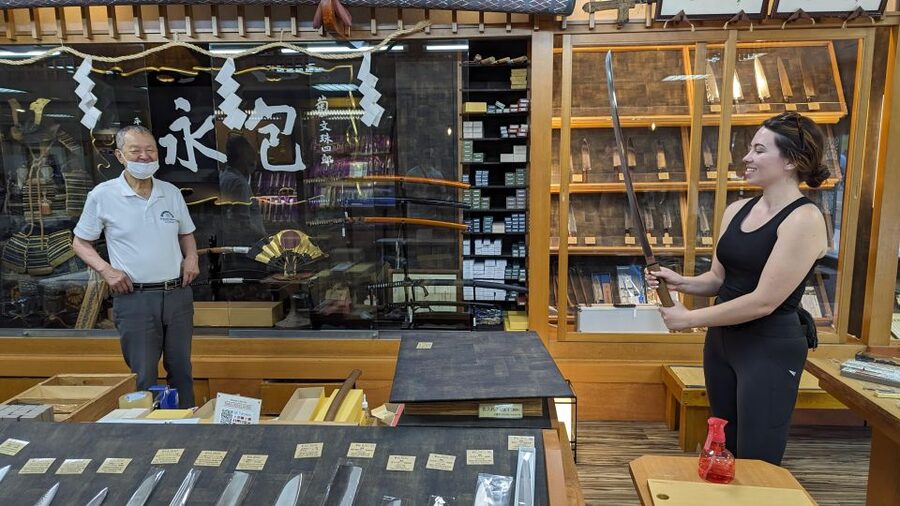
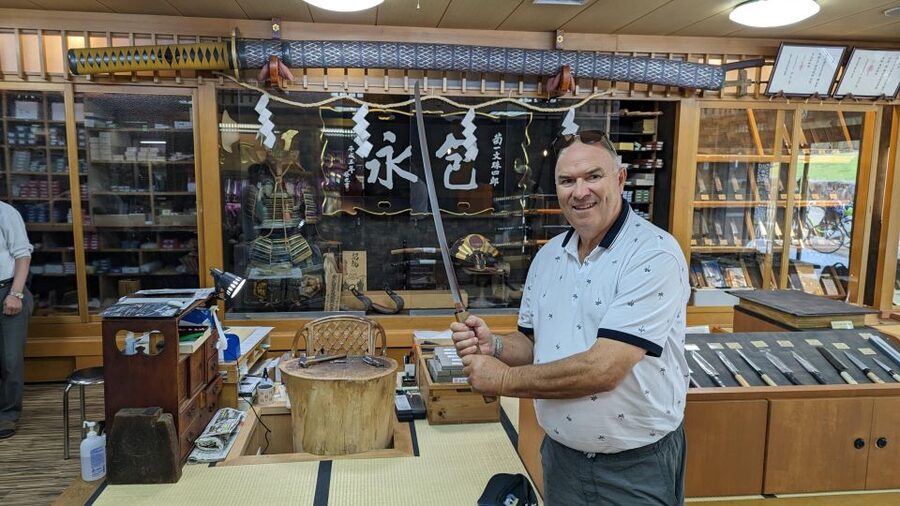
The knife stop is the tour’s most distinctive extra. At Kikuichimonjushirokanenaga honten, you get an introduction to Japanese cutlery, its background, and the craft behind the blades. There is time to browse, ask questions, and consider a purchase.
This is more useful than a generic souvenir stop. Japanese kitchen knives are practical objects, but choosing one can be confusing if you do not know the difference between styles, uses, sharpening needs, or care. The guide can help explain the options and assist with shopping.
Several guides have been praised for their help in this shop, especially when translating or explaining products. The store values its relationship with the tour company, which can make the visit feel more personal than simply walking into a shop alone.
You do not have to buy anything. Still, set a budget before you go. One rider went in determined not to purchase a knife and left wishing they had bought a set or several gifts. Another later used the knives at home and was pleased with how sharp they were.
The stop also includes one Japanese snack, Kanoko, for each participant. Extra food and drinks are not included, so carry cash if you want to buy more.
Kasuga Taisha and its rows of lanterns

Kasuga Taisha brings a different religious mood from Todaiji. Todaiji is a major Buddhist temple with monumental architecture, while Kasuga Taisha is a Shinto shrine known for its lanterns, forest setting, and long approach.
The visit lasts about 30 minutes and includes photos, walking, sightseeing, and time around the deer. The famous stone and bronze lanterns are the visual signature here. Look for the repeated lantern shapes along the approach and around the shrine buildings.
This is another place where a guide adds useful context. A good explanation of Shinto customs, shrine etiquette, and the difference between Buddhist and Shinto spaces can make the visit much clearer. Several guides, including Robert, Remi, Melody, and Elodie, have been praised for explaining Japanese religion and culture in an approachable way.
Thirty minutes gives you a good introduction, but not an exhaustive visit. If you want to explore every path around Kasuga Taisha or visit additional halls, plan to return independently.
Ukimido and the ride back through the park
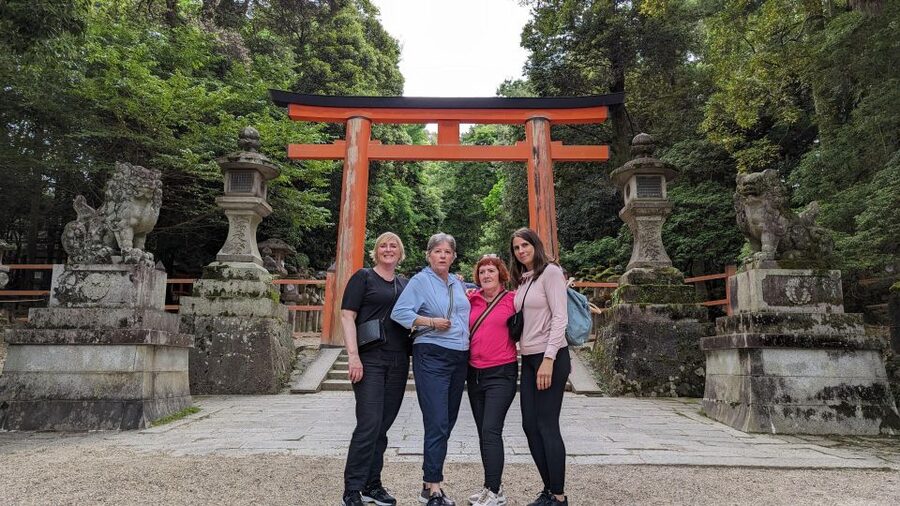
After Kasuga Taisha, the route returns through Nara Park and stops at Ukimido for about 15 minutes. Ukimido is a small pavilion over the water, a calm place for photographs and a welcome pause after the denser temple and shrine areas.
The final ride includes another pass through the park before returning to the starting point. In total, the route gives you several short riding segments rather than one long continuous ride. That arrangement works well for sightseeing because you alternate between cycling, walking, photos, and free time.
The pace deserves honest attention. One rider described the biking portions as generally forward-moving and said the outing may not suit someone expecting a very slow, casual ride. The electric motor helps, but you still need to follow the group, manage turns, and remain alert around pedestrians and deer.
How much value do you get for $90?
At $90 per person, this is not the cheapest way to rent a bicycle in Nara. You are paying for more than the bike: an English or French-speaking local guide, e-bike rental, Todaiji admission, deer crackers, the Kanoko snack, route planning, and help at the knife shop.
The real value is time. The listed route covers a large area in 210 minutes, including several sights that would take much longer on foot. If you have only one day in Nara, or you are visiting between trains, the tour lets you see the major park highlights without spending most of the day walking.
I also see value in the local connections. The knife shop is not a standard stop on every Nara sightseeing route, and shopping help can be useful when you are buying something costly or unfamiliar. The guide may also take photos during the outing and share them afterward, as happened on one rainy tour.
The price feels less attractive if you are staying in Nara for several days and have plenty of time. You could visit Todaiji, Kasuga Taisha, and the park at your own pace, using public transport or walking between areas. The tour makes the most sense when convenience, speed, and interpretation matter more than saving every yen.
Who should book this Nara e-bike tour?
I would choose this for:
- First-time visitors with limited time in Nara
- Couples who want a private or small-group outing
- Families with children who can ride safely
- People who find a full day of walking tiring
- Visitors interested in temples, shrines, deer, and Japanese crafts
- Riders who want cultural explanations without booking several separate tours
Families can request child seats for children under 10, with up to one child seat per e-bike. Confirm the arrangement before booking. Children and adults alike need to be comfortable on a bicycle, since insurance is not included.
French-speaking guides exist, but French is not guaranteed on a shared tour. English becomes the main language when several nationalities are mixed. Contact the provider ahead of time if a French-language guide is essential.
The tour can run with a single person in some circumstances, but there is a two-person minimum rule for the session to go ahead. A solo booking may be cancelled with an offer to reschedule or receive a full refund. This is worth checking if you are traveling alone and have a tight schedule.
Weather also matters. The outing has gone ahead in rain and cold, with guides keeping spirits up, but Nara is more pleasant on a dry day. Bring suitable clothing, and leave some flexibility afterward in case the tour runs over its planned time.
Should you book it?
Book this tour if you want to see Nara Park’s major sights efficiently and you enjoy moving around under your own power. The mix of deer, Todaiji, Kasuga Taisha, Mt. Wakakusa, Ukimido, and Japanese knives gives you more range than a simple temple walk.
Skip it if you dislike cycling, need a very slow pace, or want to spend hours inside one temple or shrine. At $90, the cost is fair when you value the guide, included admission, e-bike assistance, and the amount covered in three and a half hours. For a short stay, I think the time saved makes it a strong choice.
FAQ
Where does the tour meet?
Meet at 16-1 Takamaichichō, in front of Building LIFE 21, at the bicycle base. It is less than a five-minute walk from Kintetsu Nara Station, not JR Nara Station.
How early should I arrive?
Arrive 15 minutes before departure. This allows time to meet the guide and prepare the e-bikes without delaying the group.
How long does the tour last?
The tour lasts 210 minutes, or three and a half hours.
What languages are available?
Guides are available in English and French. French is not guaranteed on a shared tour, so contact the provider ahead of time if you need a French-speaking guide.
Is Todaiji Temple admission included?
Yes. The entrance fee for Todaiji Temple is included in the tour price.
Are deer crackers included?
Yes. Each participant receives deer crackers and an explanation of how to feed the deer. Extra crackers are not included.
Are helmets available?
A helmet can be provided if requested, subject to availability.
Can children under 10 join?
Child seats can be provided for young riders under 10, with up to one child seat per e-bike. Ask about the arrangement when booking.
What happens if I book alone?
There is a two-person minimum rule for the tour to operate. If a single-person booking does not reach the minimum, the session may be cancelled, with rescheduling or a full refund offered.
Just added in Nara
- Hammer a Pattern on Your Ring Workshop★ 5.0 · 57 reviews
- All must-sees in 3 hours – Nara Park Classic Tour! From JR Nara!★ 5.0 · 108 reviews
- Nara Private Tour: Flexible Pickup from Kyoto, Osaka, or Nara★ 5.0 · 17 reviews
- Private Nara Tour and Sake Tasting (Departing from Kyoto/Nara)★ 5.0 · 40 reviews
- Nara Highlight Walking Tour with Furoshiki Experience with Lunch★ 5.0 · 73 reviews
- Nara Sake Tasting Tour at Local Brewerie(tasting fee included)★ 5.0 · 12 reviews
- Nara World Heritage PRIVATE TOUR★ 4.5 · 15 reviews
- Nara – Highlights Bike Tour★ 4.5 · 89 reviews
Cycling and E-Bike Tours, compared.
3h Tokyo E-Bike Tour: Hidden Gems, and Local Life with guide
Read our review →
Arashiyama Bamboo Forest & Hidden Gems Bike Tour (Early Bird)
Read our review →
5 Top Highlights of Kyoto Full Day Bike Tour (E-bike option)
Read our review →

Hiroshima 2hr Peace Cycling Tour with Local Guide
Read our review →Browse the lists this tour appears in