
Reviewed · TEMPLES AND SHRINES
Nara: Great Buddha, Kasuga Shrine & Deer Park Tour
Nara brings religion, wildlife, and ancient Japan together. This three-hour tour makes that connection easy to understand, taking you from the deer of Nara Park to the lantern-lined paths of Kasuga Taisha and the enormous Great Buddha at Todai-ji. It is a strong introduction to Nara, especially if you have limited time or want a guide to explain what you are seeing.
I like the way the route combines two faiths in one walk: Shinto at Kasuga Taisha and Buddhism at Todai-ji. I also like that deer crackers are included, since feeding Nara’s sacred deer gives the park visit a personal touch rather than leaving you to simply take photographs. The main consideration is the pace. You will walk for most of the three hours, with steps and outdoor paths, so hot weather, rain, and tired legs can affect the experience.
The guides are the tour’s greatest strength. Takashi, Teppei, Eri, Yayoi, Nobu, Yoshi, and others are praised for clear explanations, patience, local advice, and practical help. Some guides have adjusted the route, pointed out quieter corners, helped with transport afterward, or provided small comforts such as neck coolers on hot days.
In This Review
- Key Points to Know Before You Book
- Why This Short Nara Tour Works
- Starting at Himuro Shrine
- Meeting Nara’s Deer in the Park
- Walking the Lantern Paths of Kasuga Taisha
- Facing the Great Buddha at Todai-ji
- The Guides Make the Difference
- Walking, Weather, and Timing
- Is $77 a Fair Price?
- Who Should Book This Experience?
- Should You Book the Nara Great Buddha Tour?
- FAQ
- How long is the Nara Great Buddha, Kasuga Shrine and Deer Park Tour?
- Where does the tour start?
- Where does the tour end?
- Are deer crackers included?
- Are admission fees included?
- What languages are available?
- Is transportation to the meeting point included?
- Can I cancel the tour for a full refund?
Key Points to Know Before You Book
- The tour starts at Himuro Shrine: Meet in front of the torii gate, where your guide carries a yellow DeepExperience sign.
- The deer encounter is built into the route: Deer crackers, called shika senbei, are included for feeding the animals in Nara Park.
- You visit both Kasuga Taisha and Todai-ji: This gives you a useful introduction to Shinto and Buddhism in one morning or afternoon.
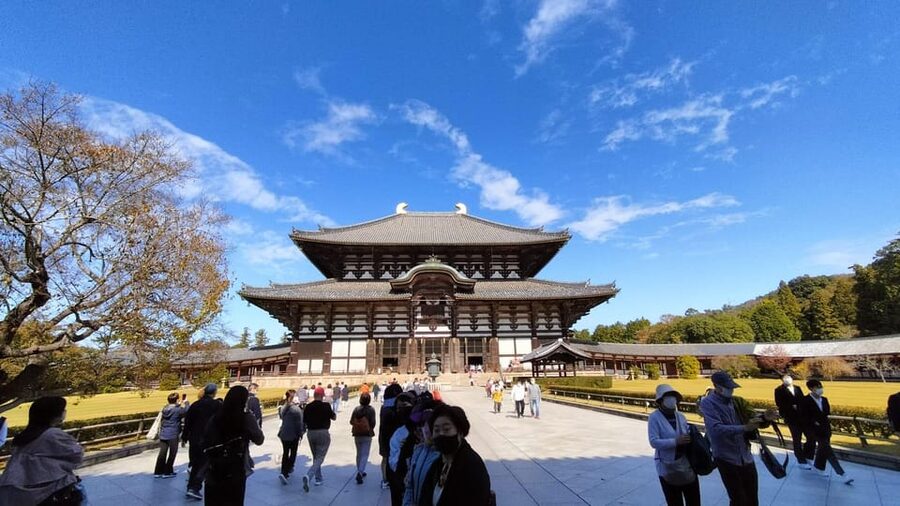
- The Great Buddha Hall is the dramatic finish: Todai-ji’s Daibutsuden is one of the world’s largest wooden buildings.
- Expect a walking tour, not a vehicle tour: The route includes park paths, shrine approaches, and temple grounds, with steps along the way.
- The $77 price includes key admissions: Todai-ji, the special inner area of Kasuga Taisha, a live guide, and deer crackers are covered.
Why This Short Nara Tour Works
Nara was Japan’s first permanent capital, established in the eighth century. Its importance is easy to miss if you simply rush from one famous building to the next. The value of this tour is the link between the places: deer connected to Shinto belief, a forest shrine built for the Fujiwara clan, and a Buddhist temple created on a huge national scale.
The three-hour length is well judged for a first look. You get the city’s major sights without giving up an entire day. At the same time, the schedule is not loose. The main stops receive about 30 minutes at Nara Park, one hour at Kasuga Taisha, and one hour at Todai-ji, with walking between them.
That structure suits you if you want context as you go. A guide can explain why a deer is more than an animal in this setting, how to approach a shrine, and why Todai-ji was built on such an immense scale. Without that background, the buildings may be impressive but harder to place in Japan’s religious story.
The group may be private or small, which is useful here. Nara’s paths are easier to manage with a compact group, and you have a better chance to ask questions. The strongest guide feedback highlights exactly this point: Eri, Yoshi, Takashi, Nobu, and others took time to answer questions rather than delivering a fixed speech and moving on.
More Temples and Shrines in Nara:
- E-Bike Nara Highlights – Todaiji, Knives, Deer, Shrine
★ 4.8 · 186 reviews - E-Bike Nara Highlights – Todaiji, Knives, Deer, Shrine, and Gems
★ 4.5 · 34 reviews - Nara: Essential Private Tour with Deer Park and Temples
★ 5.0 · 24 reviews
Starting at Himuro Shrine
The meeting point is in front of the torii gate of Himuro Shrine. Look for the guide holding a yellow sign with the DeepExperience logo. You arrange your own transport to this point, so allow time to reach the shrine before the scheduled start.
Starting here gives the walk a proper Shinto beginning. A torii marks the move from ordinary space into sacred space, and that idea becomes important later at Kasuga Taisha. The guide can help you notice details that are easy to pass without thought, including the role of shrine gates and the customs connected with entering a sacred site.
The route finishes near the second torii of Kasuga Taisha, with drop-off points listed at Nininotorii and Kasuga Taisha Nininotorii. This means the tour does not return you to Himuro Shrine. Plan your next step from the ending area, or ask your guide for help. Nobu and Takashi were especially helpful with onward transport in their tours, including walking people to a station or local bus and assisting with express-train purchases.
Meeting Nara’s Deer in the Park
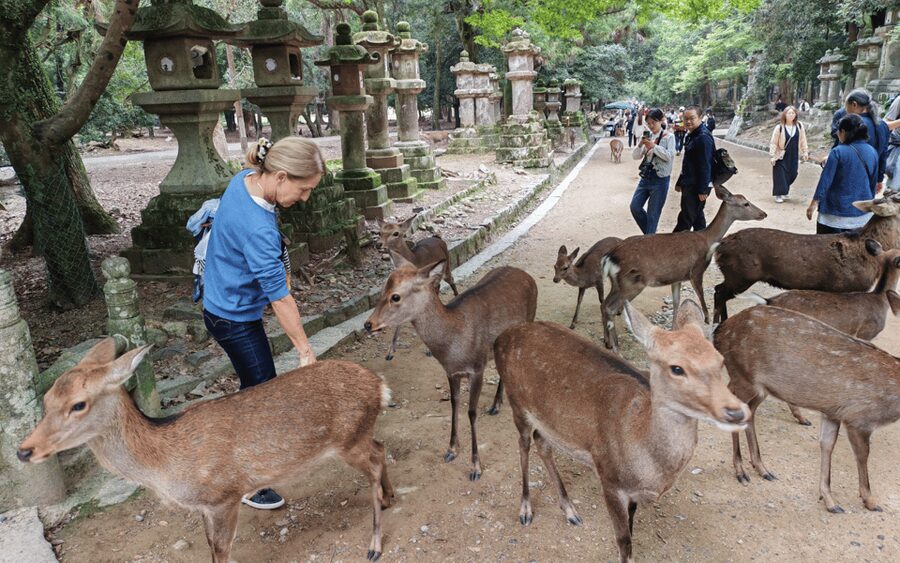
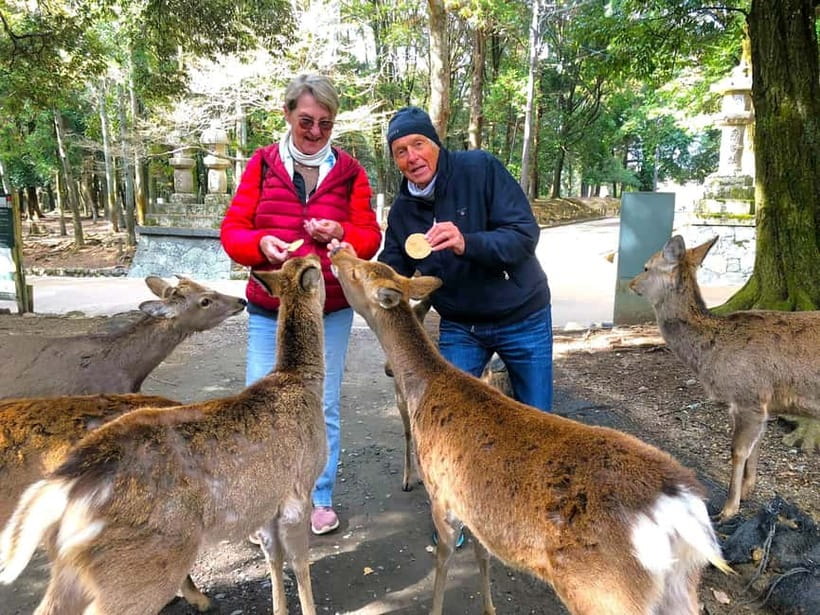
Nara Park is not a fenced wildlife attraction. Deer roam freely through a broad public park, near paths, trees, shrines, and temple grounds. Their presence gives the first section of the tour a different feel from a standard city sightseeing walk.
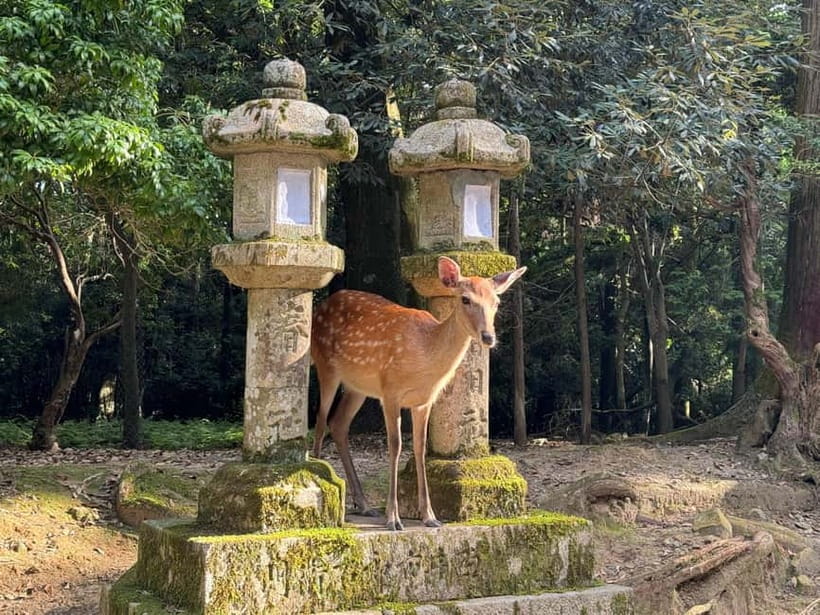
In Shinto belief, the deer are sacred messengers, especially associated with Kasuga Taisha. Your guide explains how the animals became protected symbols of Nara and how religion, nature, and daily life overlap here. That explanation makes the deer encounter more meaningful than a quick photo stop.
You receive shika senbei, the special crackers used to feed the deer. Feed them in small amounts and pay attention to the animals around you. The point is not simply to hand out food, but to understand why deer have such a close connection with the city.
This section lasts about 30 minutes. That is enough time for an introduction and a few photographs, but it is not an open-ended animal encounter. If you want a long, quiet period in the park, you may prefer to return on your own after the tour.
The park can also be the busiest part of the walk, especially around the deer and major approaches. Your guide may help you find a calmer route or a better place to pause. Eri was praised for making small route changes, including quieter spots and local stops, while still covering the main sights.
Walking the Lantern Paths of Kasuga Taisha
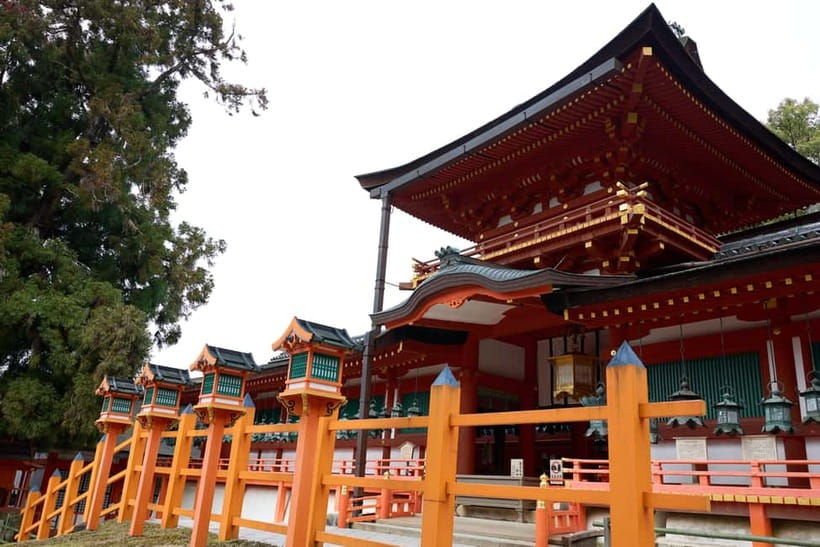
Kasuga Taisha was founded in 768 and dedicated to the powerful Fujiwara clan. It became an important place for aristocratic worship and remains one of Nara’s major Shinto shrines.
The approach is one of the tour’s most atmospheric sections. Kasuga Taisha is surrounded by an old forest protected for more than a thousand years, and the setting feels removed from the city. Stone and bronze lanterns line the paths and shrine buildings. Worshippers donated them over generations, so they function as both decoration and a record of long religious devotion.
During special festivals, the lanterns are lit. On a normal visit, you see them unlit, but the guide can explain how the shrine changes during those ceremonies and why the lanterns matter. The special inner shrine admission is included, giving you access beyond the basic approach.
This is where a guide adds real value. You learn about purification, the meaning of shrine architecture, and the difference between Shinto practice and Buddhist practice. A good guide also helps you avoid treating the shrine as a collection of attractive gates and lanterns. Yayoi, Eri, and Yoshi received particularly strong praise for explaining both the buildings and the wider customs around them.
Allow about an hour here. The paths are scenic, but they are not all flat or effortless. You should expect walking and some steps, as well as outdoor conditions. Rain did not prevent Christiane and guide Marc from enjoying the tour, but wet weather will change the mood and may make the ground less comfortable.
A few more options to weigh up in Nara
- World Heritage Kyoto & Nara Uji Authentic Matcha Experience
★ 5.0 · 1,573 reviews - Nara Half Day Trip Walking Tour (Private Option Available)
★ 5.0 · 937 reviews - Nara Early Morning Tour (Kyoto or Osaka Departure Available)
★ 5.0 · 676 reviews - Osaka: Nara and Uji Day Trip with Deer Park and Hot Spring
★ 4.4 · 302 reviews
Facing the Great Buddha at Todai-ji
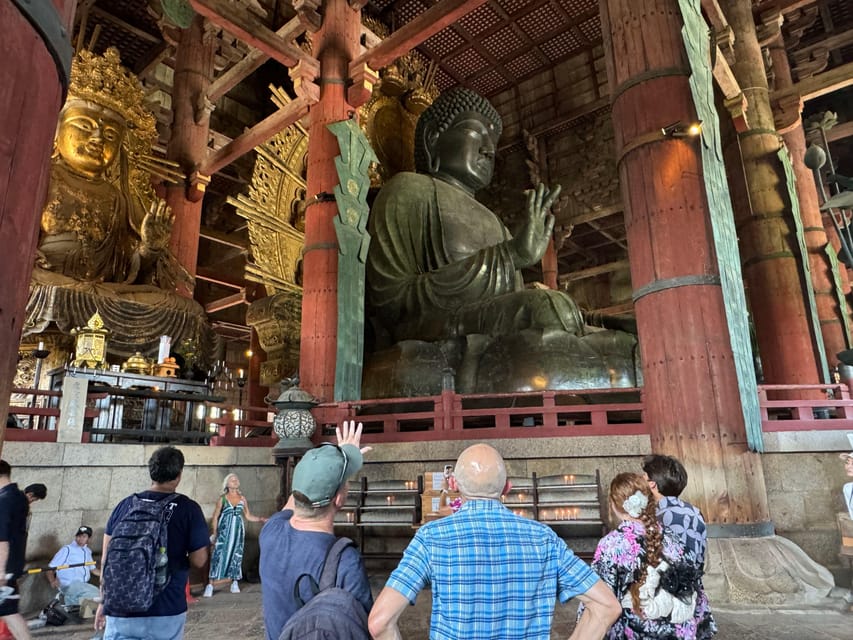
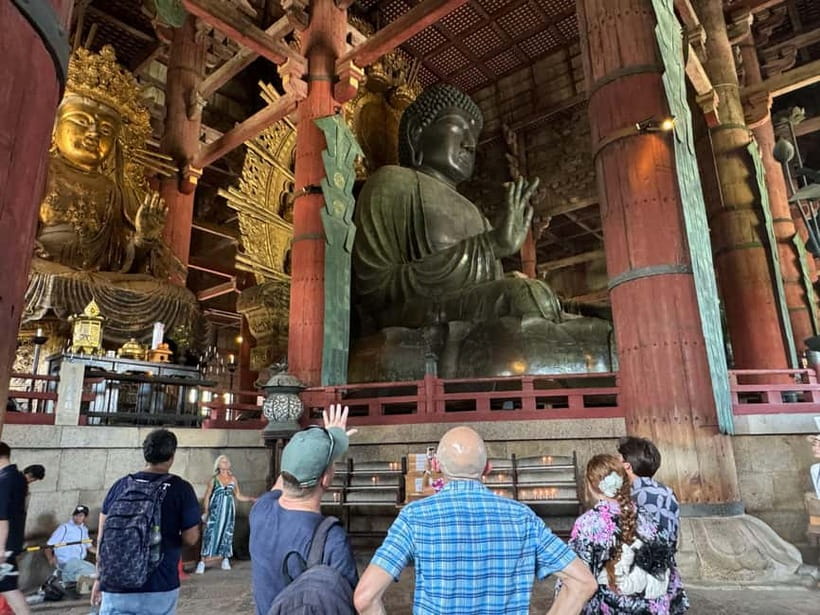
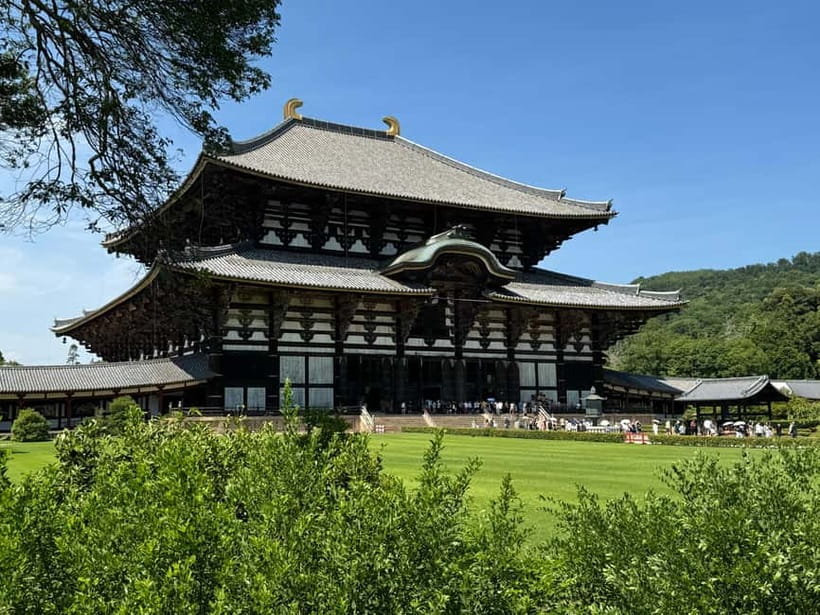
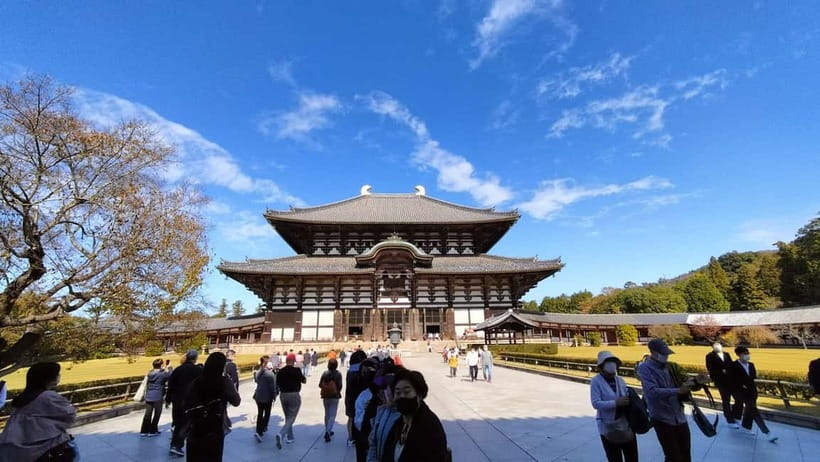
Todai-ji is the tour’s largest visual moment. You enter the Daibutsuden, or Great Buddha Hall, a vast wooden structure recognized as one of the largest of its kind in the world. Inside is the bronze Great Buddha, or Daibutsu, cast in the eighth century.
The statue represents Vairocana Buddha, a figure associated with universal illumination. Its size is difficult to grasp from photographs. In person, the hall, the statue, and the effort required to create them work together to explain the ambition of early Nara.
Your guide tells the story of the construction, including the scale of labor and resources needed to build such a monument. Todai-ji was not only a religious project. It also reflected the power of the early Japanese state and its desire to unite the country around a major Buddhist center.
The tour allows about one hour at Todai-ji. That gives you time to look carefully, take photographs where permitted, and ask questions. The temple admission is included, so you do not have to handle that expense separately.
The Great Buddha can be the most memorable stop for first-time visitors. Mario described it as genuinely breathtaking, while other guide feedback points to how much more enjoyable the shrine and temple become when someone explains the details. If you prefer slow, independent museum-style visits, the one-hour timing may feel short. If you want the main story and the central sights, it is a sensible amount of time.
The Guides Make the Difference
The tour is offered in English or Japanese, with a live guide. The guide you receive matters, but the feedback shows a consistent pattern of care across the team.
Takashi is praised for historical explanations and for contacting people before the tour to ask what they wanted to cover. He also helped with transport questions and made sure people could catch a local bus afterward. Teppei is described as patient, generous, and eager to discuss daily Japanese life as well as temples and shrines.
Eri brings local knowledge as someone from Nara. She has been praised for answering questions, suggesting food, adjusting the route, and finding less crowded spots. Nobu helped during very hot weather by providing neck coolers and later walked to the station to assist with an express train.
These details matter because a three-hour tour can easily become a rigid march. Here, the guides appear willing to pause for photographs, explain a question in more depth, or make small practical adjustments. David specifically appreciated having time for questions and photos, while Cameron noted that the tour included plenty of walking but made good use of the available time.
The English ability of the guides is described positively, and Hana even helped one participant practice Japanese conversation during the walk. That kind of exchange can make the experience feel more personal, though the exact style will depend on your assigned guide.
Walking, Weather, and Timing
Three hours is enough for the headline sights, but you should dress for movement. The route covers Nara Park, shrine approaches, forest paths, and temple grounds. Steps and extended walking are part of the experience.
Weather matters. Summer heat can be tiring, and one guide supplied neck coolers during a particularly hot tour. Rain is also possible, and the route remains largely outdoors until you enter Todai-ji. Bring suitable shoes and clothing for the forecast. The tour can still be worthwhile in poor weather, but the forest paths and open park will feel different.
Starting times vary, so check availability when booking. The tour works well as a morning introduction before an independent afternoon in Nara, or as an afternoon visit after arriving from Kyoto. Since the final drop-off is near Kasuga Taisha rather than the starting point, you should not plan a tight connection immediately afterward.
The reserve-now, pay-later option and free cancellation up to 24 hours before departure make planning easier. Transportation to Himuro Shrine, food, drinks, and personal purchases are not included.
Is $77 a Fair Price?
At $77 per person, this is not the cheapest way to walk through Nara Park. You can see the park and approach many sites without a tour fee. The price makes more sense when you count what is included: an English-speaking guide, Todai-ji admission, special inner shrine admission at Kasuga Taisha, and deer crackers.
The main value is interpretation. You are paying to understand the relationship between deer, shrine ritual, forest preservation, Buddhist monuments, and Nara’s role as an early capital. If you would otherwise buy separate admission and spend time trying to work out the route, the fee is reasonable for a compact first visit.
A private or small-group format also improves the value if you have specific interests. You can ask about Japanese religion, architecture, food, local life, or onward transport. For a large family or a first visit squeezed into a day trip, that personal help can save time.
The price is less attractive if you already know Nara well, speak Japanese comfortably, or prefer to explore at your own pace. Independent visitors can spend longer at Todai-ji, return to the deer park, or linger at Kasuga Taisha without watching the clock.
Who Should Book This Experience?
I would recommend it most strongly to first-time visitors, short-stay visitors, families who want a clear route, and anyone who wants help understanding Japanese religious sites. It is also a good fit if you are traveling from Kyoto and want the main Nara sights organized into one efficient walk.
You will likely appreciate it if you enjoy asking questions. The guides do more than identify buildings. They can explain customs, Japanese life, local food, transport, and the reasons behind what you see.
You should think twice if you dislike walking, need a slow schedule, or want extensive time for photography at every stop. The route is compact and useful, but it is still a three-hour outing through open park and historic grounds.
Should You Book the Nara Great Buddha Tour?
Book it if you want Nara’s essential sights with a human explanation and a little practical help along the way. The combination of sacred deer, Kasuga Taisha’s lanterns, and Todai-ji’s Great Buddha gives you a clear picture of why Nara matters.
The strongest reason to choose this tour is the guide support. Takashi, Teppei, Eri, Yayoi, Nobu, Yoshi, and others have shown patience, warmth, and care with questions, weather, photographs, and transport. Just bring comfortable shoes, allow for the walking, and remember that the tour ends near Kasuga Taisha rather than back at the meeting point.
FAQ
How long is the Nara Great Buddha, Kasuga Shrine and Deer Park Tour?
The tour lasts three hours. The planned visits include about 30 minutes in Nara Park, one hour at Kasuga Taisha, and one hour at Todai-ji.
Where does the tour start?
It starts in front of the torii gate of Himuro Shrine. Your guide will be holding a yellow sign with the DeepExperience logo.
Where does the tour end?
The listed drop-off points are Nininotorii and Kasuga Taisha Nininotorii, both near Kasuga Taisha.
Are deer crackers included?
Yes. Shika senbei, the special crackers used to feed Nara’s deer, are included.
Are admission fees included?
Yes. Admission to Todai-ji Temple and the special inner shrine area of Kasuga Taisha are included.
What languages are available?
The tour is available with a live guide in English or Japanese.
Is transportation to the meeting point included?
No. You are responsible for getting to Himuro Shrine. Transportation after the tour is also not included, though guides may be able to offer practical help.
Can I cancel the tour for a full refund?
Yes. You can cancel up to 24 hours in advance for a full refund. A reserve-now, pay-later option is also available.
Just added in Nara
- Hammer a Pattern on Your Ring Workshop★ 5.0 · 57 reviews
- All must-sees in 3 hours – Nara Park Classic Tour! From JR Nara!★ 5.0 · 108 reviews
- Nara Private Tour: Flexible Pickup from Kyoto, Osaka, or Nara★ 5.0 · 17 reviews
- Private Nara Tour and Sake Tasting (Departing from Kyoto/Nara)★ 5.0 · 40 reviews
- Nara Highlight Walking Tour with Furoshiki Experience with Lunch★ 5.0 · 73 reviews
- Nara Sake Tasting Tour at Local Brewerie(tasting fee included)★ 5.0 · 12 reviews
- Nara World Heritage PRIVATE TOUR★ 4.5 · 15 reviews
- Nara – Highlights Bike Tour★ 4.5 · 89 reviews
Temples and Shrines, compared.
![[Kyoto & Nara Day Tour] Sagano Scenic Railway & Nara Park & Fushimi Inari Taisha Thousand Torii Gates & Togetsukyo Bridge & Bamboo Grove & Kimono Forest (Departing from Osaka)](https://media.japanvisits.com/wp-content/uploads/kyoto-nara-day-tour-sagano-scenic-railway-nara-park-fushimi-inari-taisha-thousand-torii-gates-togetsukyo-bridge-bamboo-grove-kimono-forest-departing-from-osaka-k110001-400x257.jpg)
Kyushu One-Day Tour: Yufuin no Mori Train & Yufuin Town & Nyoirin-ji Temple & Dazaifu & Hell Hot Springs (Departing from Fukuoka)
Read our review →
Fushimi Inari, Kinkakuji, Bamboo Grove 1 Day Bus Tour
Read our review →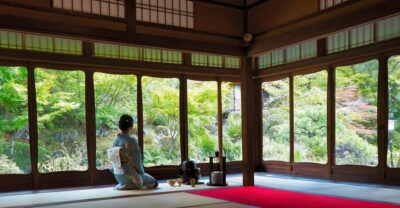
Tea Ceremony in a Traditional Tea House in Kiyomizu
Read our review →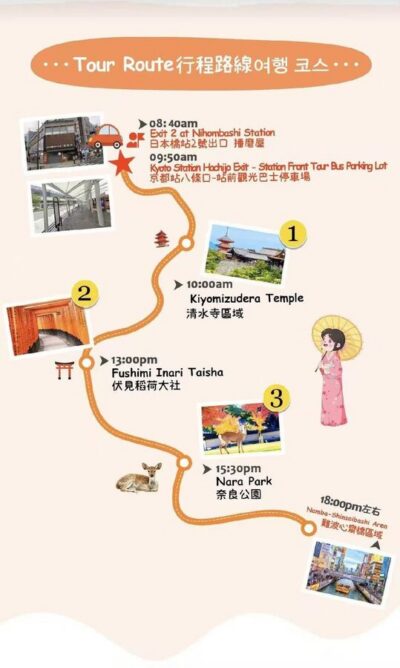
Kyoto Nara Day Trip │ Kiyomizu-dera Temple + Fushimi Inari-taisha Shrine + Nara Park (Departing from Osaka/Kyoto)
Read our review →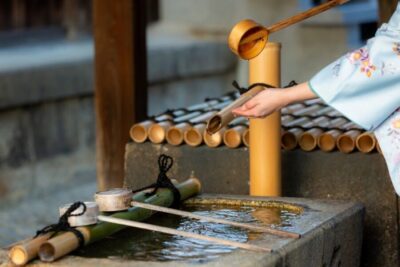
Browse the lists this tour appears in