
Reviewed · TEMPLES AND SHRINES
Nara: Essential Private Tour with Deer Park and Temples
Ancient Nara rewards a careful look. I like the private format, which lets you ask questions and set a comfortable pace, and I like the smart route from Kintetsu Nara Station through temples, gardens, and deer-filled parkland. Guide Masa earns especially strong praise for his patience, clear English, practical help, and thoughtful explanations. The main drawback is time: three hours gives you a fine introduction, but not enough for every corner of Nara.
You will walk between the stops, so comfortable shoes matter. The route includes temple grounds, open parkland, and likely stretches in the sun, making a hat and sunscreen sensible. People with animal allergies should think twice, and the tour is not suitable for wheelchair users or pregnant women.
For a short first visit, this is a well-shaped introduction to Japan’s first permanent capital. It mixes major sights with quieter places, and Masa’s habit of helping with directions, shop translation, and local questions adds useful value beyond basic sightseeing.
In This Review
- Key Points Before You Book
- Meeting Masa at Kintetsu Nara Station
- Higashimuki Shopping Street: A Gentle Start
- Kōfuku-ji: Nara’s First Major Temple
- Nara Park: Deer, Space, and Simple Rules
- Himuro Shrine: A Smaller Sacred Stop
- Tōdai-ji: The Tour’s Main Event
- Yoshikien Garden: A Quiet Finish
- What the Guide Adds
- Is $126 Per Person Good Value?
- Walking, Weather, and Who Should Book
- Should You Book This Nara Tour?
- FAQ
- How long is the Nara private tour?
- Where does the tour meet?
- What language is the tour conducted in?
- Are temple and park admission fees included?
- Is the tour private?
- What should I bring?
Key Points Before You Book
- Three hours, six stops: The route covers Higashimuki Shopping Street, Kōfuku-ji, Nara Park, Himuro Shrine, Tōdai-ji, and Yoshikien Garden.
- A genuinely private outing: You travel with your own private group and an English-speaking guide, so questions do not get lost in a crowd.
- Masa receives repeated praise: His patience, preparation, friendly manner, and ability to explain temple history are the strongest themes in the feedback.
- Deer are part of the experience: You will have time in Nara Park, but animal allergies make this a poor choice for some people.
- The route begins and ends at Kintetsu Nara Station: That makes the tour convenient for a day trip and avoids the fuss of hotel pickup arrangements.
- $126 per person is a premium for three hours: The price makes the most sense if you value personal guiding, local help, and efficient sightseeing.
Meeting Masa at Kintetsu Nara Station
The tour starts at Kintetsu Nara Station, a practical choice for visitors arriving by train. After using the East Gate, head toward Exit 3. Go up the stairs or the escalator beside them, then look near the tourist information center for a sign with the Get Your Guide logo.
This arrangement is clearer than meeting somewhere vague in a large station. Still, give yourself a few extra minutes to find the correct exit, especially if you are carrying luggage or arriving during a busy travel period.
The tour ends back at the same station. That is helpful if Nara is a day trip from another city, since you do not need to work out a separate return route at the end. Hotel pickup and drop-off are not included, so you should plan your own way to the station.
The private setup is important here. Nara’s principal sights are easy to reach, but the meaning behind them can be difficult to sort out on your own. A guide can connect the temples, religious traditions, statues, gardens, and local customs as you go. You also have room to ask for clarification instead of simply following a flag through a crowd.
More Private Tours in Nara:
- Nara 6hr Private Tour with Government-Licensed Guide
★ 5.0 · 219 reviews - Nara: Private Tour with Private Guide
★ 4.8 · 66 reviews - Nara: Private Walking Tour with a Local
★ 4.3 · 36 reviews
Higashimuki Shopping Street: A Gentle Start
The first stop is Higashimuki Shopping Street, with about 20 minutes for a guided walk. This gives you a useful transition from the station into Nara itself.
A shopping street may not sound as important as a temple, but it helps you get your bearings. You can see the everyday side of the city before moving into its major religious sites. It is also a natural place to ask your guide about food, drinks, souvenirs, or practical matters for the rest of the day.
The short timing keeps the tour moving. If you want a long browse through shops, this will not be enough. Think of it as an introduction rather than a shopping session.
Masa’s practical help is a real advantage here. He has assisted with shop translation and directions, and he has even helped a visitor reach an ATM. Those small acts can save time and reduce stress when you are still getting used to Japan.
Kōfuku-ji: Nara’s First Major Temple
The route allows about 30 minutes at Kōfuku-ji. This is where the tour shifts from daily life to Nara’s religious and artistic past.
Kōfuku-ji is one of the city’s major temple sites, and a guide helps you see more than attractive roofs and old buildings. Ask about the temple’s role in Nara and about the statues or architectural details you are seeing. One of the tour’s strongest qualities is the guide’s willingness to explain the meaning behind the objects, rather than rushing you from one photo stop to the next.
Thirty minutes is enough for an orientation and a focused visit. It is not enough to inspect every building or spend a long time in nearby museum collections. If Buddhist sculpture is your main interest, you may want to return independently after the tour.
That limitation is part of the tradeoff with a three-hour route. You get a broad introduction to several important places, but each visit has a firm boundary. The private format helps because your guide can spend more time on the subjects that interest you most, within the available schedule.
Nara Park: Deer, Space, and Simple Rules
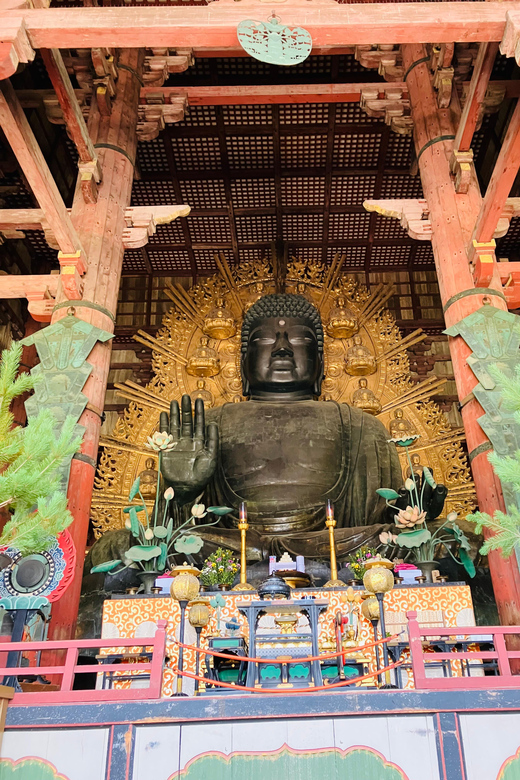
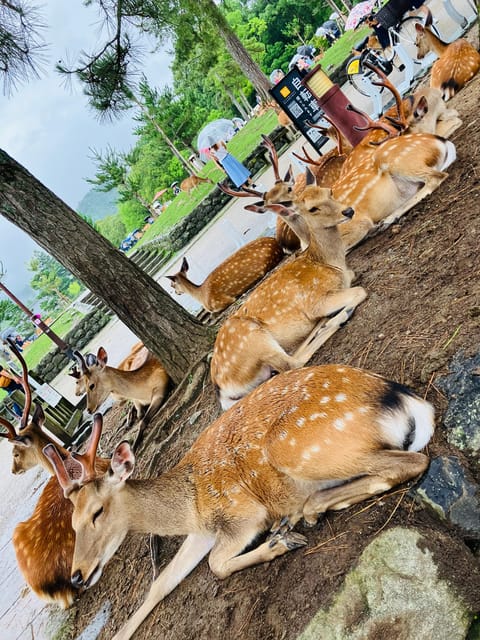
Next comes Nara Park, with roughly 30 minutes set aside for a guided visit. This is the part many people picture first when they think of Nara: open parkland and deer moving among people.
The animals make the setting unusual, but they also require a little care. Patrick specifically praised Masa for explaining how to feed and approach the deer without getting swarmed. That is useful advice, since a friendly deer can become very persistent once food appears.
Follow your guide’s instructions and keep your movements calm. Do not treat the animals like tame pets, even when they come close. The tour information also warns people with animal allergies that this experience may not suit them.
Half an hour gives you time to see the deer and understand how they fit into the city’s visitor culture. It is not a long wildlife outing, and you should not expect a quiet nature walk free from other people. The park is a major attraction, so the mood can change depending on the time and season.
Still, the balance works well. After temple grounds and historical explanations, the park gives you room to walk, breathe, and take photographs. Bring your camera, but remember that flash photography is not allowed.
More Temples and Shrines in Nara:
- E-Bike Nara Highlights – Todaiji, Knives, Deer, Shrine
★ 4.8 · 186 reviews - Nara: Great Buddha, Kasuga Shrine & Deer Park Tour
★ 4.8 · 62 reviews - E-Bike Nara Highlights – Todaiji, Knives, Deer, Shrine, and Gems
★ 4.5 · 34 reviews - [Kyoto & Nara Day Tour] Sagano Scenic Railway & Nara Park & Fushimi Inari Taisha Thousand Torii Gates & Togetsukyo Bridge & Bamboo Grove & Kimono Forest (Departing from Osaka)
★ 4.9 · 10,942 reviews
Himuro Shrine: A Smaller Sacred Stop
The 20-minute visit to Himuro Shrine provides a change of scale. Compared with Nara’s biggest temple sites, a smaller shrine can feel more personal and easier to take in during a short stop.
This is one of the route’s useful choices. A tour made only of famous monuments can become a parade of large gates and grand halls. Himuro Shrine adds variety and gives your guide another setting in which to explain local religious customs.
The short visit means you will probably receive a compact introduction rather than an extended exploration. That is fine for first-time visitors who want a sense of Nara’s different sacred spaces. If you prefer to linger quietly at each site, the schedule may feel brisk.
You should also keep an eye on the walking time between stops. The tour is only three hours, and the published stop times use that entire window. Your guide’s route planning matters, which is one reason the repeated praise for Masa’s preparation is meaningful.
Tōdai-ji: The Tour’s Main Event
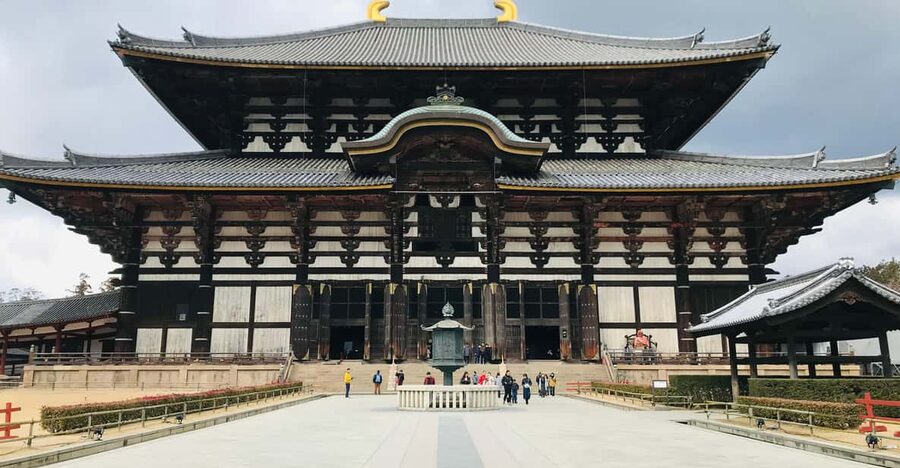
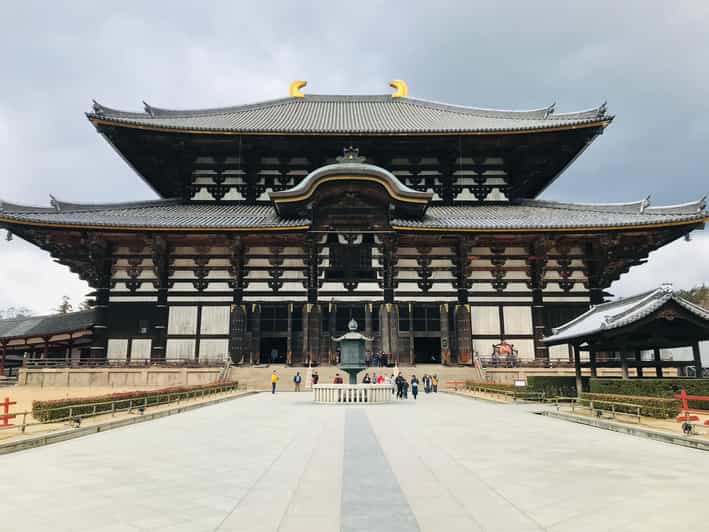
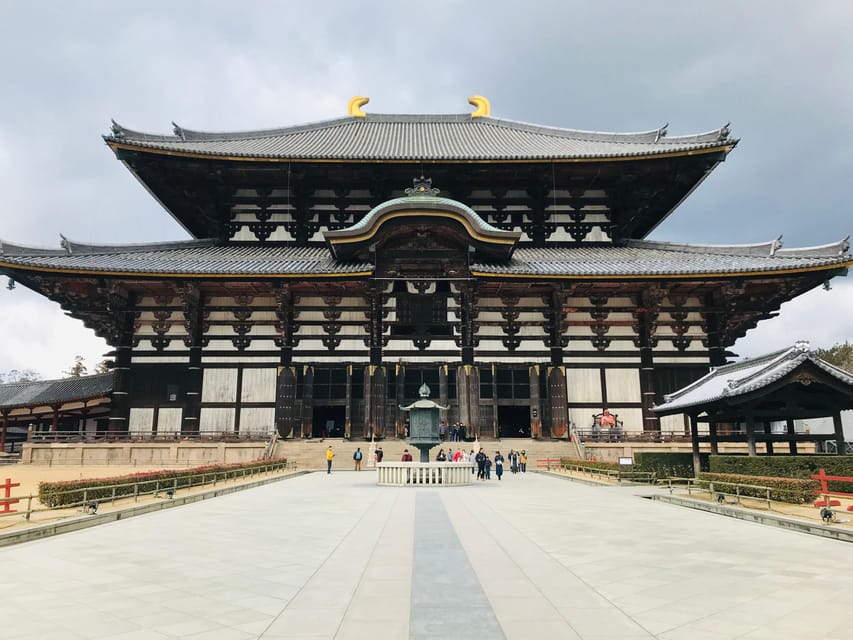
Tōdai-ji receives the longest stop, one full hour, and that is the right decision. This is the centerpiece of the route, with the time needed to appreciate one of Nara’s most important religious landmarks.
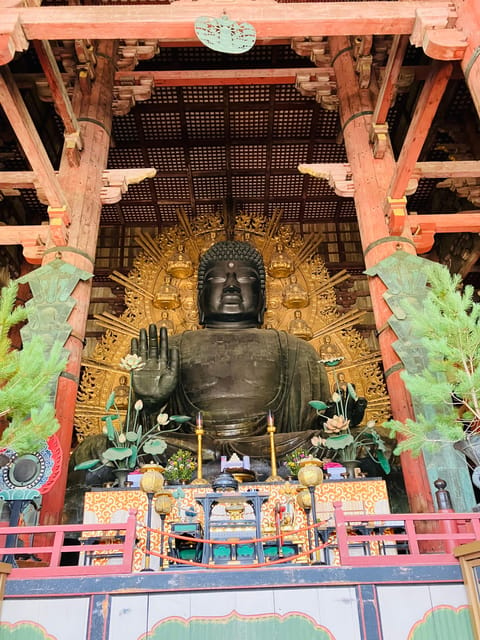
A rushed visit to Tōdai-ji can leave you with little more than a photograph of a huge wooden building. An hour gives your guide space to explain the temple, its history, and the statues inside. Patrick singled out Masa’s explanations of both temple history and the figures within the temples, exactly the kind of detail that makes a guided visit worthwhile.
You can use this time to ask direct questions. Why was the temple important? What should you notice in the architecture? How should you understand the religious images? A private guide can adjust the conversation to your interests instead of delivering a fixed speech.
Tōdai-ji is also the point where the price becomes easier to judge. If you were only walking through the park and taking a few photographs, $126 per person would feel high. But an hour of focused guidance at the most significant stop, combined with the rest of the route, gives the fee a clearer purpose.
Admission to the temples and parks is included. Personal expenses, such as drinks and souvenirs, are not. You should also remember that gratuity is optional, although it is appreciated if your guide has provided the kind of personal help described in the feedback.
Yoshikien Garden: A Quiet Finish
The final sightseeing stop is Yoshikien Garden, with about 20 minutes before returning to Kintetsu Nara Station. It is a calm way to finish a route that includes large temples, wildlife, and plenty of visual stimulation.
Gardens reward slower attention. Look at the arrangement of stones, plants, paths, and water rather than trying to cover every part at speed. Twenty minutes is brief, but it gives you a final pause before the walk back to the station.
The garden also reinforces the tour’s main theme: Nara is not only a collection of famous buildings. Its appeal comes from the way sacred places, greenery, wildlife, and ordinary city life sit close together.
If gardens are your top priority, you may want more time than this schedule allows. The same is true for photography. The tour offers an overview, not a leisurely garden study. That is a fair compromise for anyone trying to see Nara’s main character in one morning or afternoon.
What the Guide Adds
The strongest part of this experience is the human element. Masa is repeatedly described as patient, friendly, prepared, and easy to talk with. That combination matters more than a memorized list of dates.
One couple praised his ability to explain the statues and temple history while also helping them handle the deer. Another visitor appreciated his support with local navigation, shop translation, and an ATM. Those are the moments that turn a sightseeing walk into practical travel help.
Masa has also prepared information in a visitor’s native language when possible, including Korean materials for one participant. The booked tour language is English, so you should not assume a multilingual tour, but this suggests care in adapting explanations to the people in front of him.
Several comments also point to an unhurried pace. One participant said the tour covered the desired sights without feeling rushed. That is worth noting because the schedule is full. You will not have hours at each stop, but the guide appears to use the time thoughtfully and leave room for questions.
A private tour can sometimes feel stiff or overly formal. The feedback here points in the opposite direction, with Masa described as personable and good to converse with while moving between locations. For many people, that ease will be as valuable as the historical information.
Is $126 Per Person Good Value?
At $126 per person, this is not a budget walking tour. The duration is three hours, and you are responsible for getting to Kintetsu Nara Station. If you mainly want to see the deer and take photographs, you can visit Nara Park without paying for a guide.
The value improves if you want context and personal support. The fee includes an English-speaking guide, admission to temples and parks, and a private group rather than a large shared party. You are paying for a planned route, explanations at each major stop, and the ability to ask questions throughout.
I would especially consider the price reasonable for a first visit, a short stay, or a day when you want to cover the main sights without spending time sorting out the route yourself. It also suits people who feel unsure about deer etiquette, Japanese religious sites, or navigating unfamiliar streets.
The price is harder to justify for repeat visitors who already know Nara well, or for people who prefer to explore slowly and independently. You could easily spend more than three hours at Tōdai-ji, Nara Park, or the gardens alone.
The ability to reserve now and pay later, along with free cancellation up to 24 hours before the start, gives you some planning flexibility. Those terms are useful when your Japan schedule depends on trains or changing weather, but always check the available start times before committing.
Walking, Weather, and Who Should Book
You should bring comfortable shoes. The route moves among a shopping street, temple grounds, parkland, a shrine, and a garden, so this is not a seated sightseeing experience.
A hat, sunscreen, and camera are sensible choices. Smoking and flash photography are not allowed. You may also want water or a drink, but personal purchases are your responsibility.
This tour suits you best if:
- You are visiting Nara for the first time.
- You want major temples plus a taste of everyday city life.
- You prefer a private guide to a large group.
- You value explanations and questions more than a slow, unstructured visit.
- You have only three hours in Nara.
- You would appreciate help with local directions or simple translation.
It is less suitable if you use a wheelchair, are pregnant, have animal allergies, or want to spend a long time at one temple. It may also frustrate serious photographers who need unlimited time at each viewpoint.
The private group format may work well for couples, families, or friends who want the guide’s attention. Since the route is compact and the guide can adjust explanations, it is also a good fit for mixed-interest groups where one person cares about architecture, another about deer, and another about food or local customs.
Should You Book This Nara Tour?
I would book this tour if you want an efficient, personal introduction to Nara and are willing to pay for guidance. Its best features are the carefully balanced route, the full hour at Tōdai-ji, the deer advice, and Masa’s patient, helpful approach.
I would skip it if you are comfortable navigating alone, want to spend most of the day in the park, or plan a detailed return visit to each temple. The three-hour schedule is an overview, not a complete study of Nara.
For a first visit from Kyoto or Osaka, the tour gives you a clear starting point and gets you back to the station. At a perfect five-star rating from 24 submitted ratings, it has a strong record, with the highest praise focused on Masa’s preparation, warmth, English, and willingness to help. That is the reason to choose this experience: not simply to see Nara, but to understand what you are looking at while making the most of a short visit.
FAQ
How long is the Nara private tour?
The tour lasts three hours and includes guided visits to six stops before returning to Kintetsu Nara Station.
Where does the tour meet?
Meet near Exit 3 at Kintetsu Nara Station. After leaving through the East Gate, go toward Exit 3 and look near the tourist information center for a guide holding a sign with the Get Your Guide logo.
What language is the tour conducted in?
The tour includes a live English-speaking guide.
Are temple and park admission fees included?
Yes. Admission to the temples and parks visited on the tour is included. Drinks, souvenirs, and other personal expenses are not included.
Is the tour private?
Yes. It is arranged for a private group rather than a large shared group.
What should I bring?
Bring comfortable shoes, a hat, sunscreen, and a camera. Flash photography and smoking are not allowed.
Just added in Nara
- Hammer a Pattern on Your Ring Workshop★ 5.0 · 57 reviews
- All must-sees in 3 hours – Nara Park Classic Tour! From JR Nara!★ 5.0 · 108 reviews
- Nara Private Tour: Flexible Pickup from Kyoto, Osaka, or Nara★ 5.0 · 17 reviews
- Private Nara Tour and Sake Tasting (Departing from Kyoto/Nara)★ 5.0 · 40 reviews
- Nara Highlight Walking Tour with Furoshiki Experience with Lunch★ 5.0 · 73 reviews
- Nara Sake Tasting Tour at Local Brewerie(tasting fee included)★ 5.0 · 12 reviews
- Nara World Heritage PRIVATE TOUR★ 4.5 · 15 reviews
- Nara – Highlights Bike Tour★ 4.5 · 89 reviews
Temples and Shrines, compared.
![[Kyoto & Nara Day Tour] Sagano Scenic Railway & Nara Park & Fushimi Inari Taisha Thousand Torii Gates & Togetsukyo Bridge & Bamboo Grove & Kimono Forest (Departing from Osaka)](https://media.japanvisits.com/wp-content/uploads/kyoto-nara-day-tour-sagano-scenic-railway-nara-park-fushimi-inari-taisha-thousand-torii-gates-togetsukyo-bridge-bamboo-grove-kimono-forest-departing-from-osaka-k110001-400x257.jpg)
Kyushu One-Day Tour: Yufuin no Mori Train & Yufuin Town & Nyoirin-ji Temple & Dazaifu & Hell Hot Springs (Departing from Fukuoka)
Read our review →
Fushimi Inari, Kinkakuji, Bamboo Grove 1 Day Bus Tour
Read our review →
Tea Ceremony in a Traditional Tea House in Kiyomizu
Read our review →
Kyoto Nara Day Trip │ Kiyomizu-dera Temple + Fushimi Inari-taisha Shrine + Nara Park (Departing from Osaka/Kyoto)
Read our review →
Browse the lists this tour appears in