
Reviewed · NARA TOURS
Nara Early Morning Tour (Kyoto or Osaka Departure Available)
Beat Nara’s crowds before breakfast. This four-and-a-half-hour walking tour gives you an early look at Kofuku-ji Temple, Kasuga Grand Shrine, Nara Park, and Todai-ji Temple, with an English-speaking guide to explain the stories behind each place. I like the small maximum group of 12 and the peaceful start, especially since Nara can become packed later in the day. I also like that guides such as Momoka, Nana, Haruka, Futaba, and Koichiro are praised for clear explanations and helpful local advice.
The main drawback is the walking. You should expect about 10,000 steps, and the return journey to Kyoto or Osaka is not included. The ¥800 Todai-ji entrance fee is also extra, so the advertised price is not the full cost of the morning.
In This Review
- Quick Points Before You Book
- Why an Early Start Makes Such a Difference
- Kofuku-ji Temple and Nara’s Beginning as a Capital
- Kasuga Grand Shrine’s Lantern-Lined Forest
- Nara Park and the Deer Encounter
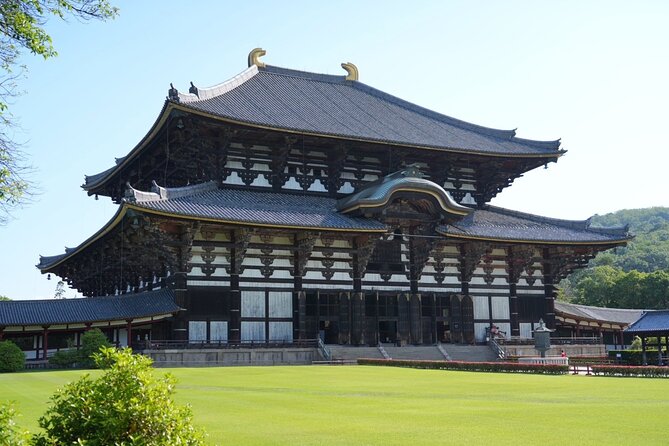
- Todai-ji and the Great Buddha
- What the Guides Add to the Morning
- Group Size, Walking, and Pace
- Transportation From Kyoto or Osaka
- Is the $61.02 Price Good Value?
- Who Should Book This Nara Tour?
- Final Verdict: A Smart First Morning in Nara
- FAQ
- How long does the Nara Early Morning Tour last?
- Where does the tour start and end?
- Can I join the tour from Kyoto?
- Is transportation from Osaka included?
- Is the return trip to Kyoto or Osaka included?
- How much is the Todai-ji entrance fee?
- How much walking is involved?
- Can children join the tour?
- What is the maximum group size?
Quick Points Before You Book
- Early access to Nara Park: You see the deer and temple grounds before the largest daytime crowds arrive.
- Four major sights in one route: Kofuku-ji, Kasuga Grand Shrine, Nara Park, and Todai-ji provide a useful first look at Nara.
- Small-group format: The tour allows a maximum of 12 people, with some departures potentially much smaller.
- Strong guide element: Guides are praised for history, culture, local folklore, photo advice, restaurant suggestions, and help with the return train.
- About 10,000 steps: This is an active walking morning, not a bus-based sightseeing trip.
- Kyoto or Osaka departure options: Transportation to Nara is included only when you select the appropriate departure option.
Why an Early Start Makes Such a Difference
Nara is easy to visit independently, but timing matters. The deer, temples, and shrine paths are all popular, and the main areas become much busier as the morning progresses. Starting early gives you a better chance to enjoy the forest paths and temple approaches without feeling hemmed in by large groups.
The early hour also suits Nara’s mood. Kasuga Grand Shrine is surrounded by wooded paths and lanterns, and the setting feels quieter before the day gets fully underway. One participant specifically found the crisp morning especially peaceful during the forest walk, while another noticed that the crowds had grown considerably by the time the tour ended.
I think this is the tour’s strongest idea. You are not simply fitting Nara into a half-day schedule. You are choosing the part of the day when its shrines, deer, and old paths are at their calmest.
The schedule lasts about four hours and 30 minutes. The listed sightseeing stops account for roughly three hours, with the remaining time used for walking, meeting arrangements, and transportation if you select pickup from Kyoto or Osaka. You should still allow extra time afterward if you want lunch, shopping, or another temple visit.
A few more options to weigh up in Nara
- World Heritage Kyoto & Nara Uji Authentic Matcha Experience
★ 5.0 · 1,573 reviews - Nara Half Day Trip Walking Tour (Private Option Available)
★ 5.0 · 937 reviews - Osaka: Nara and Uji Day Trip with Deer Park and Hot Spring
★ 4.4 · 302 reviews
Kofuku-ji Temple and Nara’s Beginning as a Capital
The first stop is Kofuku-ji Temple, where you spend about 30 minutes. The temple was established in Nara in 710, the same year Nara became Japan’s capital. That date gives the rest of the morning a useful frame: this is not just a collection of attractive buildings, but a city planned around imperial power, Buddhism, and religious institutions more than 1,300 years ago.
Kofuku-ji is best known for its five-story pagoda. It is the second-tallest wooden pagoda in Japan, only seven meters shorter than the country’s tallest. Your guide can help you notice details that are easy to miss when you are focused only on taking a photo.
The stop is brief, which is sensible. You get an introduction to the temple and its place in Nara’s story, then move toward the shrine and park. Kofuku-ji admission is listed as free, although the short visit means you should not expect a detailed exploration of every temple building.
This is also a good point to ask questions. The guides are repeatedly praised for making history understandable rather than turning the morning into a lecture. Momoka, for example, is noted for explaining architecture and culture in a lively way and inviting the group to ask questions.
Kasuga Grand Shrine’s Lantern-Lined Forest
The longest shrine visit is at Kasuga Grand Shrine, with about one hour scheduled. This is where the tour shifts from an urban temple setting to a wooded sacred site.
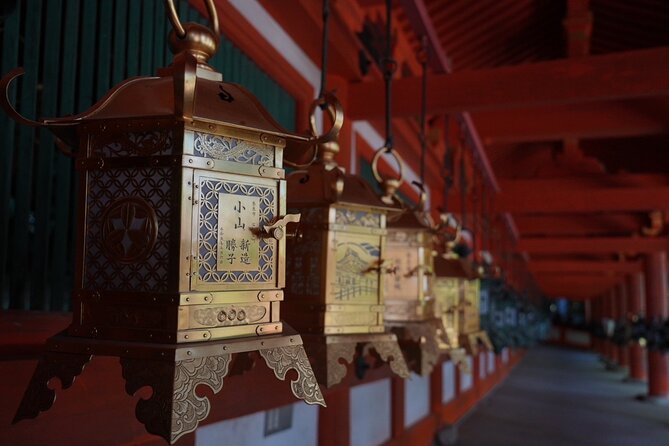
Kasuga is famous for its lanterns. About 3,000 stone and bronze lanterns were donated by worshippers, creating one of the shrine’s most memorable features. They line the approaches and help explain the relationship between religious devotion, family offerings, and the visual design of Japanese shrines.
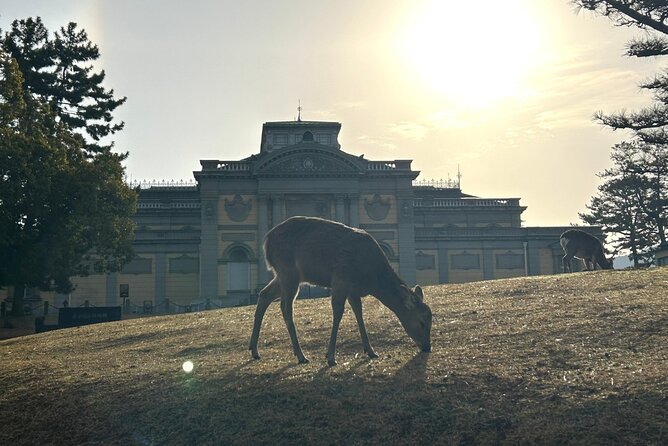
The shrine is tied closely to the deer of Nara. The local tradition says that one of the four gods associated with Kasuga arrived in Nara riding a deer. That belief is why the deer are treated as sacred, rather than simply as park animals.
Your guide’s role matters most here. The buildings and lanterns are beautiful on their own, but the meaning behind them is less obvious. Guides have explained Japanese religious practices, architecture, local folklore, and cultural customs in ways that help connect the details.
The forest route can be peaceful, but it is not a flat indoor attraction. You will be walking outdoors, and the total outing reaches about 10,000 steps. If you have limited stamina, ask yourself whether you are comfortable spending most of a morning on foot.
Nara Park and the Deer Encounter
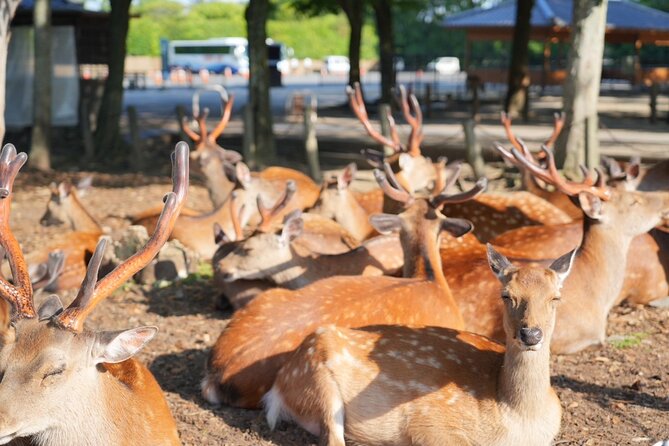
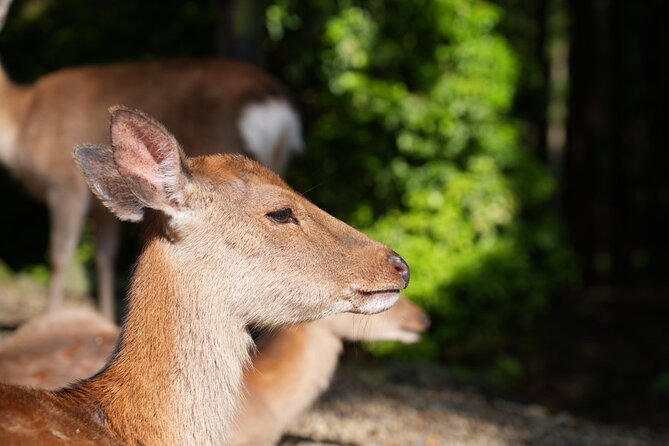
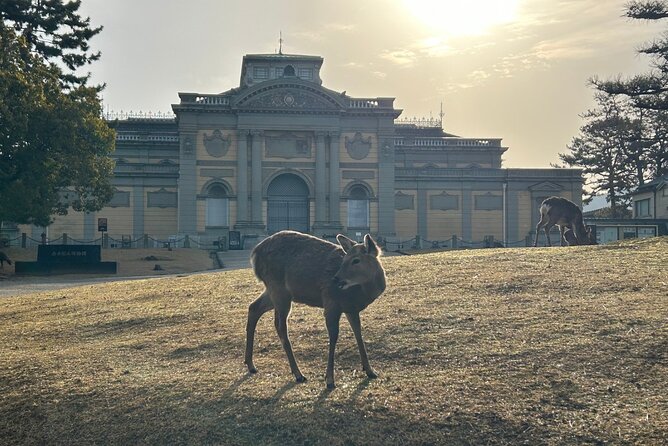
Nara Park receives about 30 minutes on the formal schedule, though you will encounter deer along the route before and after this section. The park is home to thousands of deer, and feeding them is one of the morning’s most memorable moments.
You can buy special deer biscuits and offer them carefully. The deer are accustomed to people and may bow for food, a behavior that has become one of Nara’s signature sights. It is charming, but the animals are still animals. They can be eager, persistent, and less innocent than their soft faces suggest.
This is one reason a guide adds practical value. Ayame was praised for being particularly good with the deer, and one participant joked that an experienced deer handler is useful. A guide can help you understand how to approach the animals and when to stop feeding them, especially if you are visiting with children.
Families seem well suited to this part of the outing. Children enjoy the immediate appeal of the deer, while adults get the cultural explanation behind their protected status. Futaba has been praised for using quizzes to make Japanese culture accessible to younger participants, and several guides are noted for answering children’s questions patiently.
Keep the timing in mind. Thirty minutes is enough for a meaningful encounter, but it is not a long animal-feeding session. The tour is designed to balance the deer with major religious sites, not to spend the entire morning in the park.
A completely different kind of day out:
- Kyoto/Osaka: Kinkakuji, Bamboo Forest, and Nara Deer Park
★ 4.4 · 265 reviews - Nara 6hr Private Tour with Government-Licensed Guide
★ 5.0 · 219 reviews - E-Bike Nara Highlights – Todaiji, Knives, Deer, Shrine
★ 4.8 · 186 reviews - Nara Early Bird Tour (Kyoto Departure Option Available)
★ 4.9 · 142 reviews
Todai-ji and the Great Buddha
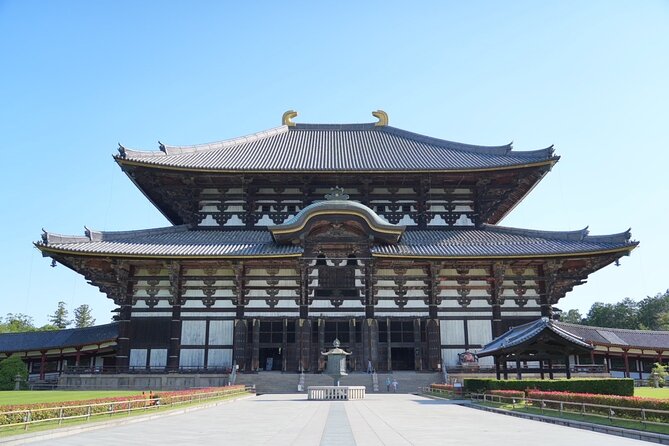
The final major stop is Todai-ji Temple, with about one hour planned. This is the visual climax of the route.
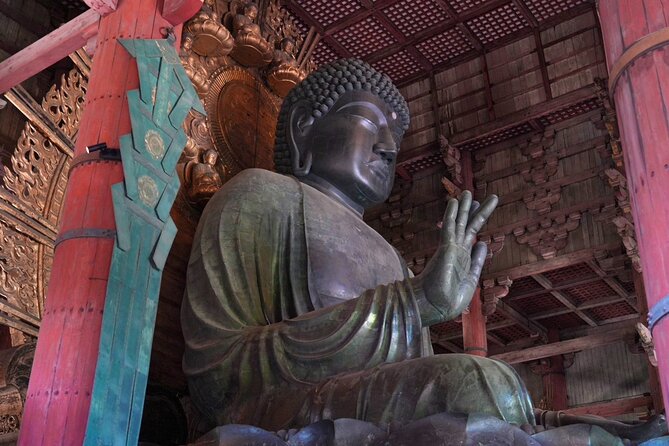
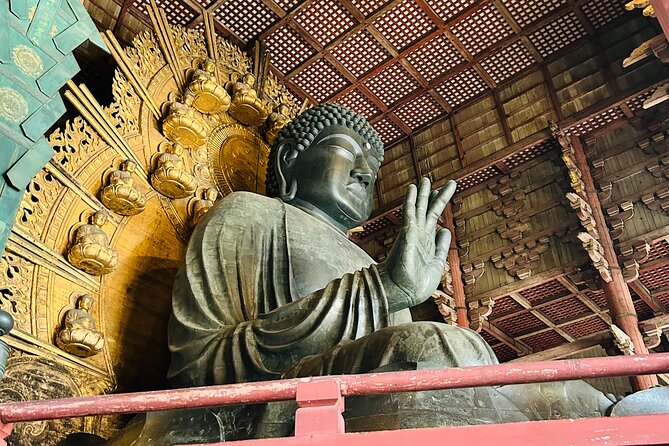
Todai-ji is famous for its Great Buddha, described as the largest Buddha statue in Japan. The temple’s main hall was also, until recently, the world’s largest wooden building. Even if you have seen photographs, the scale is difficult to understand until you enter the hall and look up at the structure surrounding the statue.
The entrance fee is ¥800 per person and is not included. That extra charge is modest beside the overall cost of the tour, but you should budget for it. Todai-ji is the one scheduled stop where admission is specifically required.
An hour gives you enough time to see the Great Buddha, take photographs, and hear the main explanation without being rushed. Guides have been praised for discussing the temple’s history, architecture, religion, and role in Nara’s development. Koichiro, in particular, is noted for sharing local folklore and answering detailed questions about Japanese culture and religious practice.
Todai-ji can be busy even on an early tour, so the advantage here is relative rather than absolute. You may avoid the worst crowds, but this is still Nara’s best-known temple. The early schedule helps you reach it before the day peaks.
What the Guides Add to the Morning
The strongest praise is aimed at the guides. Names appearing often in positive feedback include Momoka, Nana, Haruka, Futaba, Kevin, Natsuho, Shin, Koichiro, Ayame, Koh, Toshiki, Ginko, Itsuku, and Soichiro Toide.
That does not mean you can necessarily request a specific person. Guide assignments can vary. It does show the kind of service the operator aims to provide: friendly explanations, patience with questions, help with photographs, and practical advice beyond the formal route.
Several useful guide habits come through clearly:
- Haruka has helped people understand how to return to Kyoto and suggested restaurants.
- Momoka is praised for keeping the pace relaxed and adapting explanations to the group.
- Koichiro has shared folklore and pointed out good cherry-blossom photo spots.
- Kevin has adjusted the walking pace for families with children.
- Futaba has kept in touch about the meeting point and used quizzes to make the tour interactive.
- Natsuho has added stops when she thought a participant would enjoy them.
- Soichiro Toide has offered recommendations for places to visit after the tour.
A guide cannot change the fixed length of the morning, but a good one can make the route feel much more useful. Nara’s religious buildings have layers of meaning that are easy to miss without context. I would especially value the guide if this is your first visit to Japan or if you want more than a quick photo stop.
Group Size, Walking, and Pace
The maximum group size is 12. That is small enough for a guide to hear questions and keep people together, but it is not a private tour. Some departures have had only four people, while others may be closer to the maximum.
A smaller group can make the morning feel more flexible. It is easier to stop for photographs, ask about a detail, or adjust the pace slightly. The trade-off is that the exact group size is not guaranteed when you book.
The walk is the main physical demand. The tour requires a moderate level of fitness and covers approximately 10,000 steps. You will move between temple grounds, shrine paths, park areas, and the Todai-ji complex, so comfortable shoes are essential.
The schedule is generally described as relaxed rather than rushed. Participants have had time to ask questions, take photographs, and enjoy each site. Still, relaxed does not mean easy. You are walking for most of the morning, and the route may feel tiring if you are managing knee, hip, or mobility problems.
The operator does not recommend the experience for people over 75, and children under six cannot join. Those limits are worth taking seriously. Families with older children can enjoy the deer and the interactive explanations, but very young children may struggle with the distance and early start.
Transportation From Kyoto or Osaka
You can choose an option with pickup at Kyoto Station, and transportation from Kyoto or Osaka to Nara is included only if you select the relevant departure option. The meeting and ending point shown for the main experience is Nara Park, so read the exact option details carefully before paying.
The return trip to Kyoto or Osaka is not included. This is one of the most important practical points. You should not assume that a round-trip transfer is part of the price.
The guides can help with the journey back. Haruka and Koh are specifically praised for making the train return easier, but you remain responsible for your own transportation and its cost. If you are staying in Kyoto or Osaka, keep the end of the tour open enough to handle the return without stress.
Starting at Nara Park can also work well if you are already staying in Nara or plan to spend the rest of the day there. The tour ends where it starts, giving you the option to continue exploring on your own.
Is the $61.02 Price Good Value?
The price is $61.02 per person. That is a fair price if you want a guide and arranged transportation from Kyoto or Osaka, but the value depends on the departure option you choose.
The price covers the English-speaking guide and transportation from Kyoto or Osaka when that option is selected. You still pay for the ¥800 Todai-ji admission, food, drinks, and your journey back.
I see the value in the small group and the guide’s local explanation. You can visit Nara independently for less, but you would need to plan the route, manage transport, interpret the sites, and decide how to handle the deer. This tour combines the main sights in one morning and gives you a better chance of seeing them before the largest crowds.
It is less good value if you already know Nara well, prefer long independent visits, or dislike fixed schedules. You may want more than 30 minutes at Nara Park or more time inside Kofuku-ji. The tour gives you a strong first orientation, not a slow, exhaustive study of each site.
The rating is 4.9 from 676 ratings, with 98 percent recommending it. Those numbers fit the experience as described: the route is focused, the guides receive unusually consistent praise, and the early start solves a real problem in Nara.
Who Should Book This Nara Tour?
I would recommend it to first-time visitors who want to see Nara’s essential sights without spending a full day planning the details. It is also a good fit for families with children old enough to manage a long walk, especially if the kids enjoy animals and interactive storytelling.
You should also consider it if you are visiting during a busy season. The early schedule will not make Nara empty, but it can give you a quieter start and a less crowded walk through the park and shrine area.
Independent visitors may prefer to skip the tour if they want to set their own pace, return to favorite buildings, or spend a long time feeding deer. The 10,000-step route and fixed four-and-a-half-hour schedule are real commitments.
Book with extra care if you are near the age or fitness limits. Under-six children cannot participate, people over 75 are not recommended, and the return transportation is your responsibility.
Final Verdict: A Smart First Morning in Nara
This tour works because it gets the order and timing mostly right: temple, shrine, deer park, then the Great Buddha. You receive cultural context along the way, and the early start helps keep the morning calmer.
The best parts are the small group, the guide quality, and the chance to see Nara before the heaviest crowds. The chief costs are the walking, the extra Todai-ji fee, and the need to arrange your own return.
I would book it if you want a friendly, well-paced introduction to Nara and value explanations as much as photographs. I would skip it only if you are confident planning the route yourself or need a low-walking day.
FAQ
How long does the Nara Early Morning Tour last?
The tour lasts approximately four hours and 30 minutes.
Where does the tour start and end?
The listed meeting point and ending point are both in Nara Park, Nara, Japan.
Can I join the tour from Kyoto?
Yes. An option with pickup at Kyoto Station is available. Transportation from Kyoto to Nara is included only when you select that option.
Is transportation from Osaka included?
Transportation from Osaka to Nara is included only if you select the applicable departure option.
Is the return trip to Kyoto or Osaka included?
No. Transportation returning from Nara to Kyoto or Osaka is not included.
How much is the Todai-ji entrance fee?
The entrance fee is ¥800 per person and is not included in the tour price.
How much walking is involved?
You will walk about 10,000 steps during the tour, and a moderate level of physical fitness is required.
Can children join the tour?
Children under six cannot join. The tour is suitable only for older children who can manage the walking and early schedule.
What is the maximum group size?
The tour has a maximum of 12 participants.
Just added in Nara
- Hammer a Pattern on Your Ring Workshop★ 5.0 · 57 reviews
- All must-sees in 3 hours – Nara Park Classic Tour! From JR Nara!★ 5.0 · 108 reviews
- Nara Private Tour: Flexible Pickup from Kyoto, Osaka, or Nara★ 5.0 · 17 reviews
- Private Nara Tour and Sake Tasting (Departing from Kyoto/Nara)★ 5.0 · 40 reviews
- Nara Highlight Walking Tour with Furoshiki Experience with Lunch★ 5.0 · 73 reviews
- Nara Sake Tasting Tour at Local Brewerie(tasting fee included)★ 5.0 · 12 reviews
- Nara World Heritage PRIVATE TOUR★ 4.5 · 15 reviews
- Nara – Highlights Bike Tour★ 4.5 · 89 reviews
Nara Tours, compared.
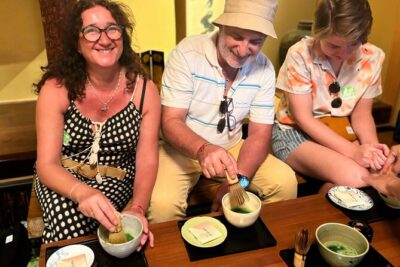
World Heritage Kyoto & Nara Uji Authentic Matcha Experience
Read our review →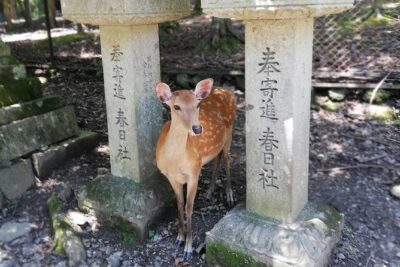
Nara Half Day Trip Walking Tour (Private Option Available)
Read our review →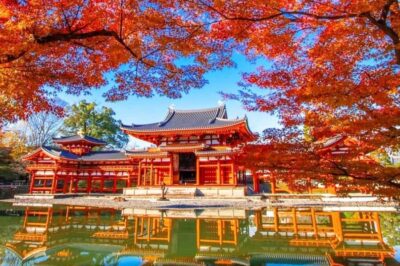
Nara and Uji Day Trip with Deer Park and Hot Spring
Read our review →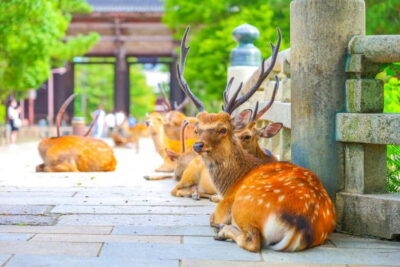
Kyoto/Osaka: Kinkakuji, Bamboo Forest, and Nara Deer Park
Read our review →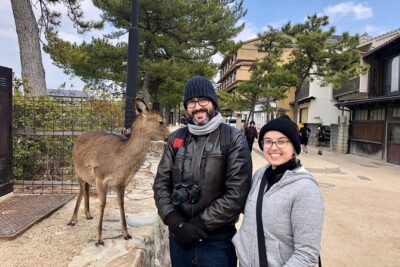
Nara 6hr Private Tour with Government-Licensed Guide
Read our review →
E-Bike Nara Highlights – Todaiji, Knives, Deer, Shrine
Read our review →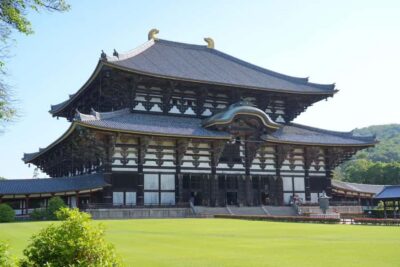
Nara Early Bird Tour (Kyoto Departure Option Available)
Read our review →
Nara:Authentic Tea Ceremony(Max 5 ppl) -Master Matcha Making
Read our review →Browse the lists this tour appears in