
Reviewed · CYCLING AND E-BIKE TOURS
3h Tokyo E-Bike Tour: Hidden Gems, and Local Life with guide
Tokyo reveals itself best at street level. This three-hour e-bike ride gives you a useful mix of famous sights and ordinary neighborhoods, from Kanda’s little bars to Imperial Palace gates, Tsukiji, Akihabara, Asakusa, and Ryogoku. I especially like the small group size, capped at six, and the chance to see more of central Tokyo without wearing out your legs.
The electric bikes make long city rides manageable, and the guides add the context that a map cannot. Guides such as Yo, Jenny, Take, Ted, Kazu, Ninja, and Yoshiko have earned praise for being friendly, patient, safety-minded, and good with questions. The main point to consider is that you must already know how to ride a bicycle and feel comfortable sharing busy city streets.
In This Review
- Quick Takeaways From the Ride
- Starting Near Kanda Station
- Kanda: A Working Neighborhood With Small Bars
- Morning Route: Tokyo Station and Imperial Palace Views
- Ginza and Tsukiji: From Luxury Streets to Food Shops
- Local Backstreets and the Value of an E-Bike
- Afternoon Route: Akihabara and Tokyo’s Pop Culture Side
- Kappabashi, Asakusa, and Ryogoku
- Nihonbashi Brings Both Routes Together
- What the Guides Add
- Is $63.01 a Fair Price?
- Heat, Rain, and City Traffic
- Who Should Book This Tokyo Bike Tour?
- Should You Book It?
- FAQ
- Where does the Tokyo e-bike tour start?
- How long is the tour?
- What is included in the tour price?
- Are there different morning and afternoon routes?
- What age and height limits apply?
- What happens if the tour is canceled because of weather?
Quick Takeaways From the Ride
- Two different routes: Morning rides focus on Tokyo Station, the Imperial Palace, Ginza, Tsukiji, and local streets. Afternoon rides head toward Akihabara, Kappabashi, Asakusa, Ryogoku, and Nihonbashi.
- E-bikes do the heavy work: The assist lets you cover a broad slice of Tokyo while keeping the ride pleasant in heat or over several hours.
- A genuinely small group: The maximum is six people per booking, which gives the guide room to answer questions and keep an eye on the group.
- Useful first-day activity: A bike ride can help you get your bearings and identify places to revisit later on foot or by train.
- The city is part of the attraction: You move through office districts, shopping streets, temple areas, food lanes, and residential backstreets rather than staying on one sightseeing circuit.
- Weather matters: Rain can cancel the tour, and extreme summer heat can also lead to a cancellation or an early return.
Starting Near Kanda Station
You meet at Cycling Holiday Tokyo, a one-minute walk from the west exit of JR Kanda Station. The address is 3-chōme-8-6 Uchikanda, Chiyoda City. The shop has a restroom, waiting area, and space to leave luggage, except for valuables, while you ride.
That location makes sense for the tour. Kanda sits between several major parts of central Tokyo, so you can reach business districts, palace grounds, shopping areas, and older neighborhoods without spending the first half-hour on a train.
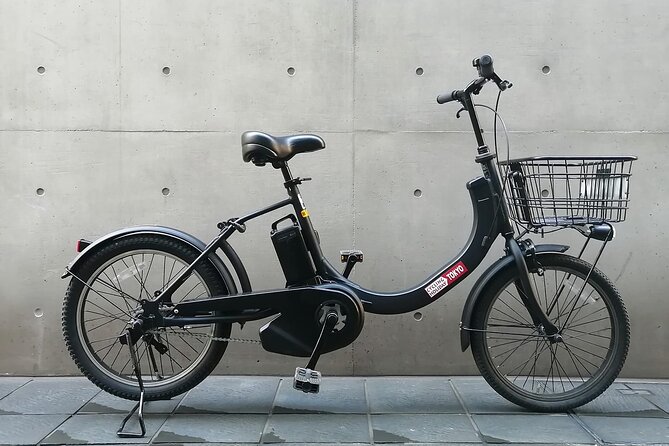
The guide fits you with an electric-assist bike and helmet. Simple rain gear is included, while gloves are provided in winter and cooling products are available in summer. You still need to bring sensible clothing, sunscreen, and enough water for the conditions. Several riders found the front basket useful for carrying a water bottle and small bag.
The bikes are described as easy to operate, but the ride is still a real city ride. You need to start, stop, steer, and pay attention around traffic, pedestrians, and other cyclists. A guide will lead the way, but you should not treat the e-bike like a sightseeing vehicle.
More Bike Tours in Tokyo
- Tokyo Great Cycling Tour
★ 5.0 · 811 reviews - Tokyo Top Highlights 3h Guided E-bike Tour
★ 5.0 · 714 reviews - Tokyo: 3-Hour Bike or E-Bike City Highlights Tour
★ 4.8 · 435 reviews
Kanda: A Working Neighborhood With Small Bars
The ride begins in Kanda, a compact downtown district shaped by office workers and after-hours dining. Instead of grand monuments, you see narrow streets lined with small Japanese-style bars and local businesses.
This is a good opening because it introduces a less polished side of central Tokyo. Kanda is close to the city’s major attractions, but its character comes from everyday work and nightlife rather than postcard views. Your guide can point out how the district functions as a place where people work, eat, and meet.
You spend about ten minutes here. That is enough for an introduction, not a full food tour. Food and drinks are not included, so any stop for a snack or meal is self-pay.
Morning Route: Tokyo Station and Imperial Palace Views
The morning route moves through Tokyo’s financial center, where modern office buildings create a sharp contrast with the older streets around Kanda. This section gives you a quick look at the polished face of central Tokyo and offers good photo opportunities from the road.
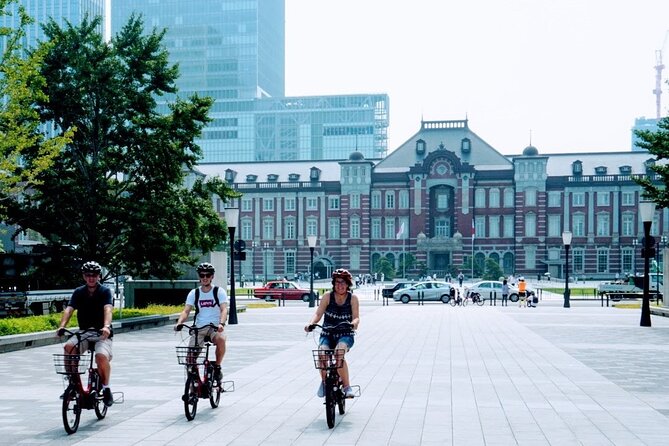
At Tokyo Station’s Marunouchi area, you pause near Gyoko-dori Street for a view of the station building. The guide explains the station’s history, while you take in the red-brick facade and the broad urban setting around it. The stop itself is short, about five minutes, so think of it as a focused photo and orientation stop rather than a station tour.
From there, the ride continues toward the Imperial Palace. At Otemon Gate, you look across the moat toward Fujimi-yagura Tower. The view is quiet and formal, with stone walls, water, and carefully maintained grounds cutting through the center of the city.
The palace area is valuable because it shows how quickly Tokyo changes from high-rise business streets to open historic grounds. You are not entering the palace buildings on this tour, but the exterior views and gates give you a strong sense of the site.
The route also includes the area around the Imperial Palace gardens, described as roughly 200,000 square meters. The exact path can change with traffic, road conditions, season, and pedestrian levels. That flexibility is practical, especially in a city where a busy crossing or crowded walkway can quickly make a planned route less pleasant.
You may also pass through Sakuradamon, one of the traditional castle gates. This section adds a little more historical texture to the ride without turning it into a long lecture. The bike lets you connect these sites efficiently, which would be harder to do on foot in only three hours.
Ginza and Tsukiji: From Luxury Streets to Food Shops
The morning route may take you through Ginza, either along its main streets or through back lanes, depending on the conditions. Ginza is known for luxury stores and polished department stores, but the back streets can offer a quieter view of the district.
This is one of the tour’s useful contrasts. You see the expensive, highly designed side of Tokyo, then move into smaller lanes where the scale feels more local. The guide may also point out less costly and more authentic places to eat near the Ginza area, giving you ideas for later meals.
The route reaches Tsukiji Jogai Market, the outer market, for about ten minutes. Small, old-fashioned food shops line the streets here, selling ingredients, snacks, and kitchen-related goods. This is not a scheduled meal, and ten minutes is not enough for a careful market crawl, but it gives you a quick look at the area and a chance to note where you might return.
You should not expect unlimited time to shop. If something catches your eye, ask the guide how much time is available before stopping. The strength of this part of the ride is the transition from formal Ginza to the older food-trading atmosphere around Tsukiji.
A completely different kind of day out:
- Tokyo Disney Resort – Tokyo Disneyland & Tokyo DisneySea Park Tickets
★ 4.8 · 99,488 reviews - SHIBUYA SKY Ticket
★ 4.7 · 46,509 reviews - JR Whole Japan Rail Pass
★ 4.8 · 29,150 reviews - Mt Fuji and Hakone 1-Day Bus Tour Return by Bullet Train
★ 5.0 · 26,383 reviews
Local Backstreets and the Value of an E-Bike
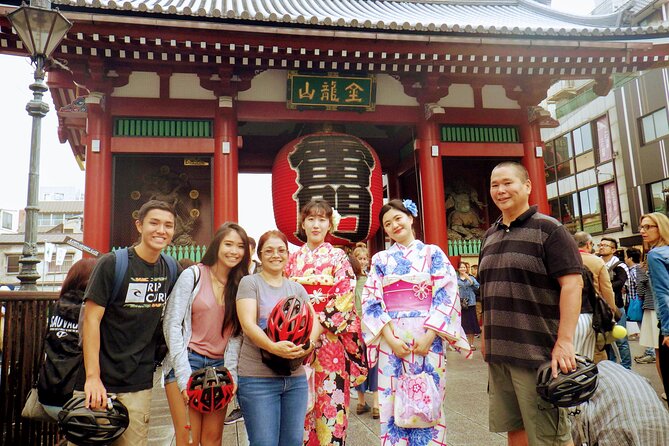
Between the main stops, the guide uses local streets and passages that are easier to connect by bicycle than by train. This is where the tour feels most different from a standard Tokyo highlights route.
You pass through areas of ordinary city life, including streets that do not appear on a typical first-time sightseeing plan. One rider particularly enjoyed the residential neighborhoods, while another used the route to find places to eat and drink that were close to Ginza but less costly.
That is a useful benefit of seeing Tokyo by bike. You can notice the distance between districts, understand how the city fits together, and stop for short explanations without repeatedly entering and leaving train stations. You also get a better sense of Tokyo’s scale.
The tradeoff is that you need to stay with the group. One rider noted that it can be easy to fall behind, especially when looking around. The guide will work to keep everyone together, but you should not stop suddenly or drift away from the line.
Afternoon Route: Akihabara and Tokyo’s Pop Culture Side
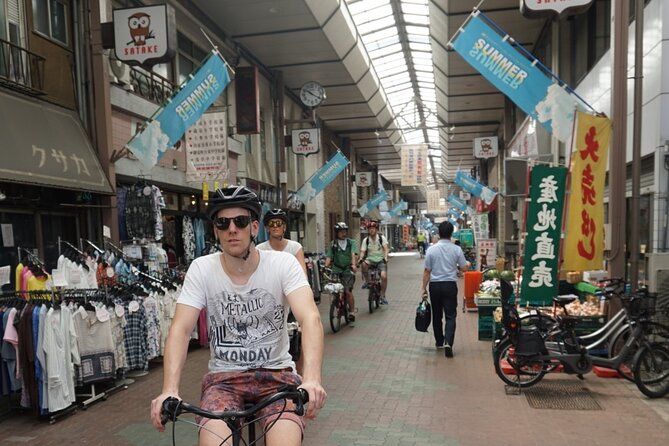
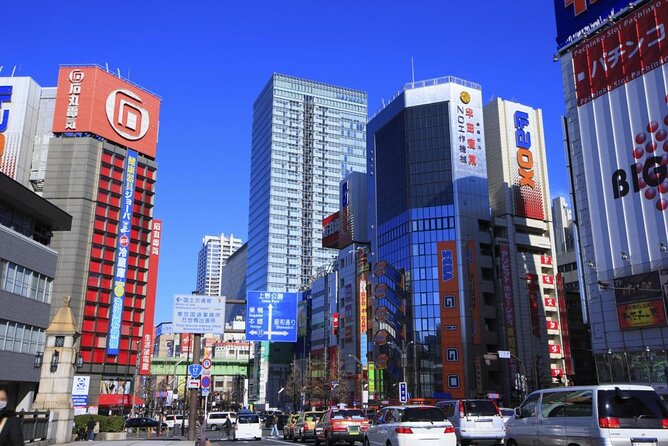
The afternoon route takes a different direction. Akihabara is the center of Tokyo’s youth and geek culture, with a strong focus on electronics, games, anime, and themed cafes.
The stop is brief, about five minutes, so this is an introduction rather than a shopping session. Your guide can explain the district’s subculture and point out more than the familiar maid cafe image. If you want to shop, browse electronics, or spend time in specialty stores, plan to return on your own after the tour.
Akihabara also helps show how varied Tokyo can be. You move from traditional gates and palace moats to a district shaped by modern entertainment and youth culture, all within the same central city ride.
Kappabashi, Asakusa, and Ryogoku
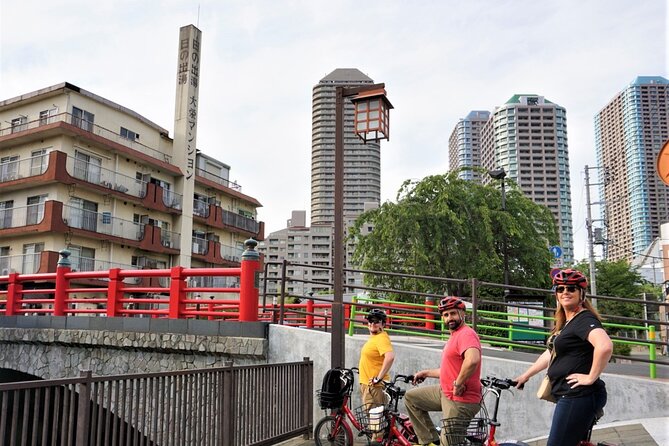
Kappabashi Street, also called Kappabashi Dogugai, is the place to look for kitchen utensils, professional cooking tools, Japanese knives, and restaurant supplies. The tour allows about ten minutes here, and you may have time to browse or shop.
This stop is especially useful if you want a practical souvenir. A knife or cooking tool can be tempting, but keep the short schedule in mind. You should not expect a long shopping appointment, and you will need to manage anything you buy while continuing by bicycle.
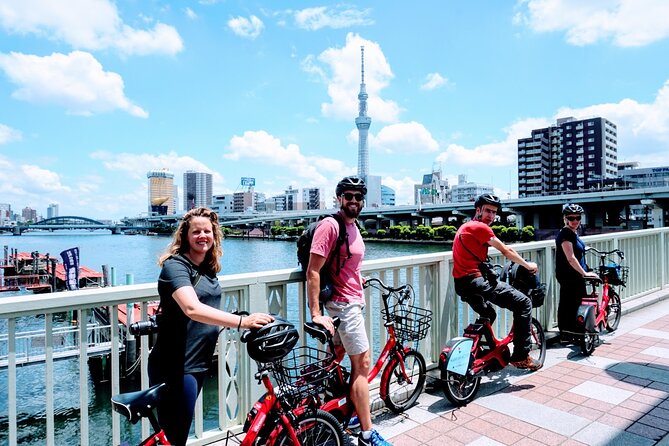
The ride then reaches Asakusa, home to Tokyo’s oldest and most famous temple area. You pause for about ten minutes. The guide can explain temple customs and rituals, which is useful well beyond this particular stop. Understanding how to approach a temple, where to bow, and how the ritual steps work can make later visits around Japan feel less confusing.
Again, the timing is brief. You will see the area and learn its place in Tokyo, but you will not have hours to explore every lane, shop, and temple building. If Asakusa is high on your list, use the tour as an introduction and return later by train or on foot.
The afternoon route continues toward Ryogoku, Tokyo’s sumo district. If the timing is lucky, you might see actual sumo wrestlers near the arena. That possibility is one of the more memorable details of the ride, though it is clearly not guaranteed.
Ryogoku gives the afternoon route a different cultural focus. Akihabara shows modern pop culture, Kappabashi shows professional food culture, and Asakusa brings traditional religious customs. Ryogoku adds the national sport and its connection to the neighborhood.
Nihonbashi Brings Both Routes Together
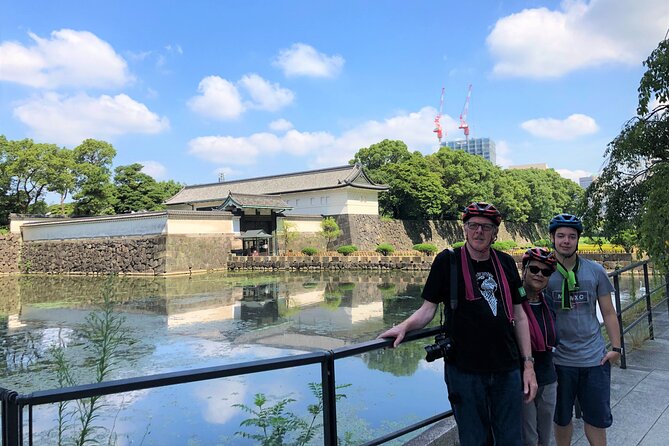
Both morning and afternoon routes include Nihonbashi Bridge. This historic bridge is described as the traditional center from which road distances in Japan are measured.
The stop lasts about five minutes, so your guide will give a short explanation and allow time for photographs. Nihonbashi is a fitting link between the routes because it connects commerce, transportation, and the older structure of Tokyo.
You finish back at the Kanda meeting point. That makes the tour easy to fit into a larger day, since you do not need to arrange a separate ride from an unfamiliar ending point.
What the Guides Add
The guides are a major part of the experience. Yo is praised for being patient and friendly, while Jenny is noted for handling the group well and sharing local food suggestions. Take has been praised for providing information that worked for both adults and teenagers, and Ted is described as attentive to safety and happy to answer questions.
Kazu is a strong choice for travelers who want history and neighborhood context while covering a lot of ground. Ninja has been praised for careful explanations and for guiding the Imperial Palace and bay area route. Yoshiko has also received credit for looking after riders in difficult summer heat.
Names and guide assignments can change, so you cannot book with a particular person unless the operator confirms it. Still, the pattern is clear: the human side of the tour matters as much as the bicycle. You get far more from the ride when you ask questions, point out your interests, and tell the guide if you need a slower pace.
Is $63.01 a Fair Price?
At $63.01 per person, the cost is reasonable for a three-hour guided activity in central Tokyo. Your fee includes the e-bike, helmet, English-speaking guide, insurance, simple rain gear, seasonal items, and luggage storage.
The real value comes from the amount of ground covered. A three-hour walk could show you one or two districts. On an e-bike, you can connect Kanda with palace grounds, Ginza, Tsukiji, or the eastern districts around Asakusa and Ryogoku.
The tour is less valuable if you want long visits inside temples, markets, or shops. You are paying for movement, local explanations, and a broad introduction to Tokyo, not for extended admission-based sightseeing. Since the stops are free, your main purchase is the guide’s time, route planning, equipment, and the ability to ride confidently without getting lost.
The 98 percent recommendation rate and 4.9 rating from 670 reviews suggest a strong record, especially for first-time visitors and families with older children. The minimum age is 12, and the minimum height is 147 centimeters. A family of four with children aged 12 and 15 found the format enjoyable, but the ride still requires alertness and basic fitness.
Heat, Rain, and City Traffic
Tokyo’s summer can be hot and humid, particularly in July and August. Bring water, sunscreen, and a towel. An electrolyte drink is a sensible addition on very hot days, based on the conditions described by riders.
The operator checks the forecast the day before. Rain may cancel the tour, offering you another date or a full refund. If rain begins during the ride, the guide decides whether to continue or return. Simple ponchos are available, but you may still want glasses and gloves for comfort.
Extreme heat can also cause a cancellation. The operator uses the official WBGT heat-stress index as a reference, and a guide may stop the ride and return to the starting point if conditions become unsafe. In that case, the fee is refunded.
Winter riders should bring warm clothing and gloves, even though simple gloves are provided. Traffic is another real consideration. One rider described the tour as fun but stressed the need to be healthy and comfortable riding on busy streets. That is fair advice. If you rarely cycle or dislike urban traffic, this is not the right way to see Tokyo.
Who Should Book This Tokyo Bike Tour?
I would choose this ride early in a Tokyo visit, especially if you want to learn the city’s shape before exploring more deeply. The route can help you decide where to return for food, shopping, temples, or longer walks.
It suits active couples, families with teenagers, and small groups of friends. It is also useful for repeat visitors who have already seen the main sights and want more ordinary streets, local food suggestions, and a different way to move between districts.
I would be cautious if you cannot ride a bicycle, are below 147 centimeters, or feel nervous around city traffic. You should also avoid booking it as your only chance to explore Asakusa, Tsukiji, or Kappabashi, since each stop is fairly short.
Should You Book It?
Book this tour if you want a friendly guide, a small group, and a fast but meaningful look at several parts of Tokyo. The e-bike makes the distance manageable, while the mix of famous landmarks and local streets gives you more than a parade of photo stops.
Choose the morning ride for Tokyo Station, the Imperial Palace, Ginza, and Tsukiji. Pick the afternoon for Akihabara, Kappabashi, Asakusa, and Ryogoku. At $63.01, it offers good value for confident cyclists who want orientation, history, and local perspective in one three-hour outing.
FAQ
Where does the Tokyo e-bike tour start?
The tour starts at Cycling Holiday Tokyo, 3-chōme-8-6 Uchikanda, Chiyoda City, Tokyo. The shop is about a one-minute walk from the west exit of JR Kanda Station.
How long is the tour?
The ride lasts approximately three hours and ends back at the meeting point in Kanda.
What is included in the tour price?
The price includes an electric-assist bicycle, helmet, English-speaking guide, insurance, simple rain gear, winter gloves, summer cooling products, and luggage storage for nonvaluable items.
Are there different morning and afternoon routes?
Yes. The morning route can include Tokyo Station, the Imperial Palace, Ginza, Tsukiji, local streets, and Nihonbashi. The afternoon route can include Akihabara, Kappabashi, Asakusa, Ryogoku, and Nihonbashi.
What age and height limits apply?
The minimum age is 12 years, and the minimum height is 147 centimeters. You must be able to ride a bicycle.
What happens if the tour is canceled because of weather?
If poor weather cancels the tour, you can choose another date or receive a full refund. The operator may also cancel or end a tour early because of unsafe summer heat.
Just added in Tokyo
- MT. FUJI/ Private Tour delivered and guided by a top-tier driver★ 5.0 · 27 reviews
- Mt fuji & Hakone customizable day tour w/ English speaking driver★ 5.0 · 45 reviews
- Fuji Speedway Self Drive & Mt. Fuji Private Tour pickup & dropoff★ 5.0 · 14 reviews
- Mt.Fuji Trekking 1 Day Tour up to the summit★ 5.0 · 14 reviews
- Seasonal Mt. Fuji Scenic Views, Fruit Picking and Ropeway Ride!★ 4.5 · 35 reviews
- Customisable Mt.Fuji Private Day Trip, English Speaking Driver★ 5.0 · 22 reviews
- Private Mt Fuji Tour from Tokyo: Scenic BBQ and Hidden Gems★ 5.0 · 146 reviews
- Private Mount Fuji Tour in Luxury Vehicle with English Guide★ 4.5 · 39 reviews
Cycling and E-Bike Tours, compared.
Arashiyama Bamboo Forest & Hidden Gems Bike Tour (Early Bird)
Read our review →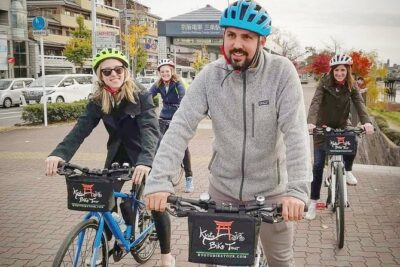
5 Top Highlights of Kyoto Full Day Bike Tour (E-bike option)
Read our review →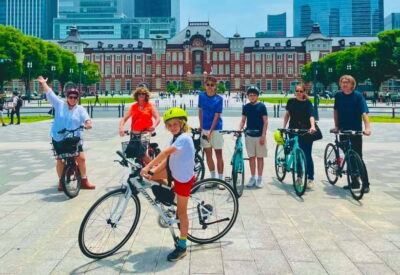
Hiroshima 2hr Peace Cycling Tour with Local Guide
Read our review →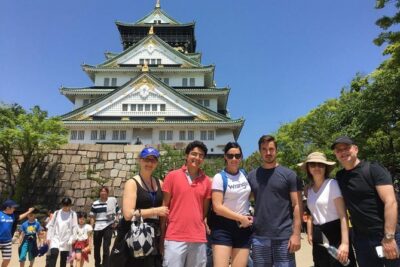
5-Hour Osaka Bike Tour to the Neighborhood of Osaka Castle
Read our review →Browse the lists this tour appears in