
Reviewed · CYCLING AND E-BIKE TOURS
Bike Tour Exploring North Kyoto plus Lunch
Kyoto rewards slow travel. This five to six-hour bike tour takes you beyond the usual bus window, linking major sights with quiet streets, back alleys, and local corners. I especially like the small maximum group of eight and the included Japanese lunch, two details that make the day feel personal rather than packaged.
The route covers Nishi Honganji, Kitano Tenmangu Shrine, Kinkakuji, the former imperial grounds, and Gion. Guides such as Mayko, Julian, Indra, Karl, Quinn, Jay, and Jamie are praised for clear storytelling and a friendly manner. The main consideration is physical: you will ride about 13 miles, or roughly 24 kilometers, across the day, and hot Kyoto weather can make that feel like serious exercise.
In This Review
- Key points to know
- Why Cycling Works So Well in Kyoto
- Starting at Cycle Kyoto at 10:00 a.m.
- Nishi Honganji and Kyoto’s Wooden Scale
- Kitano Tenmangu Shrine and Everyday Worship
- Kinkakuji: Kyoto’s Golden Pavilion
- The Former Imperial Grounds
- Lunch: Noodles, Sushi, and a Welcome Break
- Gion and Kyoto’s Geisha District
- The Guides Make the Day
- Price, Pace, and Practical Value
- Weather, Fitness, and Booking Details
- Who Should Book This Kyoto Bike Tour?
- FAQ
- How long does the bike tour last?
- How far do you cycle?
- What is included in the price?
- Is Kinkakuji admission included?
- Who can take the tour?
- What happens if it rains?
Key points to know
- About 13 miles of riding: The cycling is spread across roughly six hours, with sightseeing stops and breaks along the way.
- A maximum of eight people: The small group helps the guide adjust pace, answer questions, and keep the ride together.
- Kinkakuji admission included: You visit Kyoto’s famous Golden Pavilion without paying a separate entrance fee.
- Lunch is part of the experience: Expect a traditional Japanese meal, with the venue sometimes changing from a noodle restaurant to sushi.
- A strong first-day choice: The route gives you an early look at Kyoto’s major sights and helps you decide where to return later.
- You need to be comfortable on a bike: Riders must be at least 13 and have a moderate level of fitness.
Why Cycling Works So Well in Kyoto
Kyoto’s famous sights are spread across a wide area. By bus, you can spend too much of your day waiting in traffic or squeezing onto crowded vehicles. On a bicycle, you move between neighborhoods at a useful pace, while still noticing small streets, old buildings, gardens, and ordinary city life.
I like the balance here. You are not simply pedaling from one attraction to the next. The ride includes time to stop, listen, take photographs, drink water, and ask questions. One account described about two and a half hours of actual cycling, with the rest of the day given to temples, shrines, lunch, and short breaks.
The route is not advertised as a race. Guides adjust the speed to the group, and the ride includes only a few noticeable inclines. The approach to Kinkakuji has a slight rise, then much of the route is easier. Still, 13 miles is not nothing, especially in summer. If you have not ridden for years, you should be honest with yourself before booking.
The bicycles are high-quality Cannondale models, and equipment is included. Bikes are fitted according to height, and padded seats are available. Helmets are optional, which gives you a choice, though I would use one if you are not used to city cycling.
More Bike Tours in Kyoto
- Arashiyama Bamboo Forest & Hidden Gems Bike Tour (Early Bird)
★ 5.0 · 613 reviews - 5 Top Highlights of Kyoto Full Day Bike Tour (E-bike option)
★ 5.0 · 511 reviews - E-Bike Tours of the highlights of Kyoto!!!
★ 5.0 · 291 reviews
Starting at Cycle Kyoto at 10:00 a.m.
You meet at Cycle Kyoto, 7 Higashikujō Nishisannōchō, in Kyoto’s Minami Ward. The shop is near public transportation, and the activity ends back at the same place, so you do not need to work out a second pickup point across town.
The opening 15 minutes are used for introductions, bike fitting, and preparation. This matters more than it sounds. A poorly adjusted saddle can make a long ride miserable, so take a moment to tell the guide if the seat feels wrong or the bike does not suit you.
The included bottled water is useful, but bring a little extra on a hot day if you can. One guide, Quinn, was especially careful about keeping the group hydrated during very warm weather. That kind of attention is worth having on an active sightseeing day.
Because the group is capped at eight, you should get more direct help than you would on a large city tour. Guides have room to learn names, answer questions, and make small adjustments for different riding abilities. Solo visitors can also fit in well, since the group format tends to encourage conversation.
Nishi Honganji and Kyoto’s Wooden Scale
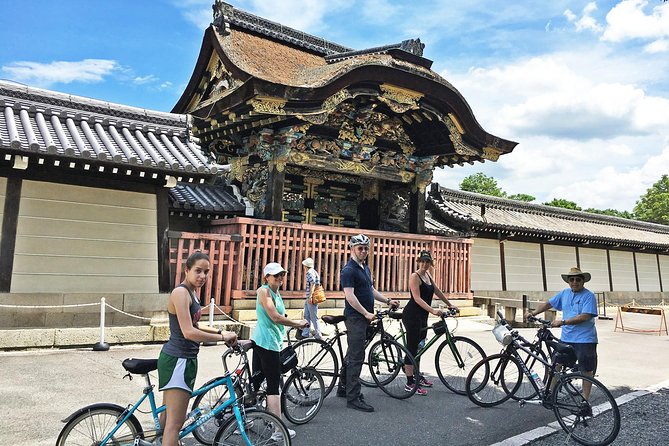
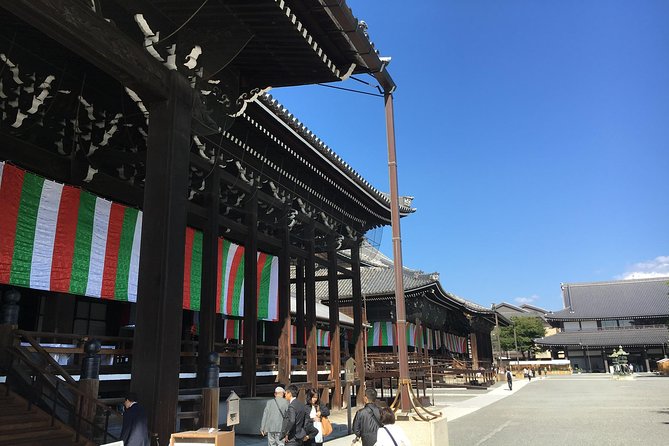
The first major stop is Nishi Honganji, one of Kyoto’s least visited major religious sites. That is part of its appeal. You get a quieter introduction to the city before dealing with the crowds at Kinkakuji.
The temple is also one of the largest wooden buildings in the world. Its scale gives the guide plenty to explain, but the stop is only about 15 minutes, so expect an introduction rather than a long visit. You will have time to see the main setting and hear why the complex matters, but not time for a slow, detailed exploration of every feature.
One especially memorable detail from the tour is the visible repair work on the historic temple. The mended areas help you see the building as something cared for over generations, not as a frozen museum piece. I like that the tour makes room for this kind of observation instead of rushing only toward Kyoto’s most photographed sights.
There is no separate admission charge listed for this stop. The short visit works well early in the day, when you are still learning how the guide presents religious sites and Japanese history.
Kitano Tenmangu Shrine and Everyday Worship
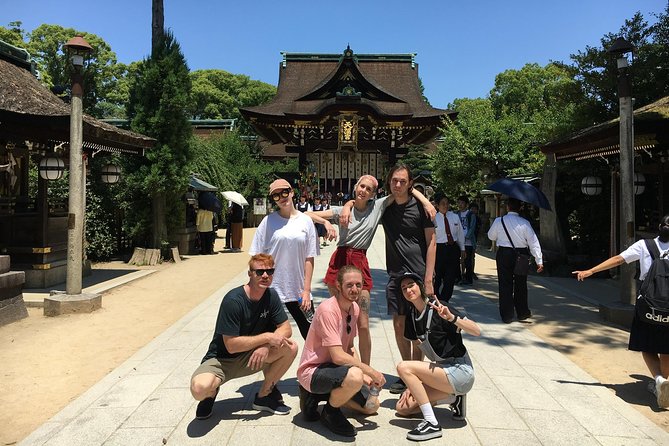
The ride continues to Kitano Tenmangu Shrine, with about 20 minutes set aside. This is a chance to see a major Shinto site while local worshippers go about their own visits.
The guide can help you understand the difference between Shinto and Buddhism, a subject that often confuses first-time visitors. You will hear about the shrine’s past, its role in Japanese culture, and how religious traditions continue in modern life. Guides Indra and Quinn have been particularly praised for explaining these subjects in a clear, approachable way.
The mood here is calmer than at Kyoto’s most famous attractions, though the experience can vary with the day and season. You should listen closely to the instructions about where to stand and how to behave. A good guide helps you observe respectfully without turning a working place of worship into a stage set.
The stop is short enough to keep the day moving, but long enough for photographs and a basic visit. If you want to study the shrine in detail, you may wish to return on your own later. The benefit of seeing it by bike is that you can fit it into a wider route without spending extra time changing buses.
A completely different kind of day out:
- PERFECT KYOTO 1-Day Bus Tour
★ 5.0 · 13,518 reviews - [Kyoto & Nara Day Tour] Sagano Scenic Railway & Nara Park & Fushimi Inari Taisha Thousand Torii Gates & Togetsukyo Bridge & Bamboo Grove & Kimono Forest (Departing from Osaka)
★ 4.9 · 10,942 reviews - Kyoto: Fushimi Inari, Kinkakuji, Bamboo Grove 1 Day Bus Tour
★ 4.8 · 4,316 reviews - Kyoto: Tea Ceremony in a Traditional Tea House in Kiyomizu
★ 4.9 · 3,519 reviews
Kinkakuji: Kyoto’s Golden Pavilion
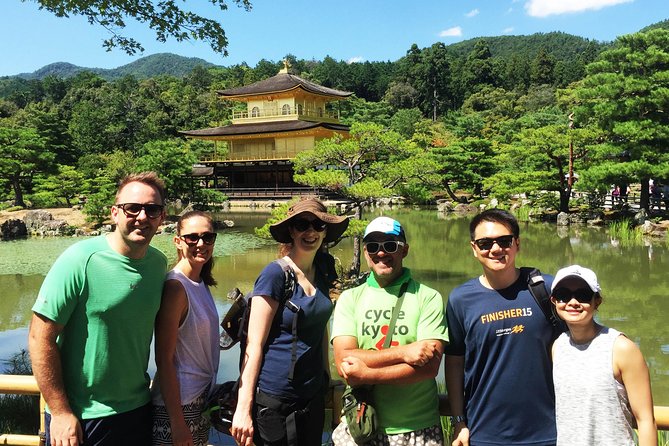
Kinkakuji is the headline attraction. The pavilion’s gold-covered exterior makes it one of Japan’s most recognizable sights, and the 30-minute stop includes admission.
This is the part of the day most likely to feel crowded. Kinkakuji is one of Japan’s busiest attractions, so do not expect the same quiet mood as Nishi Honganji or parts of Kitano Tenmangu. The bike tour helps by giving you a guide who can explain what you are seeing and keep the visit organized, but it cannot remove the crowds.
You will have time to admire the pavilion, take pictures, and walk through the surrounding grounds at a steady pace. The stop may also include time for an ice cream, a small but welcome reward after the uphill section of the ride.
The guide’s commentary is important here. Without context, Kinkakuji can become a quick photograph and a shuffle toward the exit. With an explanation of its place in Kyoto’s past, the building becomes more than a pretty gold facade.
The included entrance fee adds real value. You do not have to queue separately to buy a ticket, and the stop is already built into a route that connects several parts of the city. Still, if your main goal is to spend a long time at Kinkakuji, a private visit on another day may suit you better.
The Former Imperial Grounds
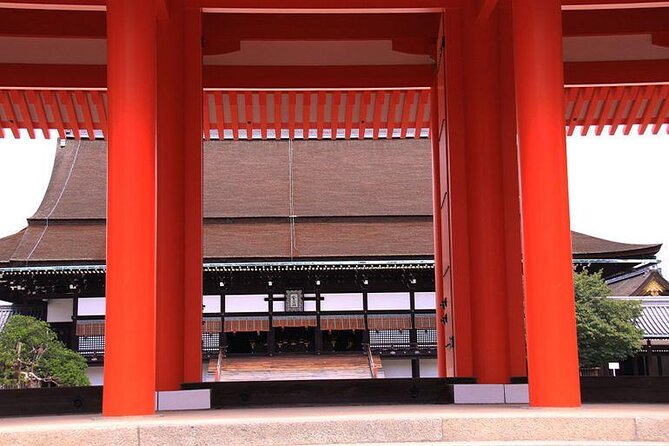
The route also passes through the grounds of the former seat of Japan’s imperial family. The supplied schedule does not give this stop a formal name or an exact duration, but it is included as part of the ride between the northern sights and Gion.
This section adds useful historical context. Kyoto was Japan’s imperial center for centuries, and seeing the former grounds helps connect religious sites with the city’s political past. You are not just collecting temple photographs. You are moving through the places that shaped Kyoto’s role in Japan.
Because the tour covers several areas, you should expect a broad introduction rather than a specialist visit at every stop. The value comes from the connections your guide makes between architecture, religion, government, and daily life.
Lunch: Noodles, Sushi, and a Welcome Break
Lunch is included, and it is one of the most praised parts of the day. The meal is described as traditional Japanese food, with past groups eating at a noodle house, a 400-year-old noodle restaurant, a sushi bar, or a conveyor-belt sushi restaurant.
The exact venue can change. One group found its planned noodle house closed and was taken to a sushi bar instead, with good results. That flexibility is practical, but you should not book expecting one fixed restaurant or one exact menu.
Lunch gives your legs a proper rest and adds a cultural experience that a simple convenience-store stop would miss. It also lets you try Japanese food in a social setting, with the guide available to explain what you are ordering or eating.
Tell Cycle Kyoto about dietary requirements ahead of time. Vegetarian options have been arranged for some groups, but the provider needs notice. Extra drinks are not included, and you may want to budget for them, especially in hot weather.
Gion and Kyoto’s Geisha District
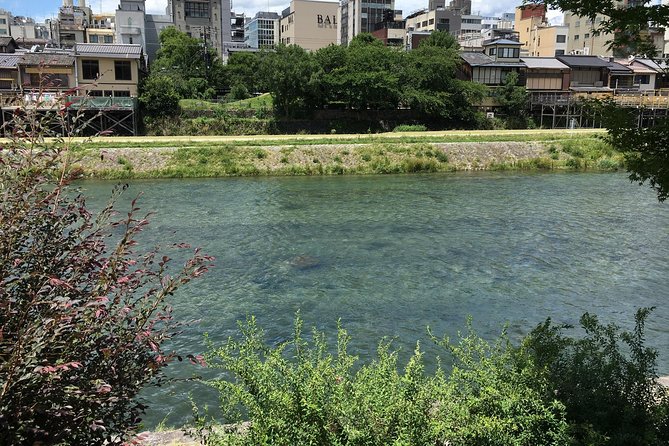
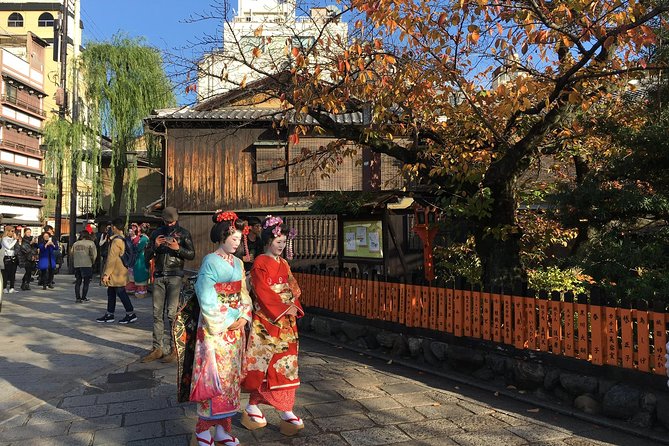
The final named sightseeing stop is Gion, Kyoto’s famous geisha district. The scheduled stop is only about 10 minutes, so think of it as a brief orientation rather than a full walking tour.
Your guide explains the district’s hidden world and the role of its entertainers. You might catch a glimpse of a geisha or maiko, but there is no guarantee, and it is important to behave politely if you do. Gion is a working neighborhood, not a theme park.
The bicycle offers a useful advantage here. You can approach the district through streets that are easy to miss when you are following the standard sightseeing circuit. The guide’s local knowledge helps you understand what you are seeing without treating private spaces as attractions.
Since the stop is short, I would return to Gion later if you want more time for its lanes, restaurants, and traditional architecture. The tour gives you a first look and enough background to make a later visit more meaningful.
The Guides Make the Day
The strongest part of this experience is the guiding. Names that come up repeatedly include Mayko, Julian, Indra, Karl, Quinn, Jay, and Jamie, each praised for warmth, humor, historical context, and careful cycling.
Their backgrounds and personalities vary. Quinn has been described as a Shinto priest with a strong understanding of temples and shrines. Julian is known for an easygoing manner and long experience living in Japan. Indra explains Buddhism, Shinto, Japanese culture, and the history of geisha in a way that connects the subjects.
That range matters because the route itself is fixed, but the feel of the day depends on the person leading it. A good guide does more than point at a building. The guide watches the group, keeps the pace comfortable, explains local customs, and makes the city feel less confusing.
Some guides have added extra time or extra stops when conditions allowed. You should see this as a pleasant possibility, not a promise. The official duration is approximately five to six hours, and the day can vary with weather, group pace, and lunch arrangements.
Price, Pace, and Practical Value
At $106.12 per person, this is not the cheapest way to move around Kyoto. You could rent a bicycle for less, visit some free sights, and arrange lunch on your own.
The comparison is not quite fair, though. The price includes a high-quality Cannondale bike, equipment, bottled water, a guide, lunch, and entrance fees for the paid temple stop. You are also paying for route planning, safety support, local interpretation, and the ability to cover several distant areas without figuring out each connection yourself.
For a first full day in Kyoto, I think the value is good. The ride helps you get your bearings quickly, and several people have used it early in their visit so they could decide which places deserved a longer return visit. The small group makes the cost easier to justify than a large bus excursion.
The tour is not ideal if you dislike fixed schedules, want hours inside each temple, or prefer to explore at your own pace. It is also poor value if you will be uncomfortable on a bicycle and spend the day worrying about the distance.
Weather, Fitness, and Booking Details
The activity requires good weather. If rain or poor conditions cancel the tour, you can choose another date or receive a full refund. You can also cancel up to 24 hours before the 10:00 a.m. start for a full refund. Changes or cancellations inside that window are not accepted, and the tour may also be changed if its minimum number is not reached.
Riders must be at least 13 years old and comfortable riding a bike. A moderate fitness level is required. The route is generally manageable, but the length, heat, and city riding make it more demanding than a short recreational spin.
Wear comfortable clothing, use sun protection, and choose shoes suitable for pedaling and walking. The tour provides water, but extra drinks cost more. If your visit falls during a very hot period, booking near the beginning of your Kyoto stay gives you room to reschedule if rain interrupts the plan.
Who Should Book This Kyoto Bike Tour?
I would choose this tour if you want a broad first look at Kyoto, enjoy active sightseeing, and like having history explained in plain language. It suits couples, families with older children, solo visitors, and anyone who finds crowded buses frustrating.
It is also a good fit if you want more than the standard route. Nishi Honganji, the quieter streets between stops, local shrine activity, and the connections between Shinto, Buddhism, imperial history, and Gion give the day real substance.
I would skip it if you are not comfortable riding for several hours, have mobility limits that make cycling difficult, or want a slow, detailed visit at each temple. Check the weather and tell the provider about food restrictions before you go.
For most active visitors, I think this is a strong way to begin Kyoto. You cover major sights, learn how the city fits together, eat a proper Japanese lunch, and return with a better sense of where to spend the rest of your trip. The high rating and 99 percent recommendation fit the experience, but the practical truth is simple: book it for the guide, the route, and the chance to see Kyoto between the famous stops, not just for the Golden Pavilion.
FAQ
How long does the bike tour last?
The tour lasts approximately five to six hours, beginning at 10:00 a.m. and ending back at the Cycle Kyoto meeting point.
How far do you cycle?
The full route is about 13 miles, or roughly 24 kilometers, spread across the day with sightseeing stops, lunch, and breaks.
What is included in the price?
The price includes a Cannondale bike, cycling equipment, guide service, bottled water, lunch, and temple entrance fees.
Is Kinkakuji admission included?
Yes. Admission to Kinkakuji, the Golden Pavilion, is included. The itinerary also includes visits to Nishi Honganji, Kitano Tenmangu Shrine, the former imperial grounds, and Gion.
Who can take the tour?
Riders must be at least 13 years old, comfortable riding a bicycle, and able to manage a moderate level of physical activity.
What happens if it rains?
The tour requires good weather. If poor weather causes cancellation, you can select a different date or receive a full refund.
More Lunch Experiences in Kyoto
- Osaka/Kyoto: Arashiyama, Nara & Fushimi Inari Shrine w/Lunch
★ 4.4 · 754 reviews - Kyoto Zen Meditation & Garden Tour at a Zen Temple with Lunch
★ 5.0 · 441 reviews - 4.5-Hour Kyoto Bike Tour with Lunch and UNESCO Zen Temples
★ 5.0 · 122 reviews - From Kyoto: Nara History Guided Half Day Bus Tour with Lunch
★ 4.8 · 114 reviews
Just added in Kyoto
- The “Golden Route” and Ancient Japan by DIAMIR Erlebnisreisen – 14-Day Tour★ 2.0 · 2 reviews
- Japan: Castles & Cuisine by G Adventures – 6-Day Kyoto to Osaka Tour★ 4.5 · 4 reviews
- Cycle Japan by Explore! – 13-Day Kyoto to Tokyo Tour★ 4.7 · 12 reviews
- Cycle Japan by Intrepid Travel – 11-Day Kyoto to Tokyo Tour★ 4.8 · 2 reviews
- Classic Japan by Intrepid Travel – 11-Day Kyoto to Tokyo Tour★ 4.4 · 14 reviews
- Ancient & Modern Japan 14-Day Tour by Exodus Adventure Travels★ 4.4 · 40 reviews
- 5 Day Cultural Adventure of Kyoto, Nara & Osaka by Tourist Journey★ 2.5 · 2 reviews
- 12 Days Kinosaki Onsen Escape: A Journey Through Japan’s Timeless Towns by UME Travel★ 4.8 · 5 reviews
Cycling and E-Bike Tours, compared.
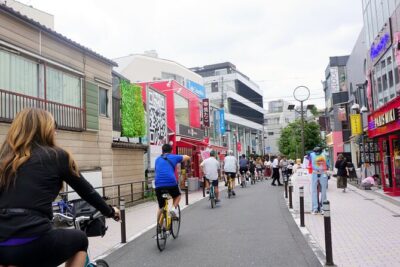
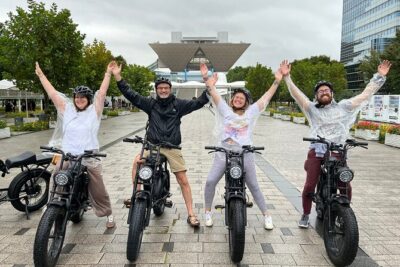
3h Tokyo E-Bike Tour: Hidden Gems, and Local Life with guide
Read our review →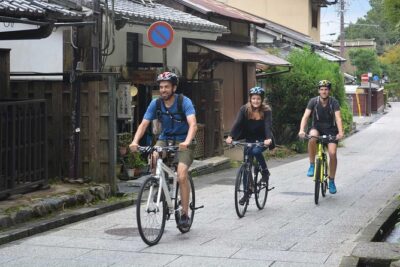
Arashiyama Bamboo Forest & Hidden Gems Bike Tour (Early Bird)
Read our review →
5 Top Highlights of Kyoto Full Day Bike Tour (E-bike option)
Read our review →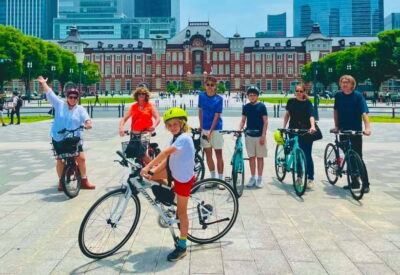

Hiroshima 2hr Peace Cycling Tour with Local Guide
Read our review →
5-Hour Osaka Bike Tour to the Neighborhood of Osaka Castle
Read our review →Browse the lists this tour appears in