
Reviewed · LUNCH EXPERIENCES
From Kyoto: Nara History Guided Half Day Bus Tour with Lunch
Nara rewards an early start. This six-hour outing makes the ancient capital easy to reach from Kyoto, with Todaiji Temple and its enormous Great Buddha at the center of the day. I like the sensible route, which pairs Nara’s major sights with a Japanese-style lunch, and I also like having an English-speaking guide explain shrine customs, Buddhist traditions, and the stories behind the monuments. The main tradeoff is time: you see the highlights, but you will not have much freedom for wandering.
The tour costs $77 per person, including transport, the English guide, Todaiji’s entrance fee, and lunch. That is a fair package for a short visit, especially if you do not want to arrange Kyoto to Nara transport yourself. Just prepare for considerable walking, possible crowding, and a meeting point at Kyoto Station that can be confusing if you arrive at the last minute.
In This Review
- The best parts of this Nara half-day tour
- Why Nara fits neatly into a Kyoto trip
- Meeting at Kyoto Station and riding to Nara
- Kasuga Taisha and the quiet language of Shinto
- Todaiji’s Great Buddha and enormous wooden hall
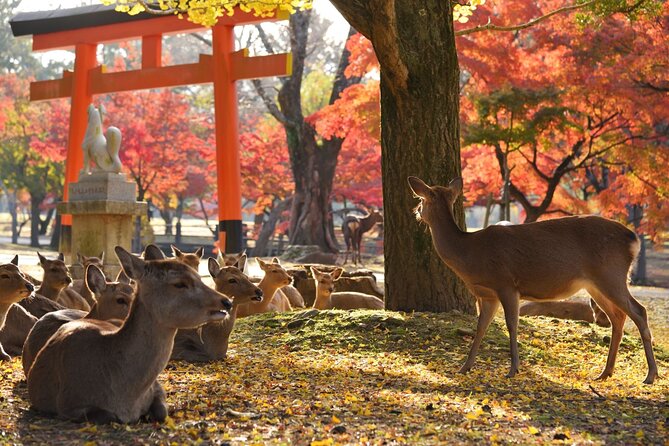
- Nara Park and the famous deer
- Japanese lunch and a short chance to shop
- What the guides add to the day
- Is $77 a good value?
- Who should book this experience?
- Should you book the Nara tour from Kyoto?
- FAQ
- How long does the Nara tour last?
- Where does the tour meet in Kyoto?
- What language is the tour conducted in?
- Is lunch included?
- Can I visit Kasuga Taisha’s museum and botanical garden?
- Is the tour suitable for wheelchair users?
- Can I bring large luggage?
The best parts of this Nara half-day tour

- The Great Buddha at Todaiji: A huge bronze Buddha sits inside one of the world’s largest wooden buildings.
- Deer in Nara Park: You can get close to Nara’s famous deer and feed them if you choose.
- Kasuga Taisha Shrine: The tour includes general worship at one of Nara’s most important Shinto sites.
- A guide who adds context: Guides such as Tammy, Emiko, Aki, Yuko, and Sachi have been praised for clear explanations and thoughtful care.
- Lunch included: A Japanese-style meal gives the six-hour outing a useful pause and adds value to the price.
- A practical Kyoto departure: You leave from Kyoto Station and return there, avoiding a separate trip back from Nara.
Why Nara fits neatly into a Kyoto trip
Kyoto and Nara are close enough to combine, but Nara feels different from Kyoto. Kyoto is known for its refined temple districts, gardens, and former imperial culture. Nara offers a more open, old-capital setting, where large Buddhist monuments, a major Shinto shrine, and free-roaming deer share the same visit.
This tour is designed for you if you want the main sights without spending a full day working out train connections, walking routes, admission tickets, and lunch. The schedule is compact, but the order makes sense. You travel from Kyoto, visit Kasuga Taisha, walk to Todaiji, spend time in Nara Park, eat lunch, and return to Kyoto.
The outing lasts about six hours. That is enough for a first look at Nara, but not enough for every museum, garden, side street, and temple. I would think of it as an efficient introduction rather than a slow exploration.
A few more options to weigh up in Kyoto
- Bike Tour Exploring North Kyoto plus Lunch
★ 5.0 · 1,087 reviews - Osaka/Kyoto: Arashiyama, Nara & Fushimi Inari Shrine w/Lunch
★ 4.4 · 754 reviews - Kyoto Zen Meditation & Garden Tour at a Zen Temple with Lunch
★ 5.0 · 441 reviews
Meeting at Kyoto Station and riding to Nara
The meeting point is the Kyoto Station Hachijo Exit Tourist Bus Parking Area, in front of Kyoto Avanti, near the Hachijo Entrance Square Sunken Garden. The activity provider sends the exact meeting information by email seven days before the date, so check that message carefully.
Kyoto Station is large and busy. Give yourself extra time to find the Hachijo side and the bus parking area. One person specifically found the location confusing, even though the rest of the day went well. That is useful advice: do not treat this as a casual meet-up beside an obvious station gate.
The ride to Nara is listed as about 75 minutes. Depending on the day, the group may use a bus, a train, a smaller private bus, or a combination of transport. One outing used the train from Kyoto to Kintetsu-Nara, followed by a small private bus around Nara. Other departures use an air-conditioned coach.
That flexibility can be helpful when road conditions or group arrangements change, but it also means you should not expect one fixed transport pattern every time. The transport has been praised for being clean and comfortable, and air conditioning matters on hot days. The return journey takes about an hour.
Large luggage is not allowed. Bring only what you need for the day, such as water, a phone, a small bag, and weather protection.
Kasuga Taisha and the quiet language of Shinto
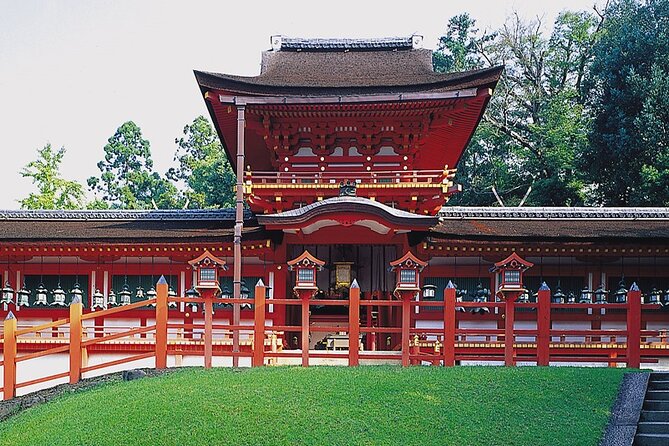
Kasuga Taisha is the first major stop, with about 45 minutes for a guided visit. It is an important shrine connected with ancient Nara, and the tour takes you to the main sanctuary area for general worship.
This is a good place to have a guide. Japanese shrines follow customs that may not be obvious if you are seeing them for the first time. Your guide can explain how to approach the shrine and what the worship process means, rather than leaving you to copy the nearest person.
The visit is focused. General worship is included, but special worship of the main sanctuary is not. The Kasuga Taisha Museum and Botanical Garden are also excluded. If you want a long, detailed visit to the wider shrine complex, you will find this stop too brief.
Still, 45 minutes gives you a useful introduction before the tour moves on. Guides have been praised for explaining customs clearly and answering questions. Names that have received especially warm praise include Tammy, Emiko, Aki, Yuko, Sachi, Kato, and Mr. Mana, a retired history teacher whose explanations were described as especially extensive.
From Kasuga Taisha, you walk for about 15 minutes to Todaiji. Wear comfortable shoes. The distance is not extreme, but the day includes several walking sections, uneven surfaces may occur, and there is no wheelchair access.
Todaiji’s Great Buddha and enormous wooden hall
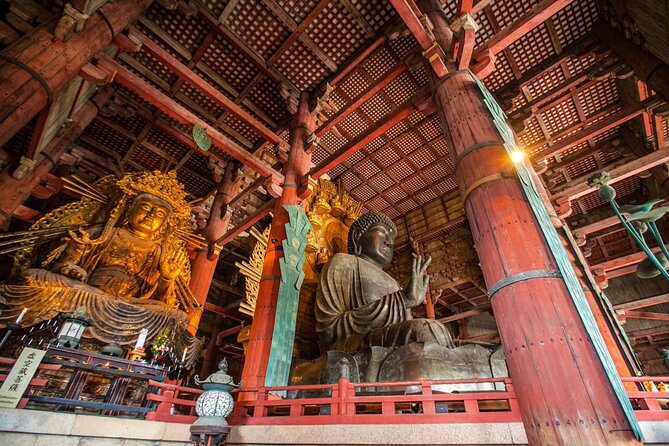
Todaiji is the emotional center of the outing. The temple is home to the Great Buddha, a bronze figure about 15 meters high. The scale is hard to grasp from a photograph, which is why the visit is worth making in person.
The Buddha is housed in a vast wooden hall, famous for its size. The building is one of Nara’s defining sights, and the admission fee is included in the tour price. You do not need to arrange that ticket separately.
You have about 45 minutes for the guided visit. That allows time to see the main hall, the Buddha, and other notable features, while your guide explains what you are looking at. Several guides have been praised for giving historical background without making the visit feel like a lecture.
The schedule also protects you from a common problem at Todaiji: spending too long at one monument and rushing everything afterward. Forty-five minutes is not generous, but it keeps the half-day moving.
Construction work can sometimes affect what you see. Some buildings or Buddha statues may look different, or access may be limited. This is worth accepting before you book, since temple sites change over time and the tour cannot control renovation work.
A completely different kind of day out:
- PERFECT KYOTO 1-Day Bus Tour
★ 5.0 · 13,518 reviews - [Kyoto & Nara Day Tour] Sagano Scenic Railway & Nara Park & Fushimi Inari Taisha Thousand Torii Gates & Togetsukyo Bridge & Bamboo Grove & Kimono Forest (Departing from Osaka)
★ 4.9 · 10,942 reviews - Kyoto: Fushimi Inari, Kinkakuji, Bamboo Grove 1 Day Bus Tour
★ 4.8 · 4,316 reviews - Kyoto: Tea Ceremony in a Traditional Tea House in Kiyomizu
★ 4.9 · 3,519 reviews
Nara Park and the famous deer
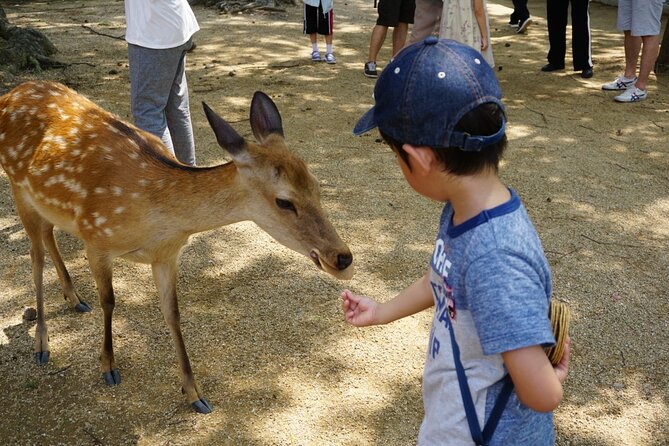
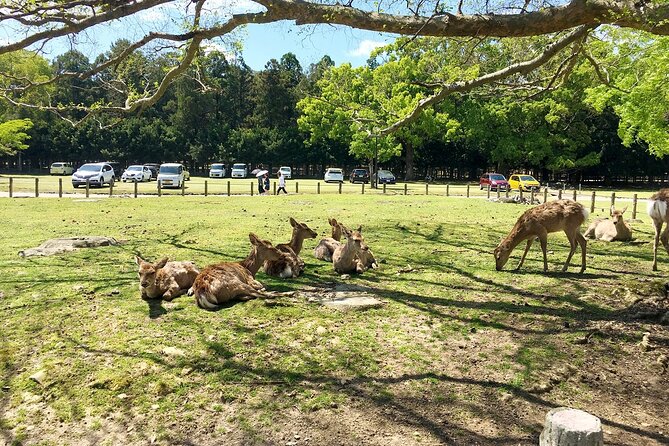
Nara Park receives about 30 minutes of guided time. This is where the day becomes playful. Deer move through the park and around the historic sites, and you can enjoy seeing them at close range.
The deer are friendly and charming, but they are still animals. If you feed them, keep your attention on what they are doing and follow local instructions. The experience is especially appealing for families, and one child on the tour reportedly ate nearly all of the lunch afterward, with a chicken option available if requested during booking instead of sashimi.
Thirty minutes is enough to see the deer and take photographs, but it is not a long park visit. You may want to linger, especially if you enjoy watching animal behavior or taking pictures. The guide-led schedule means you need to stay aware of the meeting time.
An early arrival can help with crowd levels. One group reached Nara in the morning and found it easier to enjoy the deer before the busiest period. Weather also changes the mood. Rain can mean fewer people and a quieter park, but it makes paths slippery and photographs less predictable. Bring suitable clothing rather than assuming clear weather.
Japanese lunch and a short chance to shop
After the sights, you stop for a Japanese-style lunch for about 50 minutes. Lunch is included, but beverages are not, so budget for your own drink.
This meal is more than a quick refueling stop. It gives you a chance to try Japanese food in a planned setting without searching for a restaurant during a tightly timed tour. The food has been praised as a strong part of the experience, and the restaurant also has a shop selling local souvenirs.
You can do a little shopping after eating. This is convenient if you want a simple memento from Nara, but do not expect a long shopping session. The stop is built around lunch, with some time for souvenirs rather than a full market visit.
Tell the provider about allergies or dietary restrictions when booking. Menu changes cannot be made on the day, so this is not the moment to wait and explain a dietary need at the table. A child-friendly chicken alternative may be available instead of sashimi when requested during booking, but you should arrange it in advance.
What the guides add to the day
The guides are one of the strongest reasons to choose this tour instead of traveling independently. The temples and shrine are impressive on their own, but their meaning can be easy to miss without explanation.
The best guide comments described Tammy as patient and clear, with useful information about Japanese history and customs. Emiko was praised for answering questions and keeping a group interested even in bad weather. Aki received praise for explaining each stop and keeping the timing smooth. Yuko was remembered for her kindness and detailed explanations, while Sachi was credited with making the trip well organized and getting the group to Nara early.
Small groups can make a major difference. One departure had only five people and felt cozy. Another had such a small number that it operated almost like a private tour. That is not guaranteed, since this is a group outing, but a smaller group can make it easier to hear the guide and ask questions.
The minimum group size is four. If that number is not reached 14 days before departure, the date may be canceled. Keep that possibility in mind if your Kyoto schedule is tightly fixed.
Is $77 a good value?

At $77, this tour offers solid value if you want convenience. You receive transport from Kyoto and back, an English guide, Todaiji admission, and lunch. You also avoid the time and mental effort of arranging the Nara route yourself.
The value is strongest for first-time visitors, families, and anyone who wants an organized introduction in half a day. A guide who explains the shrine customs and Buddhist sites can make the admission fee and transport package feel worthwhile.
The value is weaker if you already know Nara well or prefer to set your own pace. You will have only 45 minutes at Kasuga Taisha, 45 minutes at Todaiji, and 30 minutes in Nara Park. You cannot add stops based on personal requests, even if your group is small.
You should also compare the cost with your own transport plans if you are comfortable using Japanese trains. Independent travel may offer more flexibility, but you would need to arrange the route, admissions, lunch, and timing yourself. For many people, the tour fee is a reasonable price for a clean plan and a guide who keeps the day on track.
Who should book this experience?
I would recommend it to you if you are staying in Kyoto and want to see Nara without giving up an entire day. It works well for first visits, families with older children, couples who prefer guided sightseeing, and people who want historical context at the major sites.
It is also a good choice if you are nervous about navigating between Kyoto and Nara. The combination of transport, a guide, and a set return point removes much of the guesswork.
I would not choose it if you use a wheelchair, have serious difficulty walking, need large luggage with you, or want a slow visit focused on museums and smaller sites. The tour is not wheelchair accessible and involves a lot of walking.
Also think about your food needs. Allergies and dietary restrictions must be reported when you book, and changes cannot be made at the last minute. If you need a special meal, confirm the arrangement before paying.
The activity allows free cancellation up to 24 hours before the start for a full refund, and you can reserve now and pay later. Those terms help if your Kyoto plans are still shifting, but they do not remove the possibility of a date cancellation if the minimum group size is not reached.
Should you book the Nara tour from Kyoto?
Book it if you want the essential Nara sights in a tidy six-hour package. Todaiji, the deer, Kasuga Taisha, transport, and lunch give you a lot for the time and price, and the guides can turn a quick visit into a more meaningful one.
Skip it if your priority is freedom. Independent travel gives you more time in Nara Park, more room for museums and gardens, and control over every meal and departure. For a first visit from Kyoto, though, this is a practical and well-priced introduction, provided you can walk comfortably and accept a fixed schedule.
FAQ
How long does the Nara tour last?
The tour lasts six hours, including transport between Kyoto, Nara, and Kyoto.
Where does the tour meet in Kyoto?
You meet at the Kyoto Station Hachijo Exit Tourist Bus Parking Area, in front of Kyoto Avanti, near the Hachijo Entrance Square Sunken Garden.
What language is the tour conducted in?
The live guided tour is conducted in English.
Is lunch included?
Yes. A Japanese-style lunch is included. Beverages are not included.
Can I visit Kasuga Taisha’s museum and botanical garden?
No. General worship at the main sanctuary is included, but special worship, the Kasugataisha Museum, and the Botanical Garden are not included.
Is the tour suitable for wheelchair users?
No. The tour is not wheelchair accessible and involves considerable walking.
Can I bring large luggage?
No. Large luggage is not allowed during the tour.
Just added in Kyoto
- The “Golden Route” and Ancient Japan by DIAMIR Erlebnisreisen – 14-Day Tour★ 2.0 · 2 reviews
- Japan: Castles & Cuisine by G Adventures – 6-Day Kyoto to Osaka Tour★ 4.5 · 4 reviews
- Cycle Japan by Explore! – 13-Day Kyoto to Tokyo Tour★ 4.7 · 12 reviews
- Cycle Japan by Intrepid Travel – 11-Day Kyoto to Tokyo Tour★ 4.8 · 2 reviews
- Classic Japan by Intrepid Travel – 11-Day Kyoto to Tokyo Tour★ 4.4 · 14 reviews
- Ancient & Modern Japan 14-Day Tour by Exodus Adventure Travels★ 4.4 · 40 reviews
- 5 Day Cultural Adventure of Kyoto, Nara & Osaka by Tourist Journey★ 2.5 · 2 reviews
- 12 Days Kinosaki Onsen Escape: A Journey Through Japan’s Timeless Towns by UME Travel★ 4.8 · 5 reviews
Lunch Experiences, compared.
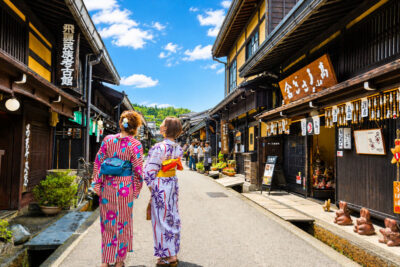
Shirakawa-go & Takayama Old Town Day Tour (Optional Hida Beef Lunch)
Read our review →
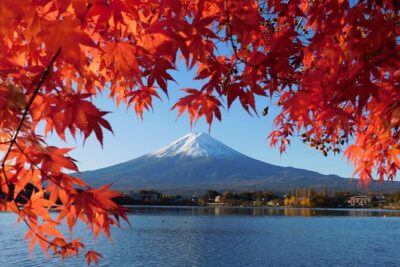
Mt.Fuji & Lake Kawaguchiko 1-Day Bus Tour w/Optional Lunch
Read our review →
Osaka/Kyoto: Arashiyama, Nara & Fushimi Inari Shrine w/Lunch
Read our review →
Kyoto Zen Meditation & Garden Tour at a Zen Temple with Lunch
Read our review →
Five Must-See Highlights Walking Tour & Ramen Lunch
Read our review →

Naha, Okinawa: Keramas Island Snorkeling Day Trip with Lunch
Read our review →Browse the lists this tour appears in